
Episode Summary:
First, Pascual is skeptical of mutating astronaut DNA, and looks closely at the media misinterpretation of a recent NASA press release. Then the gang discusses various ways that folklore is used to control behavior—a trick used on children and sometimes on the general public, too. We look closely at the Hispanic ghost La Llorona, a frightening tale that keeps children away from flood-prone river banks in New Mexico, and then some of her even scarier cousins, the Japanese kappa, who seem to have a fixation on human butts and cucumbers. Then all the way up in Iceland we meet the Yule cat, who eats children that don’t wear their new Christmas sweaters—but also teaches a host of other lessons.
0:00:00
Ben Radford: Welcome to Squaring the Strange, the podcast that examines all manner of the mysterious and the mundane through a critical lens. So let’s square the strange.
(MUSIC)
0:00:11
Pascual Romero: And welcome back to Squaring the Strange. I’m Pascual. With me as always is Ben Radford and Celeste Ward. How are you guys doing?
BR: Doing great.
Celestia Ward: Pretty good.
PR: Awesome. Awesome. So this is episode 50. That’s kind of a numerologically significant number, I suppose.
0:00:38
BR: Half of a hundred or something like that.
0:00:53
CW: That’s our golden episode. I think you guys are supposed to buy me jewelry now.
BR: Oh, is that how that works?
CW: The etiquette books say something about that.
0:01:01
PR: We’ll send you some knockoff turquoise jewelry from Santa Fe. So, and then in just a couple weeks that’s going to be our 52, which is the anniversary episode. Now that to me is the most significant, because that will fall on, you know, officially the year since we’ve been doing it.
0:01:27
CW: We have to say it is devoted a whole year of our lives to this.
0:01:31
PR: We’ve done it every week for a year. And by my estimates, that is officially more episodes than several skeptic podcasts have had in their entire lifespan. So I’d like to pat us on the back for that one.
0:01:46
CW: We’re in the middle. We’re in the middle.
0:01:50
BR: Right there, right? What we don’t have in quality, we have in quantity.
0:01:54
PR: Right. And with that said, we thought it might be kind of fun to do a little bit of listener interaction for that episode. So you guys think about this, just go to our Facebook page or you can email us at squaringthestrange at gmail.com and ask us anything. It can be questions pertaining to topics we’ve covered, topics you’d like us to speak on, or even just really, you know.
0:02:32
CW: Amuse us listeners.
0:02:36
PR: But yeah, so that’s I think that’s going to be a lot of fun. And we should definitely, you know, hopefully we get a lot of questions from you guys. And and if we don’t, then we’ll just leave 20 minutes of silence at the beginning.
BR: This is us sulking.
PR: I’ll just put on some like cure lightly in the background. But anywho, so this week we’re talking about boogie men or boogie persons, I guess we say these days.
BR: Boogie peoples.
PR: Boogie peoples. I knew a lot of them in the 70s. Actually, I didn’t. I wasn’t alive. But how these stories act as, you know, we say mother’s helpers or babysitters or even just the way they can be used to affect social behavior, that is a fascinating topic to me because I grew up in Santa Fe, New Mexico, northern New Mexico. Actually, it’s a very widely regional character, La Llorona, who is a weeping woman who is a ghost that travels along the rivers and steals children. Some stories say that she throws them in the river, others just say she steals them away. That was always a really good way to keep us away from the banks of our very flood-prone rivers in this state.
0:04:00
BR: Well, formerly flood prone. Unfortunately the drought has sort of dried up La Llorona stories now to some degree I would imagine.
0:04:08
PR: A little bit, yeah.
0:04:09
CW: Parents can be inventive when they’re trying to save their kids from potential danger. And I find that the folklore that clearly is aimed at children, you can kind of look at it in this removed way because you know adults are behind it. Like the Santa Claus stuff, you know, there’s so many like rewarding good behavior punishing bad behavior scaring you away from danger stories that you know are just made up and you can examine them that way and Then also kind of maybe take a broader look at other tales you hear
PR: No doubt. No doubt.
0:04:40
BR: Yeah, that’s one of my favorite angles into folklore and you we’ve talked about this in the podcast before is I always like to get beyond just there’s a story but then there’s why the story told. Sometimes when you look at why urban legends are spread, there’s a couple of different reasons. One of them is that of course it’s entertaining. It’s amusing, it gives a laugh, it gives a scared giggle but one of them is often that it serves a social control function. I’ve always been fascinated by that. So I’m looking forward to getting to that.
0:05:11
CW: Oh, and I got a personal story I could tell you guys about my childhood. I actually had a ghost story used to discipline me one time. A very vivid memory of mine.
0:05:23
BR: Well, before we get into that, what’s anyone skeptical of this week?
0:05:26
PR: Well, this week, I am skeptical of a press release that came from NASA. Now, a lot of people saw I know it made the rounds on social media. It was that the astronaut Scott Kelly, his DNA had altered or had been altered by being in outer space at 7%. So, I said 7% of his DNA was altered after being out in space in the ISS, the International Space Station, for a year.
0:05:55
CW: Oh yeah. That was all over the place. I read quite a few headlines about that. I was waiting for some story about superpowers.
PR: Yeah, yeah.
BR: Yeah, I’m thinking Fantastic Four, you know.
0:06:02
PR: Hey, a little gamma radiation come back, a little green, you know, what are you gonna do?
0:06:05
BR: Exactly.
PR: But yeah, so we’re gonna, a lot of people blew it, let’s just put it that way. Today’s Show blew it, March 15th. Live Science blew it, Time Magazine blew it, CNN partially blew it, they explained it correctly, but also incorrectly. And then NBC Nightly News two days later continued to blow it. So the problem was that partially due to NASA’s press release and how it was worded and the lack of clear info on their website, it just wasn’t very clear in general what exactly happened. So there was a sentence on the NASA site that mentioned gene changes, but the rest of the info there was on gene expression was very misinterpreted. So the genetic…
0:06:54
CW: Wait, wait, wait. Wait, you’re saying a science reporter misinterpreted a press release?
PR: Yeah.
0:07:02
CW: No.
PR: Yeah, we have no precedence for that. We don’t even know how to deal with that. Yeah, so that’s the… But the Genetic Literacy Project, which did a great write-up and analysis, commented on it and said, the document remains a lesson in obfuscation and misuse of terminology, peppering research descriptions with so many, quote, omics that it’s little wonder so many in the media couldn’t figure it out. So the first one-
0:07:31
CW: So the blame is sort of half and half here.
0:07:33
PR: Yeah, yeah, absolutely. I think it is important if you’re talking from the perspective of the scientific group or community that gathered the information, you need to be able to communicate it out to the world as clearly as possible. You really do need to, especially someone like NASA, because there’s so much public eye on them and people from lay people to experts are always seeing what they’re doing. I think you don’t want to leave yourself open for misinterpretation, especially on something as significant as seven percent of a human’s genes changing.
0:08:08
CW: Well, they, they, NASA also had a lot of their, a lot of the portions of their budget that was cut was in the, the public relations and education department, right?
PR: Yeah.
CW: So they, they probably had to, they probably had to lay off the person who’s in charge of wording things so that a five-year-old can understand it.
0:08:24
PR: Yeah. Yeah, and I can totally picture just the most like expert guy who just does not know how to speak in any other language but in physics and science or whatever data he gets, like he communicates it just the way it comes in. That’s not going to work. That’s not going to work for even some of the most astute of us, you know?
0:08:44
BR: No, I mean I used to write for Life Science for many years and I would oftentimes get these press releases and when you’re looking at them, you know, it takes some background to sort of sift through it. And of course often the press releases they’re intended to be sensationalistic and I was gonna say alarmist and sometimes that’s true. You know that they want the point of a press release is to get press attention. Period. That’s why that sent out there. And so press releases are not going to get picked up if it’s something really dry and really boring. A statistical reanalysis found, no, no, no. Did some astronaut grow another limb? Yes or no?
0:09:27
PR: Right.
0:09:28
BR: And so this is often what you get. And so there will be times when I would, I always tried when I could to make it a point to go beyond press release. And I would often see articles that I could tell were written directly from press release because I had read the release and I saw those exact phrases in there. And there is some legitimacy to that because part of the point of a press release is to give people content that they can cut and paste so they don’t have to reinvent the wheel. So instead of having to research for yourself the astronaut’s name and the mission they were on, it’s all right there, just cut and paste. That’s acceptable. That’s fine. That’s why that’s there. It’s in the interpretation that things get sticky. I always try to encourage people to, when possible, go beyond the press release. Contact. They always have, for more information, contact. Use that number. Use that email.
0:10:25
PR: It’s like that professor who’s like, I have office hours and also feel free to ask questions and no one does and then everyone gets it wrong.
0:10:32
CW: I’m just remembering being like a grade schooler or a middle schooler where you’re trying to do your report but you don’t want to copy the word for word of the encyclopedia or the article you’re reading. So you just change the words around a little and try to put it, quote, put it in your own words. And I’m seeing a lot of these reporters have done just that and kind of screwed the pooch.
0:10:56
PR: Yeah.
BR: Well, not just for those, because we didn’t really explain it. So part of the reason this is important is that there’s actually identical twin astronauts.
PR: Yes.
BR: Which is important for control.
PR: So that’s exactly how this mutation expression issue was kind of formed was because of comparing to a twin.
CW: And what was the flub?
PR: Okay, so to start, if 7% of a human’s genes change, that would be, I mean, first off, it’d be a first in all of history. Because the difference of 7% is like the difference between a human and a house cat or even a piece of fruit – a banana. So it’s like all of life as we know it shares a good amount, at least on this planet. I mean, there’s a lot in common in the genetic sense. You would be surprised how closely related we are to things if you go by a percentage of DNA.
0:12:02
BR: Evolution by natural selection, if I’m not mistaken. Yes.
0:12:05
PR: Yes.
0:12:06
BR: The Darwin guy.
0:12:07
PR: Yeah. He predicted this.
0:12:09
CW: I think there’s, yeah, there’s like a t-shirt out there that says, don’t get so full of yourself, you are 92%, you know, away from being a banana or something. I get most of my science lessons from t-shirts, Pascual.
0:12:30
PR: So the crux of the problem is gene expression versus gene mutation. 7% of Scott Kelly’s genes did not mutate. He didn’t become the toxic Avenger or the Incredible Hulk. But how those genes express themselves changed over the time he was in space, and 7% of those changes still have not flipped back. So gene expression means relaying of that gene’s information into messenger RNA and in turn the production of a protein. And this is in a constant state of flux in all of us all the time depending on environment.
BR: Nothing unique to being in outer space?
PR: No, no, not at all. It certainly can be affected by that, as I just mentioned, and maybe more so, more dramatically, but not so much that you turn into something not a human. Scientists looking at the changes express them in terms of proteins, which is an indicator of gene expression, not mutation. He did not mutate. His genes just expressed differently. It’s not nature versus nurture, it’s nature and nurture working together dynamically all the time. It means that the DNA is not changing but getting turned on or turned off. So they’re not mutations which do occur but are usually corrected by DNA. Sometimes they aren’t corrected and they become things like cancer, but you know, we’re not looking at something that’s any radical mutation. Many news sources repeated comment about whether or not Kelly and his brother were even still identical twins. Technically, they actually, you know, if we’re going by DNA expression, they haven’t been identical for quite some time. Changes to gene expression would similarly occur if he or his brother had taken up scuba diving or moved up to the mountains or changing your diet, that even affects it.
0:14:29
CW: So you’re saying Scott Kelly cannot have space babies?
0:14:33
PR: No, I don’t think so.
0:14:36
CW: He’s not going to be siring tardigrades slash humans that can survive in outer space, right?
0:14:42
PR: No, I don’t think so.
0:14:43
BR: That’s no fun.
0:14:44
CW: Oh, man.
0:14:45
PR: I mean, we haven’t tested it yet, but I would be willing to bet we’d run into some problems. There still are some frustrating questions and misleading info getting out there. Dr. Rikki Lewis of the Genetic Literacy Project says she has been unable to get clarification from Chris Mason at Weill Cornell Medicine in New York who was quoted on the NASA website. There was a hodgepodge of findings which included lengthening than shrinking telomeres and as well as an elevated mutation rate. So NASA and Mason simply have not answered specific questions about the quantity and type of these mutations or the cause or according to Dr. Lewis, why any of this is even newsworthy. But there is a promised integrated paper that will be of interest to people who know genetics and biology. So we’ll just have to kind of wait for that for the more detailed answers and have the right people reading it, you know, and interpreting it for us.
0:15:48
CW: Yeah, I’d be surprised if there weren’t some higher level of gene mutation because you got all that that radiation out there in space. I mean they say that your level of mutations goes up even if you’re just a frequent flyer on an airplane a whole lot.
0:16:03
PR: Yeah, I mean, we don’t really think about how much we’re exposed to it, you know, because most people can go through life flying in planes and living at altitude and going to and from space even and not die of some horrible mutation that, when I say mutation, I really mean cancer. But it, you know, we don’t, we don’t realize how much we’re being exposed to it. When living up here at the altitude we’re at, we’re exposed to far more radiation than people at sea level. We have thinner atmosphere here and therefore the sun just beats on us constantly. We also have less atmosphere to just protect us from the general radiation of space. So if I had to guess, that’s the mechanism of why we see these changes or these changes in expression. But there’s a lot.
0:16:49
CW: Not 7% worth. Yeah, exactly.
0:16:51
PR: So, and again, that’s my layperson’s opinion. I certainly am not speaking for the science. But in the meantime, though, we’ve seen the usual reassuring blow-up of articles covering the mistake. NatGeo, National Geographic, put out an article debunking all the news stories ahead of the game on March 15th. Live Science, to their credit, followed on March 16th and even headlined theirs, “We Were Totally Wrong About That Scott Kelly Space Genes Story.” So kudos to them for…
0:17:22
CW: That takes some journalistic balls.
0:17:26
PR: Yeah, yeah. I mean, if anything, I look at integrity as being more about being able to admit when you’re wrong as opposed to just moving on and not acknowledging that it happens. So Weekly Standard put out an article headed with Fact Check with a subtitle Sensationalism and a Weak Grasp of Genetics Combined to Make Misleading News Stories. And Vox put out a new article explaining the difference between mutation and expression, plus many others, which will probably be a good thing for science literacy and our grasp on genetics. I think that with reporters feeling the sting of being corrected like that, they’ll maybe spend 10 minutes talking to a biologist before jumping into an article about twins not being twins anymore.
0:18:14
BR: I’m guessing that the Daily Mail doubled down and said it was 70 percent, 80 percent!
0:18:18
PR: It was a typo. It was 700 percent. Yeah, we don’t even know what he is now.
0:18:24
CW: They’re right now trying to get interviews with one of his heads.
0:18:27
BR: Exactly.
(MUSIC)
0:18:28
PR: So, Celestia, you were telling us about your own experience of being sort of experiencing the boogeyman as a cautionary or parent kind of tale.
0:18:54
CW: Ah, well, it actually wasn’t even a parent. It was a neighborhood teenager. And I and just yeah, just to bring a little bit of a flavor here to the topic we’re at hand. I forget how old I was, but I was young and I lived in an apartment complex that was one of those apartment complexes where there are always like 20 children running around unattended.
0:19:16
PR: Oh yeah, I lived in one of those too. I totally know what you’re talking about.
0:19:20
CW: And one of the older teenagers was probably getting annoyed with all the kids running around. And as it happened, in the late afternoon, there appeared an apparition. It looked like the head of a cat, and there it was, glowing on the door of the little laundry room.
BR: A headless cat? I love it.
CW: Well not headless it was like a disembodied head of a cat.
PR: Just the head.
CW: This teenager, I think her name was Leslie. She spun a tale to all of us young kids that this was so-and-so the cat. It was killed by the neighborhood dog. And the ghost was in search of people to scratch! And if we and while that apparition was on the door we better sit right in the little alcove of the stairwell and we better stay there so that we’d be safe because if we wandered outside around the courtyard while that was glowing there We’d get our legs all scratched up by the ghost cat It worked! And it worked! We just hung out there until the thing disappeared and we were nervous about getting our ankles scratched by this ghost cat. You want to take a wild guess as to what caused the apparition?
0:20:39
PR: Swamp gas.
BR: Ball lightning.
CW: Well, I grew up in Las Vegas. It gets hot out here. And as I said, it was one of those neighborhood apartment complexes where there’s a million kids running around. There’s also people who put tinfoil in their windows.
0:20:55
PR: Oh, okay. Sure, sure.
0:20:58
CW: The sun hitting just the right amount of crinkly spots on the tinfoil was projecting a reflected image on the laundry room door that happened to look like a disembodied cat head. So she used both pareidolia and folklore to scare all the kids into sitting together in a little group for the better part of an hour.
PR: That was very well played, I have to say.
0:21:22
BR: Yeah, I like that.
0:21:23
PR: Everything about it seemed pretty, first off, well executed and using your environment to your advantage and scaring kids. And also, like, not super mean-spirited because kids in my neighborhood would have just been like, and it will kill you.
0:21:40
CW: Unless you give me all your lunch money.
0:21:43
PR: Right.
0:21:44
BR: Yeah. Well, the kids probably like pissed their pants waiting for the thing to go away.
PR: Yeah, sure, sure. So with that story, you may have guessed we’re on our topic now of boogie people of scary stories, urban legends, you name it, that are used to either kind of control or warn people off of things and use them as a form of social control. It definitely happens with kids. It also happens with other people. But, Ben, let’s walk into this. Overall, what are some of the functions of folklore?
0:22:19
BR: Yeah, so essentially what we’re talking about are rumors and urban legends and variants of folklore and the ways in which stories and legends can be and have been used to control people. And in some cases they’re rumors, in some cases they’re scary stories, in some cases they’re disembodied cat heads, you know, pick your flavor. So let me sort of go back to a seminal 1954 article in the Journal of American Folklore by William Bascom, B-A-S-C-O-M. And he identifies four primary functions of folklore in society. And of course, that’s only one of several theories, but it’s one of the more prominent ones, and it certainly seems to make sense. So essentially, the four of them are that folklore validates culture, sort of giving narratives to customs. So you see this, for example, in Christmas stories and in the rituals that we do. And it’s like, why do we do this? Because there’s a story behind it. This is one thing we do. Another function is that lets people escape from social conventions and restrictions. So in this regard, people tend to, they’ll sort let their fantasies fly whether it’s socially unacceptable or not.
0:23:45
CW: Was it sort of like the grand theft auto of the olden days?
0:23:49
BR: Yes, very much like that. And you see this, you know, for example, with the urban legends where many urban legends are, shall we say, a bit risque. There are many R and X-rated urban legends. Maybe we could do a show on that at some point.
0:24:08
CW: Of course.
BR: Well, and say, for example, limericks are a form of folklore. That’s what that is.
PR: Notoriously blue.
BR: Dirty stories, right. And so part of the role of lore is to give us an opportunity to sort of say things that are sort of rude or impishly impolite, but I’m not saying it, but this is a joke. We can all giggle at it, right? And then you also have folklore being used to instruct morals and values. And you see this in morality tales, Aesop’s Fables, and of course in many urban legends. Many of them have sort of a moral twist to them. In some cases, they have an immoral twist. For example, many urban legends are very xenophobic, and we could do a show on that as well. So that’s one thing is it tells us what’s valued in the culture and what the morals are. And then lastly, and probably most germane to this topic, folklore can be used to enforce social conformity and demonstrate boundaries and customs and norms. And again, this is where we see stories that we talk about like La Llorona, Santa Claus, I mean some of the things we’ll be talking about today, they’re very much in that vein of like, here’s stories, here’s rumors, here’s legends, and we’re guiding you to know what’s expected of you. Usually with kids, but also sometimes with adults as we’ll talk about.
0:25:30
CW: Seems like stories that children are told to sort of keep them in line or keep them out of danger might even kind of branch into the third category you mentioned where it kind of teaches certain things. It can be kind of pedagogic that way.
0:25:43
BR: Yeah, absolutely. Absolutely. So let’s talk a little bit about controlling adults first. Usually when we think of controlling people, we think of kids.
PR: Right.
BR: Controlling kids, steering them in the right way, making sure what they do and don’t do. There’s a very potent way that folklore can be used to control the masses and adults as well. So there’s a book titled The Global Grapevine by Bill Ellis and I’m spacing on his co-author’s name. But it’s an interesting look at how rumors of immigrants and terrorism really inform our everyday lives. It’s a reminder that folklore doesn’t just exist in fairy tales and urban legends that folklore is very much all around us and often scares us. So, anyway, that’s worth a look if you haven’t seen it. The idea of controlling people through scary stories is, of course, part of politics.
0:26:41
PR: Yeah, absolutely. I mean, that’s now is maybe a better time than ever to think about that.
0:26:48
BR: Exactly.
0:26:49
CW: Politics and children are very closely related.
0:26:52
BR: Yeah, yeah. So one of the ways in which folklore can sort of get us to do things is through the use of legends. For example, there’s the what’s known as the welfare queen legend.
PR: Oh, sure. Sure.
BR: And this has been around for a long, long time and it won’t go away. And it’s exactly what it sounds like. It’s the story of the quasi mythical welfare queen who is leeching on society and you know she has 15 babies and it’s used primarily by conservatives to justify cutting social services and neglect because this notion is that there’s a whole vast army of these leeches on society that in many cases aren’t really there.
PR: Yeah actually we have the numbers those people not only I mean the actual welfare queen – now any anyone listening who doesn’t remember when this thing started this was actually believed to be a real person. A person that they were using as an example and they didn’t have you know any evidence that that was a real person eventually they did find some woman who who was a career criminal basically who did kind of you know she did commit some welfare fraud. Mind you, she did a lot worse than that. That was not her prime claim, her claim to infamy. But yeah, but that story, you know, pretty much was debunked from the get go and they only kind of got lucky that someone actually did cheat the system, which any system it’s going to happen. But, but it’s a great example of how this whole concept works.
0:28:28
CW: Well, I judge my folklore heroes and villains by whether or not there’s a wrestler name after them. And in this case, according to the GLOW TV series, one of the gorgeous ladies of wrestling was indeed the welfare queen. She was a heel.
0:28:42
BR: There you go.
0:28:43
CW: And you might be interested to know that there’s a guy wrestling here locally by the name of the Chupacabra.
PR: I hope he wears a mask.
CW: If anybody’s wondering what welfare queens and chupacabras have in common, there you go.
0:28:59
BR: They’re wrestlers. And you know, again, there’s a long history. We could do a whole show on that, but basically, probably one of the most famous examples historically was a 1988 ad that featured a convict named Willie Horton. And it was the famous revolving door advertisement, which was, I think it was the Dukakis campaign, if I’m not mistaken. And Bush. And it was basically like, of course, it’s the scary black man. It plays right on the scary black man. So this guy, Willie Horton, who actually was a career criminal, they show him going in and out of a revolving door. It’s like, well, so here’s a scary guy. Now if you vote for the Democrats, they’re just going to put him back out on the street again to rape and murder. And it’s like, really? And so again, it plays on fear and it sells. Again, it’s quite common, of course, in politics. And I wanted to touch on one of the lesser known aspects of one of my favorite things, which is the chupacabra. You’re probably wondering, where’s this going? Well, it’s interesting. So one of the lesser known parts of the Chupacabra story is that it was actually that the Chupacabra was used by the mayor of San Juan, Puerto Rico, Jose Quimosoto, who was sort of a self-styled Indiana Jones guy. He was this very macho, you know, like, bring it on, I’ll take it on, you know.
0:30:23
PR: Please tell me he carried a whip.
0:30:24
BR: Oh my God, yes. Whips, machetes, you name it. So he was this hardcore, and I think he’s still there to this day. He’s been a fixture in San Juan politics for a long, long time. But what’s interesting about him is that in his political campaigns, he cast himself as the protector of the people against Chupacabra. So knowing that there’s this alleged vampire beast out there sucking the blood out of things, he basically turned it into a publicity stunt. So he could say, I’m the macho fearless leader willing to do battle with unknown vampiric creatures on your behalf. Vote for me.
0:31:04
PR: That’s genius.
0:31:05
CW: So was he running for mayor or dog catcher?
0:31:09
BR: Oh, good one there.
PR: That is amazing. And I think that…
BR: Just the balls it takes to do that.
PR: And it’s genius because at the end of his term he can say, nobody was attacked by a chupacabra under my watch.
BR: Exactly.
CW: Solving a problem that never was is actually something politicians can’t accomplish.
0:31:35
PR: And it is a very deep tradition with politicians.
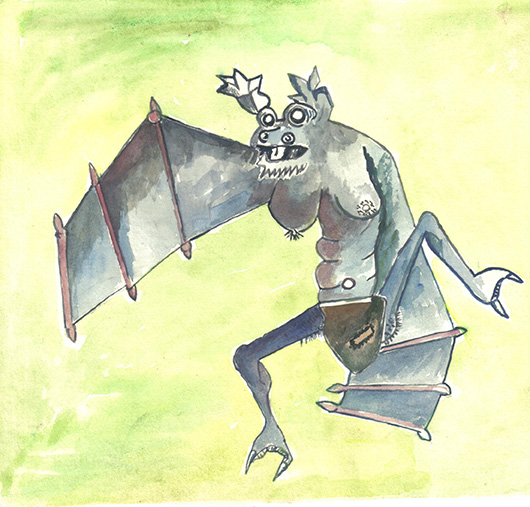
BR: Absolutely. Speaking in the cryptozoology realm, because I like to have a confluence of interests here, some of you may recall when we talked about the Popobawa, the skeptic raping bat demon ghost thing of Zanzibar.
0:31:54
PR: The true atheist’s worst nightmare.
0:31:56
BR: Part of the Popobawa story, and I’ll just recount very briefly, is that this creature was sighted around Zanzibar in East Africa, and the island of Zanzibar, and also Pamba and elsewhere. In much the same way that Jose Quimosoto did in San Juan, Puerto Rico, the politicians in Zanzibar used the threat of the Popobawa to get people to vote for them. And it was this, because part of the notion behind the Popova is that it’s this unseen bat creature thing that would attack people at night. And it’s, if you remember the story, it comes at night and it’s sort of this old hag type creature thing and it’s never really seen. But part of the story is that it’s essentially a form of the djinn or the genies, which many people believe are controlled by sorcerers, particularly Muslim sorcerers. So embedded in the Popobawa story is the notion that the creature can be controlled and or directed against one’s enemies. And this is also a feature of genie folklore, djinn folklore in general. So you see the same thing where there seemed to be a tie between the appearances of the Popobawa and local elections. So those were all tied in together. And then another, I just want to give one other quick example, and this is a piece that I wrote about for Life Science in July 2011, and that was where there were a bunch of wildfires. There was a huge wildfire in Arizona. Maybe you remember the whole story.
0:33:30
CW: I think I remember that, yeah.
PR: A movie made about the tragic loss of some of the hot shots.
0:33:35
BR: Exactly. And in fact, here in New Mexico, we had like ash coming down. It was like serious.
PR: It was bad.
BR: Yeah, there was like haze coming in just because the wildfires were so huge there. One of the stories that circulated, at least originally, was that they knew how the wildfires had started and it was, of course, illegal immigrants. Because what else would it be, right? Fires in the region are started by a variety of things. There’s been some cases where there’s been lightning. There were a couple of cases where there were actually controlled burns that were no longer controlled.
0:34:10
PR: We have a very nice shining history of that here in New Mexico, unfortunately.
0:34:16
BR: So it could be campers, whatever else, but the rumor, the legend that got latched onto, particularly by conservatives, was blame the illegal immigrants. The idea was that Mexicans were coming across. I guess that wall is going to do something about that. We’ll see how that works.
0:34:33
PR: There’s a very bad misunderstanding of the geography of Arizona as well because the mountainous, forested north, north central and north eastern parts of Arizona are not, you really don’t have illegal immigrants still marching through Arizona at that point. They usually make it to Tucson or Phoenix. And then they have cars, they have buses and cars and airplanes even. There’s a lot of ways to get past that giant forest in the northern part of the state because really there’s nothing there. I don’t know where you’re going when you walk through that part of the state.
0:35:06
CW: What if they were like Satanist immigrants that needed a dark spot in the woods to do their satanic rituals and start the fires.
0:35:16
PR: Yeah, I mean, you’ve got a point there.
BR: That makes sense.
PR: It goes without saying, yeah. But I don’t know. I still doubt that they were satanists.
0:35:23
BR: But who knows? But no, I just wanted to sort of wrap up with that example as a reminder that these sorts of rumors and legends and stories, again, they’re not confined to fairy tales and folklore. I mean, well, they are folklore. They’re in some cases informing national debates. And it’s important to keep that in mind.
0:35:43
CW: So yeah, people are assuming that fake news is a relatively recent phenomenon. And it sounds like we’ve had it in many forms for many, many eons.
0:35:53
BR: Absolutely.
0:35:54
PR: Yeah.
(MUSIC)
0:35:55
BR: Hey Squaring and Strange fans! Word around the campfire, that is, unconfirmed rumor, is that patrons are loving their Skepticrates. Hold on, what’s a Skepticrate, Pascual?
PR: The Skepticrate is a special bonus gift our $5 and up patrons get once per month. And what are the details of the Skepticrate, Celestia?
0:36:27
CW: The rumors are true. People are loving their Skepticrates. For anybody subscribing at a five dollar or over level, once a month we will send out to you a Skepticrate. Now it’s not actually a wooden crate containing live chupacabras or anything like that. We can’t quite afford that yet. But we’ll send you at least three items that have something to do with skepticism, one of our recent episodes, or something from the personal collection of one of our lovely hosts. So keep an eye out for your goodies and sign up at patreon.com.
(MUSIC)
0:37:09
BR: So we’ve looked at some of the ways in which folklore can be used as sort of babysitters or moral guides or nudges, if you will, for adults. Let’s turn our attention to Celeste’s example where these stories and legends are used to keep kids in line. Pascual, you grew up hearing some of the stories yourself.
0:37:30
PR: Yeah, yeah. La Llorona, spelled L-L-O-R-O-N-A, I think. Yeah, that’s pretty close. So, yeah, the word is not intuitive in English, but anyway.
0:37:45
BR: Oh, Celestia how do you say it? Oh, don’t make me say it. I think I’ve got it. It’s La Llorona. Is that right?
PR: Oh, yeah, that’s solid. She trills her R. I’m impressed. Good job.
CW: The first dozen times I said it, I said La Llorogna!
0:38:02
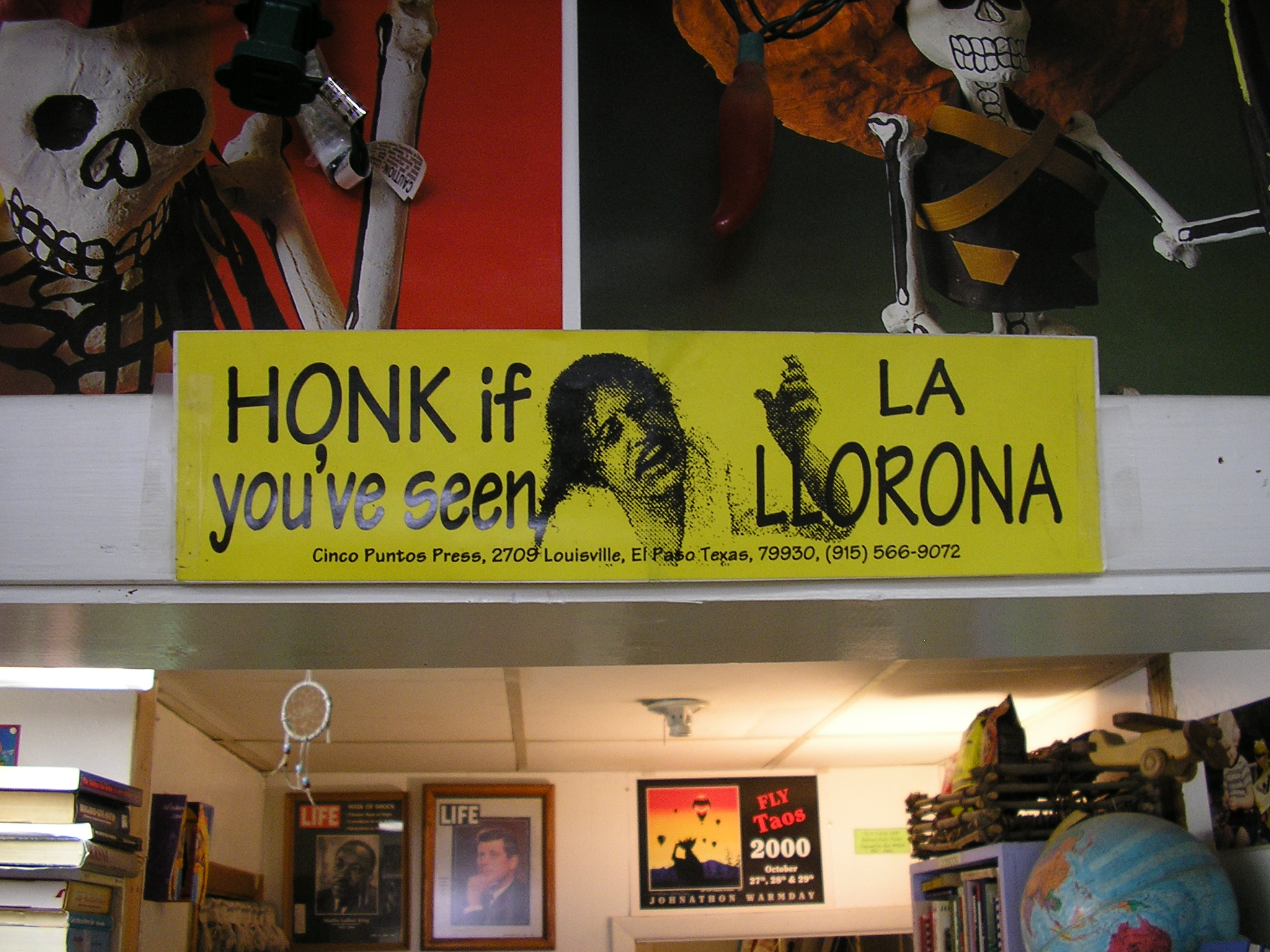
PR: Yeah, and it’s an easy mistake to make considering we also do not pronounce llama correctly. Anyway, to move on, yeah, she’s a very prominent legend in northern New Mexico especially, but it is, I’ve heard of it being as far out as Texas and Arizona. It is definitely kind of concentrated to the southwest and maybe even a little bit to the south. But we have a story about a ghostly woman. So the kind of the quick version of the story is she was a mother of a couple children who well, there’s a couple variations. The variation we always heard was there was a fit of jealousy over a man and she threw her children up against the rocks along the riverbed and they died. Now, there’s also, I think, a variation where she loses them in the water and just tries to chase them, trying to catch up to them, and she never does. But the main thing is that the story we had, she regretted what she did, but her children were already gone, and she stayed along the riverside weeping over her children, and the story is that her ghost did that and if she ever saw children along the riverbed she would sweep up and catch them and some people thought she’d catch them and keep them some people thought she’d catch them and throw them in the river. Again there’s a lot of variations on the story but at the end of the day it was really to scare us away from the river. As I mentioned at the top of the episode this region is especially prone to flash floods, which is something that you have to see to believe how quickly water can rise. It’s not a wall of water, but rather just water that seems to swell up from under you. It happens in what we call arroyos, which are just dry ditches or gulches. You could be standing in the middle of it and it’s dry as a bone. Before you know it, you see a trickle of water coming and then that trickle of water swells up to three feet moving faster than you can stand in. So there’s a very distinct reason you want to keep people not only out of the river beds but just off of the banks entirely because it could be raining 20 miles away in the mountain and suddenly the water level jumps three feet.
0:40:20
BR: So let me ask you this because I grew up in Corrales, which is of course not too far from here. You grew up an hour north of here in Santa Fe. Now I heard the story, it was never, La Llorona was never told to me as a true story by my parents, which makes sense because we’re not Hispanic, hence the Radford. So, my question to you is, was this, how widely believed was it among your peers, if you know?
PR: It was definitely pretty widely believed in kind of elementary school aged kids. I think, I like to think I was a little more skeptical and if anything just wasn’t, you know, thought of it as a ghost story. A lot of kids were very fearful and would… The Santa Fe River cuts right through the middle of downtown Santa Fe, where I grew up. I grew up literally probably about 300 feet from our backyard was the Santa Fe River. That river is one, especially because it has these high stone walls on it. It’s a very old, early engineering feat of these stone walls along the river to control the swells of water. It’s also very creepy looking. There’s a lot of old trees in the basin of the river and stuff. It was easy to believe just by the sheer fact that this ancient city with these old stone walls along the river, it just seemed like a death trap down in the river anyway.
0:42:01
CW: It looked ghostly enough for you.
0:42:03
PR: Yeah, so imagining a ghost down there seemed to follow pretty well.
0:42:08
CW: And the really crappy mom, which I’m going to qualify her as a really crappy mom who either killed her own kids or just let them wash away in the river, that’s kind of an archetype that comes around again. The first iteration I heard of Bloody Mary was that she had had her baby stolen from her. I guess it doesn’t make her a crappy mom. Her baby was stolen and if you say, Bloody Mary, I have your baby, she’ll come and get you because she wants her baby back.
0:42:33
PR: Ah, interesting. I like that variant. Maybe that’s why it never worked for me.
BR: You didn’t say the right thing, Pascual.
PR: She’s like, what do you want? I’m looking for my baby. Oh, I got it.
BR: All right, let’s just go away then. I’m going to go watch Friends.
0:42:46
CW: I’m sure it’s not the only version, but the version I heard was again a woman in search of her gone, dead, kidnapped, you know, killed baby, much like La Llorona. I said it right.
0:42:58
BR: Good job. Well, yeah, I mean, in APS, the Albuquerque Public School System, you know, we had people who would come in and they would be the ditch witch. Did you have the ditch witch up there?
PR: Yeah, yeah.
BR: So it would be, it would be, and there was a series of cartoons of a slightly scary, actually she wasn’t scary at all, but it was pretty goofy. It was kind of goofy. I’m like, really, I’m supposed to be afraid of that? You can do better than that. Like, I saw Friday the 13th last night, so this ain’t cutting it.
0:43:28
CW: What was this Ditch Witch? Was this like the McGruff the Crime Dog of the Arroyos here?
0:43:36
PR: Pretty much, yeah, that’s almost exactly what it was.
0:43:39
BR: That’s about right, exactly, yeah. And it was almost as comically unscary, you know, like, this is your brain, this is your brain on drugs, those are eggs, dude. That’s not my brain. You’re not scaring me here. Like, whatever. I mean, I won’t go near the ditches, but not because you didn’t tell me to. You told me not to. But no, the phrase was, ditches are deadly, stay away and expect the unexpected. Which I’m like, well, how can I expect the unexpected? And like, they’re like, shut up, man. Mr. Skeptic boy.
0:44:10
CW: Even then you were parsing language.
0:44:13
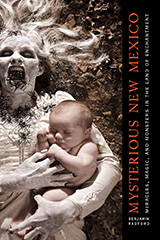
BR: Even then I was doing it. But it’s interesting. So let me, let me sort of come back on that. So one of the interesting aspects of La Llorona is she actually ties in with what we began talking about, which is controlling adults’ behavior as well. So it’s a really interesting sort of layer of dual nature, all-purpose boogie woman, if you will. So the primary function of La Llorona, as Pascoe mentioned, is to keep kids away from ditches because flash floods, rising waters, drowning, whatever else. But her message is also aimed at parents, telling them about the consequences of not looking after their kids properly. So she’s this she’s a threatening figure on on two levels Which is interesting a little twist to it, right? So it’s sort of this moralistic boogeyman warning people about what they should and shouldn’t do and in many of the cases that I researched because I wrote about la Llorona for one of my one of my chapters in my book mysterious, New Mexico in chapter 11 and And one thing that I found which surprised me was the appearance of La Llorona far from ditches and far from the waterways that I had associated with them and Pascual had as well. And so what you find is that La Llorona is a much more widespread, generalized urban legend figure that would appear to people far away from any ditches. They would just sort of on downtown streets. So the application to parents and adults is this, right? So if you if the La Llorona story was restricted to kids and you’re not a kid then you’re like I don’t care. I’m not gonna go near a ditch. I’m not 10. I’m not gonna go to the ditch. Yeah. But if La Llorona can be used to tell you to not you know cheat on your wife or not to stay away from the drink. And so what you find is that the La Llorona story, the boogie woman story adapted itself to all sorts of different situations. So there were stories of people who would swear off drinking because they were at a bar one time and they had more than they should have before going home to the irritated wife and they crossed the path and it was a woman and actually this sort of ties in with the Kuchisaki-Onna story. Oh, yeah, we talked about a couple episodes back where they would, this sort of guy a little bleary-eyed just trying to stumble home. He sees an attractive young woman and so hey… And she turns around and she has the You’d like a skull face or like a veil that she lifts up. Again, coming back to Kuchisaki-Onna, and he realizes his horror, it’s La Llorona. And the message is, don’t drink anymore, go home to your wife, be a good parent, and pay your child support, go to church on Sundays, take a bath now and then, and get right with God. And that was often one of the aspects.
0:47:08
PR: Well, the main version I remember was that the jealousy, the fit of jealousy, I think was spurred by the woman who became La Llorona, and I think went by a lot of different names in the story. I think Maria is the most common one. There was an angle that was that she was into going out and partying and being with different men and things like that. And what the children represented was something that got in the way of that. And then the jealousy was that she, in a fit of rage, just drowned them or allowed them to drown. And so that variation, I think, was definitely there. There’s an angle that’s sort of aimed at adults there. I think another one was that she married a wealthy man who was a womanizing alcoholic and she did it for him and then regrets it immediately obviously.
0:48:04
CW: Yeah, that was the version that I actually first came across online was that she was a peasant woman with three kids and no husband and then this wealthy man took a liking to her and she knew he would never marry her with the kids so she dashed the kids heads on the rocks and killed them in the river and then ended up not getting the guy after all anyway. So I almost took kind of an almost anti-abortion message from it. Like, you know, don’t, if you find yourself with a kid, just, you know, have the kid be a mom. Don’t try chasing after some other suitor that wants a childless bride.
0:48:40
PR: Right.
0:48:41
CW: But I might be reading into that. Like I said, I am…
0:48:44
BR: No, no, I think that’s, I think that’s exactly right. And, you know, one of the reasons that these stories and legends and folklore are so enduring is that you put your own spin on it. The story is what you make of it. And that’s why these stories are so widespread and have been around for generations. If La Llorona only had one message, the story would have died out long ago. But La Llorona’s story can apply to you or me or anybody else here, whether you have kids or not, and that adaptability and versatility is a huge part of why it’s so popular.
0:49:19
CW: Yeah, but the main focus of just keeping kids away from dangerous water, I noticed that there’s a ton of monsters all over the world that serve that function. You looked into some of them when you studied lake monsters, right?
0:49:33
BR: I did, yeah, thanks for bringing that up. I’d forgotten about that, yeah. That was one of the first things that I had heard when I researched Champ, the monster in Lake Champlain. I had done research on lake monsters before, that was one of my early ones, but I hadn’t heard this particular version of it. I interviewed Sandra Mansi, who of course took the famous photograph of Champ, the log, in 1977 and Nancy told me that when she was growing up, because she grew up in the area around Burlington, Vermont and the environs, that when she was a kid, her parents told her, if you misbehave, Champ will eat you. So it’s like, yeah, and I, it was interesting. There’s not many, I mean, there’s Ogopogo, which is a Canadian lake monster, which has a tradition of actually eating people. We should do a show on that at some point. But but no, before I hadn’t really, it hadn’t occurred to me that the champ was being used to scare children, but Sandy said no, that’s absolutely, absolutely the case. And so it was, and you know, I’m trying to figure out how would that come up.
0:50:56
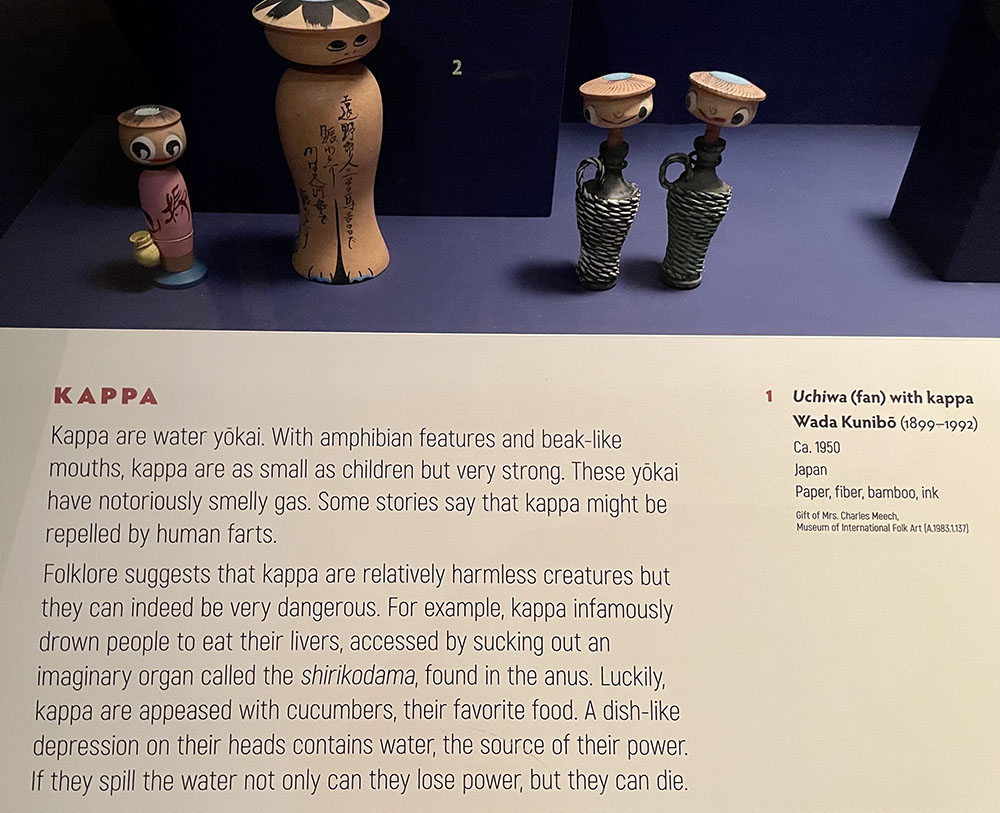
CW: I looked into some of these boogeymen that frequent lakes and rivers and and places where kids might get drowned uh, and the one that really caught my eye was uh, something called uh, Something in japan called kappa or kappa. I mean perhaps you’ve heard of these. They’re part of the yokai tradition of Japanese demons.
0:51:16
BR: I’ve read a little bit about them. Yeah, well, I’ve never met one, just to be clear.
0:51:20
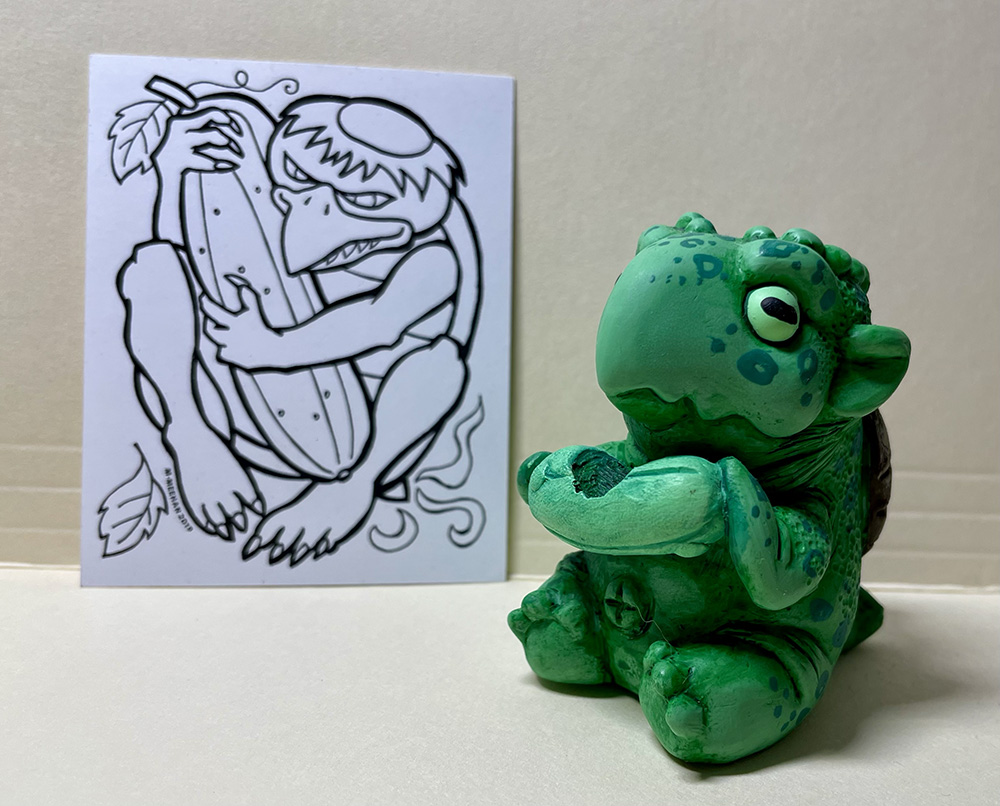
CW: Well, I think you would remember if you met one, Ben, because they’re apparently into butt stuff. I am reading about this and they are definitely used as a threat to children that might be tempted to play too close to lakes or rivers. And they even appear on some warning signs that are used near some bodies of water in rural villages. They’re said to wrestle people and drown them and drink their blood and all sorts of other stuff. And among the other things they do is they disembowel victims by sucking on their buttholes. And that’s a totally kid-friendly threat, right? That’s something you can imagine telling your grandkids, don’t get by the water. They’re going to suck your intestines out of your butthole.
0:52:04
BR: Well, little Billy, do you know why you shouldn’t go down to the river? Have you heard of the human centipede kappa?
0:52:11
CW: Yeah, well, apparently this gory detail was supposedly inspired by the distended anuses of waterlogged corpses that would occasionally wash up.
0:52:21
BR: Who’s checking these things? Hold on, back up here. First of all, I think it’s pronounced, I think it’s actually A-N-I. Second of all, who is checking these things?
0:52:27
CW: Well, I was going to bring up that I’m finding some of this on from an article on Cracked, from Cracked Magazine. I don’t know how crack the team is of researchers on Cracked Magazine, but the Cracked Podcast has had some interesting skeptical analyses of some things, but it certainly begs for some more research here. But they’re apparently, they’re very tricksy critters and they do all sorts of things. That was just one of the aspects of how they can wreck your day. They’re also really rapey. They’ll sodomize you and then they’ll take your intestines out. And they apparently also really love cucumbers. Supposedly, it’s their favorite food. They love it even more than the flesh of young children. And there’s another source that was saying that they try to grab people’s shirikodama, which is a mystical orb said to contain the soul, and that can be found, you guessed it, in the anus.
PR: Boy, they seem very fixated on something here.
CW: Yeah, I’m sorry to bring the level of discourse down a few notches here, guys.
BR: I don’t think you are, actually.
CW: I was fascinated by the Kappa. They have counterparts all over the world, like the Scottish Kelpie. You know all about those, Ben, right? Yes. And the Siokoy of the Philippines. There’s like many different things that are said to be counterparts to the Kappa.
0:53:57
BR: I am a Phi Beta Kappa so…
CW: I’m gonna start rumors yeah well let me let me bring it back around to to scaring kids and another one of my favorite topics not to keep coming back to stuff that I have researched but I’m gonna do it anyway time on it what the hell I’m gonna tell you about it if you don’t like you can fast-forward through this part I’m waiting people do that. So yeah, it’s about evil clowns. So as you all know, I wrote a book on scary clowns titled Bad Clowns. And one of the creepy clowns, and he’s actually not mentioned in my book, this is a failure of mine, I will admit to this failure, he just has not mentioned that there were only so many clowns I could fit in there. They pack up small, but they still take up space. So this one did not make the cut, but if I end up doing a second edition, there will be chapters on various high-profile clowns. You can probably think of a couple. This particular one was active in 2015, and his name was Wrinkles the Clown. Somehow Wrinkles went under my radar because there’s a lot of stuff going on.
0:55:08
CW: Wasn’t your book already in production by 2015? I mean, come on.
0:55:10
BR: Yeah, I can’t do everything. But so this was a guy based in Florida and he would dress up in a creepy clown costume he got online. And I was actually interviewed about him a couple weeks back for a feature film documentary that’ll be out probably next year titled Wrinkles, at least that’s the working title. It’s all about him. It’s all about the clown! And Wrinkles is… here’s where I’m going with this. So as So, as you all know, there were a series of scares about evil clowns stalking kids, and some of them were sort of urban legend-y phantom clowns, and other ones were real, some were copycats. And Wrinkles was sort of a hybrid of those. He would show up in different videos scaring kids, sort of a Slender Man-type figure. But he would be in videos, and if you Google Wrinkles the Clown, you’ll see some really weird, he’s like, there’s one who’s underneath the kid’s bed, and he comes out and he’s like reaching for it. And part of the story is, parents would hire him to scare their kids.
0:56:13
CW: Where was this? I remember hearing that this was happening in Europe. Oh no. Was it happening here too?
0:56:18
BR: Okay, here’s the thing. So in my book, I do talk about a guy named DeVille the Evil Birthday Clown.
CW: Yeah!
BR: Yes, okay, so it was actually similar to DeVille. Now DeVille’s case was, he was in Switzerland and he charged 666 Swiss francs for it.
CW: A bargain.
BR: A bargain, right. And actually he didn’t actually stalk kids. That was sort of a sensationalized story, if you can imagine that happening on the internet.
0:56:49
CW: Did he have NASA put out a press release?
0:56:52
BR: You would think. Yeah. But so anyway, there actually was a DeVille the birthday clown and he actually did stalk people for their birthday and he would like creep up behind them and stalk them and throw a pie at them and stuff. But he didn’t offer his services for anybody under 18. So that part of the story is true. Now in the case of Wrinkles, he offered a sort of similar situation. But here’s the difference. Wrinkles gave his phone number out. Unlike all these other weird, creepy clowns online and on social media or else, Wrinkles has a phone number. And you can Google it. I’m not gonna give it to you, but there’s the phone number for Wrinkles. And what would happen is, the teenagers and kids would be aware of Wrinkles because they’d seen these viral videos of him scaring the hell out of kids. And because there was actually an active life phone number associated with that, parents would call Wrinkles in their kid’s presence and say, I’m talking to Wrinkles right now, he’s going to come and kill you if you don’t straighten up.
0:57:56
CW: This actually happened?
0:57:57
BR: This actually happened.
0:57:58
CW: Oh my God.
BR: So, and what makes it, so what makes the story all the better is that there actually wasn’t wrinkles there actually was a phone number so the kids the kids knew that part of it was real because They’d seen the phone number and there’s actually videos online of people calling the wrinkles of the clown and talking to him back and forth so that’s that’s one of my favorite stories.
CW: It’s like dial a boogeyman. Well to bring it full circle here about scaring your kids into behaving, that’s been a long time Christmas tradition. And there are many, many, many curious things that humans have come up with all across the globe to scare their kids, right around the holidays. I think people just like telling scary stories when it gets cold and the nights get long. But have you guys heard of the Icelandic Yule cat?
0:58:52
BR: No.
0:58:52
PR: Have not.
0:58:53
BR: Do they leave Yule logs?
0:58:57
CW: Probably in a gigantic Yule litter box. I’m going to butcher this Icelandic even more than I did the Spanish here. Yola Katorin. Yola Katorin. It’s an Icelandic monstrous cat. It’s a huge, like, it’s bigger than a house. It’s a cat owned by the giantess named Gryla. She’s the mother of the 13 Yule Lads who caused their own form of mischief. The cat is said to go from house to house, peering in the windows on Christmas to see if all the children there are wearing any new clothes. And if it finds any kids that have no new clothes, it takes them and it eats them.
BR: Oh, that’s kind of harsh.
0:59:40
CW: Well, I’m gonna deconstruct this a little bit. It goes beyond just being a fashion police officer here The idea behind it is that it targets children that nobody loves because if somebody loved you they’d give you a new item of clothing for Christmas Eve, which is a Icelandic tradition Alternatively, sometimes the Yule Cat doesn’t really eat you, but it’ll eat your supper. You’ll have to go to bed without supper because it’ll eat your food.
BR: That seems more reasonable, honestly.
CW: Yeah, and it’s also a time-honored way that parents use folklore. Oh, I’m not punishing you. This evil spirit or malevolent trickster is punishing you.
BR: Right. I’m the good guy.
CW: Yeah, it’s like Elf on a Shelf, but this is a giant cat instead. And it struck me at first as a particularly clever way to just manipulate a kid into wearing that ugly sweater that Aunt Norma got him or something. But I found it went even further. Before that, it was also tradition to reward kids who have completed their chores. Because when you get your chores done, you get new clothes, and that harkens back to further, farmers used to use the threat of the Yule cat as motivation to get their workers to process all, to process the wool harvest before Christmas time. Those that did get the work done, got a new article of clothing as a reward. And those who didn’t might face a giant bloodthirsty cat. That’s kind of has some economic factors go in there, because if you’re number one if your whole country has a tradition of giving new clothes on Christmas Eve then you want your workers to produce as many you know mittens and socks and scarves and hoodies and everything as they can as Christmas approaches so so that you can sell them interesting and you can also deconstruct it another way it presumably reinforces the idea of giving to the poor as it makes children and hopefully grown-ups more eager to give some piece of new clothing to people who cannot afford to buy something for themselves. So you’re not just you’re not just giving a hobo a pair of socks you’re saving his life you know and the fact that this is Icelandic folklore I think is really key. I got to go to Iceland a couple years ago, and we happened to be there in winter during one of the worst winter storms they’d had in a few years. And if you don’t have good warm clothes, it really can be a matter of life or death. because of my own experience with a cat apparition as a youngster, but the Yule cat is one of my favorite critters.
BR: That is cool. I love that story.
PR: Yeah, it’s very fascinating.
BR: And as I recall, you took some photos of some really hardcore Icelandic cats.
1:02:31
CW: I did, yeah. Every cat, there were cats in some of the farm areas. I took a picture of a dairy farm cat and a horse farm cat, and there were cats just like sitting on the top of people’s all-terrain vehicles just looking really badass. Some of them like covered in snow they didn’t they didn’t give a crap.
1:02:57
BR: They were just like a honey badger man. They just don’t care. Adorable.
PR: Have either of you guys seen that Ricky Gervais piece when he’s he’s talking about how Jesus is an invisible free babysitter?
BR: I have not.
1:03:13
CW: Oh I think I think I have seen that when he’s talking about like being a working-class family with like a bunch of kids?
1:03:18
PR: Yeah, yeah, and he was talking about how he was quite into Jesus and God and, you know his older brother would actually kind of test his faith there and you know be like why do you believe in that and his mother would always… Would hush him and it always it struck a chord with Ricky who suddenly saw his mom as hiding a truth from him. It was a truth that he said he understood why she hid because having a kid who believes in Jesus, who believes Jesus is always watching, is way less likely to get into trouble. And his mom already had her hands full.
1:03:56
CW: Yeah, you can look at that as controversial because, you know, religion and folklore, you know, you don’t want to necessarily mix the two, but in that instance I remember he, yeah, he was like, his mom was like, shut up. He realized Jesus was being used as folklore in that household, for sure. Don’t do this, don’t do that, Jesus is watching.
1:04:17
PR: Yeah, yeah, yeah, mythology aside, I mean we certainly see it in religion that the folklore of religion often is used as ways to have stories with a moral and have some kind of way of warning people off of things. So it’s definitely nothing that I don’t even think a priest would deny that.
1:04:40
CW: Human experience.
(MUSIC)
1:04:42
BR: All right, that wraps up the 50th episode. Hope you enjoyed listening to us talk about boogie men and boogie women and kappas and other weird things like that. I wanted to just sort of on a personal note send some thoughts out to Sandra Mansi who is unfortunately ill. She’s not doing well. She’s of course the woman that took the famous 1977 photograph of Champ, the lake monster. I had a delightful time interviewing her. She was a very warm, sincere, lovely woman. Just sending best thoughts to her and her family.
(MUSIC)
1:05:32
PR: We would like to thank our sponsor-level patrons, Amy Freshour-Kelley and Dr. Angela Mattke. Thank you for watching. positive review helps us move up the podcast charts. Thanks again strangers.
(MUSIC)
PR: So be sure to tune in next week. We’re actually going to be covering a topic that again kind of touches into the local legends, treasure hunting and some of the various myths and different wild goose chases, so to speak, that people go on, as well as we’ll be touching in on a local one that’s actually made quite a bit of worldwide attention, which is the Forrest Fenn treasure. You may remember that he wrote a poem or a riddle, I guess you’d say, about a treasure that he claims to have put out somewhere in New Mexico, somewhere in northern New Mexico, and he says it’s worth well over a million dollars and we’ll definitely link it on the episode where you can see the actual riddle.
1:07:00
CW: A couple people have died looking for that treasure, haven’t they?
1:07:02
PR: Yes, and that’s, I think, an important angle to talk about because a couple people have died and there’s a lot of debate over whether there’s even a treasure out there. So definitely stay tuned for that. I think it’s gonna be a pretty pretty interesting episode. Can’t wait for it, but until then well
1:07:17
We’ll see ya. Bye. Bye. Take care We’ll see ya. Bye. Bye. Take care
1:07:19
you
Transcribed with Cockatoo
