
Episode Summary:
We start with Mad Mike Hughes and his flat-earth-funded rocket. Then we talk treasures: hiding them, hunting them, and passing along rumors of them! Treasure hunting is rife with folklore and sometimes danger. People seeking riches have trespassed, committed crimes, and even died. Celestia talks about murdered casino magnate Ted Binion’s buried vault and rumors of more treasure. Then Pascual and Ben discuss Santa Fe eccentric Forrest Fenn, who claims he hid a treasure you can find with clues in a poem. Finally, we dig into Arizona’s legendary Lost Dutchman Mine.
0:00:00
Ben Radford: Welcome to Squaring the Strange, the podcast that examines all manner of the mysterious and the mundane through a critical lens. So let’s square the strange.
(MUSIC)
0:00:11
Pascual Romero: Welcome back to Squaring the Strange. This is Pascual. I’m here with Ben and Celestia. How are you guys doing?
BR: Doing good. Ready to do some skeptical-cust-us-skeptical-izing? What is that? What do we do here?
PR: Skepticizing.
0:00:35
Celestia Ward: What he tried to say. Yeah, I agree with that.
PR: Skepticize. I think that was a form of exercise from the 80s. But anyway, so this week we’re going to break down some of the myths and mysteries and woo around treasure hunting and various lost treasures. We’re going to be covering a few things. Pirate treasure. We’re going to be talking about our local legend, Forrest Fenn, and his hidden treasure somewhere here in New Mexico, or alleged hidden treasure. And Celestia, you got a little bit. We’re going to cover, we’re going to talk about the Binion’s treasure, right?
0:01:23
CW: I’ve got some casino magnate with mob ties treasure.
0:01:27
PR: Oh, that’s always a fun one.
BR: There you go. I like it already.
(MUSIC)
0:01:31
PR: So this week it’s a little bit of a Sway So update. Our buddy Mike Hughes, now some of you might not remember that name, but I mentioned him a while back. This is the guy who built his own rocket to prove the earth was flat.
BR: I do remember that guy, yeah.
CW: Mad Mike, isn’t he Mad Mike Hughes?
PR: Yep, Mad Mike. I believe he’s a stuntman by trade.
0:02:05
BR: Turn down a Nobel Prize I think.
0:02:07
CW: He wants to be a cross between Evel Knievel and Ray Comfort. I can’t quite figure him out.
0:02:13
PR: So as I mentioned last time, I was skeptical that he’d be able to prove anything. I don’t think we’ve had any changes in that department, but we did have a successful launch. So he was able to launch his rocket this week.
BR: Was he in it or what was the…
PR: He was in it.
CW: Well he showed you.
PR: Yeah he sure did.
BR: Wow.
CW: Take that skeptics.
PR: It was on last Saturday which would have been let’s see March 24th 2018 and he went out into the Mojave Desert and he shot himself 1,875 feet into the air to prove, quote unquote, prove that the earth was flat.
0:02:59
CW: Wait, hold on. I have hiked up mountains, or rather hills, that were higher than 1,800 feet.
0:03:05
PR: Yeah, yeah.
0:03:06
CW: He could have just hiked up a gosh darn hill.
0:03:10
PR: Yeah, well, I mean considering…
0:03:12
BR: What’s the fun in that?
0:03:13
PR: When we climb up our Sandia crest, you don’t even have to hike. There’s a tram that takes you right to the top of it. You’re a few thousand feet above Albuquerque.
BR: 10,378 feet I used to work there.
PR: Yeah, so you are 5,000 feet above where we’re sitting, which is 5,000 feet above where he launched. So we don’t have to even build a rocket to look at the surface of the earth from 10,000 feet.
0:03:36
CW: When you’re up there on the top of that precipice there, are you able to see the curvature of the earth? Is it really easily spotted?
0:03:47
BR: No, no, not really. I do remember every now and then, because there used to be a restaurant, it’s now torn down, there used to be a restaurant at the top of the mountain called High Finance. Really weak double entendre there. And on occasion when we had people, usually from Texas, they would ask if they can see Texas from there. And I would point them north and I would say, yes, it’s that way, and they’re like, ooh.
0:04:13
PR: Oh man. So yeah, so anyway, yeah, we do have the ability to get that kind of vantage point. Like I said last time, I had a feeling that this was mostly just a ploy to get his rocket launch funded. I still stand by that because the guy suddenly became a flat earther when he couldn’t afford to build the rocket. But anyway, so he launched himself off of a launch pad that was made out of an old trailer naturally.
BR: Because of course. Because that’s Mad Mike for you. Was there not like an Acme brand slingshot available?
0:04:48
PR: No.
CW: Well, flat earthers don’t have that deep of a pocket. They have medium sized pockets. They’re like, here’s a trailer, go to it. Now, did he survive?
PR: He did, actually. So he launched himself off at a speed of 350 miles an hour, which is actually really impressive for a homemade rocket. Especially impressive that he didn’t die in launch. But he came back down, his parachutes deployed successfully. He had a pretty hard landing. He was quoted as saying he was going to feel it in the morning. I don’t doubt that. The man is, I believe, 61 years old, so he’s at an age where you usually feel things.
0:05:31
BR: And a former stuntman, right?
PR: Yeah, I believe so.
BR: He knows how to take a hit, take a roll.
0:05:36
PR: Yeah, yeah. So, you know, he’s a tough guy. But the reason I bring it up, well, partially because, you know, we deserve an update for such a character, but I also kind of had a laugh at his responses to people kind of asking him, okay, so like, what did you prove? Or, you know, did you…
0:05:55
BR: And?
0:05:56
PR: He said he was not convinced one way or the other, which, I mean, he only went 1,800 feet off one of the lowest points in the U.S.
BR: So why bother?
PR: Like I said, I think he just wanted to launch his rocket, and he did. So good for you, Mike.
0:06:14
CW: To his credit, by launching himself a mere 1,800 feet up, yeah, scientifically, I think most people, most legitimate scientists would agree, that shouldn’t convince you one way or the other.
PR: Yeah.
CW: You do not have enough data.
PR: Yeah, I mean the guy would have had to go at least what 30 times as high to even come close to seeing the curvature of the earth and I think that’s Conservatively, I think you really have to get pretty close to the stratosphere. I mean an airplane at 30,000 feet even still you’re not actually really seeing the curvature of the earth so much as a an optical illusion and it’s because 30, 40,000 feet, 5 miles, 10 miles above the ground is actually a very, very tiny amount of space between you and the earth on the global scale. So you don’t, I don’t think people realize just how huge this planet is relative to us.
0:07:15
CW: Is he done with all this? Is he going to give up and just take up golfing now as a 61-year-old retiree? Or does he want to make bigger, better rockets?
0:07:26
PR: So far we haven’t heard, or at least I didn’t see anything about him talking about his future plans. It’s unclear why he doesn’t just get on a commercial flight and see if he can at least beat that height a little bit. But the quotes are great from this guy. He was talking to the AP and he said, I don’t believe in science. This is a direct quote from him. I know about aerodynamics and fluid dynamics and how things move through the air. Now let’s stop with that sentence. The sentence that precludes it.
0:07:58
BR: I don’t believe in science, but I know all this science.
PR: Yeah, I know all these actual forms of science.
BR: And he did manage to propel himself. I mean that takes some engineering and science. Good for him. That he doesn’t believe in.
PR: Yeah, a lot of faith in something that doesn’t exist. But yeah, and then he said, he knows about the certain size of rocket nozzles and thrusts, but that’s not science. That’s just a formula. The whole sentence you just put together there just continues to be science. Mike, I applaud your density on this issue.
0:08:37
CW: Yeah, I’m not science, you’re science.
0:08:42
PR: I don’t know what he’s trying to achieve by saying that. And also, I presume flat earthers try to not disbelieve in science, but rather bend it to fit their narrative. So I don’t think he’s helping that case either by saying that.
BR: Now, are we sure he didn’t have a concussion before he…
PR: I’m sure he’s had plenty of concussions before this. But yeah, so that’s Mad Mike’s legacy. I have a feeling it’s not the last we’ve heard from him, but hopefully he doesn’t get himself hurt trying to launch himself another couple thousand feet.
CW: I think the only thing Mad Mike has been trying to prove is the enormous size of his testicles.
0:09:29
PR: Yeah, I’ll give him that. I’ll grant him that.
(MUSIC)
0:09:33
PR: So this week we’re talking about treasures. Everything from pirates to eccentric millionaires. So Celestia, why don’t you walk us into this one because I’m really interested in this about the Binion treasure and all that.
0:09:57
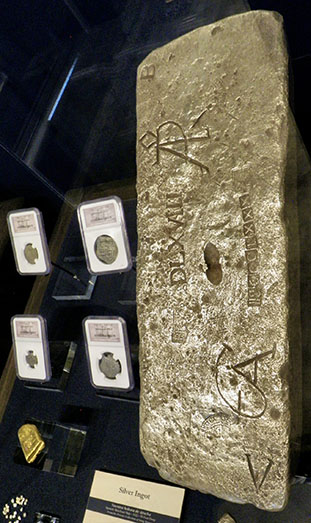
CW: Well this is, yeah, we’re hitting like the 20 year anniversary of Ted Binion’s death which created a huge sensation here in Las Vegas for a number of reasons. In March of 1998, Ted Binion lost his gaming license due to his ties to a murdered underworld figure named Herbie Blitzstein and he started slowly moving his silver out of his casino because he was no longer allowed to own the casino. Now Ted Binion is the, I should say, he’s the son of Benny Binion and Benny Binion is one of Vegas’s oldest royalty figures. He created the Binion’s Horseshoe. He really helped build this town. His family is huge here. Ted Binion was his son and he was running the horseshoe at the time. He also apparently was doing a lot of heroin and womanizing and doing things that casino magnates tend to do, I guess. In September of 1998, this is like you know not even six months after he lost his gaming license, he is found dead of an apparent heroin overdose. Heroin and Xanax and a couple of other things. And this was later ruled a murder by means of birking. Have you heard of birking? I had not.
PR: I have not.
CW: Apparently that’s when you sit on somebody’s chest and also suffocate them by putting your hands over their mouth and nose.
PR: Wow.
CW: And he had also been given heroin but they found it in his stomach which is like not the way he would ever take heroin if he was doing it for fun.
PR: Right.
CW: So yeah, so he shows up up dead. Immediately, his vault is robbed. He has a vault. He had commissioned a contractor to build a vault in the middle of downtown Pahrump, which saying downtown Pahrump is kind of almost an oxymoron. If you’ve ever been to Pahrump, it’s a little tiny Vegas. It’s outside of Vegas, about like 45 minutes over the hump to Pahrump, as they say. It’s little Nevada town you go there if you’re looking for a brothel and right behind a grocery store he had somebody like dig a giant hole and install a vault and he put a ton of silver in there. Well no it’s more than a ton it was 48,000 pounds of silver silver bricks.
PR: Oh wow.
CW: Yeah so his that vault was robbed two days later by the guy he hired to build it. Somebody named Rick Tabish, who was also sleeping with Binion’s girlfriend, Sandy Murphy, who he had met as a stripper at Cheetah’s a few years before.
0:12:37
PR: Wow.
0:12:38
CW: So this is a very juicy story. Of course, it went all over the place. So now the thing about the hidden treasure was, I mean, it’s not so hidden if the guy who built the vault dug it up and was trying to steal it two days later with a couple of other guys. They had like three or four guys that went there, including David Mattson, who was the Binion’s ranch manager out in Pahrump. He had a giant 138 acre estate that he kept horses at in Pahrump. And so the vault was away from that, but there was all this speculation that there was more money hidden in other places. So they recovered the silver. I saw estimates anywhere from four million to seven million dollars worth of silver and the Las Vegas Sun said it was 48,000 pounds of silver and apparently there was three hundred thousand dollars worth of antique coins and currency that was never recovered and everybody connected to Binion seemed to say, Oh, well, he’s got it hidden somewhere. It’s at his property somewhere in it’s somewhere on his property and on his hundred and thirty eight acre ranch, or it’s in Montana or it’s in Las Vegas. As as recently as 2010, the film crew of 48 Hours and the TV producers came to his Las Vegas home and dug up holes in his yard looking for treasure that might be buried there. Now that’s at his Las Vegas home right over by Rancho Circle and I read the real estate article about that where they were trying to sell the house and the real estate agent was kind of complaining that the news crew had left all these unsightly holes everywhere.
0:14:16
BR: So I’m trying to understand what was the purpose behind building a vault to store your silver. Did he not trust banks? Was he trying to create some sort of mythical treasure? What was the idea behind it?
0:14:32
CW: He was not trying to lure people out to search for his treasure. That was not his goal. There were all sorts of rumors of why he might be doing this. Somebody said he didn’t trust people. Somebody said he specifically didn’t trust women. He had these deep-seated misogynistic tendencies that led him to want to hide money like so Sandra, his girlfriend, would never find it. But it’s all speculation. It’s all speculation as to whether or not he’s got all these things hidden. Chances are he doesn’t, but there was definitely money hidden in a vault that Rick Tabish was contracted to build. Because I mean, that was obviously the case, because it was built, it was the police caught three guys moving, you know, digging it up with a backhoe and taking the silver out of it two days after he died. I mean, his body was not even cold.
BR: So, I’m trying to understand, so was it wasn’t buried in the middle of nowhere?
CW: Pretty close, you know, you could walk to the grocery store from where this vault was in Pahrump But there was a Burger King.
BR: Like was it covered with dirt or covered with concrete or what was it was covered with dirt and rocks?
CW: And from what I from from one of the articles I read when he took somebody out there to visit it. There were even two armed guards sitting there sort of guarding the area. And they said, why would you build it right here and then put guards up? You know, he said, because because that’s because nobody would think to look right under, you know, it’s of course, it’s right here. I’m hiding it in plain sight. So that was that was what his explanation was. According to this one article that I unfortunately did not write that one down. I read a whole bunch of these articles. But several people came forward and said that after his death, they said that they had heard from Ted Binion that he hid more gold and more treasure in other places. David Mattson, the fellow I mentioned who was the ranch manager, he said he insisted that there was more treasure and that the authorities just weren’t looking hard enough. He called their efforts half-assed as they wouldn’t cut down an enormous cottonwood tree that he said he had heard from Ted Binion contained diamonds and a bunch of gold double eagle coins about two million dollars worth.
PR: Wow.
CW: And the the sheriff and all of his men spent a lot of time on it. The ranch manager was asking for immunity in return for the information that there was more treasure hidden somewhere by that tree.
BR: Why would it be a police matter?
0:17:27
CW: I don’t know but they they didn’t grant him immunity he apparently that’s just what he wanted he and uh… let me see uh… David Mattson Michael Milo John Joseph and steve wadkins all agreed to plead no contest to gross misdemeanor charges in connection with the case. So they were not charged with murder, they were charged with conspiracy to go after the money and to commit burglary. Rick Tabish and his lover, Sandra Murphy, who was Ted Binion’s girlfriend, those two were convicted by jury’s of first degree murder, but later their verdict was overturned on what was called a technicality.
BR: Hmm.
CW: So this is this is this has been made into I believe they’ve got plans to make a movie out of it. It’s been a couple of books have been written about this story. During the trial, former Nye County Sheriff Wade Lysakie Jr. testified at the trial that Binion had told him two weeks before his death that he had indeed hidden some property under some trees near an irrigation system. A neighbor said that she knew there was treasures in the wine casks in the basement. I think this is another neighbor next to his house in Las Vegas said that he had obviously hidden the stuff in the foundation of his four-car garage. Somebody, one of the other neighbors in Nye County claimed that he had hidden some treasures near the foundation of his child’s playhouse, which was something he built for his kid, but apparently he poured a concrete, or he had a concrete block poured for it on the ranch. And a couple years after his death, there were a lot of trespassers just breaking into the Nye County Ranch, digging holes here and there. And somebody dug a gigantic hole right by the playhouse, trying to get under the foundation to find out if they could find anything. And the slightly mysterious angle here is – it may have been found. Whoever dug the four foot by, you know, eight foot hole that was by the kids’ playhouse, they may have absconded with something. There’s no way to tell.
0:19:30
BR: Yeah, and it makes you wonder, what’s the legal status on that, right? After Binion died, his property is still his property or the property of his estate. So all the silver that was taken from his vault would be, I mean, it’s still theft, that’s why you can pursue people. On the other hand, if it’s property that no one knows for a fact is there, then that’s sort of a different matter because, again, it’s not the police’s job to go chasing after rumors of Binion’s treasure. I mean, that’s not what they do. They pursue crimes. So there’s an interesting quasi-legal aspect to these things. Let’s just say that somebody did find something buried by the playhouse. Does it have your name on it? I mean, how do you prove whose it was, right?
0:20:22
CW: Well, no, if it’s on the property, it belongs to the property owner. Incidentally, the whole ranch was sold in 2016 by some developers bought the whole property for one million dollars and they’ve got plenty of plans for it. They’re going to be building some stuff out there, so who knows? We’ll see if anything gets excavated and makes the news when they start putting more foundations in that property. But yeah, that’s titillated quite a lot of people’s imaginations here in Las Vegas as we wondered if there was more silver and gold in them our hills.
0:20:57
BR: Interesting.
(MUSIC)
0:20:59
Man: I Can’t let s**t lie. You know what I mean? Like I can’t walk away from an argument. And I don’t know if that’s because I’m a skeptic or what, but it’s like I have this thing where I can’t… If you say something factually inaccurate, I physically can’t walk away. Anybody else like that, by the way? Like me, like you just can’t walk away from s**t. Yes. Yeah, because you’re probably a skeptic too. Or maybe an a**hole. That’s what I think. Because that’s what I get called a lot. Anybody else?
(MUSIC)
0:21:36
BR: Well of course here in New Mexico, the land of enchantment, we have more than our fair share of lost treasures and weird things. And in fact, Pascual, you have a bit of a connection to a lost treasure here.
0:21:52
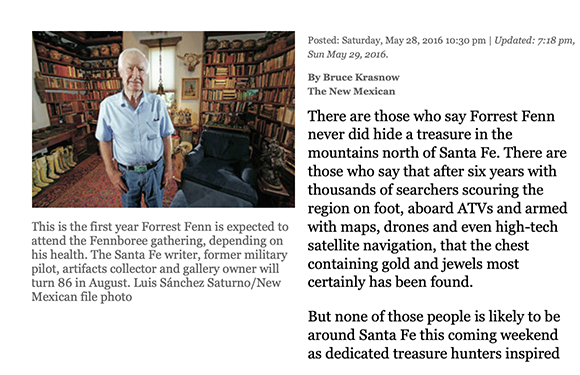
PR: Sure, sure. So it’s pretty widely known. There’s what’s called the Fenn treasure now, those who haven’t heard of it. There’s an art dealer who lives in Santa Fe. His name is Forrest Fenn. He’s an old, eccentric guy, very wealthy.
0:22:08
BR: Those are the best kind.
0:22:10
PR: Yeah. Eccentric and wealthy, my favorite. But about seven years ago, it is said by Fenn himself that he hid a treasure somewhere here in New Mexico. He’s been pretty vague about it. Now he actually created a poem of sorts that is supposed to be the clues to the treasure. Nobody has at least publicly figured this out. There’s been a lot of speculation about it, but the big thing is that it has created this worldwide sensation. People have traveled from all over the world trying to find this.
BR: What exactly did he supposedly hide?
0:22:53
PR: So he said that he hid a bunch of different stuff and and and he hasn’t described exactly what he hid it in or what exactly was in there but it seems to be that it was some kinds of valuables like jewelry or precious metals or gems nothing he didn’t say cash but uh… he says that it’s believed to be about ten million dollars uh… as of now in terms of inflation people claim that they found the treasure. Fenn has said that they have not provided sufficient evidence to lead him to believe that they found it.
0:23:19
BR: So this, just to be clear, this wouldn’t be something that he would say is priceless or invaluable meaning like a childhood toy.
0:23:26
PR: Right.
0:23:27
BR: I hid my ducky that I had when I was 13. It’s invaluable to me. It’s priceless.
0:23:35
PR: Yeah. Although, that would be great. I’d love to send everyone on a wild goose chase for a stuffed animal or something. But no, as of July of this last year, and I believe possibly even more recently than that, he’s claimed that the treasure still remains where he hid it.
0:23:52
CW: So this isn’t a rumored treasure. This is – it’s not like he’s hiding this from the world and he doesn’t want people to find it. He’s actively soliciting, hey go look for my treasure, here’s a poem.
0:24:06
PR: Yep, now he claims positively that he hid the treasure himself and that it is out in the wilds of New Mexico somewhere. So here is Forrest Fenn’s poem that he claims has all the clues you need to discover the treasure.
BR: Oh, and before you put it out there, if you’re listening to this and you find the treasure, we’re asking for a small cut, 3%, 5%.
0:24:34
PR: Yeah, just, you know.
0:24:35
CW: Or just become a patron.
0:24:37
BR: Yeah, yeah, yeah.
PR: So here’s his poem. As I have gone alone in there, and with my treasures bold, I can keep my secret where, and hint of riches new and old. Begin it where warm-waters halt, and take it in the canyon down, not far, but too far to walk, put in below the home of Brown. From there it’s no place for the meek, the end is ever-drawing nigh, there’ll be no paddle up your creek, just heavy loads and water high. If you’ve been wise, and found the blaze, look quickly down, your quest to cease, but tarry scant with marvel gaze, just take the chest and go in peace. So why is it that I must go and leave my trove for all to seek? The answer’s I already know, I’ve done it tired and now I’m weak. So hear me all and listen good, your effort will be worth the cold. If you are brave and in the wood, I give you title to the gold.” So yeah that’s that’s the whole thing and there’s some stuff you can kind of extract from it like water and canyons and stuff. Another thing that he says in it is that you know basically he hid it while he was old and so therefore he was able to access it, so which is something he always reiterates when the press comes to him, because I’m about to get to some of the darker sides of this story, he says that he could do it when he was, I believe he was in his late 70s or something, when he hid it.
0:26:11
BR: So in other words, you don’t need to be some super athlete to climb up some precipice.
0:26:16
PR: No rappelling down cliff sides.
0:26:18
CW: Well, I don’t know, he’s a millionaire. He could have had a private helicopter lower him down someplace. He could have tucked it away in a cavern.
0:26:28
BR: And for those who are not familiar with the geography of northern New Mexico, canyons and rivers covers a lot of ground. Not everywhere, but that covers a lot of ground.
0:26:41
CW: Is that like saying it’s near a lake in Minnesota?
0:26:44
PR: Yeah, that’s very much so. So Fenn, actually I just found this. It says he actually put the treasure in this chest is gold nuggets, rare coins, jewelry and gemstones along with an olive jar holding his autobiography. So it says…
0:27:02
CW: An olive jar?
0:27:04
PR: Yeah. And he actually intended, I guess, he intended to hide it and end his life. Now this, now let’s roll back. This is in the late 80s when he came up with this idea and he had been diagnosed with cancer and he was, his plan was to fill the chest with all this treasure and then take it somewhere and then kill himself nearby and leave this cryptic poem. But he ended up surviving as we, he’s still alive to this day. I believe he’s probably in his late 80’s now. So so he waited until he was in his late 70s or maybe 80 years old to hide the treasure. So now we need to get into the darker side of this whole story. Four people are known to have died while searching for this treasure and uh, the police have actually several times tried to talk him into ending this and get people to stop coming out here and risking their lives to find this treasure, this alleged treasure. I mean, because again, we don’t even have any proof that he hid anything. I mean, he could just be saying this. And four different people, one was a guy named Randy Billue who went missing in January of and was found dead in July of that year. Jeff Murphy from Illinois, he was 53, he was found dead inside Yellowstone National Park actually after falling down a slope. They reported that he was searching for the treasure. I don’t know why he was all the way up there. I think Fenn’s been pretty clear about it being in New Mexico in his interviews.
BR: That’s just a red herring.
0:28:47
PR: Right? There was a guy, Pastor Paris Wallace of Grand Junction, said he was searching for the treasure. His car was found parked near the Taos Junction Bridge up in northern New Mexico here. His body was found five miles downstream from where his car was parked in June of 2017. And then a younger guy, Eric Ashby, he was 31 years old. He was found in the Arkansas River, not in Arkansas, there’s an Arkansas River here, on July 28, 2017, and he had been trying to search along the rivers. And he actually, his family said that he moved to Colorado in 2016 specifically to look for the treasure, and he was rafting when he was searching for it, so the boat had overturned and he’d gone missing and they found him later a couple weeks after he left. So that kind of does bring up the the moral issue with, you know, the ethical issue with this, you know, Forrest Fenn, he keeps he keeps insisting that this is this is a real treasure and he keeps insisting that what he’s doing is encouraging people to get out into the world and experience life and all this stuff. And it seems more recently than not, I mean really most of these deaths have been in the last, actually all of these deaths have been in the last three or four years. And the authorities keep asking him to just stop and give up on sending people on this wild goose chase. The media has interviewed him several times and he keeps insisting that what he’s doing is a positive thing and that if people die doing it then it’s their own fault because he’s been pretty clear about the ease of being able to access this treasure and you don’t need to go climbing down cliffs and rafting down rivers to find it.
CW: Geography changes.
PR: Yeah.
CW: Something that might be a nice smooth walk during one time of year or a couple years ago, you get some more rainfall and it can be really treacherous.
PR: Sure, sure.
BR: You know, obviously we don’t know where he buried it, but I mean, I would be surprised if wherever he buried it has changed dramatically geographically since that time. I mean, it’s only been what?
PR: About eight years.
BR: Eight years. I mean, you know, certainly if you’re in an arroyo during one part of the year and there’s thunderstorms, that’s quite different than, you know, if you’re in the middle of summer. But I would be surprised. I mean, that’s the nature of being outdoors.
PR: Right. Yeah.
BR: So to be honest with you, I’m sort of with him on this. There’s lots of things that are, you know, what in legal terms are called an attractive nuisance. There’s issues with people who have swimming pools and trampolines in their backyard. There’s issues where you have to be sure to fence it off because neighborhood kids can want to go bounce on your trampoline even if you haven’t given them permission and they break their leg and their parents sue you or something.
0:31:56
CW: So somebody needs to just fence off most of northern New Mexico.
0:32:00
BR: That’s exactly where I was going with that. I mean, look, if you’re going after this treasure, the clues are there. If you think you can do it, go for it. I sort of feel the same way about people who blame movies and entertainment for what some people might do. Like, oh, well, you know, I saw this movie and it inspired me to, really? Did the movie inspire you to do that or you chose to do that? And in these cases, I mean, I certainly feel badly for the people who have lost their lives and been injured looking for it. On the other hand, that’s your choice. Now, of course, Pascual, you grew up in Santa Fe where he’s from, so what’s Fenn’s reputation up there?
0:32:38
PR: He’s not very well liked by a lot of the old school locals. He’s kind of seen as being involved in a lot of the gentrification of the east side of town, Canyon Road, where the art scene kind of blew up in the 60s and 70s. And so, I mean, he’s a figure in that world. He actually got raided by the FBI probably around the time that he buried the treasure, as a matter of fact, for as part of an investigation in artifact looting in the Four Corners area, which is just in here in northwest New Mexico.
CW: Was he burying a treasure or getting rid of evidence?
PR: Who knows, who knows. And they did seize a lot of items from him. He wasn’t charged, so I don’t know what the circumstances were. We can’t assume that he stole anything, but he could have purchased from looters, which is a big issue here in New Mexico. There’s a lot of ancient artifacts here from all the old tribes and the native population that’s been here for thousands of years. So, you see a lot of looting happening in these historic sites. So they did find items and they did seize them from him. He was never charged. In fact, the two people targeted in that case committed suicide, which is also kind of odd. It adds a little bit to the mythology of all this and you know I’m entirely sure that it’s not related or that Fenn had nothing to do with two people committing suicide but but it is pretty interesting that that happened right around the time that he said he buried all this stuff.
0:34:17
BR: And what about his is presumed honesty I mean that’s that’s that’s of course a key issue here because regardless of whether he’s you know thought of kindly or not, that doesn’t make him a liar. So what’s your take on whether he actually did bury the treasure?
PR: So that’s definitely a debatable topic. I think a lot of Santa Feans may, and I’m just speaking of the old school locals, may be a little distrusting of him because he’s one of the people that came into Santa Fe and brought in a lot of this art business that kind of drove a lot of people out of the neighborhood that he established all that in. But I don’t have any reason to believe that he’s a necessarily dishonest person, I mean, I’ve never seen a situation where…
0:35:03
BR: He’s never ripped off any artifacts from you.
0:35:06
PR: Yeah, exactly. I mean, so, and like I said, I can’t really say that he does this stuff as a practice. What I will say, though, is that I’ve always kind of had just, you know, in my own head this kind of thought that he might not have ever buried anything. Just because everything is like very after the fact with this story. Like it didn’t blow up until years after he claimed to have buried it, and he didn’t really say anything about it until years after. And so it’s like just kind of weird to me that this wasn’t a big deal when he said he buried it.
0:35:44
BR: Okay, well let me play devil’s advocate here for a second, right? Let’s say that you had buried the treasure and a month or two later you made an announcement, you know, like you go to the local press, national news, whatever else, you know, I buried this treasure, blah blah blah. Well, wherever he buried the treasure, he might have been seen nearby. I mean, unless he was totally someplace totally remote, people probably saw him at the time. And so I could see why you would want a good amount of time separation. I mean, not decades, but, you know, a few months or a few years where, I mean, again, when you make the news and someone could say, wow, hey, that’s the guy. Didn’t we see him hiking a month ago?
0:36:29
CW: Is he recognizable? Would most New Mexicans know what he looks like?
0:36:32
PR: No, no. He’s not. I mean, Santa Feans, a few people know what he looks like. I mean, now people know what he looks like because he’s all over the news, but he’s not really a guy that anyone would know by his face, at least back then.
0:36:45
BR: Well, right, but that’s what I’m saying is that once you’ve gone for press, then suddenly you’re making local and national news. And then that’s when people might recognize.
0:36:56
PR: Right, right. I mean, it’s possible, but growing up in northern New Mexico, I’ve found that unless you specifically go to a place that a lot of people are going to be, you can drive all over the place and never see a person for days.
0:37:10
CW: Yeah, and didn’t he say it was a remote area, but he didn’t even have to bury the treasure, he just hid it in plain sight? So if you come upon it, you’ll know it?
0:37:22
PR: Yeah, so he said you’ll know it when you see it. And I mean, who knows? Who knows? Like Ben said, it is possible that the reason he waited so long was because people might have seen him going out to wherever it was. Or, you know, I mean…
0:37:38
BR: If it’s freshly dug or something I mean you know you might…
PR: Yeah and I’m I’m certainly not gonna claim that he’s lying as a matter of fact I I just feel like that’s a possibility and and that’s kind of just some my own gut feeling so that’s really nothing to take to the bank.
0:37:56
CW: Unless you’re talking about somebody with a pathological like mental condition that makes them just lie for fun all the time. Usually there’s some sort of gain involved in telling a huge whopper like that. Like he’s not trying to get out of paying income tax, he’s not trying to get out, he’s not trying to swindle investors. What would be the monetary gain of making something like this up?
0:38:24
PR: I wouldn’t know what his personal financial situation was at that time. I could imagine that if, and this is just kind of a very wild story here, I’ll just note this with, let’s just call this conspiracy theory. If he had maybe claimed some huge write-offs on his taxes or something, or the IRS wasn’t able to come up with some accounting for some money or some valuables. You know, sure, it’s possible that he could have claimed that he just hid it in the mountains, but I have a feeling that would have become a much bigger issue pretty immediately. Yeah, I think, because I don’t think the IRS is just like oh you buried it in the mountains cool. Okay check.
0:39:16
CW: My accountant would laugh me out of the office if I told him Okay, here’s my receipts for all of the art supplies. I’ve bought oh, and I buried a million dollars in the mountains, can I write that off, please?
0:39:28
BR: Well, you know Celetia brings up an interesting aspect to it, which is you know, we touched on this before is the ethical aspect. At this point he knows that at least four people have died. There could be more people that we don’t know of who have just gone missing. So at least four people have died either with some connection to the treasure, presumably looking for them. And so you could argue that that makes it all the more likely that the treasure is real for any ethical person and I make no claims about his ethics one way or the other, but for any ethical person, the knowledge that something that you did had a role in four people dying would be like, wow, you know, if this is all a hoax, then, you know, that’s kind of weighing on you.
0:40:16
CW: Yeah. If he had a conscience about the matter, then, which I’m assuming most people would, then if he had made the whole thing up just for sh**s and giggles, or sorry, poops and giggles. He probably, after the first publicized death, he would have been saying, okay, no, stop, stop, please. I just kind of decided to spin a tall tale to get people to go hiking more, but please don’t endanger yourselves. Yeah, this brings up an interesting parallel with something that Ben had mentioned a few episodes ago, talking about the dangers of ghost hunting. Like with Binion’s property, I was mentioning people trespassing on his property to go dig holes. There are many ghost hunters that in pursuit of a really good EVP or something are trespassing or putting themselves in harm’s way. And you had mentioned a couple of ghost hunters that have been killed in their efforts.
0:41:11
BR: Yeah, absolutely. And I think that that raises an important point about the difference between folklore and investigations. Because a lot of times when you have these stories of these lost treasures or these lost cities or something that is hidden knowledge or something, a lot of times, of course, they’re based on, well, the accounts are inherently ambiguous, because if they weren’t ambiguous, then they would know where they are. So you’re basically dealing with legends and stories and lore. And it’s important to remember that from a folkloric point of view, for the most part, folklorists don’t care whether these stories are true or not. That’s not the point. One of the main goals of folklore is to determine how the narratives are transmitted and changed and regionally adapted and how urban legends spread and these things like that, not necessarily whether they comport to reality. They don’t assume that the stories are true. That’s different than the searchers on the other hand who have to assume these stories are true. If you’re going to devote weeks, months, years of your life, sometimes a small fortune or big fortune looking after these things, you have to have the premise that there’s something there to look for. And I think it’s important for investigators and searchers and skeptics and critical thinkers much of the evidence for these is folkloric and Therefore ain’t nobody necessarily saying that’s true! And you know it goes back to the skeptical dictum of the importance of you know before you try to Explain something make sure there’s something to explain. Yeah, and before you make a sincere concerted effort to go and look for this thing Be sure that there’s something to look for. And of course, the nature of these lost treasures is you can’t.
0:43:20
PR: Yeah, exactly.
0:43:21
CW: Well, there’s folklore and then there’s folklore. The two examples that we brought up so far are not super removed as a lot of folklore is. In the case of Binyon, there are people claiming that Binyon himself said that there was buried silver and there’s buried gold coins. In the case of Forrest Fenn, we have Forrest Fenn himself saying that he himself hid the treasure and he created a poem to help guide people to find it. And sure, you could say that there’s some rumors involved and that’s the type of folklore, but do you know quite a bit more about like way back, like passed down generation to generation, stories of lost treasures. So why don’t you walk us through a couple of those?
0:44:07
BR: Yeah, let’s turn for a second to pirate treasure.
CW: Oh, that’s my favorite.
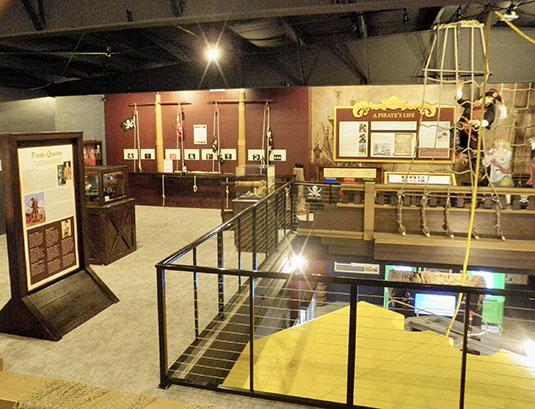
BR: Sort of a classic, typical buried treasure, lost treasure thing. One of my interests is in pirates. In fact, I’ve done some presentations and some research on that. Turns out that for the most part, the idea of there being lots of buried pirate treasure is largely a myth. For example, there’s a couple of reasons. One of them is that the nature of the pirate organizations, and there were pirate organizations, was that every man got an equal share. If you were the captain, you would get extra shares, and if you owned the ship, you had extra shares, etc. But for the most part, part of the reason that people became pirates and joined a particular pirate ship was they were assured, in some cases under penalty of death, that everybody would get equal share.
0:45:07
CW: So you’re saying pirates were communists.
0:45:09
BR: Yes. Essentially, pirates were very democratic at the time. In fact, that’s how pirate captains were elected. It was the majority. They were elected by the… more people chose this particular leader than other people did.
0:45:29
CW: So they were democratic communists. This is getting better and better.
0:45:33
BR: Absolutely. And so what that meant was, for example, let’s say you had 30 or 40 people in a pirate ship. Actually, usually the pirate ships were very crowded affairs, tend to be unpleasant in the extreme, certainly by today’s standards. But the point is that if you found, say, 1,000 pounds of gold, and I’m talking pounds sterling, you’re dividing that by 30 people and sometimes multiple shares. And so what you had was not a lot of people getting a whole lot of treasure. And for the most part, they spent their plunder on run and whores. They didn’t take it off to the Bank of Barbados and give them a deposit slip. They were much more interested in going to the nearest port and ripping it up as it were.
0:46:29
CW: The pie was cut many different slices and by the end of it nobody had a giant slice that they could bury somewhere.
0:46:35
BR: That’s exactly right.
PR: Sounds a lot like being a heavy metal musician.
BR: Old school. But here’s one difference between you and the pirates, Mr. Pascual, is that for the pirate treasures that we see in films and movies, it’s the typical, it’s what Forrest Fenn is promising. You open up the thing and there’s the gold doubloons and there’s the emeralds and jewelry. And for those of us who play Dungeons and Dragons, that’s what we pictured, right? When the dungeon master is describing what the dragon is sitting on, it’s not like, you know, there’s a couple of things that’s like, no, it’s like dripping with jewels and emeralds and rubies and you know. But the fact is that most of what the pirates, I’m talking mostly the Caribbean pirates, there were other pirates of course in the China seas and elsewhere, but primarily in the Caribbean, most of what they got were things like a bale of cotton, some tools,
0:47:36
CW: Commodities.
0:47:37
BR: Commodities. Tobacco. Yeah, yeah. Four barrels of molasses.
0:47:43
PR: Yeah.
0:47:44
BR: Not really things you’re like, oh, great. Yeah. Great, we just raided this ship and we have four bolts of cotton.
0:47:53
PR: Yeah.
0:47:54
BR: Great. What am I supposed to do with that, Captain?
0:47:56
PR: Yeah. You kind of almost have to picture it like, I mean, just put yourself in modern day seas and shipping and things like that. If you rob a freighter, it’s not going to be full of gold. You might find some Hondas and a couple of TVs.
0:48:11
CW: A container ship of t-shirts. Yay!
0:48:16
PR: A bunch of fidget spinners from China.
0:48:19
BR: Yay!
0:48:20
CW: Well, that makes sense. That makes sense that modern day pirates, they don’t take the loot. They ransom the human cargo, which is the most valuable thing on the ship.
BR: Yep. Exactly. Exactly. So anyway, so the idea of there being lots of buried pirate treasure is largely a myth. There are a couple examples where pirates would, particularly pirate captains, and usually individual pirates, usually the captains because they got a bigger share, but for the most part, they weren’t burying their treasure on any deserted island. That wasn’t what they were doing.
0:48:55
CW: They were burying their treasure in the local whorehouse.
0:48:58
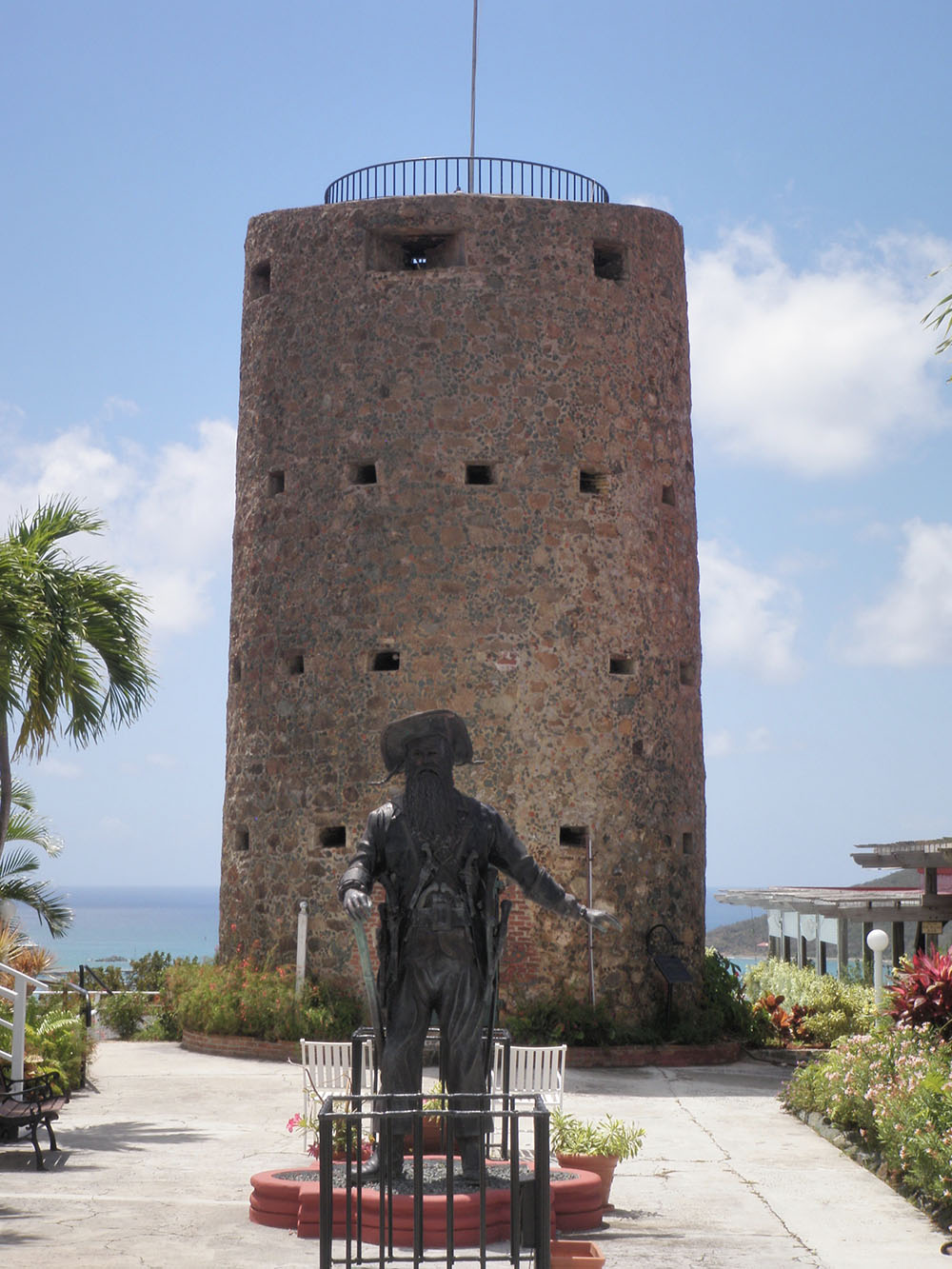
BR: Hey-oh! But no, so probably the pirate that’s most closely associated with lost treasure and buried treasure is Captain Kidd, a Scotsman, if I’m not mistaken. And it was rumored that he’d buried a bunch of gold and silver on Gardner’s Island near New York before being arrested. And Kidd was actually a really interesting pirate as far as pirates go. And we know a lot about him because he was tried and convicted and there’s lots of documentation. For the most part, pirates, they led pretty short lives.
0:49:34
PR: Yeah.
0:49:35
BR: It was the average pirate career is about three or four years. This is not like a long-term project here.
PR: Yeah, I think when they finally put an end to Kidd’s rampage, he was at the ripe old age of 40 or something like that.
BR: And Kidd, like most pirates, ended his career at the end of a pirate was not full of riches and doubloons, and it was not very pleasant. And actually, Kidd himself never considered himself a pirate. He maintained that his attacks on various ships had been legal. He was a privateer, which is sort of a semi-authorized pirate. And he said that he’d been commissioned by the King of England and that you know that yes he attacked ships, but it was okay because he had documentation right anyway long story short the rumor was that he had accumulated 400,000 pounds Sterling and so this was this this is whatever – Oh, there’s there’s Captain Kidd. I wonder where his treasury right? So this is where the rumors and lore comes up and so kid was arrested in February 1700 and put on trial and as I mentioned, eventually hung. So the rumors of his treasure turned out to be largely a myth. We know this because there was actually an accounting of what he had prior to his being captured. There is some reason to have some confidence in his accounting because again, he was largely by his own admission or at least by his own claim, a privateer. And that what that meant was that he had to account for what he sees from other ships because he had backers. He had basically people had invested in him, said okay go out there take take down some French ships and we get a cut of whatever whatever you take. And of course if you’re going to back Captain Kidd or any other pirate, you better be you know you better have some documentation as to what exactly you had. Now, of course, there could be some finagling of finances, as happens, I think, in the music business, right?
PR: Yeah. A little bit.
0:51:51
BR: Is there a little bit of magic finances in the music business?
0:51:54
PR: Sometimes, sure.
0:51:55
CW: Cooking of the books.
0:51:56
BR: Some cooking of the books. But anyway, so instead of the rumored 400,000 pounds sterling, shortly before he was arrested and later put on trial, he had around 14,000 pounds sterling. You know, certainly a tidy sum at the time, nowhere near what was widely rumored.
0:52:17
CW: I’m suspecting there is at the core of this some racial stereotyping, because Scotsmen are notorious for being tight-fisted with their money. People probably assumed that he just accumulated a vast sum because he didn’t want to spend it on anything.
BR: That makes sense to me.
(MUSIC)
0:52:35
PR: So let’s bring it back to the Southwest. Celestia, you’ve been looking a little bit into another legend here in the Southwest.
CW: Yeah, I fell down a rabbit hole, guys.
0:52:50
PR: Did you fall down a mine shaft?
CW: I did. From pirates to prospectors, I looked up information on the Lost Dutchman Mine. Have you ever heard of that?
0:53:00
PR: I have heard of it. Somewhere in our neighborhood, as a matter of fact.
CW: Yeah, it’s in your neighboring… Well, there’s actually four of them. The first alleged one is supposed to be in Arizona, your neighbor to the west there. The Lost Dutchman Mine is said to have a curse on it. And it is said to be the most famous lost mine or treasure in the United States. And at least 8,000 people by one estimate have searched for it in some way or another annually. Now that doesn’t mean people are, you know, 8,000 people a year are selling all their belongings and like looking for this full time. It means, you know, 8,000 people might take a hike kind of keeping an eye out for it. It is actually kind of an archetype of Western legends. As I said, there are at least four of these rumored to be in the West. One is in Colorado, one is in California, there’s two in Arizona, and the one that I’m going to talk about is near the Superstition Mountains. How’s that for a name?
PR: That’s awesome.
CW: It’s just east of Phoenix. The Lost Dutchman Mine, the legend of the Lost Dutchman Mine, really took off in 1931 after amateur treasure hunter Adolph Ruth went missing while looking for it. And then six months later, his skull was found with two bullet holes in it.
0:54:31
BR: Ooh, intriguing.
0:54:33
CW: Now, Adolf’s son, according to legend, had given legal aid to a fellow named Gonzales, which saved him from prison. And in return, Gonzales gave him information about the supposed mine. And Gonzales had claimed to be a descendant of the Peraltas, and we’re going to get to the Peraltas later, but just remember that name. The senior Mr. Ruth was 66 at the time, and he had pins in his leg from an injury when he’d been searching for a different lost mine, the Lost Peg Leg Mine. So this was a hobby of his, and in his condition, people tried to dissuade him as the terrain up there was rough, but he would not be dissuaded. The skull was found, as I said, with two bullet holes. Experts said that the holes were from one bullet entering and exiting his head, point-blank range, from a shotgun or a high-powered rifle or some other report set of 44. The rest of his remains, heavily gnawed upon by scavengers, were found about three-quarters of a mile away, along with personal effects. Among his personal effects was his gun, but it was fully loaded. So there were some theories that he perhaps committed suicide, but then he would have had to have, after he was shot in the head, reload his gun. So that was kind of evidence against that.
0:55:52
BR: And to be fair, who doesn’t get a bunch of treasure and then kill themselves right away?
0:55:57
CW: Yeah. Well, interesting you say get a bunch of treasure because the map he had leading to the supposed lost Dutchman mine was missing. It was not among the things that were found. And along with the other effects that were recovered was his checkbook and inside was a note from him claiming to have found the mine. Ending with the words, Veni, Vidi, Vici. I came, I saw, I conquered. This is all according to Kurt Gentry who wrote The Killer Mountains, a search for the legendary Lost Dutchman Mine. It’s a 1968 book. There was no criminal investigation. One official suggested he may have killed himself, but like I said, his pistol was fully loaded. And there was no shell recovered at the site. The story likely gained as much traction as it did because the country was in the midst of the Great Depression in 1931. And a mysterious tale of a somewhat elderly Indiana Jones being murdered after he found a lost gold mine, that was some pretty great escapist stuff for newspapers to latch on to and publish all sorts of accounts about. Over the decades there were many other expeditions to find it, some more serious than others, and there’s also been a string of deaths connected to the search. I found many different lists claiming many different numbers of deaths. Some of them just sounded like, oh, somebody went missing in the Superstition Mountains, but there’s no indication that they were seriously looking for the mine, or somebody was killed while hiking, but there’s no indication that they had anything to do with the mine. But there were some that definitely were connected. In the mid-1940s, a treasure hunter named James Cravey set out in the Superstition Mountains to find the mine and His headless remains were later found. There’s a lot of people losing their heads for some reason. I’m not sure what kind of predators are out there, but in 1952 Joseph Kelly went out to find the treasure his body was later found shot in the head. That obviously is not from wildlife that would have to be involving somebody who could shoot a gun. In 1961, prospector Jay Clapp disappeared. He had spent about 15 years exploring the superstitions, and three years later they found his skeleton, you guessed it, without a head. And yeah, I did not probe deeply into these. This is what I’m finding online, I do not vouch for the veracity of every single detail of these people’s deaths from the 1940s through the 60s. But somewhat more reliable information, in July of 2010, three hikers from Utah, who were specifically looking for the lost mine, Curtis Merworth, Adrian Charles, and Malcolm Meeks went missing while they were searching. The search was called off eventually, and their remains were found in January of the next year. And then most recently in 2012, the remains of Jesse Kappen were found wedged into a crevice. He had gone missing in 2009 and he was said to be obsessed with finding the mine. Yeah, so there’s a lot of people losing their lives looking for some sort of legendary treasure. And this treasure, much like you were mentioning, Ben, there’s a lot of folklore attached to this one and a lot of stuff that is absolutely not true and you can kinda trace where it came from. Apparently Arizona expert Bird Granger wrote about the legend of the Lost Mine and he said that fact and fiction are blended in the tales but there’s always three main elements to the story. There’s tales of lost Apache gold. Sometimes these tales even mention Geronimo. And a Miguel Peralta or his family. Now, apparently Peralta or members of the Peralta family were massacred by Apaches around 1850. Now historians say that this massacre never actually occurred. And the name Peralta was likely inspired by Pedro de Peralta.
1:00:04
PR: Oh yeah, that’s one of our old governors here.
1:00:06
CW: Yes, who was the Spanish governor of New Mexico in the 1600s. And carved stones and maps that were found supposedly and are said to lead to the mine are supposed to be modern, are actually modern fakes. We’ve got the Peraltas who have found this mine, the Apaches who have slaughtered them, and then that happened way back in 1850. Then years later, after the supposed massacre, a Dr. Thorn treats an ailing or wounded Apache chieftain, and for his efforts he’s rewarded with bags and bags of gold. The Apaches blindfold him and take him to the mine, and then he carries back what he can, still blindfolded and by a winding route so he can’t find his way back. Now, some researchers looked into it and there is a mine that was owned by a Miguel Peralta in the 1860s. It was a fairly successful mine, but it was out in Valencia, California. Peralta, you know, ran the mine for a while and it’s now in ruins. And Peralta ended up turning to fraud and swindled a bunch of people by selling bogus mining rights after his mine ran out.
1:01:17
PR: Oh, lovely.
1:01:18
CW: Yeah, so that, again, we have some name connections, but that’s about it. And there was never a Dr. Thorne serving in the Army or the federal government, but historian Robert Blair did find that there was a Dr. Thorne in private practice in New Mexico in the 1860s. did claim he was taken captive by Navajos, not Apaches, in 1854. And while he was with them, he did claim he saw a rich vein of gold, and he told three soldiers about that in 1858. They apparently went looking but never found anything. That story, which has some truth to it, was apparently absorbed into the Lost Dutchman story. So that’s the first element. We have the Apaches and the Dr. Thorn. The second element that’s always there is, the reason the mine has its name, the Lost Dutchman Mine, is it’s named after two Germans, possibly just one German. Again, the Germans were called Dutchman because of Deutsch, the pronunciation of German. In German it’s Deutsch, just like the Pennsylvania Dutch. One was named Jacob Waltz, and the other one, if there was one, was called Jacob Weiser. But Robert Blair thinks that they were originally just one Dutchman, and eventually the story became two Dutchmen as the story was retold over and over again. There’s different versions, a hawk version and a dove version, whether or not the Germans act peacefully or aggressively. The story was they find, he or they find a rich gold mine, sometimes as a result of helping a member of the Peralta family. They are rewarded with knowledge of the mine. One of them is attacked by Apaches or the other German, depending on the story, and on his deathbed he tells a Dr. Walker about the mines existence. Another story involves the surviving German telling a woman named Julia Thomas, who is his caretaker, about it, and he draws her a crude map. Blair looked into this again and found that there was a Jacob Waltz who emigrated and ended up in Arizona around that time. He did supposedly try prospecting. He did not have much luck, and to counter to that, there are indications that every once in a while, he would turn up with a hefty sum of gold to sell, but he died after contracting pneumonia after a flood in 1891. And he was indeed nursed by a woman named Julia Thomas. Some accounts say that she was a quadroon. Are you guys even familiar with what that is?
PR: No.
BR: No.
CW: I came across that term when I was editing some stuff from printed in New Orleans around the time of the Civil War and it’s what they would call somebody who was one quarter black. Mulatto and then the child of a mulatto and a white person would be a quadroon and then there’d be like an Octaroon and they had all these fancy words Divide it’s just to categorize how much certain blood people had it’s crazy. Anyway, but according to newspaper accounts, Julia Thomas did look for this mine after Mr. Waltz died, and they did not, she and her associates never found anything, but they gave up and started selling copies of a purported map for $7 each. So there’s certainly some monetary motivation there if you’re selling copies of a map for $7 each. That might be easier than finding the gold mine, frankly.
1:04:49
PR: Right.
1:04:51
CW: And then the third element is that there’s soldiers involved. The soldiers’ tale of the gold mine. Two soldiers around 1870 find a rich vein of gold and even present some of it to people, but they are soon killed or vanish. And this likely has its roots in the story of Dr. Thorne, mentioned earlier, who talked to a couple of soldiers and then they went out and couldn’t find anything. Most complete versions of the Lost Dutchman’s story incorporate all three legends, and Blair argued that there are kernels of truth at the heart of each of these accounts, as I said. And in 1977, Arizona expert Bird Granger identified 62 variants of the Lost Dutchman’s story. And some of the variations are minor, but others are substantial. Substantial and I found I found various modern takes on it. They’ve they’ve there are websites offering hikes around the area, articles cite the legend as a reason to go hiking again like Forrest Fenn’s motivation. Yeah for hiding his treasure and They have the area has recently been made into a park the lost Dutchman State Park Now from a recent infographic and summary published on the state press, quoting data from the Sheriff’s Office of Pinal County, from January 2015 to the end of February 2016, there were 75 calls to search and rescue, resulting in 28 searches and 47 rescues. There were four deaths at the park that year, two from an aircraft collision at the start of the new year, so you can’t really count those as looking for a treasure. And two deaths from hiking. There was also one medical issue and one fall. It’s kind of hard to parse which of these, you know, if you just look at all the deaths that have happened in the park, it’s kind of hard to parse which ones are due to people looking for a lost treasure, and which ones are just due to hiking accidents. The area is pretty treacherous, and there’s many steep cliffs. It’s not hiking for the novice, which kind of makes it like the Bermuda Triangle of outdoors areas. It’s easy to see how explorers and treasure hunters can get into trouble without the help of a mysterious Apache curse. The whole place is supposedly cursed. And that’s why people keep dying there. And I’m still at a loss as to explain why people are turning up without their heads back in the 40s and 50s, but that’s for another show.
1:07:17
PR: Sure, sure. It’s very curious that the whole Apache thing really fascinates me, mainly because I have a little bit of background in my family, at least with Native American archaeology, and metalurgy was not a thing with North American natives for the most part. There were some copper items because copper could be hammered really easily. But as far as gold goes, there’s not really any evidence that Apaches sought out gold, used it for anything. Maybe by the time mining became a thing, they may have used it in trade, but for the most part it just wasn’t a common thing in Native history, at least we don’t have much evidence of it.
1:08:10
CW: There were a couple variations I read where the Apaches were not said to be mining the gold themselves, but rather they had attacked the Peraltas. The Peraltas had found the gold.
1:08:21
PR: So they had stolen it from…
1:08:23
CW: And the Peraltas apparently had bags and bags of gold on them and the Apaches after they slaughtered the family took the gold and just kinda hit it some place.
PR: Gotcha, gotcha.
BR: Because that’s what you do with gold, right?
CW: Yeah, so it’s described as the Lost Dutchman mine but also the Lost Dutchman like cash of gold.
PR: So yeah, it was like the actual cache. That’s interesting.
CW: So not only is there a mine out there but somebody’s already done all the work for you. They’ve taken out the gold and it’s all in bags and you just have to find it.
1:08:55
PR: Oh, perfect. That’s awesome. You know, my grandmother was half Hikari, half Apache. I’m going to maybe see if she had some information on that.
1:09:05
CW: I’ll buy a map for $7 from you if you know where it is.
1:09:08
PR: Awesome.
1:09:09
BR: Well I have here a copy of the winter 1963 edition of the magazine Western Treasures, which is 75 cents, a dollar in Canada and the banner says, found lost Dutch oven mine.
CW: Lost Dutch oven mine?
1:09:25
BR: I thought, isn’t that when you fart underneath the, who wants that?
1:09:30
PR: I mean there is an actual oven called a Dutch oven, but that is certainly not the common definition these days.
1:09:35
BR: It’s right there on page 45. I’m like, ew, really? Seriously? But no, it’s interesting, you know, when Celeste was talking about the lost Dutch, I almost said Dutch oven again, you know, there’s lots of lots of folkloric motifs that really jump out. One of them is the deathbed confession.
PR: Yeah.
BR: That’s straight out. I mean, does it happen now and then? Does it hapen as often as it appears in legends? Nooooo.
PR: For the record I plan to just confess all kinds of weird stuff on my deathbed just to really throw people off.
1:10:13
CW: I want to go beyond the deathbed. I’m planning on donating my body to science and I want to get a tattoo of a treasure map and hide something someplace and the clues on my dead body will give the medical student that ends up with me like geocaching clues and they can go out and find a treasure.
1:10:31
PR: That’s brilliant.
BR: Well done. So you have the folklore motifs of the deathbed confession and also it was interesting in a couple of the stories you related there’s the idea of revealing secret knowledge as a thank you.
1:10:47
CW: Yeah, the Apaches, the noble savage, thank you for healing me Dr. Thorne, here come get lots of gold from us.
1:10:56
BR: Yeah. Right, and that, you know, and one of the ways that I’m more familiar with that was in 9-11 rumors. In the aftermath of 9-11, one of the stories that circulated was a Jewish man did a kind act for an Arab man who in return said not to go to work at the Twin Towers in 9-11. Sort of this ominous, you know, yes, thank you very much, if you work at the Twin Towers, don’t go to work that day. And that led to false rumors, for example, that no Jews died on 9-11 or died in the Twin Towers, which is not true. It’s factually not true. But again, you see these same legends and stories and the motifs coming over and over again. And of course another aspect of that is the versions and variants. And Celestia talked about that. You know, there’s dozens of different stories. Well, in this case, there was one guy and there was two guys and there was conjoined twins and it’s just all over the place. And that’s exactly a hallmark of folklore.
1:12:00
PR: The 9-11 thing just kind of cracks me up because I just think of is there like a Jew hotline that when one Jew is told not to go to work he calls all other Jews and then none of them go to work? Or is it a message board or like a maybe a Facebook chat?
1:12:13
BR: Yeah, the protocols of Zion or something. Dot com or something. But no, it’s interesting. The idea of finding the hidden, it’s like gold, I think part of the reason it’s so appealing is that it’s already there, it’s waiting to be found or exploited. It’s almost like a shortcut to success. Instead of working hard all your life, if you just go and find it, it’s just waiting right there, it’s out there. Just read Fenn’s poem or pick up the latest copy of one of many magazines about lost treasures and just go out and look for it. It’s just interesting when you look at the psychology of it. I think it also plays on human pride and arrogance, right?
1:13:04
Because in all these cases, they’re well-known. The Lost Dutchman, mine, and these other ones. And so it’s the notion of, well, yeah, all these people look for it, but I’m smarter than they are.
PR: Right.
BR: They just don’t understand how to look at the clues. And there’s like a conspiracy angle to it. It’s like, well, you know, yes, like if you, you know, the reason they failed to find X, Y, or Z is because they just don’t understand. They haven’t looked.
1:13:35
CW: They’re not woke like me.
1:13:37
BR: Exactly.
1:13:38
PR: Woke AF.
BR: Super woke. And it’s just, I’m always fascinated to sort of see the different aspects at play there.
PR: Yeah, it is such a romantic idea, you know, to me to go out and adventure and just discover, you know, this Indiana Jones thing. And I mean, it really, I mean, it strikes a part of me that just makes me want to do it at some level where I’m like, man, there’s just some treasure out there. Wouldn’t it be the neatest thing in the world to go with some friends and just adventure for days through the woods? And I think that you don’t have to lose that by being skeptical about treasure. You can still go out and have your adventure and see things you’ve never seen before.
1:14:26
CW: Oh yeah.
1:14:27
PR: But you should probably, you know, kind of draw a line. Like, you know, will this put me out of house and home at some point? Or will this kill me?
1:14:35
CW: Am I trespassing on land? Am I going to get arrested? Have either of you guys ever geocached? That was a big thing like 10 or 12 years ago.
1:14:44
PR: I tried to. I had a friend who was really good at it. And he had one of those. This is back before phones had GPS. It was like a unit, a little LCD unit, and he showed me how to do it. He found a little tube with a note in it, and he wrote on it and put it back where he found it, I guess. I wasn’t about to buy a several hundred dollar GPS unit.
1:15:04
CW: Well, I did dig into a couple of little geocache things on my first smartphone ever, and I found a couple of little… The people who hide the geocaches, they aren’t supposed to be hiding anything valuable. They just hide like a little like Altoids tin and there’s a little note in it and if you find it you add your initials to it or something. I found a couple of little tins hidden on, you know, of all places, the crowded Las Vegas strip. And it was exciting. It’s like, there it is! I found it! And you do get this feeling of like, you know, it’s like a video game. It’s like, I conquered that.
1:15:40
PR: Totally. Yeah, I think that’s probably the more healthy route to take with this sort of thing. There’s a lot of interactive phone games and things like that that are using that now. There was, in the last couple of years, that Pokemon Go game, which got a lot of kids out there and wandering around searching for things. and before that the game that actually that was based on was it’s…
1:16:07
CW: Oh ingress! yeah ingress then can attest to this I interrupted plenty of time when I was out there I was I had a job out there and I was visiting and I was like oh I gotta just give me a second I’m gonna walk to that park because there’s like two portals I want to get at that park.
1:16:26
PR: Yeah, the Pokemon game was actually built by the same people and used pretty much all the same technology. But you know, I think that’s the route you should take if you’re going to try to get involved in something like this because it’s a lot of fun, it’s exciting, and we all have that adventurous spirit somewhere in us. We just need to be smart about it and not foreclose on the rest of our lives for the chance of finding treasure or or you know risk life and limb just to find a box of jewels.
CW: We could probably do a whole other show on people who have become seriously injured or lost their lives trying to capture Pokemon on Pokemon Go.
1:17:08
PR: That’s true. I’m sure it’s happened. People walking out into the road and stuff.
1:17:13
CW: Yeah, it just seems like things that human beings like to do, they’re never completely risk-free.
BR: That’s just the nature of it.
PR: Life doesn’t have a sticker on it.
1:17:20
BR: No, I never did any geocaching. One of the things that I do remember fondly from my childhood was my dad would go into the Bosque, the wooded area near the Rio Grande. We only lived about a mile mile away and he would get a glass bottle and he would put a little note in there and he would go and hide it somewhere in the woods underneath a tree trunk or in the curcumin tree or something and he would make a little treasure map. I was probably 12 or 14 or something and that was always really cool. Like, oh dad hid a treasure out there. I’d go out there and I’d look for the X’s and the spots and all this. There was a little bit of a Tom Sawyer adventurous thing like that. I’ve never hidden any treasure. The closest I came was probably I was in Morocco and doing a tour of the Kasbahs and going out to the Erg Shebi, which is the big giant sand dunes where they filmed the Mummy movies. We stopped at one place and there was a huge tall cliffs and rocky ledges and at one point I climbed up and about 30-40 feet up and I put a couple silver dollars that I happen to have with me and I put them just slightly in a little crack there and I assume they’re still there today unless somebody happened to climb up to that particular spot. It’s not worth any more than a couple of silver dollars, but somewhere near Wazza’s Ott, there’s a couple of dollars that I put up there.
1:19:01
CW: I’m going to start calling you Fenn Radford.
1:19:04
BR: I’ve been called worse.
1:19:06
CW: Pascual and I were sitting here trading stories about geocaching and playing Pokemon Go and Ben’s like, well, I was mountain climbing in Morocco and I hit some silver.
1:19:15
BR: Well, I did.
1:19:16
CW: Way to just blow our stories away there, Ben. Thanks.
1:19:20
BR: Sorry.
(MUSIC)
1:19:21
PR: We would like to thank our sponsor-level patrons, Amy Freshour-Kelly and Dr. Angela Mattke. If you’re interested in becoming a sponsor or just throwing us a buck or two per episode, check out patreon.com forward slash squaring the strange.
1:20:11
PR: So on our Sway So this week, I noticed we had a fun little jingle. Celestia, you were originally contacted about that. Who was this?
CW: This was a wonderful fellow. I know him from the Ice Cream Social podcast group. And he very kindly, he’s also a listener to our podcast. He would like to be acknowledged as FroYogSoftServe which is his actual ice cream social scoop name, but he does some really cool digital sound stuff and he kindly did that for us for the Swayso, and I traded him some digital artwork, so we had our nice little transaction there, and I kind of got that for you guys as my Pod-a-versary gift to you.
1:20:51
PR: Thank you so much. It is an amazing song and I’m excited to use that going forward.
BR: I love it.
PR: And speaking of our Pawdiversary, next week is the official 52nd episode, the one year mark for this podcast. And we mentioned it last week, but we’d like to mention it again. Email us at squaringthestrange at gmail.com. Go to our Facebook page, comment, let us know what your favorite things we’ve done are, ask us questions that you want us to answer on air. We are planning on doing that. And just shoot criticisms, comments, we’ll decide which ones we feel like repeating on air. But the funnier the better.
1:21:34
CW: We’re hoping we can do at least half the podcast without doing any actual research.
1:21:38
BR: Don’t make us do any work on this. We’re busting our balls, the metaphorical balls, of course. Week after week, come on, don’t make us work on this one.
1:21:49
CW: Help us, listeners. You’re our only hope.
1:21:55
PR: So yes, please reach out to us. Let us know what you think of us, or ask us any weird and fun questions you want or just talk about episodes you like, we will be talking about it on air. And one last thing, we just want to thank our buddy Ian Harris for providing us with some comedy clips that we’ve been kind of plugging in here and there. Just look for Ian Harris, he’s got a couple of specials out and they’re a lot of fun. He’s a really funny guy and we’re happy to call him a friend.
1:22:26
He makes with the ha-has.
1:22:27
Yeah.
1:22:28
He’s funny. Check him out.
1:22:30
Awesome.
1:22:31
So, until next week, we’ll see ya.
1:22:33
Bye-bye.
1:22:34
Take care.
1:22:35
Swearing the Strange is a production of Kronos Creative LLC. Copyright 2017. Theme music by Shriek Back. Additional music by Memory, Guitard & Feathered, and Pascual Romero. Content producer, Celeste Giordani.
1:22:49
Audio engineering, producing, and editing provided by Pascual Romero at Kronos Creative Audio engineering, producing, and editing provided by Pascual Romero at Kronos Creative to the world.
Transcribed with Cockatoo
