Episode Summary:
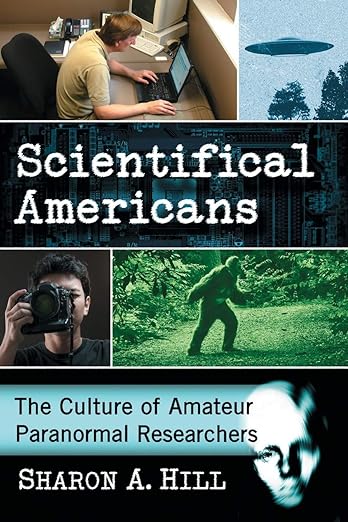
This week, the Strange crew chats a bit about “crisis actors” and how far people will go to link tragic events to push conspiratorial ideas. Then, the boys are joined by Sharon A. Hill, geologist and skeptic author of the new book “Scientifical Americans” a look into the culture of amateur paranormal researchers. They talk a bit about the utility of the title “skeptic” and go into a discussion about her fascinating new book.
Find Sharon and her book at: http://sharonahill.com
0:00:00
Ben Radford: Welcome to Squaring the Strange, the podcast that examines all manner of the mysterious and the mundane through a critical lens. So let’s square the strange.
(MUSIC)
0:00:11
Pascual Romero: Welcome back to Scoring the Strange. This is Pascual finally back.
BR: Finally back.
PR: Finally back. My voice is pretty much about 99.5% back.
0:00:32
BR: There’s that half a percent that every once in a while jumps out.
Celestia Ward: Statistically speaking, you’re back.
PR: Yeah.
BR: This from a guy who has spent years on stage screaming unintelligible lyrics.
0:00:57
PR: Yeah. Yeah, well, I mean, that’s the thing, though. I could make a career out of being unintelligible. At this point, it doesn’t work.
BR: It works for Dylan.
PR: That’s true. That’s true. Anyway, with me, as always, is Ben and Celestia. You guys are both here today. Good to see you. How are you guys doing?
0:01:17
CW: Pretty good.
0:01:18
BR: Doing good. Doing good. I was a little under the weather, sub-atmospheric as I like to say, but I’m doing better now.
0:01:23
PR: You guys held up without me. That’s what’s important. We actually get better ratings when I’m not on, so I might have to stay.
BR: He’s doing a sick out protest.
PR: Someone’s going to mail me anthrax after this.
0:01:39
CW: Oh no. What’s your address again, Pasucal?
0:01:43
BR: Strange Studios, Rio Rancho.
0:01:49
PR: So, so, Celestia, this week I hear you’re a little skeptical of something.
0:01:55
CW: I am a little skeptical of something, and I’m pleased to join you guys for the Swayso here, but I will be scooting out after this in the meantime. I wanted to talk about crisis actors. You’re familiar with what these are?
0:02:05
BR: I am. I’ve written about I had after the the Newtown Sandy Hook shooting. I wrote a piece for Discovery News that was basically debunking Several things but included a couple paragraphs explaining why these these so-called crisis actors were not or not. For example, one of the ideas was that the parents weren’t acting like some person thought the parents should act. I don’t think that’s how a parent would act after my child was killed. And your degree in psychology is from where? Oh, okay. You just don’t have to think that that’s what they would do. Anyway, I generated quite a bit of hate mail from that one. I’ll talk about that in another episode. But I, yes, what’s, and of course, you’re probably tied in with the most recent school shooting.
0:02:56
CW: Well, yes, the Parkland shootings in Florida where 17 high school, well, high school students and adults working at the school lost their lives. The survivors are being pegged as crisis actors by some sectors of the internet. And oddly enough, you mentioned it was because, for the Sandy Hook, it was because they didn’t think the parents were acting quite the way that grieving parents should be acting. I came across a site that said, their evidence for the fact that David Hogg and Emma Gonzales, two of the main outspoken kids from that school, this right-wing website’s evidence for the fact that they’re crisis actors, supposedly, was that they caught an image of the two kids taking a selfie or taking a group photo with a bunch of people from the set of a TV show. And oh my god, David Hogg and Emma Gonzalez were smiling.
0:03:50
BR: Ipso facto. There you go. Done.
0:03:53
CW: Yes.
0:03:53
BR: Case closed.
0:03:54
CW: Apparently, yeah, after you’ve been involved in a school shooting, you are never allowed to smile again for any photos. If you do, it means you’re a crisis actor. Because that means you have some semblance of happiness or you know how to act in front of a camera when somebody is taking a picture of you. So you couldn’t have possibly been through what you say you’ve been through.
0:04:12
BR: So let’s just set the stage. So just for those who don’t know, so crisis actors basically the idea as promoted by Alex Jones and others is that many of these events and tragedies are what are called false flag operations, basically staged. And the idea is that there’s like a dark industry or something, some sort of conspiracy.
0:04:36
CW: Yeah, the left wing supposedly stages these events in order to push through gun legislation, which is odd because if anybody has a financial reason to create massacre events like this, it would be the gun industry because there’s a spike in sales after every one of them.
0:04:51
BR: And we all know how successful the Obama coming for people’s guns were after Newtown and elsewhere. But anyway.
PR: And let’s also not forget that the premise also includes that the government can only afford three actors.
0:05:05
CW: That’s one of the things, that’s one of the main things I wanted to talk about. I’m coming to this from a very particular angle. And I’ve asked you guys to pull up a meme on Google. There’s a meme involving Emma MacDonald, one of the women who was at the Boston Marathon tragedy years ago. And there are two other women pictured with her from other tragedies. And it is claimed that how is the same woman at three different massacres? And I’m looking at it. Okay. I study faces. I freaking love faces, that’s my jam. I have taken seminars on smiles. I’ve learned the subtle cues that make a Duchenne smile different from a fake smile. I’ve looked at Paul Ekman’s work and learned about the facial action coding system. I own both volumes of facial expressions by Mark Simon. I dig faces.
0:05:57
BR: You are literally an expert on faces.
0:06:00
CW: Well, I try to make myself, but I also know that photos can be very misleading and the camera lies and Looking at this it’s pretty easy for me to see why there are people believing that it’s the same woman. And I wanted to sort of deconstruct the reasons around that the the first and most obvious one is they all have the same expression. They are in utter anguish. I don’t know if anybody is looking. Did you guys pull up the image? Are you able to see it?
0:06:27
PR: Yes, we’re looking at it right now.
0:06:29
CW: Yep. Her hand is to her face, or the females, all three of them have their hands to their face. Their eyes are squinted shut. Their mouth is open in anguish. And I’m not sure the average person appreciates how much we associate facial expression with facial features. Usually when I’m drawing somebody, I get the best reaction from people like, oh, that looks just like him, as soon as you nail the expression that the person has. If it’s a person who always, their eyes are always kind of half sleepy, they always kind of have a smirk that only turns up one side of their mouth, the moment you nail that expression, it is so much more important than if you had done exactly the type of nose they have, or exactly the right shaped and sized ears, or you know, put the right proportions on all their facial features, that’s not nearly as important as nailing the expression. And a way to illustrate this is when you watch a comedian, like Ian Harris, or somebody who does impersonations, they can almost magically start looking like the celebrity they’re impersonating when they just take on a signature expression of that person.
PR: Absolutely. Everyone’s De Niro is the same.
CW: Yes. You got the squinty mouth the sort of you know, kind of like You know taut mouth It it it automatically calls to mind De Niro regardless of how much that person actually resembles De Niro, correct?
PR: Oh yeah, absolutely.
CW: So we have that in action here with the three women who have a similar and absolutely honest expression of anguish on their face. Reading through the Snopes article about it, it points out that all these women, if people really want to go through the trouble, which unfortunately a lot of people don’t, these are not like secret photos from some archive. These are very well-known publicized photos. You can look up the photos. You can do a backwards image search of the photos and find the names of all three women, of course Alex Jones listeners, they will just tell you oh, well, they tell you that’s the name of the woman. But if you look up other photos of these same women, you know without that look of anguish on their face. They don’t they suddenly don’t look alike anymore and I’ll quote from Snopes here, photographs taken during happier times definitively show that Maddox, that’s one of the ladies at the far right, and Soto, one of the other ladies, look nothing alike save for the moments during which each respectively learned their sisters had been murdered. So it’s like that one snapshot of what they looked like when they found out their sisters had been killed, yes, their faces looked similar because of the expression. And so, besides the expression, there was another thing I noticed. Besides the obvious, the fact that a lot of the photos are kind of at the same angle, they have superficial similarities, like they’re around the same age, they have hair about the same length, and it’s not exactly the same color, but it’s all kind of like a brunette color, and they’re doing the same mannerisms that people universally display if you’re in anguish. Yes, people put their hands to their forehead when they’re in crisis like that. These are just universal mannerisms that you see all the time So you have those similarities that make people think this could be the same person.
PR: Sure
CW: The other thing I noticed was something about mad magazine and I know it’s weird to apply mad magazine to meme about crisis actors, but I was fortunate enough to edit a book by Tom Richmond called The Mad Art of Caricature. And Tom, for those who don’t know, he’s one of the one of the lead illustrators for Mad Magazine. He does a lot of their movie parodies, and he has done so for the past 20 years or so. And he kind of spells out one of his, an aspect of his procedure, of his process when he puts together a Mad Magazine parody. Now you’re familiar with these right?
PR: Oh, yeah sure sure.
CW: The movie parodies they’ve been since we were kids Mad Magazine has been parodying movies. And they do a quick little synopsis of the movie in narrative comic form and they so you have to caricature the lead actors and actresses a number of times and Tom breaks it down by describing a couple of the parts of his equation, one of which is here, I’ll quote from the book, and the second part of the equation involves what I call keystones. At several points throughout the parody, I incorporate a more exacting caricature of a subject based heavily on a specific photo reference. These caricatures are always more detailed and have the strongest likeness of the lot.” He goes on to explain that mad artists of previous years like Jack Davis also use this technique where you want to have one image that the eye just kind of zeros in on and says that’s the person who’s in this comic narrative and you accept it your brain kind of processes that’s Jack Nicholson or Kevin Spacey or whomever is on the page and you spend a lot more time on that illustration. And then the other aspect of the equation he talks about is face keys. And this just simply means parts of the face that you put on to make it recognizable. Kevin’s face, you make sure you get the big bulbous round nose. Jack Nicholson, you make sure you get the eyebrows and the forehead wrinkles. Just features that are not, it’s not an exacting likeness, but they’re just kind of little flags that your eye will go to and say, oh, that’s the same character. So this technique of having a really good likeness and then some lesser likenesses that you know will be carried by the really good one, that’s standard fare for Mad Magazine. And when I saw this meme, I immediately saw the larger picture of Emma MacDonald as a keystone. And then the smaller versions of different women who are supposed to be her, they struck me as secondary likenesses. They have enough face keys, what Tom Richman calls face keys, they have the somewhat similar head shape, the long dark hair, the expression, the narrowing of the eyes, enough of those where a cursory look would just make the average person accept the fact that these three or four images are the same individual. Now, I’m not really sure what to do about that besides just sort of talk about my approac, you know as a person who’s really into facial features and a cartoonist who tries to deconstruct facial features. Talk about how you know by just putting those three together the way they did They’re sort of manipulating you the way that a magician would they’re fooling people into thinking these three women are the same person and it’s frustrating that they’re accomplishing that with a certain sector of the of the population.
0:13:24
PR: Yeah, yeah. It’s interesting because as a musician and songwriter there’s there’s sort of a common theme in in how people think and how you create similarities. So when you write a song and you write lyrics that rhyme there’s a lot of songs where the lyrics don’t really rhyme. If you were to say the words in a flat tone like you were talking, they won’t rhyme. But if you say them in a way that puts them up against each other in a similar cadence and phrasing, then all of a sudden they sound like they rhyme.
BR: Like Koff and Nabokov?
PR: Yeah, good example. And as long as you rhyme it in a context where the brain is expecting it to rhyme, it’ll sound like it rhymes. And rappers especially, if you listen to hip hop or anything, you’ll hear it a lot because there’s a lot of stuff that doesn’t quite rhyme, but because of the way they phrase it, it still sounds great. I think that the human brain is wired to find these similarities. We are pattern-seeking creatures. Same thing goes for visual. We’re looking for at least a single similarity and then we’re going to apply it to everyone. As a guy with dark hair and a beard, this is something I’m not exactly unaware of. I’ve been exposed to this plenty of times. In fact, when I go to music events or concerts or NAMM that I was just at last month, people mistake me for people all the time because there are a lot of guys who are kind of these bigger guys with dark hair and beards and we’re all wearing black and we all look the same to people who don’t know us, don’t know our features. And that’s the thing about the human face, is you’re just going to apply things. I mean, it’s the same reason why people think certain groups of people look alike or certain, you know. It’s, you know, you go to a college campus and you’ve got the girls in Uggs and workout pants and they all just look the same, you know. And it’s because, you know, we’re conditioned to just look for certain, like you said, keystone identifiers of people, and if they’re not someone that you’re interacting with, you’re gonna see it. And as I look at these pictures, I mean, they are all making the same faces, but if you really look at it, you realize, well, their noses actually are quite different. That’s the first thing I noticed. It’s hard to tell because, number one, the pictures are kind of low resolution from anywhere I can find it.
0:16:03
CW: Oh yeah, they’re compressed JPEGs that have been shared all over Facebook a million times. If I were to get this, if somebody sent me those photos and said, I’d like you to draw this girl, I’d say, I can’t possibly draw this girl. You need better photos. But yeah, but the thing you were mentioning, the forced rhyme is a really good parallel. You can have a forced, you know, likeness with a face very easily by setting it up like the way that this meme creator did and it’s important to realize that people who fall into that and say well, yeah, that’s the same girl. They aren’t dumb and they aren’t face blind. They’re just using perception shortcuts that we all have. And and the way that you can pick out a forced rhyme or no certain music shortcuts and I know certain other facial based shortcuts is because we’ve trained ourselves to be a little bit more observant in picking things out and figuring out what ways we can fool other people like if I’m doing a narrative comic I want to be able to do a really I want to be able to do a keystone and something with face keys So people just read it as the same character all the way through but that’s a conscious effort and you’re making that conscious effort so that you can unconsciously just slide by somebody’s perceptive radar and unfortunately that’s what this meme does.
0:17:16
BR: The other thing to keep in mind of course is that all of these tragedies had thousands and thousands of photographs taken of them, of the crowds, of people here, of you know police officers, of reporters, of witnesses, of victims. I mean so out of the, even if you’re just one photographer you may take dozens or hundreds of photos just by yourself. So there’s probably a pool of many thousands, maybe tens of thousands of photographs. If it’s a high-profile one like the Boston Bombing or Sandy Hook. So yeah, if you comb through that many, sure you can probably find some, but again, that’s you’re finding the 0.004% of the ones that could possibly look similar from that particular angle. And I would actually be curious to see, you know, we’re just talking about a couple, three or four women here who have vaguely similar features. It’d be an interesting skeptical exercise. I’m not going to do it because I don’t have time, but it would be an interesting skeptical exercise to access as many photographs of other people. I’m sure these four, you know, long-haired brunette women look similar. Well, I’ll bet you that if you took the time and the effort, you could find similar, probably dozens of other similar, oh, here’s this older guy who’s balding and he’s wearing glasses. Oh, looky here, there’s one here, too.
0:18:41
CW: Well, yeah, I mean, you could just comb through photos of any major public event and say, I’m gonna look for a photo, I’m gonna look for somebody who looks like me and you well Pascual, you probably find somebody right away. There’s definitely you fit a certain category. You know, I think but if you wanted to you could just pour through and find somebody that looked like you and if you if you put a couple of low-res versions of the that person’s face in your your actual face making the same expression. You could probably make a meme out of it. But But, yeah, again, who has the time and there’d be no purpose. But these people have a very specific propaganda purpose. They want you to believe that this is a false flag operation, so they put the time in and they search.
0:19:25
PR: Yeah. Well, and it’s funny because, you know, looking at these pictures, the first thing I notice, if you just take their faces out of the equation entirely, they are Caucasian girls with brown hair, dark brown hair, and then there’s also, their hair is parted in a very similar place, I’m noticing.
0:19:46
BR: They’re about the same age.
0:19:47
PR: It’s a little off to the side, which is not uncommon. They all look to be about the same age group, and they’re all, because they’re in the throes of crying and being very upset, their shoulders are pushed forward, they’re hunching their chins down. They’ve got a hand up near their face or on their face. And so it’s like, in reality, like how could you not see the similarities? I mean, you could get any three people with the same hair color and relative ethnic background, and you would have, you’d be able to just, as long as they were making the same pose and they were in the middle of crying, you could make the same case.
0:20:28
BR: You know, I remember seeing the video for Robert Palmer, Simply Irresistible.
0:20:33
PR: Oh, yeah.
0:20:34
BR: Many times.
PR: With the 30 girls that are all from the same moment?
BR: Well, here’s the thing, right? I remember watching it, and at first I thought it was like special effects, that they just cloned, like visually cloned, and I realized that if you look at them, they actually don’t look that similar. The hair pulled back, lipstick, pale. All you know, you just the hair pull back lipstick pale, it’s like they look the same unless you actually take a second look at it.
PR: Yeah. Yeah, absolutely
0:21:01
CW: Yeah, you’ve got to train yourself to just not be taken in by the shortcuts that your brain wants to take.
BR: Well one thing we actually have two of these memes pulled up here and in in Strange studios and one thing that this there’s there’s one here says is this the same girl in all three maskers? The other one says, when you’re short on crisis actors. And I noticed that they’re not even consistent. There’s one girl in one meme is said to be from the Boston shooting, excuse me, the Boston bomb. The other one is from Aurora. They can’t even agree on where the photo was taken.
0:21:34
PR: It’s flipped in the second one. I pulled them up side by side because I noticed that. There’s the Aurora and Boston girls and then it’s flipped in the very next image.
BR: How much research did you do if you don’t even know which one she’s from?
PR: I feel like that that single fact should be consistent if you are so sure of yourself.
BR: You know the crisis actor idea has been around for years, not decades as far as I know, but certainly for several years and in its it’s recurred at least three or four times that I can think of and If it were true if people if there really was some organization with the government or whatever else that was using these actors you would think that after being called out on it the first time they wouldn’t do it again.
PR: Yeah
0:22:18
CW: Well there’s a New York Times article that was just out a couple days ago by a Neeraj Chokshi I can barely pronounce her last name, but she points out that it’s a very old tactic and it’s been in place since the civil rights movement. When when African Americans who were sharing stories of violence and persecution were labeled outside agitators and and people against the civil rights movement spread stories that these these people were motivated by money and were just making things up.
BR: So that wasn’t that wasn’t based on their photographs. It was just the idea that they were participants that were paid?
CW: Yes, there were people who were testifying in Congress and people were claiming that they were just testifying just to merely to get the the per diem two dollars or whatever they got to replace their wages for the day that it took them to go up to Washington, D.C. and tell their story.
0:23:20
PR: Right, as if the truth was not worth more than that to the media.
CW: Yeah, yeah.
0:23:26
PR: But you know, they never win.
0:23:28
CW: Yeah, so yeah, back then it was called Outside Agitators and of course it was not something that was spread around via Facebook, but a similar sort of tactic.
PR: Yeah, absolutely.
BR: Well, it’s offensive and I’m glad that you tackled that. It’s worth refuting. It’s almost a shame to spend any time on it, but it’s one of those things where if you don’t spend time on it, well, no one responded to that. It must be true.
0:23:54
CW: The only thing we really can do is dissect it and of course, you know, not spread it around. Don’t give any traffic to Facebook sites who are promoting that sort of bull crap, but but I think dissecting it can kind of make every person that hears this will hopefully look, you know, look a little bit closer. And if they have a friend or family member that shows them that meme, they can point some stuff out that they might not have known how to point out before.
BR: Absolutely. And you’re the perfect person to do that.
CW: Well, you guys are going to be talking to Sharon, Sharon Hill now, right?
0:24:22
PR: Yes, we’re very excited to talk to her about all things skeptical in her new book.
0:24:28
BR: Definitely.
CW: Great. Have a good time. I’ll see you guys next week.
(MUSIC)
0:24:32
BR: So today we have Sharon Hill, a long-time skeptic, creator of Doubtful News, 15 Credibility Street podcast, author of Scientific Americans. She also administers the Group of Fort group on Facebook and a bunch of other things. She’s just all over the place. Welcome Sharon.
0:25:02
Sharon Hill: Well, hello. Glad to be here.
0:25:04
BR: Thanks for coming on. I think there’s a third guest. We don’t have many guests on.
0:25:10
PR: We don’t have many guests, but yeah, I think this is number three officially.
0:25:14
BR: Okay, there you go.
0:25:16
SH: Oh, I’m privileged.
0:25:17
BR: We’ve been doing this a long time, he says with sort of a sorrowful glance over at Pasucal.
0:25:24
SH: It’s a tough job.
0:25:26
BR: It is a tough job. It’s in many ways a thankless job, but we can talk about that in a second. But yeah, why don’t you sort of give us a little bit of your background for those who, for some reason, might not know who exactly you are?
0:25:40
SH: Well, my day job is as a geologist, but in my spare time, my serious leisure work is done in, oh, lots of different things. I’m interested, I’ve always been interested in the paranormal and natural anomalies, and cryptozoology is my particular fancy. I really like cryptozoology, but of course I do a lot of other stuff involved with. I try to keep up with the UFO stuff. I do some writing. I’ve written for Skeptical Inquirer. I’ve had numerous blogs that I’ve written for. I did Doubtful News for five, six years and I just sort of retired that.
0:26:17
BR: Just to add, a great resource for those who have not seen Doubtful News, do yourself a favor and check it out. It’s a wonderful resource.
0:26:27
SH: That was the core of what I’m about because that started because I was seeing a lot of news stories coming across social media that were sensationalized. They promoted a view that was not exactly correct and had a lot of missing information from them. And because of my, you know, I read a lot and I know what’s sort of going on in the past with these types of mysterious cases that come up. And I realized that they weren’t really presenting the whole story. There was a lot more interesting information that I felt I could provide. So I went on and did my own website and tried to provide people with maybe an alternative view and hopefully a more rational take of the sensational media stories that were coming out. And I learned a lot on along the way about oh my gosh like dozens of different subjects. I never knew about before.
0:27:22
BR: Yeah, I sort of have the same feeling because you know doing the editing for skeptical inquiry, I literally have to read every article. I don’t have a choice the average person…
0:27:27
SH: You feel like you never know enough to talk about it.
0:27:31
BR: It’s just sort of it’s it’s always there and so so that’s one thing I find interesting about doubtful news Is that it filled a much-needed vacuum in the skeptical world. I mean we have Skeptic Magazine, we have Skeptical Inquirer, for a while we had The Briefs and various other things, but there wasn’t really what you were doing.
0:27:48
SH: Right. There needed to be an immediate response with a critical voice and there wasn’t one. There were a million different paranormal sites or sites that promoted fake news before it was fake news. And it was clear that there was a problem with these news stories and nobody was talking about it. And I couldn’t understand why. And I’ve always been an advocate of putting that skeptical voice out there because people want to hear – there are some people that just want to believe the story. They want to look at it as entertainment or they want to believe the story because of their own personal agenda. But there are going to be that percentage of people who want to find out more about it, maybe a different angle. So they will Google the keywords and they got to my site. So I got the eyeballs of many people who were interested in the subject or interested in the news story and got a more thorough, rational perspective. And I think they learned something. I mean, a lot of people did respond to me and say that they appreciated the site. It was an extremely huge amount of work. It was too much for one person. I had various helpers along the way that helped me with writing the story and producing the site, but it was actually – it could have been the job of like three people full time, and I just couldn’t do it anymore. So I did retire the site. I just did retire it this past week and sort of archived it there are a lot of stories that are still up and I hope to collect all the back stories and put them together in some way into a book eventually.
0:29:27
BR: I think that’d be great I mean, it’s a… that was one of the first places that I would go is if I’m trying something what did Sharon, write?
0:29:32
SH: Well that was the thing. It was so impossible to keep up on everything. The news was just, with the age of social media, it was coming out everywhere. And then it took a lot of work to dig through those stories and be more than just superficial about it. I just got burned out.
0:29:50
BR: Yeah, I can definitely see that.
0:29:52
PR: I feel kind of worn out after just digging through one Swayso every week. One article is enough for me to feel pretty exhausted from the search for facts. So I can imagine trying to keep that up with even just a handful of mainstream pieces or just questionable pieces. It could be pretty exhausting.
SH: Yeah, it was crazy. There were over 7,000 posts on the site.
0:30:21
PR: Wow, wow.
BR: That many? I didn’t realize that. Well yeah, I think you and I, I think we probably, when did we first meet? It was probably over at a…
0:30:38
SH: I can tell you exactly when it was. I mean, I was reading your books and I was reading Skeptical Inquirer at the time, but I think my first daughter was one or two years old when I came to see you speak about Lake Monsters for a Philadelphia area critical thinking association critical thinking meeting. That must have been 1999 or 2000.
0:31:02
BR: Wow, yeah that’s cool I remember talking to Lake Monsters and for PHACT I had forgotten that that was a…
0:31:08
SH: I had to rush out because I’m like I can’t leave her alone too long it was a long drive for me so I had to run out and I didn’t get to see the second half of your talk. But yes, that was the first time.
0:31:21
BR: I’m glad you came out. Well, so let’s back up a little bit. So as you said, you’ve always been interested in these topics. And as you know, I have and Pasquale has, I think it’s necessary for, certainly for professional and some professional skeptics to care about these things, you know? And this is one thing that I often explain to the believers, for lack of a better word, is that we’re not, we’re taking you seriously. We love this stuff. We think this is cool. We’re not making fun of you. And so that’s one thing that I think that we all share, certainly the three of us and others do as well, is a genuine appreciation for Fortian topics.
0:31:58
PR: Yeah. I mean, what brought me into this world in the first place was the fact that I grew up loving things like Loch Ness Monster and I watched a lot of In Search Of and read a lot of those books. It started in a place of kind of credulity and then it kind of led to, as I got older, being able to better question them and getting the resources to question them. That was the important thing. That wasn’t until really the 90s that I started seeing better skeptical takes on all that stuff.
0:32:28
SH: That was exactly my same path too, from In Search Of all the way you know into the 90s when I first hit skeptical literature. So yeah I mean we are coming from a place where we’re interested in this and we’re putting out a good faith effort to examine it, not to destroy it or take it down.
0:32:44
BR: Absolutely, absolutely. And so you said that one of your first loves as was mine and as Pascual just said was his, was monsters and cryptozoology. Of course, I’m probably best known for Bigfoot and lake monsters and chupacabras, but what was the first thing that you loved, Sharon? What was the first monster that caught your eye?
0:33:02
SH: Probably Nessie and Bigfoot. I had this gigantic conifer tree in the backyard, way up on top of the hill, that looked like a Bigfoot walking away from you in the evening shadows. And it was just, and it creeped me out every day. Every time I went into the house at night I’m like, oh I wonder if it’s real. And you know I would read all the books in my library. I remember going into my elementary school library and picking out the monster books and pulling them all out and reading all those and the UFOs and the psychics and all that section, that paranormal section, I would read them all, haunted houses, and you’d start to see the same stories over and over again, and I kind of got bored with it, and I think that I sort of let it go for a while, but it was always in the back of my mind, I was interested in what new claims would come out in the news, and I would look at it, and I was like, it’s not a whole lot different than the last Loch Ness monster. Then I was in college and I started reading more Stephen Jay Gould, and he had a lot in there about tangential paranormal topics. And I had to be a good critical thinker. And he introduced me to concepts on evolution and creationism. And that just got me into Skeptical Inquirer. And then it just snowballed from there.
BR: Yeah, I think that’s one interesting aspect of where we are today in 2018 in terms of the availability of skeptical literature. The three of us grew up in an era where it was pretty limited. It was out there, but it was not, and of course this is pre-internet for us old folks, and you talk about this in your book Scientific Americans, which we’ll talk about in a bit, but it’s a case of where on one hand there’s more skeptical literature being cranked out week after week than ever before. I mean just, you know, skeptic magazines and books and yet along with that is the rise of the BS and all the other stuff.
0:35:21
SH: Right, the Internet was a boon to all viewpoints for sure. So it wasn’t just the paranormalists who got their share of websites and internet real estate, but the skeptics had a chance to do it too. And I recall when I first got on the Internet, you know, when it was still Lynx and it wasn’t WYSIWYG, it was just text and doing the searches and I was searching for ghosts and I was searching for monsters and I actually did search for skeptic and that was when I got on like the skeptic mailing list. It was way back in the 90s and was introduced to people that I still know today.
0:35:57
BR: That’s awesome. So let’s talk a little bit about the label skeptic. I think every few years, Daniel Loxon has talked about that. I’ve talked about that. You’ve done some as well. Pascual?
0:36:10
PR: Oh, I can’t stop harping about it.
BR: So let’s just do a quick roundtable of sort of what does skepticism mean to you and is that label useful?
0:36:22
SH: Well, a couple of years ago, I got so frustrated with people using skeptics in terms of climate skeptics, that I wrote the media guide to skepticism and interviewed a number of people, there were probably a dozen people who helped me write that document about what do so called modern skeptics actually do? And what is skepticism that that it’s a process, and it’s a tool. And it’s a way to determine, what should I think about this strange idea and this extraordinary claim. And since then, I think that things haven’t gotten better, they’ve gotten worse. And the term at one point, I thought could be reclaimed, it could be owned. But it takes a lot of grassroots support and effort in order to change something that’s so deeply entrenched in a culture. And I think that the label itself is deeply entrenched in our culture now and it carries a lot of baggage. So now it’s come to mean more about the tribe of skeptics and what they’re supposed to do and how they behave and it’s not all good, you know, they attribute some bad behavior to us, which in many cases is true. So I’m very much divorcing myself from the label and from the community, from the activism, and just focusing on the process and still doing the process, but not digging the label so much. In fact, I’ll give you an example. I was just on a Paranormal podcast a couple of weeks ago, and he introduced me as a skeptic. And I felt that was like poisoning the well. I was like, everybody had now an assumption of who I was, and it colored whatever I said after that.
0:38:03
BR: So it’s like, and we have Sharon, she’s a skeptic.
0:38:07
SH: Yeah, well, he was very nice about it, but it still felt that it was, I just sort of dropped inside because it’s like, that’s not who I want to be. That’s not what I want to be portrayed as.
0:38:19
BR: Right, and did you get the feeling that there was a pejorative term for him or his audience or it was just sort of a, by the way, you know, has that connotation?
0:38:29
SH: He was framing it as a sort of pejorative term like, oh here’s the other side that we have to talk to just to mix things up.
PR: Right.
SH: And I don’t think that that was very fair, although this person, I won’t name him, but is very fair. He’s a very fair person, he’s very fair-minded, and he likes to have a fair discussion. It’s just that his audience can tend to be a little bit dismissive and closed-minded. It’s funny, they call us closed-minded, but actually that’s the type of audience that shuts down whenever they hear the S word.
0:39:02
PR: Yeah, I agree. I came into skepticism from a very different angle. As you know, I’m professionally not involved in any kind of academic endeavors or anything, and I have always used skepticism as an approach to things and I’ve read a lot of the books and stuff and even you know throughout my film and music careers I was doing a lot of you know skeptical stuff. I was a member of the Skeptic Society and I did really like the movement from the 90s into the mid 2000s and it’s not to say I dislike the movement but I think the problem is as you mentioned they’ve turned skeptic into a label that can be you you always have to go through this whole disclaimer with people when when you say you’re a skeptic and it it’s tricky because you know they they’ll say you know and they’re a skeptic and then the first thing that pops into people’s minds are the more more credulous of the crowd tend to to see it as oh this person just doesn’t believe us you know and it and it’s and that’s where it starts it’s like it’s not that I don’t believe you. In fact, I believe that you think this and I’m and I will grant you that anytime I go into anything. But the idea that I’m intentionally being cynical or doubtful of you just for the sake of being doubtful, it’s like that’s not the case. But unfortunately, the label has has started carrying that weight, you know, and then to move a little further past that, I find that it’s become a somewhat like you mentioned with with climate change has become kind of a politicized word and in some ways it’s the climate change skeptics and stuff, you can get lumped into that or there’s also kind of within the skeptic movement, there’s a lot of people that tend to try to wedge politics into what they’re saying and what they’re doing and I find that really troublesome because I don’t want that representing me because I don’t necessarily agree with this. There’s a lot of these, you know, I mean, I won’t go too deep into it. We’re not a political podcast, but there’s a lot of stuff I don’t agree with politically or morally or socially, and it has nothing to do with being a skeptic. But it seems that a lot of skeptics have kind of adopted views that they tend to push under the guise of being skepticism, you know, and the whole, you know, facts don’t care about your opinion kind of thing. It’s like I find it a little tricky to navigate, and so it’s hard to introduce myself as a skeptic unless I know the people I’m talking to are aware of what that word really means, not just that I’m being a curmudgeon.
0:41:31
BR: I find the same thing myself. Depending on the audience, I will… I’ll judge it, know your audience is the rule number one, right?
0:41:37
PR: Yeah, absolutely. Rule number one. Absolutely.
BR: And so I don’t really bristle at being introduced as a skeptic, but I often qualify it pretty quickly. I’m a skeptic and let me show you what that means because as Sharon pointed out, it sort of means, it can mean denier, it can mean pretty much whatever you want it to be. I remember about four or five years ago, I was at Dragon Con on the panel and I just sort of mentioned that we were talking for some reason about skepticism and I just said, I don’t find the word skeptic to be useful. I don’t outright reject it. I just don’t think it’s useful. If you ask the average person on the street, do you know what a skeptic is, you doubt things. I don’t know what that is, right? So my view on it is a utilitarian one. And there’s been people who have tried to you know come up with different names. There’s there’s the brights. You know, and I don’t even go to go down that road, but I just to my mind so again It’s in the course you know I’m I’m with skeptical Inquirer magazine And we’re not going to change that and sure that that magazine is actually for those who don’t know was actually inspired partly by National Enquirer which is now defunct anyway. It may be time to switch that up. So, you know, I think that as we all know, but not necessarily people outside our audience realize, is that skepticism, it’s a process. It’s not a thing, it’s a process by which you examine claims. And so to say you’re a skeptic, all that means is that you’re using one of several different processes to examine claims. That’s all that means. So in a way, it’s almost like it’s not even useful on that level, you know?
0:43:15
SH: Yeah, I agree. So, there’s a lot of people out there actually doing good jobs of explaining and unpacking difficult concepts or hoaxes or extraordinary claims without even using the term at all. And that’s the way I’d like to go. And one more pet peeve is that it’s always conflated with atheism. And I absolutely do not like that, because that’s a totally different concept that requires a totally other discussion. And I’ve had more arguments about the difference between those two concepts. And then you have people trying to do well, if you’re not a this, then you can’t be a that and you know, the no true Scotsman type deal. So, so there are a number of behaviors that the skeptic community does tend to exhibit, and they’re not always pleasant. We can do a good job without having to use the term.
0:44:12
BR: No, I agree with you. That’s one of the, exactly as you point out, the conflation of skepticism and atheism. Number one, it’s sort of pointless and tiresome. I don’t really go on and get into it, but whenever that’s brought up, I just, you know, I’ll just very politely say, okay, well, I deal with testable claims. If you’re going to claim that your statue of Jesus is weeping blood, I can examine that.
0:44:35
PR: Sure.
0:44:35
BR: If you’re going to say that you, uh, your grandmother was healed by a miracle, uh, we can examine that too. If you’re just going to tell me that you believe in God and angels, then that’s fine. Yeah. That’s cool.
SH: Good for you.
PR: Yeah. Yeah. That’s that’s exactly it and I find that it is and this is a thing that I don’t know if it’s the rise of Social media, I think part of it is social media and part of it is just the culture We live in now in in in the US at least where we try to Have discussions about any given thing and then we end up in this like semantic argument over your title or what you know or what your angle is. And it can be really frustrating because it’s like you can come into something saying you’re a skeptic or whatever title you plan to use. And then you go into it and then you end up spending half the argument trying to establish what you are and not what you’re trying to debate. And you see it all the time. I mean, like I’ve mentioned in the past, my one interaction with our friend Mr. Comfort, the Ray Comfort. And you know, he…
0:45:43
BR: Did he hand you an atheist nightmare?
0:45:46
PR: Oh yeah.
0:45:47
SH: How about a banana?
0:45:48
PR: The whole line of questioning was whether or not I could call myself an atheist. And I was just like, it’s so irrelevant to even go down this road because whether or not I call myself something is completely unrelated to whether or not something is. And so it’s and this is like what it feels like every argument is you know and I mean even politically and socially it’s just everyone’s trying to get these gotcha questions on semantics and I feel like unfortunately the terms atheist and skeptic have those titles all of a sudden the discussion has to be about that and not about the position.
0:46:34
SH: One thing I noticed when I was giving some talks about the book, I’ve done a couple where I’ve been at skeptical atheist groups and I have a difficult time getting over the hurdle of convincing them that this is an important topic, that paranormal belief, and people who who spend a lot of their time and effort and passion on these examining paranormal topics because they just can’t grasp that idea. That it’s an important part of our culture and lots and lots and lots of people believe it and they spend lots of money and lots of effort on and it’s part of their worldview. But yet that core of the community is like, well, that’s stupid stuff. Why bother looking at that? And that’s actually been really frustrating to me, and that’s a point that I’m trying to get better at when I talk about the book and the topics in the book is trying to convince them that it doesn’t matter if you believe this or not, it’s still important to a lot of the world, and we should be discussing this in a fair and balanced and oh boy I do not mean to use that word. A fair and open and sympathetic way, empathetic way.
0:47:54
BR: So let’s talk about your new book, Scientifical Americans, the Culture of Amateur Paranormal Researchers by Sharon A. Hill, who I assume is you. It better be, otherwise someone’s in trouble.
0:48:05
SH: I use my middle initial because there’s lots of Sharon Hills.
0:48:09
BR: And there’s also a town of Sharon Hill, if I’m not mistaken. That’s right. And you’ve been there. I see a photo of you signed it. It’s awesome.
0:48:15
SH: That’s right. I have my own sheriff’s department, my own fire and police. Yup, it’s great.
0:48:19
BR: That’s so cool. So, yeah, I have read the book, full disclosure, and I think it’s a very good book. And I have my own opinions on it, but it’s a, I’ll just give a one-sentence summary and then I’ll let you take it from there. Basically it’s a much-needed look at amateur paranormal research groups. And the reason that I thought that this book was especially important was that there are almost no other resources about that. You know, there’s books on UFOs, there’s books on ghosts, there’s books on this and that and the other, but as far as I know, you are one of the few people that’s actually taken a sustained, serious, in-depth look at a large part of the community, which are these amateur groups.
0:49:00
SH: That’s right. Of course, when I started the project, which was back as part of my master’s degree thesis project back in 2010, something like that, I was shocked that nobody had actually looked at this and nobody was paying attention to it because it seemed to me there were thousands of these groups just in the US alone and I I wanted to count them, so I counted them and I counted them via their public sites on the web which is mostly the interface that they use to to gather new clients and to make connections between other groups and and the general public and I found a few studies, a few people who had looked into this sort of concept on very broad brush levels. An IIG group actually had done a survey of a number of their local groups, which actually asked the people directly, you know, what do you do, how old are you, how many people are in your group, when did you start, that sort of thing. But that was a very limited sample. And at the same time as I was doing this book, Brian Riegel was doing his book on Sasquatch researchers which paralleled quite a bit of this, but did its own thing. It was rather a completely different topic. And other people were sort of looking into the idea of ghost hunters as a community, but they were sort of sociologists. They were embedded with the people and they were going and doing their own thing. So that would be like Paranormal America with Bader et al. who did that book and Annette Hill, she did Paranormal Media, she was in the UK and she was studying English ghost hunting groups which was curious, some differences and some similarities between what was going on in America. And there has since been a number of other researchers that are currently doing these types of projects as well. One in Germany I know of, one in Canada that I know of, who have asked for the book to use as a resource.
BR: That’s cool.
SH: Yeah, but after I finished the thesis and I had published, I had published a thesis, but I had published an article in Skeptical Inquirer, thanks to you Ben, and then Ben had the bright idea of saying, hey, I got this publisher who’s asking me if I have any book coming up and you didn’t at the time or you had other plans and you offered me the contact and that was how I got the publisher. So I’m very grateful for that.
0:51:27
BR: Well, cool. I’m glad that worked out well. It’s a good book.
(MUSIC)
0:51:32
PR: Hey, strangers. We love sharing our podcast with you, but it takes substantial time and money to produce and release each episode. If you think our podcast is worth a buck or two, please head over to patreon.com forward slash squaring the strange and consider becoming a patron. Not only will you be helping us, but you’ll also receive some cool perks. Again, that’s patreon.com forward slash squaring the strange. Enjoy the show.
0:51:58
BR: So Sharon, in your book, what did you find most surprising about the amateur research groups? Of course, you and I had both encountered individuals, ghost hunts at monster museums and elsewhere, but usually on one-on-one or in small groups. But I’m curious what you encountered and what you found surprising when you’re looking at them in aggregate.
0:52:25
BR: Well, there was a ton of things. One of them was the whole idea of the rise of the groups, where so many different factors were coming together to the interest that people had, this underlying interest that was now coming to the mainstream with media. The media propelled people to either have a virtual ghost hunt from their couch or go out and do it themselves because they felt that they could do it better and we had that expendable time and expendable income to go out and do that. So there’s been this boom in paranormal media and paranormal tourism and all that stuff that’s all related. It’s sort of like another whole thread of this. But the core of the book has been about how they say they use science and how they actually do use science, if they do at all, and what sort of techniques. So it was all about their methodology. Where they, half of them said, half of the groups that I looked at from their internet site said that they use science or scientific methods. What does that mean? Well, when I stopped and I actually looked at what they were doing or if I asked them what do you mean, they don’t know. They have no clue and they would back down. The most surprising thing was how quickly they back down off of the idea that they were being scientific immediately.
0:53:48
BR: Well, no, no you’re taking that too literally. What we mean is we have gadgets.
SH: Well we’re being careful we’re being methodical, we’re being systematic. That’s what they thought that science meant so by the end of all the research I realized that this is just a subset of the public. They are not scientists because none of them had, almost none, had official academic scientific training, had college degrees in any sort of scientific field. So they represented a subset of the public. So what they were doing was not science, however they valued valued science and science remains valued in our society. They knew that if they looked like they were doing science, they appeared to be more credible and they got more credibility from the public. And to me that was just like that was eye-opening. That’s what they were doing. They were playing pretend scientists and it was working. They were being “scientifical.” They were not scientific, but, and that’s where I got the word from. They were trying, but missing the mark. So then, you know, it gets into that whole discussion about what’s pseudoscience and what I described, what I found is to be referred to as sham inquiry. They weren’t really inquiring about anything. They already had the answer they wanted. They just collected all the evidence to look like it supported the answer they started with.
0:55:12
BR: And I’m curious what the reaction was. You said that they pretty quickly backed down. Was that because they realized they were dealing with an intelligent woman who actually had some background in science and was going to call them out on it? Or was this, what was that like?
0:55:25
SH: I think so. I think nobody had ever called them out on it, ever before. And you can actually do the same thing if you go and you see them in public. You don’t have to ask them about science, although that does make for an interesting pause and awkward silence. But you could just ask him things about like the Society of Psychical Research and stuff about the past. There’s a huge amount of literature on paranormal research from Victorian times and they are usually completely unaware of it. So if you catch them in this sort of, what’s the word I’m looking for, that they’re putting on an act you know this just a facade of pull the curtain back they they back down they back right down.
0:56:10
PR: I think that’s kind of in my experience as I’ve mentioned before when you know when when I talk about the gadgets they use I’m always like you know my train of thought with that is that, okay, what are you testing for? And then they’re like, well, you know, paranormal activity. And then I’m like, so you’ve proven that it exists, you know? And they’re like, well, yeah. But it’s like, if it measures for it, you know it is there. I don’t, like, you know, and it always kind of hits a dead end. And I’ve always, I’ve always thought that was, that’s kind of been like you have. Usually they just come up with some other thing, but the only place I can usually corner them is with EVP, where I’m an actual audio engineer and I can tell you what that is. It’s pretty interesting, though, but I think that’s really cool, though. Maybe not so much for them, but that you’ve been able to get people to step down when they try to throw around science.
0:57:17
SH: I don’t like to be confrontational. And here’s an important aspect. I really don’t begrudge people going out and doing this as a hobby, as an interest. They’re searching for meaning in their own lives. Maybe they’re even helping people who have or having what they feel is weird things going on in their houses. I don’t know. But what really bothers me is when they present themselves to the general public as saying, I’m an expert and I do science. Then I’m going to raise my hand and say, no, because science is hard. Science takes a lot of work. And the people who end up being scientists deserve more credibility than you who hasn’t. And that sounds elitist, but that’s the way it is. Science is hard and there’s a reason why it’s hard and there’s a reason why it’s well-respected because it is hard to do and what they’re doing is nothing resembling science at all and the problem is that they don’t have to do science. They don’t have to do that. They could just be good observers, record things, document and write something up or talk about it with each other. They don’t have to claim to be scientists. So I wish that they would tone that down a bit.
0:58:29
BR: Yeah, I mean, that’s always my position is, is if you just want to say you’re hanging out with your friends, you know, having a couple beers, walking around a spooky place, that’s fine. I don’t care. Let’s, you know, knock yourself out. If that’s your hobby, fine. But but I’m you and I are exactly on the same page where if someone is presenting themselves an expert and is a scientific expert. Because you and I have both seen real people’s lives being damaged by these ghost hunters and these other people. And it’s not funny, it’s not cute. And a lot of these TV shows, I mean, I’ve seen this firsthand, they do some real damage to people because it puts these ideas in their head about, oh, there’s something weird going on in the house, there must be some demonic spirit, and oh my God, what kind is it? And you’re like, no, no, no, no, no, no, back up, back up. And they just, they just get these things in their heads and it just pisses me off. A lot of times, a lot of the, the residual damage done by these ghost hunters, you know, they don’t care. They’re, they’re busy, you know, shooting the next season of Ghost Adventures or whatever else. And oftentimes it’s left to skeptics like you and I, uh, and Kenny Biddle and, and, and others to basically clean up the mess that these people made.
0:59:38
SH: Yeah, I really don’t think that a lot of the people who watch these shows just for entertainment or for the laughs realize how many other people actually believe this. They really believe it. They take it very seriously because it seems absurd to us watching this and knowing that it’s a heavily edited, semi-scripted production and they’re seeing it as a documentary. So there’s this disconnect and they don’t realize that this is not reality.
1:00:08
PR: Yeah, yeah, that’s true. And it kind of, this all kind of reminds me of, there was a girl, it was Michael or Michelle? Michelle, yeah, Michelle. And she was, there was a movie somewhat recently that came out with the exorcism of Emily Rose, which is based on her. And this was a story of a girl who had very serious mental issues and was in a very bad state, having seizures and a number of medical issues. And what ended up happening to her was that she passed away. She was diagnosed with psychosis caused by temporal lobe epilepsy. And she also had depression and she began to hear voices and all this stuff. And her treatment was exorcism. And I think that one of the most important things to think of when you’re talking about it, you know, is just the people talk about ghost hunters and they’re like, well, it’s all in good fun and everything. But there are people that believe this to the point that they will have a priest treat a person who needs to be careful about walking the line of this is all in good fun. There are people that actually believe this stuff to a point that they may not seek the proper avenues to take care of an issue like mental illness and an actual medical issue that will lead to someone’s death. That particular story, the movie that was based on it, The Exorcism of Emily Rose, definitely touched in on the themes that actually happened. But, I mean, it was essentially a case of neglect and essentially abuse that led to her death. And that is, not to say that’s going to happen with, you know, some of these ghost hunter people or whatever, but the fact that they’re stoking those fires and they’re kind of lending to this kind of thinking that could lead to something bad like that. I think it’s irresponsible and it’s very unethical.
1:02:10
SH: When Kenny and I, we run this sort of website that is a society, we call it a society, but it’s just a way to collect accounts for people who want to talk to somebody else and we have the ability to pass it on to other people or do some investigation ourselves. So we get in some emails and probably at least three of the requests that we have gotten have been from young single women living alone with a child saying that their house is haunted and their child is being harassed by a spirit. And I find these very disturbing because it seems that their description to us is that the child is having trouble. Maybe they moved from another location, it’s not their child, it’s their nephew or whatever, and the child seems to be having an issue and the woman believes it’s a demonic spirit in the house that’s causing the problems. No matter what we could say to her, her mind is made up. We try to tell her, we don’t think there’s anything supernatural or paranormal going on here you need to seek out some real-world help and she rejects it this is this is a pattern we see over and over again that single woman with a child having trouble and she has already made up her mind that it’s spirits and she must have gotten this from pop culture and we can do nothing about it.
1:03:35
BR: No that’s exactly right and that’s that’s the pattern that you see, right? I mean, one of the questions is, if a person is experiencing some sort of anomaly or some sort of perceived anomaly, the question is, why do you think it is what you think it is? Right? I mean, of all the possible things, it could just be somebody acting up, it could be a prankster, I mean, whatever the topic is, one question that I always try to figure out is like, why do you think it’s this? I’m not saying it’s not this, I’m asking why you think it’s this. And this is where we get into cultural scripts and, you know, pop culture representations, because people, people, you know, they basically pull these templates from from from TV shows and their friends and they apply it there.
1:04:18
SH: Yeah she’s seeing, you know, she’s seeing the demons and the shadow people in the pictures and the the cell phone picture anomalies or sounds she attributes to paranormal just like on TV.
1:04:32
BR: That’s actually one thing that scientific Americans could really help is if the average lay person picks up this book and it will give them insight into just how amateurish and I don’t necessarily say that pejoratively although it is pejorative. But seriously, they’re amateurs. They’re not professionals. As in psychotherapy and medicine, and architecture and engineering, for example, there are problems with lay people who are not trained being exalted as experts and having their advice followed, particularly when it’s something along the lines of possibly having demons in your house.
1:05:12
SH: Right. As a geologist, I’m required to be licensed. I’ve had to take an exam and I have to undergo continuing education. And every two years I have to renew a license and I have ethical obligations and that’s just to practice geology.
1:05:26
BR: Yeah, so let’s talk a little bit about that. So, you know, the lack of rigor is, of course, across the board and well documented in your book. Do you think there’s any hope for bringing some sort of standardization of conduct or scientific rigor to these topics or isit just hopeless?
1:05:45
SH: No, there’s no hope because they are very entrenched in their own democracy. They like it that way. They’ve got a good thing going and it’s succeeding. So unless there’s some sort of scandal, but right now I see the interest sort of waning a little bit and going in a different direction than what it used to be like calling, just calling up people. There is more of a sense of of being ethical, signing the right forms, not getting into legal trouble, kicking out people that you know are going to misbehave in your group, being a bit more responsible. Of course you always have the yahoos that are out, you know, breaking and trespassing and burning things. But that’s a different story. These are people who want to do a good job. And I think they are starting to realize that the previous way of investigation isn’t really working. They may be becoming a bit more serious about it. But unless they decide to be a cohesive group, that they’re going to keep doing their own thing.
1:06:56
Yeah, I think you know we see this of course in I mean the first one jumps to mind is Bigfoot and you have people like Grover Krantz and more recently Jeff Meldrum and others bringing some modicum of attempt to bring science to it but it’s just it’s just Wild West you know it’s like the…
1:07:14
SH: Oh cryptozoology is the worst. The spectrum, the spectrum of people in cryptozoology is huge. It’s just so broad. From, you know, the 12 year old goofy kids online telling you that you don’t know what you’re talking about all the time, to the PhD professors who are trying to be, you know, credible. We didn’t touch on on ufology too much, but the UFO people were kind of unique in that MUFON actually did have a large group of people and they had a manual and they had a test and they had a society where they put out trained investigators. How well trained they were is debatable, but they had the idea right and then MUFON is falling apart at the seams right now.
1:08:08
BR: So I’m curious why because that that was actually gonna be one of my questions is how how they how they differ So why do you think it is that that that particular field? Does have a somewhat higher degree of rigor to it is just because there there was for a long time, sort of move on with centralized and Bigfoot, for example, goes something or not, or what do you attribute that to?
1:08:30
SH: Right from the beginning, the UFO interest was somewhat scientific. I mean, they were looking at documenting and UFOs are particularly hard because they’re up in the sky, they’re far away, and then all of a sudden they’re gone. They don’t leave anything behind. So they’re a particularly difficult thing to study, but people were interested in that aspect of it, and for a while it wasn’t necessarily as bizarre as it is today. Just recently, it sort of fell apart with the whole disclosure and exo-politics aspect, where MUFON left the ideas of nuts and bolts and answers and switched to alien visitation and abductees and conspiracies and all sorts of things like that. So I think they really lost their core crowd who was interested in actual boots on the ground investigation. Somebody sees a light and they try to run and look at it and they’ve lost that.
1:09:33
BR: Yeah, I mean, I think that’s right. I mean, you look back at some of the history of it and you had you know plot project blue book and the Condon report And you had Hynek doing Making some effort however however successful or not right some effort to bring some some, you know codification of reports, and yeah, it’s just it’s just over the past few decades just become this Everything is just you know UFOs abductions and implants and and just this morass of garbage and it just makes it it’s just so much more frustrating for and same thing with Bigfoot it’s just so much more frustrating to try and so much more difficult to separate out the wheat from the chaff, right? And trying to figure out okay well what’s right how are we supposed to tell which of these reports are credible whether Bigfoot reports or UFO reports or ghost reports if the leading experts can’t even agree on what is an obvious fake and what has some possibility of being valid?
1:10:34
SH: Yeah, and what I tried to do in the book is show that scientists have actually looked at these topics throughout history. From the beginning of science, when science became a professionalized field, scientists field. Scientists have been looking at these types of weird things, especially like spirits and ghosts. The very top scientists at the time were looking into the idea of life after death and to try to place these current amateurs and their work in that context because, you know, they often say, well, scientists aren’t looking at this and they don’t want to look at our evidence. Yeah, they’ve looked at it before and there’s really nothing here. And boy, a lot of these amateur researchers are rolling over the exact same path over and over again. It’s like they’re reinventing the wheel again and they don’t realize this has been done before and nothing came of it then. And unless they change their approach, nothing is going to come of it now.
1:11:34
BR: Yeah, I’ve occasionally envisioned a Bigfoot monster truck stuck in mud. I’ve had this scenario, apparently, when I’m going to sleep or I’m really bored. I picture myself walking upon this monster truck, and they’re spinning their wheels, there’s mud everywhere, and the truck is full of Bigfoot believers. They’re gunning the engine, and there’s four or five of them, and they’re all hardcore, like, yeah, we’re making progress, we got here. And I’m walking around like watching them and they’re doing everything and they’re so excited and they’re just, and I’m like, you’re not, you’re not moving. I know, no, we’re moving. Like really, I can see you. You’re not making any progress, but they’re revving the engine, they’re rocking back and forth and they just have this good old time. And then, so I’ll go up to the window, I’ll knock on the window. I’ll say, you know, if you wanted to move forward, maybe I could put a stick there. I’m giving them suggestions for how they could move this forward. Like, no, get out of here, we don’t need you. And so, eventually I’m just like, okay. So I just wander off and I can hear them hooting and hollering and patting themselves on the back of how much progress they’re making. And they’re just digging their wheels.
1:12:45
SH: There you go. There’s a metaphor.
1:12:47
BR: Well, Sharon, I was going to ask, in Chapter 7 of your book, you talk about science becoming exclusive. Can you talk about, can you explain that?
1:12:54
SH: Well, there is this idea that the amateur wants to contribute to something bigger possibly than his or herself. So, they see the scientists up there getting respect, getting kudos for doing all this research and they feel that they could do the research. So their idea of research and an investigation is the gadgets collecting data and then sort of crunching that data as best they can and then spinning it back to the client with some sort of conclusion. And it’s sort of a halfway, not even halfway, of what a scientist would would do because you know science is not just a person, it’s a process and it’s the existing body of knowledge. So I don’t think that these amateurs really have a concept of what science actually is and how it’s done. And you can say that about the public too because we don’t have good public education about science. So I’m an advocate for science appreciation because I know that all the kids in this third grade class are not going to become scientists. If you’re lucky, one is. But every one of them is going to need to appreciate how science informs our society and how it will inform their better decisions in life. So I feel that we should be teaching kids about the scientific process in a way that means something to them, which does not mean memorizing the periodic table or necessarily doing experiments in class, they need to be taught about here’s how we know what we know, here’s how we went to Mars, you know, how we sent devices to Mars to measure, and here’s what we found, and here’s why that’s important. And medical technology and everything like that, that’s pertinent to them, I find that it’s kids really key in on things like that, and it sticks with them because if you get them young, they’re at that age where they’re impressionable and it forms the rest of their thinking. So what we’re getting here is a reflection of the public who’s never had that education about how science works and what it means and why it’s important to society and instead they’re trying to play a role of scientist because based on what they’ve seen in pop culture, and it’s just failing.
1:15:17
BR: It’s failing spectacularly.
1:15:19
SH: Well, not really. I mean, to be fair, it’s not failing with the public. It’s failing in the scientific world, where they’re the ones that are outwardly saying, we’re trying to convince the scientists that we’ve got paranormal evidence. Well, have you tested everything that is possibly normal? And before you can say it’s paranormal, well, no, they haven’t, but that’s what they believe so but there the public is buying into this I’ve never gone to one of these paranormal presentations watch the audience they just most most of them just eat it right up they buy right into it.
1:15:55
BR: Yeah I think it’s partly because in is something you touch on before and I talk about this in one of my books is the sort of democratization of science and ghost hunting, the appearance of it. That was sort of the underlying premise of the TV show Ghost Hunters. It’s like, hey, we’re just a couple plumbers.
1:16:14
SH: That’s right. The everyman can be a superhero and fight ghosts.
1:16:18
BR: Right. We can all go do this. And then you talk to these groups, and particularly ghost hunters, I found, and they’ll say, oh yeah, we’re on the cutting edge of what? Yeah we’re like we’re right, we’re collecting all this evidence, we got this great EVP and we’re on the bleeding edge. I’m like what?
1:16:38
SH: Special equipment, yeah.
1:16:39
BR: And it’s just, they’re just so excited about, it’s this weird like you know an eight year old like on a Christmas morning got a gadget and they’re like they don’t know what to do with it. But it’s like, Oh, it’s cool. And it works. It beeps. It’s like, I’m like, Yeah, but it’s not. Oh, nevermind.
1:16:56
SH: But the thing is, I end the book with some real life stories of people who either were believers and change their minds throughout the course of their ghost hunting adventures, or are believers and have a personal, almost spiritual reason for never giving up the idea of Bigfoot. So it contrasts those two types of people. And people can change their minds. They can evolve. And I think we’ve seen that happen, but it’s going to take a lot more for them to break out of this habit they have of just doing the same thing because they are getting some result from it.
1:17:39
BR: The results they get of it don’t impress skeptics or scientists but they like, oh look at this. I’ve once had someone come to me and be like, you know, dear Mr. Radford, I’ve got like six hours of EVP, can I send it to you? No, no, no, no, no, no, no, no.
1:17:55
SH: The people that send me EVPs and say this is crystal clear and I cover up the words that they’ve written in, and I try, and I can’t hear a thing. They cannot believe that I cannot hear it.
1:18:09
BR: Well, just, you know, you’re a mean old skeptic, right?
PR: I feel like we should start charging a nominal fee to analyze it, because I’ve got the equipment, and I know what things look like in a spectrogram, so maybe we can start doing that.
1:18:24
BR: Well, Sharon, I have another question for you. So what is your, what’s one of your favorite Fortean topics? Now, I don’t want something that’s like well-known or universal like nasty or whatever else. What’s, what’s sort of a lesser known Fortean topic that has always particularly intrigued you and why?
1:18:38
SH: Right now, I am preparing a talk March on earthquake lights and earth lights in general. And I’ve always been fascinated with earthquake lights, precursors to earthquakes where people say happen like animal behavior and weird weather and strange sounds and things like that and ball lightning. So all these ideas about earth lights have always intrigued me. I do get into arguments with other people in the skeptical community who think that this is all nonsense. I actually think that there’s something to it, and I think that we actually are on the cutting edge of work to determine that precursors to earthquakes include an emission of electromagnetism and an electrical emission from the Earth that possibly could, in some cases, be an indicator of a coming large earthquake.
1:19:49
BR: And right up your alley. I love it. That’s awesome. I have no opinion. I will defer to you on that until further notice.
1:19:55
SH: Yeah, that’s what I’m working on right now.
1:20:00
PR: So Sharon, before we wrap up, what you got coming up? What are you what are you looking into now?
1:20:05
SH: Well, I like I said, I want to try to work the doubtful news stories into a book. That’s going to take an awful long time. So right now I’m trying to promote the book a little bit the book that I have out right now. But I’m also working on my spooky geology calm website. Which is sort of the whole earth lights thing and lots of other weird geology stuff because again, that’s something that hasn’t been touched on. Nobody else is doing that. No geologists I know that are doing that and it’s something different, you know, kind of fun. But meanwhile I collect my back issues of Fortean Times and look through them, all that fun stuff and that’s what I like to do, love to do that stuff.
1:20:44
BR: And from your productivity I’m assuming that you have invented a machine that gives you extra hours in the day. Is that a fair assumption?
1:20:54
SH: I do not like to be bored. I do not like to watch television, just sit around and do nothing. I have to be doing something at all times. It’s a curse and a gift at the same time. But yeah, I literally am making lists and schedules and planning things because I like to be constantly busy.
1:21:12
BR: Very good. Well, thank you for all your work, both presently and in the past and in the future. I think you’ve done great work for skepticism and I appreciate it.
SH: Oh, thank you. It was great to talk to you guys.
1:21:18
PR: Yeah, thanks for coming on. Like I said, I’m a fan of your podcast and I enjoy looking into this topic with your new book. I’m really glad we had you on. Thanks so much. I really enjoyed it. Thanks. Keep fighting the good fight. Well, that about does it for this week.
We want to thank our sponsor-level patrons, Amy Freshour-Kelly and Dr. Angela Mattke. Thanks again for all your support and for anyone interested you just go on over to patreon.com slash squaring the strange and you can become a patron. Everyone that does the $5 and up per episode tier gets a monthly skepticrate and it’s a little goodie bag with at least three curated items that you’ll get in the mail usually about mid month every month and it’s a lot of fun. So go ahead and go over to patreon.com slash squaringstrange and be sure to stay tuned for next week’s episode where we will be talking about our fishy mysterious friend the coelacanth, a once thought to be extinct creature that was eventually discovered again and we will be digging into the story of the coelacanth as well as a little bit of the way that the story of discovering the coelacanth is used to push forward some cryptozoology ideas and such. So that should be a really fun topic and I think you should definitely check it out. Until then we’ll see you next time. Squaring the Strange is a production of Kronos Creative LLC copyright 2017. of reflect the views and opinions of Kronos Creative, Center for Inquiry, our reflect the views and opinions of Kronos Creative, Center for Inquiry, our
1:23:42
advertisers or any affiliated organizations and employers.
Transcribed with Cockatoo
