
Episode Summary:
This week, our strangers start the episode with some listener mail about Ben’s SWAYSO on Peter Rabbit. Our three amigos break down an article about it as well as debate the reality of how impressionable kids can really be. Then, our intrepid crew sets sail to the Indian Ocean to discover our once-extinct friend, the Coelacanth. They recall the story of the discovery of our fishy friend and also discuss the use of its story in certain cryptozoological arguments. Celestia delights us with a fun fortune cookie about a very creative individual.
0:00:00
Ben Radford: Welcome to Squaring the Strange, the podcast that examines all manner of the mysterious and the mundane through a critical lens. So let’s square the strange.
(MUSIC)
0:00:34
PAscual Romero: Welcome back to Squaring the Strange. This is Pascual and I’m joined today with Ben Radford.
BR: Here I am. And Celestia Ward. How are you doing?
Celestia Ward: I’m doing pretty good.
0:00:55
PR: Today’s going to be an interesting topic because we have a creature that once was thought to be extinct and turned out to not be extinct. And there’s a lot of people who use that as a way to kind of try to justify their belief in certain other creatures that maybe don’t have the parallels they think they do. But we’re going to dig into that in a little bit.
(MUSIC)
0:01:15
BR: We got a letter from our listeners and we love hearing from our listeners. Thank you very much.
PR: Yes, thank you.
0:01:24
BR: Whether they’re complimenting or criticizing us, really it’s all the same. We appreciate feedback.
0:01:29
CW: It’s productive regardless. Yes. We like it both ways, yeah.
BR: Speaking of productive, she references your cold, being productive. Koff and I. She says, first of all, this is from Digital Sorceress, one of our supporters. Thank you very much. First of all, I hope Pascual is feeling better, feeling, sounding better.
PR: I am feeling better, hopefully I sound better. I guess we’ll find out when the next round of feedback comes through.
BR: She says, so it’s a little bit of a long letter, I’ll just sort of quickly summarize it. She says, when you guys were talking about Peter Rabbit, I think you missed an actual real danger. And of course, this is referring a couple of episodes back, we talked about the concern that people, particularly kids, although I guess perhaps adults as well, would see the new movie Peter Rabbit that has a scene of the rabbits pelting an allergic person with allergies to, I think, berries.
0:02:23
PR: Right, right.
CW: Allergy bullying, as it is known.
BR: Yes. She says I’m not worried about anyone’s feels I’m worried the kids can be evil and also not think about real consequences and this is not a good combination with that.
CW: That is true kids can be evil and they don’t think about consequences
0:02:41
BR: Absolutely, and then she says you brought up fear of copycats, which is directed at me. That’s fine I’m probably the one to talk about that. And she says, I think you minimize that. 50 shades of gray isn’t going to be shown to children. So the comparison is not apples to apples. She goes on and says, here’s the issue. If you normalize directly, deliberately exposing someone to allergies with allergen, kids can be evil and being kids do not always understand the actual dire consequences. It could literally kill them. So it says, imagine some kid sees the movie and decides that it would be a neat prank, or just because of thy’re a jerk bully, to bring peanuts to school and pelt that kid. So that’s in some her feedback to that.
PR: Yeah, that’s a really interesting kind of angle to hear in terms of thinking about the way kids behave towards each other. I’m certainly no stranger to that. I was actually bullied quite a bit in middle school. And I-
BR: Did you have all the tattoos you do now?
PR: No.
BR: Cuz you look like a badass, man.
PR: Well, you know, and I didn’t even get to this height until I was 18 years old. I actually sprung up four inches right at the last second. So I was not a big guy.
BR: You spouted a fierce beard and tattoos?
PR: But for some reason, middle school was real rough. I did go to a pretty rough school at that time. And I also have horrible allergies. I’m allergic to not so many foods but just about anything that you can be allergic to airborne or that you touch that touches your skin. I’m pretty much allergic to all of it.
BR: You’re a walking bronchial problem.
PR: As evidenced by my months of not sounding right after I get a cold once. But yeah, so I never experienced that. Now that’s not to diminish what could happen just because I didn’t experience it, but I do definitely agree that kids can be pretty horrible to each other and I don’t dispute that certainly.
BR: My take on it is that I would sort of question the premise about normalizing the behavior. Particularly over the past I would say year or two there’s been lots of discussion about normalization in society in general right usually referencing the Trump administration. And yeah, and so we’re talking about how, you know, this is not normal. And the concerns that the society in general will come to see Trump’s outrageous tweets and demands and basically sort of random chaotic moves and statements as being normal and something that is expected and acceptable. I understand that concern, but I think it’s a little overblown. I think that I really don’t see any good, hard evidence that the public in general is, for example, finding school shootings to be normal or becoming numb to them. I don’t really see the public in general, certainly the American public, viewing Trump’s actions and words as becoming normal. I see exactly the opposite. I see people protesting and complaining and being outraged by, justifiably outraged in my opinion, by pretty much anything Trump does.
0:05:46
CW: Well I mean in fairness this this Peter Rabbit has generated some outrage and some protest over the scene she’s talking about.
BR: Yeah, so and so Celeste you you you did some digging into that. What did you find?
0:06:02
CW: I did. I was not here when you guys discussed the movie and I had read some articles about it. I didn’t really have a dog in the fight, so to speak, but I read a few things. There was an interesting movie review by Richard Brody in The New Yorker published back on Valentine’s Day and he points out that it’s kind of a weird movie in that it harkens back to Looney Tunes, there’s a ton of violence in it, and the thing that he noticed, and point in case the author here, Richard Brody, he has a child with food allergies himself, so he kind of wished, he said he kind of wished he had not heard about the hubbub before he saw it, so he could have seen if it would have bothered him or not without knowing about it first. He said there’s a whole lot of caricatured violence. I’m going to quote from the review here, “it is precisely this strain of emotional realism that makes the allergy subplot, slight though it is, so repellent. The movie’s other varieties of violence are exaggerated cartoonish, not just in depiction but in substance. Few kids have experience with electrical engineering or have dynamite at home. Most kids, however, know other kids with severe allergies.” And he makes a really good point. I mean, from what I have not seen the movie, but from everything I’m reading, it begins with the older farmer McGregor dying and having a heart attack, and then Peter Rabbit jumps up on him and proclaims that he killed the farmer. And there’s a use of dynamite, there’s an electric fence installed to kill the rabbits and Tom McGregor, the young heir to McGregor’s garden and farm there. And they even acknowledge when, I’m going to quote from the review again, “that’s when facing real danger, the rabbits prepare to unleash the Blackberry attack, knowing full well its potential consequences. Peter calls it the end game. For that matter, a bit earlier, as they plan the attack, the other rabbits are hesitant. Peter’s mild-mannered cousin Benjamin says that allergies are serious and adds I don’t want to get any letters.” Isn’t that ironic? And that that line was not inserted after the fact. That was clearly somebody on the screen writing team knew that this could potentially be a hot-button issue. But after reading that okay the the reviewer has some points that it’s not really in good taste, it doesn’t seem to fit in with the rest of the violence, we aren’t talking about dynamite or Wile E. Coyote being flung off of a cliff. And he points out, rightly so, that the movie does not have any instances of guns or knives being used. It’s all cartoonish violence, except for the allergy thing. So I looked up some allergy statistics, and I don’t know, did you guys do that too?
0:08:49
BR: I did not.
0:08:50
PR: I did not.
0:08:51
CW: Okay.
BR: We left it to you to dig up allergies. That’s part of your job as a content producer. I don’t know if you’ve read the fine print, but.
0:08:59
CW: Well, first I looked to find any incidents where a child had been killed or seriously harmed, not by accidentally ingesting an allergen, him or herself, but by someone putting it in their food or forcing them to eat it or smushing it in their face or something, you know, an act actual act of violence against them, right? And I could I could not find any stories of this happening to young children I did find two incidents that happened in the previous year in December of 2017 a 14 year old girl smeared pineapple juice on her hand and then high-fived a classmate who she knew was allergic to it. This girl was charged with felony assault and two other girls were charged with criminal conspiracy. The girl was treated in the hospital and released. No serious complications. And again, that’s a 14 year old girl. We aren’t talking about a five year old, somebody who would be in the range of watching Peter Rabbit.
0:09:52
PR: Right.
0:09:53
CW: And then the other thing that happened was in March of 2017, a 20 year old college student at Central Michigan University smeared peanut butter on the face of a friend who had passed out. He was charged with misdemeanor assault. Now here’s the thing, this case, again it’s a 20-year-old, not really a child, it’s a 20-year-old man. This was reported as hazing and food allergy bullying here, but according to the reports I read, nobody at the party knew that the young man had an allergy. So rather than categorizing this as an intentionally dangerous act of hazing it sounds like it was a stupid prank and nobody knew the kid was allergic to peanut butter.
BR: So it wasn’t really allergy bullying at all.
CW: Yeah, so out of the two I found one doesn’t really count. I didn’t find any individual news stories saying that it happened to young kids like it reported like that and I’m quite sure if one had resulted in a death I would have been able to find something. However, in the New York Times article published February 15th of this year, there are a couple of anecdotal reports from mothers saying that somebody smeared nacho cheese on her 12-year-old son’s face and everybody knew that her kid was allergic to dairy products. So that was an intentional act against a 12-year-old. Later on somebody had animal crackers and was waving animal crackers in the face of a kindergartner who was allergic to some of the ingredients there. So there’s definitely some reports of this happening. I’m not sure.
0:11:26
BR: I mean, I guess what would be interesting would be to correct me if I’m wrong, but the studio excised that scene, right?
0:11:34
CW: Yeah, they apologized, but they have not changed the movie. They issued an apology after the fact.
0:11:40
BR: Okay, well, see, this is interesting because it’ll provide us with a real-world case and test of whether or not this movie is, in fact, normalizing the behavior, right? Because the examples that you just gave were years ago. Obviously, they could not have been inspired by, you know, Peter Rabbit.
0:11:58
CW: Yeah, those two obviously were not.
0:11:59
BR: So either in the coming weeks and months, we will see a rise in kids intentionally creating allergic reactions in their peers and others that they know are allergic, or we won’t.
0:12:15
CW: Or it’s possible we might see a reduction, because there’s two ways to look at this. A lot of parents have said this could be a talking point. And after seeing that scene, you can have a discussion with your kids saying, some kids have allergies and you know you should never do that because that could really seriously hurt them. Or if your child has allergies, you can talk to them about it. Although if your child has allergies, you probably talk to them every day about it.
BR: Right. It’s probably not something that hasn’t come up. Well look, I appreciate Digital Sorceress’ point of view and I don’t necessarily disagree with it. I just, I’m just not as convinced that the film will have the real world consequences that people are concerned about. And keep in mind, I’m not allergic to many things, and I don’t have kids with allergies. Celestia, when you’re talking about that author, it was interesting. It sounds like there’s actually quite a few potentially problematic depictions in that film of actions that a kid could potentially copycat, you know, electric fences. And yes, there’s no guns and knives, but there’s lots of sort of quasi-violence. And the writer that you quoted seems to assume that kids are smart enough to distinguish between quasi-realistic and cartoonish violence, but not smart enough to distinguish whether these, to tell whether these are actually normal or acceptable behaviors.
0:13:38
CW: Well, I don’t want you to put words in his mouth. He at no point does he say that kids in general are not smart enough to pick up on the fact that they shouldn’t, you know, that oh, they can’t get their hands on dynamite, but you know, if they could, they would, you know, that he doesn’t say that.
0:13:51
BR: Isn’t that the implication? To me, he’s saying that much of the other… Again, I only skimmed through the article that you’re referencing. You read it much more closely than I did. My reading of it was that he was making a clear distinction between the sort of cartoonish slapstick violence that kids would not emulate and the throwing of the berries to the allergic person.
0:14:14
CW: Well yeah he’s talking about the caricatured violence on the one hand and the fact that the use of the berry as a weapon stands out as not really belonging, so he found it kind of repellent. And he really, it seems like he has problems with it as a movie.
0:14:31
BR: No, but I’m saying you see the distinction he’s making. He’s saying that the kids, again, I don’t want to put words in his mouth. He can use smart enough or mature enough or use whatever synonym you want. He’s saying that the kids, the potential audience members, the kids will not make a distinction between what is normal and acceptable on screen and in real life, but they will make a distinction between the sort of cartoonish exaggerated violence and the throwing of berries.
0:15:01
CW: Okay, I suppose you could do that. Specifically, he’s talking about how the filmmakers treated it. He said that Gluck knows – I’m quoting – Gluck clearly knows that certain things aren’t to be trifled with. Meanwhile, the same emotional realism turns Peter Rabbit didactic, dutiful, tedious, its mechanistic moralism seemingly distilled from screenwriting classes and studio notes, blah, blah, blah.
BR: It doesn’t sound like he likes it anyway.
CW: Yeah, almost like, okay, this is just evidence that the – at no point does this reviewer with a child who has allergies. At no point does he say, this is going to cause a huge spike in children dying from allergies because other kids are going to start poisoning them. He simply says it was repellent to see it in there, almost like it was making fun of this actual danger that a lot of kids face, and that by lumping it in with the caricatured violence, it was a poor choice. I don’t see in here that he’s saying kids are not smart enough to tell the difference. He’s just saying that it’s not in the same category of violence and it looks weird to have it in the movie.
0:16:11
BR: Right, well I mean it’s a different category in that as he noted there’s no guns or knives in the film. It’s a children’s film after all. So there’s certainly that distinction. Yeah, the average, if one wanted to do harm to a friend or an enemy who has an allergy, then yeah, they’re going to use that allergic substance instead of say a gun or a knife. So that’s kind of self-evident.
0:16:38
CW: Insofar as his child having allergies, he says, “I wish I’d seen the movie before the controversy broke out because I’d be curious to see whether I would have reacted strongly to the scene without having been alerted to it beforehand. Under the given circumstances, I found that I agree that the scene spotlights an unpleasant insensitivity, even an ugly obliviousness on the part of the filmmakers. Yet even more, it throws into sharp relief the overall tone and import of the film, and in the process reveals other peculiarities that make Peter Rabbit exemplary of recent movies and of the times.” Again, his whole point is more, he’s definitely a film reviewer, not a children’s health advocate here.
0:17:19
BR: To be honest, his point seems a bit muddled.
0:17:22
CW: Okay. I’ll resend you the article, but…
0:17:25
PR: Yeah, what I’m picking up is it seems like he’s just being thrown off by the contrast between silly slapstick violence and the kind of purely mean-naturedness of what happens with the berries and how that’s like a very deliberate and targeted kind of thing whereas the rest of it’s kind of silly. And…
0:17:48
BR: No, I agree with that point. But I mean, what’s the title of that piece, Celestia?
0:17:54
CW: The Real Problem with Peter Rabbit’s Allergy Scene.
0:17:58
BR: See, this is interesting because he basically seems to be acknowledging that the concern that there will be copycats isn’t the real problem with the scene.
0:18:05
CW: Yeah, yeah, he’s definitely looking at it more as an artistic viewpoint and for that matter…
BR: which frankly is my point.
CW: Yeah, and he doesn’t mention this but as far as cartoon violence versus real violence Plenty of kids have grandparents that die of heart attacks. Yeah to have the farmer die of a heart attack and then peter rabbit, uh, apparently dances on his body and claims…
0:18:28
BR: Well, again, I mean…
0:18:30
CW: …has killed the farmer. Yeah, it’s a little weird, but…
0:18:33
BR: Well, it goes through the whole thing. I mean, you know, I guarantee you that any one of us could sit down and with a notebook and write down a half a dozen problematic, potentially problematic, scenes in the film. Again, I certainly hope that no kids are inspired to assault their allergy-prone friends or enemies or anyone else with anything that might harm them. I don’t really think it will happen. I could be wrong and I certainly hope that I’m right.
0:18:58
CW: Well the good news is there’s a number of organizations like FAIR, the Food Allergy Research and Education organization, the American Academy of Allergy Asthma and Immunology and these organizations put out statistics all the time. So we will know if an increase does happen in food bullying. Right now it reports that a third of kids with allergies report being bullied about it. Quite frankly, I was kind of surprised that it was only a third because kids get bullied for everything. And if you have to sit at a special table because you are allergic to bananas or peanuts or something, I can imagine every kid who has to get isolated like that gets teased. If you have an IEP and you have to go take a test in a separate room because you have hearing difficulties, you’re going to get teased and bullied about that. The question is how much of this bullying gets exacerbated into actually pelting the kid with the food that they’re allergic to, because that’s an outright, you know, it’s an assault. And kids need to understand that, but the question is, do they?
0:20:05
BR: Well, just to be fair, let me just be upfront about my biases. As you all know and as many listeners know, one of my interests is in media criticism. And, of course, I did a book on that in 2003, Media Mythmakers. And one of the things that I often look at is the claims that fictional violence inspires real-world violence. And I research a lot of that, and including video game violence and these sorts of things. And I’ve encountered many, many examples where people have claimed that there would be detrimental effects on society from Britney Spears albums, or D&D, or, you know, 50 Shades of Grey, or the movie Orphan, or any number of other things. So, I could be hyper skeptical to this, I’ll be the first to admit, but it’s because I’ve often seen cases in which the concerns are exaggerated. They may or may not be in this case, but I’ve often seen it.
0:20:59
CW: Well, I can kind of see it from both sides of the fence here. I do not have a child with a dangerous allergy, but reading through some of the stuff here, if a third of the kids with allergies report that they have had the food either waved at them or threatened, you know been threatened with the food or had it thrown at them. I don’t have actual numbers, but according to Dr. Scott Scherer director of the Jaffe Food Allergy Institute Survey that he did said half of those bullied kids did report being threatened with the food You know and it’s something you talk to your child about every day. I can imagine as a parent, if I saw this movie, it would certainly set off a psychological, oh, why’d they have to do that kind of buzzer in my head. Now, having said that, I would also want actual data on does this happen? And we can wait.
0:21:52
BR: Well, not just does it happen, does it happen once? Has it happened dozens or hundreds of times? So it’s not just does X exist, it’s also how common is X?
0:22:02
CW: Yeah, well I also looked up stats on how deadly these allergies end up. In the U.S., about 2,500 deaths occur due to anaphylaxis and an additional 593 deaths occur due to fatal allergic reactions over a 12-year period, according to a 2014 study by the AAAA, the American Academy of Allergy, Asthma, and Immunology. Now, medications were the most prevalent cause of that. So food allergies were not the number one thing likely to kill a person. It was mostly allergies to medicines. In comparison to that number, over 37,000 people die a year in auto accidents. I’m not saying that to minimize it. I’m just saying it to sort of look at the actual relevance of how much danger your child might be in from any given thing. And that other child who, well, that 20-year-old young man who passed out from alcohol and then had peanut butter smeared on his face, well, yes, he could have died from the peanut butter if it had gotten in his mouth, but there’s also over 100 kids, college-age kids die every year from alcohol poisoning. So the biggest danger to him might not have been peanut butter, might have been alcohol poisoning. He was far more likely to have a major injury or death from that. And that’s just from binge drinking alcohol poisoning. If you look at the alcohol-related injury deaths for college-aged kids, aged kids is far higher than that.
0:23:26
BR: Well, the other thing to keep in mind is that the ideologies of these incidences are very complex, right? So I can guarantee you that at some point in the future, there will be some child that will perhaps intentionally expose a friend or enemy or peer of theirs to something they know is allergic and have also seen Peter Rabbit. Now, that doesn’t mean that Peter Rabbit caused it. It just means that out of X number of millions of people who have seen it, some of those are going to exhibit that behavior anyway.
PR: I’m really interested to see what happens, kind of going forward with just the awareness of allergies because I have a son in school now and his school takes allergies very seriously. They tell you food items that you can’t pack in your kid’s lunch. I can’t send them to school with a peanut butter sandwich. I can’t send them to school with anything containing peanuts and a number of other things that are on a list that we had to, you know, look over. And I believe this is becoming more and more common with schools in general just to minimize any risks. So I’d be interested to see, you know, kids now are more aware of it and parents now are more aware of it. And so the opportunities may be minimized as a result. And also, there’s the whole question about the rise in allergies as well in recent generations and what that’s all about. So, those numbers may also be affected by the fact that it seems that, at least right now, it seems that more people are being diagnosed with peanut allergies and such than they were 50 years ago. And I’d be really interested to see how that affects things in the long term. But as far as kids being inspired to do something like that, I don’t think that a movie is going to be the thing that causes anything like that. Whether or not someone might do something horrible like that is certainly up to debate, but whether or not they’ll do it specifically because they saw it in a movie, I have my doubts.
(MUSIC)
0:25:46
CW: Hey, squares and hey, strangers. Celestia here with a skeptical fortune cookie. Let’s see what’s inside. Google can bring you back 100,000 answers. A librarian can bring you back the right one. This rumination on the limits of Google University comes from Neil Gaiman, the legendary sci-fi and fantasy author, creator of the groundbreaking Sandman comic book series, and husband of the punk cabaret singer-songwriter Amanda Palmer. Gaiman was speaking in 2010 on the changing role of the library, and he had just been named the honorary chair of National Library Week. He noted that prior to the information explosion, librarians helped you find needed information in what was then an informational desert. Now, however, with information everywhere, the librarian is your best guide through an information jungle, helping you find, as he put it, the one tree, the one leaf in the jungle that you probably wouldn’t be able to get. Gaiman is not the only sci-fi and fantasy author to recognize the importance of librarians. Isaac Asimov included a nod to the noble duties of the librarian in his foundation series, with his description of the Library of Trantor, where tireless librarians indexed the entirety of human knowledge day in and day out. In the real world we now inhabit, with endless streams of information, all of varying pedigrees, a librarian is one of the front-line defenses against inaccurate or absurd information masquerading as fact. With many libraries now offering free courses on spotting fake news and sorting through media misinformation. So when your online search becomes a never-ending rabbit hole, just remember that Google can bring you back 100,000 answers. A librarian can bring you back the right one. Now let’s get back to squaring the strange.
(MUSIC)
0:28:20
PR: The coelacanth is a very curious creature. If you ever see pictures of it, you can certainly believe it’s a very ancient fish. And it’s a creature that we once thought was extinct and eventually discovered was not extinct. And in fact, I believe now we know there are two different coelacanths out there.
BR: Two different species.
PR: Two different species.
BR: Yeah. Not two very lonely ones.
PR: There are two coelacanths in the ocean.
BR: There’s Bob and Jim. They’re both very lonely and very horny.
0:28:48
CW: Did you guys know it’s an Oscar-winning fish?
BR: I did not know that. I did not know that.
CW: Now here, trace my logic here. The brilliant Guillermo del Toro won Best Picture, and I believe Best Director, with The Shape of Water this year. Now, The Shape of Water was heavily based on Guillermo del Toro’s viewing of The Creature of the creature from the Black Lagoon. And The Creature From the Black Lagoon was inspired by the story of the coelacanth. So we have an Oscar winning fish.
0:29:25
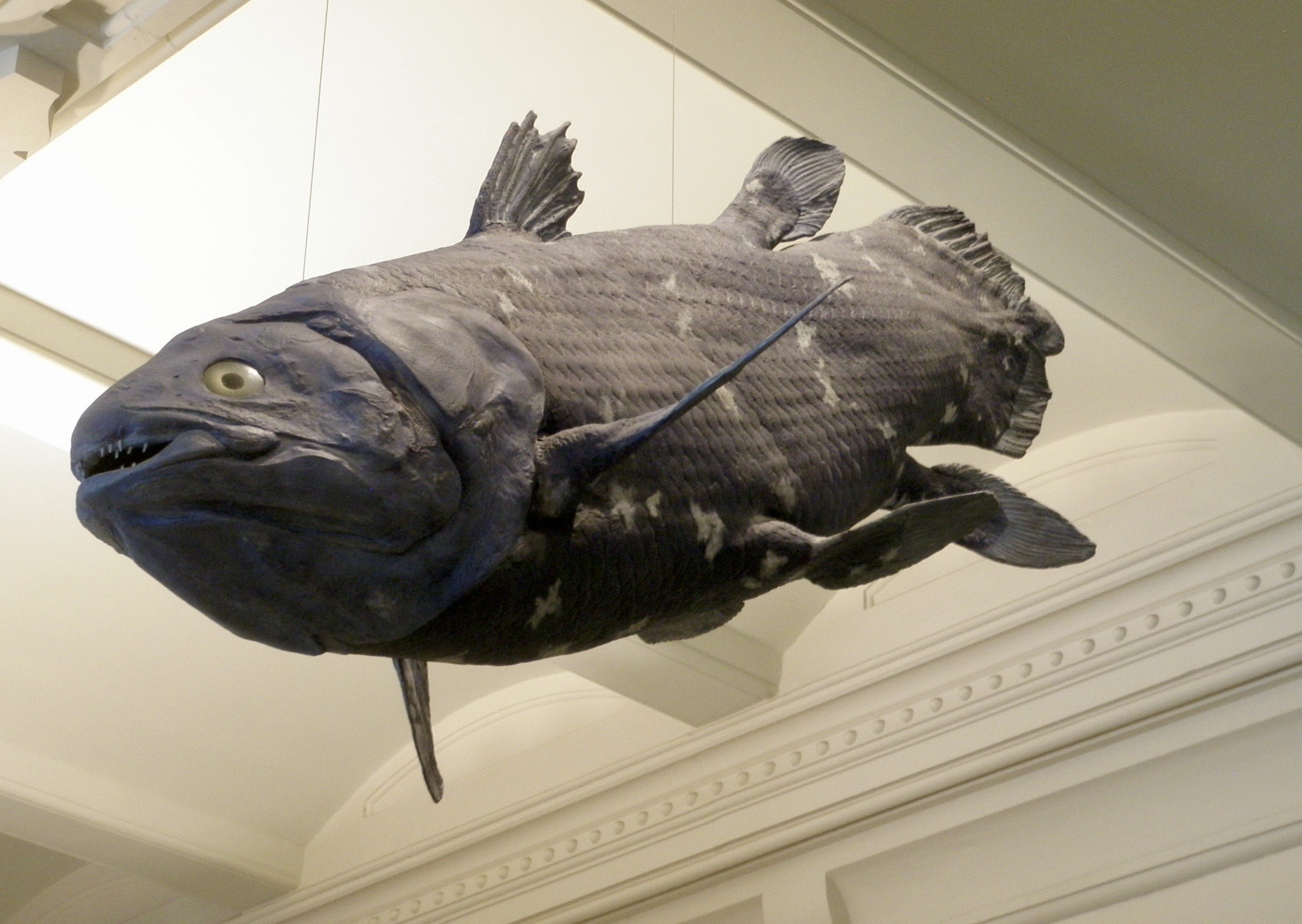
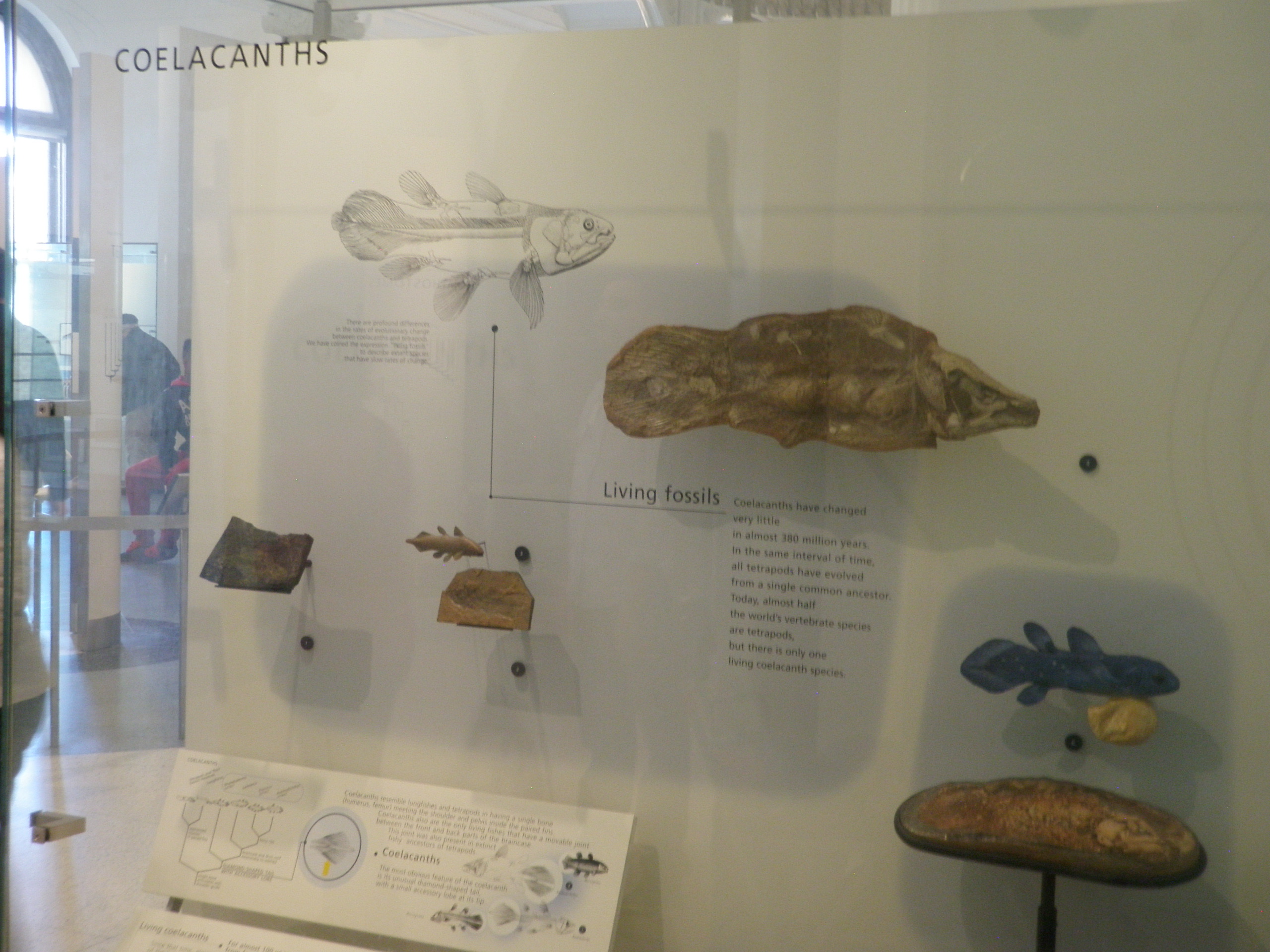
BR: In the Kevin Bacon way. I first heard about the coelacanth when I was doing research on Bigfoot, probably 20, 20 some years ago. And there were some passing references in some work by Ivan Sanderson and Lauren Coleman and Bernard Hultman and others to this fish. First of all, it took me a while to learn how to say it, how to pronounce it correctly. It’s more like koala-clanth or something. I remember the first time I saw one that was stuffed and presented, I think it was at a natural history museum in Washington, D.C. if I’m not mistaken. It was really an arresting figure. First of all, it was about as big as I am, which is unnerving on its own right, but it’s just very prehistoric, scaly, badass-looking fish, and sort of vacant eyes. I just remember, like, oh, that’s that thing that they were talking about. I remember I got some photos of it, and maybe we’ll post them on the page. It was almost like I could almost reach through the glass and touch 60 million years ago.
0:30:32
CW: Yeah, I think we’ve all seen the illustrations right alongside dinosaurs. These are fish that have… Well, I can’t say they’re unchanged because they are a little bit changed from what they were 65 million years ago, but they were swimming around there with the ancient sharks and the ancient fish before any land creatures came to town. I looked up online where you could actually see one, and indeed there is one at the Smithsonian’s National Museum of Natural History, and there’s also one in the New York City American Museum of Natural History, if anybody wants to visit a coelacanth in real life.
0:31:09
BR: They are very cool. And one thing I noticed was that it wasn’t just cryptozoology. The three of us, or certainly Pasucal and I, have a specialized, long-standing interest in monsters and cryptozoology. But when I was also researching other topics, I was sort of surprised to see the coelacanthals being brought up even, like for example, in ghost hunting books.
0:31:32
PR: Very weird.
0:31:33
BR: I’ll give you two quick examples. There’s a piece that appeared on, this is from the Atlantic Paranormal Society dot com, of course this is TAPS, for those who know the Ghost Hunters TV show, this is their group. And it’s a piece written by someone named Carl Johnson and it’s titled, Open-Minded Skepticism. He says, In our approach to paranormal research, it should be observed that no living person knows with absolute certainty what becomes of human or animal consciousness after the inevitable cessation of biological life. Keep in mind that 400 years before our time, the split personality disorder was a clear indication of demonic possession. Now I just need to clarify this because this is TAPS. First of all, by split personality disorder I assume he’s referring to multiple personality disorders, which has been pretty thoroughly debunked.
CW: Yeah, it’s not a thing.
BR: It was a thing for a while, particularly in the 70s and 80s with people like the Sybil book. And so just that right there, not quite accurate TAPS, but anyway, again, consider the source. Then he says, 300 years ago, the giant squid, now classified as a catuthis, was the legendary kraken, which pulled entire vessels to the briny depths. That’s more or less true. Credit for that. Then he mentions the Komodo dragon, which is, again, a legitimate example. And then says, also, the coelacanth was regarded as having been extinct for some 30 million years. Well, again, the number’s a little bit off. It’s actually about twice that. It’s closer to 65 million. But again, this is all within the context of ghost hunting. And then I’ll give one other example from a book called How to Hunt Ghosts, I do not recommend it, by a guy named Joshua P. Warren. As many of these ghost hunting books begin, let’s say, well, be skeptical, keep it on mind that science was wrong about these things, and because science was wrong about X, that ghosts might exist. Again, I’m not going to go down that path. We don’t have the time. But then he gives a couple of examples. Again, this is the book How to Hunt Ghosts by Joshua Warren. He talks about the story of Charles Duhl, the head of the United States Patent Office in the late 1880s, who wanted to close the patent office in 1899 because he believed that everything imaginable had already been invented. This also is not true. Not actually true.
PR: Sounds fishy.
BR: Sounds fishy. You know, if you’re quoting, if you’re trying to show that you’ve done your research, giving these examples is probably not the best, including multiple personality disorder and the Charles Duhl legend, not so good. So anyway, he then goes on, this is on page 8 of his book, he quotes The Demon Haunted World by Carl Sagan, which is a brilliant book. I’m glad he read at least one sentence of it. He quotes like six words. Then he says, scientists believe that coelacanths, a type of prehistoric fish, had been extinct for 65 million years until one was pulled from the South African waters in 1938. Prior to that fateful day, there was no evidence for the fish’s existence. Again, not actually true. There was evidence for the fish’s existence, they just thought they had died off. There’s an important distinction between something that is an entirely new animal and something that we know existed, we just thought they were gone.
PR: Yeah, that is a very critical distinction to make because we have a record.
BR: So again, those are a couple of examples from ghost hunting books. Again, an area that you would think at first blush wouldn’t have any clear connection to the coelacanth. Then, let me just quote from one more book, a book called Champ Beyond the Legend by Joe Zarzynski. It’s one of the first books on Champ, the lake monster we did a show on a few episodes back. Once again, it talks about, cryptozoologists cite that probably the most famous of the unexpected creatures to suddenly reappear from extinction was the coelacanth, and he sort of briefly talks about the case. And of course, there are others as well. There’s the okapi, which is a small animal in Africa. There’s pygmy hippopotami that were discovered in 1913. And again, the underlying thread and assumption here is that in these cases these are things that were that were recently discovered. Now keep in mind as we touched on before there is a huge difference, a huge difference between Bigfoot for example and the coelacanth. Now the cryptozoologist, the believers, love to lump them together like, see look they found this, clearly scientists were wrong. Okay, well, again, let’s get into the nuances here for a second. So on one hand, we have a fish that scientists knew existed. They knew of them. They’d been described. They had some idea what they were. And they just thought that they were long gone compared to, for example, a group of thousands or tens of thousands large hairy bipedal animals roaming North America present day that do not fit into the known taxonomy. Another important distinction here, right? So when people talk about finding new animals, it is certainly true that new animals are occasionally found. No one denies that. They’re not usually by cryptozoologists, mind you. They’re by zoologists and biologists and botanists, whatever else. But typically the animals that are found in modern times are really small, around the size of your thumb, give or take, and in remote places. For example, in Namibia and the Saharan Desert and the jungles of Thailand and Vietnam. They are not typically large animals. Sometimes they’re not, certainly not these days. And you can look into the Lowland Gorilla, you can talk about the Panda. All these examples date back a century or so. So if you’re talking about modern-day 2018, comparing either a coelacanth, which was again thought known to exist, thought extinct, reappeared, to the Loch Ness Monster, or the Chupacabra, or Bigfoot. This is apples and oranges here, sir.
0:38:06
CW: Well, another thing that makes the distinction quite different is they’re saying, oh, well, we can discover this brand new animal that nobody’s ever found. The coelacanth, it’s one of those situations where, oh, white men have discovered it. Western scientists have rediscovered it. But the fishermen on the Comoros Islands had been pulling them up for generations and they were like, well, they don’t taste very good, they give us diarrhea. They called them the gombasa. So certainly those people knew about the coelacanth. They just didn’t call it the coelacanth, and they didn’t have any ichthyology knowledge.
0:38:46
BR: No, I’m really glad that you brought it up because that’s a really important point. The analogy you made is perfect to Christopher Columbus. I mean, for all the people that say, you know, Columbus didn’t really discover America, that’s true, he discovered them for the king and queen of Spain. He discovered them for Europeans, and that, you can argue that significance, but it’s certainly true that he didn’t discover America. And in the same way, Marjorie and others, and we’ll talk about Marjorie in a second, they didn’t discover it at all.
0:39:22
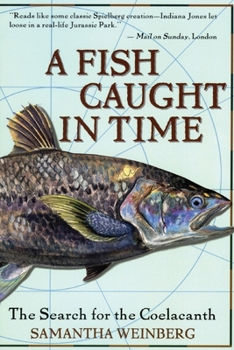
CW: They discovered its importance. And that was the one thing I liked about this book. On Ben’s recommendation, I actually picked up The Search for the Coelacanth by Samantha Weinberg. And this book came out in around 2000, and it is a, oh, I read it voraciously. I got through almost 200 pages in like two and a half days. She really brings the story to life. And she doesn’t say, oh, brand new, they discovered it. They discovered the importance of it. And they certainly got the help of the local fishermen who were like, yeah, every once in a while we pull one of these up and, oh, it’s not good to eat. And they started offering rewards and that helped out quite a lot.
0:40:01
BR: Well, why don’t we talk a little bit about the history and discovery of that, because it’s actually a really fascinating story in its own right, so let’s spend a little bit of time on that.
0:40:09
CW: Yeah, yeah, and it actually goes against the way that cryptozoologists have been throwing it around, although I did find a quote in the book, J. L. B. Smith, who was, he was not a professional ichthyologist until later in his life, he actually started out as a chemist and was teaching science at, I believe it was Rhodes College. When he identified the coelacanth, as this is actually a resurfaced species that we thought was extinct ages ago, he published a big account in the Times of London and in it he said, it is a stern warning to scientists not to be too dogmatic. And And when I read that I thought, every cryptozoologist out there probably knows that line and has recounted it as evidence that, oh you’re just being too dogmatic, you scientist, you don’t know what you’re talking about. Here, listen to this guy who disproved most of science, there you go.
0:41:07
PR: The method of science is, if nothing else, a way to not be dogmatic about science.
BR: So let me, I have a little bit of the book, A Fish Caught in Time, in front of me. Let me just read a couple little seconds to set the stage for the listeners here. And by the way, the person that found it is, well, the person that found it is, I don’t, do you have the fisherman’s name? We should probably give credit to the actual person who found it.
0:41:35
CW: The the first one in like 1938 was dredged up by captain Hendrick Goosen.
BR: I love that name.
CW: And he I know as a regular course of action He would call Marjorie Courtney Latimer who was the lady curator she actually was known as the lady curator of the museum down there in East London, South Africa and Everyone’s because she inherited a museum that had basically nothing in it. So she was just looking for stuff to put in it everywhere. She was, you know, classifying everything and bringing in all these native plants and animals and stuffing them and putting and putting together some really nice displays. And so every time Captain Hendrick Goosen would come in to shore, he’d he’d say, do you want to take a look at what we have? And so she took a look one night right before Christmas and found a very peculiar fish. Marjorie Latimer quickly wrote a letter to her friend J.L.B. Smith, Dr. Smith, who was teaching, you know, I guess a couple towns over, and she wrote him on the 23rd of December, Dear Dr. Smith, I had the most queer-looking specimen brought to my notice yesterday. The captain of the trawler told me about it, so I immediately set off to see the specimen, which I had removed to our taxidermist as soon as I could. I, however, have drawn a very rough sketch, and am in hopes that you may be able to assist me in classing it. It was trawled off the Chalma coast at about forty fathoms. It is coated in heavy scales, almost armour-like. The fins resemble limbs, and are scaled right up to the fringe of filament. The stinuous dorsal has tiny white spines down each filament, note drawing inked in red. I would be so pleased if you could let me know what you think, though I know just how difficult it is from a description of this kind. Wishing you all happiness for the season. Yours sincerely, M. Courtney Latimer.” And she sat there waiting on pins and needles as Dr. Smith got the message, finally, but he had a bunch of stuff to do to finish up his classes before he headed out, but he did he did eagerly send her a telegraph asking her to preserve the specimen and he had a feeling it might be the coelacanth.
0:43:45
BR: Now keep in mind that we’re talking about 1938 South Africa and you know these days it’s easy to think, oh well you just you just get a couple people and throw it in the freezer. Not so much. So part of the story is that the Marjorie was trying to figure out, okay, well, she finds something that is clearly queer and odd and possibly significant. On the other hand, she has no way to preserve it. So the first thing she wanted to do was, okay, what do I do with this thing? She described it, she sketched it, she sent it off, and of course this is long before the internet when we can share images, you know, at the speed of a touch. And so the first thing she did was try and put it in the mortuary. That was not gonna happen. She took it to the mortuary and the guy’s like, no, no, I don’t know what this giant ugly stinking thing is, it’s not going to the mortuary. So apparently at the time there were only two refrigeration facilities that they could have had this five-foot fish. The poor woman is getting desperate because the thing is rotting in her custody. She has no real way to do it so she said okay well it wasn’t going in the mortuary so the next best thing was to try and preserve it. So she went to a pharmacist or chemist as they call it there looking for some formalin which was going to preserve it. And from my reading of the book that she talks about in The Fish Caught in Time, unfortunately, it was very scarce. There wasn’t big jugs of it to dump this smelly big fish in. And so, and they didn’t know what to do with it because, you know, she’s, as you know, she’s trying to get a hold of somebody there to help identify the fish, what’s going on. And because we’re talking about mail and letters, which take back in the day, take, you know, days and weeks to get from point A to point B, I can just imagine her mixing dread and excitement and covering her nose, wondering what is going on here. So basically at the end of the day, she was asked, I think when she finally got a response back, he said, this is interesting, if you can please preserve the innards. And unfortunately by this time, the innards, which were pretty gamey by that point, had been tossed off in the dump. And however, the taxidermist had managed to mount it and saving all the scales. So there was at least the bone structure and the scales were there and available for examination even if the guts were gone.
0:46:36
CW: Yeah, he sent her a telegram. Most important preserved skeleton and gills fish described. According to his wife, he was in a state of near panic. Every night he was just wringing his hands wondering how soon can he get to see this fish. He was an amateur ichthyologist as I said, but he had all the right, you know, it was just a real confluence of lucky factors. He had studied all the right things to be able to help her identify this fish.
BR: And if I’m not mistaken, Marjorie, her interest was actually in birds. So this wasn’t, I mean, she had experience in a variety of things, but her, you know, she knew about fish, but she was really more interested in birds, if I’m not mistaken.
0:47:21
CW: Yeah, she took a couple visits to Bird Island, and she was definitely a naturalist from a very young age, but both of them, the Coelacanth of course is very near and dear to their heart. And J.L.B. Smith, when he wrote the official paperwork to, I forget which scientific institution he wrote it, he got it in a peer-reviewed journal and sent it off to a few places and identified it properly and as the person who identified it, he got to name it and he named it after her.
BR: Cool.
CW: So J. L. B. Smith kindly named it Latimeria Chelomne, after where it was found, and Latimeria after Marjorie Latimer.
0:48:01
BR: That’s cool. And she died just a few years ago, right?
PR: Yeah, she died 14 years ago in 2004. So as of this recording, it’s been 14 years. So she had a pretty good run.
0:48:13
BR: Yeah, yeah. And I think it’s really encouraging or it’s suitable that she lived a long life, as I understand it, she spent most of her life in East London and South Africa. And it’s neat to have something that you had a role in, you know, in the 1930s, recognized as being, you know, hey, you’re the person that really brought this up.
0:48:41
PR: Yeah, yeah.
0:48:42
CW: Oh, she took immense pride in it, apparently. I mean, she brought the, she had the specimen at her East London Museum, and after Smith published about it, it became a sensation. That was another thing that blew my mind. Again, Bigfoot researchers and other cryptozoologists will tell you that the scientific community just wants to quash any new discoveries and they’re not interested in any new information. No, the reaction to this was Herculean. People were extremely excited. Ichthyologists around the world were thrilled. They wrote tons of letters. They came and visited. The museum got swamped with people. There was a rush on the Comoros Islands to try and find more of them. It started an international incident between the French and the South Africans.
0:49:31
BR: I love it. I wish all scientific discoveries led to that.
0:49:35
CW: Yeah, there’s a whole lot of interesting characters in this drama about it, including a swashbuckling young sea captain who ends up dying, you know, tragically in a shipwreck. And he was the one who found the second coelacanth off the Comoros Islands.
0:49:50
BR: Yeah, so since that time, there have been more. I mean, once you know where the population is, then, of course, you can sort of zoom in on it and whatever else. So my understanding is that, I mean, they’re still a rare species, but it’s it’s not like it’s not like there were only a couple found.
0:50:07
CW: Well, they went they went I think it was 14 years They found the first one and then it took that long and JLB Smith actually kind of made it his life’s mission. He and his wife Margaret sailed all over the place they wrote tons of books on Seafishes and they were quite a quite an interesting pair the the wife would paint all the illustrations of the fish, and he would do all the writing, and they’d publish all these books about him, and they were constantly searching for another coelacanth. He was dying to find one with the innards intact. And he put up rewards for 100 pounds for any fisherman who could bring him a fully complete specimen. And as I said, that young swashbuckling captain, his name was Eric Hunt, he ran into them, had a conversation with them, said he thought you might find him at the Comoros. So he went and put up flyers and that yielded a coelacanth. And then there was this rush, oddly enough, right before Christmas, just around the same time the other coelacanth had been discovered. And again, all the problems you have with the holidays happening, people weren’t at work, there was no way to get to the Comoros Islands. So Dr. J. L. B. Smith ended up calling the Prime Minister of South Africa late at night and his wife wouldn’t let him answer the phone and then just by happenstance the book that J. L. B. Smith had written was with the Prime Minister and he said, oh it’s that chap that wrote the fish book. Well why is he calling you this late at night? Call him back.
BR: By Jove, I want to speak to that scientist!
CW: Just a whole bunch of crazy factors came together and Smith was granted use of a military plane to fly over to the Comoros Islands. They took off without even knowing if there was an airstrip they could land at at the Comoros. And the pilots and the airman who were along for the flight kept playing jokes, I felt so bad for him. As they were leaving with the fish, after they had only spent a short time, they just grabbed the fish and left pretty much. They said the French, they told Dr. Smith that the French had scrambled fighter jets and they were being pursued. And he believed them and was urging them not to turn back. He said, I doubt they’ll actually fire on us. Don’t worry. Just keep going. And they were all laughing at him because of course there were no fighter pilots.
0:52:28
BR: I love the stories of the Coelacanth and its significance and also alleged significance to both cryptozoology and the paranormal in general. And I think we all have these things that we hear stories about. It’s like, are they really real? As a kid, you don’t know, right? Everything seems fantastic, right? You see movies, and they have dragons in it. Like, ooh, there’s cool dragons somewhere out there. I don’t know. Pascual, do you have any monsters that you particularly remember, sort of wondering whether they are real or not?
PR: Well, I think for me, the earliest one I can think of is Nessie. As most boys my age were, I was a huge dinosaur fan, so I was very familiar with Plesiosaur and how Nessie seemed to be a dinosaur. For a long time, I mean not a long time, but for several years of my life, I still held on to hope that it was real. But I think the thing that eventually killed it for me was actually just the sheer, the scale of habitat needed for something that large and the scarcity of food in that lake for something that large. And then you’ve got the issues of a population that lived for 65 to, well, I think we’re talking like 100 million years if we’re talking about these dinosaurs. And yeah, so unfortunately for my wonder, it was squashed by a pretty practical bit of information.
0:54:16
BR: You did the math on like, how big are these? How many of them do they have to be? How big is the lake? Something’s up.
0:54:21
CW: The day that skepticism dawned on Pascual. Well, this book resonated with me for a couple of reasons. And I was I was you know, it really draws you in. You’re there with Marjorie as she is, you know, slopping through the mud on the trawler, looking for interesting fish, you know, that she might be able to take back. And, you know, she describes how her heart kind of stopped when she saw this fish that she recognized. She’s like, no, that can’t possibly be, no, they don’t exist, no, they shouldn’t exist anymore, that looks like a lobed, it looks like the fins and the tail and the lobe, it’s the lobed fish, it kind of has fins that almost look like they’re about to turn into legs. And she recognized it as possibly being one of these long extinct fish and she just stopped her heart for a second. And I remember this is kind of a this is kind of a story based on my ignorance as a teenager, but I remember having that feeling once I was I kind of got into school a little early, so I was kind of young and socially naive about a few things. But when I just turned 17, and I went to the East Coast for the first time to go to college… Now over the course of my whole life. I had lived in Las Vegas. It’s a desert. We don’t have a lot of animals and insects and flora and fauna that you guys have in regular parts of the world where you have water, naturally. And the only time I had ever seen fireflies was in Disneyland at the Pirates of the Caribbean ride. And I never looked it up. We never had a section on fireflies in school. And somehow my brain had just categorized, fireflies, they’re mythical, they don’t really exist.
0:56:08
BR: That’s silly.
0:56:08
CW: That would be crazy, an insect whose butt lights up, that’s like a unicorn, that’s even crazier than a unicorn, unicorns are just a horse with a horn, they don’t light up. So again, kind of a naive 17 year old, I show up in Maryland and as I’m, you know, I’d move some stuff into my dorm room and the twilight is falling over the campus. I’m looking around all these trees and wow, so pretty. What’s that? Blink blink. I’m seeing these blinky lights and I was like, what the hell is that? I’m checking my glasses to see if weird reflections are happening on my glasses and I start just heading toward these blinky lights and I’m like oh my god this bug is lighting up!
BR: Do you see this? Do you look at this?
CW: These are fireflies, they’re real! Oh my god I’m looking around I’m like do people do other people not see this happening?
BR: Does anybody have a camera?
CW: And yeah my roommate was like my roommate who I just met was like yeah you’ve never seen fireflies I was like, NO!
0:57:16
BR: Well, keep in mind that all three of us co-hosts grew up in the desert. Yeah, we did. We’re all, you know, New Mexico, Nevada folks. But, you know, we all, we weren’t, we don’t have fireflies here.
0:57:30
PR: No, no.
0:57:31
CW: I knew all about scorpions and horny toads that’ll shoot blood at you from their eyes. I knew all about that stuff. Didn’t know a lick of anything about a firefly.
0:57:40
PR: Yeah, I was fortunate because my mom’s family’s from Wisconsin, so I was up there in the summers ever since I was very young. I was actually born there, as a matter of fact, but most of my life, we’d get there in the summers. And so one of the things that I have a very fond memory of my life is catching fireflies around dusk, very often when we’d go visit our grandparents.
BR: I guess I spoke too soon. Pascual was the only one of us that knew that fireflies were a real thing.
0:58:10
CW: Well, I read some kids books that talked about kids catching fireflies in jars and I’m like, I just kind of assumed okay this book is set in one of those weird universes where they have fireflies I guess. But before we take off there’s also another skeptical angle to the coelacanth, Ben I’m pretty sure you you read into this as well, but the fact that it caused an uproar because it was seen as more evidence of evolution. The fact that Darwin had predicted that in the depths of the ocean we might find some of these living fossils are missing links.
BR: I do recall that. Yes, and another angle into it.
CW: And I didn’t realize this, but at the time, this is really shocking, the South African public schools, it was not legal to teach evolution there until the 1990s.
PR: Wow.
CW: So the whole place was run by Calvinists, so they were very anti-evolution and in fact the Prime Minister came under huge amounts of fire for giving Dr. Smith that, the access of that military plane to go find the coelacanth. Yes, it was a huge scientific victory for South Africa, but it was also seen as, you know, how dare you do this? And oh, Dr. Smith got letters and letters and letters. They kept a giant file of what you might get via Twitter these days. He got tons of vicious correspondence. Luckily, he was a strong enough guy to just sort of shrug it all off, but people were furious at like how dare you bring this evidence of evolution out. You’re just – you’re giving ammunition to the other side and you’re going to roast in hell.
0:59:59
BR: It’s interesting, it reminds me of what happened to one of the better known chupacabras. In my book, Tracking the Chupacabra, I talk about a particular chupacabra that was found in Blanco, Texas. It actually ended up in a creationist museum of all places. I interviewed the guy that taxidermied it, a guy named Jerry Ayer out in Texas. There was this whole strange story of the Blanco chupacabra it was eventually sold to a guy named John Adolphe of a creationist museum and last I heard it’s being exhibited as proof that scientists were wrong because well look How do you silly people believe this this evolution stuff here is a chupacabra? Scientists said this couldn’t exist and yet here it is. Mic drop.
1:00:50
CW: Well, they probably couldn’t afford a coelecanth..
1:00:55
BR: Well, you know, I’m glad that you brought that. I mean, it does. It’s important to keep in mind the context, you know, where you didn’t have the internet. You could just pick up a phone and call between, you know, South Africa and London. There’s so many things that were so different in the 1930s. And certainly if you think about what Smith was faced with, right, because I mean he had this idea that it was possibly coelacanth based on Marjorie’s sketch in her description, but he couldn’t put it out there and say that all this has necessarily been found, because if he turns out to be wrong, he’s a laughingstock.
1:01:33
CW: And he was terrified that he might find out that the coelacanth that Captain Hunt found in the Comoros might turn out to not be a coelacanth and here he’s talked to Prime Minister into loaning him a plane. He’s like, I’m gonna be ruined if this young sea captain is wrong.
BR: Well, it sort of goes back to the difficulty in science of absolutely proving something. I mean, think about this for a second, right? At the time, they didn’t have DNA analyses. They couldn’t sequence the fish. It was based on basically morphology, right? And you’re like, okay, well, based upon these sketches and these scales, I mean, it was a very, by today’s standards, a very crude method of proving something. And how do you prove that, right? I mean, how do you, again, today you can do DNA sequences, it’s black and white, either it matches a known specimen or it doesn’t. In the 1930s, you present this at the Royal College of Surgeons or something in London or in Johannesburg or something, and you’re comparing it to crude morphological characteristics of other fish. Which, again-
1:02:48
CW: From fossils.
1:02:49
BR: Yeah, fossils, exactly. So it’s important to keep in mind the difficulty in absolutely proving something by scientific standards of the day.
1:02:56
CW: Yeah, well, and I highly recommend the book A Fish Caught in Time by Samantha Weinberg. As I said, it goes into the human nature, the personalities of all the major characters involved, but you also have the themes of, like I said, the fight between evolution and the Adam and Eve story, the teaching of evolution in public schools and what sort of brouhaha it raised when the coelacanth was found. It talks about something you’ve mentioned before, the crypto-tourism, finding the coelacanth was a huge economic boon to the Comoros Islands. Scientists and tourists started flocking there to see where these fish had been pulled up. They started selling t-shirts and jewelry and now they’ve got coelacanth minted onto their coins and printed on their bank notes and everything. And then we’ve even got forgeries. In the 1950s, when they offered huge rewards for a photograph of a live coelacanth, you know, in its habitat, they had more than one photographer staging photos with dying coelacanth bodies propped up in the shallow coral reefs and trying to pass it off as a coelacanth at home, you know.
1:04:04
BR: Bastards
1:04:06
CW: And even conservationists, as soon as JLB Smith got his coelacanth and then he and then the French government put a moratorium on any other foreign scientists going to the Comoros they just they blocked it off. They said only French scientists can look for the coelacanth now and that lasted for years. So they brought up like eight of them, nine of them, ten of them and after they got to you know ten or eleven of these fish that they pulled up, JLB Smith took out a huge letter in the Times and started warning you know there can’t be that many of these fish and what are you doing pulling this many out? What kind of terrible scientists do you guys have if you can’t find out what you need to know with 10 of them.
1:04:51
BR: How many do you need?
1:04:53
CW: He said, if a herd of dinosaurs were discovered in some remote jungle, the world would rightly recoil in horror from a policy of rewarding natives to slaughter as many as possible. And so there’s international intrigue, there’s scientists slamming each other in the pages of the Times. It’s all very, very interesting stuff and it really was front page news. I mean you saw there were politicians insulting each other by calling them coelacanths, like you seem like you’ve been asleep for 10 million years, what are you a coelacanth? And people started getting drawn as coelacanths in the editorial cartoons of the day. You know I had to mention that.
1:05:38
PR: Oh yeah.
1:05:39
CW: But yeah, that really shows just what a grip it had on the public’s imagination when these things first started coming to light.
1:05:49
BR: Cool.
(MUSIC)
1:05:54
BR: All right. Well we hope you enjoyed our discussion of the coelacanth, the fish out of time, as it were. It’s a fun topic, and we all three enjoyed chatting about it, and hope you enjoyed listening to it. This next episode, we’ll be talking about food panics and contamination concerns. For example, you may remember the phrase pink slime, which was a scary buzzword a few years back that had parents fainting and panicking and these sorts of things. So we’ll be talking a little bit about that.
PR: Cool. And we just want to thank our sponsor-level patrons, Amy Freshour-Kelly and Dr. Angela Matt Key for their continued support. For those of you who are curious what that is, go on over to our Patreon page. It’s patreon.com slash squaringthestrange, and you can check out all the different perks of being various levels of patron. In fact, $5 and up gets you our monthly Skeptic Crate, which is a little little goodie bag you get once a month sent right to your door full of items that usually have something to do with an episode of the show or just to have some connection to one of us personally.
1:07:09
CW: Full disclosure, it’s a it’s a puffy envelope, not so much a crate. So you won’t be getting anything looking like the Ark of the Covenant. It’ll be a neat little puffy envelope with at least three cool little items.
1:07:22
BR: Although, if all the patrons come through and people really start donating, you might get something the size of the Ark of the Covenant.
PR: Yeah, maybe one day we’ll have enough patrons to just send those giant, like comically huge freight crates from like the 1920s, and they have to pry it open with a crowbar.
1:07:40
CW: There will be a giant salted coelacanth inside.
1:07:45
BR: It will be examined by top men.
1:07:48
CW: So if we do send out coelacanths, listeners don’t eat any of it because apparently they do give you diarrhea if you eat them.
1:07:57
PR: Yeah, that’s, I wouldn’t want to deal with that, especially with…
1:08:01
CW: Yeah, then we’d have a food panic about the coelacanth.
1:08:04
PR: Yeah, exactly.
1:08:07
CW: It’d be blue slime.
1:08:11
PR: And also, I just want to mention that this week you heard music from Shriekback. Their song Coelacanth is in the episode. I thought we’d just give them a quick shout-out for that one, and thank you guys for letting us use it.
1:08:23
BR: Yeah, definitely.
1:08:24
CW: Yay.
1:08:25
PR: But, until next time, we’ll see you.
BR: Bye bye.
1:08:29
CW: Take care.
1:08:29
Swering Strange is a production of Kronos Creative LLC. Copyright 2017. Theme music by Shriek Back. Additional music by Memory, Guitard and Feathered and Pascual Romero. Content Producer, Celeste Giordani. Audio engineering, producing and editing provided by Pascual Romero at Kronos Creative Studios. Additional support provided by Ashley Romero, and of course, our listeners and patrons. The views and opinions expressed in this podcast are those of Swearing Strange and do not necessarily reflect the views and opinions of Cronus Creative, Strange and do not necessarily reflect the views and opinions of Cronus Creative,
1:09:00
Center for Inquiry, our advertisers, or any affiliated organizations and employers.
Transcribed with Cockatoo
