
Episode Summary:
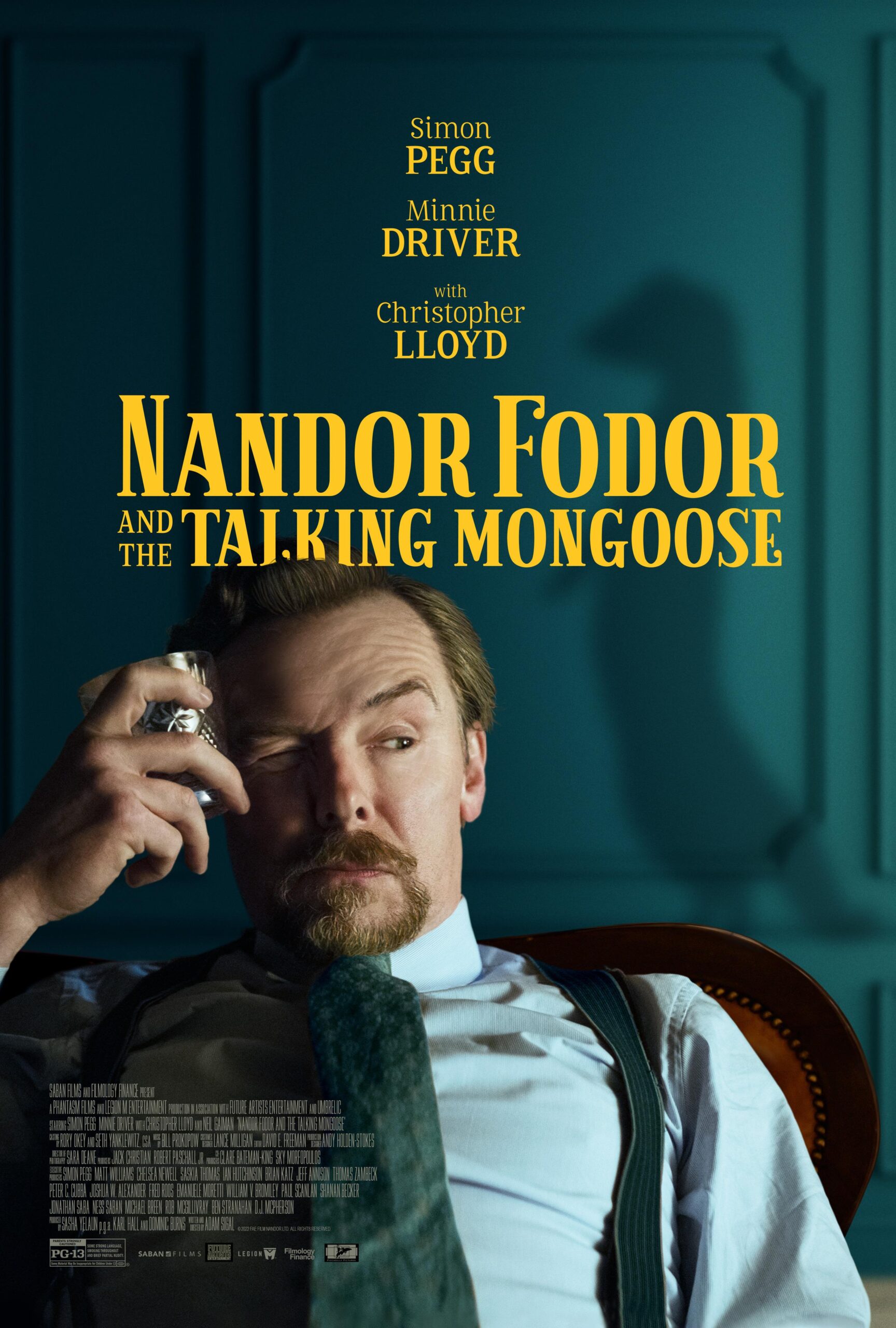
First, Celestia goes over her high points and low points of CSI Con 2023, then we move on to a few tidbits Ben came across. Sharon Hill joins us again, this time for a main segment on Gef the talking mongoose, a celebrity on the Isle of Man back in the 1930s. A new movie delves into (and somewhat mangles) the mystery, featuring Simon Pegg as Nandor Fodor and Christopher Lloyd as Harry Price. The “mystery” of Gef tapdances around so many facets of Forteana… a talking animal, “earth spirit,” clairvoyance, poltergeists, psychic manifestations, and a clever young girl with time on her hands. With Sharon’s help, we go over what the records say, what British libel law curtailed the records from saying, and what the movie tries to say today.
0:00:00
Ben Radford: Welcome to Squaring the Strange, the podcast that examines all manner of the mysterious and the mundane through a critical lens. So let’s square the strange.
(MUSIC)
0:00:11
BR: Welcome back to Scoring the Strange. I am one of your hosts, Ben Radford, and with me is…
Celestia Ward: Celestia Ward. Hey, everybody.
BR: Hey, Celestia. Hey, everybody.
CW: Yes, by everybody, I pretty much mean you, Ben.
0:00:38
BR: Yes, well, I’m…
CW: But soon we will be joined by Sharon Hill for our main topic, which is…
0:00:57
BR: Gef the Talking Mongoose.
0:00:59
CW: Yeah, no, we’ve brought up this little weasel before, but…
0:01:03
BR: Maybe you’re not a weasel, careful there.
0:01:06
CW: We got sort of spurred to making this episode finally because of a movie out, which anybody can see on streaming now. I think it might still be in a few theaters, but it’s been out for a little while, called Nandor Fodor, and the Talking Mongoose.
0:01:23
BR: Yeah, and I’ve known about the story of just the Talking Mongoose for many decades. It’s one of those sort of weird footnote minutiae ones that it’s not-
0:01:36
CW: Cryptid, hoax, performance art.
0:01:39
BR: Yeah, it’s like, it’s not a ghost, it’s not a big, it’s just this…
0:01:46
CW: There’s elements of everything.
0:01:48
BR: Yeah, everything the kitchen sinks. So it’s a fun story and I was glad we were able to get Sharon on to talk about it.
0:01:55
CW: Yeah, and so is Simon Pegg and Minnie Driver, if you happen to have seen the movie. We’ll get to that with our main topic here, but before that, Halloween happened. Did you have a good Halloween, Ben?
0:02:06
BR: I did. I didn’t do much other than respond to a flurry of annual interviews about them, but it was okay. I didn’t dress up. I thought about it, but when you don’t have kids in the house, it’s, you know.
0:02:21
CW: I do. So I did the very stereotypical old-fashioned mom thing, putting together a costume the night before using felt and a glue gun. It served its purpose. It didn’t disintegrate on the walk around our neighborhood. We got a whole bunch of candy.
0:02:35
BR: You did or didn’t get razor blades in the apples?
0:02:37
CW: No razor blades yet. Well, no apples, so that’s not even a possibility. But anyway, I’m also decompressing from CSICon.
0:02:46
BR: Yes, I was not there this year, but I saw a lot of my friends and colleagues were having merriment and seeing cool people and whatnot. So that was fun.
0:02:56
CW: Absolutely. Now, I’ll give my quick rundown here if I can. So CSICon, the Center for Skeptical Inquiry Conference, is in the books for 2023. There are a lot of little great moments. I’m going to try and run through them here. I saw Susan Gerbic and Mark Edward manning the GSOW table, the guerrilla skeptics of Wikipedia. And generally those two were stirring up trouble, mostly Susan.
BR: As she does.
CW: Yes. Got to hang out with, speaking of trouble, got to hang out with Richard Saunders and Adrian Hill up from Canada and the Skeptic Zone podcast and their rival gang, Brian Dunning and his Skeptoid Media crew. They all actually wore matching shirts this year. So very much was like a little bit of a gang war. Kenny Biddle, of course, was there, always fun. He dressed up as the Mystery Machine Van. Not one of the characters from Scooby-Doo, but the van.
BR: The van itself.
CW: For the Halloween party, which was a 1960s theme. So there were quite a few Scooby-Doo characters there. Melanie Tresick King and her floater toolkit was present. She gave me a really cool little business card that has the acronym on there. Falsifiability, logic, objectivity, alternate explanations, tentative conclusions, evidence, and replicability. Rolls off the tongue there. Found out that Hocus Pocus including a lot of skepticism by Richard Wiseman, was chosen by the British Library for a really huge honor. It was included in a recent exhibition alongside things like the Magna Carta. So, wow.
BR: Wow.
CW: We spoke to Richard Wiseman about Hocus Pocus back on episode 169, if anybody wants to check our archives on that. I got to meet Stephen Hupp, who is the new editor of Skeptical Inquirer, and he performed a very clever little undercover unannounced magic trick during a panel he was on, and people actually had to check their phone cameras to verify what all had happened. It’s hard to explain in the time I have, which is not very much here. Jim Underdown, while CSICon was happening, for CFI West, he got to actually test an applicant for that paranormal challenge. Do you want to take a wild guess as to what this applicant could do or thought that they could do?
0:05:22
BR: Well, you know, Jim, they handle everybody, people who can sort of see in the dark to predict cards. I’m guessing it has something to do with reading auras or something?
0:05:34
CW: Well, clouds. Apparently this person believed, and I think it’s somebody who lives in Vegas, they believed that they could push clouds. Like, so they took her up to the top of one of the parking garages and picked a cloud and say, okay, move that. And she was unable to push the cloud.
0:05:53
BR: Move that in a particular direction or just move it somehow? I mean, we can do that. Look, let me just say this now. If you put me in a spot and you point to a cloud and tell me to move it, I can make it move.
0:06:04
CW: I think the idea was movement in a way that would not be easily explained by the wind carrying all the other clouds too.
BR: Well, if you’re going to put in all these really complicated control conditions.
CW: You’d have to check with Jim and find out exactly what parameters he put in place there. And of course, I got to hang out with Dr. Angie Mattkey, who is always a natural phenomenon. Whirlwind, tornado, hurricane, whatever you want to apply. She was all three there just bringing merriment wherever she was. And then there were the talks. There were conversational interviews with both Bill Nye and Penn & Teller. And even though I’m a longtime fan of all three of these people, I learned new things and that’s always nice when you can kind of uncover bits and pieces that are brand new to you. Dr. Paul Offit discussed his work on the vaccine advisory group and the communication failures with the COVID vaccine rollout. Now as somebody who works in messaging and communication, this was fascinating. He went over how the public never really got a clear understanding of what the vaccine could and could not do and how these false ideas about like you heard it from a lot of people. You saw it online like, oh, oh, you can still get COVID even if you’re vaccinated. Well, this vaccine is garbage. No, no, it’s not garbage. And it was a messaging failure on behalf of the CDC and everybody else trying to get the word out. So, yeah, lessons learned. He had a great quote. Paul Loffitt was quoting David Wiener. He said, as far as the trials go, mice lie and monkeys exaggerate. And I thought that, I mean, that needs to be a t-shirt for anybody talking about animal studies. There was a journalist named Rena Raphael. She was actually a former wellness reporter who was in on all the detoxes and the goop stuff. And she kind of has reformed and she talked about how wellness is presented like fashion. Again, this was all about communication and marketing and branding and how it’s unique that these wellness things, although they try to dress it up with science-y stuff, it’s always reported by fashion reporters. People will be writing about the neatest trends in scarves and high-heeled shoes and then they’ll go right to something that really should be covered by a science reporter or somebody who writes about nutrition and it’s just not because there’s nothing to it.
0:08:33
BR: Yeah, and of course that’s a long-standing problem with journalism generally is that with the diminishing newsrooms, especially over the last 10, 20 years, you’ve got more and more outlets that they’re delegating science coverage to sports people or people who are doing some totally unrelated entertainment news last week or yesterday, and they’re being assigned a story that really does require some background in science. And it’s unfortunate, but it’s part of a broader trend.
0:09:05
CW: Yes, well, Ms. Raphael did credit skeptics for turning her around. She’s like, power to you guys who wrote in and criticized me and pointed out all these things I was getting wrong because it turned her path around. And now she writes in a much more critical way about these things. And she said, brands are targeting women mostly for this kind of junk. And there’s many products that are, quote, science washing their marketing, making it seem like their product is, you know, backed up by all this research when it’s just really not. You know, you know, the language like helps support your immune system. Well, what does that mean? Does that is clinical trials?
0:09:45
BR: It just it just means that it it’s it helps support it in some
0:09:48
CW: It gives it moral support.
0:09:52
BR: You know, it’s you know, I’ll always look for the caveats as weak as they may be You know, usually it’s the bottom and it says, you know, these statements not been evaluated. It’s not intended to treat, you know, or like treat, cure. I’m like, well, that’s, that’s exactly what your advertising is telling us. It is intended to treat and cure these things, but it’s at the bottom, it says, you know, by the way, we’re not saying this works.
0:10:17
CW: Well, yeah. The good news is Gen Z is starting to, is pushing back. One of the reasons she listed is she said, it seems like Gen Z is being a real force against this kind of stuff because they were raised by Gen X, which is naturally very skeptical. And I’m like, yeah, represent. One of the one of the other standout talks was done by Joe Schwartz, who runs the most popular chemistry radio show and the only one. He stepped in last minute because there was a cancellation and he did a fantastic fast-paced talk on chemistry and risk. I wrote down one quote from him, “if you knew there was one needle hidden somewhere among all the haystacks in the world, would that keep you from having a good old-fashioned role in the hay?” I like how he put that.
0:11:08
BR: It probably depends on what’s on the needle, but probably not.
CW: The fear of toxic chemicals and what what they can do to you at all It all depends on the dosage and the risk in every anyway Then we got to the Sunday talks and two of friends of the podcast here Adrian Hill presented on Sunday about the Winchester mystery house and it’s much maligned owner Miss Winchester some call her Sally some call her Sarah. I believe she, I believe Adrian pointed out that she always went by Sally. So people have even gotten her name wrong over the years. Then we had Rob Palmer, the well-known skeptic. He presented on MSI, Mass Sociogenic Illness, also known as Hysteria, Mass Hysteria. And he of course mentioned the Monkey Man of New Delhi, which you can hear about on episode 148 in our archives, as well as Bob Bartholomew’s take on the Havana Syndrome, which you can hear from Mr. Bartholomew himself on episode 159 in our archives. So that was cool.
0:12:14
BR: Yeah, always great to have Bob representing. He’s done, of course, I’ve co-authored two books with him, and I love his work, and he’s always on point and very eloquent, especially trying to explain the nuances of MSI and things like that.
0:12:33
CW: Yeah. Now, before we move to what we typically call our swaisos, Ben, you don’t have to reply to any of this. I’m going to get on a little bit of a soapbox here. And I’d actually prefer if you didn’t respond to any of this, because two reasons. Number one, you weren’t at the con. And number two, you work for CFI. So I don’t work for CFI except for a few freelance illustrations here and there. And I’m a free agent and I paid for my admission to the con. So I criticize out of respect and out of hope that things will always get better and skepticism will become more and more popular. Unfortunately, the opening remarks hit a sour note when Robin Blumer, who’s the head of CFI, brought up pretty immediately an issue of transgender and trans sex. Now, I’m not a biologist or a geneticist, but I am a professional communicator. And if your two messages at the start of a conference are, number one, we need new skeptics, we need to reach the next generation, we need to be relevant to the young people. And then your other message is, a trans woman is just a man in a dress, then you’re going to have a problem. And I think it’s even deeper than a messaging problem. Some people left when that statement was made. I did not walk out, and I did not see two other skeptics I know who have trans children walk out. We all stayed, and we’re in this weird place where we feel awkward being around that sort of statement, but we would feel unable to push back if we didn’t sit there and hear exactly what was said and how it all played out. Now Dawkins repeated this trans targeting message later in the in this talk on the poetry of science, and he made a few points. He said that intersex people were minuscule, a tiny molehill that those his word a molehill of point zero zero four percent of the population. Well, that’s still 80,000 people in America. And you know what? Atheists are very much a molehill, too. If we’re deciding things based on majorities, then atheists don’t really have a leg to stand on. He showed a photograph of a trans female swimmer next to a smaller female swimmer. And because I work with media stuff, I have to look through a lot of newspapers, and I know that image because it’s been used for so much propaganda and really far-right opinion pieces, including some really vile cartoons depicting trans athletes as monsters. So I was disheartened to see that photograph even used because it just automatically politicizes things. And we can discuss what should be used to categorize people for sports competitions. Like, do we go on the basis of the genitals only, or chromosomes, or hormone levels, or I mean, because those could give you a different answer for the same person. Or do we just go to wrestling rules and have the size and weight divisions for every sport? These are nuances that Dawkins did not bring up, however. He insisted also that being trans was comparable to the Catholic notion of transubstantiation, where you say magic words over some wine and bread and it turns it into blood and flesh. No, I’m a big fan of metaphors, and I think this one just failed. If he as a biologist is upset that terminology is drifting, fine. A lot of boomers can’t get over the fact that it’s just one space after a period, not two. So language is changing and you can’t stop that. And if adding the word cis to man or woman in order to clarify certain anatomical or genetic features is just too heavy of a lift, I mean, come on, it’s three letters. I sat there, I gave this a lot of thought and I talked to people about it. I ruminated on who this particular stance could possibly be helping. Humanism at its core is about helping other people. Dawkins helps a lot of atheists come out of the closet and be more comfortable with their lack of belief and understand a lot about evolution. And he helped a lot of people find beauty in science and he still is. But I’m trying to reckon with, okay, this insistence on the purity of language when it comes to man versus woman, male versus female, who does this help? Are there thousands of misguided trans men who are confused when their period comes? Or are there trans women ignoring signs of testicular cancer because they don’t understand their own biology? I mean, I haven’t heard of this happening. Maybe Richard Dawkins has some information. I don’t know. But Dawkins and CSI are kind of inextricably linked. CFI is subsumed under the Richard Dawkins Foundation for reason and science. So I do kind of worry about the future of this particular skeptical convention. I know people who have dropped away over the years, and I knew people who boycotted this year for what they view as political statements things that Dawkins categorizes as statements on biology, but are taken as political and I spoke with like a dozen people at the convention like last week who were some range of very angry sad offended or just confused by it and He’s not exactly a beginner at scientific communication. So if his point is not a political one, he did describe himself as always a lifelong liberal. Yet it’s coming off as a really far right anti-trans statement. Come on, communicate better, explain whatever nuance the audience is missing or learn whatever nuance you’re missing. And that’s about all I have to say about that. I do care about institutions and organizations that have been built around skepticism and the JREF is No more. The amazing meeting is no more and I hope CFI has a long future ahead of it I’m just hoping it’s not going to be one where I look around the room and think oh, I’m surrounded by only right-wing anti-trans people Anyway on to what we call the swaisos. Ben, so what are you skeptical of?
(MUSIC)
0:19:02
BR: Well, there’s a couple of things that cross my desk. I have a bit of good news, in case anyone would like to hear a bit of good news.
CW: Sure.
BR: It’s good news for, I would say, everybody but one person maybe. Oh. That one person would be Alex Jones.
0:19:18
CW: Oh, do we have to consider him a person?
0:19:21
BR: Yes, for the, yes. For, as most skeptics and anybody who’s followed the show knows, of course, Alex Jones, long time conspiracy theorist. Nutjob, just overall, there’s a phrase, I think it’s common in New Zealand and maybe Australia, that they use the word wing nut.
0:19:39
CW: Oh, we use that here too, yeah.
0:19:41
BR: I know, but it’s especially common there too. I just, I like it when Peter Jackson says that. Anyway, so the latest news is that a judge decided this past week that Jones, who by the way was ordered to pay $1.4 billion to the families of the Sandy Hook Elementary School victims who, of course, he claimed in some cases had not died. He had this whole elaborate conspiracy theory about how they were.
0:20:12
CW: Oh, yes. We know the damage very well. It’s nice to hear the judges are upholding the damage.
0:20:18
BR: Well, yeah. So what Jones tried to do is he tried to declare bankruptcy. And his plan was just as like, well, yes, I have a judgment against me. It’s against InfoWars, his company, and just dissolve InfoWars and he washes his hands with it.
0:20:33
CW: Didn’t he? Like, if I’m remembering correctly, didn’t he come out and pretty much advertise on InfoWars saying, oh, we got a whole new thing. We’re going to just be doing this new corporation. It has nothing to do with me or InfoWars, but it’s totally just him and InfoWars.
0:20:46
BR: That was his plan. But a judge has now put the kibosh on that. It basically does, it makes his debts what’s called non-dischargeable. In other words, at this point, Jones will be paying these survivors for the rest of his life. Whatever percentage is hashed out between him and the plaintiff’s lawyers is going to be going to them until he drops dead and probably even afterwards, hopefully, from his estate. So that was, yeah, so that’s sort of a bit of good news. Again, the fact that he was found liable for defamation and determined that he actually, he actually acted with malice and his statements were malicious. And that is, you know, he, he, he knew what he was saying was false and he didn’t care and it was harming people. And again, didn’t care. Anyway, that’s the good news is that Jones is not going to be able to weasel out of it by changing his name or just starting a new company. It stuck with him.
0:21:46
CW: Good.
0:21:47
BR: And then I have another little quick story. This is from England. So you remember, I was talking about my trip to Iceland and the elf church.
0:21:58
CW: Yeah, yeah. Elves are all over the place in Iceland.
0:22:01
BR: Yeah. So this is sort of along those lines. So the story begins in the county of Norfolk, and it’s sort of near the coast, and there had been bridges that the locals had created to get to the salty marshlands, usually for wildlife watching and accessing the beach and so on. And they’d used these for generations, but recently the National Trust, which is a conservation charity, took down the bridges. They decided the bridges were, they weren’t in good shape and they were a liability, so they, without even consulting the locals, they just went in there and tore down the bridges. The strangest thing happened, which is that within a few days, the bridges were rebuilt. When asked how did the bridges get rebuilt, the answer was the fairies.
0:22:48
CW: Whoa, whoa, whoa, who’s being asked and who’s doing the answering here?
0:22:53
BR: The locals, because, you know, again, the National Trust took down these bridges because they said they had these already to do so and they were, you know, this is for the public good and they’re, so, okay, we’re taking this down, do not rebuild this bridge. And the locals are like, okay. And so, yeah, so the, these bridges were rebuilt and they’re like, what the hell? And the locals are like, I don’t know. We don’t know anything about it. We don’t know who did it. We assume it’s the fairies.
0:23:22
CW: Was it a construction company called Fairies United or FU?
0:23:27
BR: That’s entirely possible because, you know, again, as in Iceland, fairies are said to lurk and dwell in these rural wild areas. And so anyway, so yeah, so the latest was…
0:23:42
CW: That’s interesting because in Iceland, the presence of elves has dissuaded construction projects. It’s put a kink in plans that the Highway Administration or whatever the organization is over there, had to do highways, they had to go around things, they weren’t able to move rocks. And in England,
0:24:03
BR: The fairies wanted the bridges there so that locals could access the, the, the marshes. So,
0:24:08
CW: Yeah, the fairies are, are not stopping construction. They’re, they’re building things. That’s amazing.
0:24:15
BR: Well, you know, fairies, fairies wear boots, fairies, the leprechaun, you know, leprechauns are a type of fairy. And of course, they’re known for their, uh, their shoemaking ability. So, you know, fairies are industrious folk.
0:24:27
CW: Are these bridges made of like gossamer and spider webs or are they bricks and mortar?
0:24:33
BR: You know what? We don’t know. I’m guessing it’s, I’m guessing the building materials probably could be found locally. But again, no one knows what happened. And this happened several times. The fairies were hard at work. Re-establishing the bridges that the mean national trust took down.
0:24:53
CW: Well, that’s a nice wink and a nod to good old-fashioned folklore as an excuse for something.
0:24:59
BR: And the other thing that crossed my desk recently, as it were, was I recently saw a film titled Joan Baez, I Am a Noise.
0:25:07
CW: You’re watching films at your desk now, Ben? Come on.
0:25:09
BR: No, this is actually in the local independent theater.
0:25:13
CW: Oh, OK.
0:25:14
BR: But as you and regular listeners know, I’m a huge fan of documentaries and also short films. And I was curious to see Joan Baez. I’m not a huge fan of hers. I do like some of her music. And my mother would regale me with stories of her sitting at sit-ins, civil rights sit-ins, with Joan Baez in Austin, Texas. So in the 60s, it was kind of a cool thing. So I was curious to see this film, and it’s a pretty standard biopic, you know, sort of looking at her, I think she’s now 60-some years of career, and it sort of talks about her time with Bob Dylan and touring and this and that. But one thing that jumped out at me is that part of the film, and it’s not a major part of the film, but it’s significant, it is there. In part of the film, they start talking about her journals and her stories, and not only her, but also her sister. Several times they mention hypnosis.
0:26:16
CW: Uh-oh.
0:26:18
BR: I’m like, alright, well, okay, and so I’m following along, and so I’m like, okay, well, how does hypnosis come into Joan Baez’s story. Well, you know, she suffered from depression and various things and this and that, and through several relationships and sort of careers, ups and downs. And then probably about, I think, two-thirds of the way through the film, there’s discussion about how her sister recovered memories of their father abusing her.
0:26:45
CW: Oh, no. Do they actually use the phrase recovered memories?
0:26:50
BR: They do.
0:26:51
CW: Oh, and they…
0:26:52
BR: I think once in there. So her father, Albert, is a physicist and he actually is credited for co-inventing the X-ray microscope.
0:27:01
CW: Is Albert still alive?
0:27:02
BR: He died in 2007.
0:27:04
CW: Okay.
0:27:05
BR: And unfortunately, he is not able around to defend himself. So it’s this, you know, watching this sort of, again, knowing a fair amount about this topic, just for what I do. Obviously, I wasn’t there. You know, all this happened allegedly, you know, many decades ago.
CW: But I mean, any but yeah, any skeptic you hear hypnosis and recovered memories of sexual abuse red flags shoot up.
BR: Yes. Yes. So apparently by his sister was the one that and it’s not real clear. It’s not clear whether they weren’t that specific or whether the filmmakers decided to sort of elide that just you know for you know for any number of reasons. Bias herself, Joan Baez herself, she does she does not come out right and say that she believes that she was molested by her father. She does recall one sort of ambiguous moment where she was a kid, they were in bed and there may have been a mother nearby. And the father, Albert, says something like, don’t turn around or something. It’s very ambiguous. It’s not clear what happened, if anything, again, some 50 years ago or more than that. But yeah, so I’m watching this, and I’m just sort of hoping that it’s not sort of taking this turn. And so what the filmmakers did was they sort of play it safe where they relate the sisters’ unclear accusations about that and they relate. Baez is, again, sort of ambiguous. It’s not clear what to make of it. And then they do – to their credit, I guess, they do mention the word false memory syndrome.
0:28:44
CW: Oh, okay. Thank goodness for that.
0:28:47
BR: Yeah. So, but well, what they do is they, you know, I’m not a, not really a filmmaker, certainly not a documentary filmmaker, but I can, I know enough about filmmaking to, I can imagine what the filmmakers were struggling with. Like how do we tell the story? They don’t want to come off as skeptical of sexual abuse, certainly not of, you know, all that. But again, all this happened decades ago. There was never any evidence of anything else going on. So how do you, you know, how do you weigh this out? It’s brought up and then there’s one very quick scene which uses the word false memory syndrome and then it’s just dropped. I would have liked to see Elizabeth Loftus or another psychologist. Again, that’s not what the documentary is about. It’s about Joan Baez. But if you’re going to raise these accusations about the father who, again, no longer with us to defend himself, there’s no, as far as we’re told, there’s never any accusations about anything else like that. If you’re gonna bring it up, then maybe add a little 10 or 15 second clip from some psychologist explaining what false memories are and how hypnosis is a very unreliable source for that.
0:29:59
CW: Yeah, that does seem like an unfinished point to dangle out and then just not mention anything further on.
0:30:06
BR: One red flag here was that because the documentary, of course, covers, you know, five, six decades, it was pretty clear that these memories and hypnosis sessions were in the 1980s and 90s.
0:30:18
CW: Oh, that’s like prime time for that stuff.
0:30:21
BR: Right.
0:30:22
CW: That makes me sad because this sister probably ruined the image that she had of her father. Is she still alive? Is the sister still alive?
BR: I believe the sister died.
0:30:33
CW: Oh, so she can’t even… Yeah.
0:30:37
BR: Yeah, and again, it’s just kind of icky. Again, I understand why the filmmakers would want to touch on it because it’s part of the story. As far as I know, it hasn’t been publicly discussed before. I think this is sort of one of the teasers, oh, you know, some explosive revelations or whatever. Although again, to be crystal clear, it’s not about Joan Baez herself, but about her sister and father. But it just…
CW: Yeah, it seems a little sensationalist to only tell half the story, yeah.
BR: I just wish the filmmakers had just added one more quick expert to explain for audiences what that is. Because, you know, if you don’t know about it, I mean, a lot of people have no idea what false memory syndrome is. You and I do, and our listeners do. But who knows?
0:31:30
CW: Well, we can talk to Susan Gerbic and find out if after this movie gets some play, does the number of searches for false memory syndrome spike a little bit and hopefully it will.
0:31:42
BR: We’ll see. I believe the film opens this weekend, November 3rd or 4th or 5th or something. So if you’re interested in Joan Baez, it’s a worthy doc. It’s not the best doc I’ve seen, but it’s all right.
0:31:55
CW: Well, and with that, let’s get to talking about the interesting matter of Gef, the mongoose.
(MUSIC)
0:32:14
BR: All right, well this episode we have an old friend of ours, friend of the show and friend of mine, Sharon Hill. Sharon, are you there? Hi, how are you?
Sharon Hill: Great.
0:32:24
CW: Hi, Sharon. Hello. You have quite a history in skepticism and Thoughts here. Could you remind the listeners of your vast credentials to be on our show?
SH: Show, oh my gosh, you know what the years fly by don’t they? um, I can’t remember when I wasn’t interested in weird things and unsolved mysteries and and cryptozoology in particular and Anomalous natural phenomenon. This is my jam. So I’m so glad to be back here talking to you. I do spooky geology. I do some cryptozoology stuff. I’ve written a book called Scientific Americans about the culture of amateur paranormal researchers. So yeah, I mean, every day it’s something new still. So it’s pretty cool.
CW: And you know a bit about our topic today, a talking mongoose named Gef.
SH: Yeah, this is a weird one. Can’t wait to get into it.
CW: That’s pretty much the tagline. Just to Talking Mongoose, this is a weird one.
SH: Indeed.
CW: And there’s a movie out about it called Nandor Fodor and the Talking Mongoose. It might still be in theaters by the time listeners hear this episode, but it’s not making a huge splash, so it might be one of those ones that’s released and then goes away very quickly.
0:33:36
BR: I saw it through Voodoo Fandango, I think, on Amazon. So it’s also streaming as well.
0:33:40
CW: They announced it as being in theaters and streaming at the same time. So you could choose. It reminded me of 2021. I could choose to watch it in a theater or at home. So I watched it at home last night and… mixed reviews. Yeah, we’ll get into the movie later, but we wanted to cover the actual case of Gef the Talking Mongoose, because like many movies, it was based on actual events, sort of.
0:34:11
SH: Really reaching.
0:34:13
BR: Therein lies the rub.
0:34:15
CW: They show Houdini in it, and Houdini was a real person, as was Nandor and Price. So, Ben, why don’t you lead us off here?
0:34:20
BR: This is one of those footnotes in Fortiana where if you research weird things as the three of us do and others then you’ve heard about Gef, but it’s not really well known in the general public, partly just because it’s so weird. I have a book on it and it took me about 20 minutes to find and the reason is that I didn’t know where I put it. If you’ve been to my house, it looks like a library. They’re categorized by subject and knowing something about the topic. OK, well, where is my book? Is it under ghosts? Well, no, it’s not there. OK, is it under psychics, animal, animal psychics? No, no. Is it under hoaxes? No, it’s not there either.
0:35:02
CW: I made a quick list after watching the movie of what skeptical topics this sort of puts a checkmark by. And for Gef, the talking mongoose, which I mean, you think, okay, it’s a talking animal. So it’s a talking animal. That’s one category, like an animal with communication skills and intelligence. We’ve covered that on the show.
0:35:22
BR: Yeah. Clever Hans, Lady Wonder, things like that.
0:35:24
CW: Yes. Facilitated communication as well, because, uh, the Irvings or Mr. Irving did a lot of interpreting for Gef, like explaining what was said. And then of course the ghost poltergeist earth spirit thing makes it like, is it a fae? Is it a is it a shape shifting Silky, who’s a mongoose part of the time, then we have the psychic angle of the cold and hot reading and talking to dead people. And then we have Dr. Nandor Fodor, who is a psychoanalyst. So we have the whole Freudian and he’s trying to find psychological explanations that aren’t quite like legit psychological, but tinged with this like weird psychoanalysis stuff. So one, two, three, four, five, six categories. Where did you finally find it?
0:36:14
BR: I’m embarrassed to say I found it on a shelf that was sort of a miscellaneous.
AK: Miscellaneous.
0:36:19
CW: To be sorted.
SH: You know, I also saw it called potentially a tulpa.
BR: Yes, yes. So, yeah, it’s like it could be.
CW: Now explain what a tulpa is.
SH: That it was manifested out of people’s imagination. They manifested as being real from their own mind.
CW: Yeah. And, you know, they open the movie that way, not to jump right to the movie, but they sort of make you question the narrator and how real the experience is that you’re watching on the screen, because he describes, well, what if I see a man in the corner and he’s waggling his tongue at me and the camera pans over and there’s an old man waggling his tongue, but he’s not really there. But is he?
0:37:02
BR: Well, and of course, I mean, you know, the tulpa explanation is one of the common explanations for ghosts. It’s not the most prominent one, but I mean, there are ghost investigators that will tell you in all seriousness. The ghosts are not spirits of the dead, you know, they’re not, you know, stone tape theory, you know, replay things. They are projections from human minds into the world, which again that’s its own sort of unfalsifiable weirdness. But so there’s a couple of names for this case. So it was known as partly as the Dalby spook. And one thing to keep in mind is that at the time this was named, the word spook had sort of a different connotation than it does now. So these days, of course, spook makes people think of ghosts and spirits. But at the time, the word spook was often used for elves, fairies, things like that that weren’t necessarily ghosts or thought to be the returned Return Dead. It was of course also known as Gef the Talking Mongoose.
0:38:03
CW: Which doesn’t sound spooky. That sounds like a kid’s TV show.
BR: But in this case of course, and we’ll get into this later, I mean Gef was, you know, unlike most ghost communications and EVPs and things like that, Gef was very eloquent. He talked about things that presumably he couldn’t know. He mentioned Einstein. He would spread gossip. And just so it was a remarkably eloquent ghost or mongoose for that matter.
0:38:37
SH: Except when he was a little vulgar.
0:38:39
BR: Saucy little tart. Wasn’t he?
0:38:41
AK: He was.
0:38:42
CW: Yeah.
0:38:43
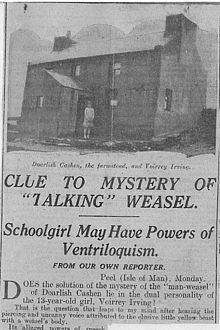
BR: So to sort of set the stage. So it was the Isle of Man, a place called Dule of Cashen. And there was a family that lived in a farmhouse. There was a sheep farm named James Irving. He tended to, the descriptions I read said he sort of dominated the conversation. He would oftentimes speak for the family and particularly when interest in Gef really went everywhere, and you know, they would have visitors coming and they would have guests, including Harry Price’s will talk about in Nandar Fodor, he would often sort of take the lead and talk about things. A bit of a showman, again, garrulous, controlling, and I’ll touch on this later, he kept a diary about Gef, from which a lot of the sources come from. It was his wife Margaret, and there was his teen daughter, Vory, who was I think about 13 when it began, all accounts was a very intelligent, shy, quiet young girl. She would walk around the farm and just rural areas by herself.
0:39:45
CW: And a teenage girl with a lot of time on her hands by herself in an isolated farm, what could go wrong?
0:39:54
BR: So yeah, so yeah, just to finish that. So basically, by the time the investigators investigators sort of came into the case, and primarily Harry Price and Nandor Fodor, the claim had been going on that, well, again, that’s the question, right? Whatever it was, came to be known as Gef, had been on their farm and communicating with them, and the farm itself was a few miles from a place called Darby. And the creature got some notoriety, people would come by. Gef claimed to be an Indian mongoose, born specifically on June 7th, 1852 in Delhi.
0:40:33
CW: Hold on, I’m looking up as to whether or not mongooses are even native to India.
0:40:39
SH: They are. They are. That part, okay, how do I put this, that part of the story checks out. Almost certainly there was at least one mongoose born in India on June 7th, 1852. I can say that with almost certainty.
0:40:57
CW: Well, we should just, why would we check anything else?
0:41:02
BR: Anyways, that’s where it set the stage for what was going on.
0:41:05
SH: That was like 1931 it began. That was the first time that the Irvings said something weird was going on in their house. I think before that, there were some local rumors that the farm had had some uncanny experiences there, but the Isle of Man, there were lots of superstitions going on there, so people were a bit used to the ideas of fairies, like we talked about, and black dogs and things like that. But this was rather new and I think what really happened was if it was Jim Irving, Gef called him Jim, was the one who started to spread the rumor that something was going on in the house and you know we could start to get into it exactly what started but it reminds one very much of how a poltergeist begins, you know, tapping and knocking and then more and more manifestations start to come out.
0:42:00
BR: Absolutely. So, as Sharon mentioned, the happenings allegedly began around 1931. Investigator Harry Price entered the situation in July 1935, along with a man named Richard Lambert, who’s a journalist. For people who don’t know Harry Price’s story, Price was a curious, fascinating figure. I’ve read some about him. I have a couple of references to him in my book, Investigating Ghosts, that basically he was sort of – how would we –
0:42:33
CW: Well, I was going to ask you to sort of lay the – lay his bio out a little bit for listeners. Where was he in terms of credibility on a scale from Houdini to Arthur Conan Doyle?
0:42:45
SH: Yikes. It depends on the time, right?
0:42:50
BR: Right, right.
0:42:51
CW: So he was kind of a wild card. Sometimes he could be fooled and other times he was very adept at sniffing out frauds.
0:42:58
SH: That’s the impression I get.
0:43:00
CW: Okay.
0:43:01
BR: Yeah, I would say that’s true. I mean, he sort of went all over the map. And it’s interesting because as we’ve talked about in the show and as in her book, Scientifical Americans, Sharon lays out very well. Oftentimes these amateur ghost hunters and paranormal investigators and so on claim to be skeptical and they will, they will tell you to their face. They’ll talk about just how skeptical they are. You know, they will, they, they consider themselves to be skeptics because they’re using little beepy devices and whatnot. And I think that Price was sort of in that field where I think he had a genuine interest in these topics as we all do, or certainly the three of us do. And to his credit, he did make some efforts to do investigations, but other times he seemed awfully credulous.
0:43:51
SH: He was, I would say, he was not actually an amateur, but he would have been considered a professional ghost hunter.
0:43:58
BR: At that point, yeah.
0:43:59
SH: He was popular in the media, and he was fairly well-known and that was his job. He would head psychical research investigations or laboratories. I think he was the head of one laboratory, they called it, a research center. The one thing though is important to remember is the movie portrays Harry Price as an American. He was British and he was well-known in Britain.
CW: Maybe Christopher Lloyd just couldn’t do a British accent.
SH: Yeah, it didn’t really work out for me, him playing that character, but Price is, you know, he’s always the guy sitting there in the photographs, the old photographs, with the pipe in his hand and looking very professional with tweed suit and everything, but his claim to fame is Borley Rectory, the haunting of Borley Rectory, which is a classic case.
0:44:45
BR: And a whole other topic we should do a drawing.
SH: Exactly, let’s not even go there.
BR: But I do have in front of me a fairly definitive book on Gef. The title is Gef, the Strange Tale of an Extra Special Talking Mongoose by Christopher Josephine. It’s a bit credulous. I mean, it’s not the perfect book, but I mean, as far as pulling together and doing a fairly good deep dive into it. The author did a good job. There’s a section here, it’s just a sentence or two I want to read here because it sort of lays out some of Price’s earlier investigations. It says, “in 1931 he had accompanied Price to Germany’s Harz Mountains where on the summit a mountain the used of the Bloxburg Tryst, a medieval grimoire. The spell was said to be able to transform a goat into a handsome prince. Needless to say, and despite the presence of numerous journalists, the goat remained untransformed.” So, to his credit, he’s like, hey, we can test this. This is verifiable. Either the goat becomes a handsome prince or not.
0:45:59
SH: So I would say, the Josephine book that you mentioned, I had that too. One thing I noticed is that there’s not that many good references on Gef because there’s a limited amount of information we have. That book, like you said, cobbles everything together. So that’s the best history. But the other resource, I guess, that if you can get it is to read the book by Price and Lambert, which is The Haunting of Cashin’s Gap.
0:46:25
BR: Yes.
0:46:26
SH: Again, that gives their impression of they went there and they didn’t experience anything for about Gef. Gef had apparently gone off because he didn’t like them. So when they were there, nothing happened. But the book Haunting of Cashin’s Gap, I have that, it’s relatively short. It’s also a good read. But again, it’s very, it doesn’t come down either way about what they thought it could be, basically because they didn’t really experience anything. But when Mr. Irving finally did read that book, Haunting of Cashin’s Gap, he wasn’t really pleased because it didn’t really portray him in a light that was all that great.
0:47:06
BR: Yeah, and one thing that sort of should be noted here, and it’s not immediately obvious. Price had to be, and frankly everyone involved including Fodor and Price and Lambert as well, had to be somewhat circumspect about what they printed about this particular case because of British libel laws. Here in America we enjoy somewhat broader protections, defamation, things like that, but in England and the UK the libel laws are somewhat stricter. So it’s much easier to prove, for example, defamation. And so, you know, again, as Sharon mentioned, Price is well-known. Lambert was a journalist. They knew that there was interest in this case, and they knew that what they published would be read, including by the Irvings. And, you know, though they were country folk, they were not above suing people. So they needed to hedge their explanations. I’ll just put it that way.
0:48:06
CW: Well, it’s ironic that you mentioned how strict the British slander and libel laws are. And on the Wikipedia page, there is a case, the Lambert slander case, which took place in 1937. And that is somebody suing another party for slander because that person told said, Oh, this guy is not going to be good enough to be on the board of the British Film Institute because he believes in Gef, the talking mongoose. So he got sued for that. And so so you’re saying Price and Nandor Fodor were afraid to write explicitly that they didn’t believe in, in the in the talking mongoose, because of slander, and then somebody gets sued for slander for saying he did believe in the talking mongoose so two sides of the coin Involving lawsuits.
SH: So lieutenant-colonel Levita was the one who who said about Richard Lambert Price’s co-author that Well, he’s not suitable to be on the British Film Institute Which would at the time was run by the BBC because he believed in the talking mongoose and Lambert successfully sued him for that and got a lot of money, which actually made Irving even angrier because now not only did Lambert get a pile of money and Price got money for the book, but Irving got nothing. And it was his story. Price and Fodor both told Mr. Irving, no, you shouldn’t print your diaries. You shouldn’t, you should not come out with your own story. We’ll do that for you because it won’t look good if you try to make money off your own story.
CW: That’s interesting. Now see in the movie, they made a point of saying that, you know, what’s his motivation for making a hoax here? If it is a hoax, what’s his motivation? Because they don’t want money. They’re a well-off family. But that wasn’t really the case, right? The Irvings were actually impoverished, correct?
0:50:11
BR: Yes. Yes. So there’s a little bit of contradiction about that. So certainly the Lamberts were certainly wealthy, but the Irvings, they were sheep farmers. They, you know, sheep farmers in the Isle of Man. This is not a lucrative business, certainly at the time. It is apparently true from my research that Irving did on occasion turn down money. People can point to cases where he was offered X amount of money for doing something or memoirs or interviews and also apparently, from what I understand, he didn’t charge people admission to the farm. So it’s not like he-
0:50:47
SH: That’s a big one.
0:50:48
BR: Yeah. Yeah. Yeah, yeah, he didn’t set up a gate say hey if you want to see Gef talking mongoose Give me two fire things wherever it was that doesn’t necessarily mean that he didn’t have other reasons for not Doing that I mean for example, you know It would look bad on him If he was you know set up a gate and said well, he would just look much more like the Barnum showman and yeah The other thing is that the opportunities to make money, even though he apparently did turn a few of those down, it’s not clear to me that that necessarily means anything because he may have turned them down because he was waiting for a more opportune time when he could get more money out of it. So we don’t know his motivations and it’s common in the sorts of investigations that that we look into that someone will say, well, why would anyone do that? And I’ve never bought that at all. I mean, the fact is that people do things for any reason or no reason at all. So the fact that some of the motivations may be murky on different people’s parts doesn’t mean anything. I mean, again, I’ve encountered over and over and over again, people who hoax things, make things up, lie about things, lie about people for any reason or no reason at all.
0:52:06
CW: Yeah, and it doesn’t necessarily need to be a whole concocted long con. People just sometimes make decision trees, you know, you make one decision, it leads to another, it leads to another, it leads to another. Before you know it, you’ve got a talking mongoose in your barn and the whole island is talking about it. Now, before we get too far into background and psychology and everything like that. What do we have in terms of sightings of this mongoose? Did any, is it like Bigfoot? Have, have there been any blurry photographs of it or is it just word of mouth?
SH: It appeared that Gef was happy to live inside the walls of the house, that people never really saw him. Although the Irving said that he would follow them to town, but always stayed hidden. And that he would scamper off to town and spy on the neighbors, but he always stayed hidden. Now, I’m not sure, Ben, I don’t know if you recall, did people actually see it other than the Irvings?
BR: Yes and no. Again, this is where things get a little murky, right? So it honestly reminded me of Chupacabra and Bigfoot sightings, where there are people that claim to have seen Gef, but it was always sort of at a distance or something furry from far away. Nobody ever really reported really good close-up descriptions with the exception of Irving’s. Some people actually claim to have felt the fur. They said they actually touched Gef. And, but it was sort of like, it just reminded me of like stage magic where, okay, sit in this seat, look at this place from this point of view, and I’m going to show you something. Right. And so it was, people would, would catch glimpses of Gef or something that was moving or alive or furry or not from behind a baseboard or behind a pile of rocks or under something else. And, you know, of course this is a private house, right? It’s a private farm. So you can’t just run over there and start tearing it apart because it’s private property, you’re gonna get in trouble, they’re gonna kick you out.
0:54:12
CW: At the same time, you’re also on a farm in a rural area with wildlife and the odds of catching something, a squirrel, a weasel, a bird, out of the corner of your eye and saying, I think I saw something.
SH: They did have stoats, which are like weasels, on the Isle of Man.
0:54:30
BR: Yes.
0:54:31
SH: And the rumor was that at one time, some mongooses were released, like 20 years prior, to help with the rats.
0:54:38
CW: Huh.
0:54:39
SH: But that’s not really clear if that was true or not. I can’t figure out if that was actually true or not. But the weird thing was that nobody ever could decide what Gef was, whether it was a mongoose, a weasel, whatever, until somebody actually called it, oh, it sounds like a mongoose. And it actually, I think, came out in the press that way. And then Gef decided that that’s what he was.
CW: Oh, so there’s some retroactive identification here. I can’t really make heads or tails out of the chronology of that. So it’s unclear.
0:55:09
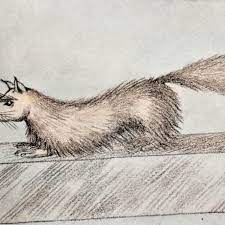
BR: Yeah. My understanding is that he is that he was assumed to be something else. For example, Harry Price described Gef as looking like a squirrel with a very distinctive, you know, sort of S-shaped tail on the back. The beautiful/frustrating thing about mystery mongering is that when you have all these different descriptions, oh, it’s a squirrel, it looks like a weasel, it looks like this, it looks like that. Well, the obvious answer is it’s a shapeshifter, guys. What do you expect? Of course, duh, it can change form.
0:55:43
SH: And then there was that allegation that Gef’s hands were very human-like, that they did not look like mongoose paws. So that was another interesting thing. And there’s some, you know, if we want to get into the evidence of any evidence that Gef actually existed, it gets a little bit weirder there too.
0:56:08
BR: In fact, originally Gef was called Jack. He was assumed to be a weasel. People talked about this weasel named Jack that could apparently talk and this and that. Gef being an apparently very eloquent mongoose, corrected them. He said, no, you’ve all got it wrong. My name is Gef, just so we’re all clear. And again, he gave his biography of being born in June 1852 in Delhi. And by the way, he confirmed that he was in fact a weasel. Except he also said that he said that he was a spirit. He told people I’m a spirit, this and that. Except he also said, quote, I’m not a spirit. I’m just a little extra clever mongoose.
0:56:52
SH: He was very inconsistent.
0:56:54
BR: Yes. As mongooses are, I don’t know.
0:56:58
CW: Now beyond sightings and people catching glimpses here and there and it being a shape-shifter, what do we have in terms of physical proof? Like, if the thing is actually living in the walls of a farmhouse, you can ask any exterminator. There’s going to be mongoose poop everywhere. Did they get any?
0:57:13
BR: I’m not aware of any mounds of collected mongoose poop.
0:57:17
SH: They originally tried to poison it because they really didn’t think it was an animal. And Jim made a big to-do about it. He’s like, ah, I’m dying. You’re killing me, Jim. And then he’s like, no, I’m fine.
0:57:33
BR: I’m just messing with you. So that’s one of the fascinating parts about the whole story is that, again, most of the reports about Gef were from the family themselves. And then you had other sort of reports of people that we had visited the farm, either as journalists or gawkers or onlookers or even friends of the family. And Harry Price and Fodor had made an effort, fairly legitimate effort, to track down locals and say, hey, have you, you know, it’d been going on for several years at this point. And so they understandably and doing due diligence, they, they said, okay, that’s all well and good. We’re going to go talk to other people. Cause keep in mind that as Sharon mentioned, Gef didn’t want to perform. Gef was, uh, uh, being a little, little turd. So he was happy to sort of make, you know, calls and shouts and knocks and this and that. But when the skeptics showed up, they’re like, no, I don’t, I don’t think so.
0:58:30
CW: Yeah, skeptical shyness, as you have put it before, Ben, definitely played a part in the movie as well. What did you guys learn from the book about the actual, you know, case of Gef, the talking mongoose? Was there a ritual that these people had to do by proclaiming their belief in him before he would show up?
SH: Oh, yeah, that was there was some good stories about that, where Gef had had an attitude about the people he knew he didn’t like them, because they didn’t believe in him. So he did make I know the first guy that that that price had sent McDonald to the house who did hear Gef talk. Gef said, you have to say that you believe in me. And you have to say it really loud. I mean, it was just it was comical. You imagine Price and Lambert also in the house talking. And you see this in the movie to Fodor does this as well, saying, hello, Gef, we’re here. We’ve come a long way. Can you perform for us more or less? And and just like laughing. I mean, he just doesn’t want to do anything. So it’s very poltergeist type behavior.
0:59:40
BR: He just flat out refused to appear around skeptics. And again, this is a well-known phenomena. This is Jim Underdown at Center for Inquiry, Los Angeles, has talked about testing claimants for the prize. You know, like, well, normally I can do this. I don’t know why I can’t do it because there’s a bunch of skeptics around. Or you know, it’s the controlled conditions. I mean take your pick which comes with the skeptics that’s sort of how that works. But yeah so Gef actually said he said quote that he didn’t like Price because quote he’s the man who puts the kibosh on the spirits.
SH: I love that line yeah.
CW: And that kind of implies that it is an earth spirit.
1:00:27
BR: So yeah, and you know, and again, other parallels with with ghost hunters, as mentioned, Gef was conspicuously absent when Fodor was there when Price was investigating. At one point, Price, and I think if I recall correctly, it was sort of, we see a scene with Simon Pegg at the cave, calling out to Gef, who he thinks is in the cave, where at one point in the investigation, Price asked Gef to give him a sign, throw something at him or spit at him. And of course, we see these provocations, they’re called provocations by ghost hunters to this day, right? That’s standard practice. If you’re on a ghost hunt and you’ve been there for four hours and you haven’t seen anything, make the ghost angry, insult the ghost, see if you can piss him off to make him do something.
1:01:18
CW: Well, yeah, and there was that pivotal scene in the jail cell where he has his arm around the corner and the mongoose apparently scratches him. Was anybody scratched at all in a jail cell or otherwise in the actual case?
SH: I can’t connect that to anything. Can you?
1:01:37
BR: No. To the best of my knowledge, that was entirely manufactured.
1:01:41
CW: Right. Okay. I was wondering how much of a contrivance that part was.
1:01:45
SH: There is one one incident where Vory says that she felt his teeth. So that she would stick her hand in the wall where he would, where Gef would be in his little sanctum, and she, he would let her feel his teeth. At one point, she did get bit, I think.
CW: I can’t imagine what would make somebody stick their hand down a hole in the wall.
1:02:07
SH: Yeah. But so let’s talk about the actual evidence that did show up. There was fur, there was photographs, and there were paw prints.
1:02:18
BR: So, yeah, so the fur is an interesting case. In the book I mentioned, Josephine spends probably a half dozen pages or so. And if you’re interested in cryptozoology, as we all are, and certainly Sharon and I are, hard forensic evidence is one of the gold standards, right? A body would be great, but if nothing else, give us hair, nails, teeth, bones, and so on. And again, this is another perfect example of where Gef would, on one hand, he didn’t want to show himself, he refused to show himself near skeptics. At the same time, he was annoyed that skeptics existed and didn’t believe in him and weren’t just buying his story hook, line, and sinker. And so there was this sort of strange play where he would say, I don’t need to prove anything to you, I know what I am, and then of course, one day he’s a mongoose and the next day he’s a spirit, but whatever. And then other times he’s like, oh yeah, well, let me give you something to prove myself to you. So you want evidence Mr. Skeptic? And it wasn’t just Price and Fodor, it was also journalists and others as well. So he would say, okay, tell you what, if you want I will take a photo and we can talk about that later. Or at one point he said, I will give you some, basically give some fur to be analyzed.
1:03:35
SH: Price got the fur in the mail. I guess it was exchanged hands. Price gave it to somebody else and eventually made it to the London Zoo where it was analyzed and fairly credibly said this is dog fur, particularly it looks like maybe a collie type dog and guess what kind of dog the Irvings had. They had a dog named Mona that was a collie type dog.
1:04:01
BR: Oh, Gef, you trickster.
1:04:04
SH: Again, was he a trickster? It’s always two views of the story that you could take from that. So that kind of was like, you can imagine Price sitting there going, hmm, that’s not interesting.
1:04:17
SH: They did actually represent that on the movie at least. You do see an expert going, I have looked at this, this is dog hair. And that’s another thing I forgot to list in the beginning. This also covers trickster spirits. I mean, it is a very tricky mongoose if it’s a mongoose.
1:04:32
BR: Yeah, again, fairy or trickster or poltergeist. I mean, there’s lots of blending from a sort of cultural and folkloric point of view.
1:04:41
SH: So the next thing we have are some photographs. And I’ll be frank with you. I see a fuzzy looking hat in these photographs. I mean, I just don’t see anything.
1:04:53
CW: A hat?
1:04:53
SH: It’s like, you know, those raccoon hats that you always see from the frontiersman. You know, it looks like somebody put a hat on top of a fence post. And there’s various of these, there’s a couple of these pictures, supposedly, I think it was Vory who took the pictures, right?
BR: I believe so, yes.
SH: Yeah. She loved cameras. Hmm. And Price gave her a camera. And she said, well, let’s see if I can take a picture of Gef.
1:05:21
BR: Obviously, Price and the other investigators were getting annoyed slash discouraged. And so, as Sharon mentioned, Vory got a camera to give to Gef, asking him to basically take a selfie. As mentioned, there was a small, I don’t know if it was an entire room or just part of a room, but there was what was called the sanctum in the farmhouse. It was said to be where Gef usually was or lived. Again, he wasn’t confined to the house. He allegedly went all over the farm. He would go into town. He probably got on a plane at some point. I don’t know. I don’t know quite how he got from Delhi to the Isle of Man, but a little passport or something. But so, so Price says, OK, well, you know, can you give this to Gef to get a photo? It will not surprise anyone that attempt failed. But Gef said that he tried to. He’s like, my paws slash hands slash whatever the hell it is. It can’t press the shutter. He’s like, I would love to do this for you. I’d love to take a selfie. It’s not my fault. I’m doing my best for you.
1:06:21
CW: Now, if Vory had had a young friend, perhaps a teenage boy who was into taxidermy, this could have been a whole different story. She was pretty good about that herself. I mean, she would like kill rabbits and, you know, she was very animal oriented. She was good around animals. So that could be why she was the focus for Gef. It could be many other reasons why she was the focus for Gef, but she seemed to be pretty good with the animals around her and the dog would go and kill rabbits as well as Gef. Gef would kill rabbits for the family as well and leave dead rabbits right on the doorstep. So I thought that was interesting too. Farm life was nothing that we would be familiar with I think.
BR: Right, right. Certainly not a disremove. And yeah, Gef allegedly had super strength because again keep in mind that presumably if then presumably, how strong is an earthbound spirit? Stronger than I am, I don’t know. But if on a particular day, Gef was claiming to actually be a very smart mongoose, which you said on several times, then you’re subject to the laws of physics.
CW: I mean, Well, what sort of feats of strength was he doing?
BR: So it would be things, for example, moving heavy chairs, so inside a room or throwing objects. So if an object, a stone, a rock, or a thing like that is going to be thrown, then of course you have to have leverage. You have to have, there’s physical demands here, and the fact is that a creature of presumably his size and weight doesn’t have the physical mass to move heavy chairs across.
1:08:02
CW: He can rearrange the furniture, but he can’t take a picture with his paws.
1:08:14
BR: Even though he was presumably super strong in this and that, he also had apparently clairvoyance and he was psychic.
1:08:23
CW: That was like the… And I’m glad we got to this. They did play to that a lot in the movie in terms of like they even had him making phone calls to people and saying, you know, psychic things to them. And that was like a big hook with Dr. Fodor in the movie. You know, how did you know what my dad said to me the last time I saw him before he died? So what what do the books what do the actual researchers into the Gef the talking mongoose case have to say about that?
SH: Well, he never made a phone call as far as I know. I was wondering about that. That’s that’s again completely made up as far as I could remember.
1:09:00
BR: Yeah, the talking mongoose. That’s the plausible part. The phone, that’s a whole that’s a bridge too far.
1:09:08
CW: The phones have buttons or rotary dials, little fingers and hands couldn’t possibly.
SH: Yeah, I mean, the movie was really just, yeah, that was really extreme. I really didn’t see a whole lot in there because there was amalgamations of things and, and, and we could talk about the movie in a little little bit. But I, Gef would know things like he would bring gossip, you know, he would spy on people in the village and bring the gossip back, he could read, so he could read over people’s shoulders and come back and tell what they were reading. I’m not sure there was some psychic stuff that was going on. It was alleged that Margaret, Mrs. Irving, was psychic, maybe that she was a witch. Gef did kind of act kind of like a familiar in some ways. So yeah, there was some of that going on.
1:09:55
BR: In the book, it describes a couple of cases where there’s one particular case where Gef allegedly repeated something that Mr. Irving had told another man while on a walk some distance from the house. So they had gone, I don’t know, 10, 15 minutes away and presumably nowhere near where either Vory or Gef would be because they’re by themselves. This is some comment and it just didn’t seem possible that either Gef or Vory could have known whatever was there. You know, I mean, it’s one of those cases, essentially this is second, third-hand information. I mean, we can go by what Mr. Irving wrote in his diaries, which again, that’s inherently suspect to begin with. But even assuming that the other person in the conversation could confirm this, again, we don’t know exactly what Gef said and how close in approximation it was. And as we’ve talked about in the show and all of us know, I mean there’s lots of hot and cold reading techniques. Richard Wiseman, for example, has done great research on audio recording seances and interactions between sitters and psychics where there’ll be a 20-minute discussion and the client will come away saying, oh my God, how did the psychic know X, Y, and Z? The answer is they didn’t we know what was said? There’s a recording of it The psychic did not say that you interpreted parts of it or this and that retrofitting and so on so again even if there is some sort of kernel of truth that maybe Gef was said to have said something that maybe relates that doesn’t by itself mean anything.
1:11:32
CW: Well that brings that it brings up another question, you know before we add remote viewing to his abilities as well. What people remember and what they tell each other and, you know, the folie a due. Is that how you say that? Folie a due? Oh, do when two people are talking, they each sort of heighten each other’s story. And then you expand that to a whole island full of people and you get into the territory of mass hysteria or social contagion. What do you think about that aspect of this in terms of was it brought up in any of the books? As you guys are both pretty much experts on social contagion to a degree, what do you guys think about that as far as plausibility as part of this story?
SH: I’m not so sure that people in the village, the villages, believed in Gef. I mean, it’s depicted in the movie that some of them did, some of them didn’t, most of them didn’t. So it’s unclear how much they actually believe that to be true. I think what we’re dealing with perhaps is a family dynamic going on here. I know Vory said later in life when they finally got back around to her and asked what was going on, she says, yeah, my mother and I didn’t want to say anything, but my father wanted to tell people, which I thought was really revealing.
CW: And he was described as controlling.
1:12:51
SH: Right.
1:12:52
BR: Yeah, he would take the lead in, you know, sort of anytime someone was trying to question Vory for obvious reasons, we can get into that a little more shortly. He’d say, well, let me answer for her. Like, well, okay.
1:13:07
SH: And she, yeah, she really suffered for that, I think. You know, Vory, she was teased. She didn’t have friends, according to the sources. You know, she was she was called the Dolby spook herself, which is tough for a girl, you know, in a situation like that in such a rural area with with being so isolated. So that that can play into the suggested explanations for what was going on with Gef. But I really think that the family themselves being isolated in that place, it was such a long walk even to get to the next house. They just really didn’t interact with people, that they did start to feed into each other’s the folly of many that something was going on in the house.
1:13:53
BR: In addition to Gef’s alleged clairvoyant abilities or whatever the hell they were, Nandor Fodor was particularly interested in what was called the penny trick. The idea was that Gef could predict with apparently pretty good certainty whether a coin that had been flipped in darkness or near darkness came up heads or tails. Of course, it’s, you know, still 50-50. So there’s that. But again, allegedly, that was one of his abilities.
CW: Well, did Fodor recreate this and like observe it and take any notes on on his accuracy rate?
BR: I don’t think he actually, you know, went to the trouble of deriving a percentage of time of accuracy. I think my reading was that Gef was right enough for the time that he was impressed by it, I guess would be how I’d put it.
1:14:43
CW: Oh, OK. So he at least didn’t take Irving’s word for it. He did try it out himself.
1:14:48
BR: That’s my understanding. He he’s like, oh, Gef can do this. Oh, let me try this. And again, I mean, it’s we don’t know the circumstances. I mean, how, you know, it was sort of described as being this Gef’s voice again from somewhere in the house, and we’re going to get to that in a second, predicting the outcome of a coin flip. But even Mr. Irving himself had hinted that maybe Gef wasn’t clairvoyant in that case, was actually being able to look down at the result of the coin toss from a knot hole above. So, what do you make of that?
CW: The explanations are getting very convoluted and possibly even unnecessary. Nobody is applying Hyman’s principle here at all.
1:15:34
BR: Yes, Occam’s razor was conspicuously absent. We’ll be bringing that in very shortly.
CW: Well, now I’m also getting a picture, sort of a gestalt picture of all sorts of indirect angles of this poor girl, Vory, the isolated girl in the middle of this story, and she’s talking through the walls, she’s throwing her voice. Can you tell me more about this voice? In the movie, they do make a point of saying that the whole house could act like a soundbox. What does that mean?
SH: Yeah, I think that was true. If you see pictures of the house, you can see it’s very stark and the pictures on the inside show that there was wood paneling against the stone. To make the house feel, you know, more comfy, there was this wood paneling inside and that if you would make that noise, it would reverberate throughout the space behind the wood paneling. So I know Fodor did suggest that that could be the case of why they were hearing the sounds reverberate because the house was acting like this sound box.
1:16:32
BR: Yeah, in fact there’s a quote in the book from Price and Lambert that examined the house. and that it was one great speaking tube.
1:16:53
SH: Yeah, that’s super interesting. So then somebody suggested, and this is something that’s very unclear to me, that Vory could be a ventriloquist. Some people said it was portrayed in the movie that this was a fact, other sources saying it was suggested and she denied it, so I am not clear about this at all. It seems kind of a stretch to say that this was going on, but I’m not sure what to think of it.
1:17:19
BR: Yeah, from my reading was that there’s at least one or two people that were quoted in the book who knew Vory as a child. And again, the descriptions of her are pretty consistent, very independent, very intelligent, very resourceful, sort of isolated farmhouse girl, this and that. And apparently, again, from the Josephine book, it does mention that at least one or two people said that ventriloquism was a trick that she had learned as a pastime. It does seem to me to be somewhat convenient. On the other hand, I don’t know that that would surprise me.
1:18:01
CW: Well, are there any descriptions in the book about how this voice sounded? Did Gef have a deep voice or did he sound suspiciously like Vory?
1:18:07
BR: So that’s interesting. So that’s, you know, we talked about the photographs, which are ambiguous, the hair, which turned out to be from their dog Mona, things like that. So another angle that we can look at it, what would be from Gef’s diction and the content and its voice, right? Because even though Gef never really appeared, you know, in full view, as far as we know of anybody, he was mostly known for speaking. And I should also add that even though he was very eloquent and would, you know, give, as Sharon mentioned, he would sort of discuss the gossip from the village and even current events, again, he mentioned Einstein, a lot of the times, the things that were attributed to Gef were screeches. There were knocks, there were sounds that weren’t necessarily coherent. I mean, so I just, I want to be clear that it’s that even though Gef did oftentimes speak fairly eloquently, a lot of the things we’re saying, well, that’s just Gef, were, could be any number of things. So Gef’s diction was interesting. It turned out that he used a lot of the regional Manx expressions, which makes sense. I mean, it makes sense that a taking mongoose would speak the local dialect.
1:19:28
CW: Well, that’s wonderful that he was able to lose his Indian accent so quickly.
1:19:31
BR: Well, I was wondering that myself, right? How does this work, right? And so, as Sharon mentioned earlier, oftentimes if something was ambiguous or muffled, which it might be, I mean, in a house or something, oh, Jim Irving would say, oh, Gef said this, so he would sort of translate. In terms of your question about like, how Gef’s voice was described, there’s a couple of descriptions in the book. It was described as sometimes being, quote, two octaves higher than a human’s. But then the person also said that, well, other times it sounded like a teenage girl, maybe who was maybe 15 or 16 years old.
1:20:15
CW: Actually said teenage girl. Okay, they went there. They were two octaves higher than a human. Back then, human meant a male. So, yeah, it sounds like a girl. Okay.
1:20:29
BR: It reminded me of Bigfoot sounds where, you know, as Sharon well knows, that’s one of the, that’s one of the, the claimed evidence for Bigfoot. There’ll be Bigfoot howls and grunts and moans. In fact, many years ago, there was a CD called Sierra Sounds, which was allegedly Bigfoot recordings. And they talked to a, they talked to somebody who said, well, does this sound like a human? The answer is, well, no. And then the answer is, well, if a human cupped the hands around their mouth, could it sound like this? The answer is, oh, yeah, oh, yeah, sure, definitely. So, you know, the question is not, did it always sound like a teenage girl? Because the answer is no. If the answer, if the question is, could it sound like a teenage girl could make? The answer is yes.
1:21:10
CW: That covers the question pretty well. I think you’ve solved the case then.
SH: Just to wrap up the one thing, well, actually two things. He did produce paw prints. Gef did produce paw prints, as I mentioned previously as part of the physical evidence. They do not look anything like a mongoose prints. They look like somebody stuck their finger in plasticine. So that’s, again, evidence that didn’t really pan out. And another thing that I found was similar in this scenario was at one point there was something called the Epworth poltergeist, and this was back in 1716. And apparently it was a case where the thing took a shape that looked like a badger. It didn’t always appear, but when it did appear, it did look like a fuzzy animal. And it happened to be named Gefrey.
1:22:01
BR: What?
1:22:02
CW: Really?
1:22:03
SH: Not really sure how that plays into. Was that the story?
CW: Was that written about? And maybe there I mean, somebody hard to say heard about it.
1:22:16
SH: So it’s just really hard to know what to think about all this. There’s just so much going on. It’s hard to make a conclusion. And again, you see, the movie didn’t really make a conclusion either. Neither of the books made conclusions, strong conclusions, although you know, Fodor and Price and Lambert had their ideas, but it was all left pretty ambiguous because what do you think about all this? Who knows?
1:22:42
BR: Yeah, I mean, I think it’s so just to sort of wrap up what they thought, right? So Harry Price, I have a quote from him, it appears on page 288 for the book, it’s very short, but it’s very pithy and revealing. So I’ll just, this is a letter from Price, he says, I agree the whole family must be mixed up in it, but there still remains the question of motive. As an editorial note, as I mentioned, I’m not sure that ambiguous motive is that big an impediment to understanding what happened. Anyway, it certainly is not to draw people’s attention to Cashin’s cap, because they do their utmost to keep them away. The motive for the imposture lies much deeper than mere publicity, and that’s what makes the case so interesting. And he also wrote, of course, we cannot state publicly and in print that Irving is a fraud, but we have indicated the affair is susceptible of a psychological explanation, and that is what I believe is the explanation. So Harry Price, again, he, for legal reasons, he couldn’t say, hey, this is all a fraud. He says there’s a psychological explanation. Now, of course, what does that mean? Right? So there, I mean, Price is certainly correct. There is a psychological explanation to this. It can be psychological and a hoax. Interestingly enough, Nandor Fodor, Celestia, do you want to guess what he thought the answer was?
1:24:08
CW: Something Freudian, he conjured up some sort of delusion that was manifest. I’m trying to remember all my Freudian buzzwords here.
1:24:20
BR: So, Fodor apparently, he thought it was in fact a talking mongoose.
1:24:27
CW: What?
1:24:28
BR: Yes, that’s what the book says. Again, this is just interesting on so many levels. So he didn’t believe it was a spirit. He thought that one of the explanations was, he basically took Gef’s word for it. Gef told him explicitly, I am just a little extra clever mongoose. And after all the research and explanations and this and that and the other, apparently Fulor’s conclusion was, yeah, it’s a mongoose that learned to talk.
1:25:01
SH: But didn’t he change his mind about it later on?
1:25:03
BR: That was his original explanation. So, I sort of buried the lead, right?
1:25:10
CW: Did the statute of limitations have to run out before he expressed his true his true opinion?
BR: Well, I’ll let Sharon get the second half of that. That was a setup for the part two.
SH: He got in trouble for it. Fodor, for sure. I mean, he didn’t get in liable trouble for it, but he did go to the Freudian explanation at some point. He psychologized, Irving, as being this failed man who ended up having to retire from his business because it wasn’t good, moving to this farm in the middle of no place, not really having much success there in farming, and produced Gef unconsciously as a projection of his personality. I think Fordor got in trouble for that, for being too psychoanalytical about psychical research and he kind of got booted from his research position for that. So again you’re seeing the psychoanalyst stuff being brought in and it wasn’t going over very well with people who actually thought there was something more supernatural or interesting going on. That’s what I took out of it. Fodor tried his best and didn’t really have a solid conclusion to that. Well, I’ll just I’ll just throw my opinion out there and say For the sake of that isolated, but very clever girl under a controlling father. I’m glad the father One that kind of had the finger pointed at him instead of making the girl into it more of a spectacle, right?
1:26:43
BR: So as to Vory herself, she died in 2005 and had declined many interviews. I think there was one interview that’s that’s Reprinted in part in the book to Fate magazine in 1970 in that interview she insists that the whole thing was not a hoax.
CW: So she never copped to anything.
BR: Nope Nope, she insisted that there was in fact a little animal that talked and she said that she I don’t know that she ever Explicitly denied being a ventriloquist. She might have at one point, but I think that it was, it wasn’t clear whether she denied being ventriloquist or she just said, yes, she was, but she didn’t do it in the case of Gef. And I want to touch on that for a second because I find that really interesting, right? Where you have, I mean, clearly there is hoaxing throughout this case, right? We know that for a fact in the case of Gef’s fur, which not only was it from a dog, but it was actually cut. Even with the scientific analysis of 1930s, they had microscopes and they could tell whether it was actually plucked because Gef had claimed, just circle back to that for a second, Gef had claimed that he had removed, he’d actually plucked hair out of his body to give to the scientists and to Irving. We know for a fact that wasn’t true. Not only was it the dog’s hair, but it was the shape on the cut was very clearly cut, not plucked. So there are many aspects to this case that scream hoax. And one of the interesting aspects was that there are people who would say, well, yeah, okay, fine. They were hoaxing a little bit, but just because there were parts of this, there were clear hoax, maybe other parts were real. And this was of course very common in during the spiritualist era, where, you know, Harry Houdini and others, even Harry Price in some cases, would expose fake mediums. And the defense was, okay, fine, yeah, sure, you caught them hoaxing this one time, but the spirits weren’t being cooperative, or they were tired, or there was always some sort of, you know, some special pleading argument why, okay, the time that we caught them hoaxing and lying was one time, but the rest of the time is totally legit.
1:28:54
CW: Yeah, so that puts the, they’re trying to put the burden on the investigator to say, you have to disprove every single instance of everything going way back to before, you know, we even started recording any of this. And otherwise, I’m still going to believe. So, well, having said all that about the actual case, and we’ve been talking a little bit about the movie too, but to explore the movie a little bit more thoroughly here. What was your just general feeling of it? It wasn’t really an uplifting movie. I didn’t really I didn’t really like it as a skeptical movie. I thought it was pretty to look at. You got to see some very nice cinematography. It was directed by Adam Seagal, but he seemed like he was channeling a little bit of Wes Anderson. It was kind of a weird little, weird little just isolated movie. And Simon Pegg sounds a little bit like Christoph Waltz as he as he portrays Nandor Fodor. And Mini Driver, let me first ask you guys, did did Fodor have an assistant or was she completely made up?
SH: She was completely made up as far as I know. Okay, Fodor had a wife.
CW: Oh, did she? So she go to the Isle of Man with?
SH: No, okay. No, Fodor went to the Isle of Man with Charles Morrison. So he did not go with his assistant. And I believe she’s entirely made up.
CW: Okay, better story.
SH: Price had a price had a secretary.
CW: Okay. So maybe that was, again, a merged idea of, you know, let’s put a female role in here.
SH: Well, and I think what you were gonna say is Minnie Driver is wasted in this movie. Because she really is.
1:30:37
CW: I mean, she was she was great for what she was, but they wrote her in kind of a weird way. As far as made up characters go, there was a black gentleman who was, what would they call him, a gentleman helper sort of around the farm?
SH: Errol.
CW: Errol, that was his name. Was he completely made up or did he exist or on the farm with this family?
1:31:00
SH: I didn’t hear of him mentioned at all either.
1:31:02
BR: Yeah, I didn’t either. I don’t recall. I mean, my recollection from researching and going through the book was that it was basically just the three of them. Again, they did have they did have neighbors, even though they were some distance away. And, you know, there was the town of Darby and this and that rural area, but not entirely isolated. It’s not like you had to go for, you know, hours and hours to to find somebody. But my understanding is it was just the three of them.
CW: OK. And they they use that character Errol as kind of this peek behind the curtain type. Now, you he said to to Nandor, yeah, you and me both. No, there ain’t no Gef. And I can’t do the accent because it’s a very peculiar accent. And I don’t know if he’s actually getting the Isle of Man accent perfect and nobody else in the movie was, or if he was supposed to be from somewhere else.
BR: Yeah. Like Gef’s dialogue, the accent sort of came and went.
1:31:55
SH: And Gef’s voice. Yeah. Let’s talk about that.
1:31:58
CW: Neil Gaiman. They got Neil Gaiman to do Gef’s voice. Wow. I need to find out why Gaiman was interested in doing that project.
SH: It was a good choice. Yeah, and you definitely kind of a spooky voice. Yeah, it’s weird.
CW: And you’re like, okay, could the teenage girl produce that? Because it seems like they’re definitely, they pushed you to be like, yeah, this is obviously the teenage girl throwing her voice. And the part where Minnie Driver seemed very badly written as a character, talking about motivation here, she spends time with Vory, and Vory teaches her, oh yeah, let’s have a lesson on throwing your voice. It’s very easy, and she does, she demonstrates how well she can throw her voice and sound like Gef, and then Minnie Driver comes away from that experience going, I believe in Gef. I believe in Gef the talking mongoose. What?
1:32:52
SH: Yeah
1:32:54
BR: Wasn’t quite sure where Going I’m like did I did the disc skip? No, it’s not a disc. It’s a did a screamy There were some yeah, I mean I sort of had I think I liked it a little bit better than Sharon did. It was not a great film It was sort of interesting and I thought it sort of went off the rails in the third act. The setup was okay-ish, but yeah, I did like the first part where he’s being interviewed in this very smoky room. And I sort of felt some sympathy there, because I’m often the same boat, where if someone says, do I believe in ghosts? I mean, the answer is kind of complicated. I mean, the simple answer is no. But the more interesting, accurate answer is sort of.
1:33:57
SH: What do you mean by ghosts?
1:33:59
BR: Yeah. So I was sort of sympathetic to his character and I appreciated that there was that nuance where again, and I’m sure to the audience and to the interviewer, he seemed to be being cagey, but that’s honestly the sort of answer that I would give.
1:34:15
CW: It started with a lot of potential and he really did think, okay, this movie is going to go into nuance and it’s going to go into definitions. And I started getting annoyed with it when they then started to portray the skeptic as kind of an a-hole. And they even have Errol, you know, say, Oh, I bet you’re a lot of fun at parties. He goes, and he turns around, he’s like, I do get invited to great parties, and I’m very fun. And he’s like, yeah, and after you poo poo on everybody’s beliefs, you know, you walk away and they all call you an a-hole. Yeah, and that was a cleverly written scene, but it was definitely at the expense of anybody trying to do skeptical work, you know.
1:34:59
BR: Yeah, and to be fair, the way the character is written, he does essentially get drunk and go and… That reaction was not totally lit from that field, given what he did. it. So I mean, the character, yeah, the character was sort of turned into that. Again, I obviously, you know, none of us met Fodor. And we, you know, I mean, we, we can read his, his descriptions and accounts of them, but…
1:35:24
CW: Well, the skeptical work that you’ve done that other people who are do, you know, Kenny Biddle is working, you know, is working with CFI doing is not to break into people’s houses with a hammer and start doing damage. It’s usually to allay people’s fears, to get down to the truth of a mystery. And I didn’t see that happening in this. In fact, it comes off, you know, by the end of it’s like, hmm, well, I, you know, I, you know, why am I even, why am I even looking for the truth? You know, what is truth? What is being a skeptic? What is, you know, and it got a little bit floofy at the end and then, you know, Minnie Driver decides she doesn’t want to do the work anymore and then she does and it was convoluted, to say the least.
1:36:12
SH: Yeah, I agree. That was, that was, it was kind of icky. The whole exchange between Fodor and Price was awful icky, again, clunky dialogue, didn’t like that. I love Simon Pegg. He could do anything and I think he’s great. So I loved him in the movie, but I was kind of annoyed that he made Fodor out to be such a character like that. Yeah, it was unfortunate.
CW: So if we’re listener, if you think we’re ruining the ending for you, we didn’t do that. The filmmakers did that.
1:36:42
BR: They’re way ahead of us.
1:36:43
CW: There was a part in the beginning, which sent off my little skeptical alarms, when they retold through Harry Price the story of Houdini’s wife receiving the coded message from a medium Arthur Ford and there’s more to that story which you can look up.
SH: That’s a good point.
CW: Yes, right They made it seem they just left the rest of it unsaid and I don’t know maybe in 1934 it might have been unsaid because she didn’t Redact, you know what she had claimed until later, right?
1:37:16
SH: Yeah, and you know what, I think we’re looking at a 90-minute movie on a very complicated case and they tried to throw in some touchstones and that, yeah, it kind of fell flat.
1:37:28
CW: Yeah.
1:37:29
BR: Let me add one other quick thing, which is that none of us were that impressed with the film. Did either of you stay through the very end credits?
1:37:37
CW: You know, I started watching and I just saw the little, you know, the little photographs start coming up and I just kind of left it at that. So what did I miss?
SH: I was confused by this.
1:37:47
BR: It was quite interesting. So the end credits seem to slag pretty heavily on the writer director.
CW: What? Slag pretty heavily. Like the end credits got in some burns on the writer and director.
1:38:06
BR: Yeah.
1:38:07
SH: They had these clips inserted of the actors talking about the director.
1:38:12
CW: Oh!
1:38:13
BR: And how much he sucks.
1:38:14
CW: Oh my! No way!
1:38:17
BR: And so, yeah, I wasn’t sure to make it that. I was like, okay, well, if we say that maybe Gef was speaking for Vory, and there’s a lot of, you know, thoughts about maybe she was sort of his voice, or he was her voice, and things like that, you know, maybe the person that put the end credits together was speaking on behalf of a crew that was frankly kind of pissed at the director. I don’t know. I’m just going to leave it at that.
1:38:48
CW: Well, Sharon, thank you for joining us for this segment and for watching Gef the Talking Mongoose, Nandor Fodor and Gef the Talking Mongoose. Still available on Amazon if anybody actually still wants to watch it after our review.
1:39:03
SH: Thank you very much for having me. I thoroughly enjoyed it.
1:39:07
BR: Always great to have you on.
1:39:08
SH: Thank you.
CW: And remind listeners where they can find you if they want to hear more from you.
SH: They can go to my website, Sharonahill.com. Everything’s there.
CW: Perfect.
(MUSIC)
CW: Well, once again, it was great having Sharon Hill with us to bring her astute knowledge of Gef the talking mongoose in this case.
1:39:40
BR: And she’s just fun to talk to. I mean, she’s a long time friend of mine into the show. And, you know, it’s just interesting and full of ideas and curious and, you know, author of the book, Scientific, Scientific Americans and just spooky geology. Just I don’t know, it’s, it’s, it’s always great to have her on.
1:39:59
CW: Ben’s a fan.
1:40:01
All right. Well, until next time, listeners, we will be cooking up some more strange stew and pouring out a brand new bowl of it in two weeks. Until then, everybody, take care.
1:40:14
Bye-bye.
1:40:18
We would like to extend heartfelt thanks to our top-tier sponsor-level patrons, Amy Frusciaro-Kelly, Dr. Angela Matke, Elizabeth Leggett, and Laura Ellis. Thank you for your continued support of our podcast. If you’re interested in becoming a sponsor, or just throwing us a buck or two, please visit Squaring the Strange on Patreon.com and browse our selection of patron rewards. Every bit helps us keep the lights on here, and we are grateful to our generous friends who help us bring you quality content. If you are short on cash and want to just give us moral support, remember to recommend us to a friend, mention us on social media, or give us a review on your favorite podcast dispenser. If you have comments or topics you’d like to see covered, come join our community on the Squaring the Strange podcast discussion group on Facebook. Squaring the Strange is a production of Two Heads Studio LLC, copyright 2021. Theme music provided by Shriek Back, additional music by Memory, Keytard and Feathered, and Pasquale Romero. Additional support by Ashley Romero, Robert Sundin, and Alicia Jarvis. The views and opinions expressed on this podcast are those of Squaring the Strange and do not necessarily reflect the views and opinions of Two Heads Studio, the Strange and do not necessarily reflect the views and opinions of Two Heads Studio, Kronos Creative, Center for Inquiry, our advertisers, or any other affiliated organizations and employers.
Transcribed with Cockatoo
