
Episode Summary:
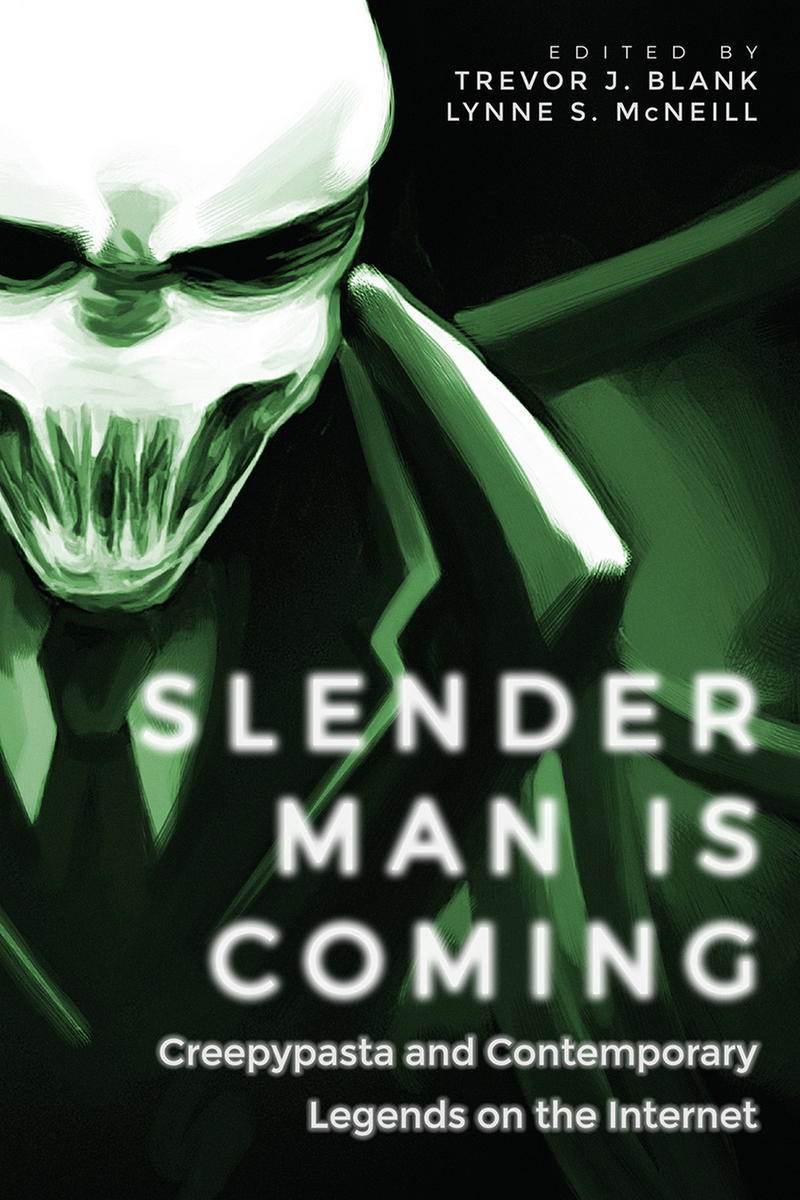
First we discuss a few skepticism-adjacent current events: the recent Colorado train spotting of Bigfoot, RFK Jr.’s bid for the presidency, and a new lawsuit naming “Sound of Freedom” hero Tim Ballard as a sexual predator who paid a psychic to help groom his victims. Then we dive into Slenderman, or “Slendy” as his friends know him. Professor Andrea Kitta, contributor to “Slender Man Is Coming” (Utah State University Press, 2018), brings her public health and folklore knowledge to bear on this created cryptid, born of photoshop in the pre-AI days and raised on the pent-up rage of cyberbullied adolescent girls. Part revenge fantasy and part rescuer, what is Slendy’s game? Does he drive you insane or take you away to his secret mansion? While he was the focus of a tragic 2014 stabbing case in Wisconsin, since then he has faded slowly and may end up where many initially terrifying monsters go — into the realm of child lore, as a spooky story for very young kids.
0:00:00
Ben Radford: Welcome to Squaring the Strange, the podcast that examines all manner of the mysterious and the mundane through a critical lens. So, let’s square the strange.
0:00:11
BR: Welcome back to Scoring the Strange. This is episode 212 and with me is…
Celestia Ward: Celestia Ward, as always, and Pascual’s not back, but we’re still here. He’s starting to be this like waiting for Godot.
0:00:51
BR: Well, you’re not going to have to wait for a super cool episode because this time we have a folklorist friend of mine, Andrea Kita, Dr. Andrea Kita, and we’ll be talking about Slenderman.
0:01:03
CW:Perfect for Halloween. He is one of the more recent spooky additions to the cryptid slash monster landscape.
0:01:11
BR: Exactly.
0:01:12
CW: We’ll be talking about that and urban legends and lore and creepiness and all sorts of wonderful stuff.
0:01:18
CW: In the meantime, we’ve got a few things to talk about. What’s making us skeptical this week? Well, we do have a few things to discuss. The first biggest overarching elephant in the room is we’ve got a war breaking out in the Middle East.
0:01:39
BR: Well, several, only one in the Middle East, but of course, there’s also the war in Ukraine and in Russia. So lots of hot spots coming up. And of course, every time there’s a war, there is…
CW: Misinformation.
0:01:52
BR: Yeah, yeah.
CW: And one thing that I was I was kind of surprised to see, but but it was gratifying to see was that the misinformation was being blasted. I should say warnings about the misinformation were being blasted from everywhere. It was making the top story on a lot of news stations. It was being talked about by late night talk show hosts. People were talking about the fact that, look, there’s TikToks out there that are just video game snippets. And I believe that happened with the war in Ukraine, too, when that first started flaring up. People were sending images from video games and claiming it was some sort of attack somewhere else and you know anything to just fire up people and get them on one side or another. So be wary, be careful and you know vet your information.
0:02:43
BR: Absolutely. I mean they say that truth is the first casualty of war and of course, the whole the whole issue is clouded by partisan reporting and partisan spins on otherwise neutral information and things. So, as always, be a little extra careful about what you’re spreading and sharing, because, you know, it might it might inflame people and, you know, it could mislead people.
0:03:05
CW: And I mean, at least this war is in Israel and nobody’s ever lied about Israel or Jews. Right, Ben? We’ve never had any any false rumors go around about it. Anyway, I’m being facetious here, but there is a political hotbed of of roiling anti-Semitism fueled things that is just expressing itself a lot this past week. And, you know, be careful, be strong and hug your loved ones. America, we’ve got RFK Jr. announced somewhat anticlimactically that he was going to run for president. Did you happen to see his glorious unveiling of himself?
0:03:46
BR: I didn’t. I’ve written about RFK Jr. a few times, usually in the context of vaccine misinformation. He makes a point of being offended and indignant when he’s when he’s called out as being anti-vaxxer, after which he immediately begins talking about how horrible vaccines are.
0:04:04
CW: And then spreads misinformation about vaccines far and wide. Yeah. Well, I’m bringing him up specifically, not just because his announcement of his presidential campaign was kind of lampooned everywhere because like he couldn’t find his speech and the teleprompter was upside down. And it was just a comedy of errors in like a short space as he prepared his grand announcement.
0:04:30
BR: But was it in front of the Four Seasons?
0:04:32
CW: That was the only element missing. It was actually in front of a legitimate press conference type setup.
0:04:39
BR: We needed Giuliani there somehow just to complete the picture.
0:04:43
CW: Oh, boy, to make the perfect soup here of political craziness. Now I’m bringing this up specifically because hoorah to the Kennedy siblings. I’ve only seen, I actually saw this happen once before. Somebody running for some local political office got, went viral because they had the perfect opposition commercial that featured all these voters who were upset and turns out all the voters were related to the guy they were talking about. Similar sort of thing, a tweet came out recently. I’ll read it to you here. Statement on Robert F. Kennedy Jr.’s announcement today. The decision of our brother Bobby to run as a third party candidate against Joe Biden is dangerous to our country. Bobby might share the same name as our father, but he does not share the same values, vision, or judgment. Today’s announcement is deeply saddening for us. We denounce his candidacy and believe it to be perilous for our country. Signed Rory Kennedy, Kerry Kennedy, Honorable Joseph P. Kennedy II, and Kathleen Kennedy Townsend. So, they have, his siblings have pushed back on some of his anti-vaccine stuff and his COVID conspiracy things before. But good on them for just, you know, united front coming out against the little brother Bobby there. And so what else is making news?
0:06:13
BR: Well, I’m sure you saw and probably many listeners saw the latest, and I was going to say greatest, but it is by far from the greatest Bigfoot video.
0:06:23
CW: Yes, yes.
0:06:24
BR: That’s a guy taking a squat in a scrubby desert looking scene there. Yeah, so this happened on Sunday, October 8th. And there was a Wyoming couple, Shannon and Stetson Parker, who were on a scenic train through the area. And if you’ve ever been to Colorado, and certainly Southern Colorado, it’s a beautiful area and there’s lots of cool, you know, vistas and trains. In fact, here in New Mexico, we have a Cumbrescent Holtec train, which is sort of similar, sort of an old-timey train and, you know, goes through and does the tourist thing.
0:07:00
CW: It’s very cool. I love the old trains. We’ve got a historical railroad here too and they’re especially fun in the autumn.
0:07:06
BR: Yes, and they were riding the Durango and Silverton Narrow Gauge Railroad through the San Juan Mountains and Forest and they saw and recorded what appeared to be a guy in a Bigfoot suit. I don’t mean to spoil the ending, but it looked a lot like a guy in a Bigfoot suit. It was shot from the moving train and as I mentioned, so you see this figure and he actually blends in pretty well. If he just stayed still, no one probably would have noticed him.
0:07:34
CW: Now that must have seemed uncanny if you were unsuspecting, like on the train and you just you’re going by and you see this, because it does kind of pop out almost like you suddenly see like the cheetah hiding in the bush with their camouflage. This this big shaggy, you know, loping figure was kind of blended in until he popped out.
0:07:56
BR: Yeah, that sort of would be the antithesis of camouflage. If if no one would see you until you get up and start running, then maybe that’s… But it was human-sized. It looked a lot like a person in a Bigfoot suit, and he seemed to be performing for the scheduled train. So when I first saw it, it was, of course, sent to me, and I took a quick look at it, and immediately three or four red flags went up. The funniest part to me was, he pops up and he’s doing the front end thing, almost like profile to the train, which of course he knows is going by because it’s a scheduled train. It’s right there, it’s right across the valley. And he goes, I don’t know, maybe 20 or 30 feet. And then he crouches down behind a shrub that can’t be more than eight inches tall.
0:08:52
CW: Yeah, there was no cover. It was not a forested area. This was not the wooded northwest of America.
0:08:58
BR: No, no. It reminded me of like the Warner Brothers cartoons where like it’s raining and Daffy Duck pulls out like a tiny umbrella and puts it over his head as if this is going to do anything.
0:09:09
CW: And from the footage I saw, he was loping like sideways and it looked like a conscious effort to recreate the Patterson Gimlin walk, like the way that he was moving in profile with his arms. And yeah, did you get that sense too? That there was like…
0:09:25
BR: Yeah, it seemed to be… Yeah, clearly the person in the suit, as literally pretty much everybody in the world has seen the 67 Patterson Gimlin film and everyone’s well acquainted with the most famous footage of it. When people send it to me, I gave a quick look. I said, I don’t have time to… I can point out to you why it’s almost certainly a hoax. I can’t drop what I’m doing to do that. Fortunately, Steve Coles, you remember Steve Coles?
0:09:55
CW: Yes, we had him on.
0:09:57
BR: Yes. We had him on about a year ago, I think, for the Bigfoot body hoax. And he has a show called Squatch Detective.
CW: Oh, I bet he was all over this.
0:10:07
BR: He was all he was. Yeah, and it was like fleas on a Bigfoot suit. So he he within about a day or so, he posted that and I shared it around and he does a good job. He dug into it and he noted that there’s a nearby RV company called Sasquatch Expedition Campers.
CW: Oh, was this a publicity effort?
0:10:31
BR: Well… so they denied it, but here’s the thing. So by this point, because it’s 2023, you can do a pretty good research on these things. And as it turns out, perhaps coincidentally, but not, they use identical Bigfoot costume for public events.
0:10:51
CW: Oh, I see.
0:10:53
BR: Same color, same baggy, the whole thing. Yeah. So, I mean, this can’t be a coincidence. So Steve reached out to them and as did others later on and said, Hey, you know, I’m sure you’ve heard about this because it’s all over the news, including Ghani. Did you have anything to do with it? And they’re like, well, and they, they issued this on Facebook. They issued this, this sort of non-denial denial.
0:11:17
CW: We can neither confirm nor deny our Bigfoot suit.
BR: Yeah, we’re like, well, we want to be clear. It wasn’t us. Well, by us, do you mean the person that typed that? Or do you mean someone wasn’t employed? I mean, there was, I don’t believe that for a second.
0:11:35
CW: And that kind of paints a picture, though. You have a Bigfoot suit within close proximity of where the thing happened. And it seems a little extra performative.
0:11:49
BR: Yeah. And, you know, keep in mind, I mean, this is one of the many cases where where you need to be careful about determining. Was it a hoax? I’m all certainly. But the the immediate assumption might be that the person that filmed it is the hoaxer. Often that’s the case, but not always, and it’s pretty clear that in this case, as in many ghost photographs and many Bigfoot sightings as well, the person that is reporting it, partly because they’re known. I mean, right, they post on the Facebook, their identities are known, it wasn’t some anonymous video.
0:12:21
CW: I didn’t jump to that conclusion at all. I figured this is some nice old couple going on a scenic rail tour and they happen to catch footage of a guy. Yeah.
0:12:30
BR: Yeah. And so anyway, so that’s an important thing to keep in mind is that there’s layers of hoaxing in the who’s actually was involved. I saw a little bit of commentary and some people said, well, you know, well, unless someone comes out and confesses, you know, how do we know? Like, OK, if if that’s your criterion, if you’re if you’re only criterion is this, this is almost certainly not a hoax unless the person in the suit makes a public video. I mean, it’s just come on.
0:13:02
CW: So so all I need to do to make something foolproof is just never confess. Right. Or right.
0:13:08
BR: The whole thing. But I I do want to point out that this is absolutely not the first time when somebody has dressed in a Bigfoot suit and tried to hoax otherwise innocent passersby into thinking that they saw Bigfoot. I think I may have mentioned this on our previous podcast, I think maybe with Eric Christopher Myers, but there’s a case in Montana and late at night and he was trying to apparently spur you know mysterious Bigfoot sightings and unfortunately he was hit by not just one but two cars.
0:13:53
CW: Oh I think I remember this yeah and we talked about the dangers of yeah yeah yeah there’s yeah lucky he didn’t get shot you know.
BR: Yeah well again so you know the point here is that it’s not beyond the pale to think that somebody might You know go out and just just for fun. You know they’re not trying to make a profit off it necessarily You know people do things for fun all the time and unfortunately you know there can be consequences.
0:14:15
CW: Yeah, I mean heck they might have been doing some some preliminary research on an interesting train activity I know down here at the Southern Nevada Railroad We have a Halloween train ride where as you’re driving along in the train, people and monsters and folks in suits like pop out and as part of the landscape. So, hey.
BR: There you go.
CW: And for our last little piece of news, we have not Bigfoot scat, but this guy, I would describe him as a piece of scat. Tim Ballard. You remember we talked about him and his movie, not his movie, but the movie vaguely based on him called Sound of Freedom?
0:14:52
BR: Yes, I remember coming across that and it was just… One thing I remember about it was I was actually going to see another film around the same time when it came out, which I think was maybe a month, six weeks ago. I remember talking to somebody who was in line behind me, and they were talking about, yeah, you know, a friend of theirs had gone to see the movie twice. And I said, is it because they love the movie? He’s like, well, no, they were asked to. They were like, people were buying up passes and trying to boost up the revenue and the box office for it.
0:15:34
CW: Yeah, to make a statement, make a statement for yes. Yeah, I remember that. Yeah. And it basically chronicles Ballard’s, the O.U.R., the Operation Underground Railroad, which purports to go out and goes all over the world trying to break up sex trafficking rings and rescue children. Rescuing children from sex trafficking is a good thing. Nobody’s disputing that, but it’s a little bit misguided. And so there’s some news coming out showing exactly how utterly misguided and messed up the whole operation is here. Ballard is being sued, and this just broke like a week and a half ago. He’s being sued by five Utah women. Now there was a Vice article out about these accusations in late September on the sexual allegations against Tim Ballard by these women. And there’s five of them that are in the lawsuit, but apparently there are more that are not in the lawsuit. So when all this started coming out, Operation Underground Railroad actually cut ties with Ballard. So Ballard has not really been part of the OUR since the end of June. There was a Guardian article that came out on October 11th with lots more details of what was going on. And apparently what Ballard would do as part of his training for these rescue missions is that he concocted this thing called a couple’s ruse. you know, if I’m undercover and they want me to touch or sexually enjoy one of these poor trafficked girls, I have to have a reason why I’m not going to. And if you come along and you pretend to be my wife, that’s my cover. But, oh, we have to be really convincing. You know, the women were apparently asked to practice with him and doing everything short of penetrative sex.
0:17:44
BR: So he was basically grooming them.
0:17:46
CW: Grooming them and sexually abusing them. I’ll quote here from the 30 page lawsuit. Ballard soon began abusing the couple’s ruse and eventually used the ruse as a tool for sexual grooming. So there was there was a ruse behind the couple’s ruse and it was not the ruse they thought. Ballard apparently asked these women, is there anything you wouldn’t do to save a child? Very manipulative. The lawsuit also claims that he did some very non-Mormon stuff. This is, you know, all the women involved are Mormon and he actually used that against them according to the lawsuit. He claimed that the president of the Mormon Church right now approved of everything that he was doing and so he sort of had a seal of approval from high up which the Mormon Church vehemently denied and there are rumors that he was excommunicated or removed from membership as happens with Mormons but there’s no confirmation from the church that that happened yet. So now where this gets a little bit even more messed up and kind of falls more into our rubric. Apparently, he’s been using a psychic medium, a woman named Janet Roussan, to obtain information on missing children. And she’s been part of the payroll of OUR, you know, this whole time. The way that she got information was to speak to a dead Mormon prophet named Nephi. And more on that in a minute. But in addition to that, he was using this psychic medium to help convince these women that what he was doing to them was okay. The suit alleges that Janet Ruisson would tell the women that they had been married to Ballard in a previous life. So what he was doing was totally acceptable.
BR: Not only to save children, but also because in a previous life they were couples.
CW: Yes, yeah, which is just, and as far as the other work that Janet Roussan was doing for OUR for like a long time now, Vice claimed that she was the source of intelligence for the organization, quote, leading to at least one failed mission and no evident rescues of missing children. So again, the headline there, all too predictable, is psychic investigator fails to find missing children.
0:20:12
BR: And not just fails to do so, but is being paid to do so.
0:20:15
CW: Oh yeah.
0:20:16
BR: Within the context of this sort of QAnon-esque trafficking conspiracy type thing.
0:20:22
CW: Donation funded, all that. Yeah. According to an investigator in one of the documents that has come out in this whole investigation Roussan was being paid a monthly consultant fee of approximately five thousand dollars with an hourly operational reading contract of approximately $1,560 so yeah, that’s a pretty I think that might be more than Thomas John charges for an hourly reading. Wow. So yeah, and the group apparently relied on her visions to do all their operational planning for missions. So yeah, and yeah, that I was reading more about the case that she spectacularly failed on like the, she led them to this, you know, little area that, oh, you’d never have been able to find this place without my visions. And then, yeah, and they never found the kid in question. And before I leave this, there’s also politics involved, because the Utah Attorney General, Sean Reyes, has ties to Tim Ballard. And he went on at least one of these child saving missions with Operation Underground Railroad. And he knew of this psychic. He knew that this psychic was being used as a source of intelligence. And the Attorney General Office came out and officially stated that psychics provide, quote, “helpful information and useful evidence”. Now, the article I read did contain a lot of quotes from other people in Utah, in the Utah various justice organizations saying, no, that’s ridiculous. We’ve never actually gotten any useful information from a psychic blah blah blah I’m paraphrasing here because I did not bother writing all of those down, but I I was buoyed up by the fact that yes this appears to be a lone voice in the wilderness here Claiming that psychics are a great idea for finding missing kids.
0:22:21
BR: And if I’m not mistaken, Ballard is also When I was digging into this apparently in July, he claimed to have raided a West African baby factory, which is what he called it, where children were being sold for their organs.
0:22:38
CW: Oh, so not just sexual trafficking, he’s now claiming that there’s organ harvesting going on.
0:22:44
BR: Organ theft, which I happen to know a lot about, and I can state definitively he’s wrong.
0:22:51
CW: Yeah, I wonder if the psychic medium told him about that too.
0:22:56
BR: Probably, and of course, you know, again, right along with the QAnon stuff and the conspiracies and satanic ritual abuse and the whole thing, it’s just, you know, when that whole sound of freedom came up, you know, there was all sorts of sketchy angles to it, but, you know, it’s one of those things where on the surface, hey, what’s the problem? Right. I mean, don’t you want sex trafficking to stop? Don’t you don’t you want to save the children?
0:23:22
CW: Yes. All those things. Yes.
0:23:24
BR: Yes. Granted, yes. Moving on. That’s that’s not the issue. The issue is the other 90 percent of it, which is totally fabricated and sensationalized and is actually actively harming people as we’ve discussed.
0:23:39
CW: Yeah, well, I for one am looking forward to the sequel to The Sound of Freedom. I think they’re calling it The Sound of Depositions.
0:23:47
BR: I’ll pay money for that.
0:23:48
CW: Yeah, yes, you’ll get my movie ticket cost for that one too.
0:23:51
BR: Enough of that muck, let’s go on to Slenderman.
0:23:54
CW: Yes, Slenderman!
(MUSIC)
0:23:56
BR: Okay, so today’s guest, I’m super excited to have, she’s Dr. Andrea Kita, professor at East Carolina University and author of several books, including Kiss of Death, Contamination, Contagion, and Folklore, and Vaccinations and Public Concerns in History. and public concerns in history. And those two are especially interesting to me because they coincide with the intersection between skepticism and critical thinking and folklore and rumor and things like that. And she was actually my mentor for my master’s thesis project at Dartmouth when I was doing my public health program, exploring ways to fight medical misinformation and rumors and folklore. So, Andrea, are you there?
0:24:49
Andrea Kita: I am here. Thanks for having me.
0:24:51
CW: Hi, Andrea. And can we call you Andrea or Professor Andrea or Dr. Andrea?
0:24:56
AK: Andrea is fine.
0:24:59
CW: Well, welcome to Squaring the Strange. And you know, this raises the question, your focus is in public health and how rumors and folklore can impact public health. And we’re going to be talking about Slenderman, who’s a monster, sort of. Do those two things have a connection? Is Slenderman connected to public health in any way?
0:25:20
AK: Yeah, actually in a few different ways. It’s both sort of a disciplinary thing within folklore that we consider all of this to be belief. So belief in medicine, belief in the supernatural, all falls under the same umbrella of belief. But also Slenderman actually has something associated with him called Slender Sickness. And so that was one of the areas that I got really interested in is what is Slender Sickness and does it align with anything else that we can look at?
0:25:51
CW: Oh wow, wow. I mean is that a sickness that makes you slender? I haven’t heard of that.
0:25:57
AK: So it was a sickness that people were actually talking about on the internet. A lot of it had to do with feeling dizzy, feeling sort of out of sorts, having lapses in memory, a lot of little things like that. If you look at the list, which is what I did, I sort of took it all as symptoms. I took it literally and I’m like, okay, if these were symptoms that somebody was presenting, what does it most closely aligns with the same symptoms as bullying and cyber bullying in children.
0:26:33
BR: Oh, interesting.
0:26:35
CW: Wow, okay. Well, we’re putting, as I like to do all the time on the show, we’re putting the cart before the horse. So Ben, why don’t you introduce us to Slenderman and refresh us, who is this? I mean, this is not like Loab, the AI cryptid, but it has something to do with the Internet and Internet folklore.
0:26:53
BR: Yeah, so let’s start with the basics here, right? For those listening to this on gramophone or on dial-up through our MySpace page, give us the Slender Man 101, sort of what does he look like, what does he do, characteristics, things like that.
0:27:09
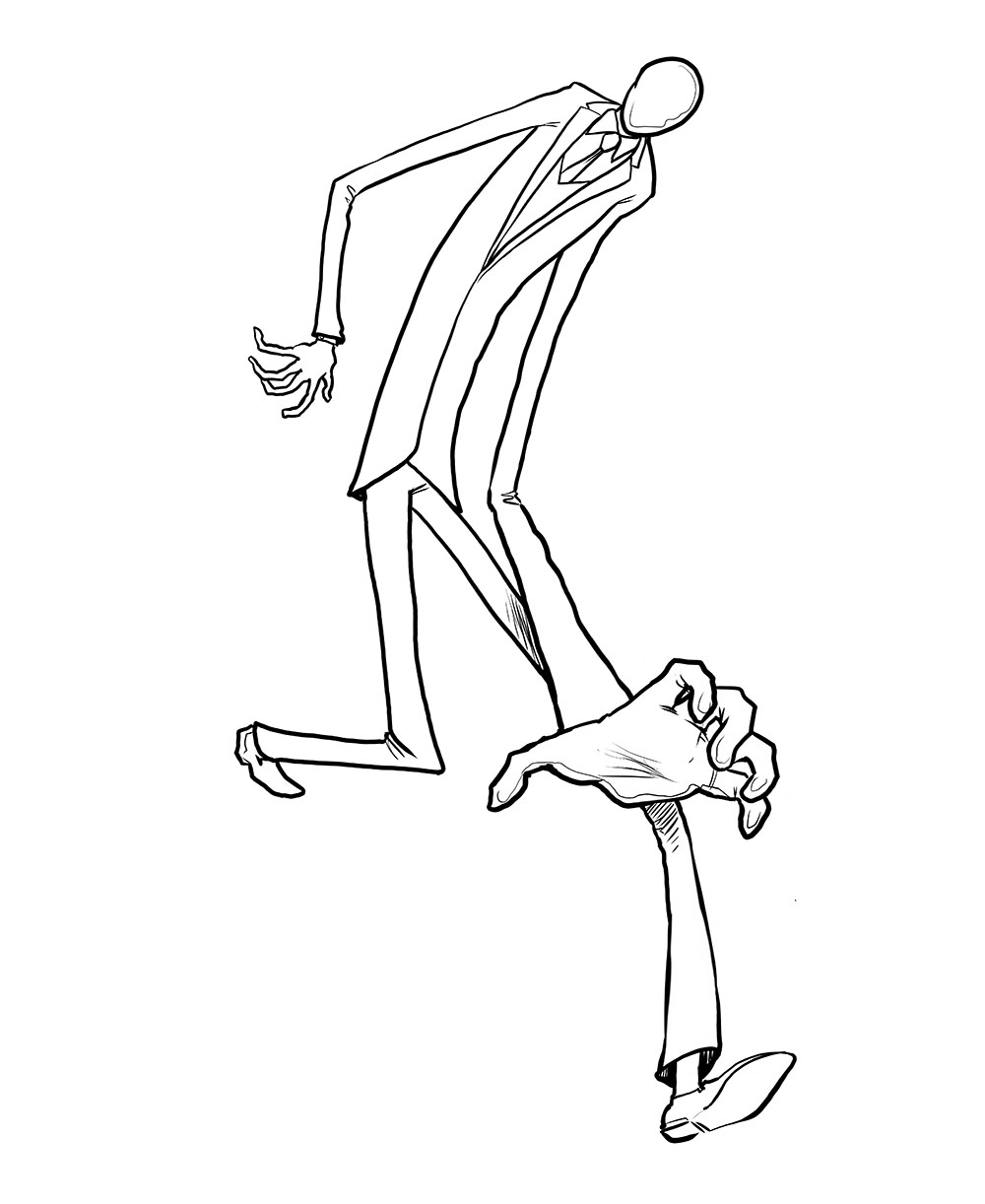
AK: Sure. So Slenderman is always shown as being a very tall, thin, usually gendered male person in a black suit, sometimes with a red tie, sometimes with a black tie, and just a completely blank face. So the face is totally white and blank. There’s no features on it, no eyes, no mouth, nothing. Usually shown with really long arms and legs, and later versions of him also show him with tentacles coming out of his back. So that wasn’t his original look but it became his look and as it sort of changed over time.
0:27:44
CW: So he’s already undergone a metamorphosis kind of like the Chupacabra.
0:27:49
AK: Yeah, absolutely. So he’s changed a lot in some ways, especially with what he does. And there’s still a lot of debate about what does Slenderman do exactly and there’s a lot of theories out there.
0:28:02
CW: I’m tempted to type in Slenderman slash fiction here, but I won’t.
0:28:08
AK: I had students do that one time. It was actually my favorite comment from my students was that it was surprisingly tasteful.
0:28:17
CW: I’m getting hentai vibes already and it did make me wonder. The appearance of him is kind of, you know, with the suit and the way he’s drawn and depicted, I got a very Japanese anime feel and I don’t know if the person who created him… Well, let’s get into how was he created exactly. Where did he spring forth? Sure.
0:28:41
AK: So he started on the Something Awful Forum, which is just an internet forum for people that like creepy stuff and it was a challenge. Someone said, you know, make something creepy. So all these people submitted, including user name Victor Surge, who’s real name is Eric Knudson, and he created these two pictures. They’re photoshopped and just a couple of lines of text. And that just took off. Like so many people loved the way he looked, they were really into it, they found him very mysterious and he sort of became in a lot of ways a sort of blank slate that you could kind of put anything on. So I think that’s part of the reason why he’s so attractive and why he got so popular. But he was only really popular on the internet up until probably about 2014, which is when the Slender Man stabbings happened. And that kind of made Slender Man much more of a household name and more people knew about him at that point.
0:29:41
CW: Yes, we’re definitely going to get to the stabbings, but it’s fascinating. Now, I was under the misconception that Creepypasta was a forum where people went to tell creepy stories. But it’s interesting learning that the image was kind of really the catalyst, and it was just a few lines of text.
0:29:59
AK: Yeah, exactly. And the Creepypasta idea, like that comes from copypasta, which is just people copying text and putting it on different places. So this was sort of like the creepy version of that. So that’s kind of where that terminology came from. But it was certainly, you know, like in part of that sort of universe, that larger idea of creepypasta, he would certainly fall underneath that.
0:30:21
BR: I want to scroll back to the appearance of Slender Man. You know, it strikes me as, you know, being sort of similar to Buffy the Vampire Slayer with The Gentleman or the Phantasm films with the Tall Man played by Angus Scrimm. That’s what jumps out at me.
0:30:39
CW: Yeah, there’s a long history of faceless, creepy people. I’m thinking that I can’t remember the name of what these creatures were in Doctor Who, but there were people in suits with no face, like several seasons back. And then there’s also, like if you go to the Marvel University, you’ve got of course Rorschach, who doesn’t really have a blank face, but he’s got that, you know, faceless face with just the black dots that move around. And then there’s also Moon Knight, who’s faceless, but there’s something creepier about it. Instead of just a domino mask, you’ve got this featureless blank slate. I’m very curious about your thoughts on that as well.
0:31:18
AK: Yeah, absolutely. And I think that’s what’s scary about Slender Man is it’s not that he’s covering his face, he doesn’t have one. And that’s what makes it like just all the more eerie, right? Especially because the idea, especially a lot of the things you read about Slender Man is part of what he’s doing is watching you, but he doesn’t have any eyes. So like, how is he watching you? How is he perceiving you when he doesn’t have those senses that we have? So I think that’s part of it that makes it so creepy is it’s like he’s standing there, he stares, but how do we know he’s staring, right? We assume that he’s staring because he’s facing towards us. So I think that-
0:31:59
BR: He could be sleeping.
0:32:00
AK: Yeah, he could be sleeping, we don’t know. But yeah, I think that visage of just being totally blank and unable to be read is really kind of scary to us in a lot of ways. We don’t know what his intentions are, but that also means that we can kind of put anything up there, right? Like we can kind of put any image of the monster that we want on his face, and it applies because it’s not like he has to look like anything else, right? He has got a completely blank face. But there are a lot of things you can see that connection. And there’s, you know, they’ve never drawn a direct connection from any of these things, but you have to think that there had to have been some sort of influence there. Although if you look at the pictures, they don’t necessarily look like any of the things you mentioned, but there’s gotta be some kind of influence, I wonder about it, even if it’s sort of subconscious in some way?
0:32:49
CW: Well, speaking of subconscious, I’m thinking of, I’m not sure how old you are, Andrea, but Ben and I are around the same age. And I remember when I was a small child, all the mannequins in shops had faces like features, like eyes, nose, mouth, lips. And you know, in the 50s and 60s, most every shop front that had mannequins had, you know, faces like somebody had sculpted faces. And around like my middle childhood, they started all changing to these blank faces that just look like something you’d put a wig on.
0:33:22
AK: Oh, wow.
0:33:23
CW: And that was kind of creepy. It was kind of creepy to see that shift in, you know, shopfront stylings. And I’m just spitballing like I often do with the rise in these faceless characters that haunt the spaces of our subconscious?
0:33:43
AK: Yeah, definitely. I could see how that could be an influence. And if you think about it, too, there’s a lot of movies and other things that have mannequins moving around, right? And how creepy that is.
0:33:54
CW: Yeah, mannequins, yeah, they’re creepy as it is.
0:33:57
AK: They really are, if you think about it. I don’t know if they’re better or worse with a face. It’s kind of hard to say.
0:34:03
CW: Well, they’re kind of in the uncanny valley there. They’re like ventriloquist doll. They have faces, but they’re like wax figures. But when they completely remove the face, is it less creepy? I don’t know. But you have a well-dressed, you know, you have this very slender figure that could be mannequin-like wearing a nice suit with no face.
AK: Yeah. And that’s just, that’s so inherently creepy because it’s like, why is he dressed like that? You know, right? Like what’s the, and I always-
BR: Is there some party?
AK: Yeah. Is there like, is he going to like a Slenderman party? Is there a cryptid party we don’t know about?
0:34:40
CW: And he’s also coming out of the swamp in a lot of images I’m seeing. Like this is not Slenderman the phantom of the corporate offices of the such and such accounting firm. This is Slenderman who’s coming out of often a wooded area or a wild space, but he has this suit on. So there’s a lot of, there’s a lot of like, your brain goes, huh, what?
0:35:04
AK: Yeah, and I think that’s part of what makes it uncanny too, is the woods are very strongly associated with him. So like, why is he in the woods in a suit? Like that just doesn’t make any sense. It really reminds me too of a lot of the, in folklore, the men in black narrative, which are the people who come and they tell you, no, you didn’t see aliens. And they’re sort of uncanny looking as well. Their dress is a little off, their looks are a little off. So there’s just something inherently kind of creepy about them. So yeah, there’s something about that, but they always wear black suits too, right? So maybe there’s a tie in there too.
0:35:41
CW: Yeah, their suits indicate they are part of something bigger. They’re just an extension of this large, powerful entity. And yeah, wearing suits to the forest is just weird. I mean, everybody knows you’re supposed to wear a clown suit to the forest.
0:35:57
BR: As one does, right?
AK: I mean, that was a 2016 thing, you know, we were all into it.
0:36:03
CW: Ben started it. Yeah.
0:36:04
BR: I did not start it. Let me be very clear about that. Yes, my book, Bad Clowns came out earlier that year. I didn’t start that. That’s my story. I’m sticking to it. I like that.
AK: Oh, I was going to say, I like that idea given that I published a book on contagion and contamination very late in 2019.
BR: Oh, wow.
0:36:31
AK: I swear to God it wasn’t me. Oh, wow.
0:36:38
BR: Correlation is not causation, folks. Keep that in mind.
0:36:41
AK: That’s right.
0:36:42
BR: Well, we talked some about the nature of Slender Man, but I’m curious about sort of placing it in folklore. So, you know, on the show, of course, we’ve covered folklore a lot because, you know, it’s half my show. But, you know, a lot of times, as we know and have seen it, Slenderman is often described in news media reports as an urban legend. But that’s not quite right. So, and, you know, other categorizations are sort of fake lore. How would you fit Slenderman into this?
0:37:11
AK: Yeah, I think he’s a part… I would probably put him under digital folklore, so that he’s a part of the world of the internet and for lack of better terms, the real world, the IRL. And it’s so funny to think about this now, of course, too, because there’s absolutely no differentiation anymore between the real world and what happens on the internet. It’s all the same thing now. But I think for a lot of people, there’s still anxiety about that, especially older generations. And they have this idea that not only is the Internet scary and bad, but the Internet is also this place that younger people don’t understand is not real. So that was so much what was said about Slender Man when it first kind of started, where so many people were like, look at these kids, they don’t even know the difference between reality and fiction anymore. So I think that’s especially with folklorists, we’re just like, oh, this is our thing for sure. So we jumped right in on this. But yeah, I would put it under that idea of digital folklore. I’d also put it under belief because there’s so many people that actually believe Slender Man is real. He’s very much sort of been the new boogeyman for a lot of especially children that were growing up around there. But he’s also, you know, he does kind of fall a little bit under that sort of cryptid urban legend category in some ways. In some ways he acts like an urban legend and in other ways he doesn’t. So he kind of, he kind of transcends categories in some of those ways as well.
0:38:38
CW: Well, I mean, I mean, can you, can you change your category? Can a thing transition from a fake lore or a hoax to a real urban legend over time? Because it sounds like that might be what he’s doing. He’s transitioning.
0:38:53
AK: Yes, he is. And absolutely, you can absolutely do that. Like so many times, like we sort of the original fake lord that we talked about was things like Paul Bunyan and Babe the Blue Ox. And it’s, you know, that was created as a marketing campaign. It was advertising. But most people nowadays don’t know that. They still think it’s a part of American folklore. And it’s really not. It’s not in that sort of traditional sense. But is it? Yeah, absolutely, because it’s become that. So Slender Man has kind of become a part of, you know, American folklore, if you will, or digital folklore. That stuff changes all the time. And I think he’s changed in so many ways. If you just look at the parodies, too, of Slender Man, you know, you had things like Trenderman and Splenderman and all these other ones where people were also, you know, taking that original text and they were making fun of it and they were kind of controlling it as well.
0:39:47
CW: Yeah, I could see Mad Magazine coming out with like Blenderman or yeah.
0:39:51
BR: Yeah, so one thing that fascinated me sort of blending folklore and psychology and we sort of touched on this was that people, Victor Surge, you know, created this image, right? Yeah, I my understanding is he didn’t have this whole backstory. It was like hey you want me to come up with something creepy? Here it is or something awful. And so I find it really interesting the intersection between the belief and and the the photographic evidence, right? And of course, I’m using evidence very loosely. So it’s not so much the people believe everything they see but the images can be very creepy and unsettling. And so I’m really interested in sort of the intersection there in terms of psychologists, including a colleague of mine, Beth Loftus, has done lots of research on how fake photographs can accidentally help create false memories. And so I’m curious to sort of look into, you know, how, what’s the interplay here, right, between someone posting an obviously or maybe not obviously faked image or one that they’re not claiming is authentic. It’s just, you know, bar this. And then you have people sort of using that and embracing that and sort of expanding on that.
0:41:02
AK: Yeah, I think there’s absolutely a connection there. And that’s the interesting part with this is, there’s so many people that can’t really tell a good Photoshop from a bad one, right? They can’t tell a good Photoshop from reality. And then with things like deep fakes and all of this coming out, it’s hard to know. But I think especially if we look at the time period, 2009, we didn’t have deep fakes quite yet. And so there was still that element of, well, here it is. And so many people were good at Photoshop, and they created these things that looked like woodcuts and they would create these pictures that just seemed real. And so, it might be something where they inserted it into a historic picture or they changed some aspect of some older well-known piece of art or photography or something like that. And people couldn’t tell the difference because their eyes weren’t really trained to see that yet. So I think now we’re a little bit better at spotting these things, but then the technology, you know, just like AI, it gets better every day. So it’s harder and harder to tell the difference.
0:42:13
CW: I am utterly fascinated by the transition in sensibilities that people have when they can detect deep fakes or AI right now. I mean, it’s becoming like a parlor game, where people throw out photos saying, oh, look at this amazing piano somebody built. And everybody goes, AI, AI, look at this, look at that. And they point out the details for how the shadow is wrong, just a little way. Or, oh, look at this person on the roller coaster, the third one back has six fingers, AI.
0:42:43
AK: Yeah.
0:42:44
CW: And we did not have this sensibility five years ago.
AK: No, we didn’t. But now people are developing a keen sense.
CW: And it’s going to be it’s going to be downright impossible for Bigfoot fakes anymore. Bigfoot, forget it. You know, people are all becoming like, you know, zoom and enhance, you know, everybody knows how to find the little triggers of when AI has created something and AI might there might be an arms race where AI gets a lot better. I you know, it’s an interesting time to be alive.
AK: Oh, yeah, definitely. And that’s so true, I think, as we, you know, we’re changing along with AI, right? So we’re watching for these things now, too, and we weren’t necessarily doing that before. And it also depends on where you’re looking at it. If I’m looking at it on my phone versus my computer, that’s a very different view, right? So am I going to blow it up? Am I going to click on it? How am I going to manipulate it to look at it? And it actually makes me kind of happy that we’re so, it makes me happy we’re so distrusting because maybe that means we won’t fall for things either. So we’ll take a little like an extra second to say, okay, I’m going to do more than read the title of this article. I might actually read the article. So, but we’ll see.
0:43:55
BR: So thinking more deeply about, about the Slenderman photographs and of course videos and songs and all the different media, you know, one thing that jumps out at me is, is this can be seen as, you know, robust evidence of Slenderman, right? Because on its face, here’s a photo, right? You’re maybe fake photo and so on. But then, you know, I’m thinking of, if we think of Slenderman as a cryptid and we can argue he either isn’t, but certainly that sort of figure, how would we compare that, for example, to the photos or the surgeon’s photo of Nessie or the Cottingley, the Cottingley fairies, for example, you know, where we have, you know, even going back to the very first ghost photos. I mean, we know those were faked. They were by, you know, by a Boston photographer named William Mumler, who he made these accidental double exposures. He said, hey, that looks kind of ghostly. And he launched fake ghost photos.
0:44:51
CW: There’s money to be made.
0:44:53
BR: Right, I can do this. But what’s interesting about this, of course, is that Victor Surge didn’t claim that it was real, unlike, of course, the Cottingley Fairy and others. So where would you fit that in there?
0:45:07
AK: Yeah, that’s an interesting question. Because I think there’s sort of a different sort of authority that comes with the knowledge that you’ve tricked someone, right? It’s not just about, like, let’s make money. It’s this idea, too, of I got one over on somebody. I managed to create something so good people didn’t, people thought it was real. No one questioned it. So I think there’s a tension there. And of course, we do have to point out, too, Victor Surge, Eric Knudsen did trademark Slender Man and there was a Slender Man movie as well as a bunch of knockoffs of Slender Man movies. So there was still some money to be made, but it is really interesting to think about what to us is now authority, what is clout to us in the digital age. And for some people, it’s just the ability to do these things, like to do it for the lolz or to do it to just see if they can.
0:46:04
CW: So Slender Man is kind of like the jackalope in a way. It’s a way to sort of have authority by tricking some people. Yeah, interesting.
AK: Yeah, and I think we’ve done that throughout time. We’ve made the jackalopes. We’ve gone snipe hunting. We’ve created all of these ways to show that I’m an insider and you’re not. Yeah, that’s kind of sad to say that we’re an exclusionary culture in some ways. We like to do that.
0:46:32
CW: Well, has anybody found any real Slender Man scat is what I’d like to know.
AK I have not. I don’t think I want to Google that. That does not sound like something I would like to know.
CW: Yeah, that’s the rule 34 you don’t want to get into. Yeah, okay. Yeah, definitely not.
0:46:52
BR: Well, let me ask you this. In your book chapter, in the book Slender Man is Coming, which I have here to my left, you have a chapter, which I think originally, or a version of which originally appeared in Contemporary Legend, which you and Ian Brody co-edited. And in there you talk about how the narratives, the phrase you use is they feel real to people despite pretty clearly being marked as fictional We’ll circle back to this in a bit when we talk about the the stabbings in Wisconsin, but can you sort of? Talk us through that.
0:47:23
AK: Yeah, absolutely. So I think there’s an element. We’ve all had that feeling right? we’ve all had that feeling where you feel like something’s watching us and Maybe it’s nothing but maybe it’s something so you’re just careful anyway. I think that’s a feeling that a lot of people have. What we’ve decided is we’ve given it different names throughout time. We assume, oh, it’s a predator, or there is somebody outside, or I’m having a bad feeling, somebody’s walking over my grave, things like that. We’ve got a lot of different sayings for it. I feel like the modern version of that is, it’s Slender Man for a lot of people. They have taken this experience of the supernatural, this experience of feeling like they’re being watched when they know no one is there, and they have morphed it into these other narratives about this being called Slender Man and brought those two things together. I think there is something. There’s a lot going on with Slender Man. There’s something uncanny about the forest. And maybe we’re a little bit afraid of nature and the forest and those places. So that’s part of this. Maybe we’re a little bit afraid of technology. Maybe we’re a little bit afraid of white guys in suits. So there’s a lot there that we can really work with, right? So he becomes a sort of blank canvas. Yeah, we can just we can kind of project whatever fear we want onto him. But this idea too that there is something inherently weird going on there. We all know what that feeling feels like. So what do we call that feeling? We don’t really have a name for it, right? We’ve had multiple names kind of throughout time, but nothing that’s really stuck. And nothing that’s ever been scientifically for the masses proven that this is what we’re feeling. So I think that kind of helps us name that thing. And when you name something, right, you kind of take power over it. So this is one way to do that.
0:49:21
CW: Well, you mentioned earlier that there’s multiple ways people have approached belief in Slender Man, like, is there one Slender Man? Or are there many? Is he interdimensional? So he’s one but many, etc, etc. Have you found people who claim Slender Man is an internal manifestation of something like he’s, he’s Slender Man is in all of us and he when we see him, we’re kind of seeing a projection of our own psyche. Has that popped up as a, an origin story for him?
0:49:52
AK: Not as much as you would think. A lot of people really go back to the notion of a tulpa or an agregor or a thought form, where he is something that we have sort of collectively caused to be real by focusing on him. So the idea that we have acknowledged him and we have created him and that, you know, that first initial set of pictures is what kind of brought him to life is that so many of us focused on it and we saw it and we believed it that that’s what made him real. So he’s become real because of that. that and the kind of really weird part about Slender Man is that there’s no way to defeat him. There is no like, if you do X, Y, or Z, you’ll be able to get through this. There’s just nothing like that. Nothing has ever stuck as a way to get rid of Slender Man. So he’s something you can’t shake. He’s just going to always be there. And that to me is really like, it’s kind of nihilistic and terrifying, right? Like we didn’t even invent a way out of this.
0:50:53
CW: Well, the Slender Man images I’ve seen, he’s always kind of on the borderline of what you can see. He’s in the liminal spaces. He’s out there. He’s coming toward you. But what happens when he gets you? What does Slender Man do to people?
0:51:09
AK” Well, and that’s another thing that’s under debate. Most people feel that he drives you insane so that you become completely disconnected with reality. So it’s sort of almost like an eldritch being kind of idea that you’re like slowly being driven insane by Slender Man and then you kind of go up over the edge. Some people feel that he’s like he’s sort of stalking in some ways so a lot of it has to do though with him usually driving people insane. There are a few narratives, though, out there that he also saves children. So he saves kids from bad situations, he saves them from bullies, he saves them in some sort of way and brings them back to his house or his mansion, and that he becomes a sort of weird savior in that way. And those aren’t as common of a narrative, but they do exist. They are out there.
0:52:02
CW: Interesting interesting Wow. Yeah, and the driving people insane again I’m thinking of another faceless type of being in fiction and that’s the Dementors in Harry Potter, which don’t have suits, but I mean I guess in the wizard world you could call a robe a suit Yeah, I mean, yeah, but yeah interesting and saving children. That’s a whole I mean now he’s got like a Robin Hood aspect to him.
0:52:23
AK: Yeah, and a lot of the fan fiction I looked at, a lot of that was written by people who were saying that they were female and a lot of it was about bullying. And so Slender Man would come along and kill, usually kill, their bullies. And it was, I mean, some of it’s pretty dark. It’s also incredibly medically inaccurate. It’s kind of painful to read at times.
0:52:51
BR: Leave it to Andrea to explain just how inaccurate it is medically.
0:52:55
AK: It was like my first impression. I’m like, that’s not what would happen if you threw somebody down a flight of stairs. It’s so interesting to think about it in those terms though, because this was kind of like a revenge fantasy for young women. And it really made me kind of unpack like, okay, well, what are we teaching women about what they’re allowed to do and not allowed to do? They’re not allowed to be mad, so a male figure has to come in and save them, which is like, oh, God, here we go again, with that whole narrative. But they were also kind of, you know, they would be horrified, oh, no, Slender Man, that’s not what I meant. But he did it anyway, because you can’t control Slender Man. And I was like, oh, God, is this what we’re teaching women about men?
0:53:43
CW: So Slender Man is in some way was conjured from from pubescent female hormones reacting to rage.
0:53:51
AK: Yeah. I think in some ways, at least that that save your narrative part definitely was. And that I think like the more I think about it, the more I’m like, oh, no, this is worse than I thought. But yeah, and a lot of it is is even them. I found, you know, a couple instances where, you know, they would be being saved from abusive parents. But for the most part, it was against parents that didn’t care. It was just the parents were simply absent. And most of the bullies in these narratives were other women. So that was also really interesting to kind of see how that was set up. And you know, and I can see it though, especially when you talk about it in terms of bullying and cyber bullying, it makes perfect sense because, you know, your parents are, they’re ineffectual, they can’t do anything about it. You’re being bullied everywhere you go. There seems like there’s no way out. So of course you have a revenge fantasy that something happens to your bully and you’re not really responsible for it. It’s not something you did. It’s something somebody else did.
0:54:53
CW: Is bullying in and of itself a thing that public health authorities have looked into in any form? Do you have any sort of information to bring on that into the arena of Slender Man? I know we’re kind of going off into the corner here.
0:55:08
AK: That’s okay. Yeah, I mean, it’s something that’s definitely considered a public health threat. You know, bullying, cyber bullying is rampant in a lot of places. This is something I think about a lot too because of course growing up as a kid, you could just go home. If you’re being bullied, you could just go someplace where there were adults and it would stop. Yes, sure, it would start again, but it wasn’t like cyberbullying where it’s always happening. There’s no escape from it. I think that is what makes it so insidious in so many different ways, is that there really is no escape from bullying anymore. Because it can happen online, it can happen at any time. You can wake up and find out something happened overnight. You know, there’s so many different ways that this can go horribly wrong. And yeah, so it has become a public health emergency. There are lists of the signs of bullying. There are lists of what to do if your child is being bullied, but in a lot of ways, as someone that was reading them and thinking, well, would this really work? Is this really a great solution? Because it’s hard to prove, right? It’s hard to tell. I mean, can you imagine when you were a child and someone said, stop bullying this person, that just made you bully them even more. So it becomes a really…
0:56:22
CW: Yeah, well, see, we’re gonna have to add Slenderman to our little list of boogeyman babysitters, because we’ve talked about La Llorona on here, and other like lake monsters and how they served a purpose to keep children from wandering too close to rivers or lakes or places where they could drown, and cyberbullying. See, Slenderman’s more of a, he’s more of a reactive, not a proactive babysitter. He’s, he’s something that a bullied child can take solace in as a fantasy revenge porn sort of thing. Not, not so much, okay, here, he will keep me from going on to that chat room and getting bullied. Interesting, and I would have to think more about that as to how to untangle it. But you’ve given us a lot to think about in terms of suicide as a result of bullying is obviously going to be a public health threat. But Ben, do you have anything to bring into this insofar as La Llorona and everybody else that you could compare him to?
0:57:23
BR: Yeah, what sort of jumped out at me was to go back for a second to the ambiguity of what happens next, right? And that’s sort of one of the driving forces of narratives and urban legends and stuff. And it reminded me of, for example, Bloody Mary. You have this legend, widely known, and then there’s all the setup, right? The story is the setup. You do this, you do this, you turn out the lights, you have this. And it’s fascinating. So when I talk to people or give talks on folklore, I often ask the audience, who here has sought out Bloody Mary? And usually there’s a handful of people, and I’m always curious, and what happened? What did you think was gonna happen? And what actually happened? And I’m fascinated by that because of course, there’s all sorts of, you know, same people, you know, did you think you were going to go insane? Were you gonna see yourself as an aged old crone? Was she gonna, you know, become real and reach out from the mirror and scratch your face? You know, what did you think was gonna happen? And second of all, why would you do that? Why did you think this was a good idea?
0:58:28
AK: I ask my students this all the time because a few years back, the Midnight Game was a big thing, and the Midnight Man, and it was this whole thing where you would cut your hand and put blood on your front door, which also is just weird. Very biblical. Yeah, very biblical. And this entity would chase you around for anywhere between like one to three hours. And I was like, well, but to what? Yeah, it’s like, that sounds terrible. Why would you do that? And I was like, does he like, catch him? You get a wish? Like, what happens? And they’re like, you just live. And I’m like, you could have just lived anyway. You didn’t need to do this. But yeah, I mean, I remember doing the same stuff, though, especially as a young woman, you know, going to a sleepover and playing Bloody Mary and playing light as a feather and stiff as a board. They were all just there to kind of test the boundaries. We were, we knew we weren’t supposed to do them. And that’s where the thrill was, right? That’s, that was the big thing. It’s like, Ooh, we’re doing something bad.
0:59:30
CW: I love how you put that testing boundaries is a perfect summation. Now this monster would chase you, I’m still hung up on, you would summon this monster and it would chase you for one to three hours.
0:59:45
AK: Yeah.
0:59:46
CW: Like, it was written in the instructions somehow? Yes. Like, if your monster lasts more than four hours, seek emergency physician.
0:59:55
AK: Monster’s lasting for more than four hours, soon seen at the emergency room. Yeah. Yeah, everything is. Well, and it’s like the elevator game, too, right? That’s the sort of the most recent version, and there’s a movie that just came out about that as well. But yeah, this idea that if you push the elevator and go out and do this certain thing in these certain sequences, you can go to this alternate realm. And it’s like, and… Why would you want to go there? Like, why would you want to do this? And it’s like, I don’t know.
1:00:27
CW: See, I have not heard that version. The elevator game I remember as a teenager was when the elevator was about to stop, you jumped up and you tried to make it shake in a weird way.
AK: Oh yeah, that’s also fun.
BR: Oh, that sounds much fun.
1:00:38
AK: Yeah, that’s fun too.
1:00:39
BR: But let me just say, what’s becoming clear to me just throughout this entire conversation is that we have to have you back. That is crystal clear to me. If I’ve learned nothing else from this conversation is that we need to have you back on another show. Just to set that out there.
1:00:58
AK: Perfect.
CW: You know too much for one hour.
AK: Yeah, the sad part is I actually played the elevator game as an adult, which is even sadder to actually. I refused to play it by myself. I made somebody else play it with me, which you’re not supposed to do, so that’s clearly why it didn’t work. And we played it at a folklore conference.
CW: Oh, well, I mean, if you’re going to, that’s the place to do it.
AK: Yes, absolutely. So yes, there was me and other folklorists who shall remain unnamed, who decided to play this when we were at the American Folklorist Society in the Harrisburg meeting more. That would have been the I think the 2021 meeting. And yeah, so we we decided that would be a great idea.
1:01:40
BR: Now, folklore conferences are fun. In case there’s a lot of people in the interview know, a lot of people don’t know what the hell folklore is, just to begin with. And if you mention that you do folklore, they’re like, you get this sort of like, huh, okay.
1:01:58
AK: And then you tell people all this stuff.
1:02:01
BR: Well, let me ask about this. A few years ago, I wrote an article published in Contemporary Legend Folklore Journal, and it was looking at manufactured sort of folkloresque monsters. There were two specific ones. One was a film called The Bye Bye Man, and there was another film, which actually was made by a friend of mine, I later turned out, titled Butterfly Kisses. And what was interesting in both cases, and again, this strikes me as sort of coming right butterfly kisses and What was interesting in both cases and again this this strikes me as sort of coming right from this tradition is you had? in the bye-bye man And I under interviewed the the guy that wrote so the bye-bye man film was based on a script Which is based on a short story by a guy named Robert Damon Sheck, I believe and he he told this whole story as true again, this is a friend of friend, and so on. And so you had this, this, this clearly fictional horror film, great B horror film that allegedly had these sort of true, uh, true elements to it. And this, this, this image that was conjured up in a Ouija board and this sort of things. And then for Butterfly Kisses, you had, that was a bit different because, uh, Eric Christopher Myers, the writer-director, intentionally fabricated this character as Blinkman, which in some ways was similar to the Slender Man. It was very tall, thin, had a hat, and the idea was that every time you blinked, he came closer and closer to you. And then actually just recently, I saw a Hulu film called Grim Cutty, which was inspired by the Momo Challenge, and of course we could do a whole show on that. But I’m curious where you see Slenderman sort of fitting into these.
1:03:40
AK: Yeah, that’s a great question. And I think you’re right. He is sort of invented, you know, like you mentioned the term folkloresque, and I think there is something very folkloresque about him, and it’s not necessarily that he derives specifically from any one tradition. He kind of is this sort of amalgamation of a few different traditions and then made to look like folklore. So he has that sort of indirect connection to folklore because it mimics the same ways of being that folklore does. So I think he kind of falls into that category for sure. You know, he was, technically he was invented. I mean, he was a response to a challenge. It’s like, hey, this is creepy. Let’s make this. But then what happened after I think is really where Slender Man goes from just this cool couple of pictures to becoming kind of true folklore, is that it really got out of the creator’s hands. It became everyone’s Slender Man, right? We could all engage with Slender Man in some sort of way. And we debated, does he have tentacles? Doesn’t he? What can he do? What can’t he do? Can we defeat him? No, apparently we can’t. So all of those things became that sort of collective involvement where people debated this on forums. And there’s probably still people who debate these things. So I think that it does come this sort of folkloresque to true folklore sort of way. But that’s like we were kind of talking about earlier, is that’s the way it always works, though, is it always starts out with one person’s real story or one person’s experience or one person’s creative idea that turns into something bigger. And I think that’s that’s just kind of the process.
1:05:29
CW: Well we touched on this earlier, and we’re not like a true crime podcast, but this folkloric figure is connected to a strange crime involving two 12-year-old girls in Wisconsin who stabbed their friend in what they claimed was an offering to Slenderman, especially thinking about how Slenderman, the figure, has been connected to bullying, etc. And there were some mental health issues going on. Can you talk a little bit about the case from a folklore perspective?
1:05:50
AK: Yeah, absolutely. You know, I really love, there’s a folklorist named Libby Tucker who wrote a lot about this, and she talked a lot about how all of us probably had an experience in childhood that could have gone horribly wrong, but it didn’t for whatever reason. And she specifically talks about like pretending, like talking about wanting the school to burn down and then playing with matches, and then of course nothing happening. But if the school would have burned down, then they would have looked connected, right? And I think we all engage in these kind of things as children. We play Bloody Mary, we do these things, and luckily nothing bad happens. And I think in this case it was sort of a perfect storm of bullying and a lot of other issues going on you know like you mentioned there there may be There probably is psychological issues and some other things that just sort of happened But you know I every time I think about that story, and I read that story I think about like sort of the horror of being a girl that age There’s so many things that could go so easily go wrong on an almost everyday basis that just don’t for whatever reason and it doesn’t turn into a story. And this unfortunately did. And I think that’s really the true horror of this is that this ended up being a situation where it was, you know, a lot of bullying was happening, a lot of girls who didn’t feel like they could trust their friends, being in a situation where maybe people weren’t noticing the signs of depression and other things like that, just all kind of coming together in unfortunately a really tragic way. Now luckily, you know, obviously, luckily the girl who was stabbed survived. I still hear rumors that she didn’t, but she did survive. I’m sure that that was incredibly traumatic for her to this day, I’m sure. But I also think a lot too about the two girls who went through the trial and who are, I think, both still in care and what has that happened to their lives. This is actually one of the reasons why I’ve chosen to never use their names is they’re never gonna get away from this one bad thing that happened in their childhood. And I think that’s really tragic. And I think it’s really tragic that, you know, that the narrative is more about, oh my God, look at these girls and what they did. And it’s not about like, oh, hey, let’s look at the situation and what happened. And there were all these other places where they shouldn’t have fallen through the cracks, but it did.
1:08:48
CW: What was the actual situation? Did the two girls believe? That the other girl was an enemy were they all friends or what? I mean, what would be the motivation? Be because Slenderman provided like a vehicle like okay, we believe Slenderman and we’re gonna do this for him. But what was the motivation to choose? The victim in that case.
1:09:07
AK: Well, they were all friends and they were all at a sleepover. This was sort of the day after the sleepover when they were still hanging out. And the two girls had kind of talked about doing this previously, but it seems like one of them really truly believed that if they didn’t do this, Slender Man was going to come after their families. So this was her belief that she was protecting the rest of her family and her friend’s family from harm by Slender Man, by offering up this other girl instead. So yeah, it’s pretty messed up to think about it in those terms, but yeah, it wasn’t necessarily that I’m gonna kill you because you were mean to me or anything like that. It was more of a, I’m trying to do this defensive thing. Yeah, it makes it a bit darker, doesn’t it?
CW: Well, yeah, darker, and you had mentioned that Slenderman is a figure that is believed by some to take children away and protect them? Did they believe that the person, the girl being stabbed was going to go and live with Slenderman and that was the way to get her there? Essentially what I’m asking is, did they know they were killing her or trying to kill her?
AK: I don’t think they did. I don’t think, in some ways it’s really confusing, especially if you look at the transcripts or if you see the tapes, it seems like there, you know, like I said, there was something psychological going on with the one girl, but she believed that Slenderman was going to take, I think, all three of them away. And they were going to live with him in his mansion, and this was going to protect their families. This, I don’t think she thought of it as actually killing her in the same way that you and I would think of it. So I think it was, in part, like I said, a perfect storm of possible mental illness, a lot of other stressors going on. And yeah, that’s what I think makes it tragic, is I don’t think she really realized what she was doing, not the full extent at least.
1:11:11
CW: Yeah, well, yeah, that’s that’s it’s tragic when stuff like this happens. And I’m glad the one girl who received the wounds survived. But I mean, it’s certainly not the first instance and it won’t be the last instance of violence happening with a fictional character or legend or TV show or celebrity in mind because people fixate on things. Yeah, absolutely. There’s nothing we can do about that.
1:11:37
AK: Yeah, that’s so true. And there were copycat crimes, too, that happened after the Slender Man stabbings. Luckily, none of them were as tragic. But there were, I believe there was a girl in Florida who tried to stab her mother, but she wasn’t successful. And I think there was another one, too, that I’m just kind of forgetting right now. But yeah, there’s other copycat crimes. And this is the same thing with some of the things you hear about when it comes to mass shootings and those kinds of crimes as well is this idea that something is happening that actually isn’t happening.
1:12:11
BR: Yeah, and that strikes me as sort of, of course, part of a broader context, right? Because we have the Momo Challenge, we have the Blue Whale Challenge, we have all these sort of online challenges that they are fads, people are doing them, are they, you know, some are taking them seriously insofar as they’re acting them out, whether they’re actually genuinely internalizing the messages is of course another matter. And of course more broadly, it fits into, you know, moral panics about technology and what kids today are doing and that sort of thing.
1:12:45
AK: Absolutely, and it’s so funny because it’s, I think people love the moral panic because it’s an easy out, right? It’s got an easy answer. It’s not just point and say, oh, the kids these days, that kind of a thing. If they didn’t play so many video games, they’d be fine. And it’s like, no, it’s actually there’s larger social issues that are happening. And we don’t want to think about that, though. We don’t want to make it more complicated. We want an easy out. And we want to pretend like this is an isolated incident when it’s maybe not. I mean, especially post-pandemic, if we look at the rates of mental illness, of stress, of burnout, of all of those other things, this is a ripe situation again for something bad to happen. But we’re just gonna ignore that, right? We’re just gonna pretend the whole pandemic didn’t happen.
1:13:32
CW: Yeah, the darn TikTok challenges, yeah.
1:13:35
AK: Yeah, that’s the real problem.
1:13:38
BR: All right, well, let’s wrap this up. Give us sort of an update, right? What’s Slendy been up to these days? As you mentioned, the character emerged and was the subject of lots of memes and stories and legends, this and that. Then, of course, there was the stabbing. But it seems like we haven’t heard much from him in the last few years. What’s the update?
1:13:58
AK: Yeah, we haven’t really. I’ve asked my students, and apparently he’s not cool anymore. He stopped being cool when the movie came out. Which I was just like, okay, all right, there went his career, you know, the second he went public, you know.
CW: His career was ruined by a movie. Was Adam Sandler in it? How did that happen?
1:14:15
AK: It was not a very good movie, I’ll be perfectly honest with you. I have seen it and it was not the best, although I do think, I think in places they did hold back because of the stabbings and everything, they didn’t necessarily want to do anything untoward, which I applaud them in that. But yeah, it was that. And I was also told at one point, like, oh, that’s just the thing kids believe in. And I was like, oh, okay. So I think he’s kind of gotten regulated down to that boogeyman level of he’s sort of a generic, like, and like some of my students are like, Oh, yeah, I told my younger siblings that if they weren’t good Slender Man was going to get them. I was like, Okay, all right. So I guess that’s where he is now. We’ve, we’ve kind of pushed him into child lore. And we’ve we’ve kind of said, Okay, that’s where you belong now.
CW: So, so he’s hanging out with Santa Claus.
AK: Yeah, great. Okay, he’s sort of like a Krampus. But you know, a little bit different.
1:15:14
CW: An online cyber bullying Krampus, fantastic. Well, Andrea, it has been a delight talking to you about Slenderman, perfect for the Halloween season here. And where can people find more of you?
1:15:29
AK: Yeah, absolutely. I’m on Twitter. I refuse to call it X. So it’s just under my name, Andrea Kida. And I have a lot of my articles and everything available online, so you can just Google me and find stuff, and if you can’t find it, I will send it to you.
1:15:43
BR: Well, thanks once again for coming on and sharing this. I’ve been wanting to circle back to this topic for a long, long time, and I’m grateful that you took some time out to explain it to us. Yeah, absolutely.
1:15:56
AK: Thanks so much for having me.
(MUSIC)
1:15:57
CW: Well, once again, Ben, thank you for bringing one of your folklore friends. Is there an abbreviation for folklore friends? his friend of a friend, but like F.O.B. F.F.O.B. A Folklore Friend of Ben. Sure, we can do that. Thank you for bringing your F.F.O.B. We’ll try to make that a thing. Well, thanks, Dr. Andrea, for coming by and talking about Slenderman. And I hope everybody has a wonderful, safe, spooky Halloween season. Remember, razor blades in candy is not a thing. And eat as much as you want. Yes, the biggest
1:16:54
danger as always are our flammable costumes and costumes that don’t have don’t don’t allow for sufficient eyesight so don’t don’t worry about all the scary panicky contaminated candy and all the other crap go with the fun stuff.
1:17:09
Yeah, yeah and until next time everybody take care. Bye-bye. We would like to extend heartfelt thanks to our top-tier sponsor level patrons Amy Frusciaro-Kelly, Dr. Angela Matkey, Elizabeth Leggett, and Laura Ellis. Thank you for your continued support of our podcast. If you’re interested in becoming a sponsor or just throwing us a buck or two, please visit Squaring the Strange on patreon.com and browse our selection of patron rewards. Every bit helps us keep the lights on here, and we are grateful to our generous friends who help us bring you quality content. If you are short on cash and want to just give us moral support, remember to recommend us to a friend, mention us on social media, or give us a review on your favorite podcast dispenser. If you have comments or topics you’d like to see covered, come join our community on the Squaring the Strange podcast discussion group on Facebook. Squaring the Strange is a production of Two Heads Studio LLC copyright 2021 theme music provided by Shriek Back additional music by Memory Keytard and Feathered and Pasquale Romero additional support by Ashley Romero, Robert Sundin, and Alicia Jarvis. The views and opinions expressed on this podcast are those of Squaring the Strange, and do not necessarily reflect the views and opinions of Two Heads Studio, Kronos Creative, Center for Inquiry, our advertisers, or any other affiliated organizations our advertisers, or any other affiliated organizations
1:18:42
and employers.
Transcribed with Cockatoo
