
Episode Summary:
Ben and Celestia discuss conspiracies, real and unreal, the conspiracy-backed arguments from a high-profile defense lawyer, a superconductor article retraction, and Barbra’s opinion on the Streisand Effect. Then, gargoyles! How do these imposing gothic carvings differ from grotesques, and what do they do — both functionally and symbolically? Who can see them so high up, and are hidden messages really carved into some of them? We learn about the guttural (literally) sense of humor on display in medieval times, and the possible connection gargoyles have to an ancient tradition of “gurning,” or face-pulling. And yes, we do talk about the 90s cartoon too!
0:00:00
Ben Radford: Welcome to Squaring the Strange, the podcast that examines all manner of the mysterious and the mundane through a critical lens. So let’s square the strange.
0:00:11
Celestia Ward: Welcome back to Squaring the Strange. This is episode 214 and I am one of your co-hosts, Celestia Ward. With me is…
BR: Ben Radford here.
0:00:34
CW: Hey, you ready to square some strange stuff?
BR: Let’s do it as we’ve been doing for years on end.
CW: Yeah, don’t make it sound like a jail sentence here. We’ve got a cool main segment about gargoyles.
0:00:50
BR: We did a bit of a deep dive into those creatures/architectural features. But before that, is there anything you’re skeptical of this week, Ben?
(MUSIC)
0:01:13
BR: Yes, over the past couple of weeks, I’ve been noticing a lot of news about conspiracies.
0:01:30
CW: All the time. I think there’s a conspiracy to put out more news about conspiracy theories. Now I should probably preface our discussion here by saying we’re recording this a bit earlier than usual. I’m going to head off to a convention pretty soon. And I didn’t want to leave people waiting for a new episode. So we’re getting this kind of ready to go about a week before we normally do. So if any late breaking conspiracy news has happened over the past six or seven days –
BR: That’s that’s not what we’re talking about.
CW: We wouldn’t have known about it. But what are we talking about in general with all the vast conspiracy news that is constantly funneling through our media?
0:02:10
BR: Well, you know, one of the things that I’m always interested in researching conspiracies is that, as you know, I’ve been writing about them, researching them, and the psychology of them and breaking them down and UFOs and Illuminati and Alex Jones and all that. And one theme that comes up over and over again, and it doesn’t get a lot of attention, but I wanted to highlight it, is that it’s very odd to me. Well, it’s not really odd. It’s it’s it is curious that oftentimes conspiracy theorists seem conspicuously uninterested in actual conspiracies.
0:02:45
CW: How so?
0:02:46
BR: One of the issues here is that the word conspiracy has sort of different meanings depending on the context, as many words do. When you hear the phrase conspiracy theorist, everybody knows what we’re talking about, the sort of, you know, the Alex Jones tinfoil hat type, which is, you know, to some extent accurate. Although, as I’ve talked about on the show before, most people endorse some form of conspiracies on both the right and the left and in the middle.
CW: Yeah, there have been polls to that effect that show literally everybody believes a little bit of something.
0:03:11
BR: Right, exactly. So it’s easy for one side of the other to point to the other and say, Oh, those crazy wackos, they believe this is a conspiracy. Well, check out your glass houses there, sir. But of course, conspiracies are real. There are actual, verifiable, genuine conspiracies.
CW: So you’re talking about like historically already exposed and proven conspiracies. So conspiracy theorists, it’s like the chasing is more fun than the having.
0:03:45
BR: Yeah, well, I mean, a lot of times, of course, conspiracies blossom in a vacuum of information, which is why, for example, the Area 51 has, of course, spawned lots of conspiracies because people aren’t allowed there unless you, of course, have security clearance. And, you know, there are legitimate reasons for our government and all governments, in fact, to not let the public wander through, you know, test sites.
CW: And I mean, there’s dangerous stuff there,
BR: Usually dangerous stuff there. There may be weapons that are being developed that we don’t necessarily want the other people to know about. But of course, you know, the 9-11 attacks was a conspiracy. There’s no question about it. Osama bin Laden and the hijackers and there was training and even, for example, the recent attacks in Israel, not to get political, but I mean, that was planned and executed and it was literally a conspiracy.
0:04:39
CW: I do remember hearing on the radio news, they were talking about how this had to have been done with like fewer than a handful of people. But it was definitely people conspiring to do a thing secretly.
0:04:52
BR: Exactly. And so, you know, historically, again, Watergate was a conspiracy. The Iran-Contra scandal under Reagan over. I mean, there’s all sorts of conspiracies out there. I was thinking about this recently because there were two high profile ones. The most recently there was one, of course, we talked on the show about election fraud to some extent. And one of Trump’s sort of bulldogs, along with Rudy Giuliani, was Sidney Powell. Yes, yes. Yes, you know where I’m going with this. And she pled guilty to conspiracy, endorsing and vehemently pushing for this election fraud conspiracy claims.
CW: Yeah, the handful has grown. We have quite a few admitted conspiracists now.
0:05:34
BR: Exactly, and I I just find that so ironic right because they they’re literally admitting to conspiring to spread a false conspiracy about election fraud. Here we have them literally pleading guilty to Conspiracy what was the and there was the you know the lottery he spoke of his honor the faster we counted our spoons.
0:06:05
CW: Well, it’s almost like it’s just too mundane If the conspiracy has been shown and proven and admitted to in court it ceases to be of interest
0:06:15
BR: Well, and of course, you know Monday at this point the election fraud conspiracy other than a handful of people Unfortunately, the new speaker of the house included, still endorse the election fraud. But I can go you even more mundane than that. So did you hear about the recent judgment against the National Association of Realtors?
CW: I did actually. I was reading that with interest.
BR: Yeah. So for those who don’t follow realty news, which –
CW: A bit of price fixing sort of going on commission fixing.
0:06:55
BR: Yeah, basically, it’s a complicated story. And it’s not relevant here, except that a federal jury ruled that the National Association of Realtors, which, as you might imagine, is a very rich and powerful organization and large brokerages conspired again, literally conspired to artificially inflate commissions paid to real estate agents. So on one hand, again, this is a federal jury. This is actual legitimate conspiracies. And the realtors group actually ordered to pay nearly two billion dollars in damages.
0:07:24
CW: Yeah, that was a huge judgment. And going forward, we’re going to see. And like I like you said, this is probably not going to be all that interesting to a large percentage of people out there. But the conspiracy theorists, again, the tinfoil hat ones, the ones that we’re talking about, they look at stuff like this, the mundane conspiracies, and they don’t say, Oh, wow, that’s interesting. I want to learn more about that conspiracy. They say, See, this proves it. This, this proves that people in power, they were probably just one small faction of the Bunderberg, you know, blah, blah, blahs, Illuminati.
0:08:02
BR: Yeah, or it just doesn’t, you know, it’s not, it’s not on their radar. It’s not, they don’t, it’s strange because again, you have these actual real legitimate ones that are so far afield, they’re not interested. And they’re not, you know, they wanna go on about the moon landing hoax and, you know, false flag and all these sorts of things. And the irony here is that these, in many cases, including the two I just talked about, there are very real, genuine, actual damages and dangers to the public.
0:08:35
CW: Ben it’s the same reason why cryptid hunters are not interested in discovering a new species of worm or fruit fly. It’s just, it’s too mundane.
0:08:46
BR: They don’t want to talk about it. And anyway, I’ve just always found that irony fascinating, and I wanted to highlight that because it’s, again, it’s a case of where these decisions, again, the last two I just mentioned with Powell and the realtors, election interference is, it basically hits the foundation of American government. And anybody that buys and sells houses is affected by this. This is not some, you know, little mom and pop. They were found conspiring to refill, you know, gourmet water with tap water. These these are actual, you know, multibillion dollar powerful organizations that are actually engaging in conspiracies that the conspiracy theorists don’t care about.
0:09:29
CW: Yeah, I should retract my use of the word mundane. I didn’t mean mundane as in like inconsequential. And I meant that once they’ve been discovered they seem mundane to the person who is hunting a mystery not a solved piece of history.
BR: Yeah, and I’ll just add one other example because it’s a high-profile one I just remembered it is General Motors. As you may recall years ago. They they were the company was fined nearly a billion dollars for hiding fault ignition switches, and people died. You know, like there was at least 120 people literally died because of GM’s conspiracies. So, you know, the next time you have some conspiracy theorists in front of you talking about, well, all the hand waving and false flags and this and that, the chemtrails explain to them that there are actual genuine conspiracies that are harming and literally killing people that they don’t seem to care about.
0:10:25
CW: Well, and then they’re going to hop into their GM truck that’s covered with bumper stickers. About fake conspiracies. Oddly enough, my first little current events topic springboards right off of conspiracy theory thinking here. You are familiar with the attack on Paul Pelosi last year.
BR: I am. I remember that well.
CW: Nancy Pelosi’s 82 year old husband was assaulted with a hammer by a fellow named David DePape. And he is right now undergoing his trial. And it was clear early on that he was very driven by conspiracy theories. He bought everything hook, line and sinker. The QAnon stuff. Democratic elites are devil worshipping pedophiles. and, you know, overturning the election was just the tip of the iceberg with their crimes, blah, blah, blah. So reading about this trial, there is something that sticks out at me, and I’ve been reading a little bit more commentary about it. The trial is certainly bringing this notion of, you know, how much does conspiratorial thinking and belief factor into a crime? crime. PBS quoted a senior researcher at the Nonprofit Institute for Strategic Dialogue named Katherine Kennelly, who said that the attack was just an example of the increasing online hate, all these conspiracies and false narratives, and how they can influence political violence. conspiracy theory belief compounded with either mental health issues and or other life crises that people undergo. And yeah, no kidding. We know that we as practicing skeptics, we see it and we know it. But the problem is there are always going to be people out there who are going through life crises or having mental health issues. So how dangerous is it to pump out this stream of conspiracy mongering, this false narrative stuff about, you know, really falsely accusing people of the most vile crimes against children, against the country. And what’s caught my attention here is that the defense attorney for DePape, a woman named Jody Linker, one of his defense attorneys, said in court that her client was not motivated by any of Nancy Pelosi’s official actions, but rather motivated instead by his belief that she was part of this plot to steal votes from Trump and manipulate the country and do all sorts of terrible things. So that’s that’s not really like pleading, you know, not guilty by reason of insanity. They’re essentially pleading not guilty by reason of we believed this false narrative. He believed this false narrative.
0:13:19
BR: Okay, so, you know, somebody kills some other guy because he wrongly thinks that the guy is having an affair with his wife. Okay. You know, your mistaken belief is irrelevant.
0:13:31
CW: Well, yeah, one would think, one would think. The question is whether or not this will have any effect on sentencing or who knows. I mean, if it works and this is what the political I listen to this fellow named Beau of the Fifth Column. He’s actually surprisingly he looks like a redneck, but he is surprisingly astute in matters of politics and law. And he said, if this has any effect on the outcome of the trial, it’s the kind of thing that sets into motion changing laws. And I guess we’ll have to see. We’ll have to see what happens there. Now to quote the defense attorney, Linker, she said, this case here is about the why. The why matters. This case is about whether David acted because of, on account of, Nancy Pelosi’s duties as a member of Congress. He didn’t. So in other words, with this one, unlike somebody who thinks his neighbor is having an affair with his wife. The the sentencing here hinges on whether or not it was, you know, somebody who was committing a political assassination type crime or trying to.
0:14:36
BR: Yeah, I mean, the parallel would be a racist hate crime. Right? So did was it was somebody attacked because they knew the target was was gay or Jewish or something? Or was it some other unrelated thing?
0:14:51
CW: Yeah, that’s a good parallel. In some cases, what’s going on in your head will affect your sentence.
0:14:58
BR: Yeah, certainly in terms of what the DA can charge, and that’s actually one of the arguments against adding hate crime charges, is that it raises the bar, and it makes it all the more difficult to get a conviction on those, precisely because you do have to establish that particular motive or intent.
0:15:13
CW: Yeah, yeah. So we’ll see how it plays out. One thing that’s kind of cool about our laws is they are changing and being updated all the time, and we’ll see what this court case does to them, if anything. Our conspiracy is literally like yelling fire in a crowded theater. We’ll see. So what other news do you have that’s hopefully not conspiracy-related?
0:15:34
BR: Well, the other thing that jumped across my desk was a retraction in the journal Nature, which is, of course, one of the most prestigious in the world. And the reason it caught my eye was, well, there’s a couple. One was that it involved claims of a superconductor that works at normal everyday temperatures.
0:15:50
CW: I remember the hoopla about that. It’s kind of like, oh my gosh, it’s like a room temperature fusion, but well, not fusion, but in this case, superconducting. And they’ve been chasing that for years. It’s almost like a perpetual motion machine type thing.
0:16:01
CW: Yeah, I mean, I sort of go back to the Pons and Fleischmann, you know, fiasco decades ago, the cold fusion that you just mentioned. This case involved a paper led by Ranga P. Dias, a professor of mechanical engineering and physics at the University of Rochester in New York State. And apparently there were claims that there was concerns that he reported being able to superconduct electricity at temperatures of up to 70 degrees Fahrenheit. This is significant because typically superconductors really only work, efficiently work at all, under very, very extreme conditions. You need high pressure, you need very, very cold conditions. And part of the problem is that in order to create that high pressure, or more importantly, create the very, very cold conditions, that takes energy.
0:16:51
CW: So you’re losing your gains.
0:16:54
BR: Exactly. So in this case, they said, hey, no problem. What we discovered was that there’s this one particular material that will work up to 70 degrees Fahrenheit.
0:17:02
CW: Yeah, it’s still required insane amounts of pressure, but you know, that was something that maybe they could work through and it was still seen as a really wonderful step forward if it was replicable and legitimate and the raw data made sense.
0:17:17
BR: Yeah. And so, as I was digging more into the story, there was a little bit more to it, a little bit of a twist in that Nature had actually retracted a paper on the same topic by most of the same authors.
0:17:32
CW: I saw that. Yeah, this is like your second strikeout.
0:17:35
BR: Yeah. So there’s, I mean, look, I mean, retractions happen, you know, they’re part of the scientific process. They’re embarrassing. In some cases, of course, the retraction themselves are important, right? This is why Wakefield’s, Andrew Wakefield’s bogus research on MMR vaccines and thimerosal and the link to autism was later retracted. It is stricken. It is widely, you know, it is entirely discredited.
0:18:01
CW: And it does make news when something is retracted, as it should.
0:18:05
BR: Well, sometimes, right? So there’s a website called Retraction Watch, and certainly when it’s high profile, there is. But there are lots and lots of, of course, there’s many, many fields and different sub-areas of science. And retractions happen probably not as often as they should, but there’s lots of different fields and sometimes they’re mundane. There you know, there’s there’s legitimate reasons, right? There’s a mathematical error that nobody caught. They discover, you know, reanalysis. I mean, there there are innocent reasons why a paper could be flawed and hopefully retracted to everyone’s credit and agreement.
0:18:44
CW: This was a big, sexy retraction, though.
BR: Yes.
CW: Superconductivity, also some claims of some mishandling of data and manipulation, right?
0:18:55
BR: Yes. I didn’t get into the deep details on that just partly because we don’t have time. But yes, it seemed there was accusations about this particular researcher. And one thing that I came across was that apparently when the piece was first published, this is the most recent one, it made a fair amount of news, but not necessarily within the scientific community because apparently a lot of his peers were skeptical to begin with. So, you know, the media were clamoring over it, you know, behind closed doors, his colleagues were like, yeah, we’ll see about that.
0:19:34
CW: I see. Okay, well, this is another situation where we have a divide between journalism and science, where they need to talk to each other a little bit better.
0:19:43
BR: Absolutely.
0:19:44
CW: Yeah. Well, my last little news tidbit here, we’re ending on a piece of fluff. We’re going to talk celebrity gossip. You’ve heard of Barbra Streisand.
0:19:54
BR: TMZ, baby.
0:19:56
CW: Did you hear Babs has got a new memoir out? Have you heard about all the details in there?
0:20:03
BR: No. The most recent bit of celebrity gossip I got was that Cher had allegedly hired someone to kidnap her son?
0:20:13
CW: I have not heard anything about Cher.
BR: Don’t assume you’ve heard. That’s just what I heard. Anyway, go ahead.
CW: You know Cher and Barbra Streisand are two different people. You know that, right?
0:20:24
BR: That’s what they want you to think.
0:20:27
CW: Okay, well, Barbara Streisand, star of Yentl, the stage and screen, she came out with a new memoir this week called My Name is Barbara. It’s 900 plus pages long. The New York Times actually dinged her in the subhead of their article, said there’s no index. So, if your memoir is so long it needs an index, good for you. And the section just about the men in her life would be very long and require an index unto itself. But the thing that I keyed in on from these little snippets of what you should know about Barbara Streisand’s new memoir is she spoke to the Streisand effect. Interesting. She’s not happy about it.
0:21:14
BR: I’m sensing a meta thing going on, but go ahead.
0:21:17
CW: Yes, I know, because I’m about to discuss how she’s not happy about it. I don’t know if she wants that to be discussed. But apparently she was appalled to hear of her supposed role in creating the Streisand effect. And for listeners who don’t know, the Streisand effect is the idea that when you attempt to hide information, like especially if you’re a celebrity or a politician or somebody in the public eye, your attempt to hide something just blows it up bigger and you’re going to get more and more eyeballs on it for the fact that you’re trying to cover it up. So there was a situation where a couple of photographers who were studying erosion along the coastal parts of California, were taking a bunch of drone pictures. And her house appeared in one of the photos, and they were being put on a public website, and she sued. There was this, like, multi-million dollar lawsuit, major stuff, and she ended up losing and had to pay court costs and everything to this couple who were the photographers and the researchers. And because she didn’t want her property showcased to the public. And what she clarified in the book is she said, no, she absolutely, you know, was not trying to suppress the images. She just wanted her name taken off of them, which, I don’t know, tomato, tomato. If you don’t want people to know you live in that house, then, yeah, you do one of two things. You try to suppress the image or you try to suppress, you try to get your name taken off of it. So the articles I’ve read on this do point out that yes, she’s open with photos of her house because she’s Instagramming these days and she’s showing off photos of her house herself. So, hey, maybe she’s grown a bit. She’s not as reclusive as she used to be. Good on you, Barbara. Sorry your name is immortalized in the Streisand effect, but I don’t think there’s anything anybody can do about it.
BR: That ship has sailed.
CW: Yeah, yeah, so no skin off her nose, I hope.
BR: You went there. Well, moving on, we’re gonna talk about gargoyles.
(MUSIC)
BR: Wel today we’re going to tak about Gargoyles.
CW: I was not as enthused about this topic as I am now. When you originally told me about it, I’m like, oh, okay, gargoyles, yeah, they’re kind of cool. And the more I started looking into it, holy cow, there’s a lot of cool things about gargoyles.
0:23:55
BR: Yes, like a lot of things in folklore and just, you know, little errata or, you know, niche topics. At first glance, you’re like, who would be interested in that? You’re just really digging into it.
0:24:13
CW: Ben Radford. Ben Radford would be interested in that.
0:24:17
BR: Thank you very much.
CW: But I mean, who normal would be interested in that?
0:24:20
BR: Well, there you go. And fortunately, our listeners are like-minded folk, or at least they tolerate our our travails and sidebars. So, so, yes.
0:24:30
CW: First of all, I guess we should define a gargoyle. What do you got in that regard?
0:24:35
BR: When I first was looking into it, I, I will be the first to admit that I, I was a little fuzzy on what exactly gargoyles were.
0:24:42
CW: Sounds like gargle.
0:24:44
BR: Garglish, gargantuan. You know, obviously I knew something about them just sort of historically and sort of quasi cryptozoology and this and that. And of course, growing up in the States, we don’t have a lot of really old buildings that have gargoyles on them.
0:25:01
CW: I live in Las Vegas. We don’t have any buildings that predate like 1960.
0:25:06
BR: So yes, there’s that. So strictly speaking, gargoyles are water spouts and that’s where the word, as you mentioned, gargoyle comes from, the Latin word gargoula meaning gullet or throat.
0:25:22
CW: It means the same thing when you get down to the root, yeah.
0:25:25
BR: Yeah, so they’re water spouts, and because of that, they’re often hollow in the back, and so the part that you see from below is sort of, as one is, unless you’re somehow standing above a gargoyle on the roof of a building, you see these sort of completed things. But if you’re at the level or above them, you notice that they are, you know, typically hollowed out in many cases from the top. So again, they are by definition ones that can drain water from buildings, churches, public buildings, homes, and so on.
0:26:00
CW: They’re literally guttural creatures.
0:26:02
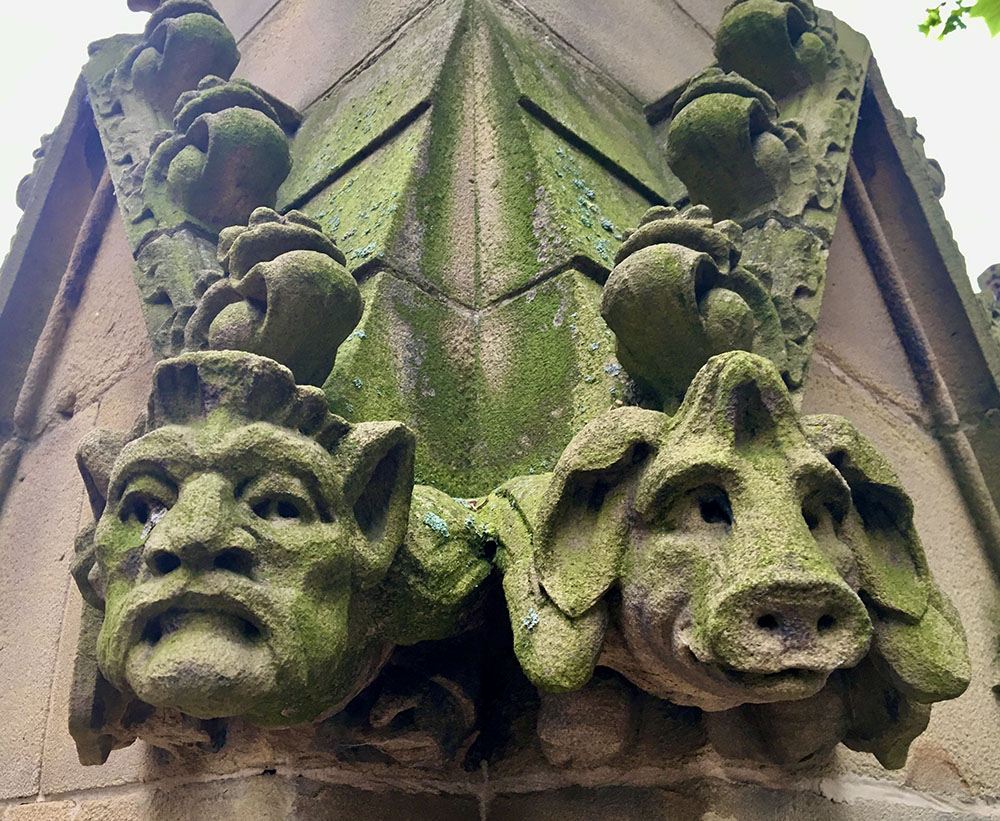
BR: Literally guttural creatures. But as you’ll notice, of course, there are many things that are these really beautiful or grotesque, take your pick, statues and figures that are right along with these gargoyles. These are actually technically chimera or grotesques. So if they’re emitting, if they don’t have a way to drain water, they’re basically grotesques. But if they’re if they either have the ability to or are actively draining water from buildings, they are technically gargoyles.
0:26:35
CW: Now, any anybody who’s studied art and especially somebody who has a penchant for the caricature arts knows the word grotesque. Da Vinci has a series of drawings that are grotesques and they’re not carved into stone. I’m talking about illustrations in his case. But there’s this rich medieval history of drawing caricatured kind of grotesque is the word I’m trying to think of a synonym that explains it more than grotesque and grotesque is the right word. a woman with like five chins and this really pinched nose and oh, they’re just lovely and they’re, you know, caricatures through and through. And it just kind of shows this rich, lowbrow, immature, playful aspect of art in the Middle Ages. I mean, it’s almost the opposite of religious art in that respect. It’s not trying to be reverential. It’s just playful and guttural, I guess, but without being functionally guttural. Yeah, grotesques versus gargoyles. There is a distinction there in terms of the usage. And you’ll see all sorts of other grotesques. If you take a tour, which you can do online, you don’t have to go all the way to Europe, you can see these little carved faces peeking out from like between steps or on the sides of buildings or windowsills and just little cracks and crevices where stone masons have really had a field day. And yeah, I love grotesques of all kinds, and I love gargoyles too, a little bit more now that I’ve had the chance to look into them even more deeply.
0:28:17
BR: Yeah, and it’s, you know, gargoyles, they sort of, they don’t appear that much in pop culture. Now there are of course a couple examples. There’s the animated series, which I think you’re going to touch on, but I mean they’re not, they’re not as, I don’t know, I’m trying to think hard.
0:28:42
CW: Unlike lake monsters, towns throughout America don’t have a pet gargoyle that people see at night.
0:28:53
BR: Right, right, right.
0:28:54
CW: That hasn’t caught on yet.
0:28:56
BR: Yeah, I mean, and you know, when you start digging into the history of them and you know, what they’re said to do and, and I was thinking about it in terms of like, you know, what if I were a gargoyle? What would that be like? First of all, you can’t see yourself, because you’re always looking out, right? So you’re, you’re constantly waiting or hoping it doesn’t rain because then you got to puke all over the place.
0:29:18
CW: Well, you’re talking about gargoyles as sentient creatures now and you’ve made a leap here.
0:29:22
BR: Yes, I have, I have. Well, if gargoyles were alive, I’m like, what would their personality be? Cranky, guttural, I don’t know. I just, I like imagining these things.
0:29:35
CW: Well, they’re protective, obviously. They’re stationed around the edge of an important cathedral, and they’re protecting it.
0:29:42
BR: Yeah.
0:29:43
CW: We’ll get into that. We’ll get there’s many aspects as to why gargoyles exist and what personalities have been imbued into them by their creators.
0:29:54
BR: Yes, indeed. So gargoyles actually have a pretty rich history. They were apparently in ancient Egypt, where of course it doesn’t rain much, ancient Greece, and I was reading that there’s actually a gargoyle that was immortalized in Pompeii in the explosion there. So there’s a long tradition of them, although they really sort of came into the fore during the Gothic era, which is around the mid-12th to 15th centuries. That was sort of the high point of gargoyle production. As we’ll touch on later, there’s different types of gargoyles. There’s animals, there’s humans, there’s half human, half animals, there’s dragons, things like that. Towards the end of the 13th century, human figures began to replace the animals, and they became more, dare I say, caricatured and elongated. Then by the end of the 15th century, they became less demonic and more sort of whimsical and amusing. And so you find the late gothic sculptures began to include less religious subjects and they became more sort of playful. So as you mentioned before, a lot of the gargoyles, I mean, some of them are genuinely frightening. Like, this is creepy as hell. Some of them are just sort of this ambiguous, you know, heavy-lidded figure and other ones are just you know, they’re people farting.
0:31:16
CW: Yeah. Yeah a little lascivious in some cases now one thing about that just the appearance of gargoyles on a building is I mean, it’s all you need. I mean anybody who’s seen a Batman Movie knows if you have a flash of lightning and you see a gargoyle illuminated, it just snaps you to this like Gothic frame of mind. It’s instantly, it’s the poster child for the Gothic era and imposing architecture.
0:31:49
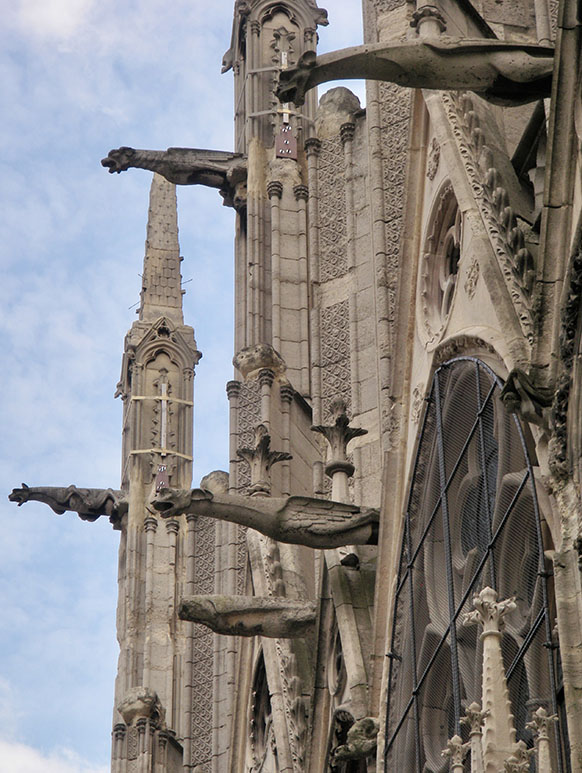
BR: Yeah, I mean, it’s just so iconic in a way that few other things of that era are. And of course, probably the most famous location of gargoyles is in Paris in Notre Dame that we have gargoyles galore. When I was there a few years back, I got some really cool photos. They’re not the best, but they’re just everywhere. Once you start looking for them, they’re everywhere. The gargoyles in Notre Dame are probably the world’s most photographed gargoyles. And a lot of visitors there assume, reasonably enough, that they’ve been there for centuries, but in fact, they’re fairly recent models. Yeah, many of them were remade in the mid-1800s, and in some cases, I mean, there are a few original gargoyles which have survived the test of time and rains and weathering and whatnot. But for the most part, many of the gargoyles in Notre Dame are, they’re not recent. I mean, they weren’t made last week, but they certainly don’t date back hundreds and hundreds of years.
0:32:58
CW: Well, I find that interesting, that it was kind of that these gargoyles need to be replaced and sort of retrofitted to give the cathedral a more gothic appearance or to maintain it. I mean, this is I mean, they didn’t want to put modern ones up there, obviously. They wanted to redo something that would look like it matched.
0:33:18
BR: And in fact, the irony is that if you did put up the originals, they would look bizarre and out of place because oftentimes the gargoyles were colored. They were orange, green, red, and so on.
0:33:31
CW: Oh, I didn’t know that.
0:33:33
BR: Yeah. So, and the original, and we’ll touch on that in a second, but the original gargoyles were wood. So they were carved out of wood and they were placed on the buildings. And yeah, and we know from a few extant pieces that they were colored with, of course, the dyes and colors of the day. But those, of course, were in rain and sun and whatnot.
0:33:58
CW: I wonder if they were connected at all to the figureheads on ships, because it really sounds like a figurehead for a ship, but put onto a building.
0:34:08
BR: Yeah, and that, of course, gets into the question of the purpose and the meanings, right?
0:34:13
CW: Yeah, because we have very specific meanings for ships.
0:34:17
BR: Right. So, yeah, that raises the question about the meanings. And basically, there’s not one blanket explanation, just like for anything, any other piece of art, right? Not all art means X. So like all art, it sort of depends on the context. So, and even religious symbolism changed by the time and the context. So a halo in one painting is clear, but a flower or shape or number could mean different things at different times.
0:34:43
CW: Medieval art is all, it’s full of like weird little stuff that you just don’t understand if you’re looking at it with modern eyes. I have never studied it and I am no expert, but writers from today and also writers from long ago have brought up a few reasons for the grotesque appearance of gargoyles. It might, for instance, be to remind people of the variety of creatures that God has made and you should love all of them. Or they might just look fierce, you know, like I said, to be protective and to scare away evil spirits because religion and superstition do not exist, you know, they’re not exclusive of each other. You can have both. Now, it could also be what architectural historians call apotropaic, which is not just designed to deflect evil, it also is highlighting the contrast between the world outside and, you know, beset by evil and the forces of the devil and sin, as opposed to the sanctity and the peace contained within the walls of the church. So that dichotomy is on purpose. And all of these reasons could be correct. There’s so much variety. I mean, some of these gargoyles, like you said, are made to look like shilly all too human beings. And some are strong, you know, griffins with claws and muscles and beaks. And some are downright demonic looking figures with like bat wings and everything. Now, adorning a cathedral with imagery from like pagan lore might sound a little counterproductive to the mission of the early Catholic church. But when you think about it, it’s kind of a good way to sort of buttress the newer church with the older belief systems. You’re kind of retconning.
0:36:40
BR: Sort of secretism.
CW: Yeah, you’re kind of retconning the older stories that are already existing. Like, come on, yeah, we have monsters on our roof that look just like the ones you heard about as a kid, right? Come on in. Wait till you see what we have, you know, in stained glass inside that we’re going to tell you about. So, I mean, you talked about this before in so many other aspects of folklore and legend, but to see that gargoyles are reflecting it, like, I want to say like in black and white, but it’s really carved in stone.
0:37:17
BR: Literally, yeah. One thing we should keep in mind is that many, and we’ll touch on this later, but a great many of the gargoyles, perhaps most of them, were animals. There’s different animals, there’s dogs, goats, and so on. Keep in mind that during the time that these were created, animals were a much bigger part of everyday life. I mean, today they’re pets and cattle ranchers and farmers and this and that, but back then and certainly in that context, animals played a much bigger part in their food, their clothing, their everyday, they were much more central.
0:37:53
CW: Yeah, it wasn’t like you went to the store and you bought your bacon from the grocer. You probably touched a pig every day. The average person touched a pig and you know had daily goings-on with all these animals a lot more.
BR: I personally would be fascinated to do research on pig touching in the 1800s.
CW: How many times did medieval peasants touch a pig?
BR: And do boops count? I would assume so.
CW: Animals of course have long been used in stories and in art to represent good qualities or bad habits of people.
BR: Absolutely.
CW: So, you know, if your hair is messy, you’ve got a rat’s nest. If you’re, I mean, I can’t even start to like name off the terms of phrase that bring animals into bad behavior.
0:38:42
BR: And of course, the notion of having animals in stories and around you go back to Aesop and things like that. And as you mentioned, I mean, these animals had various specific meanings to the people of time. So for example, foxes represented deceit, cats were associated with witchcraft, of course, goats with Satan, snakes with Satan, and the lion with Jesus Christ, the Lion of Judah.
0:39:04
CW: Yeah, generally, you had strong Christian values were represented by the lion. And monkeys are my favorite. monkeys and apes were depicted kind of doing all the other mundane sins like drinking or playing games, getting into carnal proclivities and all that. So, it really kind of made it hard. You can kind of see how there was a large pushback against evolution when that started to come into the fore, because monkeys have had a bad reputation in the church for a long time. Now, I came upon a great quote regarding all these monkeys and other strange things carved into the gargoyles here. It was from Medievalists.net, and it’s about the purpose and wonder of gargoyles. And the person who said this was back in the 1100s, so like a millennia ago. Now, this is from Bernard of Clairvaux, or Saint Bernard, not the dog kind, but the human kind, in his Apology to Abbot William of Therry, page 71, he was not real happy with the gargoyles. I’ll quote from him, “again in the cloisters, what is the meaning of these ridiculous monsters, of that deformed beauty, that beautiful deformity, before the very eyes of the brethren while reading? What are disgusting monkeys there for, or satyrs, or ferocious lions, or monstrous centaurs, or spotted tigers, or fighting soldiers, or huntsmen sounding the bugle? In fact, such an endless variety of forms appears everywhere, that it is more pleasant to read in the stonework than in the books, and to spend the day in admiring these oddities than in meditating on the law of God good God if we are not ashamed of these absurdities? Why do we not grieve at the cost of them?” Now if you picked up on it, he was pissed off because gargoyles were essentially the medieval version of tick-tock He did not like the monks wasting time staring at the little you know dramas going on in the gargoyle carvings.
0:41:14
BR: The monkey business, if you will.
0:41:15
CW: Instead of getting down to work, you know, getting down to the business of whatever it is monks were doing. So, and-
0:41:22
BR: Chanting, monking.
0:41:24
CW: Yeah, and that just made me giggle tremendously that stone masons were the original content producers, the influencers of their day.
0:41:34
BR: And it’s funny that he would take such umbrage to it. I mean, oftentimes, if you look at the work of Hieronymus Bosch, of course, in the Garden of Earthly Delights and the triptych, there’s these beautiful, grotesque, terrifying, creepy… And when I finally got a chance to see it in person in Spain, it’s huge. It’s this giant, you know, you’re sitting there in front of it for half an hour, just, you know, getting nudged out of the way, of course, because there’s just so much to see. And of course, one thing that Bosch was doing there was he was, you know, intentionally making these grotesque figures, these terrifying half-human figures, basically to scare people, right? They were like, you know, if you’re evil, if you don’t follow the true path and God’s will, then you’re going to go to hell and you’re going to be poked in the eye and in the butt. If you haven’t seen Bosch’s Garden of Earthly Delights, it’s a famous image and there’s lots of them, but it’s just surreal and terrifying and grotesque.
0:42:46
CW: I guarantee almost everybody has at least seen a detail from it.
0:42:50
BR: They will see it. And so and that was one of the ideas behind gargoyles was that maybe they were intended to scare people into going into going to church. That the idea is that the gargoyles on the outside and hey, you’re safe on the inside. The problem with that theory is that the people have also found gargoyles inside the churches.
0:43:09
CW: Well, yeah, it’s hard to really nail down a specific theory that works on all gargoyles all the time. Now there’s also plenty of speculation about whether some gargoyles have hidden messages. And I love reading about stuff like this. One such gargoyle erected in the 15th century on the parish church of All Saints in Easton-on-the-Hill, just outside of Stamford in Northamptonshire, that gargoyle is rumored to be pointing his bare ass toward the stonemasons establishment. Now, the gargoyle itself is a guy essentially mooning, like showing off his buttocks and a little bit more. And the rumor is, and it is a rumor, that it was done purposefully becaue the artisan who crafted it was never paid. So that was his protest by pointing it towards the stonemasons house. Now, again, there’s no there’s no record. We don’t have any confirmation on this from 800 years ago. But what a juicy thing to tell people when you’re on a walking tour. Am I right?
0:44:18
BR: Absolutely. And it also reinforces the notion that you need to pay people. For those who remember our episode on the Pied Piper of Hamelin, one of our early ones, one of which I’m especially proud, I might add, go back and check it out.
0:44:36
CW: Yeah, every sort of rumor or legend or folklore, there’s often a little bit of a cautionary tale, a moral of the story, and to sort of bring a little bit more art history into it, in actuality, there are more than just one of these mooning contorted men, gargoyles, who are showing their butt to those passing below. And it actually became sort of a mini trend in gargoyle sculpting, or I should say carving, in the 14th to 15th century. I’m going to quote Dr. Emma J. Wells, who studies these historic buildings, and wrote Pilgrim Routes of the British Isles, quote, “It is hardly surprising that mischievous masons could not resist the urge to use such orifices for this purpose. And that by the time of the East and carving in the 15th century, they were certainly embracing the humor of the secular world without feeling affront.” So she goes on to say that there is, quote, ample evidence that people did moon each other in the Middle Ages as a sign of insult. So I guess some things just kind of transcend time.
0:45:47
BR: And now on an angry road rage incident in L.A., this is seen several times a day, I would imagine.
0:45:52
CW: I really would be very hard to moon somebody in a fit of road rage, but I have seen it done from the passenger side. I’ve seen it happen.
0:46:04
BR: One of the curious aspects and sort of a mystery is why the gargoyles and the grotesques were so intricately carved. Because, of course, they’re high up on buildings and it, just to be clear, even though they’re in secular buildings and so on. So it was not just a church adornment. The question then becomes, okay, well, but hold on here. So people can’t see that. They’re at ground level and some of these gargoyles are hundreds of feet high perched up in the buildings and there’s no way that anybody, you know, a passerby on the street would be able to see even a fifth of the detail and love that went into it. And so that’s sort of one of the curious things. And so one of the theories behind it is that – and again, there’s not one blanket meaning of all gargoyles, but in some of the cases, it could have been the gargoyles were placed above to please God because, of course, the idea of God being higher than everybody else. And churches were often built on the highest ground to be seen by all and to be closer to God. So it’s certainly possible that some of the most lovingly carved and detailed ones, which, again, had no hope, no prayer, if you will, being seen by the common man were there to glorify God.
0:47:37
CW: Now, that wouldn’t be the first time that art was created purely for God’s eyes. I mean, do you know if the Nazca lines, if those representations of like the symbolic, what do they have? They have like a bird and a monkey or something?
BR: Yeah, well, there’s a bunch of them. I’ve been there, but it’s yeah, I mean, there’s a hummingbird, there’s a monkey, there’s zigzags. I mean, there’s a variety of different…
CW: Have historians speculated that that was meant for God’s eyes as well? Or is it just still a big question mark?
0:48:13
BR: Well, it’s, you know, the ancient Nazca tribes who built, who, you know, created them and made the great figures in the desert. Yes, that’s one of the theories. Typically it’s assumed that they were created for religious purpose. Now obviously some people of a mystery-mongering mind will try and say, oh, well, aliens either did it or it was done.
0:48:35
CW: Because it would only be visible from space. So humans, of course, weren’t even thinking about some deity looking down at the earth and looking. Of course they were, you idiots. Of course they were.
0:48:47
BR: And actually as it happens, there are hills that are not far from the Nazca Plains, and again, I saw them, I’ve been on them, where you can in fact see the figures. So these days, you can go up by plane, which I did, they’ve also built a handful of sort of lookout towers that you can climb to see, but it is categorically not true that the Nazca line makers couldn’t have seen their own work because they could.
0:49:17
CW: Now obviously there’s no hill or anything where you can view these gargoyles when they’re in place, but I mean, what do you know about how they were made and how they were transported up there and what was the significance of the actual carving as it was done?
0:49:34
BR: As mentioned, originally they were wood and of course wood just being weathered and all that, didn’t last long, and then they eventually moved on to stone, primarily marble, and limestone. They were carved on the ground and raised into place, although there may have been a few of them that were carved in place by brave sculptors. You got to be rich. If you’ve seen where some of these are, then you don’t want to be climbing up there, especially-
0:50:10
CW: And you’re swinging a hammer while you’re up there and carving stone, ooh.
0:50:14
BR: Yeah, so-
0:50:16
CW: Although I got to imagine if these things were hoisted up, that must have been a big, exciting day.
0:50:22
BR: Yeah, and when they were finally finished, they might weigh several hundred pounds. They were hoisted by pulleys, which could only go vertical because of the technology at the time. So they were able to lift a few hundred pounds of limestone or marble. But again, you don’t have a modern crane, so you got to be swinging this thing. You better hope the rope doesn’t break.
0:50:46
CW: Well see, that adds another dimension to the spectacle. I would buy tickets to go see the gargoyle, the gargoyle hoisting in the town square if I live at that time.
0:51:00
BR: As would I. Most of the sculptors are anonymous as far as we know. I mean, basically they all are.
CW: Boo, hiss.
BR: Well, you know, and it’s, you know, I was thinking about that. On one hand, some of these are really beautifully done. You sort of feel badly for whoever carved this beautiful, grotesque piece of work. But of course, that’s also true of many figures, particularly in churches, where it’s the artistry, unless you’re Michelangelo, for example, the artistry is for the glory of God. And frankly, of course, even had they put their initials on it, people aren’t going to be able to see it. So, cause it’s, you know, it’s three stories up, you know, so.
0:51:46
CW: And as we covered in a previous episode, if you do a really extra nice job building like a beautiful spiral staircase, they’ll just attribute it to a Saint and forget your name anyway.
0:51:54
BR: Exactly. So, you know, it’s sort of a no-win situation. You know, as with most, as with most, you know, sculptures at the time, they were modeled in clay or plaster, made first and then sculpted from there. There actually are a few gargoyles and chimeras made of lead, including in France, which…
CW: Oh, what could go wrong there?
BR: Between breathing in lead and trying to lift it up there, a lot of things could go wrong.
0:52:28
CW: Yeah, we did a lot of things with lead back then that we shouldn’t have done. I think people were eating tomatoes off of it, that’s a whole other episode. Well, beyond what building materials were used, I kind of did a deep dive, like I said, into gargoyles and I found one person, well, at least one person, a blogger named David Clayton who wrote a piece called Living Gargoyles, the medieval art of gurning or how ugliness illuminates beauty. Have you heard of gurning? Do you know what it is?
0:53:04
BR: Gurning, it’s like it’s part of typography, right? It’s like, is it how closely the letters are?
0:53:12
CW: No, that’s kerning with a K.
0:53:14
BR: Okay.
0:53:16
CW: Gurning, spelled G-U-R-N-I-N-G, is face pulling. And I know medieval face pulling does sound like a brutal form of torture, but in this case nobody’s touching the person. There is a tradition that does go way back to medieval times, and it’s basically a contest of how much a person can twist up their face. Like imagine the photos of these guys who look like real life Popeye with their eyes all squashed or bulging or both and their lip is up over their nose. And the contest dates back to the 13th century in Cumbria in North England, where there is an annual fair in the town of Egremont. And again, I hope I’m saying this right, because I realized in North England, things don’t always look like they should sound to an American ear.
0:54:09
BR: But they do gurning there. So I don’t think that’s their biggest problem.
0:54:14
CW: They do gurning. And oh, my God, there’s like photos you can see online. It’s amazing. But he makes this connection that the blogger that is makes a connection between this face-pulling tradition, and the types of Gothic gargoyles that became popular around the same time. Now, if there isn’t an actual tangible connection, one could certainly argue that the presence of both of these things, gurning with the face, and these grotesque gargoyles, they started coming into fashion around the same time. It kind of gives you a gauge of where people’s sense of humor was back then. And it also assures me as a working caricature artist that my job is safe.
0:54:59
BR: People love to have the faces pulled in all sorts of grotesque.
0:55:04
CW: People love radically exaggerated goofed up faces. And they have for a thousand years or more?
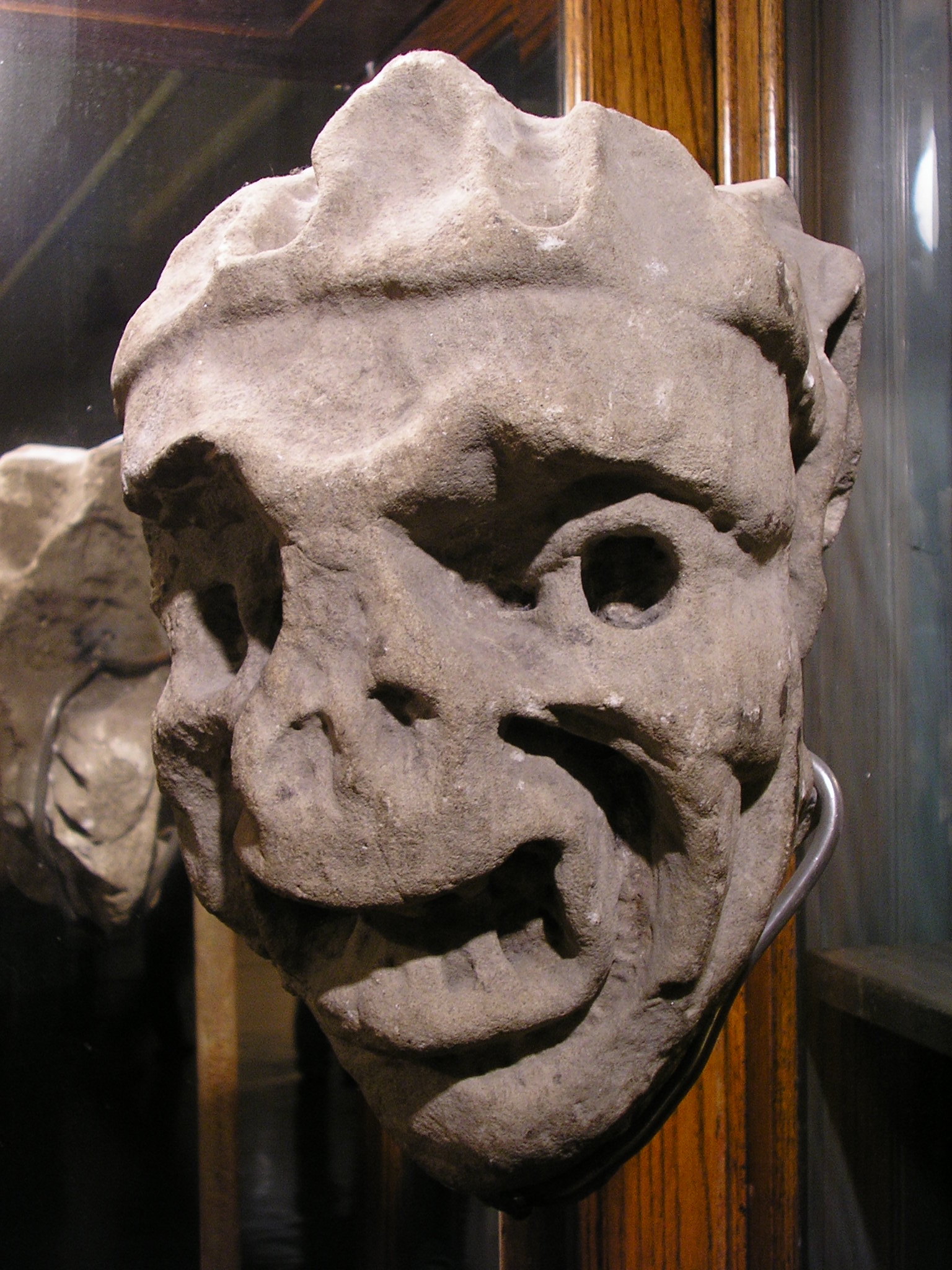
BR: Yeah, I mean that’s, in my research in gargoyles and looking at the different types, exactly, you point out there were what are literally called mouth pullers. And as you said, they’re sticking their tongues out, they’re protruding tongues, and sometimes they represented vices, right? So blasphemy, gossiping, heretics, and so on. In some cases, there are gargoyles who are, again, if they’re true gargoyles and they’re basically spewing out, remitting or vomiting up the rainwater, oddly there don’t seem to be any gargoyles that are actually pissing, which you would think that might be a natural. Maybe that was just a bridge too far?
0:55:59
CW: I don’t know, you need to make the urethra really large to be able to handle like that much rainwater. The butthole that…
BR: I don’t think they’re worried about anatomical correctness.
CW: If I might discuss the butthole in the historical art piece that I was looking at, it had to be, it had to have a fairly wide circumference and I’m not sure how the structure like that would work because you’d have something dangling out there. Anyway, I can’t believe we’re discussing this. I’m sorry. I apologize, listeners. It’s a bit more scatological than we usually talk about. Anyway, Ben, did you know I found a Chupacabra connection as I was looking through this stuff here? There is a place called Paisley Abbey, one of the parishes for the Church of Scotland, about seven miles west of Glasgow. There are several gargoyles there that had to be replaced in the 1990s, just like, you know, in Notre Dame, you know, after a while you replace these because they get worn down. Now, in keeping with the tradition, really, of whimsical expression in these things, the stonemason took a few liberties and one of these gargoyles was carved to look like the xenomorph from Ridley Scott’s Alien movie. Have you seen this?
0:57:20
BR: I have not. It sounds delightful.
0:57:22
CW: It’s freaking brilliant. And it showed up on the Internet way back in 1997 when the Internet was like a baby Internet. And then later it went way more viral in about 2013. And of course, the connection between the chupacabra and that is?
0:57:37
BR: Well, of course, the original sighting in Chupacabra was inspired directly from the movie Species and the creature, Syl, was designed by H.R. Giger.
0:57:50
CW: Who also did the xenomorph. Yes, I wanted you to sew that up. Good job.
0:57:54
BR: Full circle. You’re welcome. For more on that, check out my book, Tracking Chupacabra.
0:58:00
CW: Shameless plug.
0:58:01
BR: Although speak, although there’s another chupacabra connection, which you may not know.
CW: Two! Listeners, you’re getting two chupacabra connections with gargoyles. Wow.
0:58:11
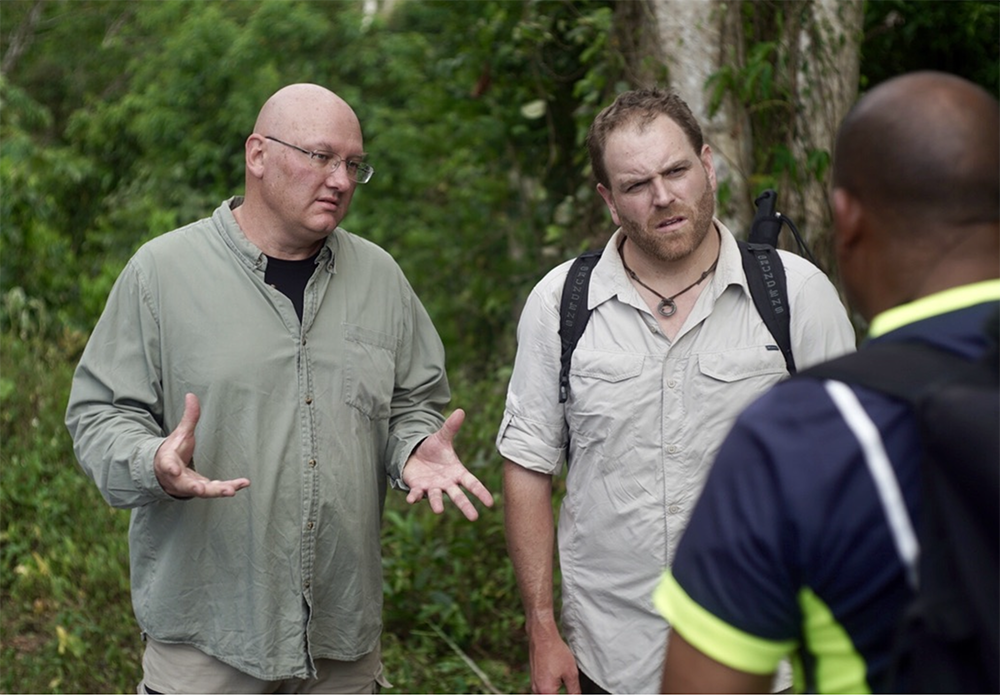
BR: That that’s why we get paid the big bucks and we have lots of listeners to bring all this in. I’ve mentioned this once or twice in the show before. I won’t go into too much depth, but on the TV show, Expedition Unknown, with Josh Gates, which occurred in 2019, Gates’s producers contacted me and said, hey, Josh wants to do a show in Chupacabra. Do you want to meet up with him in Puerto Rico to go over it? I’m like, of course. Anyway, I’ll spare you all the details, but one of the interesting parts about it was that on, I think, the third day of the shoot, we went to a cave not too far, actually not too far from the Arecibo radio observatory, which is now sadly devolved.
0:58:54
CW: Yeah.
0:58:55
BR: It wasn’t really clear to me why we were going there. And I was like, so I’m talking to Josh in between the, on the transport and like, so they go, okay, so here’s the thing. So this, this witness, this guy in this town of Barcelona named Edgargo says that he saw a gargoyle deep in this cave. Okay. He’s like, well, you know, it could be a chupacabra. Okay.
0:59:21
CW: Okay. Gargoyle, chupacabra.
0:59:25
CW: Now, did he use the word gargoyle or is there a different word for gargoyle in Spanish?
BR: No, he used the, he used the Spanish word for gargoyle.
0:59:34
CW: What is that word? If it’s a really cute gargoyle, it’s like a gargolita? Or I mean…
0:59:42
BR: Yeah, sí, claro. So, again, I’m happy to do this. I mean, I’m on the shoot. We’re already there. But, you know, as often happens on TV shoots, it’s not really clear to me how this ties in with what we’re there for. So the producer is like, well, you know, yeah, he describes his gargoyle, but you know, again, Puerto Rico, we could call it, you know, we’ll lump it together with chupacabra. I’m like, sure, whatever. So we meet this guy, Edgardo, and if you watch the episode that aired, there’s a small, there’s a short segment, it’s not very long, but this is sort of one of the, one of the dramatic beats to it, which is where we go into the cave. And so, Josh and I are interviewing him, and he says that years earlier he was searching the cave with a group of other people, other locals, and he scouted ahead in a deeper chamber and he saw something strange. This isn’t a super deep cave by cave standards, but it’s somewhat deep. And of course, there’s no light down there, and he had a flashlight and so on. And he described it as having wings, which the chupacabra isn’t typically said to have, and said it was very, very muscular. He also said that he thought that it hypnotized him.
1:01:03
CW: Oh, okay. That’s new.
1:01:06
BR: Well it is and it isn’t. So it is true, as I touch on in my book, that in the late 90s and when the chupacabra first emerged and was discussed in Puerto Rico including in where this guy was in Barceleta there were a handful of reports that said the chupacabra had the ability the ability to hypnotize. So there were a couple reports of people that said they saw something They’re sort of like frozen in fear type thing some of them described red red eyes and so on
CW: I’m thinking of immediately of Hypno Toad from Futurama.
BR: So yeah, he said that he felt like it hypnotized him and it didn’t attack him but he freaked out and he tried to scramble out of there and he hit his head and was knocked unconscious.
CW: Which I’m sure didn’t influence any of how he remembered things.
BR: Yeah, so he’s telling this story to me and Josh, some of it off camera and some of it on camera. And, you know, I’m, he’s talking, but yeah, I was knocked unconscious, my friends had to drag me out. And I’m like, so you, you, you’re deep in this cave. You saw this, this winged muscular gargoyle thing, which we’re calling the chupacabra. You freaked out, got knocked out five feet away, whatever. So we’re like, whatever, it’s TV. So we interviewed the guy, and so we trot through this jungle area to this cave. And it’s actually pretty cool. I mean, I’ve done a little bit of spelunking in my time, and it was neat. And so Josh and I are there, and of course, there’s also four or five other people. There’s the sound guy, there’s the camera guy, there’s a PA, there’s, you know, anytime you see, you know, some sort of very dramatic scene, you know, in a reality Bigfoot or ghost show, there’s one guy all by himself. No, there’s eight guys right behind him, one of them’s, you know, chewing on chips, there’s a guy texting his girlfriend, it’s a whole thing. Anyway, so we went down there.
1:03:09
CW: Ben shatters the illusion of reality TV. Thanks, Ben.
1:03:13
BR: You’re welcome. So, anyway, so we went down there and of course this was several years earlier, I don’t remember exactly what year, but this was not recent, so of course I’m thinking to myself, well, other than we’re doing this for TV, which is of course the answer, why are we doing this because there’s nothing to investigate because, anyway, so they said, okay, take us down there and it was actually a bit arduous. So we were down there and it was hot and just cramped this and that and there were bats everywhere. But the biggest thing was the roaches.
1:03:50
CW: I remember you discussing, I remember vividly you discussing the roaches and the guano.
1:03:55
BR: Yeah, and just eight, six, eight, 12 inches of bat shit everywhere, just stomping through it. And we’re going deeper and deeper into it. And again, we’re trying to get to this place where years earlier he saw something. No idea what it was, if anything. And of course, the fact he was knocked unconscious and knocked silly didn’t really help matters. But so we’re going down there. And the main thing I remember from the shoot was that Josh was going up ahead to sort of film a little thing where he’s sort of going ahead to look at something. And remember, I was just like so hot and, you know, tired and it was, and hungry and it was just, so I’m standing there and I didn’t really want to stand up because I was tired and there were bats that were dive bombing me. So and we had to keep our light limited in order to have the camera on Josh a bit further ahead. So I kept sort of having to duck bats who were swooping towards my head. So I was going to sit down on a rock, but the problem is the rock was covered with roaches, tens of thousands of roaches. I knew from experience that if I sat down on that rock, as much as I really wanted to just to get off my legs, within probably 40 seconds or a minute, I would have roaches all over me.
1:05:20
CW: Of all the stories you have to go into again on this show, you’re going to…
1:05:25
BR: Yeah, anyway, that was fun. The short answer is, didn’t see the gargoyle, didn’t find the chupacabra. Spoiler.
1:05:34
CW: Well, I’m curious. The fellow decided to call it a gargoyle. And I want to ask, how old was this gentleman?
BR: He was probably mid-30s.
1:05:42
CW: Mid-30s? Oh, okay. So, see, because I was wondering if he was Gen Z, or around about the age that remembers the Gargoyles animated series coming out in the mid-90s.
1:05:58
BR: Yes, now I will confess, other than seeing a clip here or there, I have not seen the series. I’m now more interested than I was a couple weeks ago. What can you tell me about it?
1:06:11
CW: Well, I saw a handful of them. I wasn’t a religious watcher of the show, but my friends, I’ve gotten plenty of people in the art community, especially who are Gen Xers, are very into that show. It became a bit of a cult classic after it ceased production. It only went for three seasons and it was out around the time of Bruce Timm’s Batman the Animated Series. It represents kind of this turn in quote unquote children’s animation where it was a little darker and grittier and they had really big name voice actors. I mean, I can’t even list you the voice actors that showed up on Batman the Animated Series, but for Gargoyles, they had like Ed Asner was one of the actors and Marina Sirtis and Jonathan Frakes from The Next Generation from Star Trek. And Disney has just announced last month, October, that they will be rebooting this booting this 90s series as a live action show. So it’ll be on Disney Plus at some future date. They’re still really early in development, but they’ve got James Wan’s production company, Atomic Monster, and Gary Dauberman, who was a writer on several of the Annabelle movies in the Conjuring universe. So it sounds like they’re going for sort of a horror movie feel to it. We’ll see. They might, they might ruin it. They might completely ruin it. We’ll see.
1:07:43
BR: Again, just because I literally know nothing about what’s the premise of the series.
1:07:47
CW: Uh, well, uh, you know, I’m kind of reminded of beauty and the beast with Ron Pearlman. Uh, there are gargoyles and they kind of come to life at night. And they, they help out cops sometimes. There’s like a cop relationship that goes on. And they’re basically dark protectors of people by night, and then they turn to stone by day.
1:08:13
BR: So there’s almost the Icelandic trolls, and other trolls are also said, of course, to turn to stone during the day time or is it that they just can’t?
1:08:32
CW: I’m remembering back. If you give me a second, I can ask Rob. Okay, I’m back.
BR: Okay, did you get the 401-1?
CW: I did. I wonder if I should just share that with listeners. Yeah, do it. It’ll be fun. So I took a break and I went out and I consulted the expert I have living here with me. My husband was very into that show and he looked at me like, how dare you not know this woman? They, they, it’s their nature to turn to stone during the daytime. Like they’re like vampires except instead of turning to ash and dying, light just makes them turn to stone during the daytime. and they had been ut under a curse but so the curse was lifted, but they still turned to stone during the daytime. Does that make sense?
BR: Well, as far as any cryptology folklore makes sense, yeah, I mean, again, it strikes me as being very similar to troll lore in terms of, and of course, Medusa and others, but yeah, that’s cool.
CW: Yeah, I’m curious to see how they’re going to reboot it, because like I said, I mean, the artwork itself was also really good. It had this nice feel to it. And there were shows that I just watched because I liked the artwork. And I don’t have a good mind for the details. It was hard to recall specifics after 30 some odd years.
1:10:15
BR: Well, thanks to thanks to Rob for for his encyclopedic knowledge of the Gargoyle series.
1:10:20
CW: And I’m probably going to have to watch the DVDs or the laser discs this week as penance. So thanks, Ben.
1:10:28
BR: You’re welcome. Leave me know how it is.
1:10:32
(MUSIC)
1:10:46
CW: Well that was cool talking about gargoyles. It’s, you know, a little bit past Halloween, but I still like semi-spooky stuff and gargoyles kind of fit the bill.
1:10:56
BR: So speaking of spooky, but not really, but not really. Next time we have a folklorist colleague of mine, Dr. Christina Downs. She’ll be talking about, well, it’s a curious story. Wild animals on the loose.
1:11:18
CW: Well, not exactly. Wild people are involved a little bit, but we’ll get into the nitty gritty when we have a full hour to talk about it. And until then, everybody take care. Bye-bye. We would like to extend heartfelt thanks to our top-tier sponsor-level patrons. Amy Frusciower Kelly, Dr. Angela Matkey, Elizabeth Leggett, and Laura Ellis. Thank you for your continued support of our podcast. If you’re interested in becoming a sponsor, or just throwing us a buck or two, please visit Squaring the Strange on Patreon.com and browse our selection of patron rewards. Every bit helps us keep the lights on here and we are grateful to our generous friends who help us bring you quality content. If you are short on cash and want to just give us moral support, remember to recommend us to a friend, mention us on social media, or give us a review on your favorite podcast dispenser. If you have comments or topics you’d like to see covered, come join our community on the Squaring the Strange podcast discussion group on Facebook. Squaring the Strange is a production of Two Heads Studio LLC. Copyright 2021. Theme music provided by Shriek Back. Additional music by Memory, Ketard and Feathered, and Pasquale Romero. Additional support by Ashley Romero, Robert Sundin, and Alicia Jarvis. The views and opinions expressed on this podcast are those of Squaring the Strange, and do not necessarily reflect the views and opinions of Two Heads Studio, Kronos Creative, Center for Inquiry, our advertisers, or any other affiliated Creative, Center for Inquiry, our advertisers, or any other affiliated organizations and employers.
Transcribed with Cockatoo
