Episode Summary:
Fresh from a convention of caricature artists and with heads full of pareidolia, Ben and Celestia discuss a few topics of the day and then dig into crystal skulls. Can we trust what Dan Ayrkroyd tells us on his fancy vodka bottle? Are there really thirteen of these ancient and powerful relics? What is the Skull of Doom, and does it have strange properties that baffle scientists? These skulls provide a fascinating look into rewritten histories and the power of priming. We even look at an ill-conceived lawsuit against Steven Spielberg involving the crystal skulls featured in the latest Indiana Jones installment.
0:00:00
Ben Radford: Welcome to Squaring the Strange, the podcast that examines all manner of the mysterious and the mundane through a critical lens. So let’s square the strange.
(MUSIC)
0:00:10
BR: Welcome back to Squaring the Strange. This is episode 107 and I’m your host, Ben Radford. And with me is…
0:00:32
Celestia Ward: Celestia Ward. Hey everybody.
BR: Hey.
0:00:35
CW: Hey, we’ve had some busy times going on here. Halloween is over everybody, so I hope everybody had a pleasant Halloween time. Ben, did you come across any candy scares? Was anybody reporting tainted candy out there?
BR: You know my little pet peeves and niche interests so well.
CW: And Google alerts, yeah.
BR: And Google alerts, you’re exactly right. Yeah, I want to quickly touch on a scare that happened just a few weeks back and it was a case that made national news and of course showed up on my Facebook feed and also on that of the contemporary legends and others. It was about a man in Rockford, Maine who claimed that he had found a needle in his candy. as you and listeners probably know, basically every Halloween, I either trot out or write a new piece reminding people that most if not all of the Halloween scares that people are afraid of are mostly phantom fears and they have little substance to them. So I think there was a little bit of schadenfreude for people to see, what about this case, Mr. Skeptic? When you take a public position that X is an urban legend or some form thereof, it’s natural for people when they see some news story, countering that or send it to you and say, what about this?
0:02:11
CW: So they’re being skeptical about your skepticism.
0:02:14
BR: Yes, which I invite, which is fine. Now keep in mind that the tainted Halloween candy urban legend, as with most urban legends, it’s something that could potentially happen. It’s not impossible that some stranger could be putting razors in apples or candy. So the issue is not that it is impossible that it has never happened. It is that the story that this happens certainly routinely is an urban legend. So in this case, it was a guy named Justin Sanford and he posted on Facebook a post. It was on November 5th and I’ll just read you a little bit of it. He says, I’m furious. People you need to check your kids’ candy over very, very well. So my son had gotten a lot of candy for Halloween and never did I think my son would be subjected to blank people putting blank in candy. They’ve censored it.
0:03:06
CW: Okay.
0:03:07
BR: Today he decided he just wanted one piece and chose a Kit Kat and went to watch TV like always. Five minutes later he comes screaming saying, Daddy, my candy hurted my mouth. And he showed me his mouth and his Kit Kat, and guess what I found? I’m not happy at all. Next year, whatever he gets for candy, I’ll be throwing out and buying replacement candy for myself. There’s a needle in his Kit Kat. People are sick these days, and I’m glad he came straight to me. I’ve literally been fighting back tears because he could have gotten severely, I think he means severely, hurt due to someone else being a sick blank.
0:03:41
CW: That’s a rather long screed.
BR: It is.
CW: And it didn’t mention anything about a police report or immediately taking him to the doctor to find out if the needle was contaminated with something.
0:03:54
BR: You’re exactly right. So here’s what actually happened. So he posted this on Facebook and apparently his wife heard about it and rushed home, took the son to the emergency room.
CW: As one should if that actually does happen.
BR: Exactly. So this is a three-year-old son and took it to the Penn Bay Medical Center in Rockport and they found no injuries at all. And the police were of course called because if someone really is you know putting dangerous materials such as needles or razor blades or other toxic things in candy, then of course this is and should be a police matter. The problem, of course, is that when the police are involved, they investigate.
0:04:40
CW: Yeah, that’s sort of what they do.
0:04:42
BR: The police investigated and took it seriously, as they should, and they soon determined that the whole thing had been hoaxed. He had made the whole thing up.
0:04:50
CW: You mean you can’t believe everything you read on Facebook? I’m shocked.
BR: Well, especially again, it’s the sort of classic warning scare for parents, right? It has all the elements. It has, you know, somebody who’s like, oh my God, this this this happened. And it was so, you know, I’m protecting my children. And I’m such a such a courageous defender of my children. And Daddy, it hurted my mouth, the whole sort of bad syntax that you might expect from a young child.
CW: And he’s trying to scold other parents, telling them they need to be doing a good job checking their kid’s candy because this could happen to you.
0:05:28
BR: Exactly. So as we discussed on a previous show, there have been a couple incidents of tainted candy candy in all the cases and certainly was the case here, it was a parent or caregiver that was doing it. Anyway, so this particular fear is largely fabricated and the exception that came to light shortly after Halloween this year turned out to be a hoax.
0:05:52
CW: Well, did anything happen to the fabricator? I mean, were there any punishments meted out? I mean, there’s police time spent on this, right?
0:05:59
BR: Yes, he was actually charged with the crime, with falsely reporting a crime. And as of the time of recording this, I haven’t seen any updates. I don’t know that he’s been convicted or sentenced. But yeah, and the police took it, again, they took the initial claim seriously, as they should, and rarely for these sorts of cases, they felt that they had actually put in so much time and effort and there had been so much of a public scare that the person who fabricated this deserved to be charged and frankly I support that.
0:06:29
CW: Yeah it makes sense and quite quite frankly the first thing I think of when I hear this case is a failure to communicate in one’s marriage because if he had any sense if he was gonna put a bogus story on Facebook which you obviously people don’t get arrested for bogus stories on Facebook there are so many of them he should have hipped his wife to that fact and said, hey, you don’t need to take him to the emergency room. You don’t need to go to the police. I just made it up. He should have told his wife that rather than getting the police involved and just going along with the story he’d created.
0:07:05
BR: Yeah. And of course, you know, to the police, the concerned mother who’s genuinely frightened and fearful is all the more reason to think that it’s legitimate. I mean you generally thought something was going on. So these cases of where one person initially fabricates or hoaxes an incident for publicity, for attention, to make something go viral and they don’t really want it investigated. They just want to get the attention. They don’t actually want anybody to dig into it because of course if they do then they’ll find out that it’s been it’s been faked.
0:07:39
CW: Yeah one thing I actually did enjoy that I don’t recall seeing this last Halloween but this Halloween I saw a number of funny little photograph memes popped up on my Facebook feed like make sure you check your kids candy I found this in my son’s Skittles and it’s like a full-size Sherman tank and there’s like Skittles like scattered on the turret.
0:08:05
BR: I found an AK-47 in my Snickers.
0:08:08
CW: Yeah, just kind of poking fun at like, yeah, this is overblown and an urban legend. And look, this huge thing is hidden in my kids M&Ms or whatnot. I enjoyed those. Did you get a few?
0:08:21
BR: Actually, I didn’t see those.
0:08:23
CW: Oh, I’ll send you a bunch. I’ll look for them.
0:08:27
BR: Yeah, that would that’d be I’m surprised I missed them. But yeah, that’s a that’s funny. Yeah.
0:08:31
CW: Now now I I’m sounding a little bit under the weather listeners because I have what is commonly known as the con crud I have been on a crazy road trip to the international society of caricature artists annual convention and as it happened Ben came along for the ride. We have spent, how many days was it, five days in Memphis?
0:08:58
BR: Five or six days, yeah.
0:08:59
CW: Yeah, I had planned this months and months ago and my husband was going to come along with me and we were going to take Griffin, our one-year-old son, and take him across. You know, it is actually easier to drive than fly with a kid, in our opinion anyway. So we were going to see a couple of states, get to Memphis, and then drive back. And my friend Andy, who is also known as Fact Check Andy on the Geek Shock podcast, shout out to them. He was coming along as well as fellow caricature artists, and we were heading right through Albuquerque. Well, last minute, my husband got a very, very lucrative gig, and we decided that he didn’t want to pass that up. So he bowed out because he hates traveling anyway. And Andy came along with me. And as we cruised through Albuquerque, of course, hoping to stay at Ben’s house, because that saves us a hotel night, Ben decided, hey, you know, you decided you were going to come along, right?
0:09:53
BR: I did. As you and probably many people know, I’m a huge fan of caricature. I love the art form. And I just think it’s, I can’t do it. But I love it and of course that’s how you and I originally met. So, uh…
0:10:09
CW: Yeah, you did a few decent ones at this convention. I saw your work and yeah, that is how we met. Like, was it five years ago or something at a caricature convention? This guy walks up and he’s like, hey, that’s James Randi. And I had a sculpture of James Randi. I was like, yeah, you know who he is? And you’re like, well, yeah, I know him. And therein went the conversation.
0:10:27
BR: So, yeah, I knew you were coming through. And so given the chance to hang out with caricaturists for five days, I’m like, yeah, that’s I got some I got some vacation time. Let’s do this.
0:10:39
CW: It was quite a road trip. We went through a number of southern states. I saw billboards in Arkansas that that talked about how great it was to beat your child and quoted some Bible verses. We had disgusting, nasty tap water in Clinton, Oklahoma.
0:10:57
BR: All right. So, listeners, all our listeners in Clinton, Oklahoma, you can direct your hate mail to Celestia.
0:11:03
CW: No, you need to direct your hate mail to your water authority. There’s something wrong with your water. It even made the McDonald’s Diet Coke taste nasty.
0:11:13
BR: This is true.
0:11:14
CW: Andy and I both did a spit take when we tried our diet Cokes. Now at the event, now what did you think of the caricature con this year, Ben?
0:11:26
BR: I enjoyed it. You know, it’s a little sort of fish out of water for me because basically everyone else there is a professional caricature artist, either doing commissions or working in fairs or whatever else. But it’s it’s it’s I love it. It’s just so many different styles. There’s people from around the world I think there were a hundred and eighty eight or two hundred caricaturists wide-riding styles and and techniques and it was it was cool and and I recognized I had probably a dozen or so people from previous ones. And so they they said, oh, yeah, I remember you I drew your face.
0:11:57
CW: Oh, you’ve got a good face to draw, Ben. No offense, but you’ve got a number of things caricature artists can zone in on. And at this event, we got to see the premiere, the closed private premiere of a caricature documentary called American Caricature. That’s going to be making the rounds at festivals pretty soon. And I know, Ben, you share a love of documentaries. So we got to see the premiere of that. That was pretty cool.
0:12:28
BR: That’s right. That’s right. And I contributed to the Kickstarter. So somewhere way at the end of the credits, you’ll you’ll see my name.
0:12:35
CW: Yes. Now, you might not think a caricature convention has anything to do with skepticism, but there were a few moments. I remember, for instance, my friend Ben Bloss, who was teaching Caricature 101 and a couple of other of the seminars there. He mentioned the Mandela effect just spontaneously to me. You’d have to know Ben, Ben Bloss that is my friend. He really resembles Count Chocula. If you’ve ever seen Count Chocula on the… I can see that, yeah. But he’s got a crazy deep chin dimple. It’s like the Marianas Trench of chin dimples. I think it even rivals yours, Ben. And he and Ben was like and Ben Bloss, I gotta get you two straight here. Ben Bloss was saying, yeah, Mr. Bloss was telling me, you know, it’s the weirdest thing this year. Everybody who’s drawing me, they’ve drawn me in previous years, and they’re, you know, they’re drawing my face, and they’re like, wow, you have a chin dimple. I never noticed that before. It’s like some weird Mandela effect, man. They didn’t, who were they drawing last year? It was not me. He couldn’t get over the fact that people were completely blanking on the fact that he’s had a chin dimple his entire life. And of course, the huge thing about caricature and skepticism is pareidolia.
0:13:54
BR: Yeah, absolutely. That’s, you know, as we’ve talked about on previous shows, I mean, people recognizing faces is it’s one of the first abilities that a toddler has is long before they can say anything, children can recognize faces that the two eyes and nose and mouth, you know, that’s why we see faces and everything from clouds to oil stains to coffee stains and things like that. And so it’s the recognition and sort of taking apart and putting together elements of a face is very much a part of the psychology of pareidolia and in some cases skepticism.
0:14:26
CW: Well, and for caricature, it’s going a couple steps further. It’s looking at what makes a particular face look like a particular face and stretching that and pulling it to the outer reaches of recognizability to where you know who that is, you can recognize the features, but it doesn’t resemble a standard skull and human measurements of a face at all anymore. It can be really out there, like completely whacked out. And after five days of seeing people just push and push and push their exaggeration, you know, some of these are like masters of the world who are far beyond my abilities. It just really kind of gets you in this headspace where you feel hyper attuned to pareidolia. I don’t know. We all stayed in the same room. It was me and Andy and Emily and Ben and we were just carnying it up. I’m used to staying in close quarters with people and Emily is used to my flatulence by now after being on the road at the Texas Fair with me a number of years.
0:15:27
BR: I was not, just for the record.
0:15:29
CW: Well you didn’t have to put up with it as much as she did. Well, the bathroom of the hotel had this picture of the back end of a Cadillac. It had like the fin and the little tailpipe and I kept seeing this screaming face in that Cadillac, the curves and the shines on that Cadillac. And you start seeing faces in everything. It’s just more than usual. At the caricature convention, you’re just a little bit more attuned to picking these things up. It’s like somebody’s turned your radar like way, way up. Psychological priming, right?
0:15:59
BR: It’s it’s you know, when you’re when you’re looking at when you spend days looking at faces like literally looking at and representing faces and drawing them and sculpting them to whatever else, of course, you’re going to you’re going to see this. And the same thing happens in, for example, haunted houses and haunted locations where people, they go into it with a psychological priming that anything weird they hear is gonna be a ghost. Or for example, in ghost photos, I’m continually being sent ghost photos. And by far the most common image that people see in ghost photos are faces.
0:16:44
CW: Yeah, listeners direct all your ghost photos to Ben Radford, PO Box.
0:16:50
BR: No, but that’s the thing, right? I mean, people don’t send me photographs of ghost elbows or ghost ankles. They send me photographs of what they interpret as ghost faces, and it’s for the same reason that you just said.
0:17:02
CW: Yeah, well, and after you’re completely trying to stretch features, it just kind of makes your – it moves your Overton window, I think, a little bit as far as what you do recognize as a face. I think at least that’s the feeling I get. I have no scientific proof for this, but that is the feeling I get after five days being at a caricature con. And I was experiencing pareidolia from a whole other angle too. I was having a lot of audio pareidolia because I have a one-year-old son who’s on the cusp of being able to form some words. So he’s babbling constantly and you hear him say, you know, a couple of gu-gu-gah-gahs, you know, multi-syllable bits of chatter, and you’re like, oh, did he just say blah-blah-blah? Or, I really think that sounded like he said doggy, you know? So you’re constantly hearing words in your one-year-old kid’s vocabulary, and you’re like second-guessing, did he really say that, or did I just think that that was that word? Almost like having a little EVP running around your house constantly.
0:17:59
BR: And of course, one issue is the context. Right. And so the kid could say exactly the same syllables, exactly the same sound. And if he happens to be looking at a dog or a door or a tree, you know, you’re going to interpret it within that context. And again, this goes back to the psychology of eyewitnesses and memory and things like that. Is it a cell phone or is it a gun? I mean, it depends on your priming and what you’re expecting. And like I said, five days of looking at really stretched, whacked out faces, I was seeing them everywhere, including the print of the car fins in the bathroom. And it’s not just you. I know exactly the print that you’re talking about. And I saw the same thing. And you see this online. You see someone post a photo of an electrical outlet that looks like a terrified, you know, don’t plug that into me. I saw that and I also saw when I was shaving one morning, I saw what looked like a head and eyebrows in the shaving cream. And even when we were driving back on the freeway, you and I actually were talking about this when there were trucks in front of us and when the sunlight hit it in a certain way, you could absolutely see faces in the metal patterns of the truck in front of us. And I don’t spend a lot of time driving cross-country of course and it’s possible that I would have noticed them anyway, but they were especially noticeable after five days of a caricature convention.
0:19:24
CW: We were all a bit sleep deprived and tired and I don’t think anybody really should be subjected to me and Ben having conversations on the road. Poor Andy fell asleep in the back with the kid because didn’t we have like an hour long debate over how exactly Google Maps figured out your arrival time?
0:19:42
BR: Yeah, I don’t know if it was an hour. It was certainly 40 minutes and I was right.
0:19:47
CW: I think I was right. No, I was right.
0:19:49
BR: Well, one of us was right.
0:19:51
CW: One of us was right. Yeah, we can agree on that. Anyway, one of the recurring themes was getting away from the skull and that’s because as if you learn how to do portraits You’re constantly referring to the skull the anatomy of the skull and how everything is kind of anchored to the skull You can’t have a face look like a face really without the skull but in caricature you get away from that you have to pretend the skull isn’t under there you have to think more like rubber you have to think that the skull is is completely pliable and can stretch all over the place to make the face that you want to draw in cartoony, wild form. And that goes right into the topic we have today. We’re talking about skulls, a very particular type of skull though, right, Ben?
0:20:38
BR: Yes, we’re talking about crystal skulls.
0:20:41
CW: Crystal skulls.
0:20:42
BR: Yeah, absolutely. I’ve got plenty of stuff to talk to us about crystal skulls.
(MUSIC)
0:21:03
BR: Yes, today’s topic will be crystal skulls. It’s a subject that I’ve been interested in for many years and I ended up actually writing a book chapter on it in chapter, I think it’s chapter four, three or four, in my book Mysterious New Mexico. In fact, in a recent issue of Junior Skeptic magazine, Daniel Loxton did a good piece on the crystal skulls. But so yes, that’s that’s today’s topic.
0:21:29
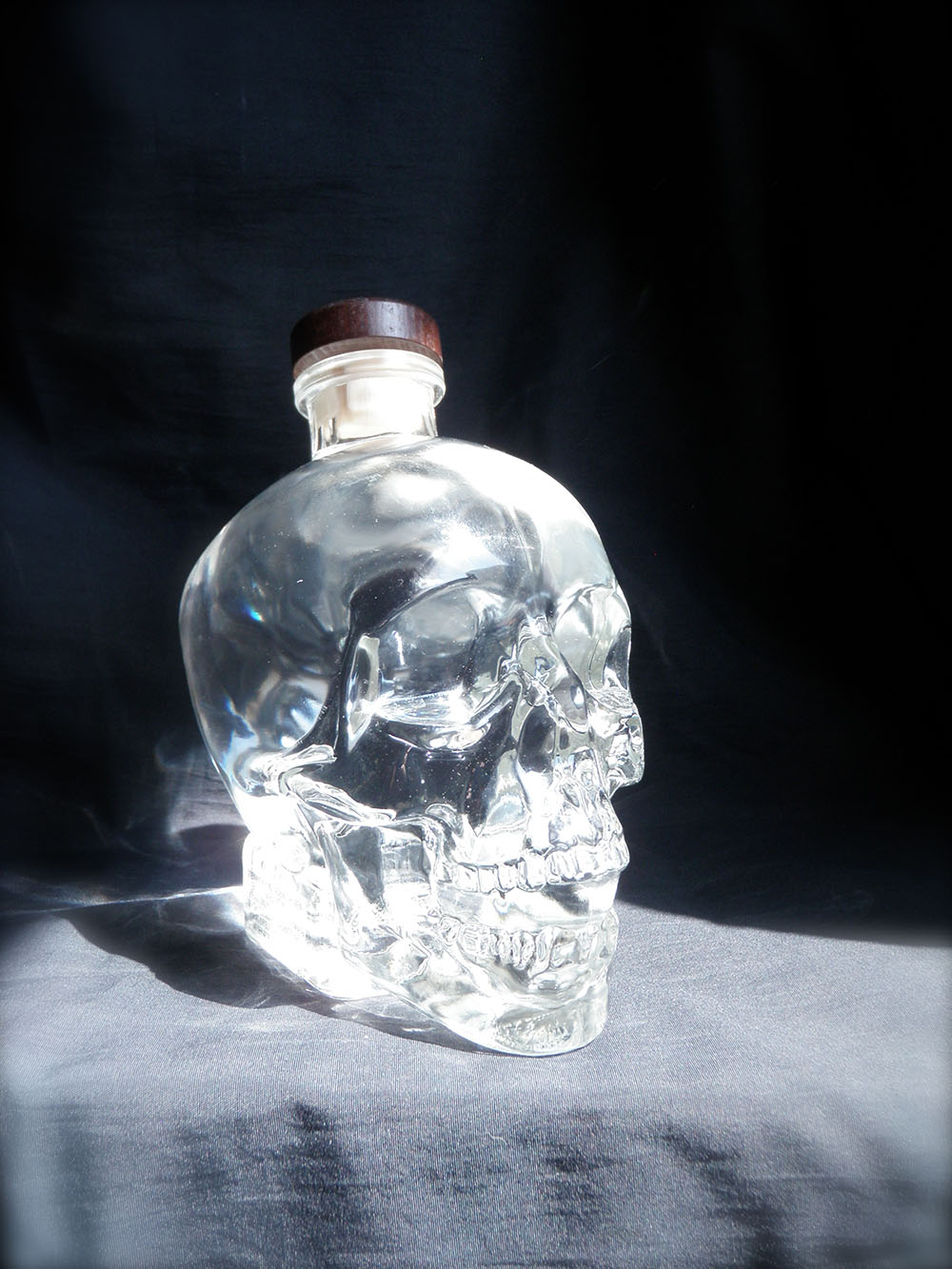
CW: Okay, I almost bought a crystal skull a few years back. It was it was in a liquor store. It was filled with vodka. I think it had Dan Aykroyd’s name on it.
0:21:38
BR: Yes, indeed. And so Crystal Head Vodka, and this is actually a really good introduction. I don’t know whether you intended it to be or not, but…
CW: Give me some credit on good instincts here.
0:21:47
BR: So, yeah. So actually, in the promotional packaging in literature for Crystal Head Vodka, Dan Aykroyd talks about Crystal Skulls, and it is co-founded by actor and paranormal buff, and of course, a noted ghostbuster, Dan Aykroyd, whose father, by the way, for those who don’t know, is an author, and actually the author of several books, including a pretty good book on the history of ghosts, Peter Aykroyd.
0:22:18
CW: That’s an interesting little bit of trivia, considering his son’s most famous movie role there.
BR: Exactly and if I’m not mistaken one of the reasons why Crystal Head Vodka other than of course being associated with Dan Aykroyd is so expensive is that it’s filtered I believe from iceberg water from Newfoundland.
0:22:38
CW: It’s really expensive vodka. Did they get the iceberg that sank the Titanic? Is it a really special kind of iceberg water?
BR: You’d have to ask Dan about that. But in researching Crystal Skulls, that’s one of the things I had to do was drink his vodka. Because, you know, I’m…
CW: Oh, you poor thing.
BR: Kenny Biddle would approve.
CW: Yes, he would.
BR: He’s often badgering me to drink more. I don’t drink as much as I probably should, but in this case, I put in an effort. In the process, I bought the vodka, and let me just briefly tell you what Dan Aykroyd says in the packaging about Crystal Head Vodka, because he talks about today’s topic.
0:23:23
CW: Oh, okay.
0:23:24
BR: So, this is quoting from Dan Aykroyd. He says, I’ve always been an avid researcher of the subject of the legendary 13 crystal heads, which have been unearthed at numerous locations and various times on our planet. The story goes that 13 crystal heads have been found in places varying from the Yucatan Peninsula in Central America to the American Southwest in New Mexico and also in Tibet.
0:23:48
CW: Hey, you live in one of those places.
0:23:50
BR: I do. In fact, I’ll be talking about one of those places. In fact, this episode, we’ll be talking about one of the crystal skulls that he’s actually talking about.
0:24:00
CW: Oh, okay.
0:24:01
BR: I personally investigated it. Yes, you’re welcome. He says there are now seven heads known to be in mankind’s custody and one currently owned by a woman in the southwest who claims she had to finally put it in the closet after he or she began speaking to her.
CW: How much vodka had she drank by that point?
0:24:17
BR: Exactly.
0:24:18
CW: His whole little co-opting of legends and lore to improve his branding there. It raises questions with me. I mean, there’s there’s numerological facets there. There’s 13 of them, supposedly, although only seven of them are in mankind’s. I mean, we’ve got two important numbers there, seven and 13. And he he used the phrase in mankind’s custody. Like, are the aliens holding the other ones for us? I mean, who who has the other ones if they’re not in mankind’s custody? They’re just they’re just misplaced for now.
0:25:00
BR: I must say, with all due respect to Dan Aykroyd, you’re already putting forth more thought into more thought and questions into the whole topic than Dan did in this case.
CW: Well, Dan’s a busy guy.
BR: He’s got a lot going on. So yes, but you know what? It tells a good story. I mean, look, the fact is that most, in fact, pretty much all of what Dan writes about Crystal Skulls is, well, factually inaccurate.
0:25:32
CW: But it looks so cool. I mean, I honestly did almost buy his ridiculously overpriced vodka because it’s really pretty, it’s attractive. Why are crystal skulls so just intriguing to people? It’s just a fascinating thing.
BR: That’s a good question, right? What is the appeal of crystal skulls? One of them is, of course, let’s take the skulls part first. Skulls are, of course, made of minerals, mostly calcium phosphate and calcium carbonate.
0:26:03
CW: Bone.
0:26:04
BR: Bone, exactly. And they’re both at the same time both sort of mundane and macabre. I mean, they’re symbols of health and death and life and medicine and all sorts of things.
0:26:15
CW: Yeah, there’s anybody who’s been to a Day of the Dead celebration has seen the sugar skulls. I mean, they symbolize a lot of things.
0:26:23
BR: Yeah, absolutely. So it’s, you know, skulls are evocative in the way that, say, a femur isn’t. I mean, let’s just be honest, right?
0:26:32
CW: And I have never drank from the femur of my defeated enemies like Conan.
0:26:37
BR: That doesn’t have the same ring to it, right? And of course, as a caricaturist, it’s the same thing, right? I mean, are you are people more interested in the caricature of their left leg or their face?
0:26:49
CW: Well, some of them aren’t even interested in their face. We’ll see.
0:26:54
BR: But that’s what it is, right? You see the same thing, this is why people see faces in clouds. This is why people see faces in ghost photographs. Humans have a natural affinity for faces. Faces are one of the first things that babies can recognize. We are hardwired in a way to look for these faces and heads and skulls.
0:27:15
CW: Alas poor Yorick.
0:27:18
BR: The other part of the crystal skulls is of course the crystal part. And to understand why that’s important, keep in mind that crystals are central to New Age beliefs.
0:27:30
CW: And they’re also a lot more hygienic if you’re going to be drinking liquor out of a skull. I don’t recommend you do that with a recently deceased cadaver skull.
0:27:39
BR: No, that’s kind of gross and maybe illegal depending on your local regulations. But, you know, crystals are evocative. They really are core to many New Age beliefs. If you go to Sedona, Arizona, for example, there’s crystals everywhere. You can’t swing a crystallized cat without hitting a skull. They’re said to involve auras and healing and there’s all sorts of different types of crystals and they’re said to do different things. Of course, if you actually ask the proprietors of these crystal places what is the scientific evidence for them, they sort of hem and haw and say, well, you know, I just know it because I’ve always done it. Yeah, yeah, vague properties. Vague properties, exactly. So yeah, so that’s basically in a nutshell, that’s why crystal skulls are so evocative. They’re human skulls and yet have this added layer of mystery and theology and New Age worldviews and legends and folklore surrounding the crystal. You put the two together and you have a ready-made mysterious object. One of the stories about crystal skulls, and it’s one that Dan Aykroyd repeats, is that some of these larger crystal skulls, if they were made not using modern tools, lapidary tools for example, they would have required centuries of man hours and man work, three to five hundred years if you’re only using sand and water for example. So that’s the estimate. So in this episode, I’ll be talking about two different crystal skulls with, in many ways, intertwined and parallel pasts. And one of them was mentioned in the introductory piece by Dan Aykroyd. And that is the San Luis Valley Crystal Skull.
0:29:29
CW: That’s like right in your neighborhood, kind of, sort of, right?
0:29:32
BR: It is. It’s in northern New Mexico. It actually extends up into Colorado. The story is, and this is taken from work, a book by Christopher O’Brien titled The Mysterious Valley. And I was actually on his show, he has a podcast, and he interviewed me a couple years back. It was kind of fun, we were chatting about the Crystal Skull story, and he sort of gave me an update on this. But basically, this is what he wrote about it. So, on a hot summer afternoon in 1995, when there was a rancher named Donna or Dana, depending on which version it is, and she’d been riding her ATV along the fence line of her new ranch. And she was accompanied by a teenage caretaker at the ranch. It was about 60 yards from the highway and he noticed something on the ground. And he went over to take a look and he picked something up off the ground and handed it to her. And it was a crystal skull.
0:30:27
CW: Oh, just laying out in the field.
0:30:32
BR: Just laying there in the field. Yeah, it was again, it was 50, 60 yards from the highway, so it wasn’t totally in the middle of nowhere, but it was mostly in the middle of nowhere.
0:30:41
CW: This wasn’t in the middle of a deep, dark cave or hidden away in some Egyptian tomb. This was on the side of the highway.
0:30:51
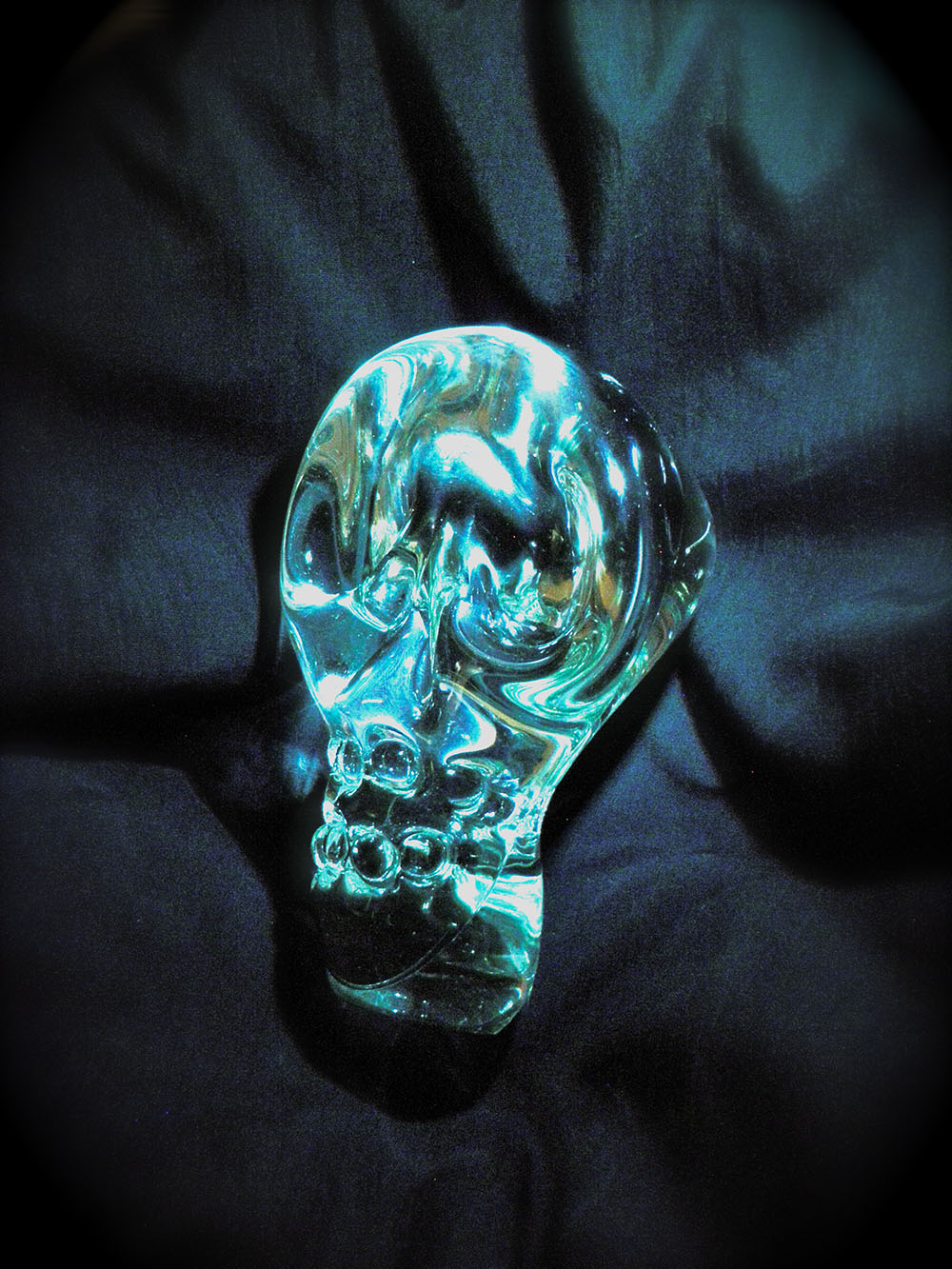
BR: Well, yeah, not too far off the highway, but again, it’s in a remote area. It’s a ranch. It’s a ranch area. And this is how she described it. She says, or this is how O’Brien describes it. There in her hands, a most unusual glass skull. At first glance, it didn’t look remotely human. The San Luis Valley skull is six inches high and three and a half inches wide and appears to have been created from a single piece of molten glass. It does not appear to be carved. Its unique form doesn’t suggest a typical human skull. Rather, it’s highly stylized.” Now, at this point, I should clarify for those who are paying close attention, as our listeners do, I just said the word glass. Did you catch that, Celestia?
0:31:33
CW: Yeah, I noticed you did say molten glass, and it had not been carved. So, I mean, did they have they just found an old empty bottle of Dan Aykroyd’s vodka?
0:31:45
BR: So so here’s the thing. So as as you know, people use words in different ways. Scientists, for example, use words like energy and vibrations and quantum in different ways than, for example, New Agers and Deepak Chopra.
0:32:02
CW: You mean some people use words to lie.
0:32:05
BR: They use words incorrectly. I’ll just put it diplomatically that way. And that’s exactly what you find with the crystal skulls. Crystals may or may not be crystal. Crystal can be crystal. Crystal can be leaded glass. Crystal can be ordinary glass. Crystal can sometimes be plastic. And on occasion, crystal is actually crystal. The point here is that, yes, so keep that in mind as we’re talking about this. So, New Agers and others have a very loose, flexible definition of crystal that suits them, that suits their purposes.
0:32:44
CW: Okay, now this skull, this glass skull? Did it receive any sort of dating?
BR: Date her? I don’t even know her.
CW: Showing how ancient this purported artifact is?
0:33:04
BR: Okay, so there’s a couple things here. A lot of what Dan Aykroyd writes about crystal skulls Not entirely factual. In fact, it’s largely unfactual.
CW: Okay.
BR: So take that with a grain of marketing salt. A rim around the glass, if you will. Just say that that’s reserved for my other celebrity drink, Cabo Wabo tequila. And don’t tell me all the stuff I’m reading on the Cabo Wabo label is bullsh** too now.
0:33:23
BR: It’s all legit, man. It’s all legit. Okay. So, here’s where the most famous crystal skull in the world comes into the picture. So, Donna finds this, what’s being called a crystal skull, and what Dan Aykroyd refers to a crystal skull, but as Christopher O’Brien mentioned, is actually a glass skull. And she finds this thing out in the San Luis Valley, near her ranch, basically, but again, it’s sort of in the middle of nowhere. I mean, it’s not an urban area. It’s a rural area. And what’s this weird thing going on there? So she turns to the Internet. And you can maybe see where this goes.
0:34:13
CW: As one does.
0:34:14
BR: As one does.
0:34:15
CW: It’s a good thing she didn’t go right to goop because they would have told her exactly where she should stick that crystal skull for her yoni health.
0:34:24
BR: Exactly. So as listeners of the show know, this is often how things go south, right? So somebody finds a hairless dog, a mangy dog somewhere, a mangy coyote, and they talk to Professor Google and it spits out chupacabra. This is how these sorts of things work. Clearly, yes. Yes. And yes, absolutely trustworthy answers can be found on Google. Yes. So this is pretty much what happened when in 1995, Donna found this crystal skull.
0:34:54
CW: Oh, that was early internet too.
0:34:56
BR: Yes, this was early internet.
0:34:58
CW: Oh, she was going to chat rooms and bulletin boards.
0:35:02
BR: And what she found was that there were in fact other ones like this, because she was naturally puzzled by this because who wouldn’t be, right? You don’t expect to find either a crystal or glass or anything else skull just sitting out in the high desert of southern Colorado, northern New Mexico. It’s weird no matter what. And so she naturally began researching it, including online, and she found that this was in fact part of a much greater tradition of crystal skulls, the most famous of which being the Skull of Doom.
0:35:38
CW: Oh man, her life would have been so different if she had gone to Antiques Roadshow instead of the Woo sites on the early internet. What did she find out about this, what did you call it, a crystal skull of doom?
0:35:52
BR: Let me do that again. The Skull of Doom.
0:35:55
CW: The Skull of Doom.
0:35:57
BR: The Skull of Doom.
0:36:00
CW: Tell me what happened after she found out because I’m sensing a curse is about to happen.
0:36:05
BR: We’ll get to that. So, Donna finds this information that apparently she was unaware of about this whole huge history or pseudo-history of these crystal skulls. And she finds out about the most famous skull, the Skull of Doom, which is a human-like skull composed of two pieces, the top part and the jaw, and it’s made of crystal clear quartz. It’s just over five inches high, about five inches wide and nearly eight inches long, and it weighs about 11 and a half pounds.
0:36:35
CW: Yeah, that’s a pretty solid, like a baseball, softball size, you would say?
BR: Bigger than that. It’s, yeah, it’s about maybe like a small football size.
CW: Yeah. Okay. Eight inches, five inches. I’m trying to place it in my head here. Okay, that’s a pretty big, heavy crystal skull.
0:36:53
BR: It is. Arthur C. Clarke, no less than Arthur C. Clarke, called it, quote, the weirdest gem in the world. One of a handful of strange man-made objects that have challenged the ingenuity of the world’s scientists.
0:37:09
CW: Ooh.
0:37:10
BR: I know, right? Crazy.
0:37:13
CW: Well, tell me more. Where did they find this crystal skull of doom?
0:37:17
BR: Well, so as with a lot of things, it sort of depends on who you talk to. That one was not found on the side of the highway in New Mexico. This was not. No, that you’re exactly right. So basically, the story is that it was found one day in 1927 in what is now Belize, formerly British Honduras. And it was found by a woman, a young girl, a teenage girl actually, on her birthday, or her 17th birthday. And the girl’s name was Anna Mitchell Hedges. And Anna Mitchell Hedges, her father, F.A. Mike Mitchell Hedges, was a sort of explorer, man about town. Anna Mitchell Hedges, F.A. Mike Mitchell Hedges, was a sort of explorer, man about town.
0:37:58
CW: Does F.A. stand for Faux Archaeologist?
0:38:02
BR: It probably does. It doesn’t, but it probably does, yes. So he was exploring a ruined city, a Mayan city called Lubantun. The story goes that Anna was there with her father who was doing these explorations and excavating these Mayan ruins, and she and some Mayan children decided to scale one of the steep pyramids so they could get above the trees to watch a glorious sunrise. While they were up there, something caught her eye, a light coming from deep below in a hidden chamber.
0:38:36
CW: I’m starting to think these things are like unicorns and you need some sort of innocent teenager or child to spot it for you because I mean, what’s her name learned about the skull when her teenage employee just like caught a glint of it. And now we got what’s his name? F.A. Mike Mitchell Hedges. Now we got the Mitchell Hedge guy spotting it because his young innocent daughter sees something glinting out of the corner of her eye.
BR: You’re so skeptical. What are you doing on this show?
CW: I’m not, it’s not a skeptical point. I’m thinking these things are like unicorns. If anything, I’m injecting more woo.
BR: So the story goes that Anna, seeing this this bizarre, strange, beguiling light from deep inside these Mayan ruins, begged her father to let her go down there because, of course, she was only she was the only person small enough to go down in this deep crevice.
CW: Oh, an even better story.
BR: An even better story. Yeah. And it gets even better. So, um, of course, uh, Mike had just said, no, no, you can’t do that. But the plucky girl, she, she, she had Moxie. She was not going to say no. She persisted. Um, and so finally, uh, finally her, her explorer father, uh, let her go explore deep in the thing to try and recover whatever mysterious object was calling to her from deep in the mine ruins. And they lowered her down with ropes and she came back up and she described while she was down there, she was, you know, terrified by the musty darkness and there were scorpions and spiders and probably bats and this whole scary Indiana Jones-like story that she talked about.
0:40:27
CW: So he threw his kid into a hole full of bugs, and then what happened?
0:40:31
BR: Yes, so that’s a good summary there. So the plucky girl, the brave girl, grabbed this object that was calling to her from deep inside the ruins and it turned out to be a skull, a crystal skull. And inch by careful inch, they brought her up to the surface and she held it aloft and according to one story, all the Mayans bowed down.
CW: Oh, geez, I can hear the music in the background now.
0:41:01
BR: They fell to their knees in reverence as this girl on her 17th birthday held this incredibly powerful crystal skull object.
0:41:11
CW: Okay. And now, dear listeners, is the part where Ben takes a string of that little story and unravels the whole damn thing. Right? Am I right?
0:41:25
BR: Pretty much, yeah.
0:41:27
CW: Okay, all right, okay. Let’s shift our gears here. Okay, what really happened?
BR: Okay, so from that point on, the Skull of Doom had an illustrious history. Mitchell Hedges wrote about the skull in his autobiography in 1954 titled Danger My Ally, which if nothing else is an awesome title. I mean it’s a classic sort of you know, Danger My Ally. That’s just a cool… the man can title his memoirs. I’m just, I’ll give him that.
CW: Sounds like a sequel to My Middle Name Carlos Danger. I eat danger for breakfast. Exactly.
0:42:04
BR: Exactly. And, yes. So, in his book, he talks about how the crystal skull was at least 3,600 years old, and according to legend, it was used to perform esoteric rites. So, for example, it was said to will death. A shaman, for example, could use the skull to see in the future or kill people, things like that.
0:42:33
CW: All righty then.
0:42:34
BR: So how fortunate that his 17-year-old daughter found this thing.
CW: In a room full of bugs, yeah.
BR: In a room full of bugs, exactly. A lot of people at the time, to modern ears, and hopefully our audience. This will sound a little bit, what’s the word, outlandish.
0:42:51
CW: Actually, I am sitting here wondering, do you remember that scene in the Temple of Doom where they lowered the blonde woman, this is I think the middle Indiana Jones thing, and she had to reach for something, I think she had to reach for a lever. I just remember there were bugs everywhere, like centipedes and all sorts of really crazy creepy crawlies, and she was like screaming, but she had to do this thing. I’m wondering if they took part of that from this story.
0:43:17
BR: That’s very likely.
0:43:18
CW: Because Crystal Skulls do make a couple appearances in the Indiana Jones lore.
0:43:23
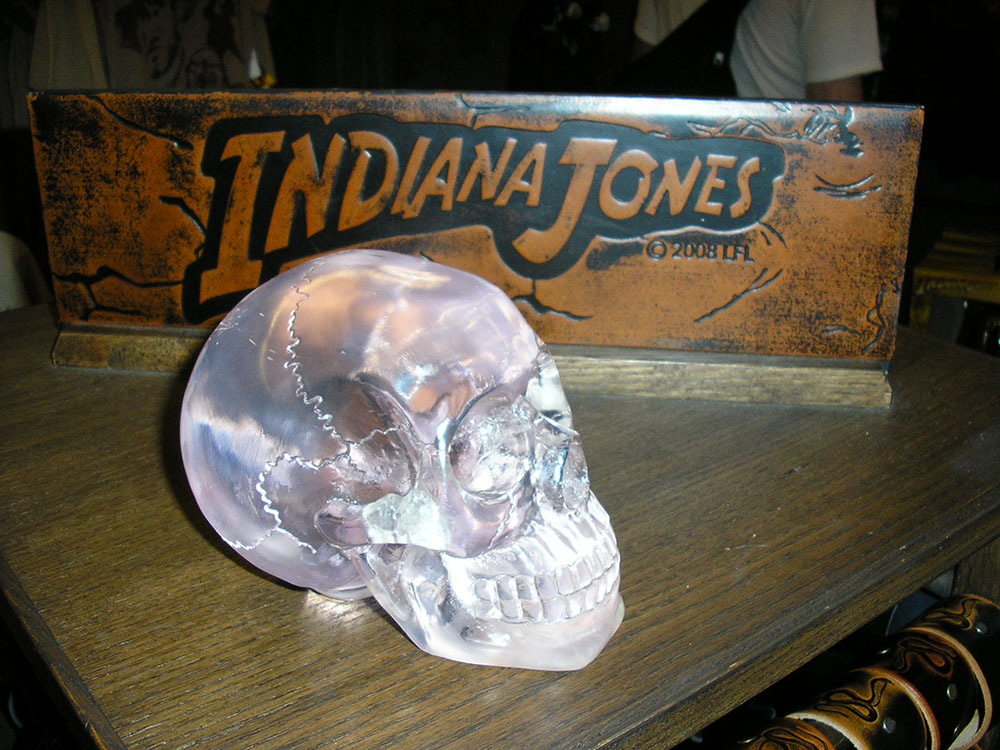
BR: They do. In fact, that was the film Indiana Jones and the Kingdom of the Crystal Skull.
0:43:30
CW: It’s in the title.
0:43:32
BR: Right there in the title. Spielberg knows how to tell a good story. So the skull, and again, we know the skull exists because we’ve seen it and it’s been photographed. I mean, it’s a real skull and it is actually crystal, as I’ll get to in a second.
0:43:50
CW: And it did show up in this guy’s, or this family’s, this guy and his daughter, it did show up in their possession and they did have it.
0:43:58
BR: That part is true, he said advisedly.
0:44:01
CW: I’m guessing they made a little bit of money off of this?
0:44:04
BR: They did. They did. So after the skull was discussed, you know, again in Danger My Ally and elsewhere, Mitchell Hedges showed it around. And since that time, particularly in the 70s and 80s and through the 90s, it was the subject of a lot of controversy. And particularly it was sort of this celebrity in the new age. So you had people who believed, and in many cases still believe, that the skull has all sorts of different powers. People would pay hundreds of dollars to be in the same room with a crystal skull. Psychics and mediums would come from across the country, and in some cases around the world, to be in the presence of this crystal skull. This obviously amazing new age item.
CW: I’m having a lot of mixed feelings now because you’re telling me that psychics and mediums are getting ripped off by this skull and now I kind of like it.
0:45:01
BR: I didn’t say they’re getting ripped off. I said they were showing up to be in its presence.
0:45:06
CW: Well the idea of them paying hundreds of dollars to spend an hour is just, oh, a turnabout is fair play.
0:45:12
BR: Yeah, you know, I have a hard time feeling too badly about that, but I’ll give you some examples. So, there was a crystal expert, for what that’s worth, named Frank Dorland, and he’s one of maybe, I’m going to say, a dozen or so new age authors who have written about crystal skulls. I have probably four or five books on crystal skulls in my library here, including by him, and there are these really gushing, credulous descriptions of the mythologies and the 13 crystal skulls and Atlantis and New Age and harmonics and in some cases aliens, all these sorts of things. And people would stare into this crystal skull, the skull of doom, and they would see things as you would a crystal ball. So, people would see these visions, they would see cottony hazes, they would meditate and after long enough or maybe with some crystal head vodka, whatever else, you’re seeing things.
0:46:15
BR: Okay. That is what psychics are supposed to do.
0:46:19
BR: Yes. So, there’s a variety of different things, again, different things that were claimed about it. One was that it gave off different subtle scents.
0:46:29
CW: Like aromas?
0:46:30
BR: Yes.
0:46:31
CW: Okay.
BR: So some people would say that they smelled flowers, they smelled wilderness or the jungle or something. Other people said that, again, they had a weird feeling when they were in its presence. They felt comforted or they felt empowered with wisdom or whatever else.
0:46:51
CW: Okay.
0:46:52
BR: This was happening, again, primarily in the 70s and 80s, and finally in the 1970s, actually in 1970, Frank Dorland took the skull to Hewlett-Packard’s laboratories for analysis.
0:47:04
CW: All right. Now we’re getting somewhere.
0:47:06
BR: And so according to Dorland in his book talking about the skull of doom, the Metro Hedges skull, there were a couple of things the scientists were stumped by. One of them was that the Mitchell-Hedges skull always remained at 70 degrees Fahrenheit.
0:47:22
CW: That would be a thing you could measure and test?
0:47:25
BR: Yes. So it was very mysterious, right? You could put it in the freezer and keep it in there for an hour and it was 70 degrees. You could put it in boiling water for an hour. You take it out, 70 degrees. We’ve just hit upon a miracle of climate control here.
BR: Yes. Amazing, if true, as they said. In fact, the crystallographers at Hewlett-Packard were quoted by Dorland saying, quote, the damn thing simply shouldn’t even be.
0:47:57
CW: Okay.
0:47:57
BR: Doesn’t that sound scientific? That sounds like something.
0:48:05
CW: Now, did they cut off the rest of the quote where they said the damn thing shouldn’t even be on display in P.T. Barnum’s museum? It is so ridiculously overhyped.
0:48:17
BR: That part was left out by Frank Dorland in his promoting the crystal skull.
0:48:22
CW: Oh, okay. All right. Just checking because when you partially quote somebody, you know, things happen.
BR: And the scientists said that, and this actually echoes what Mitchell Hedges and also Dan Aykroyd said, that if it were created by sand and water, for example, not modern tools, that would take at least three centuries of effort to create.
0:48:48
CW: Well, like I said, I find that believable because I mean artists are terrible at deadlines and I could imagine telling the client this will take me two weeks and then 300 years later you’re like, here you go.
0:49:01
BR: So this is, so just to put this in context, so all this information was, or much of the information was what Donna, who found the San Luis Valley skull, discovered when she began looking into it and figuring out, you know, are there other crystal skulls like this? So this is, all this information informed her interpretation of what she’d found.
0:49:22
CW: That makes sense. That makes sense.
0:49:26
BR: Yeah. So, as I mentioned, it was part of a lucrative new age business. People talked about receiving visions, as I mentioned, there were psychics who came in and spent time communicating with the Mitchell-Hedges skull, one particular psychic named Sandra Bowen said that it was with the help of two extraterrestrial alien friends named Ackbar and Josephat. So Ackbar and Josephat told Bowen that the skull’s favorite color was purple, in case you’re wondering.
0:49:59
CW: Oh, and it goes right in line with psychics getting useful information.
0:50:04
BR: Tell me about you. My favorite color is purple. All right.
CW: What wonders of humanity. What what mysterious questions have you found answers for? The skull likes the color purple.
BR: Yes. And this actually has quite a few parallels with ghost hunting. A lot of times when I see people talking about their ghost hunts and these ghost hunters do these EVPs or these ghost voices, they’ll ask information about the ghost that they assume is there. They’ll ask you things like, do you like the drapes? Or are you happy? Or just these, and it’s like, no, ask something substantive. We want names, dates. Were you ever alive? What was your name? When did you die? How did you die? Where is important? You know, is there information hidden somewhere? Who do we talk to about solving your murder? It’s always like, I like the drapes and I’m generally happy.
0:51:05
CW: I like purple.
0:51:06
BR: I like purple. What am I supposed to do with this?
0:51:10
CW: It also kind of goes along the lines of Ouija board divination or other types of psychic plumbing the depths of your previous lives or something where you just pick out the most stereotypical old timey foreign names like Akbar and Jehoshaphat. Yeah, sounds like a couple of guys from, you know, from far away, millions or thousands of years ago?
0:51:36
BR: Yeah, why not, right? So just to bring this back to reality, so apparently the skull had skull brothers and sisters who it missed and hadn’t seen in a long time, and the skull was actually, according to Bowen, the psychic, was the crystallization of Sha-Tritre’s skull, a high priestess of Atlantis.
0:52:02
CW: Oh, so they’re saying this used to be a real person and his skull turned into crystal. Her skull turned into crystal from the original bone.
0:52:16
BR: Yes. So, Bowen actually goes into some details. I’ll just read it here because it’s interesting. When she died, there were seven priests who had to form a special pattern similar to a star pattern around her skull with the help of the space beings using the power of their minds and laser beams emanating from their eyes. They were able to crystallize her skull –
CW: Lasers on their freaking heads! I was wondering when we’d get to the aliens and you brought them Ben you brought along with lasers. That’s awesome.
0:52:49
BR: Yes, yes, you’re welcome. Glad I could be of service to you. Again, I’m just sort of giving you an overview of the beliefs surrounding both the Skull of Doom and, of course, later the San Luis Skull.
0:53:03
CW: Well, I mean, what about, you said there were skull brothers and sisters. There’s this whole, there’s a whole family pattern to these skulls then? Were those live people?
0:53:14
BR: No. No. To be fair, there are many skulls around the world carved out of quartz crystal, varying sizes and designs. I’ve seen many of them during my visit to Sedona, for example. Again, they’re pretty common. There’s nothing unique about them.
0:53:32
CW: But you said they take like 300 years to make.
0:53:35
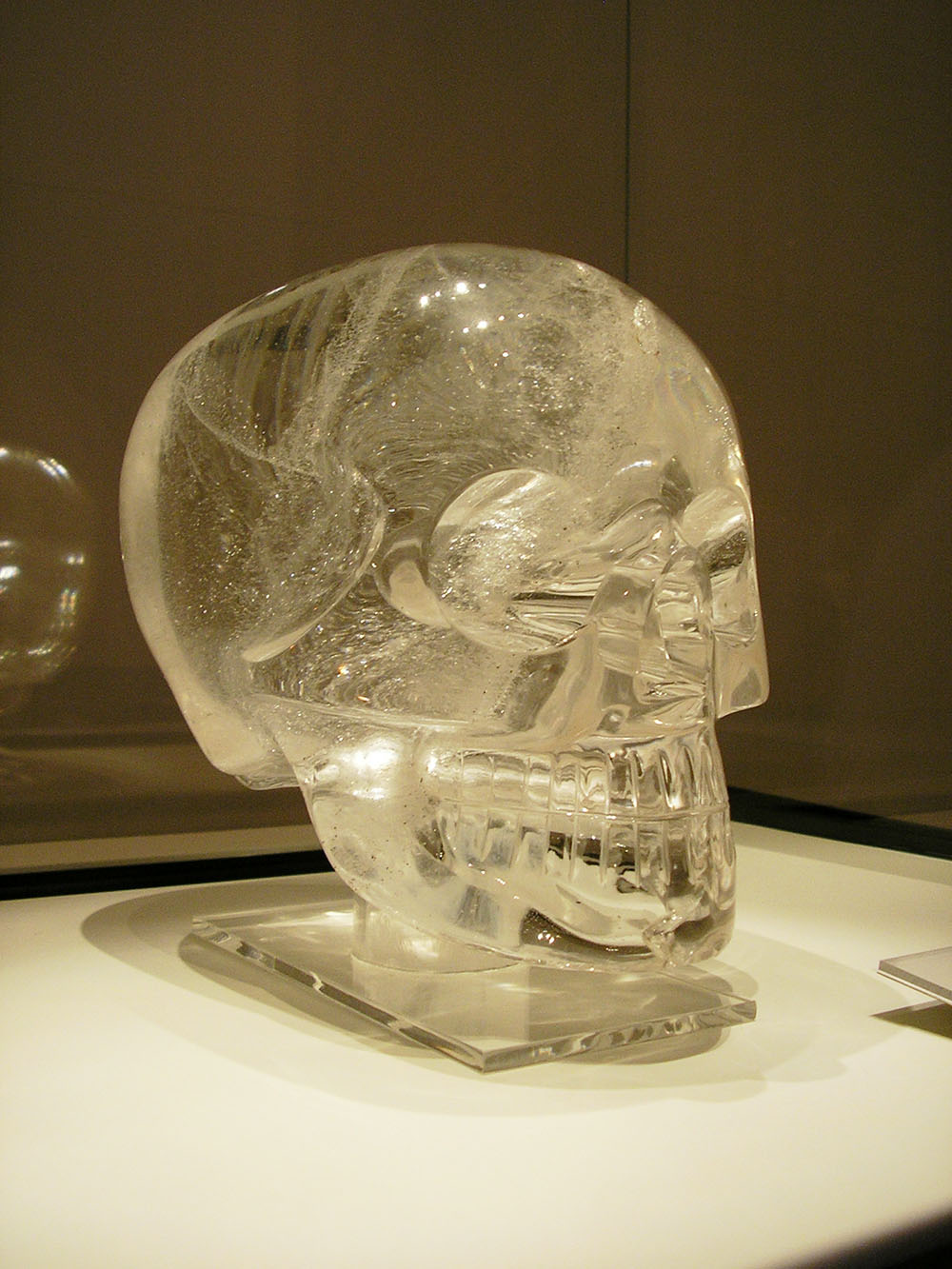
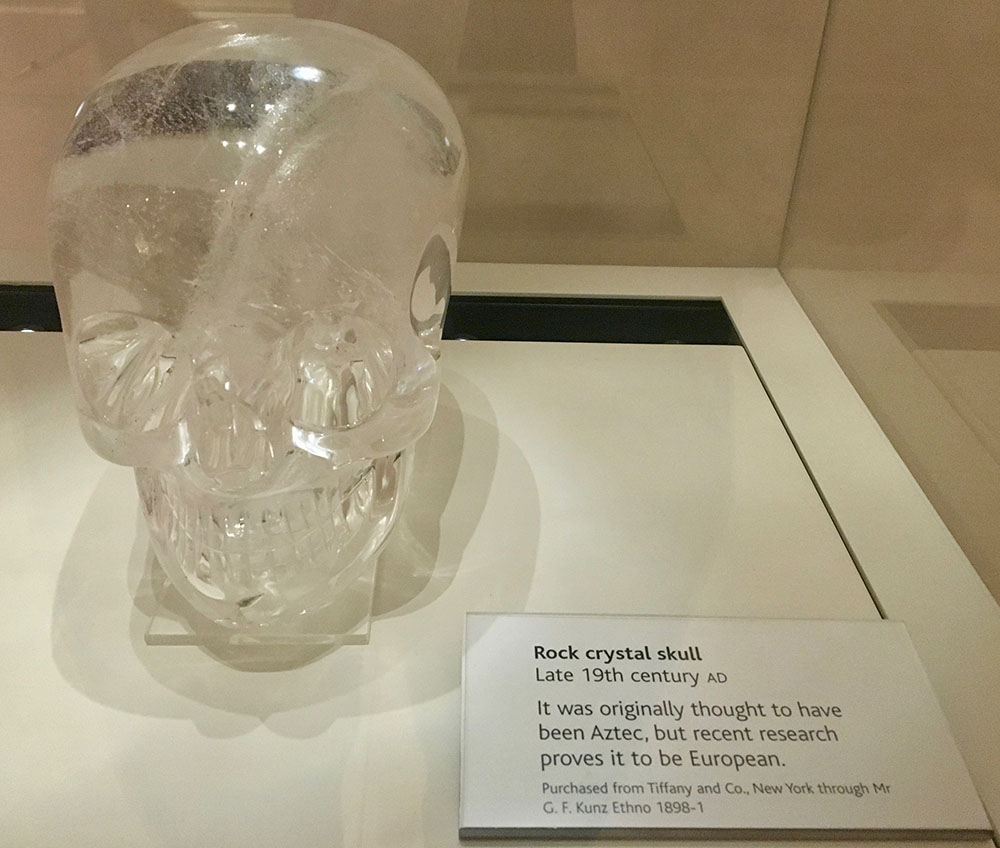
BR: Right. So here’s the thing. So most of them are about the size of your thumb. Some are the size of a golf ball, some of the size of your fist. These are modern ones. They weren’t found in a temple in Lubantun in 1927. These are made by, you know, Gus or Jesus, you know, in the back. So there’s nothing particularly unique about crystal skulls per se, unless they get to be a certain size. And there there are about three or four really well-known crystal skulls in the world. I’ve mentioned two of them so far. You can find one in the British Museum in London, England. In fact, I was in London when I saw it in person. I went and said hello again.
0:54:16
CW: Is it like the Blarney Stone? Do you get to kiss it or touch it or do anything?
0:54:20
BR: You cannot kiss it or touch it, I asked, but you can photograph it. It’s right there. It’s on the main level.
0:54:26
CW: Did you get it to tell you its favorite color?
0:54:29
BR: It was not being communicative at the moment. To be honest, I had limited time because I had to rush off to the skeptics in the pub. So I didn’t have as much time as I would have liked. But it is, again, it’s right there at the British Museum. It’s on the main floor. You can walk in and there’s no charge at all. You can walk in and take a look at it. It is really cool. There’s photographs of it in my book, Mysterious New Mexico. It’s an amazing piece of work. It’s probably about the size of a football and it’s all one piece, unlike the Skull of Doom, which is two pieces. This is one solid piece. It’s a rock crystal skull, late 19th century AD, and originally thought to be Aztec, but it was concluded that it was European.
0:55:21
CW: The other one you mentioned has a cool name, the one found in Belize is the Skull of Doom. What title does the British one have? Is it like the Skull of Etiquette or the Skull of Punctuality?
0:55:38
BR: The Skull of Coolness. No, it is basically just known as the British Museum crystal skull. I mean it has no particular legend attached to it in the way for example that the skull of doom and the San Luis ones do.
0:55:54
CW: Something tells me that it was not found by an entrepreneurial spirit.
0:56:00
BR: Well, yeah, this is actually that crystal skull, the one in the British Museum, was bought by, was purchased from Tiffany & Company. So it was, they had the receipts for it. So they know exactly where that one came from.
0:56:15
CW: Alrighty then.
0:56:17
BR: Let’s shift back for a second to the San Luis Valley skull. So Donna, as people were coming from near and far to be in the presence of her skull, she began to believe that it was cursed.
0:56:30
CW: Oh.
0:56:31
BR: Yes, and, you know, in previous episodes we’ve talked about curses, and this is exactly what happened.
0:56:38
CW: And the first thing she did was read about the skull of doom online, so already it seems a little like there’s some bad juju about crystal skulls to her.
0:56:48
BR: Right. So, there were, so there are different stories behind it. Again, many of these are described by Chris O’Brien in his book, Mysterious Valley. But she believed that it was the cause of accidents. There was a tire blowout. And you’re probably thinking, you know, tires blow out. Well, that’s true. In this particular case, she attributed it to the crystal skull that she had found. There were psychics who contacted her saying that it was dangerous and that it needed to be kept in a pine box and only a pine box. So yes, there, there are all sorts of beliefs that emerge from it. Many people, again, part of the assumption is that it had power and anything that has power, especially if it’s mysterious can be thought to be possibly be dangerous, right? You see this again, going back to the Indiana Jones films, right? At the end of Raiders of the Lost Ark, you have the Lost Ark being opened and has incredible power and it melts Nazis’ faces. That’s what it does.
0:57:43
CW: Exactly.
0:57:44
BR: So anyway, so that’s what’s going on here. So eventually Donna took the skull to the Denver Museum of Natural History. What did they have to say about this mysterious made from molten glass skull? Well, the first thing they noted, as you noted, and as I noted, and it was frankly self-evident from the beginning, was that it was in fact glass and not crystal. This posed a little bit of a problem for the New Agers, for reasons we mentioned at the top of the show, which is that the crystals have vibrations and this and that and the other. Not so much glass. Glass is pretty common.
0:58:35
CW: Well, I mean, was the glass, did the glass skull contain water that perhaps had a tiny bit of crystal diluted in it? And so the water inside the glass had a memory of the crystal?
0:58:47
BR: Oh, as in homeopathy?
0:58:49
CW: Because that’d be really powerful.
0:58:51
BR: You would think, no. So again, this is all part of the sort of the gradual unfolding and unraveling of the mystery because again, as pretty much everyone who was allowed to touch it recognized pretty quickly it was in fact glass. So then the question became, okay, it’s a glass skull but it’s still weird, right? Even if it’s a glass skull and not crystal, as was obvious pretty early on, what the hell was it doing in the high desert? Okay, keep in mind that the crystal skull didn’t have any obvious markings on it. So it didn’t have an artist’s name, for example, or name particular mark, didn’t have a website on it. And how useful would that be? Right? So the Denver Museum of Natural History located the source of the San Luis Valley skull. It was not, in fact, the severed head of an Atlantean princess. It was not, in fact, from aliens. Wasn’t from Atlantis at all. It was created by a young glassblower named Brad Chavez.
CW: Oh, they found the guy.
0:59:52
BR: Yes, they found the guy. I interviewed the guy.
0:59:55
CW: Kudos to the museum. They actually were able to track down the maker of the glass. Was he happy to get it back? Did he get it back?
1:00:05
BR: He did not get it back. And therein lies the story.
CW: Oh, man.
BR: So this is where the whole story of the the San Luis Crystal Skull unravels. Chavez, who’s a Denver glassblower, is pretty well known around the area for for doing these these skulls. This is this was not unknown. This is that’s what he does. He sells them. He used to sell them at Day of the Dead fairs in New Mexico, in Colorado and elsewhere.
1:00:34
CW: This is less of a, less of a mysterious ancient artifact and more of a paperweight.
1:00:40
BR: That’s exactly what it was.
1:00:42
CW: Okay.
1:00:43
BR: So.
1:00:44
CW: Well, did somebody get like mad at their spouse as they were driving across the high desert and say, ah, you really like this thing we just bought. I’m going to chuck it out the window.
1:00:53
BR: So there, that’s the question, right? So I interviewed, I tracked down Brad Chadiz and I interviewed him for my book. And I said, are you aware that, you know, one of your glass pieces was being revered and, and worshipped a couple of years back by people who thought that it was some ancient extraterrestrial thing. He’s like, yeah.
CW: I bet he loved that.
BR: He was nonplussed. And so he explained what happened. And he said, we left one of my skull paperweights as a kind of cornerstone when we were going to build a house there. So basically, he and his wife owned the property adjacent to Donna’s on the ranch.
1:01:40
CW: Oh, I see. And they had removed the property marker.
1:01:45
BR: That’s exactly what they’d done. So Brad and his wife, we’re going to build a dream house here one day. I’m going to leave one of my paperweights right here as a marker. This is where it’s going to be. And he said, I asked him about it, and he said, well, the one that you found, he said, quote, it was really awful. One of my paperweights. The amount went wrong, and so it was technically one of my seconds. So it was a defective paperweight.
1:02:19
CW: A discard, OK.
1:02:21
BR: Yeah, discarded glass paperweight that was revered and apparently gave all sorts of vibrations and wisdom and whatnot.
1:02:29
CW: Oh, wow. How did Donna, the owner of this cursed, not cursed, artifact, not artifact, paperweight, how did she take the news?
1:02:41
BR: Well, you know, keep in mind, at its peak it was mysterious and magical and crystal. And in the end, it was not crystal not magical and not mysterious. And he didn’t really think much more about it. He I mean, he saw that his his paperweight, which was probably technically stolen by Donna, made the news.
1:03:03
CW: So he was following this story even before the museum or you talked to him.
BR: Yes. Oh, he was aware.
CW: Oh, my gosh.
1:03:16
BR: Yes. And so he didn’t think much more about it. This is sort of a weird little story. He said, I don’t know whether it just perpetuated itself or what. He said the answer just wasn’t that far away to be so crazy. I think it just got into new age circles and it took on a life of its own. And Brad thought nothing much more about it, but months later Donna was still displaying and promoting the glass paperweight as mysterious and supernatural. She was making money off it and people were still coming from far and wide to be in its presence. And according to Brad, quote, she knew the truth but failed to disclose it for another eight months.
CW: Oh, so he approached her beforehand.
BR: Well, she knew. I mean, by the way, you know, the Denver Museum knew right away that it was glass and they pretty quickly figured out it was one of Chata’s and this was known. But Donna kept promoting it as a mysterious crystal skull.
1:04:18
CW: So after the Denver Museum had put her in touch or told her, hey, this is the guy that She just says, la la la la, fingers in my ears. Like I’m going to keep displaying this. Okay.
1:04:29
BR: Right. So finally Brad was getting pissed off because this kept going. He figured that it would be this weird story. Hey, this is strange. We figured out what it was and the story, but he saw her keep promoting the story. And so finally, uh, he wrote an article in the Rocky Mountain News in November 1996, and he demanded that she stop claiming that the skull was mysterious and had special powers. And yeah, he wrote an article in the Crystal and Eagle newspaper, which explained the whole situation. When the truth finally came out, the psychic channeling of the skull’s ancient spirits rattled to an abrupt and cheapish halt, according to one author. And I talked to Chris O’Brien about this when he interviewed me a couple of years back. And O’Brien told me flat out that Donna knew all along that it was it wasn’t crystal and it wasn’t mysterious at all.
1:05:22
CW: Oh, so his his theory was she was just being a fraudster from step one.
BR: Yes.
1:05:28
CW: OK.
BR: And O’Brien told me and I don’t think I’m speaking out of school here. I mean, he’s I think he said as much, that he’s convinced that she knew from day one that it was just a piece of glass, and albeit mysterious, I mean, mysterious in that you don’t normally find pieces of glass in the shape of a skull just, you know, 50 yards in the road, but nonetheless, she quickly knew or should have known that it was not mysterious at all. There’s the final little twist here, which is that Brad told me that he didn’t actually leave the skull open, exposed on the ground. He’d actually kept it in a in a Crown Royal whiskey bag.
CW: Okay.
BR: And he said that some of his friends had given him some Crown Royal bags for exactly that reason, to carry the ones, to carry the paperweights.
1:06:24
CW: Once again, we’re back to alcohol with this.
1:06:28
BR: And that raises the question, how was it initially presented to Donna? Because in one version of the story, her ranch hand, her teenage ranch hand, went over and picked it up and brought it to her. I’m just presuming here, but if that’s true, either somehow the last skull got out of its Crown Royale bag, which seems unlikely given its weight, or the teenage ranch hand saw the crown royal bag, pulled it out, noticed there was this glass skull, and then brought it without the context of the crown royal bag to Donna, who then thought it was mysterious. Or he brought it to her in the bag and she took it out and said, don’t know what happened. I’m just speculating here, but there’s there’s something a little more mysterious about this. So from a skeptical point of view and a psychological point of view, we need to rewind a little bit and say, well, hold on here. Why is it that psychics and other new agers were coming to this? What we now know was a defective glass paperweight and seeing visions and having, you know, messages from the dead and from extraterrestrials and thinking that there were curses. This is one of the things that really intrigues me about this story from my background in psychology is looking at why and how it was that people, when put in the context of a mysterious object, indeed thought that it was mysterious.
1:08:01
CW: So it’s like a it’s like a placebo artifact.
1:08:04
BR: Yeah, yeah. It’s this again. The same thing happens, for example, with with haunted houses, right? And ghost ghost hunts within the context of a haunting, within the context of a location or a place that someone thinks for whatever reason is haunted. Anything that’s weird and mysterious or odd in any way will be interpreted as evidence of a ghost. You know, feeling like you’re being watched or missing keys or a cat staring at nothing in the corner of the room, whatever it is, if that’s your mindset, it’s setting the stage, it’s basically psychological priming. And so it’s not surprising that people, when told, this is an amazing, mysterious object, let me know what sensation you come up with it. People will experience those.
1:08:58
CW: Yeah, yeah, that makes sense. That makes total sense.
1:09:02
BR: So let’s return finally to the Skull of Doom.
1:09:06
CW: I was hoping we would.
1:09:08
BR: So the San Luis Valley skull turned out to be less than meets the eye, but what about the Mitchell Hedges skull, the one that Donna had read about online and elsewhere that probably influenced how she spun what she found, right? Because in addition to her learning about other crystal skulls, of course, other people in New Age circles already knew about them. To them, this was just one more piece of the puzzle. This was, you know, Dan Aykroyd mentioned the 13 crystal skulls. To them, this was just evidence that that story was true, because here’s another one of the 13 skulls that Dan Aykroyd talked about on the side of his vodka bottle.
1:09:48
CW: So the question is, if the San Luis crystal skull was the placebo, was the skull of doom the actual real drug?
1:09:58
BR: There you go. There you go. So, back to the Metro Hedges skull. So Joe Nickell, my colleague at the Center for Inquiry and fellow Skeptical Inquirer columnist, he has written about this. In 2006, he talked about the crystal skull and he refers to F.A. Mike Mitchell-Hedges, Anna’s father, as, quote, a habitual liar and faker.
1:10:20
CW: Oh, OK.
1:10:21
BR: Yes, he’s not parsing any words there. He was basically a con man who had been caught in a string of lies and scandals ranging from financial fraud to adultery. Oh my. He was driven out of England several times, as ne’er do well sometimes do, popped up in odd places, including in this case, Central America and British Honduras.
CW: So he wasn’t just exploring and adventuring out there. He had gotten kicked out of Britain.
BR: Yeah. Well, yeah There you go. As I mentioned Daniel Loxton wrote a really good piece on this a couple issues back in junior skeptic and skeptic magazine So if people are interested in more of the Mitchell hedges story, you can find it there but Mitchell hedges was When you dig a little bit deeper there were actually several different stories about how the skull came to into their possession. Initially, he was very vague about it. He said, quote, how it came into my possession, I have reasons for not revealing. Yeah, so he actually told several different stories about it.
1:11:25
CW: That sounds like a place marker, like I haven’t thought of an appropriate backstory yet.
BR: Give me time. Pause, pause. Oh, wow. What’s that over there?
1:11:38
CW: Okay. And what are some of the other things he came up with?
1:11:42
BR: Well, so he, at one point, he said that he himself found the crystal skull. This of course contradicts the story that his daughter found it, much less on her 17th birthday, much less that it was revered by natives who fell to their knees because the white man had found their revered skull. Even more strangely, as Joe Nickell notes, Mitchell Hedges made no reference at all to the skull from the time when he returned from Lubantun or in the years immediately afterwards. And the first reference to it was in 1936. So the question is, well, if either Mitchell Hedges or his daughter Anna had actually found this amazing skull, why has he kept it a secret for years? I mean, why wouldn’t you be like, wow, this is an amazing thing. Look, it can kill people. It does this. But no, all of a sudden, it just sort of quietly, quietly faded away. As Dan Loxon notes in his, in his piece, Anna also told different stories about it. At one point, she said that she and her father found the skull together. None of this, you know, lured inch by inch into this creepy crawly scorpion laden place. It was them together and so on.
1:12:53
CW: Well, well, they did they did really finally settle on the best version That is the most that is the most cinematic version of that story.
BR: It is it is the the truth, however is that neither Anna nor her father found the skull at Lubuntu or anywhere else or eBay for that matter? He bought it from a collector named Sidney Bernie in 1933. And they have a receipt for it. And he so he then sold to pay a debt. It was later repurchased by his daughter, Anna, who then basically got the skull out of hock and, and made up this this fantastic story that’s still told to this day.
1:13:36
CW: Well, now that sir is a provenance.
1:13:39
BR: A real provenance, yes.
1:13:42
CW: They’ve got a receipt. They know exactly when it changed hands. And nothing occurred in Belize at all regarding this skull.
1:13:52
BR: Yes, that’s correct. The Skull of Doom is entirely fictional. The skull itself is not fictional, but the events surrounding it are entirely fictional.
1:14:02
CW: Well, no, no, no, no. I do recall you saying something about a Hewlett-Packard lab analysis. What’s going on with that?
1:14:13
BR: Yeah, about that. Yeah, so that was Frank Dorland, who took the Mitchell-Hedges skull to Hewlett-Packard and went through all these scientific tests and as you’ll recall it had some mysterious properties including always being at 70 degrees Fahrenheit. This should not be. The skull that should not be said anguished scientists. As it happens that also is not true. So yeah, so if you look at a Hewlett Packard publication titled Measure, it describes what happened. Now, it is true that Dorland did take the crystal skull to Hewlett Packard.
1:14:57
CW: Oh, okay, because I was expecting you to tell me that was completely fabricated.
1:15:01
BR: No, no, no, that was not entirely fabricated. That part’s true.
1:15:05
CW: Okay, okay.
1:15:06
BR: He did, it was examined by crystallographers at Hewlett Packard. I will read to you the results, it’s very short. For the Mitchell-Hedges Skull, the lab performed two significant tests. The lab people first determined that it was almost certainly single crystal quartz, rather than the composite of three crystals as Dorland had suspected. Next, they probed the lower jaw question, whether it was originally part of the crystal. The orientation of its X-Y axis and the veils revealed the polarized light showed that it had indeed come from the same crystal.
1:15:40
CW: Okay, so it was all carved out of one piece.
1:15:42
BR: That’s correct.
1:15:43
CW: Okay, that’s a nice little feat of artistry there. Did they take its temperature?
1:15:47
BR: No.
1:15:47
CW: Did they reveal any mysterious paranormal properties? No. So he basically brought this skull in and said, hey, was this carved out of one piece? And they looked at it and they said, yeah.
1:16:04
BR: Yes, that is. That is the extent of this scientific analysis. Dorland made up the whole story about the baffled scientists, about the skull that always remained the same temperature. That was entirely fabricated. That does not appear anywhere in the report from Hewlett-Packard that was published in December 1970.
1:16:32
CW: Well, that’s frustrating.
BR: And, you know, kind of disappointing. Not surprising, but disappointing.
1:16:41
CW: The Hewlett-Packard rebuke, was there ever any legal action about any of these, dare I say fraud, going on about these skulls?
1:17:02
BR: Not much. So, here’s sort of, this sort of brings us up to today. So the Mitchell Hedges skull, for a while, was touring. It was touring around the country and people, particularly new-agers, would pay money when it comes to town and see a lecture about it and be in its presence and maybe even touch it or whatever else.
1:17:25
CW: Wear their purple shirt and go out and see the skull.
1:17:28
BR: We all know it’s their favorite color. According to Akbar and Josephat, the actual Tressault Space Brothers, that the psychic named Bowen said, last I heard the Mitchell Hedges skull had actually found a home at a place that I know pretty well, Lilydale Assembly.
1:17:45
CW: Lilydale, that’s one of the communes for people that are spiritualists, right?
1:17:51
BR: It’s the spiritualist camp in Western New York. I’ve been there several times, as has Joe Nickell and others. And that’s one of the first places that I ever investigated psychics and psychic mediums.
1:18:03
CW: That’s a fraud-free zone. There’s no fraud there.
1:18:06
BR: Well, they don’t like to use that word. Last I heard, the Mitchell Hedges skull was at Lillydale and I don’t know if there’s admission fee or whatever else, but that’s where I heard that ended up. There were no ramifications for Anna Mitchell Hedges. Anna Mitchell-Hedges died, I think, about 10 years ago.
CW: Oh, wow.
1:18:31
BR: And so she’s no longer, for a while she was living in Ontario, if I’m not mistaken. And it later, some executor of her estate inherited it and is touring with it, was touring with it and is now at Lillydale. However, there was one interesting little twist to it, which is that there was a prominent archaeologist in Belize named Dr. Jaime Awe, who is the director of the Institute of Archaeology in Belize, who decided to sue Steven Spielberg. What? Yeah, so funny story. So in 2012, Dr. Jaime Awe sued Indiana Jones and the Kingdom of the Crystal Skull, because he basically believed the story put out by Mitchell Hedges.
1:19:25
CW: Oh, he was he was acting on behalf of his archaeological community.
1:19:31
BR: Right.
1:19:32
CW: Wow.
1:19:33
BR: So, I always sued Lucasfilm and Disney and Paramount Pictures and Spielberg, claiming that the crystal skull described in the film was stolen by Mitchell Hedges, and that it was basically a violation of a 1928 antiquities ordinance, which prohibited the removal of artifacts from Belize without government permission.
1:19:55
CW: Wait, wait, he thought they were using the actual crystal skull in the movie?
1:19:59
BR: Yes.
1:20:00
CW: Oh, that gets worse and worse.
1:20:02
BR: Either that or either that or that that someone associated with the film, Lucasfilm, Disney, Paramount or Spielberg had some connection to it, that it was that it was illegal. Basically, the argument was that since the Crystal Skull was illegally moved from the ruins and used as a basis for the Indiana Jones film, they wanted a cut of the profits.
1:20:31
CW: Wow.
BR: The lawsuit didn’t go anywhere, again this was in 2012, I wrote about it for Discovery News at the time and I got quite a chuckle out of it. I think that Awe finally sort of, either he read my piece or, whatever happened, the lawsuit quickly got dropped.
1:20:52
CW: I would have loved to have been the paralegal typing that up, hearing the rebuttals to why this lawsuit is not even wrong.
1:21:02
BR: Yeah, so about that.
CW: Wow.
BR: Yeah, so anyway, just to wrap up. So as I mentioned, that in a nutshell is a big chunk of the story of the Crystal Skulls. That’s the story of the two most famous crystal skulls. And as I mentioned, there are a handful of other skulls. Again, there are three or four ones that are significantly big and impressive enough to sort of have a legend built about them. All of them, as far as we know, were basically crafted in Europe during the turn of the last century. We know, for example, that some of the crystal was mined in Brazil. And when you look at the skulls, you can see tool marks, lapidary wheels, things that didn’t exist 300 years ago. So it’s true that the scientists said that if these skulls were created using only sand and water, it would take 300 years. On the other hand, if you’re using a dentist drill, it could take a couple weeks. Or if you’re using modern lapidary tools in even the 1890s, it could take a few months.
1:22:12
CW: It’s a similar miracle to like, wow, Celestia, how did you get to New York? Well, if this were 300 years ago and I were to have walked, it would have taken me several months.
1:22:22
BR: That’s correct, yeah.
1:22:23
CW: But I flew in an airplane, so I got here in five hours.
1:22:29
BR: So, in a nutshell, all the crystal skulls that have been analyzed scientifically have all been proven to be not, they’re not fake. I mean, they’re actual, you know, they’re relatively recent creations and there’s nothing particularly mysterious about them, no matter what Dan Aykroyd says.
(MUSIC)
1:23:00
CW: Well, thanks, Ben, for bringing all your knowledge about crystal skulls. We’ve got an interesting topic next episode. In two weeks, we will be talking about subversive messages hidden in children’s entertainment. And as a cartoon lover who grew up in the 1980s, I’ve got a bunch of stuff I’m going to be bringing to the fore. I’m looking forward to it. If I’m not mistaken, we hope to have a special guest. Yes, our friend Erik Kristopher Myers, filmmaker extraordinaire, and I believe also somebody who watched cartoons in the 80s. Clearly he listened to every subversive message he could.
1:23:52
BR: Well, if you see his work, it’s pretty twisted, so I would think so, yes.
1:23:57
CW: Yes, so we’ll be joined by Erik and we will, and hopefully Pascual. We keep trying to deal with his schedule, but he’s got a lot going on. So we’ll have three of us, maybe four, talking about subversive messages in children’s entertainment coming up next time on Squaring the Strange.
1:24:14
BR: Sounds good. So it is Thanksgiving and on that note, I’d like to send a special thank you out to our listeners and our supporters, both financial and emotional and social media and otherwise. This podcast is largely a labor of love and we’re thankful for you all listening to us and helping us out.
1:24:35
CW: Yes, exactly. And also, I need to apologize to our patrons who are getting skeptic rates. I was a little bit later than usual this month. I usually try to get them out by the middle of the month, but your goodies are coming to you. I got them out in the mail yesterday and so they should arrive right after Thanksgiving. You’ll have your November Skepticrates. If anybody is interested in what a Skepticrate is, I send you at least three little goodies related to skepticism in general, science, things that we find interesting, things that relate to our episodes, and if you are at the $5 and up episode level, I send one out a month to you lucky patrons in that category. In fact, we’ve got a special skepticrate that I’m putting together for December. In celebration of the holiday time, I’ll be sending out an actual puffy envelope full of 3D stuff, rather than the flat skepticrates, which just have flat mailable items to save us some postage. But I’m going to splurge and break that rule, and I’ve got a number of little baubles to fill your stockings with. So if you’re thinking about becoming a $5 patron, now’s a really good time. Have a wonderful time with your families. Enjoy the weekend, everybody, and see you soon. Bye-bye. We would like to extend heartfelt thanks to our sponsor-level patrons, Amy Frusciaro-Kelly, Dr. Angela Mattke, and Elizabeth Leggett. If you’re interested in becoming a sponsor, or just throwing us a buck or two per episode, check out patreon.com forward slash squaring the strange. Every little bit helps us keep the lights on here, and we could not keep bringing you content without the support of our
1:26:10
generous friends. If you’re short on cash but want to provide moral support, remember to recommend us to a friend. If you’re short on friends, hey, remember that each five star review helps us get higher on the podcast charts. Squaring the strange is a production of Two Heads Studio, LLC, copyright 2018. Theme music by Shriekback, additional music by Memory, Keytard and Feathered, and Pascual Romero. Additional support provided by Ashley Romero, Robert Sundin, and of course our listeners
1:26:41
and patrons. The views and opinions expressed in this podcast are those of Squaring the Strange and do not necessarily reflect the views and opinions of Two Heads Studio, Kronos Creative, Center for Inquiry, necessarily reflect the views and opinions of Two Heads Studio, Kronos Creative, Center for Inquiry, our advertisers, or any affiliated organizations and employers.
Transcribed with Cockatoo