
Episode Summary:
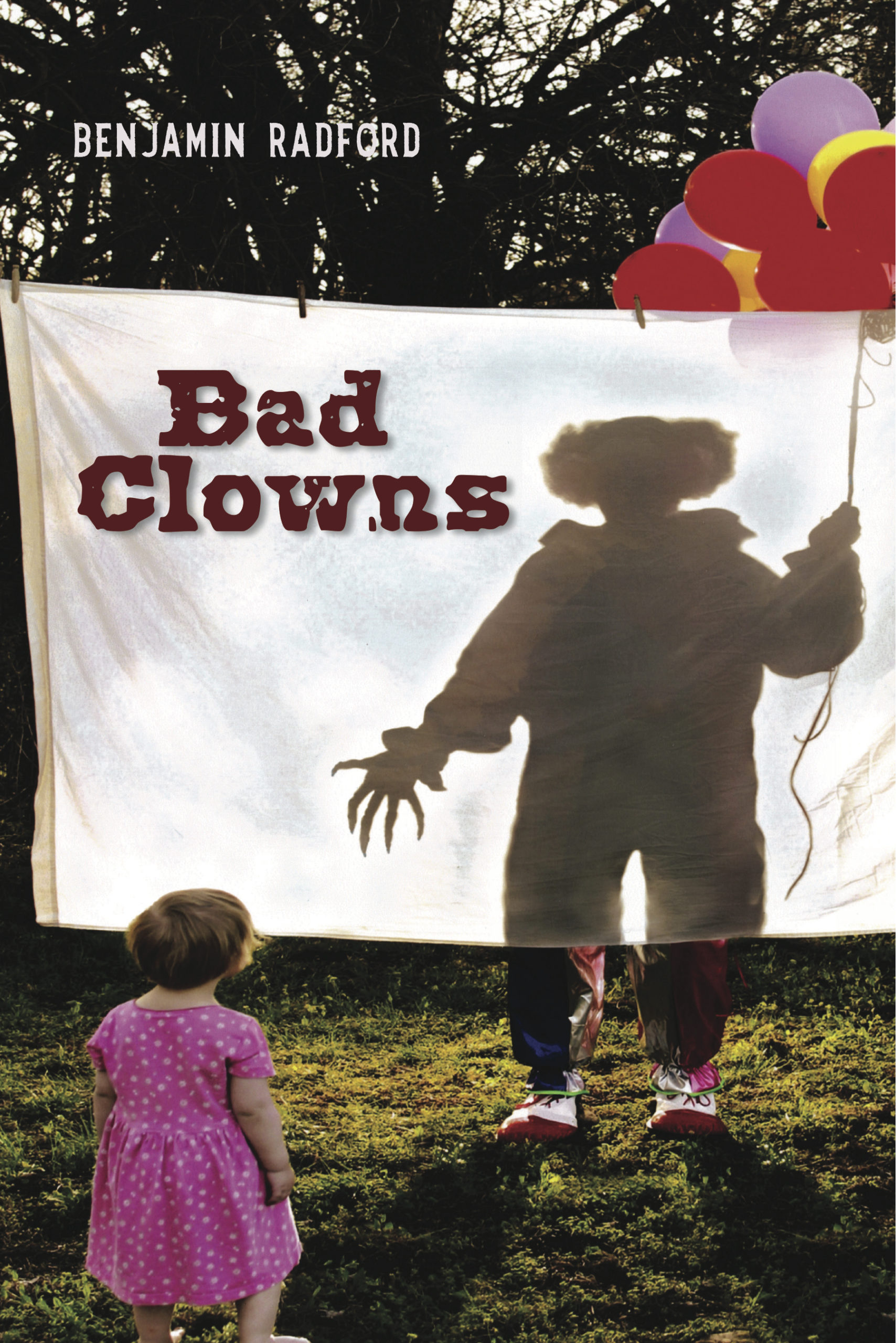
For week 3 of our spooky Halloween series, Ben, Celestia and Pascual delve into the spooky and fascinating topic of evil clowns. Ben talks about all the different kinds of evil clowns, Celestia tells a tale of her experience with a bad clown of her own, and Pascual makes obscure pop culture references throughout.
Also in this episode, Pascual breaks down a new conspiracy theory with the help of our two co-hosts.
0:00:00
Ben Radford: Welcome to Squaring the Strange, the podcast that examines all manner of the mysterious and the mundane through a critical lens. So let’s square the strange.
0:00:11
Pascual Romero: Welcome back to Squaring the Strange. I am your host, Pascual Romero. With me is your other host –
BR: Ben Radford, as always. And with us is the other host, Celestia Ward. How you doing, Celestia?
Celestia Ward: Hey, guys. How’s it been?
PR: It has been great. We’re at episode 29 already. That’s pretty crazy.
0:00:54
BR: It’s almost like 30.
PR: That is almost 30. Not quite 31.
0:01:00
BR: Mind blown.
0:01:01
PR: 32 is right out, if you catch the reference. But yeah, so we came in, we’re going to be talking about scary clowns, about bad clowns Bad Clowns this week, which I’m really excited about because again, this is the topic that Ben wrote the book on. And Celestia has a lot of experience with.
0:01:23
CW: I’ve got, well, yeah, who doesn’t have a lot of experience with bad clowns?
0:01:27
PR: Yeah, well, it helps when you’re content producer is kind of this person who’s traveled in those circles too, which I just, I love and I’m really excited to talk about this stuff with you. So I’m, like I said, I’m stoked.
BR: So Pascual, in the grand scheme of things, in the cosmic consciousness of things that you’re skeptical of, what’s on your radar these days?
0:01:55
PR: So this week, this is one that I’ve been sitting on a couple weeks and it was, I thought it would be appropriate because we have our resident Las Vegas resident in attendance, and I’d love to talk to her about it. So getting into it. I Went well… I didn’t go to a site I actually went to a mirror of the site because it seemed like a really sketchy site, but it was ZeroHedge.com and It was a it was a post titled titled, 16 Unanswered Questions About the Las Vegas Shooting that the Mainstream Media Doesn’t Want to Talk About.
0:02:29
BR: Now, ZeroHedge.com, am I… does that name ring a bell from being on the shortlist for the Pulitzers? Or was that… Yeah. Was that Washington Post?
0:02:38
PR: Yeah, no, I think they’re right up there. They’ve… They’ve come up against Washington Post a few times.
BR: Okay. So I just want to make sure I understood the credibility of the source here.
PR: Just again to reiterate, I went to this site through a do not link site, which is something that a lot of skeptics use to avoid giving traffic to the crazy sites or avoid getting you malware from some of these sites. Anyway, it said, underneath that, it said, by Tyler Durden. So those of you who don’t know who Tyler Durden is, he’s a fictional character. Actually, he’s a fictional character in a fiction novel. So it’s kind of a meta-fictional character.
0:03:25
BR: Right.
0:03:26
CW: Well, because most of these unanswered questions are fictional themselves.
0:03:30
PR: Right, right. So this is just meta-fictional from top to bottom. It said it was actually authored by a guy named Michael Snyder via the Economic Collapse blog.
0:03:43
BR: I see where this is going. Okay, go ahead.
0:03:45
PR: This rabbit hole gets deep. As such, I decided to only hit the first 10. Celestia and I agreed that we’re going to tackle the last six together in a future Sway So. Okay. We’re just going to hit the first 10, and I’m just going to kind of go through them one by one without getting too deep into what they’re saying, but I’ll try to make sure to represent their claims as clearly as possible. So let’s get right into it. So as we all know, there was a horrible shooting a couple weeks ago in Las Vegas and something 573 people were injured and or killed it I think it was 59 total killed including the shooter right I think.
BR: I believe that’s right.
PR: And so so it was a very very tragic event I’m not gonna use his name because I don’t like doing that with with these situations but the shooter so let’s just get right into it so we all know what happened he he lit up a concert on the Las Vegas Strip, started unloading several weapons at automatic fire using bump stocks on rifles, which are a modification that allows a rifle to basically bounce back and forth between the stock and the trigger using the recoil of the gun to essentially simulate automatic fire. Well, not really simulate it creates automatic fire. So anyway, so the first claim it said photos of the shooters hotel room have been leaked and one of those photos appears to show a suicide note. Why hasn’t the public been told what is in that note? So yeah, there was a notepad in one of the pictures. There was no evidence of what was on it based on that.
BR: I saw that I saw that on in my Twitter feed somebody who I have since stopped following shared a note, a thing that said exactly like you know there was this you know this this arrow pointing to this note like what’s on the suicide note? And I’m looking like that’s a notepad. It may or may not have a note written on it.
0:06:04
CW: It’s what you get when you get a hotel.
0:06:06
PR: Absolutely. Yeah, I think Motel 6 even provides those. So it’s nothing surprising and I will tell you I did a little bit of research, which they didn’t obviously, but what we do know is that Officer David Newton from the LVPD, he investigated the note and he stated that it was notes on bullet trajectory. So the shooter was using the notepad to calculate bullet drop, which is something that a person in a situation where they’re shooting long long-range may do. They fire a couple shots, take note of the trajectory, do the that’s very much a sniper thing.
CW: I wish it had been a suicide note because if he hadn’t done the math, maybe he wouldn’t have hit as many people. It’s just…
PR: Yeah, oh no, absolutely.
0:06:58
CW: It’s clear that he put a lot of planning into this. It doesn’t surprise me at all that he had notes on trajectory and ballistics information.
PR: Totally, totally.
0:07:07
BR: Well the thing that gets me about that is why would you assume that the police are covering up the contents of a suicide note? I mean, why would that be a subject? What aren’t the police telling us? What possible motive would they have to not tell you why he said what he was doing? I just… Definitely. I’m missing that.
PR: That’s a great question and that kind of lends to, you know, I mean, okay, what if it was a suicide note? And what if they didn’t want to tell us what was in it? I mean, this is a fairly, I mean, as of this recording, this, this, this, uh, this situation only happened a couple of weeks ago. And, uh, there’s any number of reasons, even a suicide note would not have been released to the public at this point. Um, this article that I’m reading is, uh, likely at least a week old because I I first discovered it on the skeptic subreddit. So I mean it’s entirely possible that, you know, it wouldn’t I mean it was maybe a week out at that point. It’s just why would they even? Divulge that information especially when they’re trying to piece together a timeline of events.
0:08:19
CW: Well, I don’t know other other shooters other mass tragedies like this, when there has been a manifesto or a note of some kind, it seems like it’s gotten out fairly quickly.
PR: That’s true. That’s true.
CW: Am I remember incorrectly here, but this I gotta say this is a I was just at Mandalay Bay today, working a gig over there. There’s a huge memorial tons of flowers. This, this makes me kind of shake with anger seeing folks, armchair quarterback this and I’ve watched our police be very patient. Sheriff Joseph Lombardo and the undersheriff have been extraordinarily patient. I’ve heard them on local radio, on you know, on the local NPR stations answering calls. You know, people sometimes think, oh as skeptics we’re looking into these really weird, fringy things that like don’t really matter no i’ve heard the sheriff deal with these that people calling demanding answers for these unanswered answered questions saying you know well how can you prove that there was no other shooter and no it’s not up to him to prove that there was no other shooter – it’s not up to him to prove there was another shooter – show some evidence that there was another shooter he had to point out that look we there’s no other hotel towers with their windows shot out yeah if you show us one more investigated, it’s not hard to see a shot out window in a hotel tower. But he’s questioned by people with all sorts of different weird questions, very hostile intent. And these cops have just freaking worked their hearts out and been through this whole thing. And regular crime has not stopped. They’ve also had to be dealing with that as they dealt with everything. And they’re getting questions like this, so why don’t we deal with it? So that people can get their questions answered here instead of hindering the Las Vegas police with their questions.
0:10:12
PR: Definitely, definitely. And that brings me to the number two claim. The number two claim was, were there additional shooters? A taxi driver reportedly captured video of an automatic weapon being fired out of a lower level window. A video from another angle and brief footage captured by a guy named Dan Bilzerian also seemed to confirm that automatic gunfire was coming from a floor much lower than the 32nd floor room that the shooter was located on. And then they say, and if you weren’t convinced by the first three videos, this fourth video should definitely do it, which was a video from across the parking lot where you see a single, not a single light, you just see flashing from a window across the parking lot. Now there just isn’t any evidence that there was another shooter, either from eyewitness accounts or video evidence. Yes, these videos showed an apparent flashing from a hotel window, but with no actual evidence that someone was shooting from another window there’s just nothing to say that it wasn’t flashing lights.
BR: Well I mean I’ve I don’t want to pull my trump card here but I’ve been to Las Vegas yeah and there’s flashing lights all over the place
PR: Yeah there are a few.
BR: So the fact that you might catch a flashing light in reflection in a window it would surprise me if there weren’t some of those.
0:11:34
CW: Yeah I’ve got some evidence against that. I was I didn’t go too deep down the rabbit hole. Like I said, it makes me angry!
0:11:42
PR: Yeah, understandably.
0:11:44
CW: Somebody had video I found some video that somebody had taken of this mysterious, you know second like flash the gunfire light that they were talking about and that it’s a strobe light that was going on during the concert I mean you see them the person pans around the concert and there’s that light, but there’s no gunshots. The light is going on 15, 20 minutes before the shooter even started. So, unless he was firing with a silencer and not hitting anybody for 15 minutes, that wasn’t a gun sight. That was a strobe light or a broken stairwell light. They sometimes do that. It happens. You get lights that are on the fritz or in the hotel room. Yeah, as Ben said, there’s a bunch of blinky lights. Don’t let the blinky lights add up to something that is not called for.
0:12:39
PR: Yeah, and that actually kind of just rolls into their third claim, which really is just part of, kind of gets thrown into the second claim, where they say, they said, why were law enforcement authorities discussing another suspect on the fourth floor and why isn’t the mainstream media talking about this? Now, conspiracies love initial reports. I mean, 9-11 is built on initial reports. It’s the, they can’t, once they get past the initial reports, you know, you get these official reports and then they just stop believing them, which is pretty terrible in terms of being a critical thinker. And also just shows that, you know, it’s like the initial reports, like, why is that more important than the official comment at the end of the investigation, you know, and they…
0:13:34
BW: That’s also been democratized in a really weird way I was talking with some local friends here And they were pointing out that you know they knew somebody that was staying in Mandalay Bay at the time and a lot of the Locals here when this started happening. They did not watch the news they tuned into the police scanners. You had tons of civilians listening to the police scanners and the thing about police scanners is they don’t have you know It not things are not vetted before they’re set on a police scanner.
0:14:04
PR: No, no.
0:14:05
CW: We have initial reports of this, we have reports of that, we have calls about this. People are calling from all over the place. They can say, we have reports of Martians landing over by Caesar’s Palace. And all that means is they’re getting a call about that and they have to go check it out. But people hear that and they’re like, I heard on the police scanner that there’s a shooter over and there’s like 10 shooters.
0:14:27
PR: Yeah.
0:14:28
CW: Well, 10 different reports on a police scanner does not mean 10 shooters.
0:14:33
PR: Right, right.
0:14:34
CW: Yeah, and but it’s more exciting that way because you get the information right away. So people are doing that. So anyway, that’s my thought that.
0:14:42
BR: Yeah, and it’s just basic failure of, you know, being media savvy. I mean, invariably, the first information is the worst information. Whatever it is, whether it’s a natural disaster, whether it’s a hurricane, whether it’s a shooting, whatever it is, the early reports are invariably at least partially wrong. It’s not because there’s any cover-up. It’s not because it’s incompetence. It’s because it takes time to investigate. It takes time to sort out what eyewitnesses said and you know what’s you know there’s confusion and just I’m just always astonished that that anybody over the age of five is is baffled by the fact that there are confusing contradictory initial reports.
PR: Yeah and that kind of brings me to my research on this specific claim because the initial reports or the claim that they say it says law enforcement authorities were discussing quote another suspect on the fourth floor end quote and this is already based on inaccurate information there is no evidence that law enforcement were talking about this. The claim comes from a video. It was a YouTuber who was filming one of the flashing lights in one of the lower windows on the hotel across from, so they were actually across from Mandalay Bay. And they were filming the flashing light, which again looked like just a light reflecting off of the window. And they claimed there was a shooter on the fourth floor in the video, so you hear them narrating it saying there’s a shooter on the fourth floor and this is not only is this a Youtuber just claiming this but this video actually was not just it wasn’t like a live stream video It was a video that a person recorded and then went back and narrated after the fact so so they…
BR: That’s rather deceptive.
PR: Right so they are actually describing the video while watching it and then saying there is a shooter on the fourth floor. So that’s that’s the only evidence I could find of that actual claim. And it again it looks it looks like a light reflecting in the window. I did a little snooping. The Vegas Strip has 15,000 miles of lighted neon tubing and tens of millions of light bulbs, which is a believable claim if you’ve ever been there. It stands to reason that there’s nothing surprising about a flashing light coming from a mirrored window. I mean these hotels have mirrored windows. It’s not just you know a glass window that you can see into.
BR: Because it helps to decrease the heat.
PR: Exactly and they also you know casinos and hotels are notorious for keeping the maximum amount of sunlight out as possible, and these reflective windows are a perfect way to keep the sunlight out. So, you know, you’re looking at a mirror in the vicinity of a place with 15,000 miles of neon-lighted tubing, and tens of millions of light bulbs. So, is it more likely that someone broke a window, shot out of it, replaced the window, mind you, because we did not find another broken window, and took part in this, or maybe the person claiming that was mistaken?
BR: Well, and even if it’s true, I mean, let’s say that the police did think there was a shooter on the fourth floor. So what?
0:18:26
PR: Yeah.
BR: What exactly does that mean? It just means that someone misunderstood. I just baffled. What exactly is that supposed to be leading to?
0:18:37
CW: At one point they thought there were multiple shooters and they talked about it on the scanner. At one point I thought a lot of things that were wrong. Well, at least human beings are going to think things and then realize they were wrong and then come out with the official report. And people see that as deceptive because, I don’t know, people have imaginations.
0:18:58
PR: Well, and you just, you figure a guy with a couple dozen weapons that are set up for automatic fire, he might sound like more than one shooter. I mean, it’s just, it seems like a pretty reasonable conclusion. And you know, but let’s move on. Claim number four said that it would have been impossible for the shooter to kill and wound 573 people in less than five minutes of shooting with the kind of weapons he’s alleged to have used. Now we already know that the less than five minutes thing is incorrect. And then they say, so why won’t law enforcement authorities acknowledge this fact? Now the shooter didn’t kill and wound 573 people. 573 people were injured as a result of the shooting. That includes people that were hit by bullets but that also includes people that were injured trying to escape. That includes people who were trampled, that fell, that were being smashed up against barriers. General injuries that would come with trying to frantically move in a panic crowd of 22,000 people. Frankly, I’m kind of surprised that it was only 573 people that were injured, ultimately. This claim, it blows my mind that it’s so short-sighted because it’s just saying, you know, how did he injure that many? Well, he didn’t. I mean, 573 people got hurt as a result of the situation and that’s that’s you know.
BR: Using a de facto automatic weapon. What part of that are you missing?
PR: Yeah he’s spraying bullets into a crowd of 22,000 and people are getting hurt and and some of them were hurt directly as a result of bullets being sprayed into the crowd but a lot of them were hurt just because 22,000 people ran away from his bullets. Anyone who’s ever even, I’ve never been in a situation like a stampede of 22,000 people, but I’ve seen what happens. There were a lot of cases, I remember back in the 90s, there were a couple of big situations at football or European football fields where people were getting smashed up against barriers and killed because of the stampedes of people. You know, there are situations where fires happen in buildings and people get stampeded. And the station fire in Rhode Island, that was a horrible tragedy, one of the largest tragedies in this country’s history. And a lot of the people that died, well, they perished in the fire, but a lot of people died as a result of being smashed into the corridors and essentially being killed in sort of a secondary fashion. And we’re just talking about injuries here. These aren’t direct fatalities due to shooting. These are injuries. And when you tally up 573 injuries, you’re not talking about every single one of those people got shot by this guy. And that’s just a really disingenuous claim.
0:22:02
CW: Well, I know that area. I actually drive near that particular venue quite a lot. Just because I know the lay of the land, I was kind of surprised that we had as many people trampled as we did. I don’t know the exact ratio. In fact, I’m kind of looking for the number here. But I remember being kind of surprised that there were people trampled and requiring hospitalization for trampling injuries, simply because it’s a very open venue. The barriers, in fact, people grabbed the barriers and immediately started using them as makeshift stretchers, because they were just these wrought iron things that you can, a child can move them.
0:22:43
PR: Sure, sure, yeah.
0:22:44
CW: They’re not very heavy. And it’s fairly wide open. You can spill out into the road very easily. They had people spilling out towards the runway of the airport, because it’s just a fairly wide open area. Had this been an arena, we would have seen so many more trampling injuries.
0:23:03
PR: Sure, sure. And like I said, the proportion strikes me as fairly low as compared to the 22,000 people who are listed as being in attendance. So I mean, you know, again, it’s just those injuries seemed pretty consistent with a panic crowd.
0:23:22
CW: At Sunrise Hospital, 124 of the 199 victims had gunshot wounds.
0:23:28
PR: Oh, wow.
0:23:29
CW: Or about 62%. Okay. And then Dignity Hospital, 37 of the 79 had gunshot wounds or about 46 percent. So yeah, around between half or a little bit more than half when you average those two out. But yeah, we would have had so many more trampling injuries than we did had it not been such an open air venue. But then again, the fact that it was an open air venue made it vulnerable to what this guy was able to do from a Mandalay Bay tower.
0:23:56
PR: Right. And he sprayed countless rounds into that crowd. So I mean, you know, it’s the reason.
0:24:01
CW: Have either of you ever fired an automatic weapon?
0:24:05
PR: I have, yeah. I’ve fired a couple.
0:24:07
CW: I have as well, and I have no problems believing you can spray that many bullets into a crowd.
0:24:14
PR: Oh, especially a crowd that size. I mean, you’ll hit a, you know, just unloading magazine after magazine, you will hit a lot of people, that’s for sure. That’s for sure.
0:24:24
CW: It’s a very dense crowd. You could probably fire a bullet that hits one person, goes through them, and hits another person after that.
0:24:30
PR: That’s likely, yeah.
BR: And the idea that the number seems exaggerated, I’m not sure what’s your point? I mean, let’s say, that seems more than you would… okay so what are you implying? Are you suggesting that people are faking their injuries? Or there were only 300 people killed? What exactly are you… this is what baffles me about a lot of conspiracy theorists is that when you call them on their claim and say, okay well, what’s your point? It just doesn’t add up. Okay, but let’s just say it doesn’t add up what what exactly are you applying it that the whole thing is fictional this is a big false flag operation that people are taking getting shot what what what the hell we’re going with this and if they don’t have an answer.
PR: The claim i mean the claim according to this point is that they think it’s unlikely he could have wounded five hundred seventy three people in less than five minutes and the fact of the matter is that he did not directly wound 573 people. 573 people were not shot by him.
0:25:45
BR: So that premise is wrong.
0:25:46
PR: A couple hundred is likely, and that seems pretty likely based on just the videos. If you listen to them, you can hear the sheer number of rounds being fired. But again, they’re making a claim based on the entire number of injured people and that’s already factually wrong because we would they’re just saying they’re saying 573 people were wounded that has nothing to do with with bullets has nothing to do with him shooting that has to do with how many people ended up hurt and in a hospital and treat it and And so that you know just that bugs me because of that but moving on We’re looking at number five, someone asks, or the person asks, how in the world did he get 42 guns and several thousand rounds of ammo into his hotel without anyone noticing? Now I can knock this down pretty fast. First off, it was 23 firearms. The other 19 were found in his home. The thousands of rounds of ammunition were mostly in his home. So he took 23 firearms and probably thousands of rounds but into the hotel. So they already made a claim based on the total number of firearms that were found between the hotel and his home. Second, the shooter spent three days at the hotel before he acted. 23 firearms and ammunition spread out over those few days in duffel bags wouldn’t really alarm anyone. And even if he did take them all at once how likely is it that that some average Joe checking in a hotel room is gonna raise an eyebrow even with a bunch of luggage I mean, I’ve seen people roll into hotels with with an entire cart full of luggage. Like, nobody cares. Nobody can’t that’s not a thing.
0:27:32
CW: I can I can speak to this directly! I do digital caricature jobs that require me to haul in a monitor, an easel, which by the way my easel folds up and looks very much like a gun in a little like nylon sleeve. I’ve had people ask me if it’s a rifle before. And I’m carting this stuff up to hotels constantly. I have worked in the top floor suites at Mandalay Bay before. I’ve never had anybody question me about what I’m loading in on my push wheel cart to get to set up and do my job. And it’s a fact of Vegas, people bring a lot of luggage and they also bring, I’m sorry, there’s just so many gun shows out here. That’s the one that really makes me just pop a gasket. When they’re like, how did he possibly get that many guns up there? Why didn’t somebody say something? Why didn’t the maid notice? Well, I’ll tell you what, even if the maid had noticed, you could have had 23 guns laid out on the bed. Somebody walks in with your room service, you say, well, I’m a dealer, I’m a gun dealer, I’m bringing these to go sell at the gun show. And they would have said, oh, they look nice. Okay, have a nice day, sir.
0:28:40
PR: Yeah. That’s totally believable. I mean, the place I have most often shot an automatic weapon was Las Vegas, Nevada. As a matter of fact, the gun ranges there are famous for renting full-auto weapons that are mostly illegal everywhere else. It doesn’t raise an eyebrow that someone would have guns in Vegas, in a hotel, and that’s presuming he didn’t just throw them in bags that nobody was going to bother him about, especially a guy who is affluent and pretty well respected in the casinos.
0:29:19
CW: Even if you’re poor, even if you’re staying at the Motel 6, people are not going to raise an eyebrow at your bags or rifle through your bags, and this will not, I guarantee you, this will not make any major hotels start doing bag searches before people come to Vegas and check the hotel. People are coming to Vegas, they’re bringing God knows what, sex toys, absinthe. They’re bringing stuff to do things in Vegas that they don’t necessarily want to write home about. Nobody’s gonna check anybody’s bags.
0:29:46
PR: We’re actually getting a little short on time, so I’m gonna stop at number six, actually, and we’ll cover the next 10 together on a future episode. This one kind of bugged me. Well, all of them kind of bug me, but this one was how did someone with no military background, and that wasn’t a quote gun guy at all operate such advanced weapons now. There’s a whole paragraph of other crap. They talk but that claim is pretty easy to knock down right on its face. We do know the guy was a gun guy he was well known as being a gun collector. The man was a firearms enthusiast. There’s no reason to presume that the military is the only place to learn to shoot effectively. My grandfather was a sharpshooter in World War II, and he taught me how to handle a rifle and how to shoot. Not to toot my own horn too much, but I’m a pretty good shot and I understand trajectory and I understand shooting over a distance. It’s not hard to pick this stuff up. I learned it when I was 14 years old and my grandfather died when I was 16, so it’s not like he trained me over 10 years. I’m not really much of a gun guy. I know how to operate a weapon and I don’t own any, but I’m proficient and I know how to shoot. It’s not rocket science. And it’s crazy to claim that only military people can do this. As we know, a lot of people have done some pretty horrible things with firearms that were not military trained at all. And we already talked about the notepad. You know, the guy was calculating range and trajectory. He obviously knew what he was doing. It’s crazy to just talk about a person, I don’t get what it is about conspiracy theorists when they act like a human can’t possibly be good at something unless they’re trained in a very specific way. It’s like-
BR: Did he have 45 years of military experience?!?
PR: In their claim, they made a claim in the paragraph, which I don’t want to quote. I’ll just quote that they said, he was able to effortlessly mow down 500 people. Again, he didn’t effortlessly mow down 500 people. He killed 59 people, including himself, in a crowd of 22,000. He hit other people, yes. Other people were injured in other ways that were related to the shooting, but not just from bullets, but so it’s just that these claims are just so not only frustrating but just kind of flat-out offensive because you’re presuming a person just can’t get good at something like this, you know, especially when they’re using a bump stock, which is a pretty easy way to shoot a gun at full-auto. It’s a very inaccurate way to shoot a gun at full-auto, but when you’re shooting at a crowd that big how can you not hit people?
CW: Well, it seems like the earlier claims completely turned this claim on its head. Oh, yeah – He owns 23 guns and he was writing, he was writing you know stuff on a notepad and calculating stuff, but he wasn’t a gun guy. No, that’s a gun guy. That’s a guy into guns. That’s a guy…
0:33:18
PR: Yeah, he was he was certainly I mean he knew what he was doing and he definitely was into guns. We’ve had that corroborated by a number of people the media and the police have talked to many people including his girlfriend and and people who have sold him firearms over the years.
CW: Yeah, these were his guns. He didn’t just rent these for the day. He slowly was buying a gun a month or something. He bought a lot of guns over the past year. So that’s a gun guy.
0:33:47
PR: So anyway, we’ll get to those last 10 in an upcoming episode. But until then, we’re going to go ahead and move on to our main topic after this quick break.
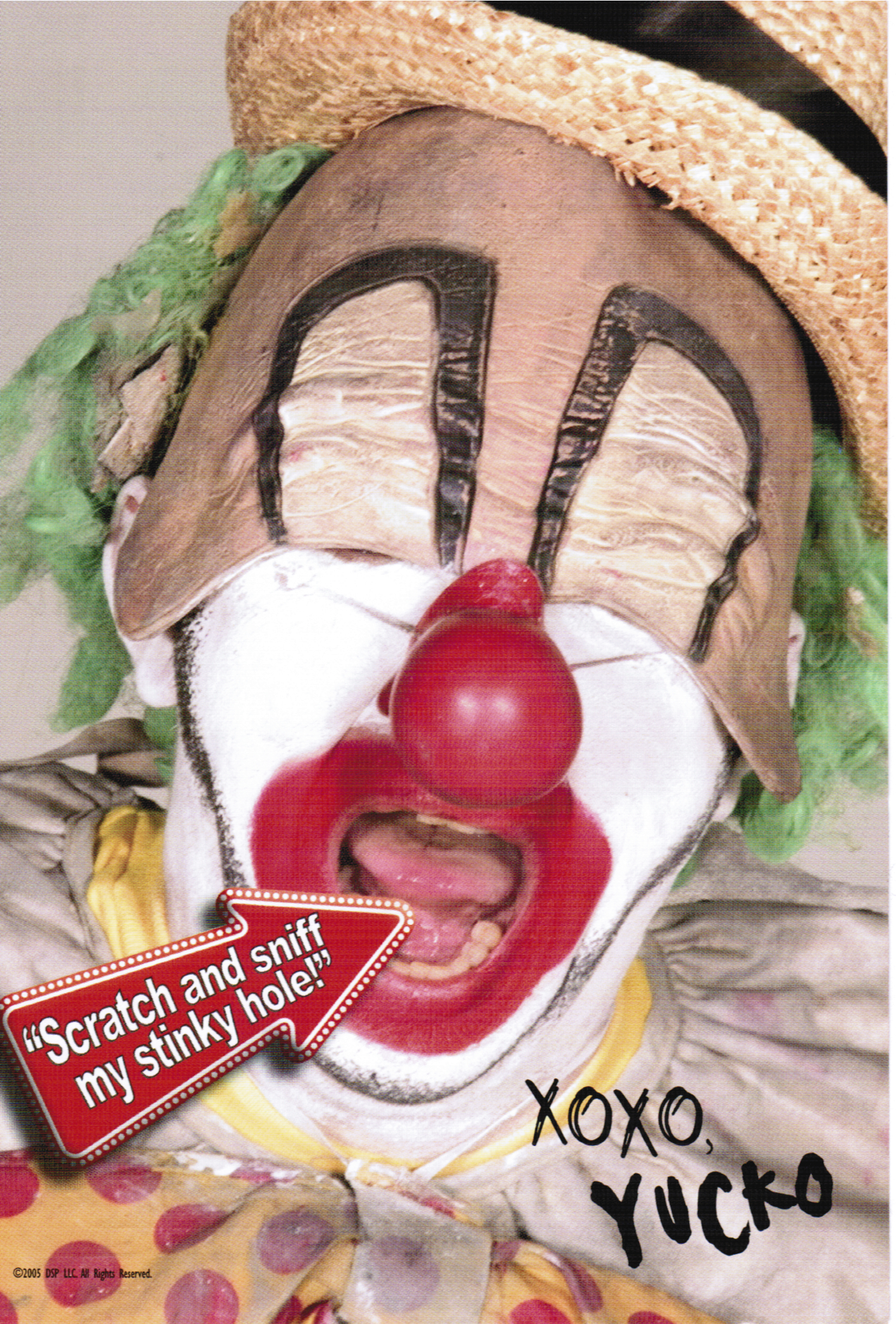
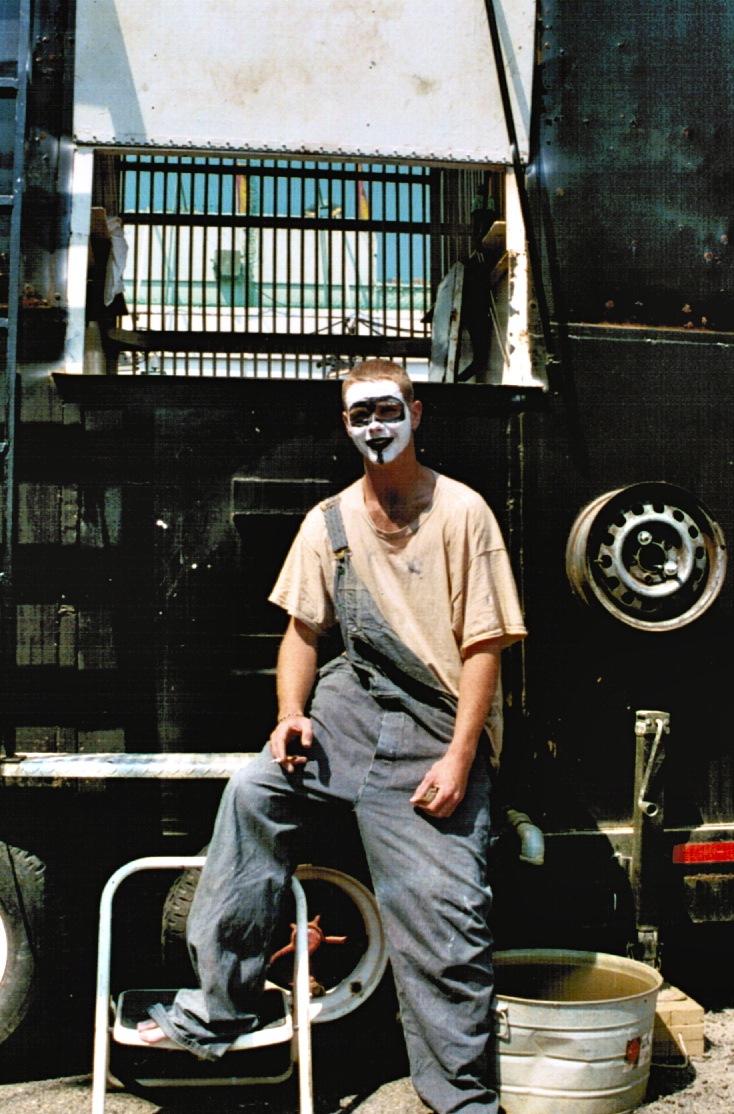
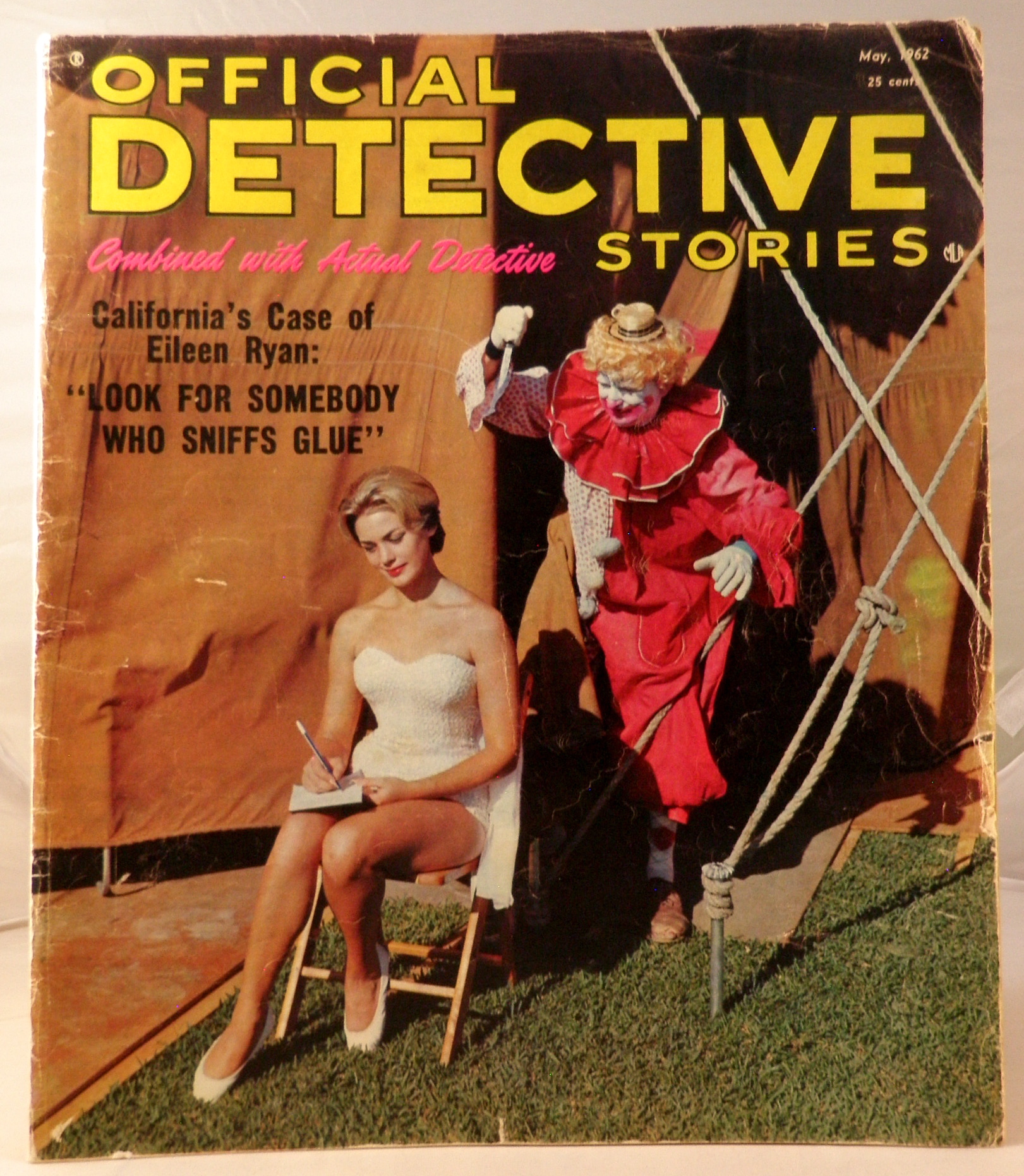
BR: So today we’ll be talking about evil and scary clowns. One reason that I wanted to write the book was that there were all these creepy scary clowns. You know there’s the Joker from DC Comics, of course there’s Pennywise the evil clown from Stephen King’s novel It, Killer Clowns from Outer Space, and so many more. Crusty the Clown, Frenchy the Clown, Obnoxio the Clown, they’re everywhere. And I remember when I told people I was writing the book, a lot of people thought I was joking. They were like, no really, what are you doing? No really, it’s evil clowns. Like oh. They’re like, oh, you know, they’re thinking, oh, psychics or ghosts or whoever else. The fact is that part of the reason that I wanted to do a book on scary clowns was that it hadn’t really been done before. I got the idea to write it in 2007. I did a lot of the interviews for it at the time. Then I put it away. It got shelved. I was busy with other things. And then after my book Mysterious New Mexico came out, I was talking to my editor at UNM Press, and he asked what do you have next? And I was like, I got nothing, except I could do, you know, evil clowns. He’s like, ooh. I think we can do some of that. To be honest, I was surprised that nobody had written that book in the interim. I just assumed that, well, I had this idea, I did some interviews 10 years ago, surely somebody’s already done it. Much to my surprise and somewhat delight, I realized that nobody had actually done it. There were a couple book chapters here or there and some magazine articles, but nobody had actually pieced it all together, the culture and the folklore and all the weird aspects of clowns. So I figured, well, I guess I’ll do it. So that’s sort of how it came about.
PR: Nice, nice. So, I guess we were going to go through a few different aspects of evil clowns. And where should we start, Ben? What’s the best place to jump in? I want this to be super creepy. We’ve got to do it right.
BR: Super creepy. Yeah, well, I mean, there’s sort of like with the chupacabra we talked about the episode before last. There’s so many weird aspects to it. With clowns, let’s talk about why clowns are scary and creepy to people. That, to my mind, is one of the things that really makes them intriguing.
PR: Oh, absolutely. Absolutely.
BR: And it’s just, one thing that’s important to understand about clowns is that they were never really good clowns. It’s interesting, the default clown that most people think of, at least up until recently, was the good clown, the happy clown. Right, kind of the bozo. Bozo, Ronald McDonald. And so for most Americans for the last couple decades, the default clown was the happy, smiling clown. So when Stephen King, for example, and the Chioda brothers, the Chioda brothers who did Killer Clowns From Outer Space, when they did their versions of the clown, the scary clown, they didn’t invent the evil clown. The clown has always been sort of ambiguous, creepy, sometimes happy, sometimes menacing. Anyway, so that’s important to recognize that there’s always been this ambiguous undercurrent in the clown character.
0:37:59
CW: So you delved into like the fossil record and you found creepiness all going through back all the generations of clowning?
BR: Exactly, exactly. I was digging up clown skeletons. In the Smithsonian, it tastes funny, but it’s there.
0:38:20
CW: What was the earliest type of clownery you found?
0:38:27
BR: The clown of course is essentially a trickster figure, which are universal to all cultures.
PR: I mean, you can think of Norse mythology had that for sure. But Native American culture has a lot of that. From my own experience growing up amongst the Pueblos here in northern New Mexico, there’s a long tradition of clowns with these ceremonies and these clowns are real a**holes and they would, well depending on the pueblo you were at, they would throw kids into the river and just do like awful pranks on people. So yeah, I can imagine it goes back pretty far.
BR: Yeah, and in fact, you know, it goes back to ancient Greece. You would have these clowns that would sort of dress up in crude costumes and pelt people with nuts and candy as they went by and they would call out insults and say their names, intentionally mispronouncing their names, things like that. And actually the word clown is fairly recent, it only dates back to the 16th century and it means a person who is crude or boorish –
PR: So Donald Trump.
BR: Yeah crude or boorish and just but but it’s interesting because the the the initial in fact It’s it shares a common origin with the Boers in South Africa Sort of the the country folk and so it’s interesting that the clowns were originally rough you know crude boorish people who were obnoxious. The original meaning is not happy, smiley. It’s a person who gets rough with you.
PR: Questionable folks.
0:40:16
BR: Exactly.
CW: Ruffians.
0:40:18
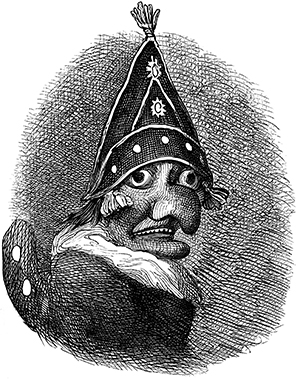
BR: Ruffians. Dubious hygiene folks. And, you know, there’s – I mean, there’s – we can – I don’t want to go too far into the history because I mean, that’s an interesting thing in itself, but you have the Harlequin figure of the Renaissance, you have, of course, Mr. Punch, the Punch and Judy shows, dating back to the 1660s in Covent Gardens. And before that, with the first performance there. And Mr. Punch is this grotesque, you know, red, red capped, you know, wife beating infanticidal bastard, that’s much beloved.
0:40:53
PR: Go figure – it’s very shakesperean.
CW: Yeah, he’s responsible for a lot of puppet violence.
0:40:59
BR: Unspeakable puppet violence!
CW: Doesn’t he like throw the baby puppet like into the crowd and at one point?
BR: Yeah in the yeah in the punch and Judy shows, there are different versions, but the basic format starts with Mr. Punch getting upset because their baby is crying, and he screams out to Judy to come quiet their horrible child. Judy comes, and they go back and forth and beating each other with bats, or slapstick, the bats are called slapsticks. Eventually, Mr. Punch just has enough, and he grabs the baby and throws the baby out the window into the audience. Not a good clown. That is inappropriate.
0:41:47
PR: No, seems, yeah, inappropriate, definitely.
0:41:50
CW: Great audience participation gimmick, though.
0:41:53
BR: Absolutely. Exactly. So anyway, there’s lots of different angles, but I think, you know, what I find, one of the things I find most interesting is why clowns are scary to many people. There’s a couple reasons. One obvious one is that typically they’re masked. They either have a physical mask or grease paint or their features are hidden by these exaggerated caricatured features. That’s unnerving. It’s not intentionally creepy to children. It’s sort of tangentially creepy. Because originally, that sort of exaggerated features goes back to the circuses, when the clown had to perform in a three-wing circus. And the people in the cheap seats had to be able to see them. They’re not doing close-up magic. They’re performing broadly. They’re doing slapsticks, they’re falling, they’re doing pratfalls, they’re doing things that are very physical and loud and exaggerated. And so they had to be, you know, they had to be easily seen and discerned from a distance.
0:42:59
PR: Right, right.
0:42:59
CW: Well, that’s interesting because, I mean, the old Greek tragedies and comedies had giant masks that the actors had to wear. But I guess as we’ve moved in closer and we can see our plays and our movies up close, we can see the humanity of the actor and the leading lady and leading man get to use their own faces but the clowns just never got to lose that mask did they?
0:43:20
BR: No you’re exactly right. Good point. So I mean I think that’s part of it, you have a figure that’s masked and also the the clown is sort of a liminal figure. It’s sort of it’s halfway between human and inhuman. And that’s the thing that’s creepy about clowns is that we know, you know, rationally we know that there’s a person underneath all that, right? There’s underneath all the garish colors. I mean, there’s a human being that has, you know, has a dentist and or not, you know, has an ordinary life. They, you know, they have a, they drive a car, they sleep in a bed, and yet we know that their antics are decidedly inhuman. They’re doing weird, they’re acting weirdly. They have props.
0:44:10
CW: So it’s like a Jekyll and Hyde type thing plays into it too?
0:44:14
BR: Yeah, yeah. I mean, I think that’s part of the tension of the clown characters. is on one hand being funny and congenial and performing at your pleasure, but on the other hand you don’t know if you want to be around when they stop performing. Who knows where they’re going to go with that?
PR: That is a pretty interesting point. This is sort of a weird parallel that I’ve drawn in my head, but working in film and television I’ve worked with a lot of method actors and seeing them on set and being around them when the cameras stop rolling it can be really unsettling depending on the role that they’re playing and it’s difficult because you see them performing these very intense scenes and they’re putting on the show. And with the method actors, when the scene stops rolling, they don’t necessarily turn it off. They stay in character. They speak in character. Most method actors usually don’t go to the extent that Daniel Day-Lewis does, where they just are that person. But a lot of them still keep the accent. They keep the demeanor. They keep, sometimes, the intensity if they need to keep the anger up or something for another scene. And it can be really unsettling to try to interact with them because they are still kind of on you know and I think clowns kind of present a little bit of that too because they’re just they’re in character as long as that’s on their face and and I you know thinking of times in my life where I’ve interacted with someone who’s had face pain or makeup or a clown for that matter, you know, interacting with them casually, out of character, it was still really off-putting because it’s like you can’t, your brain can’t really reconcile the face with the demeanor, you know.
0:46:18
CW: I’ve got a clown story that relates to that. Actually it’s my friend Andy ran into an acquaintance of his. He was at a restaurant here in Vegas. There’s a lot of restaurants that have people do balloon twisting and stuff for the kids. And he, this clown comes over. The clown is like interacting with the kids. Hey kids, here’s a doggy. And he’s making clown balloon animals for the kids. And he sees Andy. He realizes he knows Andy. Goes over, talks to Andy. Quickly devolves into this clown telling Andy this very sexually explicit story about some acquaintances of theirs at some festival or something like that. And Andy said it creeped him out unbelievably. And I was like, that would be creepy, you know, the clown telling you that story. He goes, no. The creepy thing was he never dropped character. He told me this story using his clown voice in his clown shoes and his clown makeup and his clown wig like And I was like oh my god, they never drop character do they? I did hear somewhere that like One of the rules of being a clown is the makeup goes on you’re a clown – you don’t take it off in front of the client or the audience or anybody you go backstage And then you can turn back into a human, but the makeup goes on and boom, Dr. Jekyll and Mr. Hyde, you are just going to be Mr. Hyde for a while.
0:47:43
BR: No, that’s exactly right. I talked to a couple of clowns for the book. Most of them didn’t really want to go on the record because it’s not by any means an anti-clown book but I can see how professional clowns, they said something which I kind of knew, but it was interesting having them say it explicitly. They said that when they put on their makeup, the way it was described to me is they feel like they’re becoming another person. And I mean, they weren’t, they didn’t mean in a creepy way, but just like they, you know, exactly as you were saying, when you’re getting into costume, when you’re playing that role, you put on the makeup, there’s a whole ritual, there’s a whole process to becoming a different clown. You have to, the physicality, it’s acting, it’s performing, and you have to get into that.
0:48:40
CW: Have any clowns used that as a defense in court? I didn’t shoot her, your honor, I was another person. I put the clown makeup on, it was not me.
0:48:49
BR: Not that I know of, but it wouldn’t surprise me.
0:48:51
CW: Okay.
0:48:52
BR: But essentially, I mean, the notion of sort of a dual Janus-face character, I mean, this in some ways goes back to Charles Dickens in his novel, The Pickwick Papers, in 1836. One of the characters is an alcoholic clown who, you know, on one hand he goes on stage and he’s performing for everybody. Everyone loves him. Everyone’s digging the clown thing. And then off the stage, he’s this broken, depressed man. And so I think you can trace back the sort of two-faced side. Again, it’s always been there, but Dickens really, really, really portrayed it. Stephen King with Pennywise, you have a variation on that. You have this, it’s not even clear, it’s like some sort of supernatural entity. It’s never crystal clear exactly what Pennywise is. Originally, he can take different forms, including I think a spider, but anything that creeps people out, you take the forms of things that are people most afraid of.
0:50:00
CW: Yeah, in that case, it goes from bad to worse. I mean, he’s pretty bad when he’s a clown and then he just gets worse.
0:50:05
PR: Yeah, I think if I’m not mistaken he kind of ends up being sort of an interdimensional being of some sort. Yeah, something like that.
BR: But no, I mean, I think again that’s one of the reasons that clowns are unnerving to a lot of people is they’re freakish, they’re inhuman, they’re kind of human, but not. And I think that as villains and as horror monsters and characters, that sort of plays two roles. Because if you have something that’s totally inhuman, it’s less accessible. It’s just some sort of alien that comes down and kills people, whatever else. And in the same way, if you have a serial killer, you have the human side to it, but then doing these really inhuman things. I think that that blend of human yet performing inhuman things and supernatural things. We have clowns, they fall off chairs and aren’t hurt. They can have 50 of their friends pop out a tiny car. You know, they have flowers that squirt water. These sort of quasi-supernatural aspects of them.
0:51:20
CW: I never thought of those as mutant powers before, but I guess they are. I’m getting the phrase uncanny valley in my head. The thing that, for me, aesthetically, when I see CGI that is almost human, but not quite, it really creeps me out. And I never connected that with the clown thing, but you’re saying that the fact that they’re almost human, but not quite, just kind of raises the hairs on the back of your neck.
0:51:47
BR: Yeah, I think it makes them accessible. We know that, like I said, underneath all that is a human that I could interior relate to, and yet they’re beating me with rubber chickens and talking to me in a weird voice. So I think that’s part of it.
0:52:07
PR: Yeah. I was just, it reminds me of at one point in my life going into a carnival haunted house when I was a teenager. And this was back when they, you know, we used to have those haunted houses that were sort of this little ride and you’d sit in a cart and you’d, you know, went around on a track and they’d, you know, there’d be like dummies on pneumatic, you know, propulsion devices. And it was like, and then suddenly you started seeing more like interactive stuff happening and I recall the first time I was experiencing that it was like, oh no, you walk through this haunted house. And that was already kind of off-putting to me because I’m like no I’m used to carny rides and like the haunted mansion at Disney.
BR: I will walk nowhere, sir!
PR: Yeah, why am I walking through? And it was all like people in costume and the most of it was pretty hokey but at the very end there’s a guy in a leather face costume from Texas Chainsaw Massacre for those who don’t know. Very imposing character large guy with with a face made of other human faces or a mask made of other human faces and And it was and he corners you with a live chainsaw that I presume the chain is not attached to but he’s revving an actual chains on your face and Like this person is cornering you and it’s the weirdest thing. I mean, that was obviously a very extreme example of the uncanny valley, but my brain could not accept that this is just a guy who woke up this morning and shaved and threw on this dead skin mask to quote Slayer. And here he is cornering me in a haunted ride or attraction at the state fair.
BR: And he doesn’t even know you.
PR: No, and we don’t know each other.
BR: It’s one thing if he’s some neighbor and he knows that you’re an ass, and is like, hey, let me take him out. So I mean, that person has a reason to hate you.
0:54:26
PR: Sure.
0:54:27
BR: Not this stranger.
PR: No, he’s just some guy. And again, let’s be honest, he’s a carny, so it’s a little creepier just by default. But it’s just like, yeah, I mean, it’s crazy. Because as rational of a human as I like to think I’ve always been, I cannot get cornered by a guy in a fake skin mask with a chainsaw that very clearly is not actually going to hurt me and not just, you know, that instinctual switch just gets flipped. It’s crazy.
0:54:59
CW: The lizard part of your brain is very much still alive and I think the best type of scary stuff, the stuff that’s going to scare you the most, taps into that lizard part of your brain. Even though the rational part of your brain is like, this is a haunted house or I’m at a circus or this is a licensed and bonded child birthday party performer. If it tickles the back of that lizard brain, it’s going to work to scare you on some level.
0:55:27
PR: Oh yeah, there’s no getting around it, that’s for sure.
BR: Well, I mean, you know, more broadly when we’re talking about fear of clowns, oftentimes what comes up is called coulrophobia.
0:55:38
PR: I’ve heard that.
0:55:39
BR: That’s the quasi-clinical is probably the best word to describe it.
PR: As most phobias are.
BR: Yeah, right.
CW: I was gonna ask you if that was real
0:55:47
or if that’s just a term that’s come into vogue for people to try and clinicalize the fact that they think clowns are creepy.
BR: Yeah, I think from my research, that was one of the things I needed to research for the book, is just how widespread is it? It’s certainly popular to be afraid of clowns. Bart Simpson is, of course, famously afraid of clowns. There’s him saying, can’t sleep, clowns will eat me.
0:56:17
PR: Yeah, Sideshow Bob had a very famous rivalry with him.
BR: Right. But here’s the thing, though, is that a phobia is by definition an irrational fear. But in the case of Bart Simpson, it’s not irrational at all. I mean, he has a clown trying to kill him.
0:56:35
PR: Yeah, yeah.
0:56:36
BR: So that’s not coulrophobia. That’s perfectly reasonable. So let’s just be very clear here. So a lot of times when people are talking about fear of clowns and coulrophobia, like no, if you’ve got a clown chasing you with an ax or machete or whatever. No, that’s legitimate. You don’t need to stand by, no, I’m okay. No, no, you’re not okay. Run. Don’t be brave.
0:57:02
CW: The reason why I ask whether or not it’s actually, I mean, who knows how big the actual presence of actual coulrophobia is, but whenever I hear people talk about their fear of clowns, it’s always like, oh man, clowns creep me out. I’m so afraid of them. I went to this haunted house that was fully themed. It was like a clown haunted house. It’s like, no, if you actually had coulrophobia, you would never go to a place like that.
0:57:24
BR: Right, yeah. It’s the last place you would go.
PR: That’s true. That’s, you know, I’ve always thought of that because I’ve known a lot of people who are, who, you know, said that they’re very clearly scared of clowns. I never considered myself among them. I consider myself creeped out by people in face paint and just the general kind of anonymity of it. I always found, maybe because of my experience with, like I said, the Pueblo clowns in the Native American culture and stuff, I found them mostly annoying and obnoxious and frustrating at times. It was funny because my roommate that I lived with, actually during my period of my worst sleep paralysis, I don’t know if that’s related at all, but he has a little bit of a fetish for clowns. Not a sexual fetish, but he just loves clowns and he finds them delightful in a very honest way.
0:58:22
BR: Not a phrase I often associate.
0:58:25
PR: Yeah, so in this household we had me who was like mostly just annoyed by clowns and him who was absolutely Just tickled by clowns not literally well, maybe later. I don’t know but
0:58:36
CW: Was he just trying to get you to move out was this his subtle way of edging you out?
0:58:41
PR: I don’t know man. He actually I’m not to get too off the rails, but he actually had like a band That was clown themed he used to do a lot of art like drawings of clowns and paintings of clowns. We never found any murdered children under our floorboards.
0:58:57
CW: Pascual, are you telling me you know Puddles? If you know Puddles, you need to put me in touch with Puddles! I will bear that clown many strong sons!
0:59:10
PR: But it was a very interesting experience, and as such, because I was not bothered by the clowns rather just annoyed by actual clowns I didn’t care about the art we had a lot of weird clown artwork in the house and people would come over and it was almost guaranteed that they’d be bothered by the clown art in the in the house we we had like this weird like 60s velvet clown art clown. It was meant to be like some delightful childish clown but it was like this weird kind of faded velvet and the colors had sort of muted.
0:59:51
CW: With the great big giant soupy eyes?
0:59:54
PR: Yeah, oh yeah, absolutely. It was a little bit of that drunk clown kind of style clown and it was like, it was the sad clown, but it was meant to be cute. You could tell that in its context it was supposed to be cute. And people were just, I mean it was like almost 100% of the time someone would walk in, see it and just be like, that is terrifying. And it really just lent to the idea that people are just like generally fully unsettled by clowns.
1:00:23
BR: I would suggest that probably part of that is the quantity.
1:00:26
PR: Yeah.
1:00:27
BR: I mean, whatever the topic, I mean, you go into someone’s house, there’s a little clown figurine, there’s a painting, whatever. You go in, there’s like more than three, that’s like a crazy cat lady.
PR: Oh, there were more than three.
1:00:39
BR: That’s what I’m saying. Oh, yeah. It could have been, it wasn’t really so much the topic, it was the, like for example, when I lived in Buffalo, I briefly dated, very briefly dated a woman who liked Eeyore.
PR: Okay, yeah, sure, sure. From Winnie the Pooh.
BR: Yeah, and I didn’t really think much about it. I went over to her house one time and there was an Eeyore figurine. And then I went into her kitchen. And there were dozens. I had no idea that they even made Eeyore aprons and sex toys.
1:01:11
PR: Hey man, it’s Disney. Let’s slap him on anything.
1:01:14
BR: I was just like, okay, I’m just going to back out and nod. My point here is that one Eeyore thing is fine. 30 or 40 of them in one room is probably pathology. Anyway.
PR: I concede your point.
BR: Anyway, in the case of coulrophobia, basically phobias are a subcategory of anxiety disorders. And typically anxiety disorders are treated through basically usually habituation, right? So you have a fear and you’re afraid of spiders, so you look at a photo of a spider for two minutes and then you get more and more habituated to it. But even these phobias, I mean, they only affect about 2 to 4% of the population. So again, phobias inherently are not uncommon, but they’re not particularly common. And of course, fear of clowns being a subset of that is far smaller. The fear of clowns isn’t even in the top 10. There’s fear of heights, fear of close spaces, fear of spiders. So numerically, the number of people that are genuinely afraid of clowns is minuscule. And frankly, a lot of the… Of course, a lot of people that are actually afraid of clowns don’t bother to get treated, because why would you, right? If you’re afraid of clowns, don’t go to circus.
PR: Don’t watch it.
BR: Don’t watch it. Right. It’s like anything else. If you’re afraid of heights, don’t go in a tall building.
1:03:00
CW: Well, I mean, what if you start dating a clown? You would need to habituate yourself.
1:03:06
BR: Well, in that specific case, yes, Celestia, you’re right. If you happen to be terrified of clowns, and you date someone who becomes a clown, you got issues. That’s a whole Jerry Springer thing right there.
1:03:20
CW: I know several clowns in town. This could put a hamper on their relationships. If 98% of the population actually had coulrophobia.
1:03:30
PR: Yeah, yeah. I’d be really interested to hear from any clowns, especially clowns that listen to us, and kind of what their perspective on that would be. Because that must be incredibly interesting. I had a friend in high school whose mother was a party clown. And she was, and I don’t believe this was because she was a clown, but she was pretty weird as a human being. She owned like 600 birds or something.
BR: Any Eeyore figurines?
PR: No Eeyore, but like birds, like a really cool pet. If you have a couple of really cool birds, especially ones that talk, awesome pet, you’re cool. You might be a pirate, I don’t know. But when you have like hundreds of them in cages throughout rooms of the house, you’re officially just a very strange person.
1:04:19
BR: That’s something out of Seven, the movie.
1:04:20
PR: It is, and she was a clown, so it created a weird kind of like correlation for me. I’m like, is she weird because she’s a clown, or is she a clown because she’s weird, or are these just unrelated? But she made her living as a clown, had a van with her painted face on the side, and she always did that magically appearing cake trick. You remember that? That was an old school trick where they had the two pans and then the bundt cake would magically appear. I don’t know, that was like her thing. So my personal experience with clowns is very skewed because the only person I ever knew that was a clown, at least to any real extent, was also a very strange person.
1:05:04
CW: Well, there’s a wide variety. I mean, the clowns I know, one of the clowns I know was also a blue man, and he’s done some of the top clowning work for La Rev and the Cirque de Soleil stuff and you know the people I know who clown on the strip take their clowning very seriously.
PR: That’s like some white clown stuff.
CW: They are motion theater experts. And Ben, actually going back to your book, I know a guy who knows a guy who’s one of the dunk clowns that you interviewed in your book, the dunk tank clowns that hurl insults at people.
1:05:40
BR: Yes, yes, the dip clowns.
1:05:42
CW: Yeah, the dip clowns. Yeah, well, I think dunk tank, dip, yeah. You want me to sing you one of his songs? He’s got this song. He insults people as they walk by. When a woman walks by with a bunch of makeup and her hair all done, he goes, her hair came out of a bottle, her hair came out of a bottle, her hair came out of a bottle, and her face came out of a tube.
BR: Yeah, you know, I, I, yeah,
CW: It’s supposed to get the boyfriend mad enough to throw some baseballs.
1:06:08
BR: Right, yeah, I, that was, that was one of the interesting tangents that I enjoyed looking at in Bad Clowns was, you know, the dunk tank clowns, the dip clowns, and it wasn’t one that was immediately obvious. That was one reason that I liked pursuing that. It’s clearly a clown, but it’s not an immediately obvious clown. And it’s a bad clown. I mean their job is to insult you and piss you off. I was glad I was able to interview those particular creepy clowns.
1:06:45
CW: Well, they’re separated not by makeup and by disguise, but they’re separated by space. They’re in this plastic tube, you can’t get to them. So they can say whatever they want.
1:06:57
PR: Totally.
1:06:59
CW: So, truth is a harsh mistress.
1:07:03
BR: Well, let me turn a little bit to the phantom clowns, as long as we’re talking about scary clowns. There’s lots of different angles in the clowns we could go into, but I wanna touch on one of the genuinely frightening clowns of the last few decades. Of course, these are the phantom clowns. These are the clowns are from Massachusetts in the 1980’s/ They would drive white vans and try to abduct children. Not tiny little cars, you might imagine, but they were sighted lurking around schools. There were children who were reporting that these vans of clowns would come out and try to abduct them.
1:08:01
CW: That will raise some alarms.
1:08:03
BR: Yes, that will do it. And so, yeah, that was what they were saying, was that there were all these creepy clowns that would go and do that. And it was causing a huge panic at the time. And Loren Coleman, a friend of mine and researcher at the Cryptozoology Museum. He was one of the first to write about that in one of his books. And it’s just fascinating, you look at some of the New England reports and they followed a familiar pattern where these kids, they were almost invariably kids, they were occasionally adults but almost always kids who reported in all seriousness apparently that these clowns were trying to snatch them off the streets, which can be terrifying. If you’re a parent, any stranger, certainly anyone in a mask, clown or not, is menacing children. That’s going to cause the police to come out and warnings to be issued to parents.
1:09:07
PR: Oh yeah.
1:09:08
CW: White vans. You had me at white vans. That alone gets parents creeped out.
1:09:13
PR: Yep.
1:09:14
BR: Well, that was the thing, but what happened was that invariably the police didn’t find anything. Just over and over again, the police were called, as of course they should be, and APBs were put out for, you know, look for a white van full of clowns. How hard is it to find them because as it turns out, they were essentially sort of an urban legend, sort of a mythological urban legend figure and there was just no evidence that they existed at all. Some of the reports that the kids gave were clearly hoaxes. There’s one I remember in the book where there was a kid going to school and he said he was confronted by a clown with a machete in one hand and an uzi in the other hand. This, as you can imagine, would frighten anybody, certainly frightened me as I was a kid, but this resourceful kid, I think he was like 10 or 11, had fortunately a bag of books and he threw that bag of books at the clown and scared the clown so much that he ran off.
PR: Oh wow, okay. That’s believable.
BR: I wish you could see his face. He’s like, yeah, that’s believable.
1:10:39
CW: Yeah, I’m picturing his mom as he walks in the door. Billy, how did your book bag get so dirty and torn on the side?
1:10:46
BR: Funny story.
1:10:48
CW: Well, Mom!
1:10:50
BR: So, again, keep in mind this was taken very seriously at the time. This was in the early and mid-80s and a little bit later. And part of the reason was that this was the same time as the Satanic Panic.
PR: Yeah, I was going to say it sounds oddly familiar.
BR: Yeah, this is right around the time when you had people like Geraldo Rivera and others with these highly rated, sensationalized, alarmist stories on network television, these multiple hour specials that were swearing that there were Satanists behind every tree trying to abduct children. For those of us who remember some of the Satanic panic in the 80s, you know, it was, there were people were thinking that anybody who plays Dungeons and Dragons is, you know, a step away from the occult and killing babies.
1:11:46
CW: We grew up in a really strange time guys, I’m glad we all made it.
1:11:51
PR: Yeah, that, the show Stranger Things, if you haven’t seen it yet, is a fairly accurate representation of my childhood. Maybe interdimensional beings included, I don’t know. But it really was kind of like we were all playing Dungeons and Dragons in the basement.
1:12:10
CW: Well, that was back in the 80s. And then I know just last year you became like a media darling as your book came out, right as this wave of clown panic overtook the nation. And you predicted it in your book, didn’t you? You said it would happen again.
1:12:26
BR: I did. It was curious. I mean, my book came out on April Fool’s Day, 2016. That wasn’t my intention. It just happened. Actually, there was a… So did the podcast, if I’m not mistaken.
PR: Yeah, yeah. That’s like our day.
BR: Yeah, that Halloween, right around this time, you know, last year, was when there was this, at first national, and then global panic. And, you know, I had sort of predicted it, you know, having researched the previous panics. There was a Northampton clown, a guy who had dressed up as a clown in Northampton, England, and he had, you know, walked around making viral videos on a Facebook page. There’s a variety of clowns that were sort of scaring people and using social media to promote themselves and scare people even further. I had seen this in previous years and so I had expected that that Halloween they would be back. I had no idea they would go global. It was just insane.
1:13:43
CW: There was a clown sighting website. You could go online and you could call up this website. I forget what it was, but it would show you a global array of where clowns had been spotted and you could see in your neighborhood if there were any clown sightings like in the past week.
1:13:58
BR: Yeah, yeah. It was bizarre. I mean, one of the first ones was in Greenville, South Carolina. That was one of the sort of the spark that lit the fire.
1:14:10
CW: Patient zero.
1:14:11
BR: Yeah, it really was. There was certainly patient zero for 2016. And I won’t go into the whole story because it’s sort of long and involved and we should do a show on that. But it was a fascinating case. And again, it was straight out of the phantom clown panic. It was kids claiming that there were evil clowns in the woods trying to lure them into the woods or into vans. And again, to somebody who had researched that, I’m like, yeah, that’s what that is. I mean, it was like a folklorist. I was like, yep, that’s, that’s, yep, I know all about that. I mean, it was weird because to the police and to the parents and to journalists, it was this, what in the world is this? We’ve never seen this before. I’m like, yeah, yeah.
1:15:05
CW: Ben you got to stop thinking like a folklorist here and you need to think like an entomologist. These are clearly like 25 year cicada clowns and they go into their little pods and they go underground for like 22 years And then they pop back up every 22 years and get into a van and drive around looking for kids.
1:15:23
PR: And that’s that’s actually not that’s that’s believable I don’t it might have been maybe a little more like 30 years because killer clowns from outer space almost feels like it did predicted that because it was pods and right like cocoon Clowns and I think you’re onto something.
1:15:39
BR: There’s something there.
1:15:41
PR: There’s something there. The conspiracy theorist in me kind of wants to just like look at this whole thing and be like, boy, the recent remake or reimagining of IT was beautifully timed with all this stuff because within a year of it coming out, everyone just got especially scared of clowns suddenly and I’m not saying Warner Brothers did it because I don’t think Yeah, that’d be a conspiracy theory, but but boy it just really worked out to their favor I almost wonder maybe to roll it back it it maybe the idea had been bouncing around a little and then the wave of Clown fear kind of hit and they were like well, we better we better strike right while the iron’s hot and greenlit it. But I don’t know, who knows.
BR: Yeah, it was interesting. That whole panic, it was actually a mixture of things. It wasn’t all phantom clowns and urban legends. There were a couple of real cases. Now by real cases, I don’t mean clowns killing or abducting children. That’s not what I mean. What I mean is a handful of people dressing as clowns, mostly teenagers, who would go behind a Walmart parking lot at night and scare people. They were just pranksters.
1:17:06
CW: Flesh and blood.
1:17:07
BR: Flesh and blood kids. Nobody was actually abducted. No one was actually killed. No one was actually stabbed. In a couple cases people were injured as a result of that.
1:17:19
CW: I was going to ask you that. As far as the clown panic goes, were there any secondary injuries? Because I remember reading some that turned out to be false, like a guy had his head blown off because he was wearing a clown outfit, or somebody got punched in the face. You heard people on the news saying, if somebody comes around here in a clown outfit, we’re going to beat the crap out of him. And I was just wondering, did that actually happen to people?
1:17:42
BR: It did. In a couple of rare cases, yes. Again, all these were secondary. So again, there were no and there are no credible claims of anyone dressing as a clown and hurting, abducting, molesting, killing kids, or really anyone else. That part of the story is just flat out not true. There were a handful of people that would dress as clowns and cause mischief, do some vandalism, scare somebody in the park, things like that. And then there are a lot of copycats. So it’s important. I mean, there’s nuances. It’s important to tease out exactly what’s what. so it was an really interesting blend of urban legend and phantom clown panic and a handful of hoaxes and again lots of copycats. And of course the news media sensationalized it and the police did and parents and there were clown lockdowns. There were several schools, there were actually three or four in Alabama.
1:18:46
CW: There was an injury here in Vegas, a couple of injuries in a school that I had worked at. I had painted some murals at this school, so it popped up my ears when I heard it on the news out here. Some kid last year, a couple of kids during the lunch period yelled, clown! And that caused, we were talking about trampling injuries. Apparently everybody in the lunch area started running for the exits, and they had three kids go to the hospital for trampling injuries at a middle school up here in northwest Las Vegas.
1:19:20
BR: Yeah, that’s exactly right. In fact, I mentioned briefly the Greenville, South Carolina case, and that was a case, again, where there were children telling adults and police, mostly their parents, that there were clowns in the woods behind this apartment building trying to lure them. That turned out either to be misunderstandings or hoaxes or rumors or some version thereof. But in response to that, several people fired weapons into the woods. Shooting at the clowns that they believed were lurking in the woods waiting to abduct kids.
1:19:57
CW: Gosh, I hope they didn’t hit Bigfoot.
PR: That’s about the most American thing I’ve ever heard.
1:20:04
BR: I’m going to shoot me a clown. We can laugh. Fortunately, no one was injured. What if there had been somebody who had been shot in the arm or in the face by somebody who was… There can be real consequences to these sorts of panics.
PR: Most definitely.
1:20:22
CW: Humanity, you disappoint me once again.
1:20:26
BR: Once again. But anyway, so that’s just sort of an overview of the clowns. We sort of hit on some of the other ones. But, you know, there’s always a handful of weird clowns lurking around there. I think you had an odd experience with the clown.
1:20:41
CW: I did, and it was your fault.
1:20:44
BR: Blaming me?
1:20:45
CW: Your fault, your fault, yeah. I’ve told this story to a couple of people um Ben and I actually we met years ago at a at a caricature convention, so there were a bunch of artists there and and Afterwards Ben kind of reached out to see if I could do some work for him, and he was real tentative, he was like I just I there’s a book. I’m working on it’s just… and he’s being real hedgy about it. I’m like oh, I’ve just met this guy who’s going to ask me for free work. It happens all the time. I was like, oh, what a jerk. And then it turns out you weren’t being hedgy because you weren’t going to pay me. He very kindly paid me for the work, but he needed me to draw a masturbating clown. And it’s a hard thing to ask for. It’s a hard thing to ask for from an artist you’ve just met. But of course, he asked me for that. And I’m like, oh, we’re going to be best friends. Yes. Yes, I can draw you a masturbating clown. Here, look at my portfolio. Choose among the…
1:21:42
BR: Funny you should ask. What style would you like?
1:21:46
CW: Yeah, so I drew this…
1:21:48
BR: Here’s my Tom of Finland version.
1:21:50
CW: Yeah, so I drew this recreation of a courtroom sketch of Crotchy the Clown, which appears in your book. He’s an actual guy, you know, in clown makeup, who got arrested for indecent exposure on the airwaves because he decided to turn his little late night clown show into a late night, like, full Monty clown show. And they don’t let you do that in what town was it? Iowa?
1:22:15
BR: It was like Wisconsin or something, yeah.
1:22:18
CW: Okay. You wrote the book came out, but a year or so after the book came out, I get this email from a guy named Wong Clown, and it’s this word salad threatening email. He’s like, let me read you parts of it here.
1:22:41
BR: Oh, no, I have it. It’s Nebraska. He was actually in Nebraska.
I own all images of Crotchy the Clown plus a million other copyrights, infringements by you and Ben Radford, period. You were never in a courtroom with me, and I wasn’t Crotchy. I was, I’m not bankrolling piggyback rides, and you will be in a courtroom getting sued for infringement. And I, yeah, it was a delightful little bit of word salad, threatening letter from a clown. And I kind of, I’ve worked in, I’ve worked in publishing, so I know a little bit about fair use and the umbrella of fair use. And I’m sorry if you get publicly convicted for indecent exposure as a clown, people have the right to put that in a book.
1:23:25
BR: If one would want to, yes.
1:23:27
CW: Yes, just like I have. You kind of become a public figure at that point and it’s perfectly okay. We are not making money piggy. And I found it interesting though, Ben, that he did not write me and say I am furious that you brought up this terribly embarrassing thing out of my past and publicized it. No, he just he wanted to make sure he was getting a piece. He was mad that other people were making money and he was getting a nice fat check from it.
1:23:55
BR: Yeah, I appreciate you doing that. I was a little tentative. I was like how am I going to, I don’t have the artistic skills to do it myself. And I’m like, you know, I bet she’d be game for this.
1:24:09
CW: And I also had to be tasteful enough to go into an academic press book. So everything’s covered.
1:24:14
BR: I pulled a little Austin Powers there and nothing’s showing, but I’m looking at it right now. It’s titled Plate 18, voir dire tragedy in one act. That’s a, that’s a lawyer joke that some people get. Or judicial review of public access clown self-abuse 2015.
1:24:31
CW: Ben, I think you put more time into naming that than I put into drawing it.
1:24:36
BR: Yes, well, it is delightful. Yeah, I also got a subsequent, after the book came out, I also got a rambling email from Crotchy. So it turns out he either read my book or someone read it to him. I don’t know how many hands he used to, to look at the book, but, um, yeah, I guess Crotchy’s still around and, uh, he, he, he apparently knows, he knows our names. Uh, hopefully he’s, uh, he’s gonna, you know, move on to greener pastures.
1:25:06
CW: Well, Crotchy, if you’re out there, write us and, and write, write us on the Facebook page and we’ll be happy to answer your questions.
1:25:18
PR: No pictures please.
1:25:19
CW: Yeah, no pictures. Facebook will shut you down if you start doing what you did in the 80s or what was it, the 90s?
1:25:26
BR: Something like that.
1:25:28
CW: Well, Ben, thank you for bringing me in on that project. That was a delightful thing. And a feather in my cap, I’ve gotten to brag to several groups of cartoonists now that I got a threatening letter from an indecent clown. And boy, it gets a round of oohs and ahs.
1:25:44
BR: I’m glad I could be there for you. Thanks.
1:25:48
(MUSIC)
1:26:00
We would like to thank our sponsor-level patrons, Amy Freshour-Kelly and Dr. Angela Mattke. If you’d like to find out what that is and how to become one, head over to patreon.com forward slash squaring the strange. Patronage starts at just a buck and there are a lot of perks and bonus content just for our patrons. If you’d like to lend your moral support, you can head over to iTunes and give us a review. Every five-star review gets us a little more visibility on the iTunes podcast charts and brings a smile to Pascual’s face.
(MUSIC)
PR: So that about does it for us we had a great time this was an awesome topic. I was really looking forward to it. And and this is only week three of the Halloween episode so so you’ve still got one more coming after this. And I’m really excited to tease it. It’s Halloween scares. Yeah, we’re not just talking about the typical you know boo-ahh scary things, but the the this this conspiracies and fears and various urban legends and different scares that have sort of come up over the years around Halloween, which any of us really alive today probably recall something, some urban legend about Halloween or something that really, really stuck out. And so we’re gonna go ahead and tackle those next week.
1:27:36
BR: It’ll be fun, I’m looking forward to it.
1:27:38
CW: Definitely. Don’t take, don’t take the Mickey Mouse stickers. They’ll kill you.
1:27:41
PR: Yeah, exactly.
BR: Oh mom.
1:27:44
PR: Make sure to take your candy to the fire department so they can x-ray it. But, uh, but, uh, yeah, so, uh, thanks again, uh, Celestia for joining us. This was a great fun episode as usual. Oh, Hey, thanks for getting me in. I had a lot of fun talking to you guys.
1:28:01
Awesome, awesome.
1:28:02
So we will see you guys soon. We’ll see you next week when we come back with Halloween scares. Take care.
1:28:09
Yeah, bye.
1:28:10
Oh yeah.
1:28:11
Squaring the Strange is a production
1:28:12
of Chronos Creative LLC, copyright 2017. Theme music by Shriekback. Additional music by Memory, Guitard & Feathered, and Pasqual Ramon. Content producer, Celestia Ward. Audio engineering, producing, and editing provided by Pascual Romero at Acronis Creative Studios. Additional support provided by Ashley Romero, and of course, our listeners and patrons. The views and opinions expressed in this podcast are those of Squaring the Strange and do not necessarily reflect the views and opinions of Acronis Creative, Center for Inquiry, our advertisers, or any affiliated organizations of Acronis Creative, Center for Inquiry, our advertisers, or any affiliated organizations
1:28:48
and employers.
Transcribed with Cockatoo