Episode Summary:
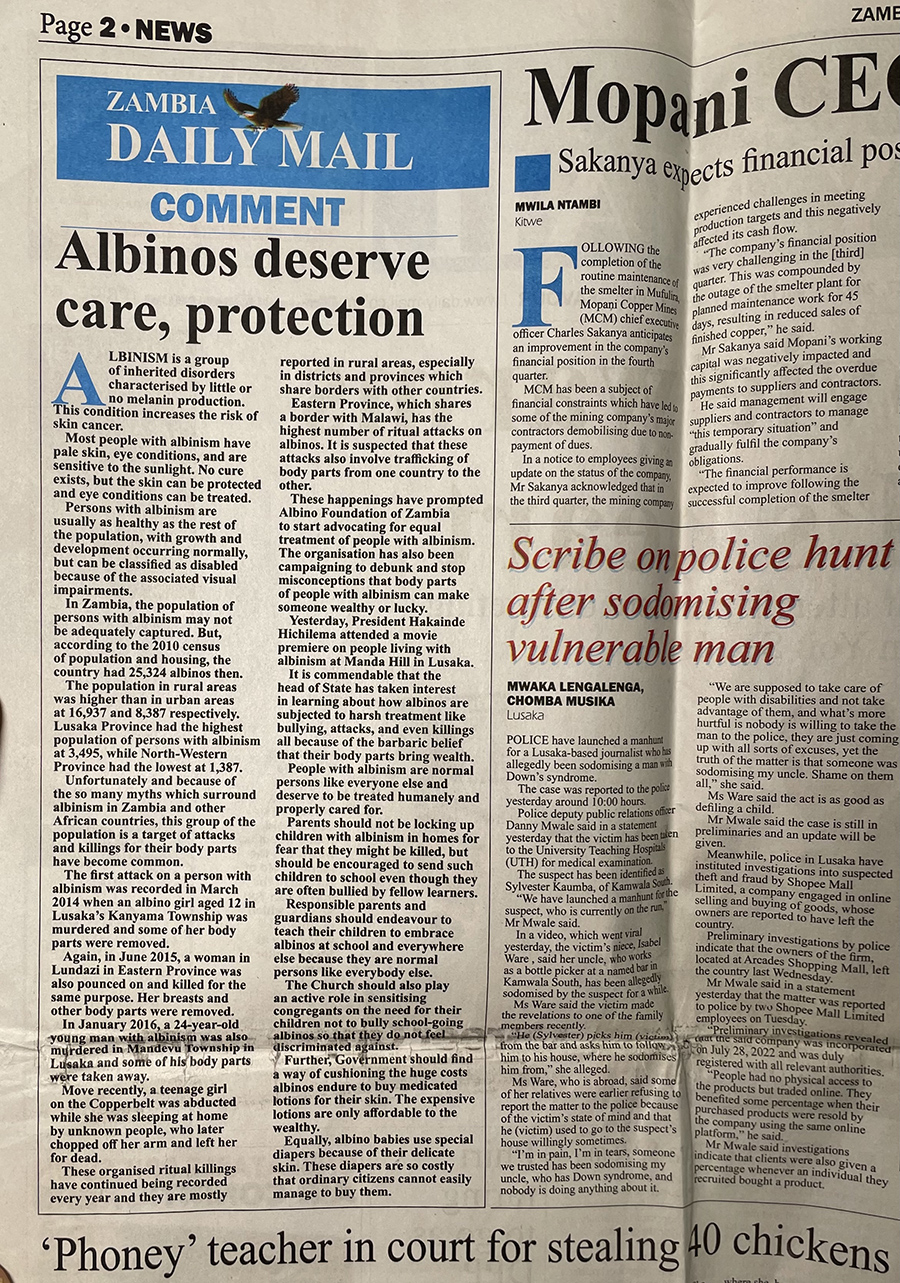
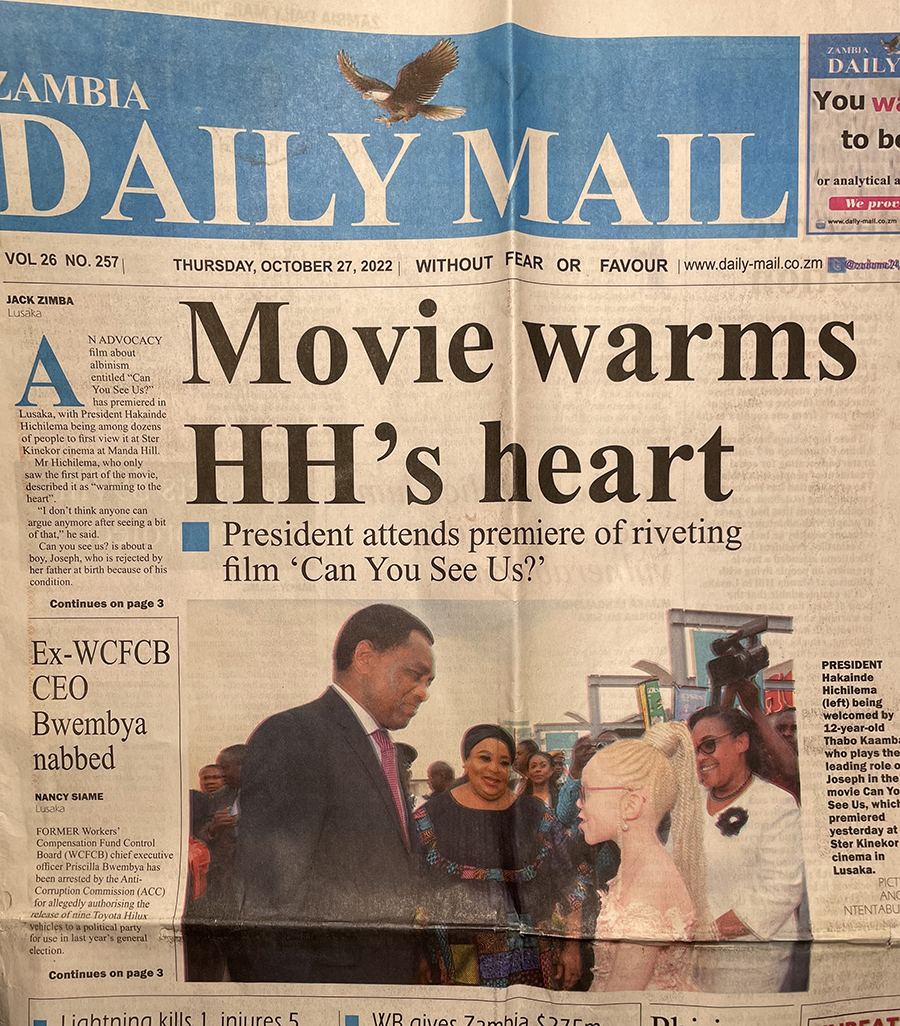
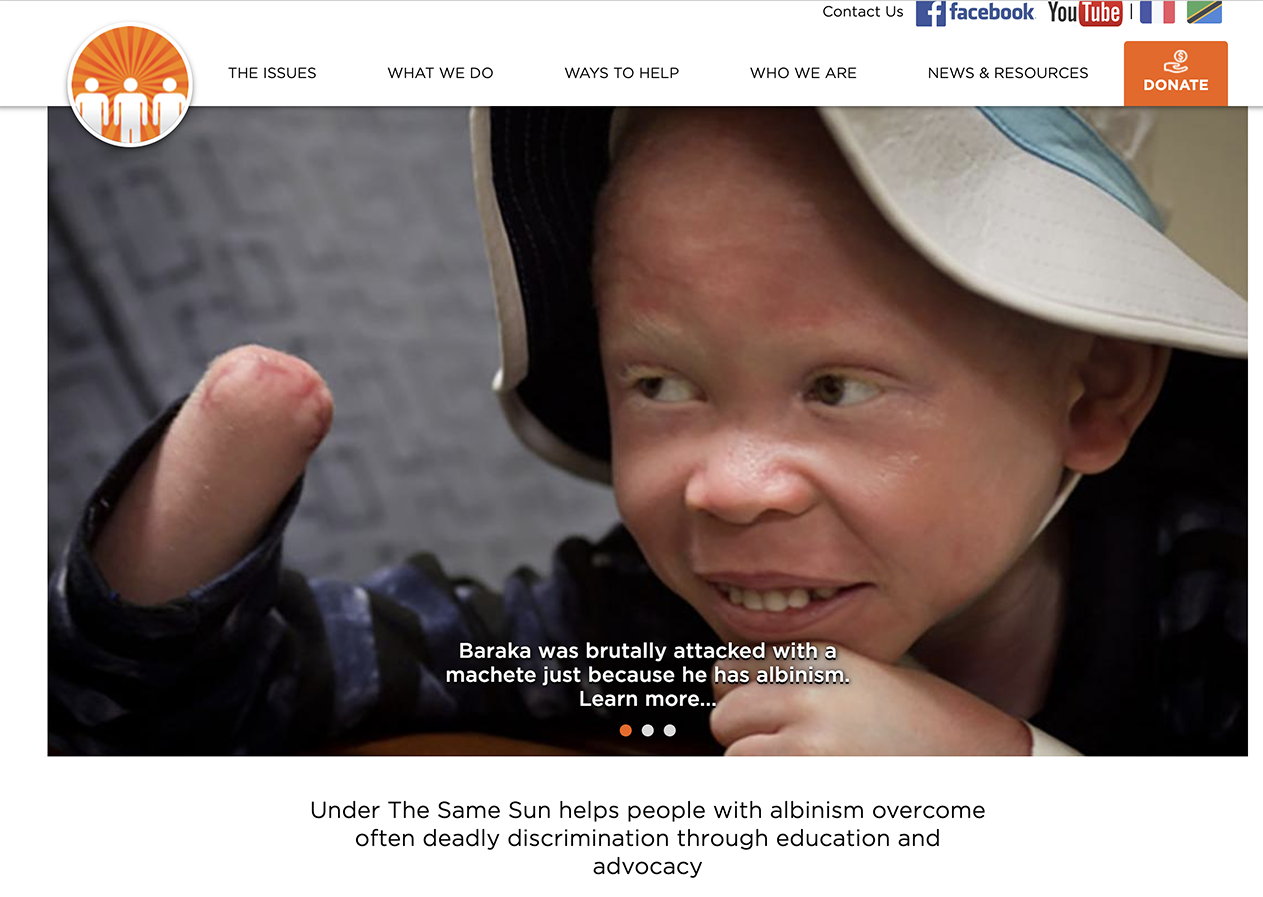
We are joined by Peter Ash, founder and director of Under the Same Sun, a nonprofit dedicated to the education and empowerment of persons with albinism in Africa. Due to superstition-based persecution, the hardships endured by those born with this condition in rural African communities are staggering to list: from abandonment, discrimination and untreated skin cancers to outright murder by one’s own family. Peter felt called to help others with albinism and has dedicated years to growing his efforts in Tanzania. With a systematic, consistent, multi-pronged approach his organization has helped hundreds of youngsters, many survivors of muti violence. Under the Same Sun houses these children and offers them an education, putting them on a path to independence and prosperity.
0:00:00
Ben Radford: Welcome to Squaring the Strange, the podcast that examines all manner of the mysterious and the mundane through a critical lens. So let’s square the strange.
0:00:11
Welcome back to Scoring the Strange. This is episode 197 and I am one of your hosts, Ben Radford. And with me is/are,
Celestia Ward: Celestia Ward and…
Pascual Romero: Pascual Romero.
0:00:52
CW: What have you been up to?
0:00:55
PR: Well, I’ve managed to poke my head out of my engineering hole for a few minutes.
0:01:01
CW: Oh, no, there’s going to be six more weeks of engineering.
0:01:04
PR: Oh, boy, if only. So, yes, as listeners may have noticed, I haven’t been around too much the last few episodes. I have been kind of weighed down with responsibility at work. I’m in charge of two entire states worth of work right now. So I’ve been a little busy, and I continue to be, but it’s starting to ease up a little. I’ve found a rhythm, and I’m starting to find myself with a little bit more free time here and there. Hopefully I’ll be back, you know, just for for topics going forward. So I think we’re kind of seeing the light finally.
0:01:42
CW: Oh, that’s good news.
0:01:44
PR: So, Celestia, what have you been up to?
0:01:46
CW: Oh, I’ve been up to a whole lot. And I want to apologize to patrons who are at the Skepticrate, you know, five dollar episode level. Normally I get the crates out around the 15th or shortly after. They’re a little late this week, but I’m hoping to get them out tomorrow. So you will get Skepticrates. Whenever I’m late with a Skepticrate, usually it’s because I’m including original artwork. So y’all will be getting some original artwork this month. And thank you again for your continued support. If you’re interested in becoming a patron, check us out on Patreon and look for Squaring the Strange and all the different benefits you can get. But one of the reasons I’ve been a little bit behind is because, yeah, my plate has been overloaded. I did do a cool thing yesterday morning. I got up at 6 a.m. and I participated in an online workshop at Iowa State University. It was a virtual pre-symposium event to kick off the R.F. Baker Plant Breeding Symposium, and I was the speaker. What does Celestia know about plant breeding? Not a whole lot, but I asked the participants who had heard of a press release and nobody raised their hand.
0:02:56
BR: Wow.
0:02:57
CW: It was about science communication and interacting with the media. So I do have a lot to say about that. And I have noticed quite a bit of what science does wrong or at least doesn’t get completely right when it comes to communicating with media. So I went over some basics and tried to arm these future scientists or current scientists, really a lot of these grad students who are working on some serious stuff, give them some tips and tricks when it comes to communicating with the media.
0:03:26
PR: So how did they find you?
0:03:27
CW: Well, I wish I could say they were all avid listeners to the podcast, but it was actually Carl Haro Von Mogel, who is a geneticist I’ve known for a while. He reached out to me because earlier this year, I had thrown him a media lead that I came across just randomly. There was an outlet that was looking for a quote from an expert on GMOs. And when I see a request like that, I just, it makes my heart sink. And I’m like, he’s gonna get so many quotes from people who are not necessarily authorities, who are probably saying bad things that aren’t…
0:04:02
BR: Little half-baked.
0:04:03
CW: Yeah, that aren’t warranted about GMOs. So whenever I can throw somebody a legitimate scientist, I try to throw it their way. So I kind of coached Carl about, you know, here’s how you can respond and here’s what you want to say and here’s what you want to offer them. And he said, hey, could you maybe tell some of this stuff to my colleagues at this upcoming symposium? And I said, sure. And then he said, can you get up at six in the morning? And I said, no, but I did anyway.
0:04:30
So that, that was fun. And I hope I can give some more, some more primers on PR 101 for skeptics and scientists in the future.
0:04:38
BR: It’s super important. I mean, that’s one of the, one of the impediments I always see is that there’s lots of great skeptics. There’s lots of great scientists, lots of people doing really wonderful critical thinking work, but they’re not always good speakers. They’re not always able to really communicate and that’s always the gap that exists. And that’s one of the reasons why Carl Sagan and Randi and others were so gifted was bridging the community. So that’s it’s an important role.
0:05:06
CW: Yeah, I think it also underscores how whatever your particular wheelhouse is, if you are a dentist, if you are a PR consultant, there are ways that you can help science and skepticism.
0:05:17
BR: Absolutely.
PR: Yeah, you can start a podcast.
BR: Even us half-baked crackpots can do it. You can do it. Well, on this episode, we’re going to have Peter Ash, and he’s going to be talking about albinism, discrimination in Africa, and witchcraft beliefs.
0:05:31
CW: Yeah, that’s a serious topic we’ve touched on in other episodes, but I’m very glad Peter could join us. And it’s a gripping interview, so hold on to your horses for that. It’s coming up.
0:05:45
PR: So in the meantime, what is in the news?
0:05:47
BR: Well, it’s not news, it’s Netflix, and it’s not quite out yet, but I am, of course, referring to Chupacabra, the Chupacabra film that I think is supposed to premiere on April 7th.
CW: Is it a film or a series?
0:06:01
BR: I believe it’s a film. It may be part of a series.
0:06:04
Yeah, I think it’s a movie.
0:06:07
PR: Yeah, standalone.
0:06:08
BR: And God help us, there’s a whole series of them. But anyway, yeah, so as the resident Chupacabra expert on this podcast anyway, you know, I felt obligated to take a look at it. I could only see the trailer because again, it’s not out yet. But it is interesting. I saw a couple snippets. At one point, there’s a guy who holds up a feather, which is an interesting touch because the feather is actually true to the canon.
0:06:38
CW: That’s an original, like to the Tolentino sighting and everything?
0:06:41
BR: Yes, yeah, it is. Yeah, exactly. Yeah, so in Tolentino’s original sighting, and I won’t go into it because, you know, we’ve only got an hour.
0:06:50
CW: You always say that right before you go into it.
0:06:52
BR: No, no, no, no, no, no, no. People can go, can check out the one or two episodes we’ve already done on it. But yeah, the original sighting, the original eyewitness, Madeline Tolentino in Canovanes, Puerto Rico, described very specifically, she said, either feathers or spikes or feather-like spikes. So yeah, she actually used the word feather. So it’s interesting, sort of, I recognized that immediately that there actually was a connection there. Although, it’s interesting because the chupacabra is not really known to fly. It’s not, I mean, there are a couple depictions that sort of have these bat-like wings, but spoiler, bats don’t have feathers. So there’s that.
0:07:38
CW: The design of this chupacabra is, it really struck me as if the designers from My Little Pony had been asked to concoct a chupacabra. It’s very cute.
PR: It is, it is adorable. That’s for sure.
0:07:51
BR: Yeah, it sort of reminded me sort of a Ewok crossed with a gremlin or something, sort of. And it’s, again, I’ll save this for another episode, but you know, it is interesting to see the sanitized versions, right? So we’ve talked about some on the show before where the original versions of mermaids, for example, or fairies were pretty nasty creatures as we’ve talked about. And over time, they sort of get cute and cuddly. And sure enough, that’s what’s happening with the chupacabra. Originally it was in horror films and a couple comedies, mostly Mexican ones. But now we’re at the point in which Chupacabra is suddenly this cute, cuddly thing that needs to be rescued from from evil, evil pursuers.
0:08:34
CW: Yeah, it definitely has an E.T. vibe to the trailer there. We’ll see what the actual film is like and see, you know, see if it’s worth its salt. But speaking of adorable little chupacabras, have you guys heard of raccoon dogs?
0:08:50
BR: Only in passing.
0:08:53
CW: Okay, well, they are pretty adorable looking, but the reason why I discovered raccoon dogs is because of a news item about COVID and its origins. You guys remember earlier this year, we had a report from the intelligence community that was, it was assessed as low confidence, but it talked about COVID originating from a lab leak.
0:09:15
BR: Yes.
0:09:16
CW: And various public figures grabbed it and held it up saying, see, it was a lab leak. Wuhan is lying to us, blah, blah, blah, blah, blah. So, yeah, something, something Obama’s fault. And I should hasten to point out that many other people stood up and said, hey, do you know what low confidence means?
0:09:35
BR: It’s literally right there in the phrase.
0:09:38
CW: It means the information in the report is not something that you should take as solid proof of anything. So this new information we have, well, it’s also not solid proof because there just kind of isn’t a way to get that at this point in the forensic examinations here. It has COVID linked to something called a raccoon dog, which, man, that sounds like a cryptid, doesn’t it?
0:10:02
PR: It does. It sounds cute though.
0:10:05
CW: Yeah, well, it actually is. You should look them up there. They do kind of look a little bit like the design of the Chupacabra in the Netflix film.
0:10:11
BR: So my understanding, and it’s wrong, is that the raccoon dog was actually created by the Chinese several years ago.
0:10:21
CW: Yes, they put the, they stuffed the COVID into a little barrel on the neck of the raccoon dog, like a St. Bernard, and they put the COVID into it and they let the dogs loose, and that’s how it leaked.
0:10:34
PR: Okay, it was Bill Gates, right?
0:10:35
CW: Yeah, anyway, back to reality here. There were actually five species identified as possible intermediate hosts of the virus that causes COVID. That’s raccoon dog, and these all sound like cryptids to me. Raccoon dog, Malayan porcupine, Amur hedgehog, masked palm civet and hoary bamboo rat.
0:10:58
BR: Wow.
0:10:59
CW: I’m not making this up. This is right out of the news story. The raccoon…
0:11:04
BR: That’s out of a Dickens novel, the hoary raccoon rat and then…
0:11:08
CW: Hoary bamboo rat.
PR: Maybe if they weren’t so hoary it wouldn’t have spread.
BR: Oh, exactly.
CW: Oh, ouch. Now, the raccoon dog, it’s kind of taken the lead here. Its DNA showed up along with SARS-CoV-2 in six samples taken in early 2020 from two stalls at the now infamous wet market in Wuhan. And that makes it a good candidate for what they’re calling an intermediate host means is that it kind of bridges the gap between bats and humans and because there was no strong evidence about a particular candidate to be an intermediate host, that was one of the things that was fueling a lot of speculation about this being a lab leak.
0:11:53
BR: In a sense, yes. I mean, you need to be able to identify the vectors before you can sort of make the connections.
0:11:59
CW: Yes. And the reason why this particular species, the raccoon dog, is a good candidate is because they are susceptible to SARS-CoV-2, the virus that causes COVID, and they can spread it without showing any signs of illness. So while we don’t have absolute confirmation that these particular raccoon dogs had the virus, the fact that they found the DNA of this species in ground zero of the pandemic, where swabs also detected SARS-CoV-2, and they also did, then they didn’t find much human DNA around in the same areas. That coupled with the history of this particular mammal of also being susceptible to SARS during, you know, remember the SARS outbreak back in 2003, it all kind of adds up to pretty good circumstantial evidence.
0:12:46
PR: So why are we just now finding out about this?
0:12:49
CW: Yeah, I’d like to know that too. The articles that I kind of read through said, well, yeah, it looks suspicious that we’re just finding out about it now, but it’s a complicated business doing genetic research and computing and like crunching all the numbers here to get all these different, you know, strains of different DNAs processed. And there’s also involved with how that data is shared and stored and updated. And yeah, scientists quoted in a Nature article recently said that they they wanted China’s CDC to be more transparent sooner rather than later. But they also said that the Chinese researchers, the bottom line is they did what they were supposed to do, and they wouldn’t have this data now if it wasn’t for the Chinese researchers work. So glad to have it. We’ll see how things unfold and whether or not there ends up more confidence in this particular theory as time goes on.
0:13:44
BR: Definitely. So with that, let’s jump into the interview with Peter Ash of Under the Same Sun.
0:13:50
Well, this episode we have a special guest.
0:14:02
He is Peter Ash, founder and director of Under the Same Sun, which is an organization listeners have heard me mention before, sort of in passing. It’s an organization that is dedicated to helping people afflicted with albinism, particularly in Africa. Peter Ash, are you there?
Peter Ash: I am.
0:14:29
CW: Hi, thanks for being with us.
0:14:31
PA: Thanks so much for having me.
BR: So yes, as I was saying off the air, I’ve been a fan of your organization for many years back when I was writing for Discovery News because I tried to blend sort of critical thinking and skepticism and things like that and sort of blend it into science. And I found your organization when I was writing about some killings in Africa and I was like, wow, this is great stuff. So, as I understand it, you yourself have albinism, is that right?
PA: Correct, I have the, yeah, I do have albinism. I was born with a genetically inherited condition.
BR: And you’re in Canada? I’m born and raised in Canada. I was born in Montreal and I’m now living in Vancouver.
BR: So, as a child and teen growing up with that condition, what was it like for you?
PA: I always tell people, for me, I had two experiences, one experience in my home and one experience outside my home. Just for your listeners, albinism is an extremely rare recessively inherited genetic condition that in North America and Europe affects roughly 1 in 18,000 people. So it’s quite rare. So I always tell people unless you know 18,000 people, you probably don’t know somebody with albinism. And so in my home though, mom and dad didn’t have albinism. It’s recessively inherited, so most parents don’t have it, and they’re quite shocked when they have a child that has it. But in my particular case, we have three boys. I’m the youngest of three boys. The oldest boy, my brother Paul, was the first born. He had albinism. The second born, my brother David, didn’t. My parents then thought they were done having children, and I was the third surprise child that they didn’t expect. And much to their surprise, I had albinism, which is extremely rare. Usually it’s a one in four chance with each pregnancy if both parents carry the gene. And so in my home, it was quite normal for me growing up because I had an older brother with albinism. And my parents knew what to do, had figured out a lot of the challenges because there’s eight years difference between me and my oldest brother. So they had kind of eight years of experience dealing with a child with albinism before I ended up on the scene. And so with my brothers and my parents, I was just another kid. I wasn’t really treated any differently. But once I left the home, I faced stigma, name calling, bullying, academic challenges in school due to low vision and a variety of other issues. So it was very two very different worlds for me inside the home and outside the home.
CW: Now, not to jump too far ahead here, but when you founded Under the Same Sun, is your brother involved at all, too, or is it just your enterprise?
0:16:49
CW: In the early days, my brother Paul came with me several times to Tanzania and was involved for a number of years. He continues to be involved as a financial supporter and supports in other ways. He hasn’t been traveling to Africa with me for the last several years. He has other charitable work he’s involved with, but he continues to be a supporter in a variety of ways.
BR: Let me ask you this. I mean, obviously, people of albinism are all over the world, but most of what you focus on is Africa. So what drew you to work in Tanzania and elsewhere?
PA: Well, 14 years ago, I came across an article on the BBC World Service website, and I traveled quite a bit over the years for a variety of reasons. And I was at a point in my life where I was looking to get involved in some kind of development work, or relief work, humanitarian work, if you will. And I came across an article on the BBC World Service website and it talked about a woman who was a BBC journalist. She was the Bureau Chief at that time in Tanzania and she published an article on their webpage that she had encountered stories of children being murdered and mutilated for their body parts in Tanzania. And so she wanted to investigate whether or not this was happening and what the situation was. So she gained a permission from the BBC to do an undercover investigation and she went into Northwest Tanzania and found out that yes, in fact, this was happening and she published the results of her investigation on the BBC website. I saw it, watched it, watched the video, read the article and I was deeply moved that I had to do something, that these were my brothers and sisters, people with the same genetic condition I had and that I couldn’t stand by and do nothing. There’s a quote that says, all that is necessary for evil to prevail is for good men to do nothing. And I decided doing nothing wasn’t an option for me. So this Canadian boy who’d never been to Africa in his life before, didn’t know the culture, didn’t know the language, decided he needed to go to this place called Tanzania. I actually didn’t even know where it was. I had to get a globe out to figure it out. And I told my assistant at the time, book me a ticket to Tanzania. I’m not really sure where that is. Somewhere in Africa, but I’m going there. That’s kind of how it all got started.
0:18:55
CW: Wow. That is not only incredibly empathetic, it is brave.
0:18:59
PA: Well, my wife thought the same thing at the time. I recall the evening that I first saw that article, it was late at night, I was in my home office and I went to bed. I was shifting and I wasn’t sleeping well that night. My wife Debbie in the morning said to me, I noticed you didn’t sleep well last night, what’s up? And I said, well, I told her everything I had found through this article and I’d watched the video Vicky Antetema had captured where a witch doctor promised to obtain the body parts of a person with albinism for her. And I said to my wife, I’m disturbed by this, I’m feeling very called to look at this and it won’t leave me alone. And as things developed, I said to her, you know, I’m gonna go there. And I remember quite half jokingly and half seriously, my wife said, so let me get this straight, they kill people with albinism in this country, right? I said, yeah. And she said, you have albinism, right? And she said, okay, and you’re going to go there, right? She said, okay, just so I’m clear.
BR: Just so we understand the ground rules here.
0:19:54
PA: So she was a little nervous, but she said, if you go to the part of the country where the killings are happening, don’t tell me until you come home, because I don’t want to be anxious about it. So of course I did go to that part of the country and I did tell her when I got home. She knew me well enough to know that’s probably what I would do. I’ve always been a bit of a risk taker so yeah everything went fine and we’ve been there 14 years.
CW: Now as you got your boots on the ground and really learned about what people with albinism face in Africa, what are the specific challenges they’re dealing with beyond the medical ones?
0:20:29
PA: Frankly, the biggest ones are social isolation, stigma, discrimination. In most of sub-Saharan Africa for as long as time records, people with albinism have faced severe isolation and stigma. Traditional beliefs are that persons with albinism, they vary slightly from country to country, but broadly there is a sense that a person with albinism is viewed as a curse to the family and on the family and on the village or community. They are defective, they’re subhuman, they could be an evil spirit, they could be a ghost, or maybe they have an infectious disease, that they’re unintelligent. So pretty much anything negative you could imagine is there.
0:21:10
CW: So being hunted for one’s body parts is just the the top of the pyramid of stigma that these…
PA: Yeah and you know one of the analogies I give people is you know if you had a rabid dog in your backyard that had rabies and this dog was obviously an unhealthy dog that really should be put down because it was a danger to public safety you had this rabid dog in your backyard and your next-door neighbor said I’ll give you a million dollars for that rabid dog. What would you do? And so that’s the best analogy I can come up with for the Western mind. It’s not perfect, but it’s an analogy that, you know, you have a person who’s living in a developing country who’s dealing with poverty. They deeply believe this child is not a normal human being, that this child is going to bring bad luck and, you know, catastrophe on the family or the village and someone comes and offers you money for their body parts to do away with this, right? That’s kind of probably kind of where they’re coming from. So the child born with albinism, there are often, the vast majority of cases, probably 80 or 90 percent, the father leaves the family when the child is born. So most of them are raised by moms, single mothers are fatherless, which has its own set of challenges because then the mother is isolated and she’s viewed negatively in the community by not having a husband. And so the child is raised by a single mother, so there’s economic hardship around that and social stigma. And so the father blames the mother and sometimes accuses her of maybe having relations with a white man or whatever. Of course, what is not known when that happens is that genetically, both parents must always carry the gene for albinism. So both mom and dad carried that gene. So the father is unfairly and unwittingly blaming his wife, right, for this. And so the child’s fatherless, and then from the time they can think, often people are looking at them strangely, pointing at them, snickering, not letting them join community events. Children are often not sent to school because mothers are poor, and or if they do get to go to school in some cases they are bullied and ostracized and teachers sometimes permit and or participate in the ostracization because they are unaware of albinism as well believe all the same cultural myths.
BR: You know it just strikes me talking to you, you sort of put this in context is I recently finished a master’s program in public health and one of my interests and one of the things I pursued in that program was looking at some of the sociocultural aspects of public health and particularly in Africa. And of course, I mean, there are medical conditions all around the world that are stigmatized. You know, epilepsy, HIV, and many others. But of course, in a lot of these cases, the public knows that you’re not born with HIV. You can get it. Some people think it’s communicable through sexual contact. Some people believe it’s a result of a curse, what have you. But the point is that nobody – it’s not something that’s associated and so visible as a person with albinism.
PA: There’s no hiding it when you have albinism, especially when you’re in a very dark-skinned culture. And so we’ve seen a correlation globally because we’ve looked at this issue globally. And there’s a high correlation between cultures where people are dark-skinned or darker-skinned and where lack of education and poverty and superstition reign. So mom and dad are black, they’re dark-skinned, and this child comes out of mom that’s white, whiter than the average white person. And you can imagine the bewilderment in a rural community that doesn’t have an explanation for this. You know, tradition and witchcraft explain it to them as this is a curse, right? And so that’s kind of adopted. They were taught that in school, right? That’s kind of oral tradition. So yeah, the child has no chance of hiding. He has no chance of blending in. I mean, even as a child who’s a Caucasian living in a Caucasian city in Montreal. I mean, I had lots of friends that were from different cultures and different colors, but broadly speaking, I’m living in a Western country, right? And so even as a white person, I had white people staring at me, right? So because I’m too white, right? And so, you know, name calling, pointing the fingers, things like that on the bus or in public. So you stand out in a predominantly Caucasian culture, all the much more so in a culture where, especially in rural areas, you can go hundreds of miles without seeing a white person, right?
BR: Yeah, I was in Mozambique and other places last year, and I remember very clearly it was, it was interesting because I was in Maputo, the capital, and I stood out a bit just because there’s not a whole lot of tourists, but of course, they recognized that I was a foreigner and so on, but I did notice, I think I counted three people of Albanism. Granted, this is a big city, so the fact that I saw three of them is not… big cities, it’s not surprising. And this is just wandering around the city for a couple days. But it was interesting, sort of, I mean, I wasn’t staring, I was just, but I noticed, right? And in the process, I wasn’t so much interested in them, I was interested in the reactions by others. And so I, again, I wasn’t stalking, I wasn’t following, I just happened to be in a park. And it was interesting because in most cases, I mean, nobody, during the few minutes that I was there, no one came up and attacked them, but you wouldn’t have expected that to happen in broad daylight during the time that I was there. But, and so it was interesting because they had, they clearly had… I mean, they were clearly locals.
0:26:42
So people, they lived there, they knew that, you know, this person lives there and so on. So it was this interesting sort of dynamic where they are the other but they’re sort of integrated in a way but they’re never going to pass in the street unnoticed.
PA: No, and you mentioned you’re in a city, I believe. So the situation for people with albinism in large urban centers is often very different than it is for people in rural areas. Almost all of these killings, or 80-90% of them happen in rural areas that are remote. And so a couple of reasons for that. One is in the city, there’s better law enforcement, better access to medical care. Tends to be often maybe a slightly larger middle class and higher levels of education, are people living in cities. So, you know, the cultural beliefs are different. And so, you know, I’ve had this where people say, well, you know, I know I saw I was in Africa, some country, they name a country, and I saw people in the city and they seem to be doing just fine. I don’t see what the problem is. And my first answer to them is, but did you actually sit down and talk to somebody with albinism? Well, no, I just saw them on the street. And my buddy Fred says they’re doing okay. Okay, but fine, your buddy Fred says they’re doing okay, but every time I have sat down and talked to anybody with albinism from anywhere in the world, including Canada, they’re not going around publicly sharing their story, unless you actually sit down and ask them. What’s life like?
BR: Absolutely, sure. And again, I mean, and I knew that going in. I mean, my experience with them was, you know, for 90 seconds sitting in a park. So I was well aware that I was not seeing anything like a representative sample.
PA: And often the persecution and the stigma comes from those closest to you, actually more than strangers. Like strangers might stare at you or make an off-color remark in a market or something, but often the most painful discrimination is from those closest to you which you never have a window into.
0:28:28
CW: Now, as a person with albinism yourself, do you feel like those you’ve interviewed and interacted with in Africa were more able to open up to you and talk about their experiences?
0:28:41
PA: Absolutely. It’s funny. When I first went to Tanzania and even now when I go to a country I haven’t been before, recently in Zambia, at first, most people with albinism in the continent don’t believe I have albinism. They just think, oh, you’re just a white guy, for a couple of reasons. One is they look at me and they look at another white guy with maybe blonde hair and at first blush, they don’t see a big difference. You know, I’m from Canada, I speak English, so that equals white guy, right? And so I have to convince them I have albinism because they also believe that it’s only an African thing or maybe it’s only a Tanzanian or a Zambian thing. Again, myths are that this is a curse on our village or a curse on our country. And so they don’t understand it’s a genetically inherited condition that exists in every race of people everywhere in the world. In fact, it’s one of the few, if not the only genetic condition that exists in every species of animal and plant as well. And so, you explain this to them and a lot of the stigma goes away, but it takes a while for me to actually convince them I have albinism. Once they understand I do, interestingly enough, the walls fall really quick. Once they really get it that I have albinism, and we have a map that we show them called albinism around the world, and it depicts people from China, from India, from Europe, from New Zealand, from everywhere, from China with albinism, and you’ll see the facial features of that ethnic group, but they’re all white in color, right? And so once we show them that, you can see their eyes just opening up and they understand that albinism is like a genetic thing that’s not an African thing, that’s not a Tanzanian thing, and there’s no reason to be stigmatized about it. And once they get that, then all of a sudden they do start opening up to me in ways they haven’t opened up before.
0:30:22
CW: That’s powerful. I’d imagine that that is quite a moving moment for somebody who’s had such a cloistered experience.
0:30:29
PA: Yeah, we have quite a big albinism community. While we all have different experiences, and African with albinism has a different experience than I do, there are some common denominators, right? The notion of being classified as the other, the gravity and the consequence of discrimination isn’t fatal for most people with albinism in the Western context. You know, it’s stigma and discrimination, or maybe some name-calling, but it’s not and challenges maybe in school because of vision, etc. But they’re not going to be killed usually, right? But nonetheless, the common denominator is being viewed as the other, as different, as you know, not acceptable. And so we all have that feeling in common. So when I’m able to talk to the kids, you know, we have hundreds of kids in our program, I can tell them about some of the stuff I went through in school, and I can relate to where they’re coming from.
0:31:13
CW: Now you’ve done an excellent job painting a picture here, a very grim picture with broad strokes. To help us kind of put some faces on these statistics, can you maybe give us some examples of cases you’re personally aware of or were involved with?
0:31:28
PA: Oh yeah, I mean, it could go on for days, but right now in Tanzania, we have 250 students in our education program. We call it our Learning and Career Advancement Program. So what Under the Same Sun does in that country is we have an education program where we take students with albinism from kindergarten all the way through university who often were not attending school at all or if they were attending they were going to an overcrowded school for the blind, but they weren’t learning anything at government school, and we place them in high-quality private English immersion schools to get the best education that we can possibly find in the country for them. And they get health care, they get residential care because they’re staying in dorms. We become their parents. Many, most of them are effectively orphans. And UTSS effectively becomes their parents. We care for them in every way. Those students, I’ll give you an illustration. I’ll tell you a story about a boy named Minyasi. On my very first trip to Tanzania in 2008, I went up to northwest Tanzania and the city was Wanza in the lake zone near the Lake Victoria. And that’s the epicenter of these killings in those days in Tanzania. I went and the first family I visited, they were about an hour out of the city in a rural area and I went and visited the family and it was a matter of a couple of weeks before the daughter, the young child, Miriam, had been murdered. She had albinism, men had broken into the house in the middle of the night, a very humble little home, brick home with a thatched roof, no running water, no electricity in the rural area. And I’m visiting there and I’m talking to the family and I found, I got a tour of the place and the mom and the grandpa are telling me what happened about how men broke in in the middle of the night, it was like dark. They knew where the child was sleeping, they knew where Miriam was sleeping. She was in a building with two of her other siblings. One had albinism, her older brother and then the oldest sister didn’t have albinism and they were all sleeping in this building together adjacent to where the parents were sleeping and she was murdered. She was dismembered in her sleep and I saw the blood on the ground still underneath her bed.
0:33:50
CW: Oh man.
0:33:51
PA: It was stained and I saw photographs, I have the photographs to this day of her dismembered remains and it was horrific. I will spare you the details but it was, I’m sadly since then seen too many pictures like this from too many countries. I have a catalog of such gruesome pictures. And I saw what happened, heard the story, and she was, her throat was slit, and they took her, put her blood into a cooking pot, and they took all of her body parts away, and they left her torso. Additional horror that occurred was that her two siblings, as I said, were present. Her brother, Minyasi, who also had albinism, was a few years older, hid underneath his bed being afraid, of course, that they would find him and do the same thing to him because he heard what was going on. And then the oldest sister, she was also in shock, Amindi, and she was old enough to really understand what was going on in a bigger way and she saw the aftermath after this had all taken place. And we immediately, once we started our education program, we took those two kids, Amindi, who doesn’t have albinism, and Minyasi, and put them in our education program. They weren’t attending school at the time. And they’ve been through our program. They’re now into university. And Minyasi is an example of a child who, though traumatized, is academically very, very bright. He’s one of our better students. He’s heading into university, and so we believe he has a bright future. He’s looking at business as a possibility. He’s played with a few careers, so we’re not really sure where he’s going to end up, but we know he’ll do well. His sister, Amindi, who doesn’t have albinism, normally we only put kids with albinism in our program, but we put her in there because the killers at that time were uncaught, the attackers, and they would have motivation to do away with her because she was an eyewitness. So we put her in our education program and these schools that we use, we make sure they’re secure with fences and guards and so the kids are safe. And the rule of our kids with albinism can never leave the school compounds unattended without adult supervision. So yeah, that’s kind of, but you know, the real joy of seeing Minyasi, he’s a happy kid, he smiles. Frankly, the trauma’s been harder on Mindy because she was older. I think she remembers more of it. It’s been hard on all of them, but Mindy feels it more and talks about it more, but she’s going into social work. She’s taking a social work degree right now. So the employment rate among our graduates is very high, like over 80%.
0:36:24
CW: Do you know if that young man and young woman intend to stay in that region or are they looking?
0:36:31
PA: They’re going to school out of the region and a lot will depend on the region is big enough that they’re in areas where the attacks for one thing the attacks have massively reduced, number two the attacks tend to happen in rural villages and the schools universities and stuff are in bigger cities, right? So general rule of thumb is big city safer, right? This because it’s harder to get access to you around other people, you’re living in a dorm. These crimes are easier to perpetrate when there’s isolation and there’s no police or no other people immediately around and or the superstitions are more powerful and the presence of witchcraft, witch doctors is greater in rural villages.
CW: So with the education you’re giving these kids a much better chance at mobility and being able to make a career.
PA: Absolutely, and most of them are going to end up working in cities. That’s fantastic. Yeah, and they’re going to be in much safer environments. Nonetheless, even people of albinism, even some of our staff over the years of albinism, they’re on edge a little bit about taking the bus home late at night, even in Dar es Salaam, which is the biggest city. The thing that people forget is that the vast majority of people of albinism in Tanzania have never been attacked physically, but all of them live with the trauma of the attacks because it’s a small community and they all know somebody who knows somebody who’s killed or attacked or lost a limb. And so as soon as another attack hits the media, all of our students are on edge, even though they’re quite safe where they are. You know, and again, the analogy would be, if you have brown hair and all of a sudden there’s a killing spree in your suburb of people killing women with brown hair at this age. Well, if you’re a woman with brown hair at that age, you don’t walk home quite the same way.
BR: So what, if anything, are the Tanzanian and other authorities doing about this? I mean, as you said, I mean, it’s, you know, obviously in bigger cities, there’s more infrastructure, there’s more money for police and so on, but in these rural communities, I mean, surely, under the same sun, are not the only organizations and NGOs that are trying to solve the matter. I mean, what are they doing?
PA: The government hasn’t done a lot. They’ve done some things. One thing they’ve done is they haven’t interfered with our good works. They haven’t stopped our, if there was a point where they’re doing so little, all I could really say when people asked me that question was they’re not stopping me from doing something. I could give them that.
BR: At least they’re not preventing you from doing good work. Wow, that’s a low bar.
0:38:51
PA: It’s very much dependent on who’s in power at the time. Don’t forget this belief system in witchcraft. Very wealthy and powerful people deeply believe in this. And we know that the purchase of these body parts are very expensive. So they can be thousands of dollars for an arm or a leg on the black market.
0:39:11
CW: I had a question about the black market. We’ve encountered in the things we’ve researched, there are people in India who will sell their own kidneys for the price that can be fetched on the black market and it ensures their prosperity for years and years. Knowing that albino body parts can fetch more than a few years average salary, have you encountered persons with themselves who are willingly engaged and maybe trade away a finger or a toe.
PA: No.
CW: Or they just don’t have that kind of agency.
CW: We just haven’t seen that.
0:39:44
For one thing, you know, having your kidney surgically removed and being able to successfully survive without another is very different than chopping off your arm. The odds are high you’ll bleed to death, right? It’s difficult to do upon a practical level. Secondly, I think what’s different is that the person who chooses to give away their kidney is not born with a message as early as they could think that someone’s out to get them and kill them and they are useless. So they have a normal life, right? A person chooses to give away their kidney and they’re poor. So people do all kinds of strange things when they’re poor, that’s fair. But where it’s not at all analogous is that the person with albinism has been born and raised to believe they are defective and the world is out to get them. And so they are protective and defensive. What is true though is that siblings or parents or extended family, the vast majority of the time, immediate or extended family are involved in these attacks. It’s not just random strangers because they got to know where that kid lives, they got to know which bed he’s in, they got to know his routine. And so we have, from all the interviews and research we’ve done, the vast majority of cases, either close friends or family members were often directly or indirectly involved in the attack, often getting a piece of the financial action for giving access to the child. Even parents, fathers especially, have actually sold their own children or arranged things so the child will be left exposed so that the killer can come in and do his thing.
CW: How do you feel safe ever?
PA: Yeah, so and your own family is the one that’s… so the level of trauma, I mean to this day when I go and see our kids, almost all of them call me father. And that’s because I’ve known them for 14 years, I’ve seen them grow up and they are almost all fatherless. And then also just the idea of an adult being kind and gracious to them and caring for them and protecting them is foreign to them, right? And so, and they, even though sometimes one or both their parents might still be alive in a number of cases, they are effectively orphaned, not in all cases, but in a number of cases. So, yeah, it’s a difficult situation. And I don’t, I have had heard stories where a parent will shave the head of a child and sell the hair. But again, the child’s not thrilled about it. What control does he have? The mom’s shaving his hair and selling the hair, right?
0:42:11
CW: You’re making me have to take a moment here before I collect my thoughts and do another question, but I did want to ask you, you said in terms of publicity of these murders, it unnerves everyone with albinism to hear about another killing or attack on these children or young people. But publicity and PR has been a big aspect of your education. Can you tell me how you thread that needle and how you’ve gotten the word out about these attacks and how that has helped?
0:42:46
PA: Well there’s 2 sorts of PR, there’s sort of international PR, you know, where it’s chiefly aimed at non-African countries. In the early days, when this issue was new, we had lots of attention. The Western news cycle is very temperamental. You know, you’re in or you’re out, right? And so we had a few years where we had lots of attention. You know, I was interviewed by all the big news outlets, New York Times, you know, BBC, ABC, whatever, you know, Al Jazeera. And in those days that helped us develop our, people becoming aware of us and gained supporters in the Western world to do our work. So we’re thankful for that. The advocacy that makes the biggest difference is the stuff that’s African based, right? Because that’s the stuff that works on the ground. And a lot of our budget, about half of our budget for the first 12 years was spent really in the area of local advocacy in Tanzania. So that included mass campaigns in the villages where we would produce the documentary, we would screen the documentary about albinism and the myths associated with it, we would do awareness-raising campaigns where we’d have kind of talks that included entertainment. And so that advocacy program, we had mass TV campaigns, radio campaigns, newspaper campaigns, we have great relationships with some of the private media, and we really hammered the country for about a decade, persistently, getting rid of the falsehoods and false beliefs and putting out the truth. And it has made a huge difference. The number of attacks and killings have massively reduced, dropped by like 90%.
0:44:17
CW: That is hopeful.
0:44:19
PA: Yeah. So, you know, talking about it, and frankly, as we produce more and more graduates of our program, they become the advocacy. So now you have a highly educated, successful, well-spoken, healthy person who is now you go to the bank and your banker has albinism or you go to school, you send your kid to school and his school teacher has albinism. That was unheard of. When I went to Tanzania, finding anybody with a university education who had albinism was extremely rare. And now we’ve produced hundreds of those, right? And so, and who are in all walks of life, business, government, you name it, the NGOs, religious organizations. So I think the people of albinism themselves who are successful become the grassroots advocacy. They become the ambassadors, right? Because it’s harder for you to believe that a person with albinism is a curse or is stupid or is a thing or is a ghost when he’s your kid’s school teacher.
0:45:13
BR: Right, humanizes.
0:45:14
PA: Right. That was my vision from day one. I believed that education would be the solution.
CW: The strategy behind your efforts is breathtaking. It works. It sounds like Under the Same Sun has made a tremendous difference by applying resources so strategically that it saves lives and changes minds on a wide, wide basis.
0:45:40
PA: I’m a guy with a business background, so I’m very much interested in getting clear. I’m a big fan of Jim Collins’ book called Good to Great. He analyzes great organizations and why they succeed.
0:45:49
One of the things great organizations do is they get really clear about what they’re the best in the world at, and they’re really clear about what they won’t do. And success often comes in saying no to a lot of things and yes to a couple of things. And so I decided early on that we were not going to be a medical NGO as worthy as that is, we weren’t going to be a social services NGO as worthy as that is, that we were going to be focused on advocacy and education. Because I believed the problem – skin cancer kills tens of thousands of people with albinism. It’s a noble cause to treat skin cancer. That wasn’t what I was going to do. Because why are people dying of skin cancer? Why are kids with albinism not going to school? What’s the root cause? The root cause is stigma and discrimination. The doctors won’t treat them, the school teachers won’t care for them. Why? Because they believe they’re not human. So you have to get to the root cause of all of these problems. These are all symptoms of a bigger cause, which is stigma and discrimination. And I believed that the only way to really end that was to show people that all the false beliefs they had about people with albinism were untrue. And the way to do that was to educate the public, A, and people with albinism themselves, B, right? So we put all of our efforts and all of our resources, you know, for the last 14 years into that singular cause. And I’ve said no to so many other, even grants at times, to do other worthy things. And I’ve kept singularly focused on that.
BR: So, Peter, you mentioned that you, that unfortunately, Under the Same Sun is getting nominal support from the government. What about, what about looking at it through medical or public health lenses, right? Because that’s part of my background. And obviously, part of public health is information, getting stuff out there and fighting myths about AIDS or epilepsy or what have you. And again, I know that you just said that you specifically don’t focus on the medical side of things. But at the same time, there are medical doctors in Tanzania and elsewhere in sub-Saharan Africa. And ostensibly, that’s part of their job. Part of their job is to treat patients, whether they have albinism or not, and try and help them out as best they can, and regardless of their personal beliefs in magic and witchcraft. How does that enter all this?
PA: And to be clear, when I say we don’t get involved in medical, what I mean is we don’t set up hospitals and treatment clinics, right, to render medical aid. What we do, though, our education advocacy program includes medical professionals. So when we go into a community and we have a public seminar over the years, we would make sure all the key stakeholders are there. So we’d have social workers, school teachers, community leaders, religious leaders, doctors, nurses, so anybody who would potentially have significant contact with people with albinism would make a difference in their care. And so we would educate them. What are some of the beliefs you have about albinism? We would openly just tell them to share what they believe. And all the myths that we know exist, they would openly share. And I’d say to them, and I remember at one time I was in a rural area and I was at a medical clinic with doctors and nurses and I said, how many of you have heard that people with albinism don’t die a natural death, they just disappear? That’s a common myth in a number of countries, certainly in Tanzania it is. And the majority of them raise their hand. So these are college and university educated people in the medical profession who believe this, right? And so I would then say that’s not true. And I’ll say, why do you believe that? I know the answer they’re going to give me is we’ve never been to a funeral to a person with albinism. So therefore, we have no reason to believe they die of natural cause. And I’ll say, you know why there’s never a funeral? And they’ll look at me with a blank stare and I’ll say, because when they die, they’re buried secretly, often by the family, so that their body parts won’t be exhumed from the grave. And that’s often why the burials are secret and/or they’re kidnapped. And so it is true they, quote, disappear, close quote, in that they left the village and never came back, right? So it’s true they disappeared. It’s not true that they went up to the sky and vanished. So there’s a variety of beliefs about it and reasons for the beliefs, but I would say education of the medical profession is a big part of what we do. And what’s really positive is that with our public education activities in general in Tanzania and across the continent in general, we find a lot of these stigmas and beliefs and false myths, they vanish pretty quickly. Like once you tell people the truth, especially if you have people with albinism from the area who are educated and well presented sharing the information. Because then how do they argue with that? Like you’ve got a university educated staff member whose skin is clear, they don’t have skin cancer because they’ve been taking care of their skin, protecting themselves, they’re well spoken in the local language, they’re going to college or they have gone to college and all of a sudden this person is looking at this because the normal vision of albinism they had was a person who looked sickly, who was begging on the side of the road and was dying prematurely. So you can see how that reinforces the belief set, right? People with albinism, you know, they’re kind of substandard. And they would see someone covered with skin cancer and they would say, well, that’s just how they are, would be the phrase we’d hear. They believe to have albinism was to look that way all the time, inherently, right? What they don’t understand is the only reason they look that way is because they haven’t protected themselves from sun exposure and they’ve developed skin cancer. That’s not how they are, right? It’s how they’ve become because of how they’ve been treated. So when you give them a different vision of albinism, including the medical community, that does fall away. So in answer to your question, it’s gotten better. As public education’s gotten better, medical treatment’s gotten better than it used to be. And again, more so in bigger cities and in smaller towns. But broadly speaking, it’s improved.
BR: And how do you navigate the sometimes porous field between traditional healers and what might be called Western or science-based medicine, right?
0:51:32
PA: It’s a difficult one.
BR: Well, yeah, I mean, that’s one of the things I find an interesting question in this, because there’s this inherent tension, right? Because on one hand, you have which doctors and traditional healers who, in some cases, that’s all they have. I mean, in rural Tanzania and Malawi and Mozambique, you can’t say, why don’t you go to the hospital? There is no hospital or it’s a two-day bus ride away. So they have to rely on the local resources. Unfortunately, sometimes, I don’t know, oftentimes maybe, those local resources themselves believe in Muti.
0:52:07
How do you navigate that?
PA: Yeah, they do. And it’s very, very common. Some traditional healers just practice what we might call herbal medicine. But the vast majority blend that with the practice of witchcraft to various degrees. You know, and one thing that I think has been a help to me is my background is theological. So I have a theological degree and a counseling psychology degree. And because of that, I understand witchcraft. I understand it theologically. I understand it conceptually and philosophically. I understand the belief set and why it is the way it is. And I come from a Judeo-Christian perspective. And so as a result, that’s been a huge asset to me because Africa is a very spiritual continent. People can not like that. They can disagree with that. They can feel all kinds of ways about it. But that’s just the way it is, period. And if you try to do work in that continent and don’t accept the spiritual, you won’t get very far. And so I understand witchcraft and its effects on people. And so I can address things at a spiritual level with people. And you have to remember, in many of these communities, people have another religious background beyond listening to the witch doctor. That’s part of their world tradition. But many of them are going to go to church on Sunday and see the witch doctor on Monday, right? And so I’m able to say to them, you know, your Christian faith says that the practice of witchcraft is forbidden. It’s wrong. It’s harmful. It’s evil. And they listen to me when I say that. And so that has been a tremendous asset to me, to talk about kindness and grace and healing and protection, Christian values. And that has been a tool for me to be able to address, because if I just talk to them about science all day long, I’m going to get a blank stare from a lot of those people. That’s not a frame of reference that controls their worldview. They have a spiritual worldview, right? And so because I do as well, it gives me a basis upon which to connect. And that has been a huge bridge. In fact, we found sometimes that getting church leaders behind us has been a huge help to to helping the people accept what we’re saying, you know, and change their attitude. But, you know, God says we’re supposed to love everybody and treat them all with dignity and kindness and respect, right, and they can buy into that value set, which can motivate them to stop being harmful and discriminatory, right. So, you know, I found that that’s way more effective than trying to give them a detailed genetics lesson in the village. That’s been my experience.
BR: One of the things that jumped out at me in looking at this topic is that, as you pointed out, oftentimes the anti-witch beliefs are rooted in the Catholic Church, right? I mean, thou shalt not suffer witchcraft. Concerns about magic and witchcraft are prevalent in theology, certainly Christian theology. So how do you – you sort of touched on this but how do you reconcile that, right? How do you – not you personally but I mean you have Catholic churches and other religious organizations which in many cases are doing wonderful work around the world and including in Africa. And yet on Sunday, they talk about the evils of witchcraft and that blends in with these sorts of attacks?
PA: Well, I mean, that’s a big question that could take an hour just on that question. But what I would say is I have spoken in many churches in Tanzania, many denominations. That was one of my careers. I was a minister for a decade. And I am clear, because I have a Christian worldview, that I believe the Bible to be true. I do tell people that. Having said that, it’s not my understanding that we’re to harm anyone. So what I say is the belief and practice of witchcraft is forbidden in the Scripture. I’m not calling for vigilante justice against the practitioners of witchcraft. What I’m trying to tell the members of the church is don’t go to those people. Don’t consult those people because we see the harm that they’re creating in this country. We see I have living proof of children without arms because of what those people are doing. And so I educate people about the dangers of this, which they all too well see and that they shouldn’t be putting their faith in these people without encouraging them to be harmful or violent toward those people in any way. So I think people can make the distinction that it’s a belief set we’re dealing with more than it is anything else.
BR: No, that’s a fair answer. It was just a nuance that I thought was worth asking.
PA: And sadly, of course, there are some people, there’s no shortage of crazy people in the world. There are some cases in certain contexts where I’ve heard of people going and killing witches, you know, and of course that’s not what we’re endorsing or calling for at all. So I can’t answer for the behavior of everybody who claims to be a Christian. I’m not even going to try to go down that road. All I can do is answer for myself and my understanding.
0:56:46
CW: Well, Under the Same Sun is technically a faith-based organization, correct?
PA: We are, yes.
CW: People probably wouldn’t expect to hear us interview a faith-based organization leader at Squaring the Strange. We’re very hard science on a lot of our applications, but I think you’ve given some great examples on how you kind of bring a multi-pronged approach here. You’re talking theology, you’re talking PR and public relations and education.
0:57:11
PA: We’re not opposed to science, we’re very pro-science. When I have an opportunity, I’m educating kids about genetics and genetic inheritance and a lot of the early founders of modern science were people who had a belief in God in the Western world. So that’s just a historical fact. So I’m always basically – exactly, I like your point, it’s a multi-pronged approach and that’s why we try and use science and we also use our worldview. We try and work all that together, which fortuitously works well in this continent, right?
BR: So in terms of the politics, I mean, obviously any NGOs, including yours, need to work within the framework. As you mentioned, the local government and governments change, ministers come and go. It’s got to be very challenging to try and implement these programs and try to, you know, these public awareness campaigns and all these sorts of things amid changing regimes and politics and things like that. What’s it like trying to navigate the politics and what sort of enemies have you made in the process?
0:58:14
PA: Yeah, you know, the enemies come and go as administrations come and go. The bigger issue is that many people who use the services of witch doctors are politicians because when you’re spending $3,000 or $4,000 or $5,000 for a body part, the average family in Tanzania doesn’t have that kind of money. So there’s only a small group of people who can even afford that. And those people are usually politicians or wealthy business people. So we know that some of the people buying these very body parts are actually politicians. We know that politicians in the run-up to elections visit these witch doctors to get blessings or voodoo or muti for their election campaign. So the challenge we have is we’re telling these politicians this has got to stop, but yet they’re using these bushwalkers, right? So the very people we’re looking to for the solution are a part of the problem. So which is why early on I decided we wouldn’t hitch our wagon to them too much. We would operate as independently from the government as we could. We would gain their buy-in whenever we could. We would try, but we didn’t spend a lot of our – my first year or two, I spent a lot of time trying to convince the government to help us, and I quickly realized this was – I was spinning my wheels. They would, at best, nod and smile sweetly and say yes and then do nothing. And so I thought, you know what, we’re going to make a difference on the ground. We’re just going to go and do our thing, educating people of albinism, putting them in school, doing public awareness campaigns, and if they don’t stop us, we’ll just keep doing it. And I realized that the high-level advocacy had some value, but the more immediate change was brought about at the grassroots. And so what we did start doing, I didn’t talk about this, we started working at the Human Rights Council. We were very active a number of years ago on this issue. When I first went there with colleagues of ours, Eyeke who works with me and she was the independent expert for the human rights of people of albinism, we worked with the UN and got several resolutions passed through the Human Rights Council. One was that they established a study to be done on the issue. Then we had International Albinism Awareness Day, which is a UN-sanctioned international day, June 13th every year. We got that through. We have also gotten to appoint an independent expert or sometimes called a special rapporteur on the human rights of persons with albinism. As it turned out, the first person appointed that role was an employee of our organization, a woman with albinism from Nigeria who’s a Canadian now and so we’ve been very active UN the reason we use the UN was they have the power to put external pressure on the national governments and so because a lot of these governments are dependent on Western funding aid funding, etc. They don’t like Western countries taking a dim view of them and their human rights records. They’re very pragmatic about it, right? So they last thing they want is Canada the US or the UK or the EU to come by and say, look, unless you deal with this human rights thing with people of albinism, we have second thoughts about funding you. They don’t want to hear that, right? And they don’t want to have and be looked at negatively and they’re very ego sensitive, right? The leaders of these countries. So, I want to kind of did an end run and went above them in a sense to the UN. Now, the UN can’t force them to do anything, right?
1:01:09
They can make recommendations, but it’s more of a peer pressure kind of thing.
CW: I’d imagine it also affects, I mean, if you publicize these beliefs and the attacks, I’d imagine it has an effect on dollars that come in for tourism and people visiting.
PA: At least it creates that fear.
CW: Well, fear of losing money can be a powerful thing. Well, thank you so much for sharing your time with us, which is obviously very valuable. You’ve got a lot going on, Peter. How can our listeners learn more about Under the Same Sun and help?
1:01:42
PA: Best way is to go to our website, underthesamesun.com. That’s underthesamesun.com, just how it sounds. Check it out. We’ve got all kinds of resources there. Our Facebook page is pretty active as well, Under the Same Sun on Facebook. Take a look. Really, the more people we have, as you know, our cause is unique. Albinism is not a common condition. Many people don’t know much about it in the Western world. So go and educate yourself. Take a look. If you care at all about human rights or the human rights of children or people who are vulnerable, I think you’ll find it interesting. Maybe once you go there and find information, spread it to your friends and family. Share it on your Facebook page or social media. We need supporters and we are a non-profit organization that exists entirely on the generosity and kindness of our donors from around the world. And so anything somebody can do, one thing I should say is that every dollar that’s given, it goes directly to Tanzania. None of it’s spent on administration or oversight. It goes directly to our education programs in Tanzania and the rest of Africa. So yeah, we appreciate that, your support and your standing behind us in that way would be a tremendous value.
1:02:45
CW: Fantastic, well, we wish you the best in your efforts and thank you for sharing some of your thoughts and your time with us.
1:02:51
PA: Thank you very much.
1:02:53
CW: Well, that was really wonderful of Peter to share some of his time with us. And, you know, it’s uplifting hearing about the efforts that he’s put in and how you’re really able to measure the results of how things improve because of that.
1:03:21
BR: Absolutely. Yeah. I mean, it’s just between he and Leo Igwe and others doing great work in Africa. So I just hats off to them.
1:03:30
CW: Yes. And what do we have on the burner for next episode?
1:03:34
BR: So next time I thought we would do something on rabbits.
1:03:39
CW: Oh, the possibilities are multiplying before my eyes.
1:03:44
BR: Yes, yes.
1:03:45
CW: Folklore involving rabbits.
1:03:48
BR: Yeah, you know, I guess it’s tied in with Easter.
1:03:51
CW: Oh yeah, oh yeah, it’s Easter too. Yes. Easter’s coming up, isn’t it? What a coincidence, it’s almost like we planned it.
1:03:56
BR: What? You think people, we planned this out?
1:04:00
PR: I’ve been winging it for five years.
1:04:05
CW: Well, there’s lots we can talk about that fits into the category of strange when it comes to rabbits. So we will be getting into that next episode and join us. Until then everybody, take care.
We would like to extend heartfelt thanks to our top-tier, sponsor-level patrons. Amy Frusciauer-Kelley, Dr. Angela Matkey, Elizabeth Leggett, and Laura Ellis. Thank you for your continued support of our podcast. If you’re interested in becoming a sponsor, or just throwing us a buck or two, please visit Squaring the Strange on Patreon.com and browse our selection of patron rewards. Every bit helps us keep the lights on here and we are grateful to our generous friends who help us bring you quality content. If you are short on cash and want to just give us moral support, remember to recommend us to a friend, mention us on social media, or give us a review on your favorite podcast dispenser. If you have comments or topics you’d like to see covered, come join our community on the Squaring the Strange is a production of Two Heads Studio, LLC. Copyright 2021. Theme music provided by Shriek Back. Additional music by Memory, Keytard and Feathered, and Pastoral Romero. Additional support by Ashley Romero, Robert Sundin, and Alicia Jarvis. The views and opinions expressed on this podcast are those of Squaring the Strange and do not necessarily reflect the views and opinions of Two Heads Studio, Kronos Creative, Center for Inquiry, our advertisers, or any other affiliated Kronos Creative, Center for Inquiry, our advertisers, or any other affiliated organizations and employers.
