
Episode Summary:
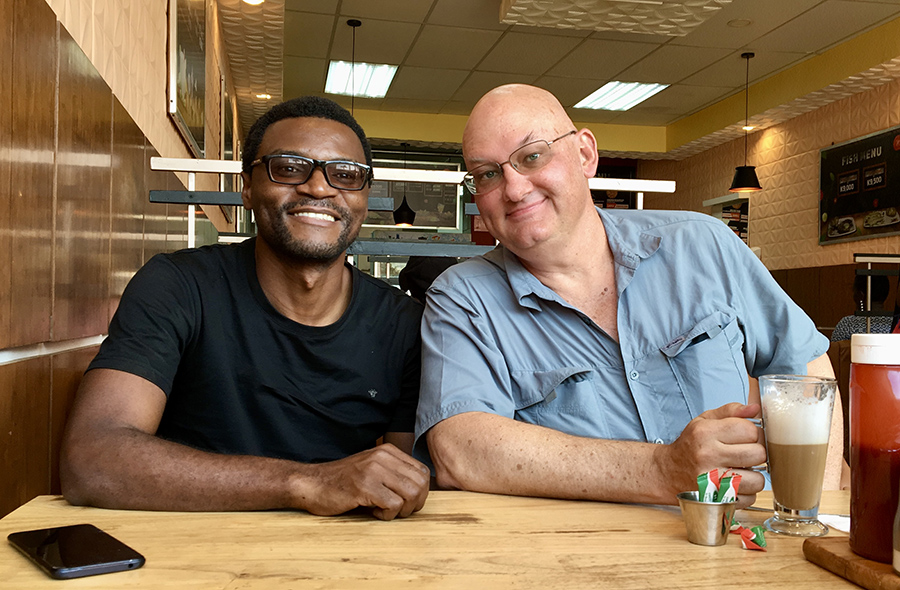
We were inundated with news this week, so first we cover prehistoric bugs in Arkansas, the Desert Monkey King glyph in Southwest Las Vegas, the folkloric accuracies in Netflix’s “Troll” movie, a new report on Havana Syndrome, and alleged gas poisonings of schoolgirls in Iran. Then Ben recounts his time late last year in Malawi, where he was able to spend time with an activist and reporter covering the latest case of witchcraft persecution and lend some moral support to those on the front lines defending people accused of witchcraft.
0:00:00
Ben Radford: Welcome to Squaring the Strange, the podcast that examines all manner of the mysterious and the mundane through a critical lens. So let’s square the strange.
0:00:10
BR: Welcome back to Scoring the Strange. This is episode 196 and I’m one of your co-hosts, Ben Radford. And with me is…
Celestia Ward: Hi, I’m the other co-host, Celestia Ward. Pascual is still busy with stuff, but he will be back eventually. We’ve got a lot going on this episode, Ben.
BR: A lot going on. You know, the world does not stop or even slow down in the slightest for skeptical weirdness and unfortunately analysis.
CW: Yeah, and we had sort of planned for a while that we were going to do a two-parter, which this is technically the first part of. So for our main segment later this episode, we will be talking to… Ben Radford. Hey, you’re right here. We can talk to you as much as we want. But specifically about your travels recently in Africa and a little side jaunt you took to Malawi to get some boots on the ground perspective in terms of the impact of alleged witch accusations.
0:01:35
BR: Yes, absolutely. So looking forward to digging into that.
0:01:39
CW: Yes, and for part two of this two-parter We’ll be talking to Peter Ash who is founder of under the same Sun an organization That helps save the lives of children with albinism and it’s making some real difference I mean definitely tune in in two weeks for that episode. But for this one before we get to your travel experience has been we have got a whole bunch of stuff. The news went sideways, silly, every which way, and I’m not even talking politics. I’m talking we have a lot of stuff on our little current events list here.
BR: Absolutely, but in terms of the housekeeping before we get to the news, I want to let everybody know, and this ties in with this episode and the next one, Leo Igwe, Dr. Leo Igwe, our friend and tireless advocate in Nigeria, has a new website up. And that is actually thanks to a listener and skeptic friend, Klaus Larson.
0:02:34
CW: Thank you, Claus.
0:02:35
BR: Thanks, Claus. Leo’s new website is www.critthink.africa. That’s C-R-I-T-T-H-I-N-K.africa. It’s still in development, but you can check out some of Leo’s work there, and of course, particularly his organization, Advocacy for Alleged Witches.
0:02:52
CW: And Ben, I know you don’t know how to make a website, but you’re helping Leo in another way. What have you got going on?
0:02:57
BR: Yes, I thought in order to help Leo out, we would create a fundraiser. So I think we did this once before a couple of years back, but I’m doing it again, damn it. And it is a fundraiser for Leo’s organization, again, Advocacy for Alleged Witches, and we have some cool stuff for auction and raffle. So we have some signed books by me and other people, some prints by Coral Pollack, delightful artist up in Winnipeg, and others as well. So you can check out our Square Enigma Exchange Facebook page, and also check out eBay where I’m going to have about a dozen items listed. The seller is Ben102, B-E-N-1-O-2, and the auctions will start going live on March 7th. They’ll be going for about a week, so check out those auctions and again, if you’re on our Facebook page and also on Twitter, we’ll be sending out some links to it. So all money that’s raised in the auctions and the raffles will go directly to Leo and I’m covering all the expenses for eBay. So every cent’s going to him.
0:03:57
CW: Awesome, awesome. Yeah, sort of like a silent auction, but online. So you can come see the cool items Ben has collected. It’s an eclectic collection, if I can be a little alliterative there. And you’ll find some items related to show topics. So yes, check it out. And the money is going to a good cause. And we’ll be talking more about that after we discuss some stuff that maybe made both of us skeptical.
CW: First up, in news of cryptids showing up in plain sight here, have you heard of the giant Jurassic insect found at a Walmart in Arkansas?
0:04:44
BR: I did, I did. I was like, okay, I mean, weird things at Walmart, not surprising, but this particular one, yes.
0:04:56
CW: Well, it might not be as scary as I just made it sound. It wasn’t quite a giant insect, but it was an insect that people didn’t think was on North America anymore. And it was found by a fellow named Michael Skvarla. I believe that’s how you pronounce his name. Actually, his last name almost looks like an anagram for larva. Skvarla. He is the director of Penn State’s insect identification lab. So, I mean, if anybody’s going to find a weird insect that doesn’t belong where it is, it’ll be this guy. The critter in question turned out to be a giant lacewing, also known as Polystoichotes punctata. I swear, we could have an entire blooper reel of just Celestia trying to say species names here.
0:05:51
BR: And Spanish swords.
0:05:52
CW: Yeah, that too. Anyway, it belongs to a family of insects that does predate the dinosaurs. To the average person, though, it just looks like a big old dragonfly. He actually found this insect in 2012 so it just kind of sat in his house for a while but when he initially found it back in 2012 he said he took it shopping with him in Walmart and then he mounted it when he got it home and ignored it for the next 10 years which kind of sounds like a proper Arkansas date if you ask me. Anyway, in 2020 he realized it wasn’t necessarily the antlion that he thought it was originally. He did some DNA analysis on it and it confirmed that it was in fact this ancient species. I say ancient, it doesn’t mean they’re extinct now, it just means they’ve never been found in Arkansas before. And entomologists thought that it had disappeared from North America since like the 1950s. If this sounds a little bit like the insect version of the coelacanth, well, yeah, sort of, except it wasn’t thought completely extinct. Dr. Floyd Shockley, who manages the bug collections at the Smithsonian, he was quoted in a couple of the articles about this critter and he has a great quote that I think cryptid hunters everywhere should take note of. Quote, “everybody always sort of focuses in on the big stuff, big birds and mammals and things like that, but this is an insect world. We’re just living on it.”
BR: Yeah, unless you’re in Australia
0:07:29
or Florida where of course the insects will kill you at the drop of a hat.
CW: Oh yeah, then you probably living on the insect world, yeah. In other news, I found out just this week that there is a glyph right in my backyard. Oh, I don’t mean my actual backyard, but like a couple miles from my house.
BR: A glyph, now this is a type of typography?
0:07:49
CW: No, like the giant Nazca lines and the Scottish glyphs we’ve talked about on the show before. There is a brand new glyph in town, and it’s called the Desert Monkey King. Isn’t that a great name?
0:08:13
BR: The Desert Monkey King.
0:08:15
CW: Yeah.
0:08:15
BR: I’m hard pressed to think of a better name. So we’ll go with that.
0:08:21
CW: This glyph, which has been made from arranging rocks and dirt, began to take form in late 2016. And it’s up in the Southwest part of Las Vegas, just you can’t really see it unless you have a drone or you’re using Google Earth or you’re hiking up in the hills over there. In January of this year, the RJ, the review journal, our local paper, wrote about it and questioned whether or not it was public art or vandalism. Since then, the internet has named it, or somebody did, nobody knows who, named it on Google Maps, the Desert Monkey King, as we said. And just this past week, a creator has come forward, he’s a fellow named Matt Jones. He’s 47, and he works as a massage therapist and does body work. I’m betting that that’s Reiki. I don’t know the guy, but it just kind of sounds like he might do some Reiki work here.
0:09:18
BR: Yeah.
0:09:19
CW: He’s been hiking up there a lot and he started making a circle and then eventually that evolved into a Merkaba symbol, which kind of looks like a Star of David. And then he made it a yin yang. And then he created the monkey, you know, holding it with a crown. And just like you would, if you were making a crop circle, as you know, because you’ve made crop circles, he used a rope to sort of map out his straight lines and his circles and put everything together. He said he was initially inspired by a documentary on Peru’s Nazca lines, and he thought to himself, well, what about the Matcaza lines? And that’s where he got the idea. Yes, I was waiting for you to groan on that, but I’m just quoting. This is what the guy said. So, Jones did say that he was somewhat inspired by Hanuman, the quote-unquote monkey commander of the monkey army in Hindu mythology. This monkey was frowning sternly in his creation. Up until fairly recently, Jones said that the frown got turned upside down because the pandemic was finally over. And I’m all for that. So we still have the question of whether or not Matt Jones is going to get into trouble for this, because as I said, there was a question of is this public art or is this vandalism? He did not do it on his own private property. It was it was property of the BLM, the Bureau of Land Management, which owns a lot of them thar hills out here around Las Vegas. And a spokesperson from the BLM said that, you need a permit to do these sort of things, but they’re not really coming down hard on him or giving him a pass just yet. They just said they’d like to talk to him about it. So we’ll see what happens there.
0:11:07
BR: Well, fair enough. I mean, you know, BLM manages public lands, forests and deserts and whatnot and it’s not any person’s private property or play place, but on the other hand, you know…
0:11:19
I’d probably give them a pass. I would say yeah.
CW: Well, they’re concerned as they don’t want wildlife impinged upon and they don’t want to create some sort of public art thing that’s gonna Drive tourists up there in droves and have them stomp all over the place.
BR: Well, you remember what happened with the obelisks.
CW: That’s right That’s right, that’s right, yeah. Hmm. Well, the RJ said that there have not been a ton of tourists beating a path up there yet. And as far as wildlife goes, Matt Jones said he encountered an anthill in the face of the monkey, and he made sure to leave it alone. So that’s what he said to say about that. But moving from art on the ground to art on the screen, you saw an interesting movie that relates to many of the things we’ve talked about on the show.
0:12:05
BR: I did. I finally got around to seeing the movie Troll on Netflix. There are several films called that, as you might imagine. You can’t copyright a title. This particular one is actually from a couple of years ago. I had seen one of those, you know, this is recommended to you because, of course, it was. I just hadn’t gotten around to it. And I’m like, oh, you know, whatever. I’ve got an hour and a half before bed. Let me check it out. And it was actually pretty cool. It’s subtitled, and it’s basically set in Norway. In this particular version of it, you have trolls that are ancient creatures. And I don’t want to give too much away with the plot, but it’s interesting because it begins with an eco-protest.
0:12:49
CW: People chaining themselves to trees and stuff?
0:12:53
BR: Yes, very much like that. And that took me right back to the elf church in Iceland that I investigated and wrote about.
0:13:01
CW: Oh, yeah, don’t mess with the landscape here because it’s inhabited by elves or trolls.
0:13:07
BR: Exactly. And this is actually a fairly common motif, and so as a folklorist I was like, this is cool, this is making it into these sorts of films. So there’s this connection between, you know, ecology and saving the earth and these creatures. And Daisy Ahlstone, who we had on a while back, talking about the thylacine, also touched on this as well.
0:13:31
CW: Yeah, yeah.
0:13:32
BR: So there’s all sorts of interesting aspects to it. And one thing that I really especially enjoyed about this. The special effects were pretty good, as you might imagine, they would have to be in this day and age. But it was cool to sort of see some of the lesser known folkloric aspects of trolls. For example, there’s a scene, I think about 45 minutes in, where a troll sniffs out a Christian because they can smell Christian blood. And there’s this military guy, I think it was an army man, who’s wearing a cross and he snatches him up and just plops him right down.
0:14:07
CW: Why am I thinking fee, fie, foe, fum? I smell the blood of an Englishman.
0:14:12
BR: An Englishman, yes. Okay. And again, this is all true to the lore. I mean, it’s not an anti-Christian movie. It’s just that was, you know, again, this goes back to this notion of these ancient creatures that are part of the landscape that sort of had this other culture or in some cases religion imposed upon it. Anyway, there’s another scene where trolls are said to be afraid of bells and particularly church bells and there’s this one scene that is it’s so silly and ridiculous but it’s just if there’s a scene where helicopters are attacking this giant troll not with guns but with large bells, which was so bizarre and yet faithful to the lore. So that was cool.
0:14:57
CW: Now, beyond just the fact that they kept to the lore and they made folklorists like you happy, would you say it was a dark comedy, a horror film, or what exactly was it?
0:15:09
BR: It was sort of, I mean, it doesn’t take itself too seriously. It’s sort of Godzilla-like in terms of this creature that comes up. And the middle third of the film I thought was the best. The last third sort of goes off the rails a bit and it just becomes this kind of silly, you know, how are we gonna save this monster thing? And it’s, again, it sort of goes off the rails in the last third. But overall it’s certainly an enjoyable way to spend an hour and a half. And I will call out one other scene, which is where it reminds me of the crypto tourism, right? So if you go to Point Pleasant, West Virginia, there’s Mothman Museum. Of course, you go to the Pacific Northwest. There’s Bigfoot, Ogopogo, Champ, all these other things. And oftentimes, of course, they have the cutesy, Disney-fied version of the monsters, right? So in the episode on Ogopogo, we talked about, you know, the sort of plushy things. And there’s this one scene towards the end of the film where there’s all these tourists and locals who are playing in this sort of theme park dedicated to trolls. And so there’s these sort of cute troll-like things. And then there’s this one scene where this giant, huge, clunking so-called real troll is looking at the consumerist, commercialized depictions of trolls thinking, what the hell is this?
CW: Looking at his chibi self.
0:16:32
BR: Yeah, it was a cute little meta moment.
0:16:35
CW: Cute, cute. Okay, well we’re kind of moving now from our less serious topics to our more serious Swayzo topics here and we wanted to mention that there was a report out on Havana Syndrome. On March 1st, Reuters reported on a wide-ranging intelligence investigation that had declassified its findings on February 24th and officially released its conclusion. And their conclusion was that it was very unlikely that the so-called Havana syndrome with the help of our guest Robert Bartholomew back in October of 2021 on episode 159. If anybody’s curious, wants to poke back into our archives there.
0:17:25
BR: Yeah. And in fact, Robert Bob, as I call him, and also Robert Baloh did a piece, did a book titled Havana Syndrome. And they make a very compelling case that it was almost certainly mass lysogenic illness or mass hysteria. And what this particular report did, it was from the Director of National Intelligence, and it basically compiled the conclusions from seven different intelligence agencies. And they tackled one specific question, which is, was this a threat by a foreign government? That was one of several possibilities that was probably the most prominently discussed one. And they determined that it was, quote, very unlikely that it originated from any foreign weapon. It wasn’t some weaponized sonic thing. There just there just wasn’t evidence there. And they they actually examined nearly a thousand cases of what were called anomalous health incidents that were compiled and reported by embassy staff and others. They just said, we’re not finding any indication at all that it is a weapon.
0:18:32
CW: Yeah, apparently Reuters did say that the investigators did also take into consideration whether or not it might be extraterrestrial, but they did rule that out.
0:18:43
BR: So, right, well, in fact, I mean, the full report hasn’t been made public yet, so all we’ve seen so far is a press release on it and some tidbits from it. But from what I understand, the intelligence agencies actually concluded that our enemies were as confused about it as we were. So not only were China and Russia, who were the main people that were accused of being behind it, not only were they saying, what the hell is this? They were actually thinking that it was some sort of ruse by the by the American government To maybe launch some sort of counter-attack or pretext or some other action I mean there was no intelligence that was intercepted this just said yes we know what this is and haha, they haven’t figured it out. It was what’s this weird story out of Cuba?
0:19:30
CW: Yeah, and I just the language quoted in in the the Reuters article I read indicated they were kind of writing it with care, they were taking a lot of care in how they phrase things. I did not see the word mass hysteria or mass sociogenic illness anywhere, but the way that here, I’ll just quote from it here, “I see agencies that intelligence community agencies assess the symptoms reported by US personnel were probably the result of factors that did not involve a foreign adversary such as pre-existing conditions, conventional illnesses and environmental factors.” And then later it says, quote, “medical, environmental and social factors can explain the symptoms.” Social factors. I’m making that word social factors do some heavy lifting here because I’m curious as to whether or not mass sociogenic illness is mentioned on the actual report.
0:20:28
BR: Well, certainly that was one of the most, certainly that was one of the explanations, and I think it’s almost certainly responsible for much of it. Now, keep in mind that in these cases, it’s not a blanket explanation for everything. So, if you, if it’s the same thing with like Bigfoot sightings or UFO sightings, someone say, what are UFO sightings? There’s no one answer. There are lots of different things. And that’s the case with Havana syndrome. So there’s not one single answer for every single reported symptom. What you can do is look for the patterns and look to see is there anything that points evidence-wise to one conclusion over another. And as the report said, there’s little or no evidence at all that it was a weaponized attack, a sonic attack or anything like that. So the report that we have so far doesn’t point to a specific conclusion in terms of it being mass hysteria or anything else. It ruled out one primary theory, but it says, look, you know, it could be, you know, there’s not one single explanation. And so in my reading between the lines and looking up the report as much as I could, they seem to be acknowledging that MSI is a likely contributor. But again, as we’ve talked about on the show, mass sociogenic illness or mass hysteria, it’s widely rejected. People don’t, it has a bad reputation. People think that it means that someone’s making it up or they’re malingering or they’re faking things. And that’s not what it means at all.
0:21:59
CW: Yeah, they were careful to state that the findings, again, I’m quoting here, quote, “do not call into question the experiences and real health issues that U.S. government personnel and their family members, including CIA’s own officers, have reported while serving our country.” So, yeah, in other words, I think they really crafted this to make sure that, you know, we’re not saying it’s all in your head if it’s mass sociogenic illness, you’re really feeling things.
0:22:29
BR: Exactly. And so I think they had to walk a fine line. Inevitably, of course, any time the MSI is offered as an explanation, there are people that say, oh, this is part of a coverup, or they have no idea what it is, or I mean, there’s all these sort of pushbacks. But if you understand the nature and the scope of MSI, it really does strongly point to that conclusion. And I’ll just add one other thing, which is that when Havana syndrome first emerged, I wrote about it in Skeptical Inquirer and elsewhere. And I said, you know, there will be studies and there were studies, and this is one of the studies that are looking into this. I said, it’s possible that it is indeed a sonic weapon unknown to Americans that is the cutting edge weaponization of sound or who knows what by the Russians or the Chinese or the Cubans. That’s possible but very, very unlikely. And I said, you know, someday whether it’s five years from now or 10 years from now or 50 years from now, there will be revelations that come out saying, do you remember that Havana Syndrome thing? Well, due to a defector or a hack or something, we now know that it was in fact some sort of unknown sonic weapon. That’s not likely to happen. Again, they’ve looked into this. The answer is it’s almost certainly not any sort of weaponized attack. And once you’ve ruled that out, the next most likely is MSI.
0:24:01
CW: Speaking of, our next topic out of the grab bag here of the news is gas poisonings of schoolgirls in Iran. And this is sort of a touchy topic because I first and foremost want to say I don’t I don’t want to come off here like I’m saying, oh, girls in Iran are making stuff up and girls in Iran don’t really have any real threat of actual poisoning or violence against them. That’s of course the case. You know, there are schoolgirls in Iran. They are under some serious stress and fear for their lives at many points. And with the protests recently, that’s been amped up even further. More than a thousand schoolgirls in 15 cities around Iran reported symptoms of what they’re calling exposure to gas poison. Now, I’ve read several articles about it, and they’re on the vague side. They mention quotes from the girls who are affected, from the families, from the teachers. There was never a toxicology screen, but they mention smells and the panic, and then it passes quickly and there’s no sample that anybody is able to collect. So this has been going on since November 30th of last year. That was when the first case involving 18 girls happened, and these girls fell ill and they went to the hospital, and most of them luckily recovered within 24 hours. Dan Kazeta, who is a chemical weapons expert that the BBC reached out to, said that it was quite complicated. Without a sample of the substance in question, there’s not much to go on. And if it’s gas, that disperses. A toxicology screen on the blood or urine of somebody who was affected could also help, but that’s also complicated because there’s literally hundreds of thousands of possible compounds that might be making people sick. And if you don’t know what you’re looking for, you just can’t test for all of them. So there was a similar run of alleged poisoning cases that happened in Afghan schools a decade ago. And these were not properly investigated and remain unsolved today. But it feels like deja vu. You’ve got schoolgirls in a country that does not look pleasantly on girls getting educated and they’re under a lot of pressure and they’re getting sick. None of the stories I read earlier mentioned MSI as a possibility and we even had a listener ask on the Facebook group early on if we thought it was MSI. So hat tip to listener Red Engine, thanks for tipping us off to this. But I was not seeing press outlets go towards the MSI possibility until a couple days ago, the most recent BBC article did mention possible psychological factors at play. And they quoted Professor Simon Wesley from King’s College London, who said that he believed, he had been led to believe with all the factors involved, that it was actually a case of mass sociogenic illness. So this remains one to watch. I mean, without concrete evidence, we can’t say one way or the other, but it certainly, it has a lot of the red flags that would mark it as a mass sociogenic illness. With the quickness of the onset and then recovering within 24 hours, I did not find anyone who had died from the poison, the alleged poison. I found all the cases where the girls felt ill, the girls went home, the girls went to the hospital where they felt ill for a short while and then were released.
0:27:43
BR: Yeah, I mean, all those, as you pointed out, all those are hallmarks of MSI. And again, you know, the information is sparse, it’s at times conflicting, but I mean, just based on the news reports that I’ve seen and the description, that definitely is pointing in that direction. And if I’m not mistaken, I believe that Bob Bartholomew will soon be having a piece out on it.
0:28:10
CW: Yes, I had heard I think Rob Palmer told us that he had heard from Bob Bartholomew that he that Bob believed it was MSI probably earlier than the BBC expert believed it was and the last news item we’re going to be looking at for this very large grab bag of peculiar news involves Dilbert I’m sure everybody by now has heard of the great self immolation of Dilbert and his creator Scott Adams
0:28:37
BR: Yes, I heard something about that. I I will be honest. I was never a huge Dilbert fan. I mean it was It was alright. I can think of many other comics, especially including Bizarro, I think are much better. But yes, I did hear about it.
0:28:55
CW: Well, I’ve gotten into the rise and fall of Dilbert a bit more than I should have lately reading about all of it. And I do have some vague personal connections. A friend of mine was Scott Adams’ letterer for a while, worked with him. And even he, he’s been like, yeah, the guy gave me my start in cartooning and I completely disavowed the guy. He’s just gone off the deep end bonkers. That seems to be the opinion of many people who have worked around or near Scott Adams. He’s gone off the deep end.
0:29:26
BR: Yeah, well, what jumped out at me was the reason. Do you remember the key issue that he brought up?
0:29:34
CW: Well, it was being very racist and saying that black people were a hate group?
0:29:39
BR: Yes, but he referred to a specific poll.
0:29:41
CW: Oh, he used a poll.
0:29:43
BR: Yes. And that that was the part that jumped out at me. I wasn’t again, I wasn’t following much of the story. But what did jump out at me was when when he quoted and again, I didn’t see it. I was only following the news. But apparently he was citing a poll by a group called Rasmussen Reports. And he was citing some statistics about whether the phrase, quote, “‘It’s okay to be white’ was endorsed or not.”
0:30:12
CW: Boy, that’s a loaded question.
0:30:14
BR: Yeah, you know, and as listeners know on the show, I think we even did a whole show on sketchy polls and surveys. And that jumped out, that was a huge red flag. Like I’m sincerely not sure what endorsing the phrase, it’s okay to be white would mean. It’s such a sort of awkward, loaded, sort of trollish question.
0:30:42
CW: Yeah, you need three boxes for that. I agree, I disagree, and what the F do you mean by that question?
0:30:48
BR: Right. It’s just like I don’t. Yeah. This is one of the reasons why reputable pollsters such as Pew and Gallup and others are very, very meticulous in how they craft questions, because if a question is ambiguous or strange or a double negative or there’s all sorts of ways that the question can give you bad results. And this is this is going to be in textbooks. I promise you this. This example will be in textbooks on how not to not to frame a question. Anyway, digging a little bit deeper, there’s actually a pretty good piece in The Washington Post that dug into this. And apparently this group Rasmussen has sort of in recent years had these sort of Republican leanings and had been asking leading questions about, for example, anti-vax and things like that.
0:31:39
CW: So they’ve kind of been hijacked by the far right.
0:31:41
BR: Well, it’s that’s what it seems to be. And again, the the the phrasing of that is a big red flag. I mean, that’s I’m not saying there aren’t ways to ask that question. That’s not a way to ask that question. It’s what I’m trying to say. So as it turns out, the phrase it’s OK to be white was actually popularized in 2017 as sort of a trolling campaign that was meant to provoke people into sort of condemning it and saying, well, of course it’s OK to be white or no, it’s not OK to be white or I mean, it’s sort of this.
0:32:17
CW: It’s almost like 2017 was smack dab in the middle of a very divisive time in our American culture.
0:32:27
BR: It’s just again, it’s again, the problem is that there’s the question is so problematically phrased that the results are meaningless. They’ve just I mean, I’m regardless of your opinions on polling or Rasmussen, that phrase doesn’t tell you anything. And it certainly doesn’t get to the heart of whether or not people are having tensions between races.
CW: A better question might have been, when you see the phrase, it’s okay to be white, does that call to mind images on the news of rioters or white supremacists with t-shirts that have that phrase on it? Because that’s what I think of.
0:33:05
BR: Yeah, again, it’s just, I think one of the keys here is that it’s a trolling phrase. It’s meant to sort of say, oh, we mean this. Oh, but we really we mean this. Right? It’s like, oh, well, do you agree with this? Yes or no.
0:33:22
CW: Yeah.
0:33:23
BR: Like that’s that’s not how reputable pollsters approach the topic.
0:33:27
CW: All right. So Scott Adams, did you actually see his televised rant thing?
0:33:31
BR: I know I did not watch it.
0:33:33
CW: But for your understanding is he used this poll to say, look, all these black people answered this question the wrong way, so they’re awful and stay away from them.
0:33:43
BR: I did see that part. Yeah. So yeah, basically, yeah. The problem is that is that Scott Adams was either trolling or was trolled by this question. And take your pick. I can’t get in his head, but he should have known or should have immediately recognized that that question is inherently problematic. And to use the results of that as a basis or a metric for assuming that black people don’t like whites, it just doesn’t make any sense.
0:34:16
CW: Yeah. Well, the good news is there’s a big old spot open on a national syndicate for another burgeoning cartoonist who can maybe get their wares out there for wider audiences in the place of Dilbert. And that ends our incredibly long news roundup. We will be moving now to the main topic which will be a bit of a travelogue piece, Ben. You’re going to talk about your experiences in Malawi.
0:34:42
BR: Yeah, I actually wrote a piece in Skeptical Inquirer magazine about it in the last issue and I can talk more about it here. And I expect to have a more in-depth blog out soon. So check that out.
0:34:57
CW: Awesome.
0:34:58
CW: So Ben, we’re talking about a couple of different things in Africa that have to do with superstition or witchcraft beliefs or magic beliefs and you spent quite a bit of time there last year and you got face-to-face time with people involved in this. So tell us about it.
0:35:16
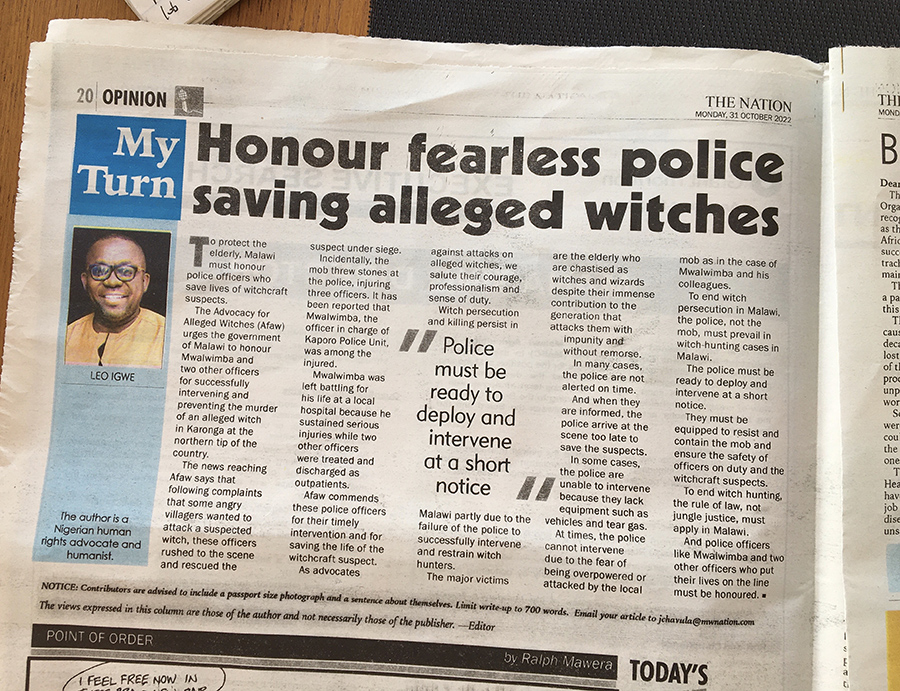
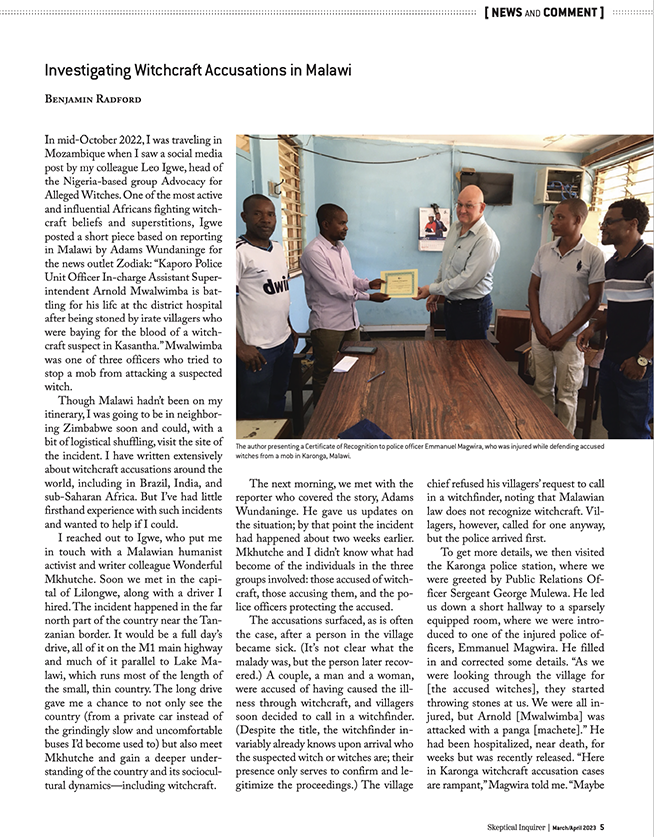
As regular listeners know, I’ve spent a fair amount of time in Africa and have some connections there and have advocated for a long time and of course had Dr. Leo Igwe on a couple of episodes as well. Basically during my trip I had planned to meet with Leo in Ibadan, Nigeria. Unfortunately for a variety of reasons I had to cut my trip short. But before that happened I did investigate some witchcraft accusations in Malawi as you mentioned. I first heard about it while I was actually in Mozambique and I was heading up towards Gorongosa National Park. Normally when I’m traveling I try to stay off social media just because I don’t have time and I’m more concerned about like everyday things rather than whether someone’s angry about some black mermaid, for example. But so I happened to log on when I was able to get Wi-Fi, which was a bit spotty, as you might imagine. And I saw that Leo had posted a piece that was talking about a recent witchcraft accusation in Malawi. And it was a short piece that said, I’ll just quote from it briefly, it says, Keparo, police unit officer in charge, assistant superintendent, Arnold Mwalimba, is battling for his life at the district hospital after being stoned by irate villagers who are baying for the blood of a witchcraft suspect in Kisantha.
0:36:54
CW: So he got between these angry people and their intended victim and paid the price for it. Now for listeners who don’t have a map handy, Malawi is sort of a landlocked country on the eastern part of southern Africa. If you see the island of Madagascar there, you hop over from the island, you hit Mozambique and then from there you would hit Malawi. It’s directly below Kenya and Tanzania.
0:37:23
BR: Yes, it’s a long thin country and Lake Malawi is basically the length of the country. It goes a little bit further south than that. But I’d never been to Malawi before but I was certainly interested in it. So I contacted Igwe and I was expecting to be meeting within a few weeks.
0:37:43
CW: And when you found out about this case happening, you were nearby. You said you were in Zimbabwe?
0:37:49
BR:I was in Mozambique, so I was even closer. But yeah, so I found out about it while I was in Mozambique. And I hadn’t originally planned to visit Malawi, but it wasn’t too far from where I was planning to be, which was in a neighboring Zimbabwe, in Zambia. So I contacted Leo and I said, do you have any contacts in Malawi? I’m interested in this, this is happening like literally while I’m there. And a lot of times, you know, when I’ve written about witchcraft accusations and things like that in Sub-Saharan Africa, usually it’s after the fact. It’s sort of generally, it’s about different cases and the Muti attacks on people, albinism and so on. But in this case, it had just happened. I mean, it was going on as basically unfolding as I was there. And I saw this as an opportunity to just sort of go and try and understand the situation, try and help out if I could. So I reached out to Leo and Leo put me in touch with a colleague of his in the capital of Lilongwe, a Malawi named Wonderful Makuche. And I reached out to Wonderful via WhatsApp. And he said, yes, we’d love to have you here. Let me know when you’re going to be in town. So I did that and I headed over to Victoria Falls and over to Lusaka, Zambia. And interestingly enough, while I was in the capital city of Lusaka, there were news reports about a recent film that had been released, and the title was Can You See Us? It made the national newspaper, the Zambia Daily Mail, because the president of the country, Hakayende Hichalima, had actually been to the screening of this film that was actually about a mile from where I was, and had met with a young actress, a 12-year-old girl who had albinism.
0:39:44
CW: Well, that was the theme of the movie, I assume?
0:39:48
BR: Yes, that was the theme of it.
0:39:49
CW: Can You See Us, okay.
0:39:51
BR: Yes, and in fact, right here in front of me, I saved a copy of the Daily Mail that day, Movie Warms H.H.’s Heart, H.H. being the president. And I was pleased to see that not only was there a write up, you know, literally on the front page of the national newspaper with the president meeting with the 12 year old girl with albinism. I was really pleased to see that. And accompanying the article was an editorial that was calling for compassion about people with this affliction and actually highlighting some of the attacks and killings that I and Leo and Wonderful have worked to fight. So that was gratifying to see some publicity again sort of in real time. I mean, I was, you know, the president was, you know, was there the night before. I mean, it was it was this wasn’t like years ago. This was happening while I was there.
0:40:47
CW: So it’s not it’s not all bad news. You’re seeing some real signs of progress and also finding out that attacks on suspected witches are still being carried out.
0:40:58
BR: Yes, yes. And so that was sort of part of the impetus to continue. So from Lusaka, I took a very long, arduous bus ride that I won’t go into details of, and ended up in Lilongwe, the capital of Malawi, and I stayed at a hotel. And the next morning, we were going to head up to Karanga, which is in the northern part of the country, which is where these attacks happened.
0:41:27
CW: Now, you say we. Were you traveling with the activist you mentioned? I want to say Mr. Wonderful, but that would sound sarcastic. But his name was Wonderful Machuke?
0:41:38
BR: Wonderful Makuche.
0:41:40
CW: Makuche, okay.
0:41:41
BR: Yeah, so actually he had arranged to have a driver pick me up from my hotel. So I said, yeah, let’s go do this. And so we were headed off, but we didn’t get very far.
0:41:51
CW: Why is that?
0:41:53
BR: Well, there’s gas shortages. So I just figured, yeah, well, you know, whatever, just head. And he’s like, yeah, no, we need to find gas. And I’m thinking, okay, well, there’s a gas station there. And he very patiently turned around, said, no, there’s a gas station there.
0:42:08
CW: Is that just for show?
BR: Well, again, it’s gas shortages are thankfully fairly rare here in the States, although they’re not uncommon in many places in the world, including in Malawi. And I didn’t really care the way I mean, I wasn’t rushing. I was just like, hey, I’m a guest in your country, you know, you’re the driver, you know, get us up there and then we’re going to pick up Wonderful on the way. And so after driving around for about 20 minutes, he said, okay, I know what to do. And so we headed off down the road. And then we pulled in front of a it looked like a lemonade stand that had been broken into if if you can picture that, and it said barber on it.
0:42:51
CW: Okay.
0:42:52
BR: So, I’m just sitting in the car, I’m like, hey, you know, you know how this works, I don’t. So, as it turns out, this was the black market, so we were buying illegal gasoline.
0:43:02
CW: Oh, so did you stop in and get your head shaved and get a couple liters of petrol?
0:43:07
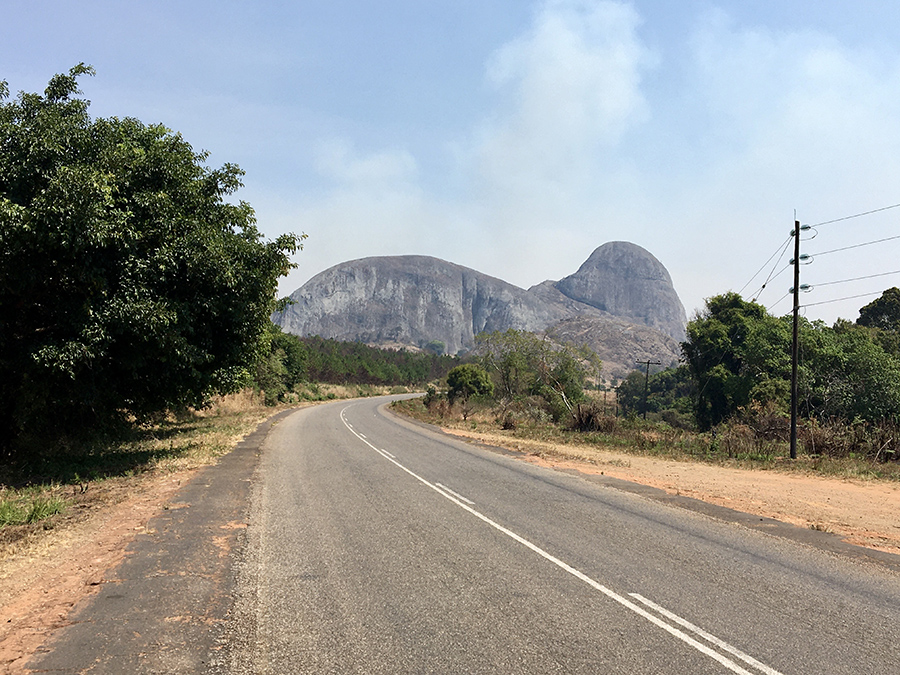
BR: Well, I stayed in the car. As he told me to. And I just tried to look inconspicuous. And he went and talked to somebody and they sort of gave a little sort of wink and a nod and I’d like to buy a shave, shave and haircut two bits, wink, wink. And he brings out this jerry can of gas and fills up the tank. Anyway, so that was just one of several minor culture shocks there were also roadblocks every about half hour or so there. But anyway, we ended up picking up Wonderful. And it’s about an eight-hour drive up the M1, which is basically the one main road that goes north-south, and it runs more or less parallel to the lake.
0:43:52
CW: Now, when you got there, I mean, you got this long car drive you’re embarking on. What were you thinking you would do when you got there? What were your plans?
0:44:05
BR: Well, I was still trying to figure out what was going on because there was some ambiguity. So I had, I was unable to get an update on the situation. Again, I, all I had to really go on was the piece that Leo Igwe had posted on Facebook. And when I reached out to Wonderful, I was asking him what he knew of the situation and he had kept tabs, he was actually in touch with a reporter up in Karanga, northern part of the country near Tanzania, who had been covering it, but he hadn’t any particular updates. He was just like, we’re going to find out. So that was part of the process, was trying to figure out what was going on. So fortunately, I had, you know, we had this, you know, eight, nine hour drive and so I got to know wonderful well we were chatting and just fascinating guy it’s just interesting I was learning about the the culture and the history and the sociology and you know in his his efforts to combat witchcraft accusations and to sort of bring a more humanistic perspective to and otherwise quite religious and conservative country anyway we ended up going all the way up to Karanga and we stayed at a hotel there. And then the next morning, we met with the man that had written the article, Adams Wodenighe. And Adams basically caught us all up on the situation. So I interviewed him outside of our hotel and said, what’s going on? Whatever happened to all of this? And so I had thought that we were just talking about like one person, probably a woman accused of witchcraft. In fact, it had happened about two weeks earlier. And so I was trying to get an update on the three parties, basically the accused witches, the mob in this village, this rural village that had sort of chased after them and tried to attack them. And the group of three police officers from the Carunga police station, all three of whom were injured, one of them very badly. So trying to get an update on all three of those.
0:46:12
CW: So now that you’re talking to this local reporter and he’s got some more up to date local news, which party did you decide to seek out first?
BR: Well, the most accessible group were the police officers, because we were already in Karanga. And of course, as a reporter, he’d been in contact with them. So basically, we sort of nailed down a few of the details. So it was actually a couple, a man and a woman, who were accused of causing illness through witchcraft of another member of the village. And, of course, this is fairly common. I mean, you know, having an inciting incident, being somebody falling sick or getting in an accident is pretty common because then people are thinking, okay, well, how did this happen? And if you’re steeped in that, then you assume it could be the evil eye, it could be a curse and so on.
0:47:05
CW: It’s a misfortune that rarely has a really obvious cause.
0:47:10
BR: Right, exactly. So this is where things sort of got more interesting in terms of the dynamics, which just fascinate me. So this couple were accused of bewitching this, it wasn’t clear if it was a man or a woman, but anyway, they eventually recovered. And the rest of the village wanted to call in a witch finder. And Leo has done lots of stuff on witch finders in Nigeria and West Africa and when we have him back on the show, we can talk more on that. In fact, I think he talked about some last time he was on. But typically, the witch finders are brought in to basically legitimize the process.
0:47:46
CW: Yeah, it’s not really somebody who goes around and finds a witch logistically. They just confirm what your suspicions are.
0:47:56
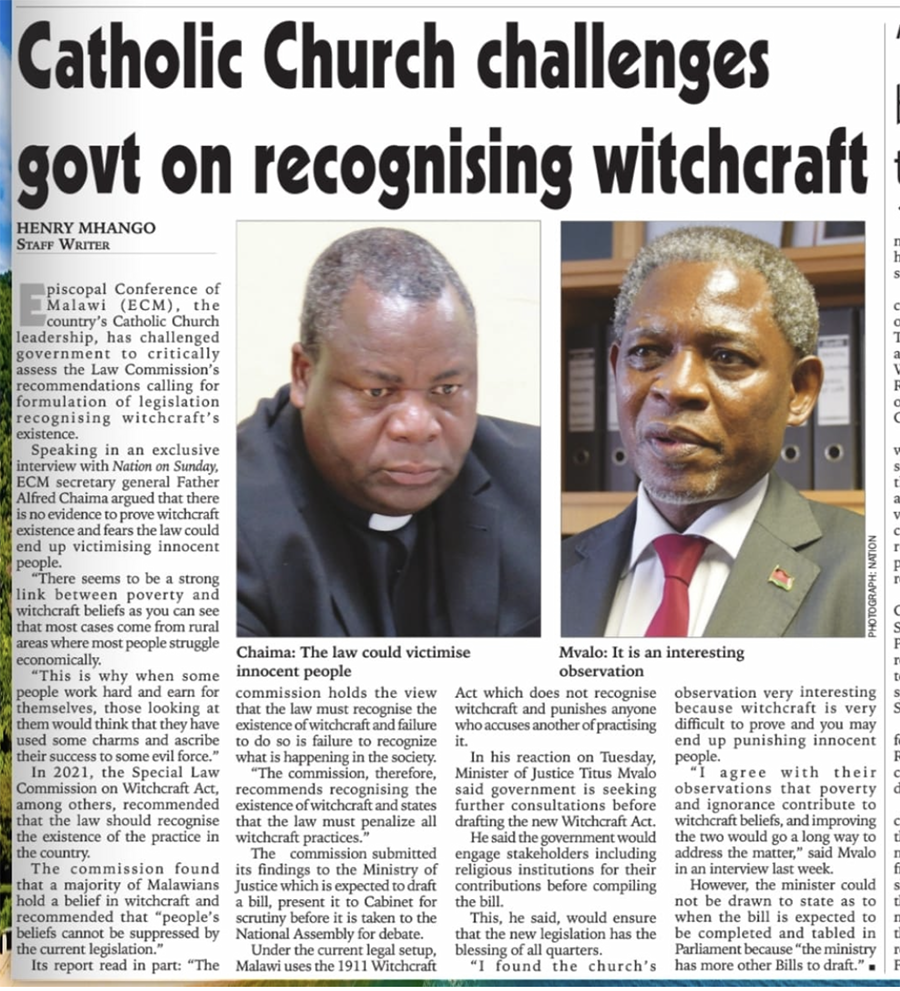
BR: Right, you call in the witch finder to make sure that, you know, it’s like, it gives you an imprimatur of like, well, hey, we follow the rules, the unwritten rules, we call it a witch finder, what do you want from us? Yeah, yeah. Yeah. So, so an interesting twist here is that the village chief refused. And it was on the basis of the fact that Malawian law doesn’t recognize witchcraft.
CW: Oh, that’s good.
BR: It is good, right. So this is, and this is, this is a topic that the wonderful and I were talking about on the way up I was like help me understand the context here and he said yeah, you have to understand that in our country legally witchcraft doesn’t exist and It’s not used as a basis for legal proceedings and and this and so on The problem is that in reality in practice witchcraft is widely believed so you have this really interesting tension between the popular belief and folk beliefs about witches and witchcraft and curses and things like that, and then you have the law and you have the police officers that are in charge with enforcing the law and judges and so on, that officially doesn’t believe in witchcraft. And you can have these cases in which, for example, police officers that are charged with protecting alleged witches, they may themselves actually believe in witchcraft. They may themselves think that there may be a witch around here, but their professional job forces them or requires them or obligates them to protect alleged witches regardless of whether they personally believe in witchcraft or not.
0:49:34
CW: That’s tricky. I see I’m thinking of situations in the US where a police officer in an area where, you know, cannabis is still illegal, might see some people smoking a joint and just kind of be like, oh, yeah, whatever. Because they smoke. They smoke weed too on their off hours or something. And, yeah, that gets really tricky when you’re dealing with two different standards there.
0:50:01
BR: And it’s also important to recognize, and I told this to the police officers and also wonderful Adams as well, just how fraught their job is. I said, look, I’m basically an outsider, right? I’ve never been to law before. I’m not of this country, obviously, but they have to work here. And when they later on met with the police officers, I said, you know, I’m just in awe of your courage because, and we’ve talked about this in the case of Leo, right, Leo lives and works in Nigeria, where being an atheist or not believing in witchcraft or take your pick or defending witches is legitimately perilous.
0:50:44
CW: Yeah.
0:50:45
BR: It’s easy for us to sit back here and say, oh, this and that and the other, but it’s a very different thing to actually have to live and work and be in that community. And the same thing was happening with the Karanga police officers.
0:50:56
CW: Yeah. So you mentioned one was severely injured. Did you get to meet with him or was he laid up?
0:51:03
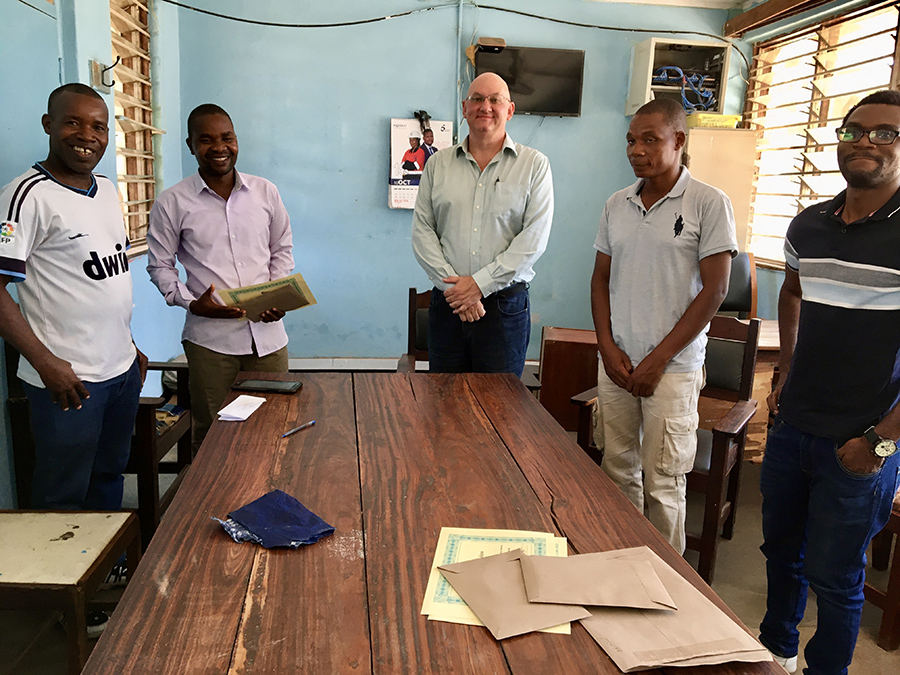
BR: So I was able to meet with one of the police officers, and that was Emmanuel Maguira. So we went to the police station, Wonderful and I, and Adams and the driver and we met with him and so I was sort of getting closer and closer to the people that were actually there, of course.
0:51:22
And so I interviewed one of the police officers and he added some details. He said, yes, what happened was that, and again, keep in mind, this had only happened about two weeks earlier. So this wasn’t months and months earlier. This was, you know, fairly recent and fresh. And so he said that they had been called in by somebody from the village, perhaps the chief, it wasn’t clear, because again, the chief was trying to put a lid on this anyway by saying, look, don’t call in the witch finder, Malawian law doesn’t allow it, the residents of the village did it anyway. I don’t care, we’re going to call it in. So fortunately, someone did call the police, the police went there. And when they went through looking for the suspected witches to protect them, they were being attacked by stones and rocks and…
CW: So they got there literally just in time.
0:52:08
BR: Yes.
CW: Wow. So all of them were injured. The one that I talked to, Manuel, was only lightly injured. I didn’t speak to the second officer who was out on patrol at the time. Most badly injured was a man named Arnold Malwimba. He was not there at the police station. In fact, he’d only recently been released from the hospital. So he was at home. And so we weren’t able to meet up with him at first. So after we left the Karanga Station and we met with one of the police officers and I provided a certificate of appreciation, recognition. And this is one of the things that Wonderful and I were talking about on the way up there. I was like, what do we do? I mean, I, and I was basically following their leads. I mean, they live there, they work there. I’m like, I’m here to help, tell me how I can help. And they said, well, one thing, just being here and getting some attention is helping us out as well. But why don’t we make some token effort to appreciate, you know, let them, let them know, these officers know that their work is appreciated and you know, that they should be encouraged.
0:53:15
CW: Yes, some positive reinforcement, especially if they’re getting a lot of negative reinforcement.
0:53:19
BR: Absolutely. So we very quickly drew up three certificates of recognition that I presented on behalf of the Center for Inquiry and also the Advocacy for Alleged Witches, which is Leo Igwe’s organization, which I’m part of. And so we filled them out and I gave them a little token money just to say thank you and make something more of it. And as I was talking to Emanuel, I was asking, so tell me more about the situation. So he described what it was like to live there and work there. And I asked, how often does it happen? I mean, I assumed it was only every few months. He said, no, this is every day.
0:54:01
CW: Oh, wow. OK. So it was not the first call that they had had to go out and protect somebody who’s getting stoned by a mob.
0:54:11
BR: Yeah, I was I was I was just I still am just shocked by that. I mean, it’s just and obviously not not every single day does a police officer get badly injured. But he says, yeah, we get, yeah, we get calls about alleged witches pretty much every day.
0:54:31
CW: The gentleman you said was badly injured and who had just been released from the hospital, Arnold. What was the nature of his injuries? Were they just throwing rocks or I mean…
0:54:41
BR: Yeah, so he was attacked. He had brain damage attacked by basically a machete or a panga.
CW: Oh, my goodness.
BR: Yeah. And so I so after we left the police station and we headed out. So we’re actually heading back towards down south towards the long way again. And we were able to meet very briefly with Arnold. Wonderful called ahead. And we he came out. We we didn’t. He was he was an elderly guy, probably in his 60s or 70s, sort of shuffling and clearly compromised. And I just felt bad for him. And he showed me the scar. I mean, you know, he’s like, this is where they attacked me, and he had this huge scar going down his skull, going behind his ear. And he was there with his wife and I think his sister, yeah, just very matter of fact, and said, yeah, this is what happened. He sort of spoke haltingly and he sort of shuffled. You could tell he was still pretty badly injured. And again, this had only happened two weeks earlier. But he was released from the hospital and as you might imagine, rural hospitals, especially in sub-Saharan Africa, Malawi, are not the best, especially dealing with, for example, traumatic brain injury and so on. So his days as a police officer were clearly over and it was just a very sad sight to see. But he was very grateful for the, he was shocked frankly, that we were even there. In fact, so was Emmanuel. I mean, when we first arrived at the police station, they were sort of wondering like, why are they here? Right? It was, you know, they knew that Adams, the local reporter, was following up on it, but they’d never met Wonderful, and they certainly hadn’t met me. And so there’s this sort of suspicion of like, why is anybody interested? I mean, why are you here?
0:56:38
CW: Well, you used the word suspicion just now, and I got to ask, you were there, you were talking to them, you could read the room, you’re perceptive that way, I know. You’re this white guy from out of town representing the Center for Inquiry, which none of them had ever heard of. But it sounds good. Was that a benefit? Does that help them? Does that raise their stature to have this out of town white guy come and show up and present them with a piece of paper and a few dollars? Does it help or does it not help or is it about the same?
BR: Well, I was very cognizant of that. And I was following Wonderful’s lead. He is born there, he lives there, he is Malawian through and through. At some point soon he may be running for office. And I told Wonderful, you tell me what to do, this is your country. I mean, I’ve researched this and I have something about it, but I said, I don’t want to cause any problems. You tell me how I can help you.
0:57:46
CW: Yeah, the last thing you want to do is make things worse.
0:57:48
BR: Yeah, and he said, this is how you can help. And so again, I was following their lead. I was doing what they asked. And in fact, it was interesting because when we filled out the, when we created the certificates, it was important that they mentioned New York, Buffalo, New York. And it didn’t… I mean, I was like, yeah, go ahead, put it on there. I didn’t really see the significance of it.
0:58:12
CW: Because everybody has heard of New York in the whole world.
0:58:14
BR: Everybody’s heard of New York. And that’s why Wonderful wanted to make sure that the word New York appears on the certificate that we gave to the police officers in recognition because they sure as hell don’t know who I am. They’ve never heard of the CFI, but they know where New York is. And so that sort of lent some legitimacy to it.
0:58:32
CW: Wow.
0:58:33
BR: And yeah, and actually when I met with Arnold, the most badly injured one, again, I just wanted to, clearly he wasn’t well and I didn’t want to prolong it or exploit him. I just said, I just wanted to thank you. And I shook his hand and the tears welled up in his eyes. He said, you know, he said, you know, I, I worked on the police force for, for, you know, I think 30 years. Uh, and, and he said, you know, I had my, my, my left arm was badly injured years ago. Nobody cared. Nobody gave me any money compensation at all. They basically ignored me. And all of a sudden I’m being recognized for this, for this thing that I did. And he was very emotional about it as, as where we all. Anyway, so at that point, again, that pretty much wrapped it up. Again, we talked about, you know, should we try and go meet with the people that are accused of witchcraft?
0:59:27
CW: Yeah, yeah, that’s what I was wondering, if you guys made it that far.
0:59:31
BR: Yeah, and again, I was following their lead, and I talked to Wonderful and Adams, and they said, you know, at this point it seemed like the alleged witches were out of danger. I mean, it had been a couple weeks. Apparently what had happened was that the people that were accused of witchcraft, partly because the person got better, right? It was illness and they got better.
0:59:51
CW: Well you can imagine if the crowd had stoned those two people to death or, you know, killed them with a machete and then the person got better. What would everyone think?
1:00:05
BR: So so apparently, as I understood it, as last I heard, the the two alleged witches were still within the village, although they were probably being ostracized. And that may not sound like much, but in many cultures, being ostracized is a very real threat.
CW: Yeah, and if they’re already being ostracized, you get this white guy from New York coming over, talking to them is not gonna make things better.
BR: Right, it was only gonna make things worse. And so I reluctantly, you know, again, as much as I would have liked to dig more deeply into the dynamics and talk to people, interview people, I recognized that pretty much I had done as much good as I could do. And I was gonna sort of just, you know, that was pretty much it.
1:00:58
CW: Did you find out maybe later was, I know Leo Igwe’s group, the Advocacy for Alleged Witches, does reach out to these folks, especially if people are injured, if they need help with medical bills, and a way to help is to help fund Leo’s project. Do you know if anybody from the AFAW was going to head to that village?
1:01:20
BR: My understanding is no because as I understand it, Leo’s organization, even though he has contacts throughout Sub-Saharan Africa, I think he mostly works in Nigeria. And keep in mind, of course, that I only made contact with Wonderful through Leo. So Leo, I never asked and I don’t know whether Wonderful is a member of AFAW. In a way, I mean, again, if Leo can or wants to reach out to the victims here, that connection has already been made. Anyway, I don’t want to…
1:02:03
CW: Yeah, I understand Leo’s got his hands full and it’s a triage situation. I’m glad that this pair of people was not injured previously. But as you mentioned, the officer was. There seems to be two different dynamics going on here where, you know, like I said, your presence helped inspire confidence and gratitude among the police officers, but could have been a danger if you’d gone out to the village itself. What is it like with those two different dynamics going on?
1:02:32
BR: Yeah, it’s fascinating. And again, I explicitly thank the police officers that I met, the two I was able to meet, and also the police PIO, public information officer, because I wanted him to know, yes, you know, This may happen every day to them, but it shouldn’t. And it is outrageous, frankly. And I wanted them to recognize, because you can get in your own fishbowl. Like, oh, well, this happens all the time. But no, it’s like you have people who could have been killed. We have a man who’s brain damaged because he was protecting an alleged witch from a mob. I mean, this is straight out of 1600s Europe. I mean, it’s just astonishing.
1:03:22
CW: And in 1600s Europe, it seemed normal because we’re all humans and we have the same brain no matter what, you know.
1:03:30
BR: Right. And there was also, again, the added layer of police officers who, as I mentioned before, made themselves believe in witchcraft. Just because you’re a cop doesn’t mean you’re immune to these things.
1:03:44
CW: But the three officers involved, you got the feeling they were not of that type of officer.
1:03:49
BR: Well, again, I only spoke to two of them. One of them was not well off. The main one I spoke to, certainly, he was a young guy, very, very bright, very able. He certainly, he and the PIO were both pretty clearly seeing, you know, we were on the same page about this. As I mentioned, there was initially some suspicion like, what are you doing here? What’s this about? Are you going to accuse us of something? You’re going to criticize us for something? I’m like, no, I’m here to thank you. They go, okay. Okay. Okay. Yeah, because, you know, and they mentioned that, you know, that oftentimes in these almost daily calls, the police officers can sometimes be accused of siding with the witches.
1:04:33
CW: Yeah, yeah, that’s the last thing you want.
1:04:37
BR: Yeah. And yeah, and you know, the officer, Emanuel, he says, you know, we go out there, we’re just trying to do our jobs and, you know, and he said that in this particular case, some of the villagers, they didn’t necessarily support the attack on the alleged witches, but they were afraid of being lumped in. And, oh, why are you defending the witch type thing?
1:05:02
CW: Now, I got to ask another context question here. Coming from America, we’re used to our officers having a taser, a gun, a sidearm, you know, pepper spray. What are officers in Malawi armed with?
1:05:20
BR: Batons. It was really interesting, again, visiting the Karanga Police Department. I had no idea what to expect, never been to Malawi before. It’s a small town by any standard, certainly even within Malawi. And it just, it was no computers that I could see, very rudimentary. And I asked the officer in the PIO, I said, you know, how could people help if they wanted to? I mean, if you, you know, how could the average person, either Malawian or American or anybody else help? And he said, the biggest problem, honestly, is resources. He said, look, we have two vehicles to cover hundreds of kilometers. It’s just it’s just in half and one was breaking down all the time. So it’s really as much as he recognized, we’re talking about the problem of the social damage, the witchcraft, like the accusation and so on. A big part of it was we just don’t have the resources. You know, he says we get calls saying, you know, come help us, we’re being accused of witchcraft. We have one car, it’s on the other side of the country.
1:06:30
CW: And you got to fill it up with gas from the barbershop.
1:06:33
BR: Yeah, if you can find it, right. So it’s a case of where as much as they’re understaffed and under-resourced, they would love to go and help out. They can’t get there, right. The officers, you know, they may not own their own vehicles, and even if they do, not sure they should be required to drive in their own cars. It’s just the lack of resources is a big part of it, which is why, just to circle back, Wonderful is working on, as I mentioned, sort of getting into elected office and trying to help police officers in those contexts.
1:07:08
CW: Well, that’s good to hear, and as you started this off with a hopeful note with the seeing on the front page of the newspaper, the the president meeting with the young girl with albinism. So, yes, there’s there’s hope to be had here and there’s progress. And, you know, sometimes sometimes in America, it’s hard to measure progress. It’s hard to sort of see skepticism and humanism and rationality marching forward. But in a situation like where you were just at, you’re seeing that in real time.
1:07:43
BR: Yeah, the case of the president being photographed with a young actress with albinism on the front page is certainly a big step. And even in Karanga, it was interesting, in my article in Skepticon Choir, it concludes with a photograph of a banner that I saw for a festival, an upcoming cultural festival. And it said as one of the themes, it was, quote, promoting unity, love, respect for the elderly, ending mob justice and gender based violence.
1:08:14
CW: That certainly seems like it hits all the ticks, all the boxes for witch hunting and witch finding.
1:08:21
BR: Yeah. I mean, it’s just and again, I was I was it was just I just happened to notice that no one pointed out to me. I just like, Hey, there’s a upcoming festival that is explicitly asking people to beware and help end mob justice and gender-based violence. Well, that’s a, just calling it out is a big step. So I, as, as much as this case was sort of frustrating and fascinating and kind of scary, there’s also elements of hope to it.
1:08:50
CW: Yes, yes. Well, thank you, Ben, for sharing your experiences. And yeah, there’s definitely, we got to talk in more depth about what it was like for you over there. Next episode, we will be talking to Peter Ash. Now, Ben, you reached out to Peter Ash. Tell us a little bit about what we’re in store for here.
1:09:23
BR: Yeah, so Peter is the head of the organization under the same sun, and he works primarily in Tanzania and other places in Sub-Saharan Africa to try and advocate for people with albinism on many different levels, including fighting witchcraft beliefs and accusations, as well as trying to get help for them for medical and navigating political and cultural issues.
1:09:51
CW: Yes, we look forward to speaking with Peter Ash, and until next time, everybody, take care.
1:09:57
BR: Bye-bye.
1:09:58
We would like to extend heartfelt thanks to our top-tier sponsor-level patrons,
1:10:00
Amy Frusciower Kelly, Dr. Angela Matkey, Elizabeth Leggett, and Laura Ellis. Thank you for your continued support of our podcast. If you’re interested in becoming a sponsor, or just throwing us a buck or two, please visit Squaring the Strange on patreon.com and browse our selection of patron rewards. Every bit helps us keep the lights on here and we are grateful to our generous friends who help us bring you quality content. If you are short on cash and want to just give us moral support, remember to recommend us to a friend, mention us on social media, or give us a review on your favorite podcast dispenser. If you have comments or topics you’d like to see covered, come join our community on the Squaring the Strange podcast discussion group on Facebook. Squaring the Strange is a production of Two Heads Studio LLC, copyright 2021. Theme music provided by Shriek Back, additional music by Memory, Keytard and Feathered, and Pascual Romero. Additional support by Ashley Romero, Robert Sandin, and Alicia Jarvis. The views and opinions expressed on this podcast are those of Squaring the Strange, and do not necessarily reflect the views and opinions of Two Heads Studio, Kronos Creative, Center not necessarily reflect the views and opinions of Two Heads Studio, Kronos Creative, Center for Inquiry, our advertisers, or any other affiliated organizations and employers.
