Episode Summary:
For our last episode of the year, after Ben lists his upcoming appearances and a nice book accolade, and after Celestia discusses “Skibidi Toilet Syndrome,” we speak with Prof. Libby Tucker about dark play. Existing in the liminal spaces of childhood, forbidden yet alluring, dark play takes many forms. Rituals, tests of bravery or belief, chants and rhymes, breathing control games — all exist as a means for children to test boundaries and take control of otherwise overwhelming concepts. Mortality is a common theme, as only recently have children come to be relatively shielded from death. It was quite common for Victorian children to see siblings, playmates and others their age succumb to illness or injuries, with bodies kept in the family home for funeral rites. From “Light as a Feather” signifying resurrection to Bloody Mary foreshadowing menstruation, old tales and games have both stayed ever-present and evolved to new online pranks and TikTok challenges. Whether it’s divination by means of an origami “cootie-catcher” or a vandalism dare, chances are you, too, have dabbled in dark play.
0:00:00
Ben Radford: Welcome to Squaring the Strange, the podcast that examines all manner of the mysterious and the mundane through a critical lens. So let’s square the strange.
(MUSIC)
0:00:11
BR: Welcome back to Squaring the Strange. This is episode 217. I am one of your co-hosts, Ben Radford, and with me is/are…
Pascual Romero: Pascual Romero.
Celestia Ward: And Celestia Ward. Hey guys, how was your Christmas? Did anybody get some awesome presents or what?
0:00:55
PR: I was given the gift of strep throat, so that was an adventure.
0:01:00
CW: Well, I hope you had fun getting it at least.
0:01:03
PR: No, tt was just the usual schoolyard vector. So the kids came home and they got it and then I got it. But thanks to not so modern medicine these days, I was able to kick it with some antibiotics in a couple of days. So I’m a little scratchy. I’m gonna be using the mute button to avoid coughing into everybody’s ear right now, but I’m doing better.
0:01:26
CW: I consider you a little scratchy, even just on a regular day.
0:01:30
PR: Yeah, it’s a heavy metal lifestyle.
0:01:33
CW: Yeah, I feel like I’ve had sick voice for like the past three episodes and I’ve never smoked a cigarette in my life. So I don’t know where it’s coming from and I hope it’s temporary. I’m hoping I’m not just getting like, you know, the old lady voice is settling in like, hello menopause, hello two octaves lower and sounding like Marge’s sisters on The Simpsons here.
BR: My voice is as good as ever. Thank you for asking.
0:02:03
CW: La-dee-da, okay.
0:02:04
BR: Yes, I had a nice holidays so far. I had a cousin come out from Kentucky. Nice to catch up with her and I’m trying to shake off her accent. I started saying y’all to people and I’m trying to shake that off.
0:02:19
PR: Yeah, it’s a little dangerous here in New Mexico.
0:02:22
CW: I got a lovely holiday card from Ben that mentioned a folklore bit about how many balls snowmen have. And I don’t mean that like, like, genitally speaking. But you were saying in your card that the snowman on this card is probably British because it has two snowballs. And American ones have three. Is that a real folklore fact? Where did you pick that up?
0:02:46
BR: It is. I did a little digging into, uh, there’s not a robust, a deep dive on, on snowman literature. Even among folklorists, it’s a bit niche, but in my perusing of some of the books on my shelf and also online, I came across that nugget that, and I hadn’t even, I hadn’t noticed it, but once I sort of, once I learned about it and I mentioned it in the card to you and I was looking around, yeah, apparently it’s not like a hard and fast rule. But from what I from what I can tell is that typically American snowmen have one extra ball. That would be the middle part.
CW: The thorax of the of the snow.
BR: Yeah. Yeah. We’re not talking about any other balls here. But typically the British ones have usually just a head and just the, you know, a body.
CW: So British children are lazier than American children. Is that what I’m getting from this?
0:03:40
BR: Well, lazier or there’s less snow.
0:03:44
CW: They didn’t have as much leisure time. They had to go to the coal mines and everything.
BR: Right. Well, of course, you have the coal and you have the eyes and the carrot. Anyway.
0:03:54
CW: I feel like we’re extrapolating probably too much. We are. We are. But, you know, that’s what we do here.
0:03:58
BR: So, if you don’t like it, tune out.
0:04:01
CW: Now, what do you have on your social and your academic calendar coming up?
0:04:05
BR: Well, I have a couple of things coming up. I’m actually going to be in Buffalo, New York, January 18th. I’ll be speaking on moon myths and solar superstitions.
0:04:16
CW: Ooh, spacey.
0:04:18
BR: Yes, I was informed that there’s an eclipse of some sort, and I got an email from somebody at CFI saying, hey, Ben, do you know anything about folklore of eclipses and sun? I’m like, yeah, in fact I do. He’s like, well you should come out and talk about it. I’m like, all right. So yes, for anybody who is in the western New York area, Buffalo, Amherst, around there, on January 18th from 7 to 9 p.m. I’ll be giving a talk at the Center for Inquiry at Sweet Home Road. And then a few days later in Rochester, which is a couple hours away, Kenny Biddle and I will be tag-teaming a Skeptics in the Pub.
CW: Oh lovely! Oh you guys are gonna be a fun pair.
BR: Yes it’ll be delightful. It is at the Elmwood Inn which is 1256 Elmwood Avenue in Rochester. Again that’s January 20th starting around 6 p.m. So yeah if you’re in the Western New York area stop out and say hi. Just be aware that Kenny will probably already be loaded on rum.
0:05:20
CW: You kind of need it to fight off the hypothermia. You’re going to upstate New York in January.
BR: I Lived a decade there. I know where I’m going.
CW: Yeah Yeah, you need to find something like in the Bahamas next next January.
0:05:31
BR: I’ll see what I can do and in other news. I was a guest on the Digital Folklore Podcast. It was actually recorded when I was in Sheffield, England for a folklore conference that I mentioned a couple of episodes back. We touched on everything from evil clown panics to skepticism and investigations and the folkloric intersection with skepticism. It came out on Christmas. Again, it’s called the Digital Folklore Podcast. You can find it on Apple and all the usual places And I was also recently a guest on the comical heathen podcast, which is run by a guy named Jerry Jaffe. No relation to Al Jaffe. I I’m guessing I never asked him, but I’ve been on the show a couple times and he’s he’s fun He’s a you know comic and all that sort of stuff so we talked about conspiracy theories and clown panics and all those sorts of things and Lastly, I found out a couple days ago that my book, America the Fearful, my most recent book, which you Celestia contributed some to, was chosen as one of the top 10 bridge building books to buy this holiday season by the editors of Divide or We Fall website, which is a non-profit news organization dedicated to providing bipartisan dialogue.
0:06:40
CW: It shocks and warms my heart to know that in America we still have some some establishments dedicated to bridging the gap to reaching across the aisle, because that is sure scarce these days. And and hey, congratulations. I think that’s an awesome feather in your cap for that book.
0:07:02
BR: Yeah, thank you. I mean, it’s kind of cool. As you know, a lot of my work, it’s, I wouldn’t say it’s divisive, other than, you know, if you’re trying to promote mystery mongering and things that aren’t true, then yes, you’ll find that divisive. But certainly what I tried to do with with America, the fearful was really trying to sort of help different sides, political sides, social sides and so on, understand each other and build bridges. So I was I was heartened to see that someone recognized that was one thing I was trying to do with the book.
0:07:30
CW: Well, between live talks and podcasts and your books, getting some some accolades. Way to dominate, Ben. Way to leave no room for us to say anything. Okay, but I don’t really have anything to say anyway. Do you, Pascual?
0:07:46
PR: Not really.
0:07:47
CW: No tour dates? Nothing?
0:07:49
PR: No, no, those days are probably going to stay far behind me at this point.
0:07:54
CW: Well, for our main topic this week, we’re going to be talking about dark play. And this was an interview that Ben and I conducted. I’m sorry, Pascual, you weren’t here for it. But Libby Tucker. Now tell us a little about Libby and why she’s so good for this.
0:08:09
BR: Yes, Libby Tucker is a professor of English at Binghamton University in New York and a fellow folklorist and just an all-around cool person.
0:08:19
CW: Yeah, all about dark play, which sounds very intriguing. So there’s a bit of nursery rhymes and a bit of dares and a bit of familiar stuff. If you’ve had a childhood, some of this will sound familiar to you.
0:08:32
BR: Absolutely. And if you didn’t have a childhood, or at least an unhappy one, then you’re probably an avid listener. So let’s not go down that road. What are you guys skeptical of this week?
(MUSIC)
0:08:52
CW: Well, Ben, I’m going to say a sentence here and I want you to tell me how many words you understand in it. At least, how many words were familiar to you yesterday?
BR: Okay.
CW: Skibbity toilet syndrome threatens Gen Alpha.
0:09:08
BR: I got syndrome and toilet. You’re familiar with the toilet. Those are the ones that jump out at me.
0:09:19
CW: Let’s dissect that first word, skibbity. Paschal, can you tell me what you know about skibbity?
0:09:24
PR: I just know that if you are a parent of a child, probably between the ages of, I don’t know, zero and 20 right now, you will hear that word a lot, either in some random song playing over YouTube or just your kids using it in very esoteric and obtuse ways?
0:09:45
CW: It’s definitely entered the new slang and it’s hard to really pin down a meaning for it. The Skibbity, I can’t say it without thinking of that song by Little Big in 2018, it came out. You remember seeing this music video from Russia with all their, they were like, you know, jamming their arms back and forth, you know, skibity-ah, skibity-ah-ah-ah-ah-ah-ah, and had like the chicken with the human mouth on it.
0:10:12
BR: I musta miss that one. I guess I was busy writing books or something.
0:10:15
CW: Am I the only one? It was very catchy. I ended up watching it a number of times. It was weird. It was really weird.
0:10:20
BR: I do remember Gangnam Style, if that helps.
0:10:23
CW: It is kind of a cousin to that. It was the Russian cousin to that.
0:10:27
BR: Sorry, I don’t know.
0:10:28
CW: But according to the band itself, Skibidi doesn’t really have a meaning in Russian. It means nothing. It was a made up fun word meant to just kind of be part of a satire, making fun of anything and everything popular right now. More recently, Skibidi, the Skibidi series is an animated short form bit of content by I can’t even say this person’s screen name or content provider name It’s spelled da fu q Exclamation point question mark boom.
BR: Okay, that does sound pretty filthy.
CW: Well, yeah I didn’t want to have to bleep it out. So I’ll spell it. Basically, the animated series is there’s a guy’s head in the toilet and they’re sort of bugged out eyeballs and This contraption walks around singing Dom Dom. Yes. Yes a song by the Bulgarian artist Bizer King That uses the skibbity word in its chorus. So I don’t I can’t even really sing that. I don’t know the tune. But I did watch the video and it’s you know, there’s skibbity and like there’s two hot ladies and guy in a fedora and Yeah, some of the kids watch.
BR: I’m feeling very old right now.
0:11:44
CW: Yeah, me too, I know, I know. There’s a bunch of these toilet guys singing the song and they have a war with people who Instead of heads they have TV cameras and other gadgets coming out of their necks so sex. So absolutely horrifying. Oh, believe me, when you have a kid just trawling YouTube, even just YouTube kids will get used to some weird stuff. You see this stuff over and over and you walk by and you’re like, OK, well, there’s no sex or blood shrug. And then you…
BR: Or is there a quick nudge? We talked about this when Eric Christopher Myers was on the show about Tiki Winky. Remember that?
0:12:18
CW: Oh, yeah. Yeah. What’s what’s appropriate and what’s not? Well, yeah, we could if we could have many discussions about about that But Washington Post actually took notice of this trend the skibbity toilet guy and they wrote about it a couple weeks ago December 10th They called the skibbity toilet series the biggest online phenomenon of the year, it has gotten 65 billion views on YouTube alone and then tick-tock, you know There’s another 15 million on TikTok. They’re very short, like under 60 seconds each, and he’s released a ton of them. And Maddie Braxton, who is the Culture and Trends Manager at YouTube, said she’s never seen anything like this. And I’ll quote her here. It started as a meme, but it’s evolved into this very complex storyline with a lot of hidden meaning that people are very eager to break down and try to understand. Maybe? I mean parents definitely don’t understand it. I don’t. And there are also an equal number of sources saying that there is no story at all. There’s nothing to understand. It’s just singing toilet heads marching around. I mean, do you need any more?
0:13:34
BR: So this reminds me, to take a left turn here. This reminds me of I was recently the circumstances we don’t need to go into but I was recently watching a YouTube video of a song called Moo by Doja Cat and It came out a couple years back and I hadn’t really noticed it But then I was watching it and it was oddly entrancing. Then I was clicking around YouTube as one of the few times I started going down a rabbit hole and I came across this somewhat academic discussion of what did she mean by moo?
0:14:09
CW: An academic discussion of it?
0:14:13
BR: Well, it was this sort of deep like, okay, well, she’s dressed like a cow and there’s girls and there’s boobs and there’s this and there’s a dancing and is it some sort of satirical commentary on capitalism vis-a-vis, you know, old McDonald?
0:14:31
CW: That sounds like utter bull to me.
0:14:33
BR: Wow. You went there. I’ll have to give you a nod to the way you work that in. Good job. I’ll shut up now.
0:14:42
CW: Well, all right. Well, there is more to the skee-bitty toilet saga here. In June and July of 2023, some videos and TikToks started surfacing in Indonesia, showing children popping out of trash cans or squeezing themselves into laundry bins and singing the toilet song, singing the skibidi, you know, yes, yes, dom dom, you know, a weird little song that the toilet heads do. And I mean, I think anybody looking at this would kind of label it adorable, typical play behavior. Kids like to imitate what they see. And some of these videos, however, called it Syndrome Skibbity Toilet, or in English, Skibidi Toilet Syndrome. Now, this was very likely tongue in cheek, and many of these videos and the labels that they were giving the videos were intended to be a joke. They were saying stuff like, oh, this video contained a virus from the Skibidi universe and now my child is infected, you know. And of course, things take off from there. By August, more video content was being uploaded calling this a syndrome and it started to spread to English-speaking countries. Motherhood.com actually published a serious warning. Skibidi Toilet Syndrome, how to protect your kids. And this had 160,000 reads as of today.
0:16:09
BR: See this is right up my alley. I’m surprised I didn’t hear about this.
0:16:13
CW: Well expect to because they do they compare it to they compared it to Slenderman and they also compared it to the Pokemon Panic. So expect your phone to ring possibly here. We’ll see. But basically the motherhood.com article stayed away from any sort of medical terms or guesses about what was going on neurologically and just said that exposure to this type of toilet skibbity content could be dangerous. And then it told parents how to block certain keywords and keep their kids from seeing it. And as far as what the danger was, it didn’t really say. It just linked to some of the videos that I was talking about from Indonesia and it described kids getting into trash cans or bins and singing the song. I don’t know about you, Pascual, but my biggest worry with this video is I don’t want my kid throwing doll heads in the toilet trying to recreate it for his own amusement because that could result in a plumbing bill.
0:17:11
PR: Yeah, absolutely. And it’s really funny because I think it’s interesting as parents of young kids right now because we’re sort of getting a taste of our own medicine a little bit. I think those of us, especially Gen X and Millennial, did put our parents through a lot of weird, esoteric youth culture, which people don’t maybe remember so well, like one of the more formative things in my life was Spike and Mike’s Twisted Animation Festival.
0:17:42
CW: Oh, yeah, me too.
0:17:43
PR: And Liquid Television, which sort of sprung from that on MTV, which became sort of the pop culture version of it. And that stuff was just absurd and weird and dark and sometimes violent. for kids, but I was a teenager, so it was something that I was repeating and talking about with my friends and stuff. I sort of think that we’re looking at this and being kind of baffled by it, but I think if we just take a step back, it’s like, we did have this stuff. I think my parents probably felt the same way about Pee-wee’s Playhouse and stuff like that. So I think the thing is that we look at this sort of stuff and we try to read so much deeper into it than it probably is.
0:18:31
CW: Yeah, yeah. Looking for meaning, looking for some kind of meaning. Well, I mean, they were given this content creator quite a bit of props saying, oh, he knows how to tell a story and he or she, I don’t know. I don’t know how old this person is or if they’re male, female, American, Bulgarian. I don’t know. But it’ll be interesting to see how it develops and if it just fades away by the middle of 2024 and we never hear about it again or if by next year everybody’s going to be wearing t-shirts with Toilet Head guys on them.
BR: The creator’s name wasn’t Chauncey Gardner?
CW: No, no, I don’t think so. Well, the skibidi toilet syndrome kind of leads us into dark play a little bit because it is about, you know, it ties in with, you know, kids doing things that parents regard as possibly dangerous or just a little weird or we don’t really understand it, but we can kind of remember being kids. We did some and we did some stuff. So onto our main segment!
(MUSIC)
0:19:28
BR: So, today I’m delighted to introduce kind of a colleague of mine, I say aspirationally, Libby Tucker, Distinguished Service Professor at Binghamton University, State University of New York, and a folklorist of much note and a person that I’ve seen at various focal conferences Around the states and I think even around the world Libby. Are you there?
0:20:07
Libby Tucker: I sure am and thank you so much Ben for inviting me to be part of your podcast. I feel very honored.
CW: Welcome Libby and I understand you’re gonna talk to us about dark play.
LT: Yes, yes.
BR: So well just by way of introduction, so as as regular listeners know, I love folklore and of course bring it into the show whenever I can. And we recently had Andrea Kita on, not too long ago, for Slender Man. And during that interview, she said, you know, you should talk to Libby. I’m like, yes, yes, you’re correct. I should talk to Libby and here you are. So again, we were talking about Slender Man and sort of, you know, child folklore and teen folklore and sort of ostentation, things like that. And she recommended you and I kicked myself for not having reached out to you sooner. So yes, we have you on for Dark Play. Can you tell us about that?
0:21:00
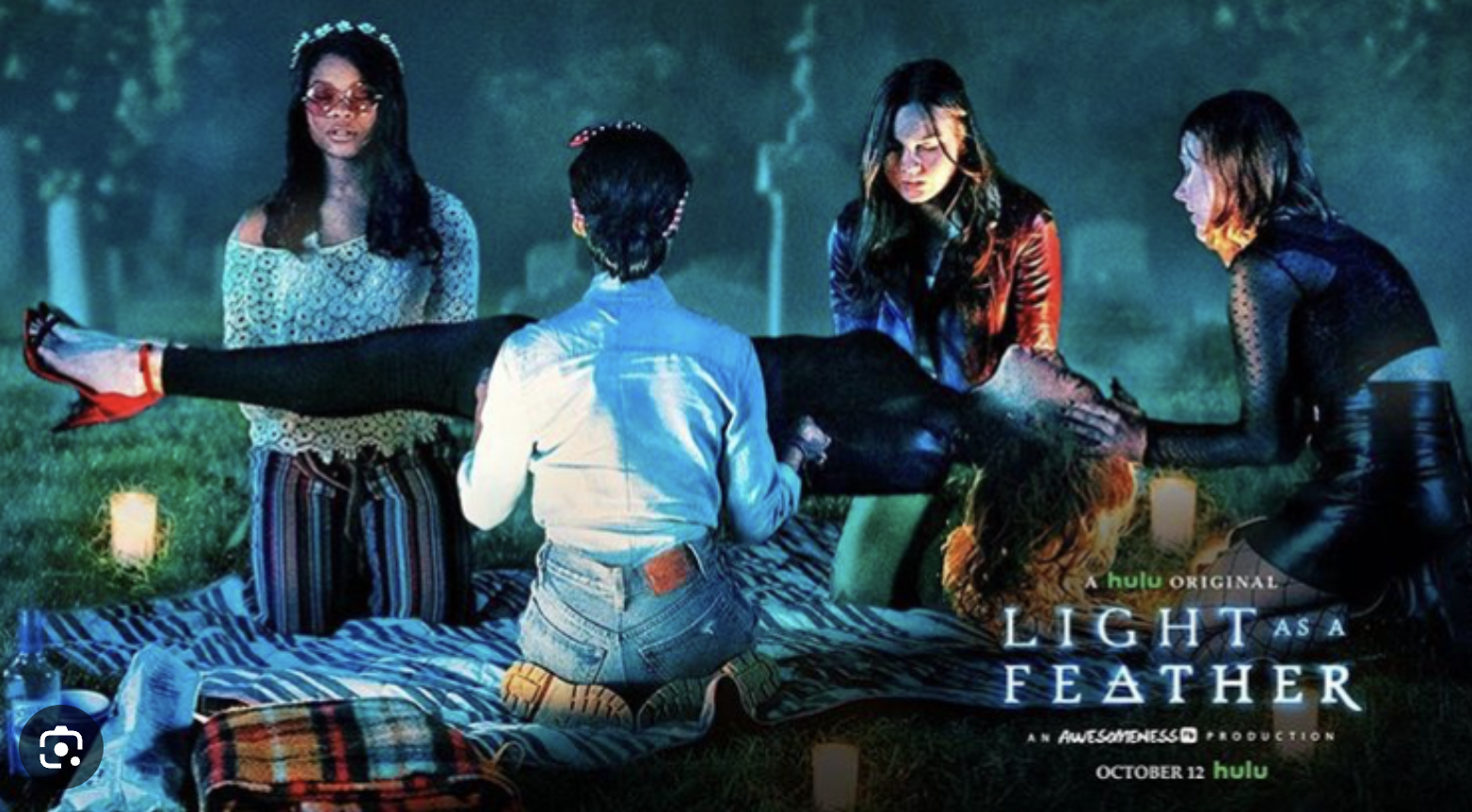
LT: Sure, I’d be happy to. I think Dark Play is very important to children and teenagers and even adults sometimes, because it helps them explore a side of activities that society doesn’t always sanction very much. It’s sometimes fears because it seems like it might be dangerous, it might not be good for young people. And so there’s that thrill of entering forbidden terrain, a kind of liminal space where you might find something amazing, you might be in a little bit of danger, but it would be worth it because you are entering a place that you’re not normally encouraged to go. And amazing, and sometimes somewhat painful things can happen. I think dark play is a pretty broad classification. It encompasses different ways that people, particularly tends to be in relation to kids, young people, the way that kids can just try to learn about a dimension of life that is kind of underground, kind of secret, and very exciting. For example, for girls, certain slumber party games have been part of dark play. The levitation ritual, for example, light as a feather, where you, several people get around a friend who is lying on the ground, or maybe on a bed, usually on the ground, and each of them puts two fingers under the person and then they lift together and by magic they lift the person up. Some people think that this is a dangerous and even demonic thing to do, that it might be associated with witchcraft, with consorting with Satan, but it’s no such thing. It’s just it’s a game that kids like to play, and it’s developmental. It tends to be really exciting to kids who are in upper elementary school, middle school, and then they just move on from it and might remember it years later, but it wouldn’t usually come up much.
CW: Now, dark play the term, as you’ve just explained, the way that folklorists use it. Dark could connote possibly witchcraft or demonic things, and danger, physical danger. Can we talk more about the physical danger aspect of some of the dark play? I was, I’m recalling a game myself that I foolishly played with other middle schoolers called the Pass Out Game. We would press on each other’s chest, you know, hyperventilate, put your head between your knees and hyperventilate for like 10 seconds, and then you’d stand up really fast and somebody would push on your chest and you’d like blackout or come close to blacking out and sort of see stars. A really dumb thing to do. I don’t recommend anybody do it. But does something like that fall under the rubric of dark play?
LT: Oh, it absolutely does. I’ve written a few articles about breath play. And they have been fascinating to upper elementary and middle school and sometimes high school students for years and years. They were common in British boarding schools back in the 1940s and 50s. They’re very common on playgrounds at slumber parties. Kids do it at odd moments when they want to make each other hyperventilate they’re going to pass out. In many cases it’s not too dangerous. They might just breathe a little too hard and faint for a moment, but there have been cases of people dying because of passing out and falling and hitting their heads. Oh. And also it’s possible to play that game by putting something around your neck and then it gets really dangerous.
0:24:50
CW: Oh, yeah.
0:24:52
BR: Speaking of which, that reminded me, this is a bit of a tangent, but whatever. It’s my show. I’ll do what I want. Breath play. So I’m remembering various stories about breath play and particularly going through tunnels, if I’m not mistaken. There are sort of stories about holding your breath going through tunnels and there was a case, I think it was maybe five, ten years ago, where there was actually an accident that was caused by somebody who was driving through an adult, driving through a tunnel, holding his breath, probably as part of some version of this, and he passed out and I think injured somebody. Can you talk a little bit about that?
0:25:28
LT: Sure. I hadn’t heard of that accident. That’s really too bad. But yes, it is custom for people sometimes to hold their breath before going through tunnels, before going across bridges, and particularly when passing a cemetery. And when you’re passing a cemetery you’re supposed to hold your breath because you don’t want to breathe in anything bad that the spirits might throw at you. You have to protect yourself. Why you need it in tunnels and on bridges is a little more murky. I think it has to do with the idea of places that are passages. It seems that the veil between life and death might get centered there. And so you need to keep your breath in, keep yourself safe.
0:26:11
BR: Interesting. I’m remembering I occasionally do scuba diving and of course, rule number one, well, one of the top rules is never hold your breath. So hopefully no one’s done that while diving.
0:26:22
LT: Gosh, I hope not.
CW: Yeah, I’m now just remembering all the little rituals that weren’t necessarily dark play, but like lift your feet up when you drive over a cow catcher or something like that, or you want to make sure your feet aren’t touching the floor of the car. It’s like part supersition and part something to do. And I look, I’m interested to hear all the things you’ve studied about what has turned into dark play over the years.
LT: Yes, I think kids who have extra time on their hands are more likely to get into these games if they’ve, and of course with the internet, it’s easy to learn about many things. You can put in a keyword and find out about all sorts of things. YouTube videos were dangerous for a while because kids were posting videos of making each other pass out in different ways.
BR: That’s right.
LT: And kids were watching and YouTube was frantically trying to take them off but the kids being smart and tricky would find ways to give the videos different titles like Mommy’s Brownies, for example, so that nobody would think there was anything bad going on. I was doing research during the time that YouTube said it was removing almost all of them and I had very little trouble finding the videos. So it’s kind of a challenge with the internet for kids to share their dark play with each other and find a way to evade the authorities. Not that they want to cause any harm to anybody. It’s just that they know what they’re doing is okay and they don’t want people to tell them to stop. I remember feeling that way as a kid, like when I played the game of lying down In the street when I was about eight years old on a navy base in Japan and um… this is just what our little neighborhood gang played Lie down all alone in the street until you when you saw a car coming you would jump up at just the right moment when the car came close to you.
0:28:30
BR: That’s right.
0:28:32
LT: It’s a horrible thing to do to a motorist, but to me it seemed quite funny because I knew I was fine.
0:28:36
BR: There was a scene of that in a film, I think maybe 20 years ago. I think it was a football film. I’m forgetting the exact title, but there was a there was a case where several teens were laying down in the road. It was according to the news media reports inspired and possibly so but the claim was it was inspired by this this teen film and I think someone got killed. Yeah, but it was I want to say it was it’s not it’s not important I remember the title, but yeah, there was a Football film maybe 20 years ago. I want to say it was the…
0:29:15
CW: I think it was Friday Night Lights, the original.
0:29:18
BR: Could have been.
0:29:19
CW: Like there was a movie before there was a TV show. Because I remember that made the news, like they were copying what they’d seen in the movie and it was like a fraternity dare or something.
0:29:28
BR: Right, right.
0:29:29
CW: And I also seem to remember lying down in the street was a thing we were cautioned about when I was a small child. And I seem to remember my sister doing it. Or not lying down in the street I think it was a cardboard box or something again a really stupid thing to do.
LT: Very much.
CW: And I hope my mother let never listens to this. But we had a lot of unsupervised time We were a bunch of kids in a courtyard, and I think the danger of telling kids Hey, there’s this dangerous thing that kids are doing make sure you don’t do that Like give some the idea.
LT: Exactly. They think, oh, well, I can do that. That will be fine. My friends and I had baby aspirin eating contests on our little Navy base during our hours and hours of free play.
0:30:13
CW: Oh, my gosh.
0:30:14
BR: What is that?
LT: You just eat as many baby aspirin as you dare. And the winner eats the most.
0:30:20
CW: Okay. That’s pharmacologically dangerous. It’s a different sort of danger. Oh, absolutely.
0:30:24
BR: As long as you’re not homeopathic, I guess.
0:30:28
LT: No, just baby aspirins. It fills my motherly heart with horror, but at the time it seemed to make sense.
0:30:34
BR: Well, let me ask about the authority issue here, because the ones we’re talking about, their children’s play, in some cases, I imagine parents are warning against them, but for example, I would imagine for slumber parties, the hosting mom doesn’t say, hey, enjoy light as a feather. So, and of course, by bringing it up, the Streisand effect, right? You tell her, be sure not to do this. Very clearly knowing what to do, so.
0:31:02
LT: One interesting thing about the authorities, the parents and teachers and others, not usually cautioning kids about these games is that many of the adults seem to have forgotten what they did as kids, kind of amnesia, if you will, or maybe it’s deep back in their minds, but they know their little darlings would never do that. And so they just don’t think about the possibilities of their kids playing pass out or anything else like that. Now, I, as a folklorist, knew about all of them, and I asked my son about all of them. I think he was a little disappointed that I was so well trained in the games that he wouldn’t talk about them that much because, you know, you’re not supposed to share them with your mom. But I think most parents just, they don’t remember or maybe they haven’t played them. Maybe it’s something connected with the internet that’s youth culture oriented and not so familiar to parents. But kids just seem, they just want to operate within what folklorists call the childhood underground. They don’t really want adult authorities to be involved.
CW: Oh, that makes sense. Yeah.
0:32:13
BR: So Libby, previously on this show, again, we’ve had lots of content on folklore, because that’s one of my passions, including on legend tripping. Can you talk to us about the parallels between dark play and legend tripping?
0:32:27
BR: Sure, I’d say that legend tripping involves a number of different goals. Usually it’s several teenagers, several friends going out at night to visit a place that is exciting or interesting or sensational. Maybe it’s a place that’s said to be haunted, maybe it’s a place where a terrible crime happened and they want to see the site where these awful things took place But the important thing with this kind of experience is to organize the trip so that it will go just right and make everybody feel satisfied. So the first step is usually telling the story of the place you’re going to your group of friends and letting them react and maybe if they’ve been there before they’ll tell the story of how it worked to go there, what happened, whether anything exciting took place. And then the next stage would be the visit to the place itself where they look around and maybe role-play for a little bit. For example, pace back and forth the way somebody who is rumored to have killed a baby might have paced. The La Llorona idea that the woman who killed her baby is out at night as a ghost walking back and forth. They might play that role. They might try to see if a ghost will appear in a certain place where it’s been sighted before. And then on the way home, they’ll tell the story of what happened. Hopefully something exciting. Often it’s nothing too big. It might have to do with technology malfunction. For example, I’ve gotten many stories about legend trips where they knew something amazing was happening because the cell phone suddenly stopped working or there was a message on the ghost hunting app that showed a ghost really was there or something else happened so that it’s clear there was some kind of supernatural intervention. So all of this really is dark play because the people are going to this disputed place. In many cases, if they’re kids, their parents probably wouldn’t want them to be there. And they go anyway. They take the risk of visiting this place they’ve heard about. For example, for quite a few years, this community had what the kids called a haunted slaughterhouse, a building where animals had been slaughtered for a while. And kids would sneak at night over to the slaughterhouse and they would look for buckets of blood and bones and they would take pictures of each other and use their night vision goggles. And they’d get all excited and they’d look for the spirits of the animals that had died there. And so this was very exciting to them, but it was a place that was not really on the cognitive map of most people who live here, most adults, because going to a haunted slaughterhouse just would not have drawn them. It wouldn’t have been exciting for them, but for these kids, it was amazing. It was a real highlight of growing up.
0:35:46
BR: Yeah, that reminds me, I mean, growing up here in New Mexico, not far from the Rio Grande River, I heard some stories of La Llorona, and I have a chapter on the figure in one of my books, Mysterious New Mexico. And it was interesting, because I heard about La Llorona. Many of my friends, people who lived down the road, were Hispanic and Mexican, so I grew up hearing a lot of Spanish stories and the Spanish language. But I was sort of the Caucasian kid, so I didn’t, you know, my mom wasn’t warning me of La Llorona. However, interestingly, the public schools were. So we had, yeah, we had, I remember very clearly, probably in fourth, fifth, sixth grade, a campaign with a ditch witch. It was a little cartoon witch saying, ditches are deadlies, stay away. And at first I didn’t make the connection. It was like, okay, the witch is scaring people. And I realized this is La Llorona. And I think that was actually one of the first times that I really sort of clued in on the folkloric aspect of everyday life, right? It wasn’t, yeah, it was a witch, yeah, it was, you know, parents and teachers telling us to, you know, stay away from the ditches. And in the community that I grew up, I mean, there’s, it’s a farming community about a half mile from the Rio Grande River. Definitely dark wooded areas and, you know, places where people can go. But I think that was one of the first times that I made a connection between, oh, there’s a whole, this is a symbol of a much broader thing that people talk about, and that sort of intrigued me.
0:37:17
LT: Yes, yes. It’s a very widespread legend that is meaningful to many people, particularly people of Hispanic background, but also many others. The idea of a witch or a dark woman wandering around at night, crying, moaning because she lost or killed her baby. That’s horrifying to people, but it’s also fascinating. They want to see the woman, they want to hear her cry. But this story also works as a cautionary tale, as in, you know, watch out for the ditch witch. Similar to what many parents say, if you go out in the dark, La Llorona may get you, so you better watch your step. So it keeps kids thinking about what they should do to stay safe, keeps them closer to home, and makes them think about where they’re going, especially when it’s dark.
CW: We did a whole episode on, what did we call it, adventures in boogeyman sitting? Where these boogeymen and creatures and legends have been designed to keep kids from dangerous bodies of water or areas where they can hurt themselves.
0:38:32
BR: And of course, La Llorona is especially interesting because she serves as a warning both to parents and children, where parents use leguironas to scare their kids and yet leguironas also, hey parents, if you want to keep your children safe, watch out. So there’s an interesting sort of dimensionality there.
0:38:52
LT: Exactly. That’s an important point. It’s not just something for kids. It’s about this whole set of dangerous things that can happen. And of course, it’s also one of the kinds of legends that is about women who have suffered and have felt they have to do something destructive as a result of what they’ve gone through. People have traced the La Llorona legend back to early times where the Europeans were coming in, particularly the Spanish conquistadors, and women were having to give up their children, they were being taken away from their families, they were experiencing terrible times. And so the story of the woman who feels that she has to kill her baby, her babies, it can be traced back to that time about which we don’t know as much as we might, but it gives a glimmer of what happened.
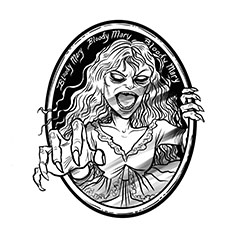
CW: Well, well, this this brings up, of course, you know, the sister, cousin, distant or close relative of La Llorona, which is Bloody Mary, who figures prominently in dark play games of many sleepovers of my youth. What can you tell us about Bloody Mary and her roots and her function?
0:40:10
LT: Oh, sure. I’d be happy to talk about Bloody Mary. The International Society for Contemporary Legend Research has a series of legend casebooks that I started a few years ago. The third in the series is going to be the Bloody Mary casebook by Dan Peretti and Brandon Barker. It’s going to have a lot of very, very interesting information about this tradition, which was not really understood by scholars until my friend Janet Langlois wrote an article about Mary Worth in Indiana, one of the variant names of Bloody Mary. And then people started comparing notes and realizing that young people, especially girls, were going to spaces where there were mirrors and where you could turn off a light and were trying to summon a spirit in the dark. And if they were successful, this Bloody Mary would come out and would reach out with her nails and scratch them through the mirror. And that’s the kind of thing that makes you wonder why, why would kids want to risk getting scratched? When I was a Girl Scout leader in Bloomington, Indiana, my troop members, aged 9 to 11, were always sneaking out of the meeting to go to the bathroom. And I found out they were trying to summon a spirit that they called Mary Wolf. This was back in 1976. And so it was, it just became very common around the United States, also common in Scandinavia. There’s a figure called Black Madame or Svart Madame that Bengt of Klintberg wrote about in an article he published. And there’s also a Russian version, the Queen of Spades, a little different. Now, it doesn’t conform to the pattern in all ways, but it’s interesting. I think that it wasn’t until the late 60s, early 70s, that people started to become aware of this either ritual or game, depending on what you’d like to call it. I would call it a game ritual because it’s something that kids love to do. It’s part of dark play, but it’s also a very serious summoning ritual where you try to see if you can make Bloody Mary appear. And if you succeed, then you’re excited but also scared because you don’t know what danger might come to you, whether you might get hurt, what might happen. And of course there are all these horror movies such as Candyman which bring that possibility up to the acme of horror and show that you’d better watch out because hideous things resulting in danger and death can happen if you dare to do this ritual.
0:43:06
BR: I’m just fascinated by the whole notion of summoning ostensibly dangerous and powerful creatures. Like, you’re like, again, why would you do this if you’re genuinely frightened of them? This past weekend, I was talking briefly with a Muslim man, and we were talking about djinn, and genies, and I asked him, what did he, you know, he told me about some in the Quran, and of course I’ve researched it, and I knew something about it, but I was curious to hear his version. And he mentioned, after telling me how dangerous djinn were, he said, oh, yeah, and I tried to summon one once. You just got done talking about how dangerous and horrifying and powerful they are and they can turn invisible and cause evil things. And I said, well, why did you try and summon a djinn? He said, well, I was just curious. I just said, okay. I mean, it was an interesting conversation.
0:44:03
CW: Yeah, all of these summoning things, and I could get into religion too, but I’m not going to bring that into it. All of these tests, these little like, like saying it in the mirror and trying to summon and asking for, you know, some sort of superstitious thing to come true, really just kind of strikes me as everyday, constant, little skeptical exercises that we all perform as children, We don’t really realize it is, but we’re constantly wanting to, you know, we don’t really 100% believe anything. We’re always trying to test it.
LT: Exactly. I think that’s a wonderful insight. Now, you did the Bloody Mary ritual. Do you remember how you felt when you did it? Why you liked it?
CW: It was it was it was a bit of a peer pressure thing, like everybody was doing it. So I think I went into it. I went into the bathroom and did it too. And I was like, all right. And I think the version I heard was Bloody Mary had her children taken from her. Not that she killed her child or baby or kids, but she had the kid taken from her and she went on some bloody rampage and she’s looking for her kid. And so if you said, Bloody Mary, I have your baby, Bloody Mary, I have your baby, Bloody Mary, I have your baby, she’d come out and grab you and take you because she thought you were the one who took her baby.
LT: Yes, that’s great that you had that more elaborate rhyme. And there are a lot of variants of that one. Bloody Mary, I killed your baby. Bloody Mary, here is your baby. And the idea of enraging a dangerous spirit and provoking her to come after you is pretty amazing, you know, when you consider that kids are open to so many more things than average adults are. They want to reach out and see what happens.
CW: I do have to thank the Bloody Mary lore for one of the funnest little practical jokes. One could say traumatizing, but really there was a lot of laughter. My stepkids, when they were about that age, they came to me and they said, yeah, we’ve heard about this, you know, and do you think it’s really true? And I was like, well, we have a bathroom mirror right there. You can go try it. They thought about it and they didn’t do it. And then the next morning I woke up and I heard them doing it in the bathroom. As I was coming down the hall, now the way our house is situated, you can come around the hallway and if the bathroom door is open, it’s like a nice little sneak attack, you know. And so I heard them, Bloody Mary, something that whatever they were saying, I think it was the same thing. Bloody Mary, I have your baby. Bloody Mary, I have your baby. And I got right to the bathroom edge. And my hair was all frizzed out because I’d been sleeping, you know, with my hair unkempt. And I was in my bathrobe or whatever and as soon as I heard that third one I just popped in from the open bathroom door and went right and grabbed them both by the bellies.
LT: Oh My goodness, that’s amazing. Were they terrified?
CW: Oh, it was a big scream and then a lot of laughing. They were like why would you do that? I was like, how could I not do that?
LT: Yeah, you had the chance you had the opportunity the timing was perfect.
CW: And the way the bathroom mirror was situated It would look like somebody was coming because you can see the door right from the mirror. It’s like right there So me coming from the door looked like somebody coming from the bathroom a mirror I suppose But yeah, it’s just such a well-worn like constantly recycled legend and dark play as you folklorists call it.
LT: Exactly. Yes, it’s so well known and even older people sometimes do it. My college students have done it sometimes. Two of my students did it, tried to summon Candyman in the mirror at Denny’s one time because they thought they saw somebody who they thought looked like Candyman. And so they thought if they just went in and said his name several times, then maybe he’d come in. It didn’t really make much sense.
CW: Well, they’re at Denny’s I hear candy man’s more of a Waffle House kind of guy.
0:48:07
BR: Actor Tony Todd, I’m sure he shout out to Waffle House. Yeah You know Bloody Mary is one of the few ones that I did as a kid and I remember I remember hearing about it and I was feeling kind of left out because the version I heard was it was always in the girl’s bathroom. And of course, me, you know, not being a girl, I want to participate, but none of my friends are doing it because, you know, duh. And yet, like, so I was like, I wanted to ask a friend of mine, of course, you know, I was in fifth grade or something like, you know, hey, can I just, can I just run real quickly in the girl’s bathroom to try Bloody Mary? And they’re like, no, understandably so, but I…
CW: So you were fine with summoning a vengeful spirit from the nether realms, but trespassing in the girls bathroom was a bridge too far for you.
0:49:00
BR: You know, to this day I’m baffled by what goes on the girls bathrooms. I’ve never… I’ve heard horror stories. Anyway, I… it was always the sort of, the boys bathroom was gross enough. I figured that the girls bathroom, for reasons I won’t get into, must be even worse. I don’t know that it was, but anyway, eventually I recall I did try it. It was at that school, it was Corrales Elementary. It was after school hours, so I was at the school. I didn’t, they wouldn’t, that’s what, they couldn’t, they had the lights so you couldn’t turn them off without a special key so like foiled again.
0:49:39
LT: That’s too bad you were very brave to go in there. Yeah kids are trained for a very early age to only go to the bathroom that their gender matches to and of course now that’s become more complicated because we have a better understanding of the different types of gender that people may have. But that training starts early, and people tend to take it very seriously. But of course, that also gives rise to kids daring each other to go to the bathroom they’re not supposed to be in. And this can be really difficult to do.
CW: Well, speaking about middle school, as often 13, 12-year-old girls are asking about bloody things in the bathroom, one has to wonder, is Bloody Mary connected with the onset of menstruation, which is in itself a scary sort of thing that seems to come out of nowhere?
LT: Sure, that’s a very pertinent question. And the scholar who introduced that interpretation was Alan Dundas, who wrote a book called Bloody Mary in the Mirror. And he was very firm in saying that this was a ritual practice mainly by girls because it was all about menstruation. It was all about passage from childhood to adulthood and summoning a spirit that represented this passage that girls were very aware of and very nervous about also. Now, I believe that this is part of it, but I don’t think it’s the whole salami, so to speak. I think there are plenty of other reasons why girls and also sometimes boys do Bloody Mary.
CW: Was there ever sort of a prediction sort of aspect to it, like once you summon Bloody Mary through the bathroom mirror, you know, well, that was the month that you were going to get your first period or something, or it was just kind of part and parcel of being that age.
LT: The second one, it’s told by, also, Bloody Mary is, the stories are told in the rituals practice, sometimes by much younger kids, around the age of eight on up. So many of the kids who are doing the ritual are too young to be dealing with menstruation. And many of the older ones have already gotten it and gotten used to it so it’s not that big a deal. But I agree with Alan Dundas that it’s part of why this is such an enormously popular and meaningful and scary form of dark play because it is about a life passage that they’re going through and they’re struggling to understand it, to figure out what it means. And sometimes the explanations that parents give don’t fully explain what the kids want to know. And so rituals of this kind fill the gap.
0:52:33
BR: And of course, one of the aspects of Bloody Mary is the mirror, right? Where you have the portal to other other dimensions, you know, Alice – Lewis Carroll through looking glass and so on. And the predictive nature and prophetic nature of the mirrors. And of course, we could do a whole show on that.
0:52:56
LT: Oh, yes, easily.
0:52:58
BR: But, Celestia, you mentioned the sort of prophetic aspect of that. Is there – I was reading – is there a game called, I think, Concentrate, which is sort of – as I recall, I didn’t read too much about it, but it had to do with sort of predicting how people die. Do you know about that one?
0:53:15
LT: I actually don’t know about that one. Is that where it played in a group where people…
0:53:20
BR: Yeah, as I recall, there was a rhyme. We have plenty of other stuff. We don’t need to go into that one, but…
0:53:27
LT: We could talk about it. I’d like to learn more about it. I mean, I do remember doing a rhythmic song with clapping called Concentration, but it wasn’t about predicting forms of death, but also as seance stories, stories that kids tell to each other about ways they might die. That is sometimes a prelude to light as a feather, and sometimes they’re just told on their own.
0:53:52
BR: Well, yeah, let’s talk about light as a feather. That’s a perfect transition.
0:53:55
LT: Sure, yeah. One of the reasons I got interested in studying light as a feather is that it is about death and about lifting up a kind of symbolic resurrection. And it goes all the way back to the time of the diary of Samuel Pepys, a game that he learned from a friend that girls had been playing in France. And it was around the time of the great plague of London. And so people were very concerned about large numbers of people dying and how to handle the bodies, all of that. And so it comes from a plague time and we don’t know much about its origins. But if we look at some of the records of resurrection games that act out what happens when you die or what happens if somebody tries to raise you back up. This is, of course, biblical. Also, you know, the return of Christ from the grave and Christ’s raising Lazarus from the dead. And so this is very exciting to work this kind of magical transformation. Kids in England used to love to play a game called Green Man Riso, where the child lies down and then they do kind of tagging and the person who’s supposed to be dead gets back up and starts running around and tagging somebody else. Those games were very common. They’re not really common now the way they used to be, but it’s the records are enough to show us that kids really find it meaningful to play games that have some sort of symbolic involvement of death and transformation.
CW: Do kids make up games to deal with the idea of death without becoming overwhelmed by the seriousness of it, but sort of turning it on its head a little bit as a concept, because I mean death is heavy.
LT: It is. It’s very difficult.
CW: And parents are always shielding kids from death, but they understand that it’s a thing. I mean, so they get to put it sort of together with their imagination and see what happens.
LT: Yes, exactly. That’s a really helpful insight. When kids play a game or do a ritual that involves some form of death, they’re taking control of what seems to be a mysterious and difficult process. Of course, it’s relatively recently that families started shielding their children from death. It used to be before funeral homes that the dead family member was laid out in the parlor or living room and people came to pay their respects. And if it was an Irish family, they might have a wake. Depending on the family’s cultural background, they would have a memorial in different ways, but the body was there. And so there wasn’t that fear of coming in touch with the dead body and less of a need, I think, for kids to try to figure out what death means and try to act it out. I can imagine that at the time of the great plague in Europe, kids were really upset seeing so many people die and scared they might die themselves and wanting to play games that made it seem less of a scary process, more something that they could control themselves by acting out the roles and then just making it more something they did themselves instead of something that they worried about.
CW: And up until relatively recently, it would not be uncommon to have a family that had seven kids, but only three of them or four of them survived to reach teenagerhood.
LT: Exactly. That was more the norm than otherwise. Families expected to lose a number of their children and they would have more children because they expected they would lose some.
CW: Yeah, childhood diseases, you know, measles, flus of various kinds and no antibiotics to speak of meant that you have you you rolled the dice with each child. So that’s an interesting way for a child to shield themselves from the psychological effects of like, well, I had a little sister last week, but now she’s dead, she’s with the angels, and maybe I can play a game with her, you know, this way.
LT: Yeah, yeah, exactly.
0:58:41
BR: I’m curious about the conclusion of that particular ritual, right? With Bloody Mary, presumably, ostensibly, Bloody Mary doesn’t show up. Certainly didn’t show up in the times I’ve tried it. Although I have spoken to a couple of people who have given these often clearly embellished stories of what they did, but the fact is that if we could reliably summon Bloody Mary, then we would do so. But in the case of Light as a Feather, I’m guessing it depends on how many people are lifting with their fingers, how big the kid is, what’s the usual conclusion of that?
0:59:17
LT: Well, sometimes it works, and the kids who have stationed themselves around the friend who’s lying down, will stick out two fingers and lift. But sometimes it doesn’t work. When I was in sixth grade, I went to a slumber party, and we did light as a feather, though we didn’t use that name. We just, I think somebody said it was called the lifting game and we tried to do it and it didn’t work. But somehow it didn’t bother me anyway because I knew we were trying to do something magical. I thought we’d probably just gotten it a little bit wrong and maybe some other time I’d play it and it would go better. So it’s the process of doing that sort of ritual game that makes it valuable. It’s okay if nothing really spectacular happens But by the way, I have talked with a number of people who have seen Bloody Mary appear to them in the mirror including some of the Girl Scouts who were in my troop way back when in 1976 –
CW: Have you met my stepkids?
LT: No. And I’m sure there have been a lot of pranks. I haven’t really made an effort on YouTube to find Bloody Mary pranks, but I did for a while look for Slender Man pranks and found that there were so many of them. I wrote an article about that for the Slender Man book that Andrea was involved in putting together.
CW: A Slender Man prank. Oh, you could do a lot with one of those blow up twirly guys from the front of an auto dealership?
LT: You could. What a good idea. The pranks that I saw in the YouTube videos were pretty simple. It mainly had to do with darkening the room and then the older brother or sister, often the older brother, would put on a suit, put on a white shirt and a black suit and put something over his face so it looked like he had no face and like their mother’s stockings or something like that. And then they’d wait patiently until the younger sibling came into the room and then leap up, scare him or her to death, and then just show the aftermath of it. I don’t know if many of those videos are still up on YouTube. They probably are, but I found a great plenty of them to enjoy and it showed that Slender Man was very much alive in the prankiverse so to speak. Kids looking for ways to torment slightly younger friends and siblings and so pretending to be Slender Man was a really big one and I know some kids around this area now who are still very excited about Slender Man. I don’t know of them playing pranks, but they’re still trying to find him. They’re trying to find a way to meet him and that can get a little dangerous sometimes. When kids are so determined to find something of this sort.
CW: Yeah, that was one of the topics that we covered with Andrea when she was here that she mentioned Slenderman had gone from the older kids and young adults to be more in the realm of the younger kids. So seeing that it’s an older brother pranking a young sibling, that makes complete sense with where he is in the folko universe, the folk universe right now.
LT: Yeah, it tends to get passed on from older ones to younger ones. And of course, there was that tragedy in 2014 in Waukesha, Wisconsin, where two 12-year-old girls ganged up on their friend and stabbed her. It was terrible, but again, it could have been even worse. So it shows that it can be dangerous for kids to take these things very seriously. Most, the vast majority of kids are just going to experiment with it for a bit, laugh and have fun and move on, but occasionally it gets darker and more dangerous for some kids.
1:03:23
BR: For a lot of these, there are regional variations as there always are in folklore, but did you also, do you also find ethnic variations, for example, in how these these rituals were conducted?
1:03:33
LT: There are some. I don’t think that folklorists have gone into that quite as much as they might, but I’d say that in most cases the ritual seems pretty consistent across ethnic groups to the best of my understanding. Janet Langlois’ early study, the one that made other people aware that kids, many kids were doing Bloody Mary, involved kids from white and black families and I think maybe another one or two ethnicities, and they were all playing the same game. It didn’t seem to have, but that’s a good question. It certainly could be explored more.
1:04:22
BR: And I would assume that, you know, we talked a little bit earlier about, um, about YouTube and the influence of TikTok and things like that. And I would assume that in some ways social media has homogenized these rituals, right? Because if you want to know what, how to do this, go on YouTube and there’s a bunch of them. And so it’s not that there’s one formal official version, but, uh, anytime that you can directly access without mediation, what other people are doing, it seems to me that would, that would intend to homogenize them.
1:04:53
LT: Well, I’m not sure I would see this as exactly homogenizing, though I think I see what you mean, because there are a number of different variations that you can find on YouTube. So depending on which video you see, you may get a somewhat different approach.
1:05:09
BR: Right, yeah, I was just thinking like in terms of, you know, someone looking up the correct, I’m using air quotes here, the correct way to perform a ritual. So yeah, they’ll see a correct way or what is, you know, this is how we do this. But it’s because they’re not necessarily being presented in a folklore context, it’s like, hey, we did this and you can see people, you know, copying that, much as of course ghost hunters do with their legend shipping and things like that.
1:05:35
LT: Oh yeah, definitely. And with ghost hunting, there are all those TV shows in England and in the United States that tend to set a pattern that people are going to emulate. And there’s all of this ghost hunting equipment you can buy online, often pretty cheaply. And so as long as you have some money available to buy equipment, you can get night vision goggles and EMF meters and all sorts of other things like that and go forth and be excited and know that you’re doing a ritual similarly to the way you’ve seen it on TV or on videos that you find online.
1:06:16
BR: Yeah, that’s one thing that I found in looking at ghost hunting groups is they take a lot of their cues from TV shows, typically of course, Ghost Hunters and Ghost Adventures and things like that. But also, sort of, you know, they meet at conferences, ghost conferences. A friend of the show, Kenny Biddle, does a lot there. And that’s where they swap, oh, here’s the latest gadget. And of course, you know, mine beeps louder. You know, mine has more buttons. You know, like, oh, it must work. So it’s interesting sort of, you know, coming at it from more of a skeptical, folkloric-based perspective to sort of see how these things get transferred around.
1:06:54
LT: It really is. And one thing that’s both frustrating and fascinating is that when you’re on social media, looking at what people are saying, you’re finding a lot of interesting information, but you’re also aware that there’s a lot you’re going to miss because it comes up and then some of it gets deleted and you can’t possibly see it all. And some things are in languages that you don’t know. For example, when I was doing my study of the blue whale suicide challenge, I was watching videos made in India and I don’t speak Hindi. So I had to rely a little more on the videos which had some English language element to them. But there’s just so much you can’t possibly absorb at all. And you can try.
CW: And there’s also an awareness that when you’re on social media, you are cocooned in your own algorithm and other people have algorithms that are going to be showing them vastly different things. So it’s kind of hard to scoop through all the different algorithms and see what the average 14 year old sees. And so you have this this split with the childhood, what did you call, what do folklorists call it? The child realm?
1:08:06
LT: Childhood underground.
1:08:07
CW: Childhood underground. That is so apropos for today, where somebody will say something and the adult will be like, what? What’s that? I’ve, you sound so familiar with it, but I’ve never heard of it. But it’s the only thing that everybody’s talking about on their own little middle school channel. And so how has that changed in the Internet age? How has dark play changed? Does it just go a lot faster? Do things erupt and then disappear quicker? Or is it is it making dark play fade away because there’s so many other things kids can occupy themselves with?
LT: Well, that’s that’s a really good question to ask. And to the best of my knowledge, it continues in fairly consistent patterns, but sometimes it does get faster and more intense. And an example of that they would offer is the devious licks bathroom challenge which came up in the fall of 2021.
CW: I think I remember that. I think I remember that. Ooh, that was gross.
LT: TikTok challenge for kids to go into the bathrooms of their schools and rip out entire sinks, soap dispensers. Sometimes kids pulled out everything from an entire stall and it was interesting to me because of course bathrooms are big sites for dark play.
CW: So ripping, ripping stuff out of the wall?
LT: Yeah, just stealing all of this expensive hardware. I was mistaken. I was thinking of kids filming themselves licking things that should not be licked.
LT: Oh, there was one like that too, but devious licks. That was the name for this TikTok challenge, telling them to just go into their school bathrooms and just pull everything out, everything that they could take. And this spread a little bit to colleges. It even came to our university a tiny bit. I heard that somebody took some ketchup and mustard dispensers, not that that’s such a big deal. But I think that one reason why this became such an intense and highly destructive and rapid form of vandalism is that it was in the fall of 2021 when people were just going back to full in-person contact after many of us, not all, but many of us had been living in strange semi-seclusion in our bubbles. And people came back into schools and groups in 2021. And this was when this huge, very destructive challenge took place. I think it was a kind of expression of stress and a chance for kids to just go out and do something awful to show that they were back. They were going to try to take charge. Some of them got caught, some of them got charged, but this was a challenge that many young people embraced with a ton of enthusiasm.
CW: See, that’s like veering away from the whole demonic witchcraft thing, just a straight up unimaginative vandalism.
LT: Well, kind of imaginative when you consider how much they managed to remove from Beth. It was pretty terrible, very expensive, cost the school so much money, and it was just perplexing, you know, all these administrators scratching their heads. Why are they taking the sinks? Why did they take out all the towel dispensers? What is wrong with these kids? And it didn’t last that long because the sanctions started happening. And after a while, you know, the administrators fixed it so that it was over. But it was very exciting to kids for a while.
CW: Well, I guess I guess the thrill and the challenge there is just one upping the last person. Like, oh, they took the soap dispenser. I’m going to take the toilet, you know, kind of thing.
LT: Exactly. And it was incredible how far they got with it. I don’t understand how you could take a toilet and just march it out of your high school. And you’d think, wouldn’t somebody be watching? But it’s like some of the pranks that high school kids play too. Like one of my students was just telling me about a prank that their senior class in high school played of getting the principal’s car, opening the sunroof and filling the car completely with marbles.
CW: Oh my gosh.
LT: That takes a lot of patience.
CW: In my high school, the legendary prank was the football team took the football coach’s VW Bug and there were lockers that, there was a big center island of lockers that about came up to about chest high and they placed the car on the lockers.
LT: Oh my goodness.
CW: So it was like raised up like that was just something I heard about. It could have been an urban legend of the high school but that was apparently the biggest prank there.
LT: I bet it was real. There are a lot of pranks involving cars sometimes taking the cars apart and putting them back together inside.
CW: Going from these destructive vandalism type pranks back to the whole dark play where it involves superstition and magic forces. What do you, what have you learned about the games that involve, something that was big in my middle school and childhood, the paper folding thing where you would chant something and girls could go click, click, click, click and it would be like a four section paper puppet that you would put on your fingers and you could figure out with a little chant where you do it like a number of times. Would you live in a mansion, a shack, an apartment or a house? Would you marry somebody who was poor or rich? Would you have one kid or two kids or three kids or zero kids? And even I think some kids use this to figure out how they would die and whether they would die young or old. Have you encountered things like this, the elaborate paper folding chanting divination that kids do?
LT: Oh sure, I encountered it as a kid in Washington DC and in Japan we called them cootie catchers. They were these little paper things that you just moved back and forth with your fingers and filled them out. A lot of them did have to do with who you’d marry.
CW: Cootie catchers, I love that.
CW: Yeah, I don’t think I ever, and sometimes you take it and you just sort of playfully try to nip a friend with it saying, oh, you have cooties and I’m going to catch them. I don’t remember any of them saying how you would die. I think that would have seemed a little too dark for our group, but yeah, often it’s divination. You have to move it back and forth the right number of times and then you see who you’re going to marry and what your future is going to be like.
LT: And it’s I think that one is less popular than it used to be, but it still exists. It depends on the group and what they’re interested in.
CW: Yeah, the thing I see replacing those is the little tick tocks or reels where you tap the screen to like pause it. And when you tap the screen, it’ll pause on a thing that says it’ll give you some aspirational saying or it’ll say your day today is going to be this, like a little fortune cookie type thing.
LT: Ah that’s really cool. I didn’t know it did that.
CW: Yeah, well, there’s just, you know, various ones pop around, and you just tap it to see, see which spirit animal you are, or see what your future house is going to look like. And you just tap your finger on it. And because the reel is like a video with a bunch of different pictures going by, like really, really quickly, like one after the other, whatever you tap is kind of like a random, like, oh, surprise, that’s my fate, that’s my future. And when you have something that’s that, that’s got those bells and whistles, why would you bother to learn the intricate origami folding to make a cootie catcher? That has these little-
1:15:56
LT: Exactly. Yeah, you don’t need to.
1:15:59
CW: Yeah, kids are getting lazy.
LT: It’s all in the it’s on they are you know that does it even though I think tick tock is Fascinating in its own way. I like some of the little videos, but it does take away the element of crafting something making it yourself. You’re relying more on the way that somebody else has put it onto the screen and that’s too bad.
CW: This is the part of the podcast where Celestia says, “kids today!”
LT: Kids today! Yeah, but then I remember what I was like as a kid and I really can’t yeah
CW: There are some very crafty making kids today who do a lot of amazing cosplay things that I could never do.
LT: Oh, yeah Yeah, they’re incredibly creative. Mm-hmm
1:16:38
BR: I want to go back for a second to the the elements of some of the dark play forgive rituals
1:16:43
LT: Obviously as we’ve talked about a lot of them involve chants or rhymes. Can you talk about the role in that? Sure, when you have a chant or a rhyme this helps you to get into the right mood to think that something magic can happen. It has to be synchronized. Everybody has to be concentrating on the rhyme. So with Light as a Feather, for example, there are variations on the rhyme but everybody has to chant together something like, she’s ill, she’s ill, she’s getting worse, she’s getting worse, she’s sick, she’s sick, she’s dying, she’s dying, she’s dead, she’s dead. Now let’s rise her from the grave, light as a feather, stiff as a board. Light as a feather, stiff as a board. And so as they do that, they’re laying the groundwork for magic to step in and something incredible to happen. If you’re just sitting there silently, if you’re not chanting together, then the energy isn’t the same. You’re not building up toward a climactic moment.
CW: It’s like a group bonding thing too, right? I mean that brings you together with the other people that you’re chanting with.
LT: Exactly. And with Light as a Feather also, it synchronizes you because if that ritual is going to work, everybody’s got to be lifting their fingers at the same moment for the weight distribution. And if you don’t lift at the same time, it’s just not going to happen.
CW:Yeah. I remember the light as a feather, stiff as a board thing as a kid. And it was never presented to me… again, I was like nine or 10. It was never presented in my peer group as a magic thing, you know, rising up from the dead or anything that had to do with like, this is a really amazing trick. It was this is a cool physics thing. Look at this cool physics thing we can do. And it’s all a trick of just distributing the weight correctly. And even though it doesn’t seem like you’re lifting that much weight, it gets divided up enough and it seems like it’s a really easy task. It was more like a STEM exercise than a magic one. But it was still a time I remember as a kid doing something as a group with my peers, lifting up friends off of, you know, I think we laid chairs out and we put the person on the chairs.
1:19:00
LT: Lying down or sitting up?
CW: Lying down on the chairs, but we had put the chairs like opposite each other in a certain way where we could get our fingers into the right spot and then just lift them up off the chairs.
LT: That’s a good method because that way you don’t just have to lift a dead weight up off the floor. You’ve got a head start.
1:19:16
CW: Yeah, yeah. But it was it was totally just like, hey, look, look, science, go, go science. So I guess that says more about my peer group than about the the ritual. But I like I like that it got changed up that way for me.
1:19:30
BR: Nerds.
1:19:31
LT: That’s right. Yeah, that fits. That fits what you’re if it fits what you’re interested in, it can be just as exciting, even if you don’t expect that magic is part of the process.
1:19:43
BR: A little bit earlier, you mentioned the Blue Whale Game, which I’ve researched some and talked about a little bit on the show. I’m curious if you could sort of talk some about how the Blue Whale Game and the Momo Challenge sort of fit into all of this.
1:19:57
LT: The Blue Whale Suicide Challenge was a subject that I was researching for a whole year. The book that that article is published in came out in, I can’t remember exactly the year, but anyway, I set my Google Alerts so that every time Blue Whale Challenge was mentioned, I would get a record of it. And I found that it was spreading around the world and its reception depended a lot upon how seriously adults took it. In this country, there were some expressions of it. There were some very sad deaths of young teenagers and allegations that they had been getting the suicide challenge, which involved starting with a simple self-destructive act, working through 50 increasingly dangerous things, culminating in committing suicide. But there wasn’t much of that in this country and eventually it just kind of died out. In India, it was very different because adults were horrified by what was going on. They took it very seriously. They completely believed evil people were trying to corrupt teenagers and trying to get them to kill themselves. It got to the point where the government in India was voting to outlaw video games because of their fear of this blue whale suicide challenge. And so just a very different reception in India than it was in the United States. But it spread around the world. People were worrying about it in Iran, in different parts of Europe, really around the globe. And it spread very quickly, of course, because of the internet. But eventually, some of my Russian folklore colleagues cracked the code of what was going on because they went undercover in Russia to figure out what was going on with some of the people putting it out online, would you like to be part of this blue whale challenge, and they discovered that it wasn’t some evil overlord who had it in for kids. It was teenagers bullying other teenagers, trying to get them to do dangerous things just because they could.
CW: And did any of these teenagers actually get bullied to the point of suicide in Russia? Or did your colleagues find out that it was it was just all sort of magnified rumors?
LT: There was a kernel of truth to it, as there is so often in the spreading of rumors and legends because there were teenagers who had died. There are a number of tragic cases in Russia of young people who had put an end to their own lives. And there was an adult who was talking about wanting to rid the world of stupid teenagers. And so these bits and pieces came together to give people the message that there were dangerous people who were trying to ruin the lives of vulnerable children and trying to get them to kill themselves. Of course, that’s a very scary thought.
1:23:08
BR: And what about the Momo Challenge? Did you look into that?
1:23:11
LT: Yeah, the Momo Challenge, I didn’t write an article about that but I know about it that was the image of a very scary looking doll which was part of this whole suicide challenge complex that this doll is going to cause damage to you going to incite you to do dangerous things and you shouldn’t even look at it because if you look at it you’re going to damage yourself in some way, you’re going to be risking your life. And so many people were very scared of the Momo doll. And of course, there’s a lot of fear of dolls, cross-culturally, people being afraid that these creatures look somewhat human, but not entirely human. You don’t know what they might be capable of.
CW: In Momo’s case, it was a bird woman sculpture by a Japanese artist. I don’t think it was specifically a doll.
LT: People called it a doll.
CW: It was repurposed into this Momo creature, which it was not originally supposed to be, of course.
LT: Yeah, it wasn’t supposed to be, that’s right. But for the kids that I knew of who were dealing with it, they called it a doll. And said that this was scary and it was very dangerous. Similar to what was going on with the movie The Ring when it came out, the idea that if you watched this spooky videotape with the static that ended up saying seven days at the end, you were going to die. It’s all about death really in media, a new media form, exploring different ways that you might be endangering yourself, you might be opening yourself up to something that’s going to be deadly. When parents and teachers get involved, then it changes because of course they want to protect their children from anything dangerous. And it’s so slippery to try to trace the tracks of this because it’s hard to know who started it, though in the case of the Momo figure you can figure out its origin, but it becomes something that’s moving around the internet with lightning speed. It’s hard to know exactly who saw it and who changed the story and who offered it in a different way. So it’s a little bit hard to keep track of.
CW: Yeah, I can imagine in the internet age, in some ways you have more tools at your disposal to track exactly where certain legends got changed and where they sprung up because you can do searches and you can actually find digital evidence. But on the other hand, it’s going so fast now it’s infinitely harder to see what pops up where and how often.
LT: It really is. Yeah. And in most cases, folklorists or others who are trying to track something like this are not going to get to the point of calling in the police and trying to get the IP addresses of the computer and things like that because you know it’s the stakes aren’t high enough to warrant that kind of investigation.
CW: Well officer I’m trying to write a paper.
LT: The officer would probably charge you with wasting police time.
1:26:21
BR: And of course you have the you have the issue of this sort of legitimizing coverage. I remember when Joel Best and others talked about, for example, the Halloween sadist stories, concerns about tainted Halloween candy or things like that. And oftentimes, parents would, of course, receive warnings about these scares. And then they would assume that, well, maybe there’s something to it, because, I mean, after all, if it was just an urban legend and there was nothing to it, then the police wouldn’t be involved and I wouldn’t be getting parents and teachers taking it seriously. So there’s an interesting dynamic where legitimate parental fears and concerns are sort of co-opted into better safe than sorry warnings, which then circle back and can reinforce the fears.
1:27:06
LT: Exactly. Yeah, you explained that very clearly. It’s very complicated.
CW: Well before we wrap up, we would be remiss if we didn’t talk about Ouija boards. What can you tell us about Ouija boards and their history and how they got immediately turned into the number one slumber party accessory?
LT: Sure. I’d love to talk about Ouija boards. Ouija boards have a long history. It’s only relatively recently that they’ve existed as games that you can buy in toy stores. It used to be that people just made them themselves, a little piece of wood or maybe a glass. They can be traced back to the time of Pythagoras in ancient Greece. And they are all about contacting a spirit, getting yes and no answers to questions, and also getting words spelled out because the Ouija board has an alphabet as well as yes and no. And kids tend to take Ouija boards very seriously. I have known a number of students who have said, if you bring a Ouija board to class, I’m going to have to ask to be absent that day, because this is too upsetting. It’s my mother always told me to stay away. The church told me to stay away. I can’t stand to look at it. It’s too dangerous, people might die. And so kids take it very seriously.
1:28:28
BR: I remember being at a hotel in Northern New Mexico called the St. James Hotel. It’s one of the, one of the more famous haunted hotels here in the Southwest. And I remember being there a few years back and passing a printed sign on the wall. There were several of them actually that said, absolutely no Ouija boards on the premises, the management will kick you out without refund if you bring in a Ouija board. So they were, because it was of course a destination for ghost hunters, but it was just interesting seeing such an apparently stern sign warning against the use of Ouija boards there.
1:29:08
LT: That definitely shows a lot of concern, doesn’t it? It makes you want to know what happened that they put up a sign like that.
BR: Right, right.
LT: Nothing good.
CW: It has been 11 days since the Ouija board accident here.
LT: Yes, exactly. And again, you know, there’s so many other kinds of dark play. There are these movies, like the horrible movie Witch Board, which show people using Ouija board and then just one person after another dying in truly horrible ways. So the mass media fuel this fear of what might happen if you dare to put your hands on a Ouija board.
1:29:46
CW: But again, I’m bringing my own childhood into this, but all the Ouija board stuff, I recall, it wasn’t it wasn’t so much dark sinister, like, ooh, death, murder, violence, mayhem. It was Okay, spirit, do you know if Bobby Fletcher likes me? And it was a lot of divination about crushes and everything.
LT: Oh, I love it. That’s great. Yeah, that’s that’s a much more comfortable way to use a Ouija board than summoning a spirit and then asking what kind of spirit is, and hoping it’s not too dangerous a spirit. Sometimes it’s played in that more innocent ways and other other times darker.
CW: Well if there really is a Ouija board switchboard type service that the poor dead departed souls of human beings have to talk to these middle schoolers I bet they’re pulling their hair out about oh god I know that now this one wants to know if this girl likes him and this other one wants to know if you know so-and-so…
1:30:43
BR: Yeah, I’d like to see the planchette just spell out just ask him. Yeah, I’m busy
1:30:47
LT: Great.
CW: Go away kid. You’re bothering me.
BR: I don’t need this.
CW: Well, Libby, thank you so much for joining us on this discussion. You’ve brought up so many old memories. It was fun just going down a nostalgia lane here, thinking about all the dark play I did as a kid and wondering what my kid’s going to be up to soon. Celestia, I loved hearing about your own dark play experiences and Ben about your experiences, too. A lot of fun to know what you did as kids and thank you so much for having me on the show.
1:31:21
BR: And before we go Why don’t we let listeners know where to find more of you and your work? I I see you now and then at conferences, but not everybody has that has that benefit and pleasure So for listeners who are interested in folklore and specifically your areas of research, where can they find you?
1:31:38
LT: Well, thank you very much, Ben, for asking. All of my books are for sale on Amazon.com. Haunted Halls, this is about college ghost lore. Legend Tripping is my most recent book, co-authored with Lynn McNeil, all about the trips that people take, not all kids, some older people, to different haunted and sensational places to see what might happen there.
1:32:02
BR: So, thanks once again, Libby, for coming on. This has been super interesting, dug into lots of angles that I hadn’t thought of or even thought about for a while. So thanks, and we want to have you on again soon.
1:32:15
LT: Thank you so much for having me on your show. I’ve enjoyed it enormously and hope to come back again sometime.
1:32:24
CW: Wonderful.
(MUSIC)
1:32:25
CW: Well, Ben, once again, thank you for bringing one of your learned friends from the folklore world and it occurred to me we never covered Ring Around the Rosie. We were talking about plagues and rituals and songs and we never even touched on one of the most popular, ring around the rosy, pocket full of posies.
1:32:55
BR: We also didn’t touch on ring around the collar.
CW: Ring around the collar.
1:32:59
BR: Maybe next time.
1:33:00
CW: When we do advertising slogans and the hidden meanings behind them.
1:33:04
BR: Fair enough.
1:33:04
CW: Well, what have we got coming up in the next two weeks?
1:33:08
BR: So for the next one, I thought we would circle back to an old friend of mine or imaginary friend depending on your beliefs, look at the alleged life and death of Bigfoot.
1:33:22
CW: The death of Bigfoot.
1:33:24
BR: That’s a little bit of a cheeky title. It came on the cover of the most recent issue of Skeptical Inquiry magazine which is be out any day now if it’s not already. Basically it was suggested by editor Stephen Hupp and we thought it’d be interesting to sort of circle back and just take a look at, okay, well, where is, what’s the status of Bigfoot? And it’s one of those things where if you’re into cryptozoology, if you’re into chupacabras and, you know, mothman and all sorts of things, then you sort of have one sort of foot in that field. But for most people, including most sort of avid listeners, well, it’s not, they’re not into that field. So they may be wondering, okay, well, there’s these videos now and then, but taking a step back for the forest for the trees, what’s the status? What the hell has been going on with Bigfoot over the last couple decades? So we’ll talk about that.
1:34:13
CW: You give up your opinion right there in the title. Skeptical Inquirer thinks Bigfoot is dead. Let’s talk about that.
BR: Yes.
CW: And we don’t mean like shot last week and in a freezer and two guys in Georgia are going to have a pay-per-view about it. We don’t mean that kind of dead.
1:34:29
BR: They tried to do that. Yeah, we touched on that in a previous episode.
1:34:32
CW: We mean culturally dead.
1:34:34
BR: Yeah, well, I mean it actually sort of evokes one of the last sentences in my Chupacabra book, which is when you view these creatures as cultural means and items and things that people seem to be discussing. So in some ways, you know, the Bigfoot will have on as does Chupacabra and others, but if the goal is to solve the mystery and to find these creatures, that’s a different topic.
1:35:00
CW: Ah, okay. Well, we’ll get into it. You’ll get to hear a lot more about it in the next episode. And until then, everybody, take care. Bye-bye.
1:35:07
BR: See ya.
1:35:08
We would like to extend heartfelt thanks to our top-tier sponsor-level patrons, Amy Frusciauer-Kelly, Dr. Angela Matkey, Elizabeth Leggett, and Laura Ellis. Thank you for your continued support of our podcast. If you’re interested in becoming a sponsor, or just throwing us a buck or two, please visit Squaring the Strange on Patreon.com and browse our selection of patron rewards. Every bit helps us keep the lights on here, and we are grateful to our generous friends who help us bring you quality content. If you are short on cash and want to just give us moral support, remember to recommend us to a friend, mention us on social media, or give us a review on your favorite podcast dispenser. If you have comments or topics you’d like to see covered, come join our community on the Squaring the Strange podcast discussion group on Facebook. Squaring the Strange is a production of Two Heads Studio LLC, copyright 2021. Theme music provided by Shriek Back, additional music by Memory, Keytard and Feathered, and Pascual Romero. Additional support by Ashley Romero, Robert Sundin, and Alicia Jarvis. The views and opinions expressed on this podcast are those of Squaring the Strange, and do not necessarily reflect the views and opinions of Two Heads Studio, Kronos Creative, Center for Inquiry, our advertisers, the views and opinions of Two Heads Studio, Kronos Creative, Center for Inquiry, our advertisers, or any other affiliated organizations and employers.
Transcribed with Cockatoo
