
Episode Summary:
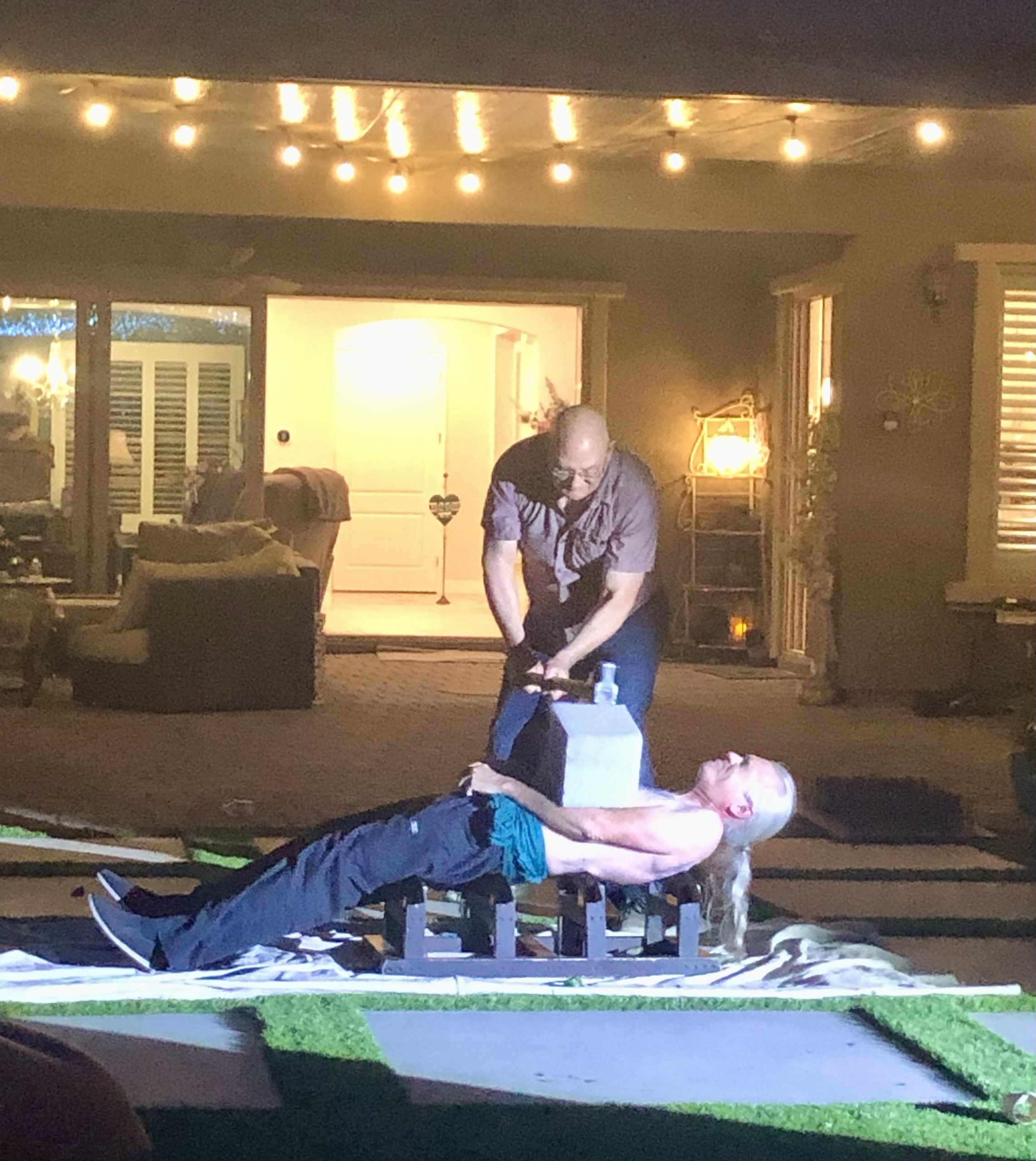
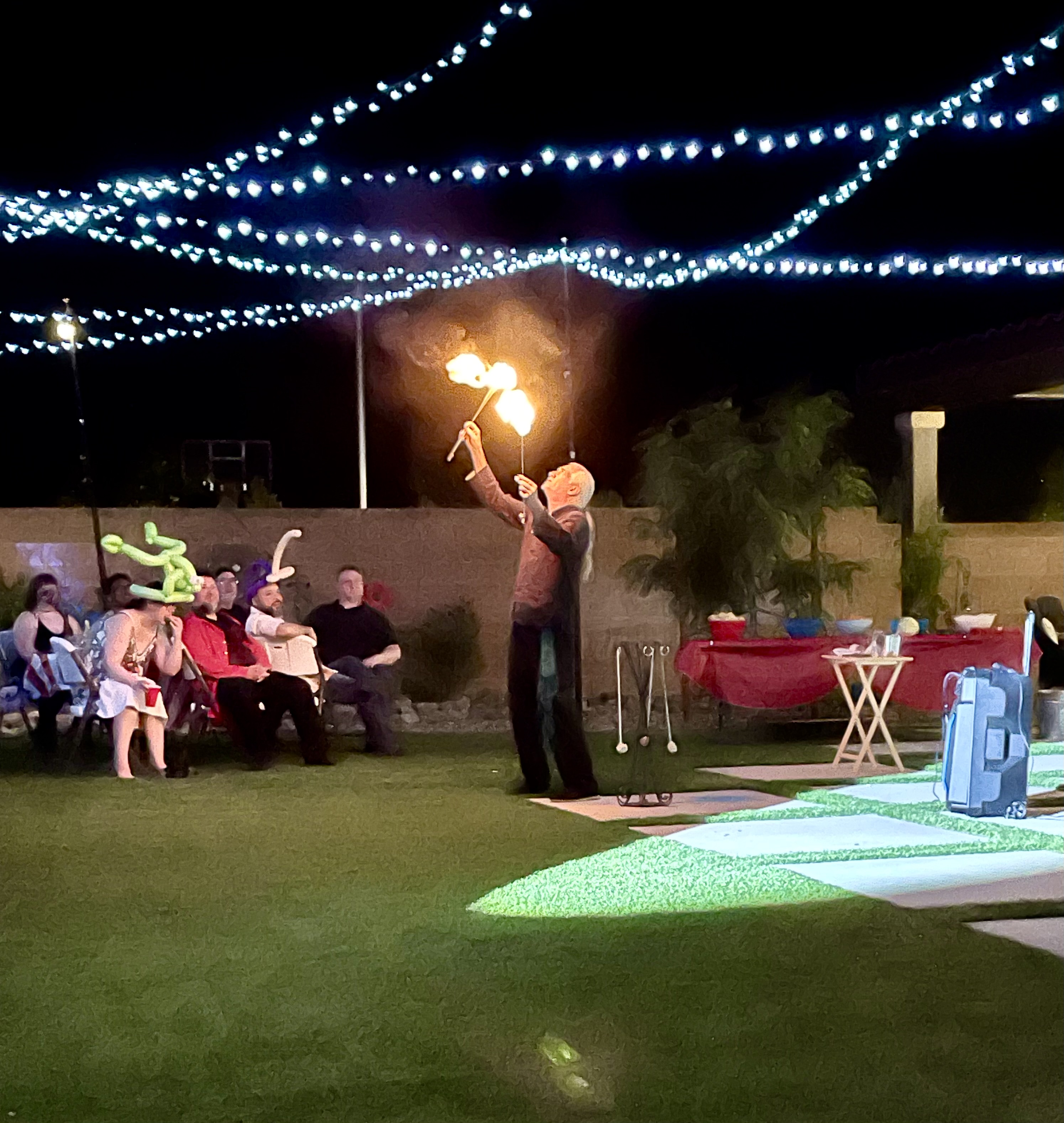
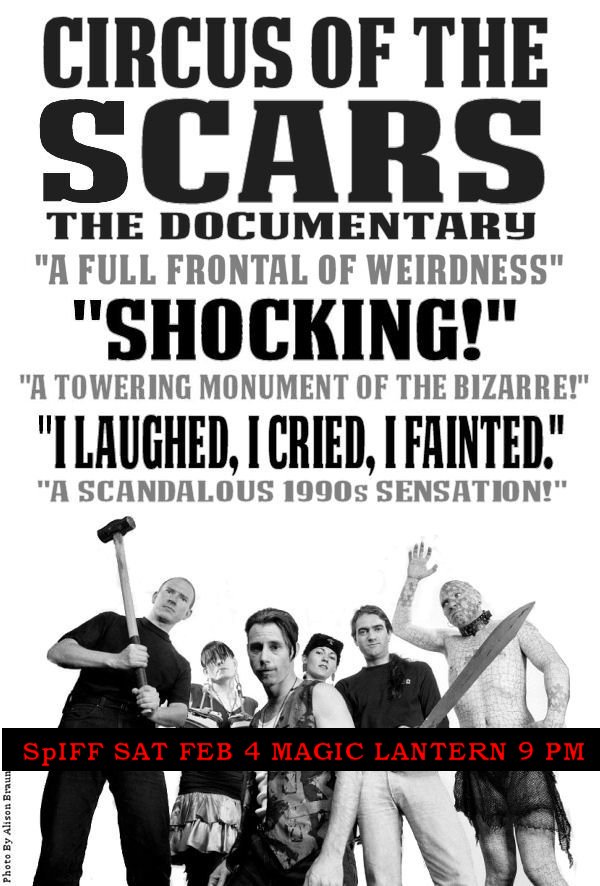
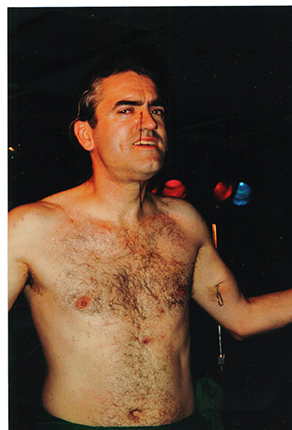
For our 200th episode we are joined by Matt “The Tube” Crowley and Tim Cridland, aka Zamora the Torture King, to discuss the new documentary about the rise and fall of the Jim Rose Circus. This rock n’ roll version of sideshow oddities reintroduced the art of sideshow to many who had never seen it. As two of the original four marvels of the Jim Rose Circus, Matt and Tim share tales of the road, their philosophy of what sideshow is — and what it may evolve into — as well as giving away a few secrets of their acts.
0:00:00
Allison Cossitt: Welcome back to Squaring the Strange. I’m Allison, a voice actress completely unrelated to the show. Nevertheless, I’m here to congratulate Ben, Celestia and Pasquale on 200 episodes! That’s a lot! Certainly more than a hundred, but far less than five hundred. So, in that sense, it’s a bit of a failure, I suppose. Still, three quarters of new podcasts don’t last more than a year, and very few make it to five years and two hundred episodes. They must be doing something right to get you lot to listen regularly and drop a coin their way. Over the years, thanks to your generous patronage, the team has been skeptical about an astonishing list of topics, all made into listenable content through Celestia’s expert editing. Things like Headless chickens and bottomless pits, Chupacabras, clown panics and crop circles, ley lines and lake monsters, moral panics, mermaids, Minnesota Icemen and literary hoaxes, Ben’s hate mail, toilet ghosts and TikTok scares, pink slime, the Pied Piper and… penis theft? All right then. And there have been lots of special guests including Kenny Biddle, Sharon Hill, Susan Gerbic, Matt Crowley, Eric Christopher Myers, Richard Saunders, Kyle Polich, Mick West, Daisy Ahlstone, and well, I’d list them all but I was only paid for a two-minute spot. Anyway, without further ado, here’s the gang to tell us what they cooked up for their bicentennial episode.
0:01:55
Ben Radford: Welcome to Squaring the Strange, the podcast that examines all manner of the mysterious and the mundane through a critical lens. So, let’s Scare the Strange.
This is episode… oh, she just said it! To 200! And with me is…
Pascual Romero: Pascual Romero, and…
Celestia Ward: Celestia Ward. 200! Yay! Confetti, pop pop,
0:02:45
streamers, balloons! Congratulations guys, we made it to 200.
0:02:51
BR: Let me pat myself on the back here. There we go.
0:02:54
CW: No implosions. A lot of sleepless nights. Man, podcasting is surely a way to just eat up all your free time.
BR: And with that recommendation… if you have too much free time on your hands, Celestia recommends podcasting.
CW: Start a podcast. Otherwise, I mean, how have you guys
0:03:18
been doing?
BR: Good, busy.
PR: Yes, I echo that. I’m very busy, but good. Surviving. I’m excited to be here.
0:03:27
CW: Happy to be above ground, yeah.
PR: Yep.
CW: So Ben, who do we have on for episode 200?
0:03:32
BR: So this time we have two marvels from the Jim Rose circus. We have Matthew Crowley and Tim, the Torture King, the Moron.
0:03:42
CW: Sideshow people! I love sideshow people. This is going to be a fun interview. But before we get to that, we have some news items that definitely fit into our category of strangeness that needs to be squared.
0:04:03
Yes, there were a couple of news items that I definitely put on my little list to talk about on the podcast here. The first one has two things that we love, controversial public art and merfolk.
0:04:18
Ben, have you heard of the mermaid statue recently created in southern Italy?
BR: I have not. The main mermaid statue I can think of is the one, I think it’s in Denmark, the Little Mermaid.
0:04:30
I don’t know about the Italian one.
CW: Wasn’t there like a quote-unquote real mermaid sighting off of, was that France or Italy?
BR: Israel.
CW: Israel. Different I nation. Well this time mermaidas are in the news because a statue created by Luigi Rosso Art School students in southern Italy. It has gotten a lot of attention for its assets. The students endowed this mermaid with very large, curvy buttocks and breasts. And, yeah, the fishtail doesn’t actually go all the way up to her waist. It starts way down low. So it’s not just a butt shape. It’s a butt. There’s a crack like it’s a butt. Now some some of the community are objecting specifically because well, it’s been put up in a square that’s named after a scientist, a famous Italian woman who became a senator later, Rita Levi Montalcini. She was a Nobel Laureate for her work in neurobiology and she, as I said, she later got into politics. So they’re thinking this is not really respectful to the woman’s memory and whatnot. You guys, what are your thoughts on this?
0:05:49
BR: I’m struggling to, okay, so there’s a mermaid with that you think is a little too butty or something and this is, I don’t.
0:05:57
CW: It’s being called vulgar. They’re saying it’s, you know, casting a shadow on on this this scientist
0:06:04
Who is it named after.
BR: Is it depicting this woman scientist as a mermaid? What’s the connection there?
0:06:10
CW: No, it’s it’s not but some people are kind of throwing that essence on there like well, this this doesn’t look like her at all it was it’s not supposed to but they’re saying that just the fact that this female statue is in the square named after her kind of creates a connection.
0:06:29
BR: Oh, whatever. You know what? Look, let me just straighten this shit out now. So mermaids, like women in general, come in many different forms. There’s no single prototypical mermaid. There’s none of this sort of, you know, I just I’ve seen mermaids in many different forms in Brazil, which are not the Ariel type you see in Little Mermaid. There’s all sorts of different mermaids, big, small, everything. So this idea that I’m not buying it.
0:07:00
CW: So we’re here, we’re fishy, get used to it.
0:07:03
BR: Exactly.
0:07:04
PR: Yeah, I did look up pictures of it and while she is very voluptuous and well-endowed, I don’t really know, I guess it’s just where do you… Is it that you don’t want nudity at all? Or is she too curvy? The butt thing is a little weird just because it’s not typical of mermaid depictions, but it’s also just a woman’s sitting posterior on the ground. So it’s not like she’s in like a pose that’s meant to accentuate it, I guess. So I don’t know. I’m kind of on the fence. I just, you know, personally, I don’t find it to be vulgar or, as was quoted, as being too provocative.
0:07:47
CW: The Italians kind of have a history of naked people.
0:07:51
BR: Yeah, yeah. Italy is not known for their prudery. Lemme just put that out there.
0:07:59
CW: I’ll read an Instagram in which Italian actress Tiziana Schiavarelli objects to this statue. She says, it seems like a mermaid with two silicone breasts and above all, an enormous ass never seen on a mermaid, at least not on the ones I know.
BR: What? I have so many questions here.
0:08:20
CW: Well, there was a wink wink nudge nudge there.
0:08:22
She’s not actually she’s not actually claiming that she knows mermaids. She’s being cheeky. And she does say she hopes, she wishes the students well who created this. Now the teacher in charge defended his students’ work and said that it was a tribute to curvy women. And the idea had been put forward by the students who produced a scale model. And it was approved by the council of the region. So what’s the big deal? So I guess one thing I’m really curious about is, Pasquale, you just did a search for the photo. I did a preliminary search. I didn’t find anything that showed me the actual scale of the statue. It was described as a giant statue, an enormous statue, but I couldn’t see anything. I mean, would a person fit in the butt crack or is it just like slightly larger than the average human? I mean, how big is this thing?
0:09:15
PR: I can tell from the pictures I see, there is a car parked behind it and the car is probably larger than it. So I would say that this is probably, you know, maybe larger than a person, but not
0:09:32
larger than a car.
0:09:34
CW: How big was her ass on a scale of Honda to Dodge Ram.
0:09:41
PR: It’s about the size of a hatchback,
0:09:42
according to this picture.
0:09:43
CW: Well, honestly, I mean, as somebody who works
0:09:46
with some people who design public art, one of the thoughts going into public art these days is how attractive will this be for people who want to take selfies with it? And if that butt is the right size to just kind of snuggle on in there, that’s a tourist attraction.
0:10:06
PR: Absolutely. I think it’s a great way to bring people to the squares.
0:10:11
CW: Yes. Well, and the next thing, the next thing that crossed my desk and was not nearly so cheerful a topic as in mermaid asses, although asses are involved here. We’re talking about Florida. You guys heard that the COVID study that was done, you guys heard about the COVID study, the COVID vaccine study in Florida that was found to be fraudulent?
BR: I heard something about that, yes.
0:10:36
CW: News came out that Florida Surgeon General Joseph Latipo, who is a pretty outspoken critic of vaccines, or specifically the COVID-19 vaccine, which maybe sort of got him the job of Surgeon General in Florida in the first place. The public health graduate is growling among us. It looks like, according to some documents that were obtained by a public records request, that Latipo personally altered the state study about COVID-19 vaccines to indicate that some doses would pose a higher cardiac risk to young men, specifically young men, than had been established. This comes from researchers at the Johns Hopkins Bloomberg School of Public Health, as well as the University of Florida. And looking through it, I mean, they looked at his edits and they’re using words like lie, this is a lie, it was altered over political concerns, et cetera, et cetera. They’re not mincing words here.
0:11:39
Meanwhile, Latipo said that his edits are a normal part of the process. And, quote, I have never been afraid of disagreement with peers or media. I mean, come on, dude. This is the kind of stuff that kills people.
0:11:54
BR: Yeah, and it’s one thing to have, you know, some Breitbart journalist or, you know, or somebody with some low ranking person with some agenda. But to have to have a person that prominent, particularly in the public health field, is just astonishing.
0:12:11
CW: Yeah. I’m reminded of Neil deGrasse Tyson’s saying, you know, you are entitled to your own opinion, but not your own facts. I mean, that was the one thing I remember with the the covid-19 vaccines is, oh, what’s what’s the effect on the heart? Is there a greater chance of myocardia, blah, blah, blah. Well, you know what has a far greater chance of causing myocardia in young men? Getting COVID.
0:12:38
The reporting on that and just the way everything, yeah. We’re gonna be doing studies on how this was handled and there’s gonna be so many investigations. There already are, this is coming out right now. So we’ll just kind of sit back and see how everything is assessed as it rolls in. But enough about that because it will just keep me angry. Let’s get a move on and talk to our two guests.
0:12:59
Ben, we’re talking about sideshow stuff today, which is very close to my heart and yours too, I know.
BR: Yes, indeed.
0:13:09
I’m a longtime fan of circuses and sideshows and carnivals and all sorts of oddities. And so this is a I’m super excited about this episode.
0:13:20
CW: Yeah. And there is a lot of crossover between skepticism and sideshows and magic. What are your thoughts on that? Yeah. and side shows and magic. What are your thoughts on that?
0:13:32
CW: Yeah, well, of course, we could do a whole show on that.
0:13:34
CW: We are right now. We’re on it.
0:13:38
BR: Well, yeah, but there’s the intersection of magic and skepticism. Of course, that goes back to Harry Houdini and, of course, the amazing Randi. All the different ways in which magicians are uniquely qualified to detect deception and trickery and things like that.
0:14:07
So, yeah, this is super cool.
0:14:10
CW: Yeah, I think sideshow acts are kind of like a fun little prerequisite for serious skepticism later on. I mean, you’re a kid, you walk through a carnival. It’s part real and part unreal. And walking into a sideshow tent, you expect fraud. You expect to encounter something that is not what it appears. Penn Jillette, who kind of counts himself a member of the carnival arts, in his Vegas show, his patter kind of discusses the difference between magic, a magic approach, and a juggling approach, which, you know, the magic and conjuring is all phony, and then juggling is skill and practice, and you get to the point where something looks like it’s magic, it looks like you must be doing a trick, but you’re actually doing the thing. So in a sideshow, there’s that intersect there of like, it’s ambiguous, is somebody really swallowing a sword? Or is it a gimmick sword that just collapses and so it doesn’t actually go all the way down the trachea?
0:15:08
BR: Yeah, and it’s odd because as a professional skeptic, I am inherently annoyed by intentional ambiguity of whether something is true or not. Because it’s like, no, that’s… And that’s why the documentary about Randi is called An Honest Liar. Because he’s telling you flat out, I’m going to deceive you. I’m a magician. You’re paying me money. Sit down, shut up and enjoy the show. But then we get into, and we sort of talked about this on the previous episode where we’re talking to some magicians, but then of course you get people like Kreskin, where there’s this sort of ambiguity, like, okay, well, he’s sort of saying he’s doing tricks and not, and then you have other people like, you know, well, psychic mediums, some, some famous ones who are pretty clearly doing hot and cold reading.
0:16:05
CW: Yeah, there’s a difference between fakery for the showmanship of it and then just out and out charlatanism. And I think sideshow performers, and we’re going to talk to our guests about this, I think when they’re doing real bodily stunts, I think they go to lengths to make sure that the audience can see up close that the thing they are doing is really happening. You know, it’s the way it appears to be. And and to be fair, I mean, skeptical magicians, as you said, Randi and others, magicians who build themselves as also educators and skeptics, they go to lengths to talk about how what they’re doing is an illusion and they are conjuring it. And it’s a it’s a skill. It is a it is a gimmick. And there’s a lot of cross pollination. And I got to quote Ward Hall, who’s known as King of the Sideshow. He unfortunately died in 2018, but he lived a very long life and a tremendously long career. He once said, everything here is real. Some of it is real real, and some of it is real fake, but it’s all real interesting.
0:17:12
BR: I met Ward and with Joe Nickell, I think at the Erie County Fair, at least twice. And just, you know, exactly as you would expect him to be, the sort of crusty, carny, you know, he tells you the dead truth, or does he? A little wink and a nod. I was born in 1938. Were you? Okay.
0:17:37
I mean, that’s plausible, but then…
CW: You see, one of the things he said in an interview later when he was very elderly, he said, one of the nice things about being that old is you could tell stories and there was a lack of fact checkers available.
0:17:51
BR: Absolutely, and I hung out with Ward and others, Bobby Reynolds, Petey the fire-eating dwarf, and of course there are lots of crossover between Ren Fares and the Sideshows and Singalows, those are the sort of standalone things, and of course Dip Clowns, which I wrote about in my book Bad Clowns.
0:18:13
CW: Yeah, that’s true, clowning kind of intrudes its big red nose into this too.
0:18:18
BR: It does, and of course in a lot of the cases you see, you know, again, sort of it’s a porous profession, if you will.
0:18:27
And, you know, you go and see the side shows and you pay your quarter or dollar or 10 cents depending on when the air is, and you go and see the pickled punks, the babies in jars, some of which are real, some of which aren’t. Of course, on the previous show, we did a show on shrunken heads and that was actually a time when I got to see a real shrunken edge for the first time. And it was just, it’s just the whole evocative,
0:18:55
beautiful, grotesque scene.
0:18:58
CW: Well, to go more into that beautiful, grotesque scene, we have special guests joining us.
0:19:06
Yes, I am super excited about this show and these guests. As listeners know, we rarely have two guests on at one time, but this time we just had to have them both. I have known both these guys for quite a while. Zamora the Torture King and Matt the Tube Crowley.
0:19:23
CW: Hi guys.
0:19:25
CW: Good evening. Now, Zamora, can we call you Zamora or do you prefer-
0:19:29
TC: You can call me that. I have this thing where I’m on stage, I’m Zamora the Torture King. Off stage, secret identity, Tim Cridland is my real name, my birth certificate name.
0:19:41
But call me whatever you feel like, you know, whichever applies for the situation.
0:19:47
CW: We’re on a virtual stage. It is the stage of the mind right now in podcast land. So now I’ve seen you both. I’ve seen Matt, you performed a stunning condom up your nose trick, had a skeptical convention for me one time.
0:20:04
That was amazing. And Zamora, I’ve seen you numerous times. In fact, at one of your very small intimate shows in Las Vegas in a not quite luxurious hotel. You were up in the second floor, very small room. And right behind me sat two women, one of whom was an ER nurse or some kind of nurse. And she was wailing, screaming, that arm is dead! Oh, my God! That arm is dead!
0:20:34
And that, like, made the show for me.
0:20:36
BR: My first introduction to Zamora was seeing him perform at a small bar or club in Ontario. I was living in Buffalo at the time, and I just heard about the Torture King. I’m like, I don’t know anything about this guy, but sounds like someone I should go see. I crossed the border and drove to, it was like Kitchener, I forgot exactly where, but somewhere in Ontario, and saw him, and I’m like, wow, this guy’s the real deal. And I’m kind of freaked out, but this is really cool. Met him, got an autographed poster, got a photo, which actually appears in one of my books. And only later did I realize that he was part of the Jim Rose Circus and the other guest, which is Matt the Tube, Matt Crowley. And we’ve had Matt, of course, on the show before talking about the…
CW: The Skookum butt print.
BR: The Skookum cast, exactly. And of course, his trademark trick, I don’t know if it’s trick, stunt, I don’t want to slight the word. But the first time I came across him, and I may mention this, was I read an article he wrote on autoerotic asphyxia in the Loompanics catalog.
0:21:45
CW: Now, what was the Loompanics book catalog?
0:21:49
BR: Loompanics. Matt, please, just a brief explanation of Lumpanix.
0:21:54
MC: Loompanics was run by a man named Michael Hoy, who’s still alive up in Port Townsend, Washington, and he kind of described himself as like the radical fringe of the libertarian movement. He was very much a free speech literalist, that he would publish books that really pushed the boundaries of all kinds of taboo subjects. books on how to manufacture drugs, how to make weapons, explosives.
0:22:33
BR: The Poor Man’s James Bond?
0:22:35
MC: The Poor Man’s James Bond. That was an older book, but I think he sold it. But many, many books like that. But a lot of, there were political books too, with a, like a libertarian bent on, you know, and how to keep from under the thumb of the oppressive government. And so Tim and I occasionally would go visit Michael Hoy. The first time I met him, in fact, Tim had described my interest in autoerotic asphyxia to Michael Hoy. And Michael Hoy just approached me and said, Hi, I’m Michael Hoy. I publish Loompanics. Would you like to write an article about autoerotic asphyxia and I’ll pay you $100? And it was so incredibly flattering at that time because this is 1987 and I had just gone through pharmacy school and I didn’t do much writing in college. I didn’t have two, I think I had like one English class, right? I could barely type with 10 fingers. And so, it seemed like such a monumental task to write an essay on this arcane subject, but I did have the information because I had photocopied dozens and dozens and dozens of forensic science journal articles about the subject. So I had a great deal of information on it. And so I was able to distill it down to an essay and it appeared in the, I think, 1988 book catalog.
BR: I had no idea that Tim was involved in that as well.
0:24:06
So how did you two meet?
0:24:09
MC: Well, Tim, I could give you my version or you could give me…
0:24:12
BR: Let’s hear both versions and we’ll decide which is right.
0:24:15
TC: Let’s hear yours. I think it’s the same, but there might be a little difference in what you remember. But sure, tell them how it happened.
0:24:24
MC: Okay, so my memory was that I like to drink at a bar on Capitol Hill called Squid Row. I recall being in Squid Row and this man walks in the bar holding a metal suitcase that reminded me very strongly of the metal suitcase in the movie To Live and Die in L.A. And I was very twitterpated by that movie and so this man became the focus of my attention and I said what’s in that briefcase? Counterfeit money? And he said no it’s my zine. I’ve just come from Kinko’s. I have created this a fanzine. At the time I did not really know what a fanzine was and so this is kind of my introduction to what a fanzine was. So he opens the briefcase and it’s the latest issue of his fanzine entitled Off the Deep End and what I most specifically remember was a political cartoon and it showed a representation of the John F. Kennedy assassination on Dealey Plaza and the trajectory of the three bullets from the sniper’s nest and the caption was the three ballots that elected Lyndon Johnson. And I thought that was about the blackest humor I had ever come across. I thought, wow, this is a pretty interesting guy.
CW: And Tim, does that square with your memory there?
0:25:54
TC: Well, kind of. It’s got, I think, some things put together. I think there’s a thing I read once where Matt said that he met me at Squid Row and I was handing out JFK assassination literature. What I remember is I had maybe along with the fanzine I had some anti-voting literature at the time. I was hand pamphleting for encouraging people to go out there and not vote. And it was like at the mishmash of different things. One of them was this essay by Bob Black, an authority on anti-authoritarianism called Elect Not to Vote. And then because of the times cut and paste photocopies, I’d taken a thing. This was the election of Lyndon Baines Johnson was the, what he’s referring to, which I think was republished in the one of the subgenius, Church of the Subgenius fanzines. I’d cut and pasted that in there. And I did have a fanzine. My fanzine was called Off the Deep End and it was kind of a celebrating in a way the most outlandish extreme beliefs. And it was for people who were like, you know, people were into kind of weird stuff that was stuff that was too beyond the normal weirdness. Fortean conspiracy, weird science, even political punk magazine all melded together. And I did that for quite a number of years, photocopied Fanzine, had a friend who worked at Kinko’s or probably would not have been able to happen with the lifestyle I was living at the time. But yes, basically Squid Row handing out strange literature. And we had a lot of similar friends as well, I think, who went to those type of bars on Capitol Hill, Squid Row and the Comet Tavern, which became quite infamous in the scene of Seattle at that time, the 80s and the 90s.
0:27:52
CW: Well, before we get too far into what that weird little meeting spawned here, first of all, we have you guys both here because a documentary about the Jim Rose sideshow is now making the rounds on the festival circuit. And I hope it will soon be available to wider audiences. Do you guys know anything about whether or not that will occur soon?
0:28:12
TC: Well, all I can tell you is it’s the producers, Director Corey Weiss and Jan Greger producing it, who are going to be able to answer that. Right now, it’s on the festival circuit and they’re looking you know for interest and we’re getting quite a lot of results from the Festival Circuit and think there’s five best documentary awards we’ve gotten so far. So eventually it’ll come out on the streaming and or DVD or however people do things these days but right now it’s still making the rounds of the Festival Circuit.
CW: Now for anybody out there who needs an explainer, I know we’ve got a wide variety of ages that listen to our podcast. The Jim Rose Circus was a huge phenomenon in the 90s and the early 2000s. It was an integral part of Lollapalooza and also a smash hit all over Europe and Australia, as well as the US doing multiple world tours. And many said it sort of revived the The Lost Art of the Sideshow and the documentary Circus of the Scars, S-C-A-R-S, is based on a book, as you mentioned, the book of the same name that you, Zamora, co-authored with Jan Gregar. It’s a beautiful book. I purchased one at one of your live shows and it looks like you can get it online now, but you’re going to be paying upwards of like $70 or $80 for a used copy.
TC: It came out in 1998 and it’s quite well done. But I do have them at the showings of the movie. The movie does show at the film festival. It’s the next one at the Coney Island Film Festival. I think that’s May 5th. And I will have them available there for a reasonable $40.
CW: Oh, that’s a bargain.
0:30:01
Well, if you can get up to see the documentary and we will try to find the documentary schedule and get it on our Facebook group so people can find out where to see you next. It’s a fascinating look into road life and the culture of how the Jim Rose Sideshow took place. And it’s got interviews with you and Matt and people like Enigma and Mr. Lifto and Jim Rose himself, which is amazing. He participated. A lot of people really didn’t have great things to say about him in the movie.
0:30:32
TC: There’s a story about that, a little background on that. I can go into that later or go into that now as to how Jim Rose ends up participating.
0:30:41
CW: Oh, I’m curious now, Ben. How about you?
0:30:43
BR: Sure.
0:30:44
CR: Well, that was the thing. The thing about Jim Rose is he totally wants to be in control of everything and we’re putting together the documentary and of course we’d like to have Jim Rose interviewed but we felt he would be the most difficult person to cooperate and sure enough when it was almost all the way done there was an attempt to contact him and he came back and wanted to know everything. He was talking to Corey Weiss, the director, seemed like he wanted his mother’s maiden name and social security number and all this stuff. Might as well be that, but he wanted to know everything about it and wanted to see every part of it that had already been, and it became obvious it wasn’t going to happen, but luck would have it that he had just done this interview with Coney Island Sideshow for some event they did, so he’d done this long interview of which they’d released only a small part of it, and we were able to get the full interview and incorporate that into the documentary Which Jim Rose is apparently not that happy about but the fact of the matter is he is basically was answering the same questions that would have been asked and you can see that in the Documentary he’s basically going along with what everybody’s saying and what everybody’s talking about, he’s responding to this. So what’s the big deal, man?
0:32:06
BR: He needs to be in control, damn it, come on.
0:32:08
CW: Yeah, well, once you put it out there, it’s fair use.
TC: Yeah, well, actually purchased from Coney Island.
0:32:14
Yeah, he already signed all the release forms for that. And my thing is this, if he had like different answers for anybody when they do a documentary. If they said, if I’d known so and so was doing this, I wouldn’t have said what I said. And I’d say, well, it’s, you know, if you’re going to give different answers to the same questions, depending on who’s asking it, what does that mean? But he’s basically, you’ll see it in the interview. He, in the documentary, he’s answering the questions that would have been asked by us or anybody. In fact, it’s, it’s been, it is quite recent to the time of the documentary being produced. So it’s pretty good as it turns out in the end.
0:32:56
BR: So set the stage for us. So who were the marvels? You two were some of the marvels. Who were the marvels in general?
MC: Well I was, there was just four. At the very beginning we incorporated a few other performers to kind of round out the show. We had a contact juggler, which juggles clear glass balls that remain in contact with the skin. He’s not throwing them up in the air, they roll along his skin.
CW: Yeah, I’m a big contact juggling fan. Michael Motion all the way, man.
MC: Yeah, I’d never seen it. There was no World Wide Web in 1991, so you couldn’t just go on YouTube and what is this? And we also had a gentleman who did cowboy stunts. So we had kind of a extra group of people, but the primary group of people was the so-called Four Marvels and Jim and Bebe. So that would be me and Tim, Mr. Lifto and the Enigma, or as he was called at that time, Slug the Sword Swallower. His basic cornerstone stunt was he was a sword swallower.
0:34:07
CW: He also swallowed some slugs, right?
MC: Yeah, insects mostly.
0:34:11
I think the slugs, I think he might have done it once. I’m not clear on the historical facts. I think he really did.
BR: He swallowed one slug and suddenly everyone’s calling you slug the swallow.
0:34:27
TC: As I remember this, in the documentary he says he thought this up and I remember it differently, but the fact is he did it in this, I was doing things with my friend Tom Prince in Seattle was doing this kind of thing he called a subgenius revooval, which is different than the subgenius revival, Church of the Subgenius, and we do these kind of performance performance exhibits at various venues around town over the years and I had him do that for one of those. I think while everybody else was doing, or not everybody else, but some other people were doing Lollapalooza, the first one, Lollapalooza 91, they wanted people to do that. Mr. Lipto ended up doing a little small segment in the first Lollapalooza locally and everybody else was like, well, there’s a story about that. Weren’t interested in the first Lollapalooza because they were trying to do, come on man, do it for free and had heard about us. And this was just a local promoter trying to get us to do that. But Lipto was down for that. And I was doing a subgenus revooval. So it was supposed to be some type of a quack medication that he was, a nurse had taken a big thermometer, a tongue depressor and shoved it down his throat in a big thermometer. And then, oh, you require some naturalistic remedies and had slugs and things like this. So it was, I think once, yeah, once you do swallow a slug, yeah, you’re gonna be, it’s like that, they don’t call you the bridge builder, you know?
0:35:58
CW: So Enigma was a sword swallower and Lifto lifted things through piercings on various parts of his body. And you are the human pincushion, aka Zamora, the torture king. And Matt, what was your nickname and why?
0:36:10
MC: My nickname was the Tube because I started off not even thinking so much about Sideshow, when I was in college I knew a nurse that would intercept stuff on the way to the garbage, not like biological hazardous material, but things like rubber gloves or plastic containers or things like this. So he had this box of gastric lavage units and these are True Blue stomach pumps and they’re not very big. It’s a long tube which goes down the nose into the stomach and at the other end of the tube is a small syringe. You know, I remember taking it home and I thought, wow, this would be pretty wild to just be able to do it, like pump your own stomach. And I remember sticking the tube into my nose and one nostril, I couldn’t even put it down. It wouldn’t turn the corner to go down into my esophagus. And so I tried the other nostril and I turned the corner, I got it to my esophagus, but then I hit my gag reflex and I couldn’t swallow it. So I set the thing aside for years. And that would have been the early 80s. That would have been like, I don’t know, 83 or something. So I moved to Seattle in 87 and at this point I thought there might be a bar stunt, a way to win a bar bet because I thought, you know, you could challenge somebody. You could say, you know, I can drink this beer. I can put the contents of this beer in my stomach without it passing my lips. You know, and if I win, you know, you give me 20 bucks or something, you buy me beer tonight, whatever. So I thought, so I thought what I’m going to do is I’m going to put a stopper, like a rubber or a cork stopper in the beer, and then this tubing, I’ll get the tubing into my stomach, then I’ll shake up the beer. And what I discovered right away was that the pressure of the carbonated beer was not enough to push it into my stomach. So I thought, well, I’ll just use the gavage syringe. So I did that, you know, I filled the gavage and it’s only about a 60 cc syringe. It’s not even a complete beer. So I filled the syringe full of beer and pushed it into my stomach. And I was, and so, yeah, so essentially I was looking at it at that point in time as kind of just a bar stunt, not a sideshow stunt. I was a big fan of Houdini growing up, and I knew some about magic and escapology, but not really so much about sideshow. So Tim knew that I was working up this stunt, and he was doing a performance for the Church of the Subgenius, and he had an intermission and he said, Matt, I need to manipulate a prop during my short intermission. Why don’t you entertain the crowd with your new bar stunt? Why don’t you fill your stomach with this syringe full of whatever? You look back on it now and it’s just the absolute crudest beginnings of this weird stunt, but it did it did take up the time and Tim will know the rest of the story because it was video recorded and I’m not sure if the video was shown to Jim Rose or if Tim just described the stunt to Jim Rose.
BR: Tim what happened?
TC: Well what
0:39:56
happened somehow I don’t know how he knew about it but you know you do this in front of a bunch of people, Matt, people are going to talk about it. And somehow Jim Rose knew that I knew you and knew that you did this. But Jim asked if Matt could come by and do the show, be part of a show we were doing at Cafe Sophie’s, a small venue, downtown Seattle, but how did Jim Rose and I meet and everything get together. Well, Jim Rose was doing these solo shows at this place called, where was this?
MC: Alibaba.
TC: Alibaba, yeah, on Capitol Hill and he’d done one of these and he had these posters and I was interested in this but I’m gonna say at that point I wasn’t interested enough that I went to the first show but I was, I had to start in magic, you know, conjuring, stage performance, things like that. And it was kind of doing these kind of kind of gross out magic performances was a lot of it was, was Matt was talking about earlier and the subgenius event that happened. So somebody knew me down at the market magic shop, uh, Pike Place Market in Seattle and said, Hey, have you heard about the geek? Have you heard about the geek? And this guy knew that I was doing kind of sideshow-esque type of stuff. I had an interest since I’ve been very young and that was part of what I was doing. And he literally picked up the phone, dialed Jim Rose up and shoved the phone in my hand and made me talk to Jim Rose. And I met Jim Rose at a coffee shop in Capitol Hill and then went and saw my first experience of his show, which I think was the second show at the Alibaba Cafe, which we have some videotape of that actually in the documentary. And then he asked me to be part of a show that he was doing at Cafe Sophie. I did that. And I think that’s where everybody began to get together. Mr. Lifto, I actually had known beforehand, not very well, as under the name Joe Jizzem, he was going, people have these punk rock names, Joe Jizzem, and you can see him. He was at one of the Alibaba shows, and Jim put him on the show. And then Paul Lawrence would come on to be Slug, later The Enigma, as times progress, was at an early Cafe Sophie show. And the first time I met him, he’d been doing fire blowing, where he was using a lamp oil that was dyed red and it was all down the front of his shirt and his face was all dyed red from blowing. Yes, and that gives you a kind of a first impression. Pretty much fits with the rest of the experience throughout time spent with him. But the Cafe Sophie performances were where we all kind of got together as a group. And he had a sword swallower, and at that point I had never read, I’d read about sword swallowers, but I’d never seen an actual sword swallower. So he was pretty much the first real life, in front of my eyes, sword swallower I’d ever met, and it was very much a lost art at that time.
0:43:10
CW: While you’re talking about the evolution of what became your acts and how you approach things. I’m interested in something that was said in the movie about how each of you, how you approach the art itself and what you want to do as a sideshow art. Zamora, you said your philosophy was more about studying ancient techniques and reviving them, like the fakirs in India and stunts done for centuries in other cultures. And Matt, you were all about inventing your own stunts, coming up with new things involving like plastic tubing and latex condoms and those things wouldn’t necessarily be available to street performers in Eastern Asia like 200 years ago. So can you talk about how each of you approaches your sideshow stunt development differently? I mean, do you guys have arguments about this? Or is it just you’re covering two separate sides of a spectrum here?
0:44:02
MC: Well, for myself, as I say, I knew about Houdini. So knowing about Houdini was kind of as much as I knew about stage magic or stage performance. I really knew nothing about sideshow. But once I saw the Cafe Sophie show, it was immediately obvious that my stunt fit in to the general temperament of a sideshow performance. However, I really only had one stunt, and so I thought, I need to come up with something more than just one stunt. I remembered back to being a child. My parents did not drink alcohol. My father taught law at the University of Montana, and he had a party, and they thought, well, we should have some alcohol at this party. So there’s a bunch of drunken lawyers at our house. And I must have been, I don’t know, six or seven years old or something. I didn’t really understand the effects of alcoholism at that time. So this man approaches my mother and says, Mrs. Crowley, do you have a can of canned food? And I could see my mother, this teetotaler, was kind of aghast and, like, so handed him a can of pineapple or something. And we had a wooden cutting board on top of the dishwasher. So he put his index finger on the wooden cutting board, say his left index finger, and then he held the can in his right hand, and he brought his hand up, and as hard as he could he smashed his finger on the cutting board and it dented both the edges, the sides of the can and of course made a huge indentation where he just hit his finger. And at the time I didn’t know if that was a magic trick or a something else and so of course being a child I was like, well do it again, do it again. First rule of magic you don’t do it again. But this guy was, you know, he was kind of in a different world. And so, he says, well, Mrs. Crowley, do you have another can of canned food? You know, so I think he did it two or three times. And I had forgotten about that for many, many years. And so I thought, you know, I bet you that could be resuscitated as a sideshow stunt. I did not invent this stunt. In fact, Tim Cridland discovered a magic book that detailed this stunt and obviously I learned it from this lawyer in the 70s. So I didn’t invent that one but I did, I will claim to have introduced it to modern sideshow because I don’t think anybody was doing that. So the way I approached it was people haven’t seen sideshows in a long, long time. It seems to me like I’m looking at a blank canvas. You know, I can do anything I want as long as it, you know, as a kind of, it has a familial resemblance to some of these other stunts. And so each stunt I started trying to figure out how it could be done and started doing them.
0:47:12
And how about you, Tim, as far as Zamora, how do you approach things in terms of like, do you have this quest for knowledge of the ancients when you look into what next you’re going to do?
TC: Well I want to say one thing that really going way back was there was this book on magic in my elementary school library and it had all these you know stage illusions and things like that and but it also had all of these sideshow type stunts and I show that in the documentary it was called a secrets of magic ancient and modern by Walter Gibson. And some of this is a rewrite it turns out of some other books and things like this I would discover later but that was really brought me into it and they’d have the descriptions because there’s these books that are out there and they’re like this is how it’s done but if you do some thought it seems like the person who’s telling you how it’s done has never done these things and there’s a pamphlets and booklets over the years that have had this where I can even trace where someone is basically cut and pasted so to speak passages from somebody else’s book onto their book, but they don’t really do it. And even if people do have the correct technique, there’s a difference between telling somebody how something is done and telling them how to do it. Now I’d read about all these different types of stunts and different types of feats that have been done or witnessed or supposedly witnessed over the years, over the centuries and the thing is can I do this in real life, can I reproduce this and going through some of these old booklets it seems well the information they have is totally wrong and if you do what they tell you to do you’re going to mess yourself up really bad.
0:49:06
CW: Yeah, I imagine that’s rather, a little bit of knowledge is a dangerous thing.
0:49:11
TC: So there were some stunts I’d read about and it’s like how could this possibly possibly ever happen and did a lot of experimentation of course starting slow with some theories as to how things could work. I Actually would try and do a version of it. But a lot of it was like I’d try to do something and there’s a point where, well, I’m just going to have to go and do this because I’m going to give you an example. The first time I put a skewer in my mouth under the tongue coming out under the chin, you know, there’s this point where do all the research you want, but you’re just going to have to do it. And now what I’ve done a lot of research, I had anatomy books, I had photographs of people doing this, it’s even much more extreme versions of that. And what I was trying to do is get, you know, this is basically a lost art, even to the point of like sword swallowing was quite common at one point. But when I was doing it, I eventually taught myself sword swallowing. I would say I’m one of like eight currently performing sword swallowers in North America. And I would be truthful. This was a true statement. I could count, I could find them all. They had to be, you know, and nowadays there’s a lot more than that. But at one point it was so rare that you just didn’t see anybody doing it or it was very difficult to see it. And I was trying to find these old stunts and just revive them, see what I could do to bring them back even with whatever knowledge I could and risky things. But I’m not going to kill myself. I’m going to get close sometimes it would seem.
BR: Well, let me ask you about that because like you guys, I’m a huge fan of sideshows and carnivals and this and that. And every now and then you could find some of these old carnies, you know, Bobby Reynolds, Ward Hall, Melvin Burkart doing them, you know, the Blockhead Acts. So did you, when you were developing these, did you seek out some of them at like Ren Fairs or side shows or was it sort of mostly just by the books? Like in Matt’s case, of course, like Celestia said, they weren’t doing the stomach pumping act as far as I know, you know, in Barnum’s day.
0:51:42
How did you?
0:51:43
TC: I’ll bring this together here. There was a, for me, when I, one of the first stunts I learned, fire eating, I had a book. It was this point hard to find. I bought this book, in fact, at Market Magic when I was 15 or something, when I’ve got this book and it was how to do fire eating. But even then it was like, and it was, I could tell reading the book is, is leaving a lot of stuff out. It’s telling you things, but it’s not, not giving you everything. And I didn’t want to do this without some type of professional guidance. And I did find this group called the Wenatchee Youth Circus when I was living in Eastern Washington and I just went to the circus and went to the back of it and told people what I was interested in. And people gave me some guidance. People said they’d done it and taught me how to do this. As I showed that I did have my research, I wasn’t just going in, hey, Nino, I want to learn to eat fire. I was very serious about it and they showed me some guidance. And then later, it’s odd that the human blockhead was something that I’d only read about. One of the other things I’d read books by Dan Mannix, had a book, we had it under the name of Step Right Up that a members of a sword swallower better known as and This one had the description of the blockhead and at that point I’d never seen such a thing It was like unimaginable so weird a human blockhead thing could this even be possible is this book? Giving us the the real deal? And I went with Matt to an event at COCA Center and Contemporary Art in downtown Seattle which was a photo exhibit for the modern primitives book and they had Captain Don Leslie Doing a performance there. This is the pre Jim Rowe circuit sideshow both Matt and I were there and we Saw the performance and then talked at length to Captain Don afterwards and that was the first time I’d ever seen with my own eyes somebody doing the human blockhead and nowadays I can’t get people to stop showing me the human blockhead. It’s a very weird thing to think about but also a weird thing that happened was it turned out that Captain Don had injured himself pretty badly doing the sword swallowing act that he did on the stage that night, but I was completely unaware of it. Talking to him, he seemed just fine, but apparently he’d punctured his stomach during the performance, but was getting along just fine afterwards. If Matt has any memories of that, perhaps he can.
0:54:15
MC: Not as not specifically. Uh, but before we Tim, Tim alluded to these pamphlets that he had and we quickly or slowly or quickly recognized that there was a lot of Misinformation or as you say people are cutting and pasting or maybe not doing it themselves So these these pamphlets were not to be just fully trusted and we started noticing that there was like more than once They would say well the secret to this stunt is you’ve got to toughen your skin. And the way to toughen your skin is to soak your feet or your hands in a solution of water and alum, right? Alum. And so that became a catchphrase for us for some time. Oh, the secret is alum. You just got to get some alum.
0:55:06
MC: Reading these books, it seemed that alum would make you invincible. If you just rubbed alum on yourself, bullets would bounce off you.
0:55:15
CW: So there’s sort of a caveat emptor sort of approach, even as a performer yourself, learning about how to do a working act here. This brings up a point that Ben made earlier in terms of how do you guys feel about the mixture of magic acts with real human stunts where you’re doing stuff for real to your to your body? Matt, do you have any thoughts on that?
0:55:39
MC: Yeah, I have thoughts. I’m, I kind of vacillate on my thinking. In in one sense it’s all entertainment. In another sense there’s such a steep mixture. I mean I’ve seen, I’ve seen performances by groups where it’s quite intertwined and what my worry is is that you know someone will see what is obviously a magic trick, you know, what is obviously a miracle, but then see a person swallow a say like a curved sword, you know taking it to the next level and then maybe that spectator is gonna think well, how do I know that that curved sword isn’t a gaffed sword of some kind. But I mean, as far as gaffing goes, I mean, I’ve done it myself. I could describe to you one way that I myself engaged in what might be called a magic trick.
0:56:39
CW: You don’t have to reveal your secret, but we’re all ears if you do.
0:56:42
MC: All right. Well, you can always edit it if the powers that be decide it’s no good. But so one of my passions in life is lock picking and I discovered I could make my own lock picks and I would take a Dremel tool and put in a cutoff disc and I would put the Dremel tool with the cutoff disc into a vice. So I had like a sort of like a miniaturized bench grinder and then I would take usually a piece of hacksaw blade and very, very carefully push the hacksaw blade into this spinning wheel and it would remove very small amounts of steel. But it would generate a spark shower coming back at my face. I’m pretty sure I wore safety goggles. But I started realizing just from that that these sparks are hitting my skin, but they’re not injuring me. I’m not being burned. They’re obviously red hot sparks. And I thought, well, wow, what if you scaled that up? You know, what if you took, say, a piece of quarter inch steel and I had a blacksmith friend of mine just bend a piece of, it was probably a half inch steel, just bend it into an L shape. And then we’d use the locking pliers to lock it on top of the stool. And then Jim Rose would hit this steel with the angle grinder and generate these huge shower sparks. You know, you can generate shower sparks that’ll go eight feet, you know, six to eight feet. And so then I would slowly approach it. And the climax of the act was, I do not smoke cigarettes. I hate cigarettes. I hate everything about cigarettes, but I realized, well, I’m doing it for the show. So I thought, I wonder if I could light a cigarette off of the spark shower. And I didn’t think it would work. So what I did was I took a firecracker fuse and pulled it out of the firecracker and then I carefully wound it in a spiral and Super glued it to the tip of a cigarette and that would be my gaffed Cigarette and so I would approach the spark shower. It didn’t work 100% of the time worked about 95% of the time right, but it did work right and so there’s kind of a there’s kind of a continuum between a pure sideshow stunt like sword swallowing or human pincushion to gaffed stunts like I did and straight up magic tricks. So the answer to your question, which you did ask, was I have mixed feelings about it. I have mixed feelings. I’ve done it myself. I entertain people by doing it. I think it can be overdone. I’d rather see more true sideshow stunts than magic tricks, but that’s me.
0:59:47
CW: Well, I gotta say, there’s a shot of you in the movie lighting your cigarette with the grinder spikes, sparks.
MC: Yeah.
CW: And I remember thinking, is that even possible?
0:59:58
MC: Well, I actually don’t know that it is, but what’s weird is that I’ve talked to people that they figured out that the first evolution of that stunt was where people used like hatchets and so they would hold a hatchet with one hand and hold say a cordless angle grinder with the other. So my stunt was a two-person stunt. So these people who made the stunt evolve and a lot of this migrated into the world of burlesque.
1:00:26
CW: I was going to say the grinder girls, where they’re wearing a metal piece like on their crotch area or other parts of their body, and they do the grinding right on it so that they’ve got these sparks just coming off of their ta-tas.
1:00:39
It’s amazing.
1:00:42
MC: This is correct. And so it all comes back to me. I take complete credit. This is the egotistical and boastful portion of the show I invented it. None of these gals like reached out to me ever I’ve never had like a PM on Instagram going. Hey, I heard you were the guy came up with a spark shower thing. Never! It’s like a public domain
1:01:06
CW: Well if you out there in the world of burlesque are listening and you want to thank somebody for the sparks that come off of your boobs each night. Hit up Matt Crowley and also all you college students sticking condoms up your nose and calling it the TikTok condom challenge. Also owe him a tip of your hat as well.
1:01:28
BR: What about you, Tim?
TC: Magic and sideshow mixed together. Well, I’m going to go on a tangent here. There’s a thing that happened way back. The people who were kind of interested in doing sideshow-esque performances would tend to be in two groups, and these were either magicians who wanted to add sideshow stunts to their act. But for me, it was like they could never lose their magic persona, which is kind of goofy, dorky magic. I think magicians are hearing this and are all offended – kind of goofy dorky. Hey, how you doing type of persona?
1:02:06
CW: Oh my gosh, this is this is like the clown mime rivalry. I had no idea…
1:02:10
TC: Yes, but but it’s not that then there were like the modern primitives people the people who kind of got into this from you know the modern primitives book and and body piercing and their problem was they had had no idea how to be entertaining. There were people who would do these piercings on stage, but had no idea about presentation and entertainment. And that was kind of the thing going for a while. It was my thing. I felt I was a weird combination of both of these. I kind of had this magic performance background and kind of this modern primitives, interest, things, all kinds of things. I’d melded together with my personality. So you can tell I kind of a weird guy. But the problem with magicians doing sideshow stunts and mixing together is of course it makes people think the sideshow stunts are not real because they’ve been doing a bunch of magic tricks which are known not to be real. So there are ways I think if you do real, real, real, kind of not so real, real then it’s easier to get away with that, but if you’re doing phony, phony, phony, real, real phony, phony, then it works completely opposite. I can give you an example of this, a thing that some people would give us some grief for was Jim Rose doing this razor blade trick where you seemingly put razor blades in the mouth and they seemingly go on a string and get pulled out together. There are enough people who knew this was a magic trick that it would get problematic at some points and Jim would get all angry at some points that we were telling people it was a magic trick and I’m saying, you know, enough, you know, it’s not that, it’s that people know that’s a magic trick.
CW: Teller does a version with needles.
TC: Yes, the classic version of Houdini, you know, is known for was with needles and then it turned into, I had this version when I was like a tween, teenager, where it was razor blades turned out to be the more modern version at that point. And apparently there is a way to do it for real, but the problem with that is that people are doing all the trick versions, it’s pointless to try and do the real version because nobody would be able to tell. The main example of somebody, a magician doing real stunts now, it works, he’s successful is of course David Blaine.
1:04:36
CW: I was going to bring him up, yeah he just injured his shoulder not too long ago here in Vegas.
1:04:40
This is what I understand, I haven’t seen his show here in Vegas but I have this thing, it seems to be a combination of endurance stunts and he’s doing like he’s jumping off a tall, this is what he injured his shoulder and jumping off a tall platform onto some boxes, which to me is like, this is kind of county fair stuff. This is what’s going on here. Yeah, I’m not saying it’s not impressive. I just, it’s like, okay, fine.
1:05:06
There’s an odd, odd mix, but David Blaine’s been making it work. I suppose. The Criss Angel, now I could say this, the TV show, it’s quite obvious that he’s doing some stunts, but then he’s also doing some major cheats with things like camera angles and editing and things like that, if I’m revealing the magic secret.
1:05:33
CW: I don’t think you’re revealing anything people don’t know.
1:05:35
TC: I want to say I’ve worked with both of these people kind of recently. I did this TV appearance with Criss Angel for this TV show he’s had on recently. Criss Angel did see my show when I first came to Las Vegas. It was a show called Shock. It was in 2003 when I arrived in Vegas. He’s one of the few actual mainstream magicians who saw my show, but this was before he had his TV show and it was not as well known. But apparently he completely forgot about it because when I met him again, he was like, oh, I’ve heard about you. I was like, yeah, I guess.
1:06:16
CW: But OK, we’re we’re talking about Criss Angel and the sideshow. I’ve got to tell my story.
1:06:24
TC: I’m ready for it.
CW: My little interlude with Criss Angel and a dwarf, boy that sounds bad. I was doing caricatures at our little stand, it was back when it was the Aladdin, just starting to change over to Planet Hollywood, and Criss Angel was filming one of the later seasons of his show there, and he’s walking around in a dress with three little people, three very stocky, male, tattooed little people wearing diapers. And in this little stunt or hidden camera type thing, he was pretending to be a mom with her three adorable toddlers. Very obviously badly pretending. And during some break in filming, I mean I’m just kind of observing all this from the caricature stand, during a break in filming he’s sitting there in the dress, you know, and he just kind of shakes his head and he goes God what has happened to my career? And the dwarf looks up at him, you know with it with a cigar in his mouth. He goes (snort) your career? And I’m just saying they’re going I’m gonna remember this this this is surrealistically funny
1:07:28
Just just observing from from afar.
TC: I want to say that David Blaine, I got a call once when I was in New York, David Blaine
1:07:43
wants to meet you.
1:07:45
And I was taken in by Todd Robbins to meet David Blaine at his residence in New York where he just right before he filmed some special. And again, I guess he’s making it work. There’s things he does that are very impressive, the water regurgitation thing he’s doing is legitimate and a lot of work and there’s some points of him I think, geez, I’m thinking like, oh, he doesn’t really know exactly what he’s doing. And I also think he’s, this might be a reason that he’s, he got injured. When I was doing my show, my solo show after leaving Jim Rose Circus side show, I would be doing like five days a week or more of doing these like stunts over and over and over again. Pretty dangerous stunts. You know, I have the routine, I have it in my muscle memory or whatever you want to call it of how to do this. And it seems to me that David Blaine doesn’t do these public performances very often that he does them for maybe TV appearances and the fact that he’s doing a live show in Vegas is unique because I’d heard that it’s very rare that he’d be doing a live show and even the ones he does here in Vegas, they’re like twice a month or something like that. So, I heard that he had another injury in one of the, maybe with the spike roulette thing I’d heard in one of his performances. This is a thing about the live dangerous stunts. I think the more you’re doing them on a regular basis, the less likely you are going to be injured in them. This is why in the Jim Rose Circus side show, we built up small. We didn’t really know what we were doing. We did small and slowly, slowly. In particular, Matt’s tube things began as a small little tube thing and then at the end of it he’s got this thing he made made himself this huge huge device and it was like that for my act as well I was doing the skin just the skin of the forearm piercing and then eventually after I leave Jim Rose’s show I’m going in muscle tissue and things like that so this is why this is my speculation Blaine is not doing this on a regular basis, he’s more likely to be injured doing it.
1:10:04
CW: That sounds so counterintuitive, like the way to not get injured doing sideshow routines is to do them a lot.
1:10:10
TC: Well, any type of routine, the way to like have any type of thing happen correctly again and again is to do them over and over again. I guess you could say the time will, time will get you eventually. I’ve heard of some sword swallowers who have done it for years and years and then get injured. That could happen, of course, any of these stunts, but it seems Blaine is getting injured more so than percentage-wise of the amount of performances that he’s doing.
1:10:45
CW: Now, as somebody who works in PR, of course, I smell PR opportunities everywhere. And how much do you think there’s any chance that some of these injuries are played up a little bit in the press? And I wouldn’t say invented out of whole cloth, but do you think they help his act and they help his his infamy to to have injuries occur once in a while?
1:11:06
TC: Well if you have an injury, the best thing to do with it is is to play it up. I mean I would want I myself would want to avoid getting injured, but if it happens, you’re going to like use it for what you can get out of it, right? Anything else you would do in a show if something unexpected happens, you can do that. But I don’t know. I don’t know. I’ve had this thing where I’m claiming, this is my claim that’s been good so far, I’ve never had the – I’ve been injured doing stunts and been injured during the show, but I’ve never had to stop a show and I’ve never had to go to a hospital or an emergency room because of something that happened during the show and I you know this is over 30 years of me performing a part of it is I just can’t afford to be injured I say this if you want to do dangerous things you’ve got to be very very safe you know you’ve got to be very focused and people there are people out there now who are just I don’t know where they they get there, you know, it’s a party, it’s like this shows are doing it’s more of a party. They’re half having and they’re drunk on stage and things like that And I’ve heard accounts of people getting somebody here in Las Vegas who got injured multiple times doing this sword swallowing type stunts, and me? I can’t afford to be injured.
1:12:26
CW: Yeah, you’ve opened up all these questions I now have about whether or not you guys got insurance while you were on the road, but it seems like that would be a whole other
1:12:34
show.
1:12:35
BR: Well, yeah, we actually haven’t talked much about the time with the Jim Rose Circus. We talked a lot about different parts of it. Yeah, the subject of the interview.
TC: Well, Jim Rose Circus sideshow, it just kind of took off. It was pretty amazing how quickly when I look back on it, it seems like well, it seems like a long time. It seemed like forever at the time, but then it happened really quick. We went from performing at a very small bar in Seattle to like touring these huge rock venues in about a year. So we were in Lollapalooza 92. Yeah, it was almost a year after the whole thing first began. We were doing, and after that we were doing European tours and things like this. When it got together, the key group, that was the most important thing, the people that were the four marvels, as they say in Jim Rose and B.B. Rose, were willing to and able to put their other part of their life aside and go on the road. The first part of it was we did this Canadian tour, which was a total chance by the Canadian Booker. When we did that, the most we see after this with hindsight, the best part about that is we really got the show together at this point. In Seattle at the very beginning, it was very loose and formal. It was kind of like we were doing it for our friends and you can kind of see that in the documentary. When we get on the road we really tightened up the show and it was really able to like, because you’re just kind of like doing nothing but traveling and doing the show and not much else to it. So it really tightened up the show and at that point the audience reaction to people who had never seen it before. We could really play off of that and knew how to change the show to get the reactions better. And this was the point when we got back to Seattle. It was a really tight show, and that’s when Lollapalooza was interested in doing this rock and roll circus theme and had heard about us. And we were really, really tight and ready at that point as far as doing a show that was acceptable to be done in a major venue, which when I look back at the early tapes of the show, this was certainly not the case. And I think one of our greatest advantages we had is that this was so old, it was new again to these whole generation of people that didn’t have anything to judge it against. The concept of sideshow was so foreign to them that they thought we’d made up the whole show. But of course, and I thought like, well, my friends, we read books and stuff. We know about this stuff. But that was the main thing I thought was like the like going from this like kind of just local show for, you know, the local scene and then turning it through the Canadian, I guess, the crucible, this trial by fire, it would be the Canadian tour and then getting on Lollapalooza. It was very, very quick and just very changing to, I would say, people’s personality. If you show that in the documentary, you can show this, particularly with Mr. Liftoe, who became Mr. Liftoe very charismatic. By the time he’s on Lollapalooza, he’s wanting to be a rock star himself and hanging out with Al Jorgensen. Now he’s smoking and drinking whiskey.
1:16:09
CW: Yeah, it seemed like there was a rock and roll transformation for everybody, in some degree or another. One of the things that struck me was, we’ve done shows, episodes on various techniques of spreading rumors like there was a – I don’t know if you guys know about the ghost platoon from World War two that was a whole group of people that would like fraudulently create the idea that a huge you know platoon of tanks had moved in overnight and they’d send people in – actors to drink at bars and spread rumors or act like they were spilling information that was of course all false and I remember, and it seemed like Jim Rose did a little bit of that. They said he was always on, he was, every time he talked to a cab driver or a bartender or whatever, he was spreading rumors about what you guys would do and how dangerous the show was and how many people would faint at every show. And although you guys did have a lot of people really faint.
1:17:06
TC: Oh yeah, we did.
1:17:08
CW: And this created this mystique of like, well, have you heard the rumors?
1:17:12
rumors, you know?
1:17:13
TC: Oh, yeah. He one thing he would do all the time to say that we’re selling out shows all the time. We’re selling out shows all the time. And then at this one point, he became terrified that people weren’t buying tickets to the show because they thought the shows were sold out. It was a very weird thing. He’d have all these weird paranoid kind of anxiety moments. And that was one of them so he would do this thing it’s like but we’ve reserved a special section of tickets we’ve reserved. Yeah it was it’s got very weird at points. Jim Rose of course is you know he is control freak and this is what I learned of control freaks is that the operative emotion of a control freak is fear is that they’re constantly afraid they’re gonna lose control of a situation, so they’re in the constant state of anxiety and this seemed to be very much so with Jim Rose even though he seemed to be in charge and I wanted to be in that he was just freaking out about something or else all the time. He didn’t know what it would be. He’d find something to freak out about he just come up with weird stuff. He’d be things like oh we’d go out with people after the show and he’d be like you guys can’t go out after the show, what if you get kidnapped? And it was very weird. It was like, no. And it’s like, at this point, it’s like, how about this? I realized that we’ve got to be back at a certain place at a certain time to go to the next town. How about if somebody screws that up, they can’t go out after the show. But for a while, it was even coming to this point where it seemed like he didn’t want us going out and doing anything else after the show was over, whatever town we’re in.
BR: Well, Matt, what was your experience? I know that there’s one part in which Jim is smoking in the van and you are just livid. You’re just here, you’re putting on a mask.
1:19:06
MC: Well, it’s a real mask because to me, it’s just basic human civility to not smoke in a van that’s packed with seven or eight people. And we took out the rear seats of the van to accommodate gear. So there’s just not a lot of air, you know, there’s just not a lot of air. And the windows on these, these vans, it can’t really be rolled down. You could kind of, you could kind of push them to the side. So the ventilation was terrible, right? But, you know, it just, it was more than about cigarette smoking. It was Jim Rose putting his foot down and saying, Oh, I’m in charge this is my van, f*ck you.. You know, and so I’m like, because it’s just such a gross thing to do, to smoke tobacco in a vehicle.
1:20:10
BR: It’s disrespectful.
1:20:11
MC: Yeah.
1:20:12
CW: I can see you have strong feelings about it even now. It just seems like everybody I’ve talked to who goes on tour, going on tour is never as glamorous as one might think it is.
1:20:25
MC: That is true. It’s a great amount, a percentage of time is just spent in transportation, right? Whether you’re in a vehicle or a van or a tour bus, or even if you’re on an airplane, you’re just in transit. And it’s kind of a solution, one of the solutions to, well, why did Princess Diana die in a car wreck? Well, because she is a celebrity who is always traveling. They’re always traveling, right? You know, Buddy Holly, they’re always traveling. Stevie Ray Vaughan, Bill Graham, right? That’s just, that’s part of the, that’s part of the job description. You don’t just go to the nine-to-five office, you are traveling continuously. So it raises your risk of something bad happening in transportation. And so you are locked in a box with the same group of people, right? And even if these people are saints, the same kinds of conversations are going to come up, the same style of speech pattern is going to come up and it’s just it’s kind of like listening to a comedy record again and again it’s like it’s like getting Bill Cosby’s Why Is There Air and we’re going to listen to it for uh eight hours while we drive to this next Canadian city.
TC: How about the Jerky Boys over and over?
MC: Yeah there you go. That did happen.
TC: That’s a real thing that’s why I mentioned it. Well, if one thing I wanted to say, I haven’t said this anywhere publicly yet, but Jim Rose kind of, he got me well prepared for the internet age, I think, because that can attest to this. This is the thing about Jim Rose, if he had said something, he was constantly listening and asking people questions about other personal life and would be writing it down in his head and would be willing to throw this out or spreading rumors about this. And I learned, well, if you don’t want Jim Rose finding out about you and using it against you for whatever reason, you just got to clam up, got to keep that personal stuff to yourself. This has kept me so far uncancelled. We’re worse than ever. But yeah, Jim Rose is a master of just collecting dirt, real or kind of convoluted rumors on
1:23:05
people and then spreading it around when he felt they needed to be punished or something
1:23:10
like that.
1:23:11
CW: I think it’s fitting that you had a siren going by.
1:23:14
TC: Oh, there we go.
1:23:15
CW: You describe some of these scenes here. Now, the documentary covered a lot of your sort of living with each other pains and again, sitting in a van for many, many hours next to people. What did you think of the final product? The documentary that you’ve seen, I’m assuming a number of times now. What did it get right or wrong?
1:23:35
MC: Oh, I thought it was excellent. It really got nothing wrong. The only thing I would do differently if I could do it would be to get some outside critics, you know, rock music critics or someone like V. Vale would be great, who have seen the show and, you know, or if we could have gotten, you know, like Fakir Musafar to have commented on the show. But the thing is that there was just so much material. There was way, way more video archived than I knew about at the time. So Jan and Corey had to pare down. So to me, there’s no excess fat that needs to be trimmed from this product. It’s very well done.
1:24:27
CW: Well, that’s a great compliment to the filmmakers. I hope they’re listening.
1:24:31
TC: Yeah, I will say my version of this, of course, I’m totally biased. I’m in the documentary, right? I was in the real thing. But the thing is, you could have made it into a 12-episode Netflix series or something like that with the amount of material, the amount of things that happened. But the real fact, it seems to me, is like, yeah, I did a very good job of telling the main overview of what happened and very well doing it with the mixture of the interviews and the archival footage that we had. I felt it did a very good job of saying this. Of course, there’s people who have different perspectives of things. Jim Rose, I’m certain, is not going to be a fan of this, but it doesn’t seem to be that he’s not a fan of it anymore. There was a point when it first was coming out where Jim Rose was majorly pushing back against this. In fact, the first film festival that we were doing, Jim Rose was trying to stop it from happening, stop the sick documentary, I guess. And I think he felt it was going to be about other things. I think it was, he was saying, it’s a tabloid hatchet job on me, which it’s about the show. This is the thing about the documentary, the book. It’s about the whole, everybody in it and the whole show. And there were things about Jim Rose, of course, that people say, but this is part of the experience. It wasn’t so much about him, but really about the entire show, the experience of the show forming and coming together and what happened with that. I think he did a very good job, from my experience of being in the show, of putting that into 90 minutes, and especially with the mixture of the visuals and the interviews, I think it was very well, in my opinion, somebody who’s incredibly biased.
1:26:33
CW: Excellent.
1:26:34
BR: Well, let me ask you about this, because we’ve talked about what happened before each of you joined the Jim Rose Circus in During, but we haven’t really touched on how it ended. I know, because I watched the documentary, but can one or both of you give sort of a
1:26:48
little overview of how the whole thing collapsed and where things are today?
1:26:53
MC: Well, Tim and I roomed together and so I felt that we were pretty much on the exact same wavelength as knowing what Jim Rose was really like, right? I had a fantasy that I would have my own fun as I went down the road. But you can’t, it’s physically impossible, right? So I can’t speak for Tim, but for me there was just a point where it turned, right? It shifted for me and I’m like, as much fun as I’m having, there’s also a great deal of abuse going on. I never grew up in an abusive family environment, so that kind of behavior was novel to me, and I didn’t understand it. It was illogical. But here’s this man who exhibits these pathological behavioral patterns, and I just decided that I’d had enough of it. So for me, it was an easy escape hatch because I still had my pharmacy license. So I just, you know, told Jim Rose, well, I’m going to go back to being a pharmacist. And, uh, that’s what I did.
1:28:10
TC: Well, for me, I can say that, uh, there was a point, it was even talking with Jan Greger, and this is a part in a European tour where, uh, I think people were talking to each other and kind of having the same feelings, but the weird part of this, it was a thing I wanted to be doing my entire life, you know, I’d wanted to be in this experience and here I was having it and then there’s a point where I’m thinking, well, I want to stop this, I want to get out of this, which is a weird thing to go that way. But it became quite obvious that there was going to be no advancement beyond the situation I was in at the time. And I began to plan, shall we say, my escape. I wanted to do, there’s a thing that happened where Jim was like, you got to do new stunts, got to do new stunts. And I’m thinking like, well, I’m not going to get much out of this, doing, figuring out new stunts, endangering yourself for the glory of Jim Rose. It’s not going to raise my paycheck and it seems to be it. So I began, I kept doing that, thinking of new stunts, but I was thinking of the future if I were to leave the show, I could do my own show with new stunts, of which eventually this is what happened. When I left the show, I had all of these things develop, these more extreme versions of the piercing and things like that, and I began to do my own show. And a weird thing is like, Jim Rose would ask me, what are you gonna do? What he would, it’s a manipulative question. What are you gonna do for the, what stunt you gonna do for the next show, Tim? What, and I would tell him exactly what I was working on. And then he would say, no, no, man, seriously. No, man, seriously.
1:29:56
And this was, I would say like,
1:29:58
I’m gonna stand on eggs without breaking them and I’m going to put skewers through my muscle tissue, Jim. That’s what I’m going to do. These are things that I did in the show after I left, so that must have been a burn at the end there. But it became, I say some of this in the documentary, the show was going in this direction I was not interested in being a part of. And it would turn out later I would see these, Jim really ramped up his personality so to speak after I left and you’ll see this in the tour with Nine Inch Nails they did after I left. In the Marilyn Manson book there’s a little bit of writing about the antics of the Jim Rose Circus live show which I’m proud to say I had nothing to do with because I was not there at the time. But the Enigma continued with the show for a while and left eventually. But he’s I would say he seems from seeing the documentary every time I see it, he seems the most damaged by the whole experience, even to this day, even though at some point I thought that I should be the most damaged because after I left the show, I began to compete with Jim Rose and this is when he really turned up the negativity towards me with the power of the press and things like that. Which I used, as I said, to get injured for publicity. I would use this feud with Jim Rose for publicity and had this thing where it was going to be the battle of the side shows where we both performed at the same venue in the same town and two different days on the same weekend, which Jim was not very happy with, but I was able to turn it into this news story. And I would say this thing about Jim Rose, you know, I wanted to say he’s like the best and the worst thing that happened to Modern Sideshow because you know the show it couldn’t have gotten to where it was without him but I just felt if he’d just like you know calm down dude just get a handle on things he could have gone to even better places because when I left he became very negative about some of the acts oh we don’t do this gross out stuff anymore we don’t do this and this is when he changed it from the Jim Rose Circus side show to the Jim Rose Circus. And it was doing these, it was like transvestite wrestling and chainsaw football and things like that. And then shortly after that, all these TV shows, first it was Guinness World Records and then Ripley’s Believe It or Not came back on the air. And then it was this thing hit mainstream, this type of entertainment went back to American mainstream and I felt if he had been just mellowed out and just kept going the direction he was going he could have had his own TV show, he could have been the host of Ripley’s Believe It or Not, but by this point he’s doing Transvestite Wrestling and that’s not going to go on Ripley’s Believe It or Not, it’s not going to go on mainstream TV.
1:33:15
CW: Well, you’ve discussed a lot of sort of ups and downs. It seems to be a lot of what makes up sideshow culture goes through cycles. And I wanted to know what your what both of you what your thoughts are in terms of the future of sideshows. I mean, do you see it going anywhere?
1:33:32
MC: I have a kind of an oddball opinion about that. And my oddball opinion is that there’s a bunch of sideshow runs the danger of being anachronistic. Like for instance, escape from a straitjacket, right? So Houdini made that famous in the 1930s and Jim Rose did a straitjacket escape. And I’ve seen other sideshow performers do straight jacket escapes. But the reality is that mental institutions, they haven’t used straight jackets in decades.
1:34:09
So you’re kind of taking out this vaudevillian era prop, and people have a kind of an understanding of what this is. And so, I mean, even a sword, I mean, we haven’t fought wars with swords for several hundred years, right? So, but still people get what a sword is. But even a sword is kind of an anachronism. And things catch, technology changes quickly. People eat glass light bulbs, but they eat incandescent glass light bulbs, right? And so, the LED changed everything. So if I was a glass eater, I would start stockpiling on some form of edible glass that was very thin, maybe incandescent bulbs.
1:35:04
CW: Tim, do you have a stockpile, Tim?
1:35:08
TC: I try to get them wherever I can. You know, there’s a point where you can do things like there’s these thin wine glasses and things like that. I think a lot of light bulbs were just being used because they were a convenient thin type of a glass that you could, very common and known that you could, that people were familiar with. So yes, that’s part of it. But you can always find something else is what I’m saying there. Wine glass will do you.
1:35:39
MC: Well, kind of. Yeah. So my opinion is I think Sideshow is always going to have one foot in the past because the classics will never get tired. There will always be a new audience that will be blown away by seeing someone swallow a sword. However, in my opinion, I’m really glad to see people move the technology into the future. Like, I’ve seen people take cordless drills and they have a big stainless steel helix and they feed the helix into their nose and make it come out of their mouth and then keep the thing moving. And if you do it right, you can do it from both nostrils. And I’ve seen it done.
CW: I’ve seen that done live
1:36:28
Yes, actually I for a while I skated roller derby with Kelvikta the blade and her husband who I forgetting his name, but he could do that
1:36:36
MC: Andrew Stanton
1:36:38
Yeah, he’s really good
1:36:43
I mean, he’s one of the best in the world today. He’s really really good so I’m glad that there are people doing things that are keeping up with technology and moving it into the future with adapting to technology.
CW: Interesting, yeah.
1:36:59
So you see, well, do you see TikTok as a place that might become a little bit of a sideshow?
MC: I’m not qualified.
1:37:06
I’m afraid it’s Chinese malware, so I don’t install it on my phone.
CW: Well, I use TikTok is sort of a catch-all.
1:37:17
Do you see Reels and other little social media video blips as being a place where people now turn to for their 10 cent oddities?
1:37:27
MC: Maybe. I think there’s still a place to get a crowd in a live theater to see it live.
1:37:35
CW: Yeah, there’s nothing like a live experience.
1:37:37
TC: Yeah, I was going to say that this has come up a few times lately with people are like, oh, you can just go on the internet and look at a freak now. Oh, we can just like look on YouTube or Tik Tok or wherever. And but the fact is, this was back when Jim Rowe Circus Sideshow first began was that what was unique is that it was a live experience and that people were so At this point. Oh all people see if live entertainment is rock bands and everything else is a movie or TV Video or what have you so when they see something like this live they they know there’s no special effects they know there’s no there’s no a trick photography, etc. But maybe more so with a TikTok are these type of things because there’s so many of these, and it’s going to be worse and worse as it comes on. There’s so many of these digital manipulations that people do on all of these things and especially the reels, oh my god the Facebook reels with these convoluted fake pranks people are doing and all of this stuff so that it’s going to actually make reality even more, if you do something strange in real life, it’s good. It can be more effective. That’s how it was I think that’s one of the more things that pushes forward In success back in the 90s was that it was real live entertainment that you knew wasn’t a trick photography or something that you were and you were kind of more connected to it as an audience and the performer you’re right just a feet away from what’s happening. And this might be just the same case with these TikTok and Reels and all this. People might see those and it might be even a good way to bally, so to speak. I’m not sure. There’s such a huge amount of people just pouring stuff out that I don’t know that people can pay attention to what’s going on out there anymore. But the fact is, I’ve said from back then, it’s just going to adapt, you know. The sideshow was pretty much like, you know, dying in the 1970s, breathing its last into the 80s, and then all of a sudden it’s back again. So it’ll find a way to show up in that. But usually a live performance is what it’s about.
1:40:02
CW: Well said, well said. Thank you so much, Matt the Tube Crowley and Tim Zamora, the Torture King. Where can people find you? Zamora, why don’t you go first? Where can people find you?
1:40:16
TC: Well, first I should say, if you want to know about the film, Circus of the Scars, there’s a Facebook page for that. If you go on Facebook, Circus of the Scars Documentary, you’ll find it. Just join that, it gives you the invites of when the next showings are and it’ll show you when it will come out on physical media or streaming media. I am Zamora the Torture King on Facebook as well. And Tim Cridland, C-R-I-D-L-A-N-D, just type that in Facebook, you’ll find me. And all of my public performances are listed there.
1:40:51
MC: I have nothing to add to Tim. Tim nailed it regarding where to get access to the documentary, The Circus of the Scars. I’m also on Facebook just under Matt Crowley. I don’t actively perform sideshow. I have not in a while, but I’m always enthused by people who are enthused by sideshow, so I’m always willing to befriend people who truly enjoy sideshow.
1:41:16
CW: Well, fantastic. And, Matt, I’m sure we’ll have you on again in the future. You are a wealth of information about so many things that are strange and square.
1:41:26
MC: All right.
1:41:27
TC: All right. Thanks for having us.
1:41:29
CW: Well, that was awesome of Matt and Tim to Zamora to give us their time.
1:41:45
Ben, thank you for knowing such cool people.
BR: It’s one of the perks of the job.
1:41:51
PR: So we have a whole lot of topics in the wings ready to fire off in the coming weeks.
1:42:05
So if you liked the last 200, definitely stay tuned for the next 200.
1:42:09
CW: Yeah.
1:42:10
Surprisingly, our list doesn’t seem to dwindle. We tick off the categories and then Ben keeps saying stuff. It’s like, oh, we should do a show on that, and our list grows some more. So we won’t run out, but thank you, thank you, thank you, listeners, for bearing with us for 200 flippin episodes and contributing to our Patreon and recommending us to friends and putting us on social media. That helps, you know, that helps the lifeblood of any podcast. And we couldn’t have done it without you.
BR: Yes, thank you very much.
PR: Yes, thank you, everyone.
CW: All right, until next time, everybody, take care. Bye-bye. See ya. We would like to extend heartfelt thanks to our top-tier sponsor-level patrons, Amy Fruchauer-Kelly, Dr. Angela Matkey, Elizabeth Leggett, and Laura Ellis. Thank you for your continued support of our podcast. If you’re interested in becoming a sponsor, or just throwing us a buck or two, please visit Squaring the Strange on Patreon.com and browse our selection of patron rewards. Every bit helps us keep the lights on here and we are grateful to our generous friends who help us bring you quality content. If you are short on cash and want to just give us moral support, remember to recommend us to a friend, mention us on social media, or give us a review on your favorite podcast dispenser. If you have comments or topics you’d like to see covered, come join our community on the Squaring the Strange podcast discussion group on Facebook. Squaring the Strange is a production of Two Heads Studio LLC, copyright 2021. Theme music provided by Shriek Back, additional music by Memory, Keytard and Feathered, and Pascual Romero. Additional support by Ashley Romero, Robert Sundin, and Alicia Jarvis. The views and opinions expressed on this podcast are those of Squaring the Strange, and do not necessarily reflect the views and opinions of Two Heads Studio, Kronos Creative, Center for Inquiry, our advertisers, the views and opinions of Two Heads Studio, Kronos Creative, Center for Inquiry, our advertisers, or any other affiliated organizations and employers.
