Episode Summary:
First, Ben looks at current failures of intuition and psychics. Then we take a skeptical look at tour guides! Tours straddle a line between entertainment and education, and tour guides happily embellish local legends and lore as time goes on. We welcome special guest Cindy Boyer from the Landmark Society of Western New York and chat about ghost tours. Pascual confesses to teenaged transgressions, and Ben recounts an egg-balancing lesson with a tour guide in Ecuador.
0:00:00
Ben Radford: Welcome to Squaring the Strange, the podcast that examines all manner of the mysterious and the mundane through a critical lens. So let’s square the strange.
0:00:11
Pascual Romero: Welcome back to Scoring the Strange with myself, Pascual Romero, and of course, as always Ben Radford.
0:00:31
BR: Here I am.
0:00:32
PR: And Celestia’s here with us today. Hey, Celestia.
Celestia Ward: Hey, guys. How’s it going?
0:00:36
PR: Good, good. So, this week we’re going to be talking about Tour Guide Woo, which is a pretty cool topic. We’re going to cover some of the bases in how tour guides can sometimes embellish stories or use certain spooky angles to sell a tour or just like I did when I was a teenager and was a tour guide in Santa Fe, just tell ghost stories just to scare people.
0:01:14
BR: Is that a confession?
0:01:15
PR: A little bit, yeah.
0:01:16
BR: Squaring the Strange Exclusive. Pascual confesses his sordid past.
0:01:20
CW: You’re part of the problem, Pascual, I know. They are definitely what you would call a disease vector if you’re looking at how BS spreads throughout the general public.
0:01:31
PR: Oh yeah, yeah. I will definitely agree with that wholeheartedly. I’m not going to pretend that being a teenager didn’t mean I didn’t know better, but you know I mostly did it for fun, but mostly repeating local legends in fact, but we’ll talk about that a little bit later, and we we also have a guest right Celestia?
0:01:50
CW: Yes, I I roped in a personal friend of mine Cindy Boyer. She lives in Rochester and she is the director of public programs at the Landmark Society of Western New York. And she knows her history and she knows her ghost tours and she knows her historical tours. And there’s kind of a, there’s a divide and a discussion between people who are big fans of history and people who are big fans of making money by embellishing history. So we’re going to talk to her a little bit about that.
0:02:23
BR: Awesome, can’t wait.
0:02:24
PR: Cool, cool. But first, we’re going to get into our Swayso. Now, you might hear us use that word once in a while. And it’s-
0:02:32
CW: What’s a Swayso?
0:02:34
PR: It’s funny, because it just never occurs to us, because in the background, we always create this, we have this acronym for, so what are you skeptical of? And we just throw that acronym around all the time.
BR: We assume that our listeners are intelligent, and can parse these things out.
PR: We assume they’re psychic and can read our conversations between episodes. But yeah, so I wanted to clear that up before we get into it. But Ben, what are you skeptical of this week?
BR: Well this week I wanted to touch on a topic that I’ve mentioned before and I think it’s important to remind people. You know, one of the recurring themes that we have on the program is, and we actually think we did a show on it, or if not we should have, is the importance of seeing patterns and seeing context and things. So for example, I, and actually let me just do sort of a double-swayso which is I want to remind everyone, all listeners, that the History Channel still hasn’t come clean about their deeply flawed Amelia Earhart documentary that I and others discussed about a year ago, I believe, if I’m not mistaken. So I think there is value in reminding people when these themes come up, especially things that people should know better. So for this, I want to just touch on the failure of psychics and and intuition specifically. Because as when you become attuned to it. I see it all the time I mean It’s just sort of like it’s just this this nagging thing that I the clicks in my head like oh there it is again. And I’m sure that some people get tired of me bringing it up, and that’s too bad. Because no, but not seriously because I think that it’s important for people to keep in mind just how transparently bogus these things are.
0:04:31
PR: Right.
0:04:32
BR: In my talks about psychic detective failures and psychics, I often mention J.C. Dugard, who was abducted, as many of you may remember, at age 11 in 1991, and she was held captive for nearly 20 years. She was repeatedly beaten and raped by a couple in the back of her California home. Meanwhile, there are dozens of psychics who claim to have psychic powers and claim to find missing persons, including Noreen Renier, a convicted felon, Sylvia Brown, James Van Praagh, John Edward, Dancy Weber, and so on. And yet not one of them used their alleged powers to find this poor girl. um… and it i just i that particular cases always really galled me
0:05:19
CW: Now, with with that particular case where their psychics who were claiming that they were trying to but they’d simply didn’t find anything or the pronounced that they knew she was dead or anything bogus like that or did they simply ignore her?
0:05:30
BR: uh… for the most part the high-profile psychics ignored uh… they there were as i recall it’s been a while since i’ve written about the Dugard case specifically, but there were a handful of psychics who had offered evidence, because it was such a high profile case. There was also a similar case with, who was the woman that was Peterson, Lacey Peterson? Another high profile case, and any time there’s a high profile case, psychics come out of the woodwork to offer their ill-informed opinions.
PR: Especially when the husband did it because it’s the easiest one to get right just on sheer statistical probability.
BR: Exactly.
0:06:10
CW: Or when there’s a child’s body that might be found near water.
0:06:13
BR: There you go. How useful is that? Anyway, I just want to just touch briefly on it because I think it’s important to return to when these cases come up organically and just point out the glaring failure of psychics. So you know my question is always, you know, where are these psychics when it’s important? You know, when real people are desperately needing help, right? Their psychic powers seem to work pretty well if you’re talking about vague predictions of your love life or you know, whether your dead grandmother loves you. I’m not impressed. I’m not impressed at all. In fact, I’m insulted If these people can do what they claim they can do they should be hired by the FBI, they should be in every police department across the country.
PR: Absolutely.
BR: Um, and and so this I anyway, so I’m okay. So, um, I want no it’s a I want to just touch briefly on on a on a recent case and this made the news just actually a couple days ago, and it was a couple named David Turpin and his wife Louise Turpin and this is the family that was in Paris, California and… But yeah, you know the case I’m talking about so…
CW: Yeah, I’ve been hearing about this on the radio.
0:07:31
BR: They were arrested on nine counts of torture and child endangerment after one of their daughters escaped from their home which is basically a jail. And she managed to get a hold of a cell phone that had been deactivated, although even in deactivated cell phones there’s still a 911. So fortunately she called and the police showed up and they found a horrifying scene of emaciated children chained to furniture. and just you know the house is a mess there’s you know rotting food just just horrific conditions. There were actually seven adults there were five women and two men ranging from ages I think they’re like like four to twenty nine or something.
0:08:11
CW: Yeah the oldest was like in their 20s but they said it was hard to believe any of them were over 18 because they all looked developmentally stunted due to the emaciation.
0:08:24
BR: Exactly exactly and so you know so I mean the fortunately the the kids or the now adults are now in the hospital and they’re being treated and you know, they can they can feed them, you know and adjust the malnourishment they’ve suffered but they can’t of course undo that the psychological damage.
PR: Yeah, which I mean what is undoubtedly going to be profound and you know, you’re now you have 13 people?
CW: 13 offspring. I can’t say children because some of them were technically adults but wow, it’s hard to even call them adults if they’ve lived a very stunted life like that.
PR: Certainly.
BR: And so my question is, you have all these psychics, these self-proclaimed psychics all across the country, many of them in California. Why are their powers failing so obviously? If your psychic powers can help you stop these conditions, and if you’re a psychic and you can genuinely tell when people are in danger, how could you have missed this? How in the world can you call yourself a moral person and claim that you have these abilities and yet when it comes down to actually helping real people, helping in some cases saving people’s lives, they’re nowhere to be found.
CW: So what you’re saying in this case Ben is that a deactivated cell phone is still more effective than a psychic in getting these children help.
0:09:58
BR: Exactly, unfortunately so. So it’s not just a failure of psychics. It’s also I also want to touch briefly on on intuition. There’s a there’s another another aspect here, which is sort of a watered… You know intuition is basically a watered-down version of psychic ability that supposedly we all have depending on you talk to although you know women are more often cited you know women’s intuition sure it’s having more of it. But depending on which New Age author you listen to whatever else the idea that we all have this intuition, and if you you have a hunch that something isn’t quite right a feeling, you know it’s some sort of sixth sense that that’s you know that this is this is something that comes up and so from the accounts that I’ve read about about the the Turpins, the neighbors said that they they they they weren’t sure anything was really a mess there. They would see the kids now and then but there’s something weird about him. They would they would work at night in the backyard. They may have had some sense that something was odd, but clearly it wasn’t strong enough they would actually call the police. I mean, anybody who’s reasonably sentient can tell if something is a little bit odd, but odd people are all over the place.
PR: Sure, sure.
BR: Pascual, in your neighborhood, I drove past five odd places on the way over here. Right? So there’s a difference between something a little odd and something as horrific as this. And it shocks me that all their neighbor’s intuitions failed so spectacularly. And this is not something, this didn’t happen over the past few weeks. This has been, apparently for years.
0:11:35
PR: Yeah, entire lifetimes of some of these kids?
CW: This is a good case that can separate the observational intuition, which is not so much psychic as it is, hey I’m seeing a couple of cues that I can’t quite consciously put together, but there’s something off here, versus the psychic intuition, that you know women’s intuition and all that, because I’ve been hearing on the news, this was unfortunate that these parents were so good at masking and posing as a normal family. They’ve got photos on Facebook going to Disneyland. They’ve got all signs point to, all outward signs pointed to, oh, it’s a family. They just keep to themselves, and the kids are really shy. Although they weren’t giving out enough verbal cues for people to pick up on it, something was deeply horrendously wrong that if there was a psychic plane should have been sending out earthquakes of bad vibes, but people didn’t pick up on the bad vibes. All they had was visual cues and there just weren’t enough.
0:12:46
BR: Well and I would say if the value of intuition is so weak that it can’t penetrate the veneer of normality, when you have these horrific children being chained and emaciated and in horrific conditions, if intuition isn’t strong enough to overcome a couple of Facebook posts where everything seems normal, then what value is it?
PR: It’s kind of an interesting thing because I think everyone’s known someone in their life that led a much different private life than you knew them to lead. There have been times where I’ve found out an acquaintance or something ended up being a criminal and got arrested, like someone you would never guess. And that’s the thing is that it’s not even really that hard. I mean Facebook certainly helps hide it in this situation because you can kind of put on a front. Because the way you’re going to get in trouble for something like this is someone that knows you who can get a little deeper into your life will see something’s wrong. But if you’re putting on a pretty good front, I mean, what are you gonna do? But with the intuition thing, it’s just people, you just, in the context of neighbors or acquaintances or anything like that, you’re not, any, even the natural, the real, quote unquote, intuition that we do have, which is the ability for our brain to pick up very subtle cues if something’s wrong. It’s hard to do when you’re dealing with someone that you just see in passing, even if it’s every day. I don’t know enough about some of my neighbors to even know if something’s wrong. I don’t even know if they’re weird or normal or what.
BR: Part of that is just ordinary boundaries. It’s easy in retrospect to say, well, how come you weren’t over there pounding on the door and the answer is if you’re a little weird or someone thinks you’re a little strange do you want people pounding on your door? Right, right. I mean so there’s sort of a natural common courtesy boundary that we have where we don’t you know and it that’s good that’s valuable right? I don’t want people in my business. You know I’m probably a bit strange I’ll admit that. Being strange is not a good reason to cast an eye on somebody.
0:15:19
CW: Nor should it be. Going down this intuition dark hallway again is reminding me of the fact that if people are getting gut feelings or they’re just developing intuition, it’s quite possible that people thought, well, intuitively, I kind of get a good feeling from this neighbor family. Sure, they seem a bit odd, but you know, my mommy sense tells me that she’s just a good homeschooling mom, you know. Their intuition may have prevented them from making a call to Child Protective Services.
BR: That’s a great point.
CW: If they saw some things. And there’s a reason why we have signs in the airports that say, if you see something, say something. And they don’t say if you feel something, say something.
0:16:05
PR: Right, right.
0:16:06
CW: Because you need some objective data. You need something that you’ve seen or heard or witnessed, rather than just a gut feeling that you can’t quite discern.
0:16:14
BR: Yeah, so anyway, let me just wrap it up with one other quick example. I want to go back a week to another high-profile and potentially catastrophic failure of intuition, and that was the false alarm about an incoming ballistic missile in Hawaii.
CW: Oh, how is that related to intuition?
0:16:32
BR: Thank you for asking, as she sets it up. As you may recall, it happened again just probably about a week or so ago, and an employee at the Hawaii Emergency Management Agency sent out a confirmation saying that there was an incoming ballistic missile. It said, ballistic missile threat inbound to Hawaii. Seek immediate shelter. This is not a drill. So, pretty clear. No ambiguity. Missile threat coming in. Seek shelter. Not a drill. So, as you can imagine, this terrified the residents of Hawaii and others as well. And it took almost 40 minutes for them to realize, oh, hey, about that thing, the “this is not a drill?” Funny story. Not so much. That was just all a big mistake. And but what I want to, where I want to focus here is on the as yet unnamed person that allegedly pushed the wrong button. Now I’m reading from the New York Times piece here on January 16th and it talks about there was a guy again as a as yet unnamed and I’ll just read you the quick description he says in terms of how this happened because that’s the question how did this happen the answer is there’s a menu and one selection for a drill and one for a live alert and he selected the wrong button. After the employee made that selection, quote, a standard confirmatory pop-up appeared on the computer asking whether the employee was sure he wanted to send the alert. And the answer is yes. So I’m wondering if intuition is real and we have this sense that, you know, I just have this sort of nagging feeling that something bad is going to happen. Where was it exactly when the button came up and said, you know, do you want to send out a message saying that there is an incoming ballistic missile and this is not a drill? And he’s like, yes. And I’m like, okay, are you sure? And he’s like, yep, absolutely. So twice there was a glaring failure of intuition.
0:18:44
CW: If he had managed to notice what the second pop-up said and kept himself or herself from hitting that button, we probably would have heard that person say later, you know, something told me I shouldn’t hit that button.
0:19:04
BR: Exactly.
0:19:05
CW: Something, some intuition told me I shouldn’t.
0:19:08
BR: No, you’re exactly right. And I’ve talked about that before, but I believe that intuition is essentially a form of confirmation bias, in that we only pay attention to the good outcomes.
PR: Focus on the hits.
BR: The only time you ever hear about it is when, you know, I was going to board that plane that crashed, but at the last minute I had a weird feeling. There’s lots and millions of stories like that. You don’t hear about the opposite.
0:19:35
CW: I’ve never heard somebody who died in a plane crash say, you know I just had this feeling that I should board that plane.
BR: Exactly, last moments, boy that intuition sucked.
CW: Yeah, I want my money back on that intuition.
0:19:52
BR: Anyway, I just wanted to touch on that again. These things come up all the time and I think it’s valuable for people to just keep in mind what the world would actually be like if psychics existed. How much good they could do and their glaring absence. And same thing again with intuition. Just how many disasters would and should be averted if this intuition is real.
0:20:19
PR: Yeah. And on the flip side, how many horrible abuses of power you would see with psychics, you know, using it for the quick buck. Oh wait, that’s what they do.
0:20:30
BR: Oh, hold on.
CW: One last thing I gotta point out as somebody who kind of has an eye towards design and artistry, there’s a podcast called 99% Invisible and they covered the design aspect of that false alert that went out in Hawaii as a real alert. And that wasn’t just a catastrophic failure of intuition. It was a catastrophic failure of design. Because they designed it in such a way where a couple of button clicks would send out that warning. And we are all so used to just hitting, blop, I want this choice, are you sure? Yes, we are so used to that. That that kind of becomes intuitive, you might say, on our part. And so, I feel kind of bad whoever the employee is they’re getting they’re getting raked over the coals publicly, although anonymously and it really is also a catastrophic failure of design.
0:21:23
PR: Yeah, I fully fully support that that train of thought because the the the thing is that you you always have to in any in any position or any any job you always have to take into account that people will eventually either become complacent or become forgetful. You have to know that. When you build any system that has any kind of safety measure, like a secondary confirmation, you have to make sure that you’re doing it in a way that you can’t just allow someone to have a dismissive click of the button.
0:21:59
CW: As Stephen Colbert said you know everybody’s calling to fire this guy – No, keep the guy on he’s the one person in the world that will not make that mistake again, right?
0:22:13
PR: Yeah, we could Definitely go down that rabbit hole, but I I think that you know that’s just on the opinion side of things I think it definitely speaks a little more to the system than to the person.
(MUSIC)
0:22:31
Announcer: You may know that Britt Hermes, who is an international skeptical campaigner about naturopathy, is currently being sued for defamation. Britt used to be a naturopath herself, but she now spends a lot of time and effort exposing naturopathic practices, including on her own blog, Naturopathic Diaries. She’s been taken to court in Germany by US-based naturopath, quote, doctor, end quote, Colleen Huber, who is claiming that Britt has defamed her on her blog. Huber is a critic of chemotherapy and radiation therapy in cancer treatment. Instead, she uses quote, natural end quote therapies that include intravenous infusions of vitamin C and baking soda. The international skeptical community is concerned that the case against Britt may have the effect of silencing a major campaigner against unproven and disproven quote medical end quote practices through the imposition of considerable legal costs. For this reason the Australian skeptics have set up a fund raising campaign to help cover BRIT’s legal costs. If you would like to contribute to the fund, or you want some more information, then go to www.sceptics.com.au slash BRIThermies. That’s B-R-I-T-T-H-E-R-M-E-S. www.sceptics.com.au slash Brit Hermes
(MUSIC)
0:24:28
PR: So we’re here today talking about tour guide woo, which is a pretty interesting topic that you don’t really hear much about in the skeptic world. You know, it’s not really a very well-tread path.
0:24:38
CW: We’re trailblazing!
BR: I find it interesting because it’s one of those things where it’s this fascinating intersection of the paranormal and commercialism. And you know, Sharon Hill of 15 Credibility Street, who actually has a new book out, Scientifical Americans, Sharon has written pretty extensively on crypto tourism and monster tourism. And of course, you know, it’s what you find, that’s why, frankly, anybody goes to Inverness and Loch Ness. So I’m always fascinated by people who capitalize on legends and the paranormal. And of course, there’s lots of money to be made, particularly, you know, selling UFO books and this and that. For sure. But the tour guide woo has always interested in me. And so I think it’ll be a fun discussion.
0:25:40
PR: Awesome. And, Celestia, I hear you have a friend here who’s a bit of an expert in the field.
0:25:46
CW: Well, she’s not here. We’re having her remote view herself in using a psychic technique called Skype. I’d like you guys to meet my friend, Cindy. Cindy Boyer, she is the Director of Public Programs at the Landmark Society of Western New York Over in Rochester. She’s been she spent the past 30 years Trying to bring history alive for people and she is the author of Ghost Walk: Chilling Tales from Rochester’s Past I actually I read the chapter on the the suspect the fellow who was suspected of being Jack the Ripper Who ended up ended up in Rochester. That was a neat little tale because he was all, oh, he reminded me of a modern day, an old timey Dr. Oz. Anyway, Cindy, welcome.
0:26:36
Cindy Boyer: Thank you, everyone. It’s great to be here. And you just said there’s lots of money to be made. I must be in the wrong lane in this field. I don’t know. I work for a not-for-profit, but yes, I’m glad to be here and to be in this conversation.
0:26:51
CW: Well, speaking of money, there’s been a trend lately. I’ve heard a lot of people complain that in terms of choosing between legitimate history and beefing things up with ghost hunting equipment and spooky tales and having people take photographs of dust to get ghost orbs, there’s a lot more money in the latter than there is in the former, but we notice on the Landmark Society website you offer a ghost walk and that’s something you put together. We’re just wondering, you know, what do you do in terms of that and can you tell us a bit about how you have defined ghost walk?
0:27:27
CB: Well, you’re right. We do have something called, we’ve actually had to landmark society ghost walk. This year, 2018, will be the 25th anniversary since we started this program. And when we started, there weren’t a lot of ghost walks, so people weren’t as familiar with the term. And now they most certainly are. It has exploded in terms of many uses of that term to mean events such as ours or events where you are hunting orbs or events where you’re hearing about lore and tales from the past, not necessarily history.
CW: Walk us through what yours is like.
CB: Okay well ours is, here’s my soundbite, it’s a nighttime guided walking tour where you follow lantern-bearing guides down the street of a historic neighborhood encountering ghosts from Rochester’s past, each with a true gory story to tell from Rochester’s past. So it’s not really ghosts, okay, they’re actors. And the stories that they’re enacting on the tour are things that actually happened in Rochester’s past. So they’re not folklore, they’re not ghost stories, but they’re events in Rochester’s history, significant events too, something that’s got some resonance with today. And people experience these performances, they stop at houses and the actors appear on the porch and enact the scene for them and they go on to the next stop until they’ve seen six performances as part of their evening’s tour.
0:28:59
CW: Neat! So these actors are all portraying actual historical events or people or trends and they don’t… nobody represents a ghost or you’re not saying and this person is said to come out of the hallway every third full moon or anything like that?
0:29:16
CB: Yes, yes, when the lilies are in bloom or something, I don’t know. But no, they are portraying either actual Rochesterians or people that, I guess I like to think of them as bystanders, people who saw events happen and can comment on them from a human perspective. So it’s kind of difficult to put words into the mouth of actual figures of history, for example, Susan B. Anthony. But I can have a bystander who knew that Susan B. Anthony and Frederick Douglass were on the first anti-capital punishment committee and they can talk about that in terms of why is this young man been condemned to die when there shouldn’t be capital punishment and we’re talking in in the 1880s. So they’re bystanders and they’re actual events and there’s a whole range of events. I mean some of the performances are humorous, some of them are very moving, a good portion of them does have a sense of gore in them, but it’s not enough just to be a gory accident to end up as a ghost walk story. There’s got to be a little more purpose to the context.
0:30:27
CW: Cool. And you also mentioned that you had a little, I remember you telling me at one point, you had a spiritualism, something about the birth of spiritualism in Rochester.
0:30:39
CB: Exactly. We have two different, I mean, over 25 years, and I’m the script writer, I’ve written quite a few scripts for this event, two of them have dealt with seances. One of them was really about the change in the spiritualism movement or religion. Rochester is the birthplace of the spiritualist movement. It’s where the Fox sisters were when they first came forward and demonstrated their ability to hear wrappings from the spirits and to interpret them. And they did that in Rochester to great success. After that was formed a religion where really it was the first time where women could participate fully and as leaders because they were seen as softer vessels that were more demure and the spirits could inhabit them. So you’d have a woman who was a leader of a spiritualist church because the spirits were speaking through her but she was really speaking for herself.
0:31:33
CW: That’s such a mixed bag. As a woman, it’s always nice to hear about, you know, the women claiming power in every aspect of historical space they can, but, you know, then you have people, you know, pretending that they’ve got ectoplasm coming out of their mouth for money and it’s a…
0:31:52
CB: Yeah, well, there was no ectoplasm at that point. It was just speakingto those who have gone before us. The whole ectoplasm thing, that came in a little bit later later when people started performing seances for money, where they started using special effects, where they started creating spirit photographs to, you know, as a source of money. We actually have a Ghostwalk script about a woman who was a spirit photographer in Rochester and there was, she would take your portrait and if the spirits were willing, your dear departed one would show up in the image when the image was developed. She was… a newspaper reporter, wrote about it and showed how she did this sort of thing, you know, revealed her secrets. And so we have a performance with the spirit photographer and the reporter and she talks about how, you know, what harm did she do to give comfort to those who were missing their loved ones. She just gave them comfort. That was from quotes from her. She really did no harm. But we also had a spiritualist seance when it was, again, the people doing it for money where you do see the husband and wife coming. The wife’s sister has died and she really wants to be able to talk to her sister again and the husband is very much in doubt, but he almost becomes swayed, but then all becomes revealed. So it puts the seance and the spiritualism in context where it kind of went from a religion, a way for women to express themselves when they had very few options, to being this money-making thing.
0:33:31
CW: That’s, this is the first ghost walk I’ve heard of that actually features scenes of debunking.
0:33:37
CB: Ah, that’s true.
0:33:38
CW: Yeah.
0:33:39
CB: There are other ghost walks like ours. As a matter of fact, we got ours from a small town in Ohio. We went to see it. They were basically doing five scenes and it was people from their history. It wasn’t so much the darker side, but it was very popular. And that was Warren, Ohio. And we said, gee, can we try this in Rochester? And they said, sure, you’re far enough away, five hours away, and not going to get our audience. So that was how we started. My husband, David Boyer, was the first one to see that in Ohio and said, we got to check this out. So, yeah, but you’re right. The debunking that we’ve done, that is, I haven’t seen other places doing that.
0:34:20
BR: I think it’s pretty cool. I used to live in Buffalo and I spent a fair amount of time in Rochester and also over at Lillydale, the other spiritualist community up there. And so I attended a couple of seances in that area. So it’s neat to hear you sort of bringing that about again. And I’m curious, what reaction do you have? I assume you talk about William Mumler and his faked spirit photographs and all that. What sort of reaction do you get from people who are drawn to, oh, here’s a ghost talk, and then they come away thinking, you know, this whole thing is riddled with fraud, which is true. But what sort of reaction do you get? Do you get people thanking you for clarifying the historical background to spiritualism, or do you get people who are like, well, I just don’t believe it?
0:35:11
CB: Yeah, well, you know, and not every year has got a debunking type of story, but we get varied audiences at Ghost Walk. First off, we get people that have been coming for 23 years, 24 years, and every year we get a good percentage of new people. And I know because it’s called Ghost Walk, that some of those people are coming expecting a haunted hayride kind of thing. Right at the beginning of the tour, that’s one of the things we tell them. We said, you know, we want you to know that this is not a haunted hayride. No one’s gonna come running out at you with a chainsaw, but we want you to know that everything you’re about to experience really happened, and that’s even scarier. So some people are like, oh, this isn’t what I thought it was going to be. And then at the end of the tour, they come back to the host facility and they have cider and donuts. That’s when they get a program, because first off, I don’t wanna find the programs laying all through the neighborhood, but also because the program tells them what happens next historically. And that’s when we get a chance to get some one-on-one, besides our feedback forms, one-on-one conversations. And many times people have said, this isn’t what I was expecting, but it was better, because it was real. And I, wow.
0:36:19
BR: That’s awesome.
0:36:20
CB: We do have this photography one. One of the things we did when people came back to the host facility, here in Rochester, we’re the home of the George Eastman Museum, which is the International Museum of Photography. In their collection, they have some spirit photographs, and they loaned them to us, so we had them on display. And we also had one on display that we made that was related to our story, so I got our actors involved in making the photograph. So people found it really interesting to see the historic spirit photographs and see the one that we created. Of course Photoshop makes it a lot easier these days but they appreciated getting to see those actual artifacts so it was a good balance between the two.
0:37:01
CW: You are doing really good work Cindy. I’ve always kind of said that a lot of skeptical outreach requires sometimes an element of subversiveness where it’s kind of a bait and switch like, oh I’m going to tell you a ghost story, oh well here, this is a story about how people got tooled by all this stuff.
0:37:29
CB: Yeah, yeah, exactly.
0:37:31
BR: So I’m curious, I know if I’m not mistaken Eastman died by suicide. Is there any stories about his ghost haunting Rochester?
0:37:45
CB: There are no stories of his ghost haunting Rochester and you’re right, he did take his own life. He was very ill, he knew his illness was going to become more and more debilitating and his suicide note said, to my friends, my work is done, why wait?
CW: Wow.
CB: And they used to not like to talk about that at the at the George Eastman Museum, which is his home, as well as the Museum of Photography, but now they do talk about it. So, you know, they, because everybody knows about it, so they they definitely bring it into the conversation, but I’ve never heard talk of hauntings or his presence or anything like that.
0:38:23
BR: I’m actually glad to hear that, because that’s that’s always sort of an issue that I have as an investigator and a ghost researcher is the exploitation aspect of it. I’ll give you a quick example in Santa Fe, where Pascual’s from, there’s the penitentiary and there was a horrific prison riot I think in 87 or something?
PR: I think it was in 82.
BR: 82, yeah, 82. And just this horrible prison riot. For many years, the penitentiary is now shut down, at least that part of it is. For many years, they would have ghost tours. People would go there. I did a penitentiary tour about two years ago. And I was pleased to see, because knowing the bloody history of the place, I was pleased to see that they did not encourage ghost stories. And you know, again, you can go by the prisoner’s families who said, look, this is not, you’re exploiting my family member’s death. And yeah, he may have been a convict, but he was still a person and he died in horrific ways and people were mutilated and it was just a horrible thing. And they were offended that this was being used as entertainment by ghost hunters and they finally put an end to it and I was pleased to see that.
0:40:03
CB: Yeah. When did the riot take place approximately?
0:40:06
PR: I just looked it up. It was on February 2nd, 1980.
0:40:11
CB: And that’s part of the reason that I don’t choose as source material anything that’s happened after 1950, I would say, because I am sensitive to that. We do have some performances that focus on a murder or that focus on a horrific accident. I think the most recent one we have is during World War II and it’s not an accident or anything like that. But I know of some things that have happened and sometimes people ask me, oh, why don’t you ever include such and such in that? I’m like, no, there’s still family members around. I don’t feel right about that. I don’t think that it’s not something that people need to learn about. They already know about it. We had a serial killer in Rochester that was one of the most successful, if that’s the word, over a number of years. He killed a lot of prostitutes and I would never do that story because those prostitutes’ families are still here. You know, it’s just not appropriate. So yeah, glad they do it. They do the same thing if there’s a penitentiary tour, the Western Reserve Penitentiary in Pennsylvania, and they have the same approach that they do not do ghost story kind of things, but that’s been closed much longer. So it doesn’t have anything that’s that recent.
0:41:30
CW: I think that’s a very good, it’s a very good rule to apply. And very sensitive. And it’s a way to be a historian without being an exploiter. Now, you don’t really encourage people to take photos in the dark and see dust orbs as ghosts or anything, but there are plenty of tours that do, have you ever had somebody on your tour take a photo and claim that they’ve found a ghost because they’ve got an orb on one of their digital pictures or have you yourself ever taken a photograph and found something odd?
0:42:07
CB: Well nobody on the ghost walk tour. We also here in Rochester we have the second largest second oldest municipal cemetery in the country Mount Hove Cemetery an absolutely glorious place lots of hills and canes and a very glacial thing and this where Susan B. Anthony is buried, where Frederick Douglass is buried. For the past couple of years, they’ve been doing torch lit tours around Halloween. But again, it wasn’t the gory dark side. It was really a history tour. And I don’t know if people were looking for orbs. There is another tour group called Rochester Ghost Walks. And this is why I’ve had to say the Landmark Society Ghost Walk, because they are doing the orb hunting kind of thing, and they do not have permission to go into Mount Hope Cemetery and do the tour there. They can go on the sidewalk outside the cemetery, and I guess people are happy to pay for that, because they do. But as you know, Celestia, we did talk about a photograph that I have. Should I go into that now?
0:43:09
CW: I think the guys might be curious if you’d like to bring that up.
0:43:11
CB: We have a historic site. The Landmark Society is a historic preservation organization. We believe in that preservation is a good reuse of buildings, brings good economic viability and interesting places to live. We also have a historic site called the Stone Tolland House Historic Site. It’s an early 19th century tavern and farmhouse. We have a living caretaker and about, I was trying to figure out, about 15 years ago the caretaker who was living there unfortunately had an undiagnosed heart condition and he died on the site at a pretty young age. So, we had a couple of months where we had no caretaker and other staff and I were taking turns going over to the house making sure things were fine. And in one of those visits I picked up a disposable film camera that had been left there that summer. We didn’t know who lost it. And I thought, well, I’m going to develop the film, get it developed, and then I’ll probably know which volunteer it belongs to, but I’ll take a few pictures first. There’s like three more pictures left. So I did that, and one of the pictures that I took in the tavern room when we got the prints had this swath of light across it. And I showed it to my husband, David Boyer, and said, honey, what is this? And he said, well, let me see the negatives. So he looked at the negatives, and he said, well, it’s not a light leak in the camera because if it were it would go across the whole width of the film strip not just in the frame. And it’s not a development problem because if it were it would be the whole film strip and not just in the frame and it’s not a ghost. And I said, well if it’s not a light leak and it’s not a chemical, how do you know it’s not a ghost? And we joked about it a little bit. I’m sure there’s some kind of explanation for it, but I keep it at work. It’s just kind of a nice reminder of Paul, who would have laughed hilariously. We one time had a reporter come to the Stone-Tolan house because he wanted to do a story about, is this oldest house in the county haunted? And Paul was incensed. He did not want to talk about if it was haunted because it’s not, he said. So it would just be too ironic if he had come back and made the light swath. But anyway, so you know, there’s some explanation for it, but it’s just a fond memory of a past friend.
0:45:24
CW: Well, that’s kind of a neat little keepsake story. Now, I know that David Boyer, your husband, has a history working with cameras as an engineer, correct?
0:45:33
CB: That is right.
0:45:34
CW: So I would trust his word with what he said about the light leaks and everything. We happen to know somebody who’s pretty good with supposed paranormal photos. I wonder if, Ben, do you think who I’m thinking might be interested in seeing this photo?
0:45:50
BR: : Yeah, I think so.
0:45:52
CB: I’ll get that off to you. don’t think I have the original film strips anymore, the negatives anymore, but you know, you can take it on our description of what we saw.
CW: , perhaps we could even throw it up on the Facebook site. And as happened before, we had a very intrepid viewer and professional photo investigator help us with another photograph a couple of weeks ago.
0:46:13
CB: Oh, well, I’d love to hear what they what they say.
0:46:17
CW: All right. Well, thank you very much, Cindy, for for spending some time with us and talking about your approach to to fighting the the the fighting the Wu and the exploitation of the whole idea of hauntings.
0:46:33
CB: I have been on some of those tours and they’re just they do a disservice I have to say. I mean you know people deserve to be entertained any way that they want but I don’t want people who say they’re paranormal people to put words in the deceased’s mouth.
0:46:48
CW: It’s just not right. But that makes sense. It makes sense. Yes. Very good. All right. Thank you.
BR: This has been great talking to you.
CB: Oh, I enjoyed it as well.
(MUSIC)
0:46:58
CW: Hey squares and hey strangers, Celestia here with another skeptical fortune cookie. Let’s crack it open. Painting is easy when you don’t know how, but very difficult when you do. This artful quote comes to us from Edgar Degas, a French artist known as one of the founders of Impressionism in the late 19th and early 20th centuries. He was drawn to movement and dance, and his paintings and sculptures of ballet dancers are on display at countless museums today. His desire to be a history painter led him to intensely study traditional methods, which he then brought to bear on contemporary subjects. His exquisite draftsmanship made him an influential artist in his day, though not one without controversy. Degas was profoundly conservative and carried deep prejudices and anti-Semitic views. He never married and did not seem to have lasting friendships. He was described as argumentative and a curmudgeon and he seemed to cultivate a reputation for being a misanthropic bachelor. A painter, he said, cannot have a personal life. Regardless of his retrograde personal views, Degas seemed to encapsulate one thought well ahead of his time when it comes to expertise. Painting is easy when you don’t know how, but very difficult when you do, is one way to express the Dunning-Kruger effect. From a 1999 study by David Dunning and Justin Kruger, this effect has become a well-cited phrase in skeptic circles and even the mainstream, referring to how people of low ability suffer from the illusion of superiority. The less you know about how to do something, the easier it seems, and the better you think you are at it. As someone who works in the arts myself, it’s become something of a standard line that the way to spot a terrible artist is that they come up to you and tell you they’re a good artist. I’m sure my profession is not unique in this. So, if you’re learning anything from calculus to cubism, just remember that painting is easy when you don’t know how, but very difficult when you do. Now, let’s get back to squaring the strange.
(MUSIC)
0:49:30
PR: So I was a tour guide once upon a time.
0:49:41
BR: You’ve had many lives.
0:49:45
PR: Yeah. So I was a teenager. There was a, I honestly cannot remember the organization. They were actually working with the city of Santa Fe to sort of provide teenagers with summer jobs. And so they got me a job, paid actually really well. This is the mid 90s and I think I was making like 10 bucks an hour.
0:50:11
BR: Damn.
0:50:12
PR: Yeah. For a teenager that was something else. But we had, it was about like four or five of us and what they do is just set us up like a normal tour guide down at the Santa Fe Plaza, which is the the center of tourism in Santa Fe. It’s a big square and there’s all kinds of historic, you know, hundreds of year-old buildings. In fact, the oldest building is about 700 years old now, the oldest house. But the, so anyway, I would, I would do these tours and now, my father was the state historian at one point. Well, he’s a retired history professor, but he was also a New Mexico state historian. And I knew a lot, actually a lot more of the history of Santa Fe than most of the other teenagers and most of the stuff that they fed us because they kind of fed us the brochure version of Santa Fe. And I talked about some of the things that maybe the tour guides don’t like to talk about it so much, like the great Pueblo revolt in 1680, when the Spanish were actually driven out by the natives. But anyway, the thing, the woo part comes in with, there’s tons of ghost stories in Santa Fe, as Ben is very aware, he’s studied a few of them and debunked a couple. And there’s some historical ghost stories. I’m not even sure if it’s specific to Santa Fe, but the Santa Fe story is that either a governor or a mayor or something hundreds of years ago was killed by an angry mob and he was decapitated and the crowd was seen kicking the head down Canyon Road like they were playing soccer with it. Which kind of actually is like, there’s a little reference to, I believe it was the Mayans, who those stories came from with the kicking the head around or decapitating and using the head.
BR: They were into that sort of thing.
0:52:12
PR: Yeah, and, but the story itself is pretty common. Most kids know it by the time they’re in middle school there. But I’d always kind of relay that story when we get to Canyon Road. I’d never say it as if I saw anything or it was real.
0:52:27
CW: Well, now what’s the ghost aspect of that?
PR: Oh, right. Sorry, sorry.
0:52:32
CW: It’s a gory decapitation, but does the body walk around after or something?
0:52:36
BR: How much more do you want, Celestia? This is horrific and gory. You’re like, tell me more. Get to the gruesome part.
PR: I missed the actual ghost part, which is that sometimes at night the head can be seen rolling down Canyon Road, a disembodied head rolling down Canyon Road.
0:52:56
CW: That’s creepy because when you’re driving or something you can totally see just a plastic bag or a bit of garbage or something rolling down in your peripheral vision. That’s a great story to have in your head when you see something like that.
0:53:09
PR: Yeah, totally frightening imagery when you think about it.
0:53:12
CW: So how would you typically relate this story to your your minions of tour goers here?
0:53:17
PR: I’d start mid to late afternoon with the tours and the earlier tours I kind of just say well There’s this ghost story. Sometimes you could see a head rolling down Canyon Road. Look behind you. What’s that? But by the end of the day, you know as the sun’s getting a little low and the roads are kind of quieting down the last tour was always the great time to do this stuff because, you know, Canyon Road, by the time we got there from the plaza, it was a little bit of a walk. And we’d kind of all, everyone’s a little tired and everyone’s kind of ready for something fun and exciting. And, you know, see, tell them the story. And then I used to kind of add to the story, like, and it rolled all the way down to the plaza.
0:53:59
BR: With every bounce, the tongue would, the teeth would bite a little of the tongue. By the last time the tongue would just completely get separated and then someone slipped on it.
PR: Well by sheer luck one evening I got back down with the group and we were walking through what’s known as Cathedral Park which is next to the St. Francis Cathedral, a big French-looking cathedral that was built by a French priest or archbishop in the 1800s. Anyway, it’s a very Gothic place with wrought iron fences and there’s some graves of some old priests and archbishops. As we were walking through there, after I had relayed the stories about 15 minutes later. We walk through there and then I look I just noticed across the street that there’s something in the window of one of the office buildings and the office buildings just you could tell it’s very dark inside all the lights are off and nobody’s there and I just see the this light kind of bouncing around in the window and my I’ve just never been real real susceptible to thinking that stuff like that is anything. So before I even could react to it myself I was just like, look over there and everyone looks and they’re like, what is that? And it’s just this light bouncing in the window and we’re kind of pretty well separated from it so we couldn’t walk over there. And I didn’t make any claims as to what it was but it just totally like after I’d been telling this story it just worked out so perfectly. Well, after I wrapped up with that crowd, I walked back over to the office building and actually walked up and jumped over the bushes and looked in the window, and it was a screensaver on a computer on a desktop. And it’s just that, you know, the old Windows 3 point whatever logo just bouncing around.
0:55:58
CW: Oh, the screensaver wasn’t like a severed head, like bouncing around?
0:56:01
PR: I wish. I wish. I should have gone in during business hours and asked the person to put something fun on there. But now, so, knowing that, I just, that became part of the tour. It was every time I’d get down the hill and we’d, having just told this story about the head rolling down Canyon Road, I’d, you know, be like, what’s that? And then everyone would just look over and, what is it? What is it? Take pictures. I’d do my best to keep them from trying to look too closely and shuffle them off. That was my woo. I never took advantage of it in the sense of trying to get money out of anyone or anything, but I certainly did my best to sell the story a little more than I should have.
0:56:50
CW: Shame on you, Pascual. Go say ten Hail Sagans and come back to us.
0:56:54
PR: OK.
0:56:55
CW: That illustrates that illustrates perfectly something about tour guides. I have often thought about it. It kind of turns into like this game of telephone where history gets interpreted or, you know, a certain legend gets interpreted by the person who puts together the tour, the original tour owner, the business person who starts the tour, and then they train a bunch of, often, teenagers, teenagers who are thrilled with the power that they have over telling people a story and taking them on a journey, and those tour guides kind of embellish a little bit, and then in turn, in a couple of years, when one of those tour guides has to train somebody else to give that tour, they’re giving them their version, and then that person is gonna embellish a little bit. And I just wonder how much folklore kind of evolves after you have a tour of some supposedly haunted site that’s been going on for 30 years or something.
0:57:55
PR: Totally, totally.
0:57:57
BR: And especially if they’re encouraged to deviate from the script, and the script may not be that accurate to begin with.
0:58:05
PR: Yeah. No, that’s true.
0:58:08
CW: And the more excited their tour, their whole tour group is, that influences how many tips they get at the end. I don’t know if you ever got tips on your tour job.
0:58:18
PR: We weren’t allowed.
0:58:19
CW: In Vegas a lot of people are. Did you get tipped?
0:58:21
PR: No, we weren’t allowed to get tipped and I was maybe a little too honest and really would insist people not tip me even if they tried. But I’m sure I could have taken advantage of it just in the sheer shock factor at the end of the thing. But most people were just entertained by it. I don’t think anyone – there were a few people that had some pretty visceral reactions right out of the gates. But most people were just like, what is that?
BR: They’re probably still talking about it to this day. Remember that kid, it was like 30 years ago. And he’s just like, you know, and then he said, turn around, remember that? Oh my God, do I, Ethel!
0:59:02
PR: That will be my legacy. Above all else.
0:59:06
CW: I’m editing your Wikipedia page right now, Pasquale. Nothing but ghost tour stuff here.
0:59:14
PR: Yeah, that’s it. He was a famous tour guide.
0:59:16
CW: All right, well, it does really kind of walk that line between entertainment, known, knowing entertainment, and kind of hoodwinking people. It’s not quite going to a psychic or having somebody remove a curse from you, I did a quick browse through of the tours available in Las Vegas that kind of build themselves as haunted tours or mob tours with, you know, with a slant on all the mob violence and the various, you know, haunted mob hit places. And you can pay anywhere from 25 bucks for a quick walking tour to, there’s one place offering a haunted lockdown tour, where they just lock you in a saloon for a whole three hours.
1:00:07
BR: Oh, I’m scared already.
1:00:09
CW: Yeah, $150 bucks. And the only thing that would be scary to me about getting locked into a saloon for three hours is if they ran out of booze.
1:00:17
BR: That’s when s*** gets real, right?
1:00:21
CW: So they, you know, in Vegas especially, they are definitely capitalizing on celebrities that would never have agreed to have their name or likeness used had they been alive, but people are certainly making tons of money off of. And here’s where Michael Jackson used to really like to go when he was in Las Vegas, and some say you can even hear the, woohoo, you know. And Elvis has a whole bunch of places in Vegas that you know his ghost is reported to have frequented and there’s a thing called a demon swing and there’s all sorts of different celebrities.
1:01:01
BR: A demon swing? Is it like a BDSM thing? What is that?
1:01:04
CW: I’ll need to look into that but I know it’ll cost you $89.95 to go see it.
1:01:10
PR: That’s what’s keeping us from looking into it folks.
BR: If you want to investigate guys just sign up on Patreon.
1:01:19
PR: Patreon.com forward slash screen screen.
CW: I’m sure Sharon Hill knows this already but they are also adding adding technology to their tours and about half of the ghost tour ghost walk things that I saw and it seemed like this is definitely a price increase like you went from $30 to about $100 if they had the added feature of use of ghost detecting equipment. So it was like a special AV fee that people would pay a much higher premium to go on these tours if they were allowed to touch something that beeped and whirred. I’m not sure at what, whatever these ghost-detecting equipment pieces are, it added about 70 bucks to the cost of the average tour.
BR: Someone should do a book about that.
1:02:07
CW: Yeah, we should… We could do a whole show on ghost equipment.
1:02:13
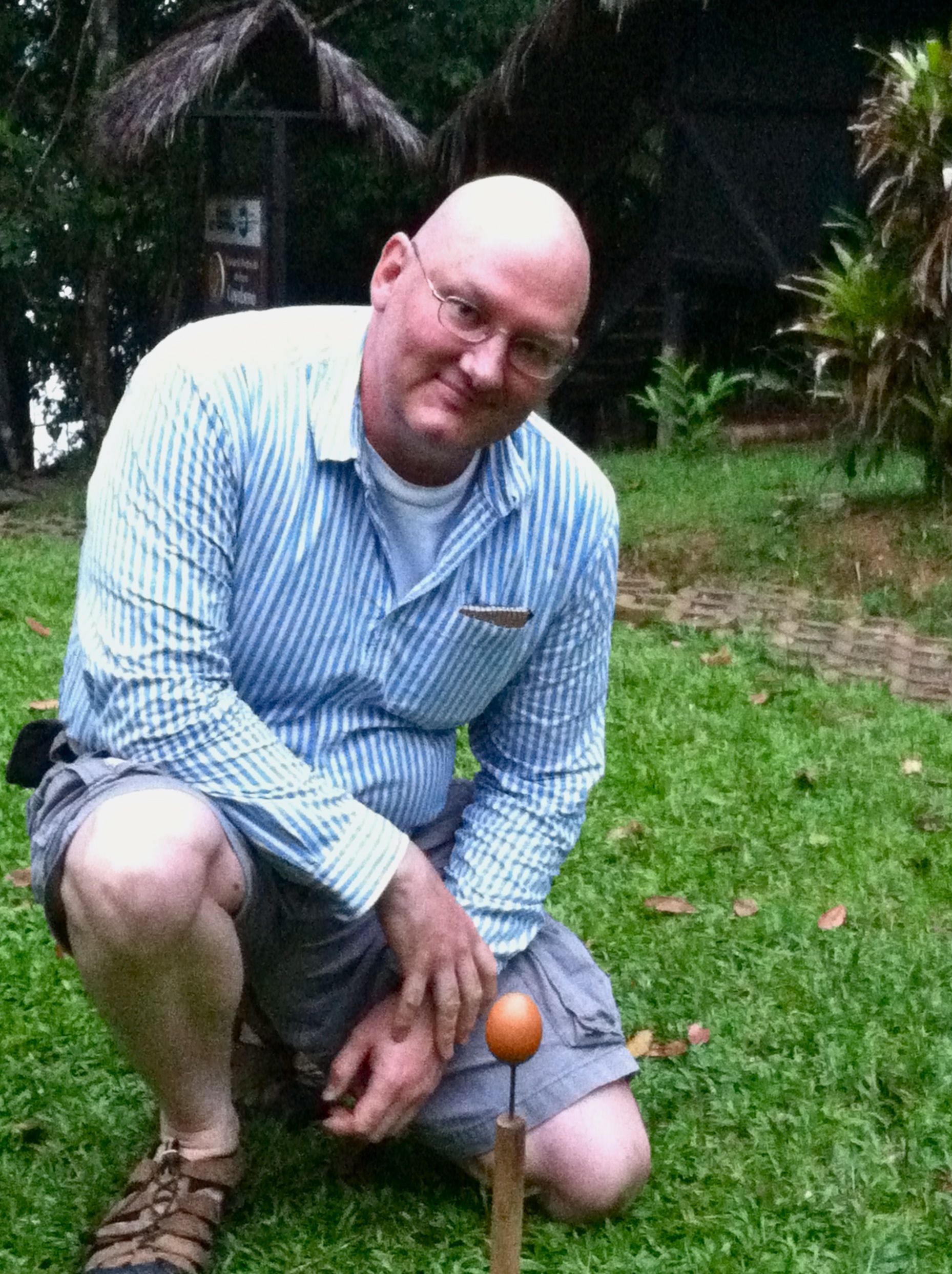
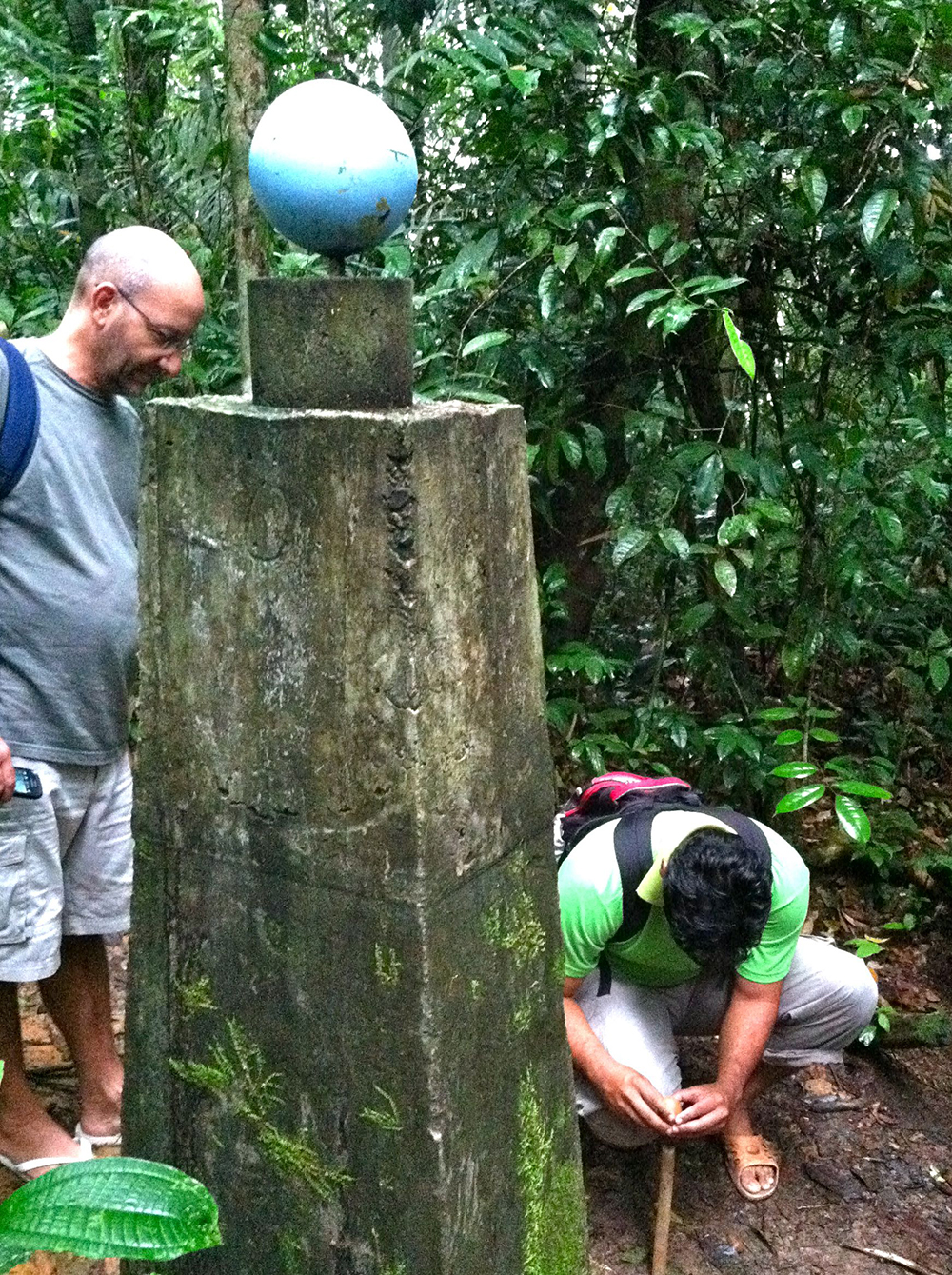
BR: Well, I have a quick ghost story. Actually, it’s not a ghost story. It’s certainly a Woo Tourism story. And this happened about three or four years ago, and I was in the, I was in Ecuador, and I was there with my father and a friend of mine, and we were out in the jungle in the Amazon, and we had a really good tour guide, and he was, you know, it’s the normal, typical thing, but this was, this wasn’t like in a city. You had to like get in a boat and go on a kayak. And it was this big, this camp, actually in a protected reserve. And so we were there, I think, for like five days. And our guide would take us out. And he was, like most guides are, certainly in South America, especially the native guides, very knowledgeable about the flora and fauna and stuff and so we would go out on a on a nighttime hike and you know he’d point out tarantulas, scary things and snakes and you know flora and fauna that sort of thing. But I remember this one time, I think it was on the third or fourth day, we did a midday hike and we were hiking, we took a canoe to another part of the reserve there, most of water and after about five minutes we came across a little small monument about six seven feet high and it said meet that El Mundo meaning the center of the world and it was the literally it was on the equator of course that’s that’s where that was which is you know why Ecuador’s call that for those who don’t know and and so this is kind of cool. I mean, you know, not everybody gets to see a monument at the equator. So, you know, it was kind of fun. There were a bunch of couple of Italian guys and a couple of Brits and a Canadian.
1:04:15
CW: You didn’t have any flat earthers, did you?
1:04:17
BR: We did not have any flat earthers. None at least said anything at the time.
1:04:21
PR: They usually don’t travel that far.
1:04:22
BR: They’re afraid they’ll fall off, so they stay close to home. So it was kind of cool. And so a couple people took photos of themselves at the Equator Monument. And then our guide did something a little bit odd. He was wearing a backpack, and he took it off, and he had an egg in one hand and a wooden stake with a little nail on it in the other hand. And we were all just standing around there, I think there were seven or eight of us, and we’re just watching him. We’re not going to keep going, we don’t know our way in the jungle, so we’re just waiting for him to do it. Whatever it is he’s doing, and so he brings that little mallet, and he tells us that on the equator you can balance an egg on a nail. And I’m like, okay.
PR: That’s pretty fascinating.
1:05:16
CW: Which end of the nail?
1:05:20
BR: Well, the obvious and the flat end of the nail.
CW: Oh, okay. That’s not as impressive.
1:05:27
BR: And, you know, I had done some research on that before. In fact, one of the columnists in Skeptical Corps Magazine, the late, great Martin Gardner had written an article, actually a column on egg balancing as it’s known. And there’s various versions of it. Some people say you can only do it on an equinox. Certain days of the year there’s these sort of magic themed stories about why you can balance an egg.
1:05:56
CW: There’s an actual egg balancing woo. I did not know that.
1:05:59
BR: There is egg balancing woo. That’s right. So anyway, so he, so sure enough, so he puts it and he’s kneeling down and he after about, I don’t know, maybe half a minute or a minute or so, he steps back and sure enough, much to everyone’s shock, well not mine, but almost everyone’s shock, the egg is balancing on this nail in the stake in the ground right next to the monument signifying that we’re at the equator. And this elicits lots of oohs and ahhs from people and photographs and this and that. And I asked him, I said, well how does that work exactly? And he said, well, he says something about, he was very fuzzy on this, which is remarkable. He’s remarkably clear and concise about the flowers and the fauna – he really knew a lot about it but when it came to explaining the physics of how how it is this egg could only be balanced here on the equator things got fuzzy. He basically said something about how the gravity was different. Now it’s true that because the earth is not a perfect sphere, it’s slightly flat the equator because it’s spinning, it’s true that you weigh, I think, slightly more or less. I’m forgetting. I think you…
1:07:23
CW: You weigh like about 84% quantums there.
1:07:30
BR: So it is technically true that imperceptibly, you weigh slightly more or less at the equator. I’m a little embarrassed that I’m spacing which one it is right now. I think it’s less. I think it’s less because that makes sense because it’s spinning. Anyway, so this is what he said and so I was like okay and you know I’m in sort of a weird position here because I don’t want to embarrass our tour guide because frankly if I break my leg he’s gonna be the one who gets me to the doctor. I mean seriously we’re nowhere near the nearest hospital’s hours away. I mean, he’s a good guy, but I don’t want to piss him off.
1:08:09
CW: That’s literally where you have to kind of decide, well, are you going to be the one on the tour to raise your hand and say, um, actually.
1:08:16
BR: Excuse me, actually, I have to say. So again, I’m trying to be diplomatic because he’s a nice guy. I like him. He’s really knowledgeable. I’ve had a good time with him, but I just, there’s, but I was like, well, you know, he’s telling these people and I’m pretty sure that’s just not true. So I tried to be diplomatic, I said, well, I said, have you tried it somewhere else? And he said, no, why would I do that? I was like, well, because if you try it somewhere else and it works somewhere else, then that would mean that it doesn’t only happen at the equator. He’s like, oh yeah, well, no, it only happens here. Why would I? So I was like, all right, I made my point. I didn’t embarrass him. I just asked the polite but pointed question and we went on. So whatever. So we did the hike and I almost stepped on a fer-de-lance, which is one of the most dangerous snakes in the jungle. That would happen to be the day that I didn’t wear my boots. I was actually nearly barefoot in my sandals. Anyway, bad move on my part. I won’t do that again. Anyway, so a couple hours later we made it back to the camp and we disembarked and we were all going to go back to our mosquito-netted hammocks and they were going to cook us dinner and I saw him walk by and I said, hey, can I borrow that egg and that steak? He’s like, yeah, sure. And, cause I was thinking about how would I test this? And I realized that I could try this back home, but it wouldn’t be with the same egg and it wouldn’t be with the same nail. So the conditions would be different. So I couldn’t honestly say that I had done any sort of actual valid comparison because it would be a different nail. So it was important that if I was going to try and recreate it, it’d be with the exact same thing that he just did. And by this point, we were, I mean, to be clear, we were probably a couple miles from the equator. We weren’t, you know, huge distances, but we were not on the equator.
1:10:17
PR: Yeah.
1:10:17
BR: Clearly not on the equator. And so he said, yeah, sure, you know, knock yourself out. So I went and got a cold beer because that helps to do this. And I tried and tried, and it wasn’t working. It was like, I’m like, and I’m, you know, I stick it in some grass, and one of the other guests was like watching me, he’s like, you’re gonna try to do that? I’m like, yeah, why not? He’s like, I got nothing better to do, and you know, dinner’s in an hour, what else are you gonna do? All right, so he sat there and watched it. And eventually, I got it to work. And sure enough, and I was right there, and I took photographs of it and I just left it there because I knew that he was going to be showing up in about 20 minutes or half hour for dinner.
CW: Like a giant egg-shaped middle finger.
BR: Exactly. So and actually I was a little bit concerned because there were giant iguanas that were probably about three or four feet long that were climbing, it was on this little small island. So I was actually kind of concerned that one of the iguanas was gonna knock it over with their tail. Fortunately, that didn’t happen. But so I’m sitting there on the deck of this little camp there, and then having a cold beer. And he walks by and he stops, he looks at it. And he, obviously he knew that I’m the one that had borrowed the egg, and he says, how’d you do that? I said, I just balanced it. I said, I didn’t do any magic. I said, check it yourself. I mean, I didn’t use glue. There’s no tricks or anything. I mean, people were watching me. And some of the other people had come up. And again, there’s like seven or eight of us there. And they’re like, oh, look at that. I didn’t make a big deal about it. I didn’t say, ha ha, you’re wrong, Mr. Tour Guide.
1:12:01
CW: Well, not outwardly.
1:12:01
BR: No, I just like, I was like, huh, look at that. So, you know, it’s kind of a fun story, but I think that what I hope that the people there took from it was the notion of a control group. And the notion, because it’s so easy for us in our minds to think, well, you know, it works, why would you, why would you try it, right? Well, it’s not going to work anywhere else. And in some ways it’s almost like the placebo effect. Or with medications, right? You try something and you become psychologically dependent on a sugar pill that’s supposed to be a sleeping aid, right? So you take it even though it’s not actually making you sleep because you’re just concerned that, well, why wouldn’t I take it, right? So it becomes like a superstition or a lucky charm. So anyway, I hope that the tour guide and the others were sort of like, hmm, yeah, that’s why you would try it somewhere else. That’s exactly why, because if it’s not there, then it could happen anywhere.
1:13:00
CW: Well, just the notion of testing something, I think, is a great lesson to pass along to the other, the other tour goers there. Like, oh, you heard you can’t do X? Well, try it. Maybe you can. I mean, we’re not talking about building a replica of the 9-11 towers. We’re talking about putting an egg on a nail. That’s definitely something that could be tested quite easily.
1:13:20
BR: Well, and one thing that I realized was that, you know, I was getting frustrated. I mean, it took me probably five minutes to do it. And, you know, I was like, oh, this is stupid. I’m hot. I want to go lie down. But so it was a case of where, you know, if I were convinced that it could only happen the equator then number one Why would you try number two you would give up more quickly could be like? No, I can’t do it. Yeah, and so I mean he I mean the the tour guide He’d done it I’m sure he’d done that for countless groups over the years And he just it just had never occurred to him that it can be done somewhere else. So I don’t think he was I don’t think he was lying I think he just inherited this little nugget of false wisdom, which he passed along to his his charges Innocently and yeah, yeah, and and that’s that’s how that that’s how that moved on.
1:14:14
CW: That’s that’s a that was a handled very well, then I gotta say I have been on quite a few tours where somebody disagrees with something the tour guide has said and It’s kind of a weird dynamic because there’s you know, there’s different ways to do it. I’ve heard some people say, no, that’s not actually the case. And then the tour guide feels a little awkward. Everybody feels a little awkward. It seems it’s just an odd little social situation where you have some disagreement. And then I’ve also been on tours where somebody disagreed with something, and they waited until the tour guide was taking a bathroom break or something and was like well what that tour got what you know what they said about XYZ that’s no that’s not the case but rather than just disputing it you you took the egg and you showed everybody that’s that’s a good way I don’t know if you can do that with ghosts.
1:15:05
BR: Well here actually I’ll give you one other quick story I was a couple years ago I was doing a tour of labyrinths in Taos New Mexico north of Santa Fe and as as those who have read my book Mysterious New Mexico know, I have a chapter on labyrinths there. And we’re doing a labyrinth tour. I actually took my mom. And as part of this tour, this couple, I believe it was a couple, it was a man and a woman, and there was a handful of us and we were in a minivan, and they were sort of taking us to several different labyrinth sites and sort of semi-sacred places around Santa Fe. And there’s a famous gorge there. It’s a what’s the name of the gorge Pascual?
BR:Taos Gorge.
BR: That’s pretty self-evident. I’m embarrassed. I didn’t know that we’ll just call the Toas Gorge. Anyway, it’s been it’s been seen in many films. I think give Terminator.
PR: I just it’s yeah that the Christian Bale Terminator they’re going across the bridge, and there’s all the the the What are they the T5000, I think they call them hunter killers or something, and then natural-born killers that’s where Mickey and Mallory get married and that’s right and a number of other movies.
BR: So it’s a it’s a famous, I mean it’s very spectacular, I mean the views and it’s really pretty cool.
CW: Is it gorgeous?
BR: It is gorgeous, but it also has a sordid history and that’s because there have been many suicides there. Apparently it is a favored place for people to jump off, and it’s a long way down, and you’re pretty much guaranteed, I’m not advocating this, but you’re pretty much guaranteed to die if you jump off that.
PR: And it’s a fairly easy bridge to access the railings on, because the railings are maybe four feet I think it’s not really protected against it and I think the problem is they don’t want to ruin the gorge experience by putting giant fences up.
BR: They do have, although they do have four, I think four stations that are like suicide prevention hotline call here.
PR: Yeah, yeah.
BR: But anyway, so they’re giving us a little mini tour of places around Taos, including the labyrinths in this place. And she mentioned, as I knew, that there had been many suicides there. And in passing, she told us, it was a small group, she said, well, you know, of course your life flashes before your eyes right before you die. And so, again, I was like, I don’t want to, so I just, I don’t want to call her out on, so I just sort of wondered aloud, I wonder how you would know that? And it was just this sort of pause and silence, like, yeah, how would you know that, right? It’s like, they say, I guess it’s something they say, but like, yeah, there’s really no way you could know that. And so she didn’t acknowledge it, but there was a sort of silent like, yeah, okay. You won this round, sir.
(MUSIC)
1:18:15
BR: Ben Redford here. If I can have a minute of your time, I’d like to shamelessly plug my new book. It’s called Investigating Ghosts, The Scientific Search for Spirits. It examines ghost hunting and ghost investigations from a historical, cultural, and evidence-based perspective, from the Victorian era to modern TV ghost hunters. It is, in a way, a follow-up to my 2010 book, Scientific Paranormal Investigation, How to Solve Unexplained Mysteries. That book was more general, covering everything from psychics to crop circles to monsters and ghosts. But I realize that ghosts are a special category. Not only are ghosts the most popular paranormal pursuit, but ghost hunting also has its own set of assumptions and challenges. The book will be available soon for under $20 and is currently available as an e-book. For more information on the book and me, check out benjaminradford.com. Please check it out.
(MUSIC)
1:19:10
PR: So I thought we’d just go around real quick and kind of talk about just to wrap it up some advice on on how to kind of parse this stuff how to how to dig into it and see what you’re getting into before you spend your you know 90 bucks getting locked in a saloon for three hours. Celestia, go ahead, what’s some advice you would give?
1:19:42
CW: My advice would be look into who is giving the tour, whether or not they have any historical credentials and what their motivations are.
1:19:49
PR: That’s a good one. Ben.
1:19:51
BR: I would just say two quick things. One is take it with a grain of salt. When you sign up for these things, you want to be entertained and just realize that just like with TV, they’re there to entertain. They may or may not be there to inform you, but they’re there to entertain you. And oftentimes, I mean, the irony is that oftentimes the truth is even more fascinating than the stories. And the other thing it would be just, you know, if you see a tour guide saying something that’s dubious, it’s usually best to be diplomatic about it. I mean, if you come across as like a nasty or an ass, it’s like, you’re not going to win any points. The tour guide’s not going to like you. Everyone else is like, I don’t know. But if you just sort of ask a sort of simple, polite, like, how do you know that? Or you just, yeah, that doesn’t need to be challenging. Just sort of a polite question. Like, just get people thinking.
1:20:44
PR: Totally, totally. And I think that my best advice would be this is the age of the customer review and if you just go on Yelp or just Google it, look at what you’re getting into just by the reviews and you’ll be able to tell if people are talking about seeing ghosts or learning something. I mean, you’re going to be able to parse that out pretty quick and I highly suggest doing that, really with anything, but especially with going into something where you’re going to spend, you know, $90 to get locked into a saloon. So, and hopefully it’s an open bar for that price, I’m just saying.
1:21:25
CW: And use your own power as a member of the online society. Use your power on TripAdvisor, on Yelp, and everywhere else to give good reviews to good historical tours.
(MUSIC)
1:21:48
PR: So that does it for this episode. Next week we are going to be talking about a book, about the topic of a book, and I will be speaking with the author of the book, one Benjamin Radford.
BR: I say, that’s me, sir!
CW: You write books?
PR: Real renaissance, man. Podcaster, book writer, podcaster, filmmaker, filmmaker, board game designer, but most importantly podcast.
BR: Man about town.
1:22:16
CW: Yes, yes, that as well. Tour guide, tour guide, corrector.
PR: Lady of the night.
1:22:21
BR: I’ll take what I can get. Yeah, yeah, well, yeah, so I did, as you probably heard, I do have a new book out, Investigating Ghosts, The Scientific Search for Spirits. And I want to talk about it not just because I enjoy promoting myself, but it’s an interesting book and it’s basically a summary of the past 18 years of research into ghosts. And I’ve done dozens and dozens of haunted house investigations. I’ve interviewed people across the board, looking at the history and the folklore, and it’ll be fun. So I’m looking forward to talking about it.
1:23:01
PR: Awesome. I can’t wait. I hopefully will have gotten eyes on the book before then, because we’re literally recording very soon after it came out, and so I haven’t even seen the book yet. So I’m excited.
CW: Copies are definitely in, the publisher has finished shipping copies to Amazon etc?
BR: Yes, it’s available as an e-book now and the paperbacks are available at Amazon I think $19.95. They’re available now if it says temporarily out of stock that means you got to order it because as soon as they’re backloaded they’ll be in so they’re ready.
1:23:35
PR: Awesome, awesome. Well congratulations and what number book is this? How many other books have you done?
1:23:41
BR: This is my 11th book, I believe.
PR: Wow.
1:23:44
CW: All right. Well, Trent, try not to act like it’s old hat when we interview you about it, okay?
1:23:48
BR: Well, no, actually, one of my books was an accident. And maybe sometime I’ll talk about that.
PR: So before we go, I’d just like to thank our sponsor-level patron, Amy Freshour-Kelly. She’s at the sponsor level. If you’re wondering what that is, go to patreon.com forward slash squaringthestrange. And for the $5 and up patrons, you get a monthly skeptic crate. I know we talk about this every episode, but we have to remind everyone because it is one of the coolest things. I think, not to pat ourselves on the back, well, pat Celestia on the back, this is all her idea. Yeah, yeah. But it’s a very unique thing. You get a monthly crate with at least three items in it and they’re all kind of skeptic themed or they might refer to an episode or just have something to do with any one of us as individuals and it’s really cool.
1:24:47
CW: I love putting them together. It is a treat putting them together and curating the items and finding ways to get groups of things that I can disperse among the skeptical fans of the world. So, yeah, the more the merrier. Anybody who wants to sign on, that’ll just give me more incentive to shop.
1:25:07
Awesome.
1:25:09
And with that, we’re gonna bid you adieu. Until next week, bye-bye.
1:25:13
Bye-bye.
1:25:14
Bye.
1:25:15
next week. Bye bye. Bye bye. Bye. provided by Ashley Romero and of course our listeners and patrons. The views and opinions expressed in this podcast are those of Squaring Strange and do not necessarily reflect the views and opinions of Kronos Creative, Center for Inquiry, our advertisers or any reflect the views and opinions of Kronos Creative, Center for Inquiry, our advertisers or any affiliated organizations and employers.
Transcribed with Cockatoo
