Episode Summary:
This week, Ben and Pascual talk about the phenomenon of outrage, especially on the internet. They break down some classic outrage from the last year and even have an update on a big story from last year! Celestia also stops by with another tasty fortune cookie.
Wish Background Kevin MacLeod (incompetech.com)
Licensed under Creative Commons: By Attribution 3.0 License
http://creativecommons.org/licenses/by/3.0/
0:00:00
Pascual Romero: Hey strangers, Pascual here. As we all know, that special time of year is upon us. The time of year we decorate the house, put up the tree, and sing songs about that jolly old bearded fellow who goes by many names, but around Strange Studios, we prefer calling him Kronos. That’s right, friends, Bromalia season is well underway and there’s only 17 more shopping days until the sacrifice at the Temple of Saturn. If you’re thinking of interesting gifts for the skeptics in your life, why not check out our Skepticrates. We pick out at least three fun items and ship them to you or the person of your choice every month. It’s always a fun surprise to see what unique skeptical or just plain interesting items we send. This month is a special holiday themed Skepticrate. To start receiving Skepticrates, just head on over to patreon.com slash squaringthestrange and pledge $5 or more per episode. It’s as easy as that. When we ask for your address, you can just use yours or the person you’re gifting the crates to. Every dollar you pledge helps us keep this show up and running with the content and quality you’ve come to love, and we thank all of you who have taken part in supporting this show. And remember, get your orders in before December 14th to receive the December holiday edition of The Skepticrate.
0:01:23
Ben Radford: Welcome to Squaring the Strange, the podcast that examines all manner of the mysterious and the mundane through a critical lens. So let’s square the strange.
(MUSIC)
0:01:30
PR: Welcome back to Swearing the Strange. This is episode 34. This week we’ve done a deep dive into the concept of outrage and how it plays into social media and the media at large. What we’ll be doing is digging into the topic from a media literacy standpoint, covering topics kind of long after the outrage has faded away so we can look at them with a more objective lens. News items like the female Doctor Who announcement that seemingly lit social media up and brought out the trolls, or the frequent outrage that leads to moral panics like Stranger Danger and some of the stuff we covered on our Halloween episode. So anyway, might as well get on to it. Thanks for tuning in and enjoy the episode.
(MUSIC)
PR: Today we are going to get kind of outrageous here.
BR: I’m feeling very calm.
0:02:56
PR: And we’re going to calmly talk about outrage culture. And outrage in general and outrage on the internet and all things outrageous. So Ben, why don’t you just walk us right into it. What are we going to be discussing and what angles are we looking at?
BR: Well, you know, I’ve always been fascinated by things that give offense. It’s always been an interest of mine. It sounds weird when I say it, but no seriously, I’ve always been fascinated by what offends people and why. You know what, you know religious things blasphemy. You know rude jokes. Slurs. The idea of offense intrigues me. That there’s some impropriety, usually verbal, that is so beyond the pale that it provokes anger or some other outrage. I used to subscribe to a journal called Maledicta, the International Journal of Verbal Aggression, which is a great series. It’s no longer published. It was done by a guy named Reinhold Amon. And I have a couple signed copies of the journal. But anyway, it was a fairly scholarly journal, but it was all about maledicta, literally bad words. It was everything from slurs to insults, you know, tasteless jokes, anything you can imagine that was outrageous. And I was inspired in part by Celestia’s discussion of the controversies over the female Doctor Who we had on a couple weeks back. And she did a fascinating job breaking down the outrage, or I’m using scare quotes, outrage, depending on how you look at it. I’m not going to take a position on that at the moment, but depending on how you look at it, that was certainly what was out there. And also, of course, there was a similar sort of situation with the screenings of Wonder Woman. When it first came out, there was a Alamo brew house, I think, in Austin or something. Had a couple male only screenings and…
PR: Female only.
BR: Yeah, I’m sorry, female only screenings that outraged or didn’t, depending on… In fact, we sort of went into that and as I think the point that you brought up was a lot of it was publicity stunt. You know, I mean, were there a few people outraged? Probably.
0:05:36
PR: Yeah, sure.
BR: On the whole, who did it benefit? The theater and the film. So anyway I just wasn’t fascinated by that and so I wanted to sort of sort of Go a little bit further into that because I think there’s some some nuances to the story that… Both involving skepticism critical thinking and also journalism and media literacy. And you know I I’m interested in the topic from media literacy perspective and point of view you know how for example how the news media and social media distort real and imagine the controversy you know scientific controversy social controversy things like that. For example we see this often in the news media when as we discussed We mentioned earlier in the previous show about the false equivalency right so you have you have you know bill nye and Ken Ham. Right. And it’s like, oh, look at these two people. They’re like, no, no, no, no, no, no, no. They shouldn’t even be on the same stage together. They’re not equal opinions. And, and so just because you have, you know, you can have, you can have 99.98% of the public who loves something. And you got 0.002% of the public who either doesn’t like something or says they don’t like something. And who do the news media report on? It’s the extremes, right? It’s the outraged.
PR: Of course.
BR: And there’s a strong media literacy aspect to it. And so I want to sort of touch on that. So I want to begin by talking about, by briefly quoting a book that’s one of my favorites. It’s titled Damned Lies and Statistics, Untangling Numbers from the Media, Politicians, and Activists by Joel Best. And he’s a professor and chair of sociology at the University of Delaware. And he’s actually written, I think, three or four books. He had two other follow-ups. I think it was called Stat Spotting. Anyway, he, along with John Allen Palos, and if you haven’t read either Joel Best’s work or John Allen Palos’s, particularly the book Innumeracy, great stuff. There’s also a book called, I think it was called The Mathematician Reads the Newspaper.
PR: Oh yes, I’ve heard of that.
BR: Yeah, and just you know this really good, and I’m not a math guy, I mean I’m okay at math, that’s not my strong suit, and for the math phobes out there, these books are really good, accessible introductions to how to interpret statistics in the news media, social media, and elsewhere. And it’s super important for skeptics particularly because, you know, we see statistics everywhere. In news media, politicians love to throw out numbers. Well, my number is the biggliest, biggliest ever. Okay, there you go. So anyway, so in his book, Damn Lies and Statistics, several of the chapters Best devotes to explaining where some of these bad statistics come from. And sometimes it’s just someone makes a mistake, just makes an error. You know, we all make mistakes, but overall it just gets picked up and goes. Other times, and I also wrote about this in my book, Media Mythmakers, I have a chapter or two on that. A lot of times you have activists who will, I don’t want to say exaggerate, but they’ll exaggerate claims, oftentimes to get attention and funding. activist organization got funding by downplaying the severity of a problem, or underestimating its scope, right? Whatever it is, whether it’s, you know, cancer rates or, you know, rates of, you know, child abuse in the Mississippi Delta or, you know, homeless, whatever it is, activists have a specific reason why they want to alarm you. And again, a lot of times, you know, to be clear, in order for the public to understand the nature of problems, we need good data. And so I, you know, I don’t blame activists and and, you know, people who are trying to raise awareness for trying to hype it up, but you have to, you have to take it with a grain of salt. So this is from Joel Best’s book on page 57. He says, “people who talk about social problems almost inevitably want to generalize from some cases a sample to the larger problem. The key question is what sorts of generalizations the sample permits. Researchers able to draw random samples from populations that are well understood can make convincing generalizations, but this is almost never possible analyses of social problems, especially when the problem is first coming to public attention.” And the reason I brought that quote out from from the book Damn Lies and Statistics is that Oftentimes the outrage is a sampling problem You you have the exception Portrayed either as the rule or as a significant minority.
0:10:49
PR: Sure, sure.
0:10:50
BR: So it’s not the people getting outraged over any given thing don’t exist, because of course they do. There’s hundreds of millions of people in America, online, billions around the world. If you dig deep enough, or as Celestia said, you dig far enough down the comments, there’s no shortage of crazy, wacky, obnoxious, sexist, racist trolls out there. Do they exist? Sure. That’s not the question. The question is, how generalizable are they? How representative are they of the larger population? And if the answer is that they’re not, then just be upfront about that. If the answer is that the people that got outraged over female Dr. Who are, you can count them on one hand, then, you know, how big a problem is this really? And you know, keep in mind that this issue, so again, there’s part of it is a bias towards exaggeration on the behalf of not just activists, but also journalists. And again, so this applies to the news media as well, because of course, it’s not much of a story If the outrage is traced to a half a dozen bored trolls living in their mom’s basement, right? Instead of you know legions of rabid fans, right? Right of you know or legions of rabid, you know misogynist or or you know, take your pick Yeah, and there’s a couple there’s a couple books that I can recommend that have a better discussion. One of them is This is Why We Can’t Have Nice Things by Whitney Phillips. It’s a really interesting book. I actually referenced it in several of my, actually referenced it in the last chapter of my Bad Clowns book in the section on trolls. Another book is called The Outrage Industry, Political Opinion, Media, and the New Incivility by Jeffrey Berry and Sarah Subiraj. And I’ll just briefly quote from that book because I think it’s sort of give an overview of the nature of outrage. “Outrage in American political culture undermines some practices vital to healthy democratic life. Specifically, we show that outrage tactics such as ideological selectivity, vilification of opponents, and fear-mongering, make talking politics beyond our most intimate circles extraordinarily difficult, complicating our ability to have meaningful discussions about politics in our communities. Outrage discourse involves efforts to promote emotional responses, fear, anger, moral indignation, from the audience through the use of overgeneralizations, sensationalism, misleading or patently inaccurate information, ad hominem attacks, and belittling ridicule of opponents.” So again, that sort of gives you a nature of sort of sets the stage for a quasi-scholarly academic look at an outrage. I have to say, I’ve seen fellow critical thinking advocates sort of set aside their skepticism on this topic. Why? Likely because it confirms their biases. You know, they don’t want to look too closely at the numbers because, you know, they like the overall message. We talked about this when we were talking about pedantics a couple of weeks back, right? And I understand that. It’s a human thing to do. It’s easy to sort of give a free pass to people whose position we believe in, we support. But at the same time, if they’re distorting the facts, if they’re engaging in sensationalism and misleading tactics, then you have to be willing to call people on it.
PR: Yeah, yeah. That’s true. And it kind of reminds me of the whole idea of not using faulty arguments in favor of your position. And you don’t want to use faulty interpretations of data or faulty thinking on a matter as a way to fuel your own activism or your own reaction or your own, you know, outspokenness about a position because then you become, you know, vulnerable to hurting your own position. And who really in the long run wants to spend that much of their life and that much of their energy just focused on something that really may or may not be an actual problem.
BR: Yeah, and I think you make an excellent point. I guess my position is that there’s enough real problems in the world, there are enough legitimate, serious, real issues that we can identify and that we can quantify that need our attention. We have finite resources, we have finite human attention spans and money and everything else. I think that it’s part of a skeptic’s job to help the public identify the real problems and sort them out from the ones that are, that are, they may be legitimate, but they’re just not that big, that big an issue. I mean, you know, one example that jumps to my mind is, you know, I mentioned Joel Best earlier in his book and he and I have both spent many a Halloween being interviewed by, by news media explaining why, why kids don’t need to be terrified of Halloween candy. Why stranger danger is not a problem around Halloween. Why convicted sex offenders are not waiting behind every tree to jump out and molest a kid dressed as Casper. Again, it’s not that the dangers aren’t real. They’re just remote. And we ignore that distinction at our peril. So anyway, I’m gonna give two quick examples of a couple cases that I researched on the topic of outrage. As I said, it’s a subject that’s fascinated me for many years, for better or worse.
PR: Well, and now just with how prolific the internet and social media are, it’s an incredibly appropriate topic of study.
BR: It is, sadly enough, it’s only getting worse. So I’m gonna talk about two topics, again, I won’t go into too much detail on them, but I think breaking them down is useful because in both these cases, I saw them in the news media and they were widely discussed and there was, I don’t know, outrage about both of them. So the first one is about Miley Cyrus. I actually briefly referenced this on a previous show. And what happened was that in November 2011, Miley Cyrus, the former child actor and pop star, made national headlines in November 2011 for a tweet in which she and her friend Demi Lovato denied she was fat. So yes, you’re wondering, okay, why is she making news for a tweet saying that she’s not fat? Yeah, this does not seem newsworthy. I’ll just be honest with you. But apparently it was because what happened was that somebody had called Miley Cyrus fat and she went on Twitter and posted, she defended her curvy shape, I’m reading from the article here, online critics criticized her for piling on the pounds they said. And she was, you know, I love being shaped like a woman and trust me ladies, your man won’t mind either and fellow Disney star, as I mentioned, Demi Lovato chimed in and said, you know, you tell them Miley, you know, don’t listen to those fat haters. And so I was like, okay, this is, I mean, you know, like, in a way I’m like, good, I mean, you know, that’s good for you for, you know, ignore the trolls and, you know, again, there’s, if you look hard enough, you’ll find someone who has bad things to say about everybody. You and I both get our fair share of hate mail.
PR: My Wikipedia was vandalized not too long ago. But anyway…
BR: Well there you go. And mine’s been vandalized a couple times ourselves. Welcome to the club.
PR: Thank you.
BR: This means we’ve made it. And so I was curious because I was curious like, okay, well, who’s calling her fat? I was genuinely curious. I’m not a huge Miley Cyrus fan. I’m into who she is, because I don’t live under a rock. But I assumed that it was a rival pop star, maybe a celebrity news reporter, maybe a news anchor, a politician, I don’t know. So I do some digging, and it turns out that it was, you ready for this? Someone who goes by the YouTube handle of Kelly Bestendedup. Do you know Kelly Bestendedup?
0:20:12
PR: No, I’m afraid I don’t.
0:20:14
BR: I don’t think anyone does. No one’s ever heard of her. So it got me thinking, well, hold on here. First of all, why would anyone scour YouTube for one of two or three videos that say something unflattering about Cyrus. Like, yeah, this is what you’re spending your time doing, really? I mean, come on, right? So, so, so then, and so the news, the news report actually referred to a previous ABC News report from 2009 by writer Sheila Maricar, who who mentioned how this had also happened to Jessica Simpson. Apparently, she was performing at a country, Florida country radio station’s Chili Cook-Off. I didn’t know that was a thing. And apparently, somebody said that she was putting on some pounds. So, apparently, so again, once again, I was doing some digging to find out who exactly said this. I assumed it was somebody who’s influential and important. It was not. It was two anonymous bloggers on a gossip website.
0:21:25
PR: Okay.
0:21:26
BR: So, you see where I’m going with this, right? In this case, you have Jessica Simpson and Miley Cyrus, both beautiful women, talented, I suppose, and they’re being criticized anonymously on gossip websites by people that nobody cares about at all. And look, I mean, I don’t doubt that, because I’m sure I’m rankling people, and look, I know that fat bias exists. No one’s saying it doesn’t. Absolutely it does. It’s a real thing, it’s a serious thing. And of course, it’s unkind to make fun of anybody for their physical appearance right yeah whether you’re you’re you know sexily bald like me you have too much hair like you, we could both lose a few pounds but that that’s not nice thing to do right yeah but you know in there expressed it to to in the rush to express indignant outrage over the comments about their weight they’re missing an important point which is that these trolls don’t represent most people. So, you know, is there fat shaming? Is it a bad thing? Yes, it is. That’s not what I’m talking about. I’m talking about combing through the internet, finding one or two, in this case, anonymous people who have no influence, no notoriety, expressing odious opinions that nobody cares about, elevating them so that Miley Cyrus and Jessica Simpson can can issue a press release through their publicist talking about how outraged they are that somebody who they’ve never heard of and they don’t care about is commenting on they put on a few pounds. Am I missing something?
PR: Yeah, it almost sounds like something a publicist would make up, you know.
BR: It does, doesn’t it, right?
PR: To me, it almost reads like, you know, you’ve got a client who’s feeling a little insecure about their weight or something, and then you just go, well, then let’s just give you, you know, a straw man to knock down real quick. And anonymous tweet comes from out of nowhere, you respond to it, because the way I see it when you get into any kind of discussion where you are defending yourself against just an utterly outrageous claim, and body shaming aside, there are just situations where I’m not going to engage with half of the fan mail you get that’s calling you an idiot or talking about where your head is. And responding to it, especially in the public sphere, is almost like elevating that anonymous person to your level in order to knock them down. Because you’re bringing them, you’re either bringing them up to you or you down to them, but either way you’re leveling a playing field that doesn’t have to be level. And it legitimizes the trolling and the bullying. And to me, the fact that someone like Miley Cyrus would respond to something as ridiculous as that, especially in such an isolated incident, kind of does a disservice to people who actually have to deal with that in their lives. lives because it’s just all it is proving is that hey you know this stuff does get to people and if you keep doing it you know before you know it my Miley Cyrus will be bringing in you know bringing you up and you know it like 10 million Twitter followers all of a sudden because you said a not nice thing.
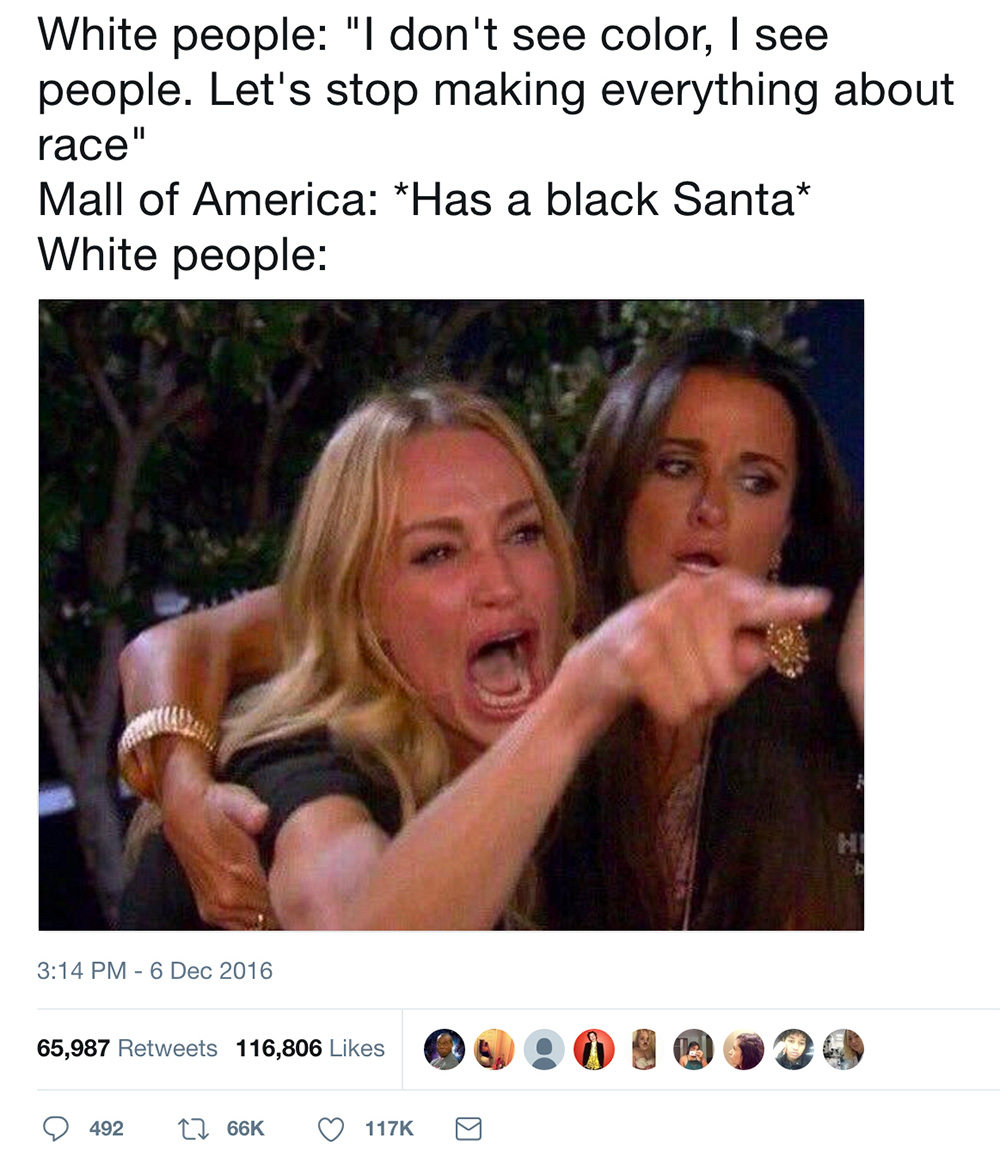
BR: You’re exactly no you I do exactly right I mean you know why in the world would an international superstar like Miley Cyrus even notice what you think she’s spending her time trolling YouTube looking for something mean about her? I mean, come on. Why would she even notice, much less care to respond to, some random nasty comment by someone who’s anonymous that would have been completely ignored if she hadn’t responded to it? And I’m guessing, this is the cynic in me, I’m guessing the answer is publicity. As you said, this is, and I hate to be cynical here, but let’s be honest, by responding to the insulting comments like these, celebrities gain benign controversy and sympathetic news headlines while scoring points for standing up to the Hollywood ideal. In this way, Miley Cyrus’ handlers are like, hey, I know you don’t care, I know you’re busy with real things like everyone else, but we found this person that thinks she put on a few pounds. Why don’t you just get a couple points, oh, this is fat shaming, this is horrible, blah, blah, blah. And then Demi Lato comes in, and they get their name in the news, and it’s all in the context of them being, you know, a hero standing up for these anonymous trolls and again like fine but why bother? My second example goes back to December 7th 2016 and Possibly you may have you may have remembered seeing this story. It was about it was about National, nay International outrage over a black Santa.
PR: Oh yes. I do remember that and I remember some I remember some ridiculous news pieces about it. Ones that I thought was like the Daily Show or something. I’m like no this is Fox News. What is this?
BR: So what had happened was that I came across this story because it was just all over the it was in social media. I mean just everybody’s losing their stuff over this case and again, it was about the headline in Huffington Post was racists freak out over black Santa at Mall of America. And a friend of mine posted this on her on her on social media and I asked, you know very very politely I said because again I only sort of briefly seen the headline I had I didn’t read much about and I just asked was there really a lot of white people upset over black Santa are there legions of angry white people because there’s a black Santa because I think that’s weird I just… Does racism exist absolutely does sure sure are there a few people who are probably cranky about it? Probably. Is this a national outrage? I’m not so sure. So again, I very politely responded on social media. And then I was sent a link to the Huffington Post piece. And it was interesting. So I got three different responses. And again, I’ll break it down just a little bit because I think analyzing as a case study can be helpful. So I got three different responses. The first one was, the person wrote, it’s more than just that one article. I just posted one. It doesn’t mean anything.
PR: It doesn’t speak to how much of that has actually happened.
BR: Exactly. Thank you. Right. know if there’s a shooting in downtown LA, 30 news outlets may cover it. That doesn’t mean there’s 30 shootings. It just means that there was one thing that 30… so just like, well, I only sent you that one article, there’s others.
PR: Yeah, but they’re about the same thing.
BR: Yeah, that doesn’t help the case. That does not help your argument. So the next comment, the response I got was, it wasn’t just a handful of racists, it was enough that they shut down the comment section entirely. So, you know, this could, there’s two things I’m thinking about. Again, I tend to overthink things, I know that, I admit that, sorry guys, that’s just what I do. The first thing that jumped to my mind was that, was that, you know, I’m not sure what enough that they shut down the comment section means because I don’t know, I don’t know if there’s like a certain threshold.
0:29:45
PR: Right.
0:29:46
BR: Where it’s like, you know, where it’s a journalistic rule that if there’s more than 20 comments or 50 comments or 2000 comments, they shut it down.
0:29:54
PR: Right.
0:29:55
BR: I think it’s more sort of like an individual. You know, judgment call.
0:30:00
PR: Right, so honestly, people listening right now, Yeah, right? So, honestly, people listening right now, if you’re at your computer, go to any news site, your local news channel, and look at the comment section on anything. I mean, if it’s a video of a water skiing squirrel, look at the comment section. You will find the most deplorable, racist, sexist, bigoted nonsense that has nothing I mean, frankly, if I ran any of those sites, I would just shut the comment section down on principle.
BR: But there’s actually a second part to this, which is interesting.
(MUSIC)
0:30:38
Celestia Ward: Hey, squares and hey, strangers. Celestia here with yet another skeptical fortune cookie. Let’s see what’s inside. The dose makes the poison. Well, those of you who know your toxicology or your 16th century alchemy already know this comes from Paracelsus, a Swiss physician, alchemist, and astrologer. Hey, nobody’s perfect. Born Theophrastus von Hohenheim, he began his medical career as a military surgeon and eventually became a lecturing professor at the University of Basel. Dr. Hohenheim was in many ways ahead of his time. He was among the first to recognize that physicians needed a solid education in the physical sciences, specifically chemistry. He objected to excessive bloodletting, saying that blood could not be purified by lessening it, and he anticipated germ theory by proposing that illnesses were entities unto themselves from outside the body and not simply states of being. He published some non-medical works under the pseudonym Paracelsus, in addition to the scathing criticism of other physicians and common treatments that he published under his given name. He placed more importance on practice than on titles and was not afraid of attacking authorities. Paracelsus also claimed that in learning their craft, doctors should seek out old wives, gypsies, and sorcerers. As I said, nobody’s perfect. Paracelsus is also known as the father of toxicology, and here is where we get his statement poison. He declared that if given in small doses, what makes a man ill also cures him, which unfortunately has been taken as sage medical advice by homeopaths. But Paracelsus also laid out the concept of dose-response. In his third dissents, he wrote, all things are poison and nothing is without poison. Only the dose makes a thing, not a poison. Something now commonly condensed to the dose makes the poison. Something to remember the next time you look at a chart with LD50 values or hear an alarmist report about trace amounts of pesticide or even when estimating how many people hold some poisonous view that would hinder our society if present in a higher dose. Outrage too can be a poison. With more on that now, here’s Ben and Pascual.
(MUSIC)
0:33:19
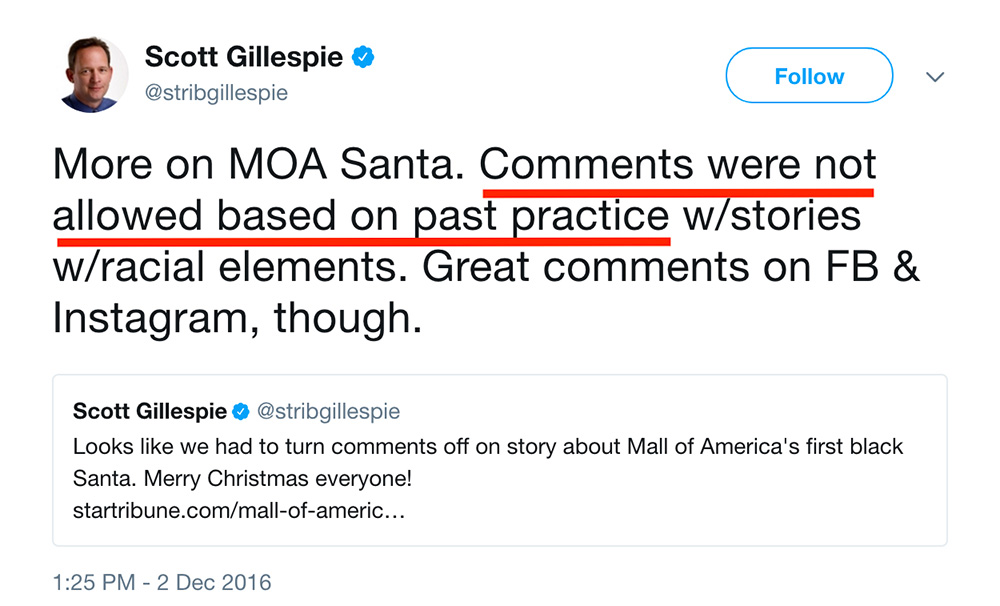
BR: So again, the response was, well, clearly there was a lot of people because it was enough that they shut down the comment section entirely. And so, as I do, I researched , that a bit. Turns out that’s not quite true. So in terms of reading a tweet from Scott Gillespie, who is the editor of the Star Tribune, which is the article that originally reported on this, where the trolling happened. And he sent out a tweet, you can check this for yourself, it was December 1st 2016, he says, looks like we had to turn off comments on the story about Mall of America’s first Black Santa. Merry Christmas everyone, with the photo of the Santa. And actually the the photo is actually really adorable, it says it’s two cute babies and the Black Santa, everyone’s having a good time. But then I did a little more digging and turns out there’s a little more to it than that. Because according to the Huffington Post dated 12-05-2016, an article by Ed Mazza, M-A-Z-Z-A, there’s more to the story because it says, quote, the Minneapolis Star Tribune turned off the comments function of its article on the mall’s first Black Santa before it was published based upon past experience with trolls.
0:34:53
PR: Right, okay.
0:34:55
BR: So that actually was not true. So, and actually, and I suspect this is true because it actually had a clarification. It highlighted to people, people have been misunderstanding this, see our clarification. Our clarification is that the comments were turned off before the story was published and therefore it was not in response to legions of trolls. So again, do a little digging and you find out that it wasn’t quite true. So that was the second comment. The third one was that there was so much outrage, in order to prove how much outrage there was, that the media in the US and abroad, pick the story up. Yes, that is the criteria. That proves just how widespread the outrage was because it was reported in the news media. Now, come on, this assumes that the news media would only cover the story if a significant number of people complained. This is, of course, not true. The fact is that if only one person complains, if a handful, there’s no journalistic threshold. And I wish there was. I mean, let me be clear about this. I would love it if journalists just had a sort of code of ethics. And they’re like, all right, if we’re about to do a story on outrage, and we can tell that it’s under a dozen, under 50, given the population of, you know, whatever it is. Let’s just all agree that this is a non-story. Because I can find 50 people who are flat earthers. I can find 50 people who think that squirrels talk to them. The three arguments that were put to me to justify how, in order to try and answer my question, which is a very simple, sincere, honest question was, was there really a huge amount of white people who were upset about this? I’m not saying there wasn’t. I’m just asking you, this is what’s being claimed. You’re making the claim. You have the burden of proof. Where are they? Are we talking 20 people, 200 people, 2000? Give me some sense of the scope of this problem.
0:37:13
PR: Yeah, yeah.
0:37:14
BR: I was told that my questioning, and I wasn’t questioning the story, I was asking about the scope of the story. I wasn’t suggesting at all that racism didn’t exist, or it wasn’t at play in this case, I was just asking, how big is this problem?
0:37:30
PR: Right.
0:37:32
BR: That was honestly, and I wasn’t, I’m not being covert, I’m not trying to, it’s a legitimate question. And the answer was that the people on this thread felt that I was engaging in a distraction tactic. Their complaint was that I was distracting, that by asking for evidence of how big this problem is, I was engaged, I was sort of maliciously trying to steer the question away from how big the scope of the problem is to sort of say, oh, that racism isn’t a problem. And the fact is that, look, I mean, let me be very clear about this, you know. Quantifying a problem is not ignoring or diminishing it, right? Scientists need real numbers. Sociologists need real numbers. Epidemiologists need real numbers. That’s how you solve a problem is you determine how big a problem it is and what its nature and scope is. I was surprised. You know, I have, I’ve been doing journalistic research and skeptical investigations for going on 20 years now. And rarely if ever have I had someone accuse me of employing a distraction tactic for asking a question. Usually when that happens it’s because someone has something to hide. Like, tell me more about the UFO. Well, I don’t know, you’re distracting from the bigger picture. Well, you claim that homeopathy works. Where’s your data? Don’t distract me. Like, no, no, no, no, no, no. Asking for evidence is not being mean. It’s not trying to distract from things. It’s not, in fact, I see it as the opposite. It’s trying to solve a problem. It’s trying to figure out what’s going on. And look, I mean, to be very clear, you know, it’s not as if there’s a threshold under which this is a problem. So I’m not saying that’s okay. I’m not saying if it’s two people it’s okay, or it’s five people. There’s no threshold for being okay. The question is, is this a serious social problem? Different issue.
PR: There’s no denying that racism exists. And there’s no denying that it is largely a systemic issue. And this is to say that if we, it’s not that we shouldn’t think that there’s something wrong with someone if they think that there’s something wrong with a black Santa. But you know, and we saw it. I mean, I remember, you know, after all this happened, Megan Kelly on Fox, yes, famously argued that you can’t have a black Santa, which is just ridiculous. That is a very poor position, a very indefensible position, especially when we’re speaking of an imaginary character.
0:40:32
BR: It is Fox’s Megan Kelly.
0:40:33
PR: Yeah, and it sucks. I mean, let’s not give them too much credit. But the thing is that when we let these things sort of occupy the discussion of race relations and and what the the true issues of oppression and systemic racism are in this country, these things become if anything the person distracting is the one that’s trying to create a problem out of something that while yes is a problem is not the big problem and and it’s also if you’re if you’re trying to say that you’re an ally to people of color and you’re trying to defend that they have a right to be a black Santa, then you need to also be honest about what is really happening. You need to be able to parse the actual pushback from what is just people almost creating a fantasy of how much outrage there is. And I think it’s important. I mean, you know, the Mall of America, I’ve been there before. A lot of, in fact, the people you’ll see there the most, there’s a theme park in the middle of it. And I don’t know why this is, but the majority of the people working the rides and concessions there are Muslim women in hijabs. It’s just, they’re just all over there. And there’s a huge Muslim population in Minneapolis, in St. Paul. And if you walk around in that mall at all, I mean, and it’s not just Muslim.
0:42:21
BR: Interesting. I didn’t know that.
PR: It is surprisingly diverse. I mean, it’s like kind of heartwarmingly diverse because people from all over the world are just there. Right. And it is a big tourist draw too. And so to me, I’m like, if you’re upset about a black Santa, you’ve never been to the Mall of America because black Santa, I mean, everyone there is, it’s just an ethnically diverse place that everyone that works there is from a different culture, a different country. And just the fact that you see so many Muslim women there working and operating the rides and selling concessions and working at the arcade there and stuff, I mean, that to me is, it says that, you know, if someone came here and got offended at a black Santa, they are, they’re obviously out of their mind. And I doubt they ever came here because they’d be like, why is this place run by Muslims?
BR: And that actually reminds me of the point that Celestia made, which is regarding the female Doctor Who. And she made a really good point, which was that it was being framed in some circles as Doctor Who fans are outraged. And she’s like, no, no, no, no, no, no, no. Doctor Who fans, like the actual people who follow the series, this was foreshadowed years ago. Maybe decades ago. So the fact is that these were not outraged Doctor Who fans. These were probably people who had only a passing… It was trolls. People like, oh I’m an outraged fan. And the same thing with the black mall Santa, right? I can’t quantify this. I’ll say this right now, but I would guarantee you that there were only a handful, maybe a dozen, maybe two, I don’t know. I tried to find out. It’s almost impossible to get numbers on here because we don’t know how many people would have had racist comments because the comments were shut off before the article was published. So we don’t know. It was in anticipation there would be all these comments. And so again, I guarantee you that nobody in that mall cared. The people in the mall loved it. In fact, I was reading an article that was talking about that and the black Santa, a guy named Larry Jefferson, a retired Army captain, I’m looking at his photo, he looks awesomely adorable.
0:44:40
PR: I would love, he makes a great Santa.
0:44:43
BR: I would, you know, and he, I guarantee you that nobody involved in this cared. They thought it was delightful. In fact, when there was a follow-up to it, here’s an article from NPR, and Jefferson said the online negativity didn’t surprise him. He says, because of the times we’re living in, there’s always somebody out there. But he said, quote, that backlash was only a small percentage. So he himself said, were there a couple of people? Sure. The other 98% loved me. And you know what? Of course that’s the case, right? So again, my point is that nobody who knew anything about it cared. But you know what’s interesting was to go back to the distraction question. Because again, I don’t think I’ve ever had anybody try to discourage me from asking a question by saying, well you’re trying to distract me. Don’t go there. That’s taboo. That’s the sacred cow. Do not ask questions. No, no, no. Look over there. And I was like, wow. I was actually sort of offended that they thought that there was some sort of racist undercurrent to what I was asking because there honestly wasn’t. And there isn’t. And I think that if you know my work, I mean, I’m genuinely curious about this. I’m not trying to prove anything about racism doesn’t exist. That clearly exists. That’s not the question. And again, it goes back to what I was talking about in the outrage industry, the quote that I had in there about how it gets people excited and it foments them. But so I was intrigued by this notion of questions as a distraction, because I hadn’t really seen that much before. And I tried to remember who else had used that tactic to discourage questions by calling them a distraction tactic. Donald Trump!
0:46:38
PR: Yeah.
0:46:39
BR: I was like, wow! It’s like, that’s straight out of Donald Trump’s playbook.
0:46:44
PR: Yeah, oh yeah. The famous quote, Russia’s a ruse, Russia’s a ruse. Yeah, it’s all a distraction. Every time someone asks him a question about it, he’s offended that you would even ask. You’re distracting from this.
0:46:49
BR: Mike Pence, Vice President Mike Pence, in an article on January 15, 2017, called the Russian story, quote, all a distraction. It’s interesting to see how people in my circle, skeptics, who are brilliantly anti-Trump, use a page of his own playbook to sort of like, oh, look over there, we don’t want… and look, if you personally aren’t interested or curious about how big the problem is, if you personally don’t care whether there were three people or 30,000 people upset at the Black Malls, Santa fine. That’s fine. But But don’t, don’t don’t cast shade on me because I want to try and quantify the problem.
PR: Yeah, it’s it’s it’s kind of that that defensive, you know, Wizard of Oz, don’t look behind the curtain thing, you know, because it’s, it’s, again, you know, I sympathize with the position that we have to worry about racial backlash and about how people will take something like this. I think that the publication or the news organization that chose to turn off the comments was, I think, probably a good idea. I think, as I mentioned before, if it were up to me, I’d turn them off on all of those because never a good discussion do we have in the comment section. But I understand why they did that, because it’s expected.
0:48:32
BR: But to clarify, I mean, exactly as you said before, it’s not just race, I mean, it’s especially true of race issues. But I remember about a year ago, there was a big discussion on, I think it was Scientific American, there were a whole bunch of science sites that turned off the comments. Yeah, we’re talking squirrels, you know a new a new article on photosynthesis, you know New dental implants, you know, what does the technology show? It doesn’t matter what the topic it topic is Yeah, you’re gonna find yeah, it’s I mean,
PR: I’ll tell you right now like just go into any comment section you’re going to still see someone blaming Obama for something. You’re going to see about a dozen different racial slurs and then there’s the guys that work Muslim conversation and everything. It just doesn’t matter and so you know a comment section is not a good gauge of anything other than How shitty people can be in comment sections, but you know and you know I’m not certainly throwing racial slurs around as if they’re nothing in a comment section is a symptom of racism and regardless of whether these people believe what they’re saying or not the fact that they’re doing it is engaging in it, but it doesn’t really speak to what the real world implications are. And I think we need to know this stuff. And I think it’s especially important for those of us who are trying to expose and correct the real issues of racism and bigotry in this country, because we can’t be using real tenuous claims and especially when the person at the center of the controversy is saying it’s not really, no one’s really worried about it. Because you’re working against the very person you think you’re defending and if anything you’re complicating their situation and I really wish we’d focus a little more on more, not necessarily bigger picture, but more real intangible problems, and not you know some troll.
BR: It also demonstrates a disregard for the truth and facts. Yeah, because it seems to say That it doesn’t matter right. It doesn’t matter of whether there were five trolls or Five million trolls right it’s like it’s like it’s like No, it does matter. Yeah, it really does.
0:51:14
PR: Yeah.
0:51:15
BR: Right? It’s important.
PR: We need to know how many people are really doing this. Yeah. It’s either going to be something that we can manage or it’s going to be truly a frightening statistic and we need to know these numbers.
BR: I’m asking questions about a news story that has quantifiable answers.
PR: Yeah, you’re asking for an answer that should exist. You’re not asking for, you know, you’re not using apologetics to corner people into things. So, yeah, and it’s fair. And I think that you definitely, you know, anyone who knows you knows that that’s at the core of what you’re trying to achieve is getting the information correct and getting the, you know, you want the facts because you’re not going to make a judgment on it without that information.
BR: Right. And I think it goes back to people just need to remember that asking for evidence or data is not challenging somebody or doubting the claim. And we both see this all the time, right? Somebody gets upset, well, why are you asking for evidence? Because that’s what I do. That’s what scientists do. That’s what researchers do. That’s what skeptics do is they ask for evidence. It doesn’t mean I doubt you. It doesn’t mean I think you’re wrong. It doesn’t mean I think you’re lying or exaggerating. It just means that if you’re going to make a claim, I would like to quantify how big that problem is. I think it’s an interesting topic. One thing that jumps to my mind is a deeper question is there’s a prescriptive side to this which is you know if someone expresses their opinion about something is that worthy of dispute? So if somebody says I don’t I’m not gonna like the new female dr. who my answer is well don’t watch. Just me personally I don’t really care what other people’s beliefs are unless it directly affects me or it’s harming others. You know, if someone makes a factually incorrect statement, if someone says, well, you know, we know the Bible is true because X, Y, Z, okay, well, you’re in my territory now because you made a false Bible claim. We can go into that. But if you just express an opinion, you know, you say you like chocolate or you don’t like a female Doctor Who, whatever else, I don’t feel the need to correct someone. Like, no, you will like the female Doctor Who. I don’t know if you will or not. I have suspicions about your motives and the sensibilities of your worldview if you reject a female Doctor Who out of hand, but I don’t see a foundation for telling you, you’re wrong. Of course, everyone likes to argue. People love to argue. I actually don’t enjoy arguing that much. I like debating. Arguing is a different thing. But I think that oftentimes, and I think this is part of key to understanding its prevalence, is that there’s an assumed social harm. People intuit that. They recognize that you have to get beyond personal preferences. Because otherwise, you’re just debating about personal preferences and, you know, what’s the point of that? So, the concern that I think often comes up is a concern that it will influence other people. Right? It’s this idea that if you say you don’t like the new Doctor Who, who’s a female, that others will listen to you and also not like the female Doctor Who. Or if someone expresses their obnoxious, probably racist position that they don’t like the new black Santa, that somehow other people will hear that and think, oh, he’s right. I hadn’t thought about that. Now that you mention it, he does seem darker than the one that Coke commercials. This is absurd. I can’t deal with this. And so, you know, but I, again, I want evidence, right? If you’re going to say, well, why, what is the concrete harm? And to go back to Miley Cyrus, in the tweet that I mentioned, where she was responding to Becky185, I’ve already forgotten her name, she basically said that, well, she said that, she tweeted a photo of an emaciated woman and said that this is the result. This is Miley Cyrus saying, people who call me fat are contributing to anorexia. That’s her argument. Now, I happen to know something about anorexia. I’ve researched it and we can do a show on that. But essentially, Miley Cyrus is not correct. There’s lots of contributing factors to anorexia. Many of them are genetic. An anonymous person calling Miley Cyrus fat realistically is probably not going to cause anyone to have an eating disorder.
PR: No, I doubt it.
BR: I doubt it too. But again, the reason I’m bringing it up is that Cyrus recognized that if she just fired back, well that’s just your opinion, they were like, oh, just opinions. So she latched on to a presumed social harm in order to bolster her own objection to fat shaming. I think the question comes down to how much attention do you want to give the trolls and to vile opinions? Think of this, you know, part of the reason that Trump won was the extreme media coverage of his every gaffe and misstep. I mean, think about this for a second. Trump got billions of dollars in free TV time. He didn’t have to spend a dime on it because he’s always in the news saying something often stupid, often false, but doing odious things that gets him attention. And it’s free publicity and that’s what’s going on here. If you don’t like what Trump did, if you don’t like his demanding media attention and social media attention to these sorts of things, then ignore him. And the next time you see someone calling Miley Cyrus fat, don’t share it, don’t like it. Ignore it.
PR: Right. Yeah. I think that that’s how I’ve always felt about the Westboro Baptist Church, for instance. You know, there’s a lot of debate over their motives. I mean, it’s a family of lawyers, and it may be that they like to sue over free speech issues, or it may be that they’re looking for media attention. But the bottom line is that once they kind of stopped being the media hate darling after a few years there, well, after Fred Phelps passed away, they just sort of fell off the map and go figure. You never really hear about them doing anything. I know they still go out and protest stuff, but it doesn’t cause any real problems. I mean, you know, don’t get me wrong. If they show up and protest a family member’s funeral, that causes real problems for the family, and I’m not going to discount that. But we’re not giving them any more attention than what the local community is giving by them being there. And 90% of the time there’s always a counter-protest. But my point is that these kinds of people can only really exist with a lot of attention.
(MUSIC)
0:59:26
PR: Hey Squaring and Strange fans, word around the campfire, that is, unconfirmed rumor, is that patrons are loving their Skepticrates.
0:59:37
BR: Well, hold on, what’s a Skepticrate, Pascual? The Skepticrate is a special bonus gift our $5 and up patrons get once per month. And what are the details of the Skepticrate, Celestia?
0:59:49
CW: The rumors are true, people are loving their Skepticrates. For anybody subscribing at a $5 or over level, once a month we will send out to you a Skepticrate. Now, it’s not actually a wooden crate containing live chupacabras or anything like that. We can’t quite afford that yet. But we’ll send you at least three items that have something to do with skepticism, one of our recent episodes, or something from the personal collection of one of our lovely hosts. So keep an eye out for your goodies and sign up at patreon.com.
1:00:27
PR: We would like to thank our sponsor level patrons Amy Fleshour-Kelly and Dr. Angela Matt Key. If you’d like to find out what that is and how to become one, head over to patreon.com forward slash squaring the strange patronage starts at just a buck and there are a lot of perks and bonus content just for our patrons. If you’d like to lend your moral support, you can head over to iTunes and give us a review. Every five-star review gives us a little more visibility on the iTunes podcast charts and brings a smile to Pascual’s face.
1:01:00
PR: That about does it for us this week, but first we have a little bit of an update between the time we recorded the episode and tonight which is the night before release We had a little bit of an update Ben you contacted Scott Gillespie the person who tweeted about the article having disabled the comments and You have a little bit of info. So what happened?
BR: I reached out to To Scott Gillespie of the the the Star Tribune and I didn’t hear back but I figured I would try one more time just to sort of email him and say, look, I have some questions about how exactly this whole thing unfolded because I hadn’t seen any coverage of it anywhere. There was this huge story almost exactly one year ago next week and I had seen little or no sort of skepticism about it or anybody sort of saying, well, hold on here. What exactly happened? So I emailed Gillespie actually this afternoon and asked him a couple of questions about it and he very kindly replied back and gave me his phone number and I called him up and I just said, you know, can you help me walk through how exactly this outrage, this national outrage over Mall Santa case happened. And he clarified, and I’m glad that he did. He was actually very, very helpful, very contrite. And I felt it was important to sort of touch on how this actually happened. What happened was that he was, again, this is almost exactly one year ago in a couple days. He was at home by himself on the evening of December 1st, 2016, and he decided to look over his newspaper’s website. Now keep in mind, he’s not a hard news editor. That’s not his beat. His beat is editorial and opinion pages. So that’s not any slight on him. That’s just not what he does. He doesn’t do the hard crime coverage. He’s mostly opinion and editorial. So he’s at home on his time off, and he said, well, let me see what’s on the website. And he noticed that there was the Black Santa story, and he just was wondering if it had gotten any comments on it. And that’s when he realized that there were no comments at all. And he assumed that the Star Tribune’s web moderators had shut off the comments due to inflammatory posts, because it’s about a black mall Santa. And unfortunately, in this day and age, you can expect that maybe there will be trolls and racists coming out of the woodwork. And so that’s what he assumed happened. He’s like, oh, well, that’s weird. There’s no comments. Oh, they must have got shut off because the moderators had, they were just deluged with hate and racism and they just finally pulled the plug on it. So that’s when he put out the tweet, the first tweet that was referred to earlier, where he said that the comments had to be turned off on this story, and then he went to bed, didn’t think more about it. And then the next morning, he saw that his tweet had gotten thousands and thousands of retweets, and he was sort of surprised and shocked by that. And a colleague at the newspaper mentioned it to him, said, wow, your tweet last night really went everywhere. And he was surprised, and he talked to the moderators, the web moderators of the Star Tribune, who told him that there were never any comments on there in the first place. It had not been enabled at all. So it was not because of a deluge of racist hatred towards Jefferson, the Black Santa, it was just because the moderators decided not to turn on the comments on that particular story. And Gillespie clarified that that’s actually not uncommon on the paper. And I looked around the paper’s website. So it’s true that on stories where they expect that there will be lots of hate and nastiness, they will turn the comments off. But they actually do it on many different stories, even ones that have no particular reason to assume that this is going to unleash America’s nastiness. For example, during our conversation, there was a then-breaking story about the death of a two-year-old girl at a St. Paul foster home. And the comments on that one were also disabled. So again, this is a two-year-old’s death in a foster home. This isn’t some racially charged story. So it’s not clear why the moderators chose to not turn on the comments on that one particular story about the black mall Santa. It could have been for any number of reasons, but it was not in response to a wall of hatred flooding through You know with people complaining about the mall Santa so so So it was it was interesting to sort of hear how this whole story unfolded And as soon as he realized that that his that Miski The his his tweet was its own story right so that at this point Huffington Post and Jezebel and dozens and hundreds of other news reports were picking up on the story and it was the story of his story based on his tweet saying that all these racists were getting outraged because of this black male Santa. So Gillespie realized what was going on and he made an effort to reach out to several news organizations including Huffington Post. So if you look at the Huffington Post story, at the bottom it has a clarification. It says, you know, that it clarifies at the very bottom that contrary to the headlines and frankly contrary to Gillespie’s original tweet, the comments were not shut down in response to a wall of hatred. But by this point, you know, the the horses were out of the gate. I mean, it went viral. It would have been impossible to track everybody down. So the next thing he did was to issue a clarifying tweet, which was done that afternoon. And he clarified that in fact it was contrary to what he’d written before. I mean it was a sincere mistake. He wasn’t trying to mislead anybody, but he had understood wrongly that it was due to all that. So that was basically what happened. He was very apologetic, and he accepted full responsibility for it and he said, yeah, I can he said I can totally understand why people would have gotten the impression that that the comments were shut off because of this flood of hatred. But in fact that wasn’t what the case at all. You know, he had assumed that the newspapers moderators had been inundated with it. And it basically they were trying to find the positive comments. But in fact, exactly the opposite occurred. And I asked him specifically about that and he said that by far the greatest feedback to that story was positive. People were saying, this is great, we have a black mall Santa. Wonderful, awesome, way to go Larry. Like literally almost everyone loved it. It was overwhelmingly positive. And you see that also in the news stories, there was a December 9th NPR interview with Larry Jefferson, the Black Mall Santa, who himself said that only a very small percentage of the comments he got were negative. Overwhelmingly everyone thought it was great. So ironically when you sort of peel back your assumptions about how people will react and how people are going to react, you find that maybe things aren’t quite as bad as people think. And so anyway, I don’t want to go on and on about it, but I thought it was important to sort of have a follow up to it. Because in the spirit of Christmas, maybe one lesson that we can take is the lesson of charity. Instead of assuming the worst about people, instead of assuming that comments were shut down because racist comment that would work to pound on this guy, instead of assuming that, for example, you know, the Gillespie’s original post was some sort of race baiting, you know, sensationalist clickbait, which I don’t think it was. I think it was just a misunderstanding and you can absolutely see how that might happen in this day and age of social media, you sit on a tweet that’s maybe not entirely accurate, only 140 characters, and all of a sudden it goes viral, and you’re trying to put the genie back in the bottle and correct this misperception. To the best of my knowledge, I’m the only person that actually tracked this down. I mean, I’m not patting myself on the back, I’m just frankly surprised, because it was such a widely reported story and there was I think there was just this sort of like well, it’s not look at too closely and as I talked about I actually got criticized for looking into it and asking, you know, how big was this original story? And you know you saw that recently with the revelations you saw the same sort of pattern recently with the revelations from Washington Post with false accusations that Roy Moore had impregnated her as a teenager. And those reporters, you know, did their due diligence and questioned this person. It didn’t mean that they think that she’s a liar. It doesn’t mean that they don’t think that Roy Moore did other things. It just means in this particular case, they approached the question with skepticism, as they should have. So anyway, I think it’s just a lesson all around that, again, not to assume the worst in people, and to, especially this time of year, to engage in charity, right? And just not assume that other people are out to screw you over, do something mean. You know, just look into it, do your due diligence, don’t criticize people who are asking sincere questions.
1:11:11
PR: I’m just really glad we had the chance to follow up on this story. And we’re sitting here just a handful of hours before release time, so I’m busy jamming this into the episode. But I’m glad we got to follow up, and that turned out to be a pretty great little update. So anyway, that about does it for us. and we’re going to be coming back to you next week with one of my favorite, favorite crypto zoological topics that is lake monsters. But we have a specific one, a good old homegrown here in the USA monster known as champ up in Lake Champlain at the New York and Vermont border. And it is a really cool legend. I’m sure a lot of you have heard of champ before, but if not, you’re in for a treat. And we’re going to be breaking down the legend and talking a little bit about lake monsters in general and covering a bunch of that fun stuff. So until then, we’ll see ya! Squaring the Strange is a production of Chronos Creative LLC. Copyright 2017. Theme music by Shriekback. Additional music by Memory, Guitared and Feathered, and Pasqual Romero. Content producer, Celestia Warren. Audio Engineering, Producing, and Editing provided by Pascual Romero at Acronis Creative Studios. Additional support provided by Ashley Romero, and of course, our listeners and patrons. The views and opinions expressed in this podcast are those of Squaring the Strange and do not necessarily reflect the views and opinions of Acronis Creative, Center for Inquiry, our necessarily reflect the views and opinions of Acronis Creative, Center for Inquiry, our
1:12:46
advertisers, or any affiliated organizations and employers.
Transcribed with Cockatoo
