
Episode Summary:
This week we start with a quick look at a dog-buys-cookies story that took Celestia down a path of searching out pet videos and, finally, reading about whether or not monkeys can be taught to understand currency. Then Ben revisits an investigation he did on the Pokemon Panic, a wave of illness that struck Tokyo children in the 1990s during an episode of the incredibly popular show–a phenomenon that was referenced again this summer as journalists warned of the strobe effects in Incredibles 2. But what are the numbers, and how exactly does photosensitive epilepsy work? And what was to blame for the thousands of children falling ill that week in Tokyo?

0:00:00
Ben Radford: Welcome to Squaring the Strange, the podcast that examines all manner of the mysterious and the mundane through a critical lens. So let’s square the strange.
(MUSIC)
0:00:11
BR: Welcome to Squaring the Strange, Episode 74. This is Ben Radford and with me is…
CW: Celestia Ward.
BR: Hello Celestia.
CW: Hey, I hope listeners didn’t miss us too much over that long two-week period without a new episode.
0:00:35
BR: Oh, they had STS withdrawal.
CW: I’m sure that causes panic and hysteria.
BR: Yes, yes.
CW: Yes. Well, oddly enough, we’re going to be talking about panic and hysteria this episode, right, Ben?
BR: Yes. We’ll be talking about my investigation into the mysterious Pokemon panic attack and all the all the weirdness that entailed.
CW: And you know all about Pokemon, right? You keep up with the kids. Do you play the Pokemon Go, Ben?
BR: No, no. I’ve actually never played Pokemon. I know what it is. I’ve seen a couple of the cartoons, mostly in having to research this topic, but I’m not a big Pokemon fan. I’ll just admit that up front.
CW: Oh, well, you’re one of the few people I know who’s not actively asking for more friends on their Pokemon Go numbers.
BR: My interest is primarily academic.
CW: Academic, okay.
0:01:42
BR: And skeptical.
0:01:43
CW: Well, there we go.
0:01:44
BR: So, Celestia, is there anything you’re skeptical of this week?
(MUSIC)
0:01:55
CW: I do. I was actually challenged a while back by a friend of mine who had seen a friend of a friend.
0:02:02
BR: Was this a friend of a friend? Was this a folk tale?
0:02:03
CW: No, this is actually somebody I know. I’ve been to his house. He exists. He’s a real person. He was asking me. He was daring me to debunk a meme that he saw of a black Labrador holding up a leaf at a coffee shop. Do you know what this is?
0:02:20
BR: I’ll just say that I’ve seen dogs hold up a variety of things, bones, dead rabbits, and so on, so I’m not inherently skeptical of a dog holding anything in his mouth.
0:02:34
CW: Well, yes, dogs will put a number of things in their mouths. That’s what they do, they’re dogs. Some of them are even named for it, they’re called retrievers. And this was actually a black Labrador retriever and it was captioned, after watching customers pay money to buy cookies from a store, a dog in Columbia started bringing a leaf in his mouth and presenting it to the store attendant. The staff decided to play along and now the dog comes to buy cookies every day.
0:03:02
BR: OK, with that added context, I my skeptical senses are tingling.
0:03:11
CW: Well, see, there’s different ways you can approach this. The old saying goes, extraordinary claims require extraordinary evidence. But if a dog is given a cookie every time he gives a human being a leaf, that dog’s going to learn how to bring you leaves. That’s not an extraordinary claim.
0:03:30
BR: No, that is a conditioned response, actually.
0:03:33
CW: Yes, that’s what dogs do. You give a dog food for doing a thing, the dog is going to do that thing as often as it can. Now, my friend dared me to harsh his buzz by debunking this. And it was 2am and I was still awake. So script I looked up whatever I could on this dog. Now. It was reposted over the spring and summer by the Dodo, April 25th, 2018, as the source that they’re quoting from. And it makes sense. The Dodo deals in pet stories. It’s hard to really argue with a lot of the stories they post because they’re often accompanied by a full-length video of the animal doing the thing that the Dodo is talking about.
0:04:20
BR: And usually I’m guessing this is something that would be considered adorable?
0:04:25
CW: Very adorable, yes, and that’s what you want to see on the Internet is adorable pictures of animals doing things. So there you go. I clicked on the Dodo and found a full video of the dog who I learned was named Negro, meaning black, obviously, in Spanish. So nothing, no overtones to that name.
BR: This is in Columbia, South America.
CW: Yes. So not Columbia right outside of Washington, D.C., but Columbia south of the border. And so you see Negro with a leaf in his mouth and the coffee shop attendant or the little coffee kiosk attendant takes the leaf and gives him a cookie. It said he has lived on the campus of Columbia’s Diversified Technical Education Institute of Monterey Casanare, if you, I hope I’m pronouncing that right, and quote, he would go to the store and watch children give money and receive something in exchange. Teacher Angela Garcia Bernal told the news outlet. Then one day, spontaneous, he appeared with a leaf in his mouth, wagging his tail and letting it be known that he wanted a cookie. He’s limited to two treats a day and only the dog safe ones, no chocolate for him. And I didn’t see anything on Snopes, which does have plenty of dog stories in the little Glurge gallery and Critter Country section of Snopes, because there are a lot of urban legends involving dogs, or animals in general doing really incredible things. But like I said, this boils down to something that’s not really an extraordinary claim. The real question underlying it is does he understand what commerce is and does he really think he’s buying something with currency of some kind. In other words does he think money grows on trees?
0:06:13
BR: Right, right. Does he understand money in the way that we do which is something that you get for a particular service or is it just something he’s given to exchange for something else?
0:06:27
CW: Yes, because I mean it doesn’t take too much. It wouldn’t take it with a smart dog. It would not take too much training to just get him to understand. Find a thing that looks like this. Bring it over here. You get a cookie. I am no expert in animal behavior, although I did take a minor in psychology focusing on animal behavior, but that was many years ago.
0:06:45
BR: And you do have an adorable dog.
0:06:47
CW: I do have an adorable dog. I don’t know if I could teach him how to bring me leaves, but he’s brought me a lot of dead rats from the backyard.
BR: That’s a start.
CW: Yes. So now there was an article, there were a series of articles about 10 or 12 years ago that pertain to whether or not animals can understand what currency is. And I don’t know, Ben, if I were to give you the phrase monkey prostitute, does that ring a bell with you?
0:07:14
BR: Let me just be very clear, that’s not me in the video. There are lots of bald men with glasses who might look like me. So I don’t…
0:07:26
CW: This wasn’t a gotcha video. This wasn’t a, what would you do with…
0:07:31
BR: Oh, okay. Then no, no. Tell me all about it.
0:07:35
CW: Well, in 2005, as reported in a Freakonomics column in the New York Times magazine by Stephen J. Dubner and Stephen Day Levitt, they covered a story that was led by Keith Chen, who is a behavioral economist, and Laurie Santos, a psychologist. In their laboratory at Yale New Haven Hospital, they had seven capuchin monkeys and they were trying to teach them how to use money using a form of a token. And each token, after repeated exposure, they got the monkeys to understand that each type of token could be exchanged for a different type of food item. And they assigned each one by the value of, the perceived value that the monkeys had with the food. Like they would sort of like a slice of cucumber, but whoa, a grape was way better so it was more valuable. So having trained the monkeys to think of each token as representing the food item, they knew they could trade it in for a food item, he messed with their financial universe and introduced situations where the monkeys could either budget or they could gamble or they could steal and he raised and lowered prices of things to see what would happen and he found out that they were a lot like humans. Now the thing that made headlines everywhere is monkeys taught to understand money, engage in prostitution immediately.
0:09:13
BR: Where sis the hooking come in? I must have missed it.
CW: Well that’s what was being pointed out. You know, monkeys learn how to use money.World’s oldest profession created immediately afterwards. And this did not. This didn’t happen as a Nevada licensed brothel.
0:09:29
BR: What is the legal status of monkey prostitution in this in that
CW: I’d have to look into that, although we do have a we do have a pimp running for Senate out here. So I could I could call him and ask him what his stance is. What is your stance on this? On legalizing monkey prostitution. But now reading further into the actual study results, there is no official statement from their findings that that monkey prostitution occurred.
0:09:55
BR: Well, now, come on. So if you if you’re going to read the articles these are based on, you’re you’re going down the wrong path here. This is not, you don’t read the articles, you don’t read the abstract, you don’t read the methodology, you just glance at the headline and you run with it.
0:10:12
CW: It’s almost like it was a click-baity effort to make you read about really hot monkey prostitution that ends up just being a whole lot of grape trading. Well, according to the way that Keith Chen reported some of the goings on, and again, not official, this was not in their official study findings, but anecdotally, he said during the course of their studies, one monkey grabbed a tray of tokens and flung it into the cage. This created chaos. During the chaos in the monkey cage, Chen saw something out of the corner of his eye that he would later try to play down, but in his heart of hearts, he knew to be true. And I’m reading from the article here. What he witnessed was probably the first observed exchange of money for sex in the history of monkey kind. Further proof that the monkeys truly understood money. The monkey who was paid for sex immediately traded the token in for a grape. Now the lab took steps to make sure that it didn’t happen again, lest Yale be categorized as fostering a primate brothel.
0:11:22
BR: Ah, and I’m hoping these will someday appear in the Journal of Irreproducible Results?
0:11:29
CW: Well, it sounded like they didn’t want to reproduce it. It was not part of what they were studying. So it was an anecdote relayed during a very chaotic time when a bunch of monkeys were all over the place and Chen said he thought he saw it out of the corner of his eye. So yeah, that’s not, yeah.
0:11:46
BR: There you go. I thought I saw something, I don’t really know, whatever, didn’t interview the monkey.
0:11:52
CW: Yes, and there have been other experiments involving monkeys and currency. There is one that was reported in 2008 in Nature. The original results were in PLOS as preference, transitivity, and symbolic representation in capuchin monkeys. That one was led by Elsa Adessi at the CNR, in the Italian National Research Council in Rome, and they were able to show that capuchins like us do understand the symbolic value of an otherwise mundane object. So similar to what Keith Chen and his associate Laurie Santos were looking into it’s just No report of monkey prostitution in that one.
0:12:32
BR: Yeah, they just opens up so many so many angles there Clearly you spent far more time on this than I have and we appreciate it.
CW: Well I like to research things thoroughly when somebody asks me about an adorable Labrador that wants cookies.
BR: Yeah, and so so I get this was a challenge you said, and did the person agree that you would solve the mystery?
0:12:57
CW: I did reply and tell him what I found out, and he seemed pleased that I did not find it hard to believe that it actually occurred, and in fact found video that it did occur. So meme proven. See, this is what happens when you go on the internet. You start looking for an adorable story about a doggy who likes cookies, you end up at monkey sex.
0:13:18
BR: Sooner or later, you always end up there, right?
0:13:21
CW: Yes, a warning to you all.
(MUSIC)
CW: Well, now we’re going to talk about something a little something called the Pokemon panic and kids today who are playing Pokemon Go probably don’t even remember this because it happened in the 90s way back in the 90s. When I was in college, I remember this happening. But it actually it came to mind again recently this summer, due to a similar sort of callback in news stories about the summer release of Incredibles 2. Did you get to see that, Ben?
0:14:06
BR: I have not seen Incredibles 2 yet.
0:14:08
CW: Oh, man. That’s right. You just stay in your little hidey hole and you write stories. I keep forgetting.
0:14:13
BR: They don’t let me out of the skeptical mind very often.
0:14:16
CW: Ah, yeah. Poor guy. Anyway, well, there’s this movie company called Pixar, and they make movies, and they’re very good, very popular movies. And Incredibles 2 was a much, much anticipated sequel to Incredibles 1. Obviously, that’s why they called it 2. And the first one was called, well, okay, anyway. Anyway, soon after it was out, warnings started going up in theaters showing The Incredibles 2. After several fans saw the movie and tweeted about certain scenes that could potentially cause seizures in people who had photosensitive epilepsy. And it made big news everywhere and Disney apparently acted the first day they heard about it. They got a memo out and people put signs up in the theaters that were showing the movie. And this was the first time that a major movie had warranted an epilepsy warning. Apparently they’ve had a bunch of epilepsy warnings put on video games, but this is the first major movie that has happened to.
BR: So so there was lots of concern about this and and how many how many kids were actually hospitalized?
0:15:20
CW: There’s the rub Now reading through the articles and I must have read through about 20 different articles CNN mentioned Veronica Lewis who’s a George Mason student and also an activist for people with Disabilities. She said she suffered a migraine after the movie now. It says she does Have a photosensitive condition that brings on migraines due to a brain condition called Chiari malformation. Her tweet about the experience was retweeted thousands of times. I looked up Chiari malformation and they are fairly common. It is sort of a defect on the base of the skull. It used to be believed that about one in one thousand people had this, but now doctors with better imaging techniques are thinking that it might be even more common than that. And oddly enough, migraines are not listed among the things associated or caused by this kind of deformation. I don’t, I’m not a migraine or a skull deformation expert, but I mean, maybe Steven Novella can give us a call and let us know if he’s listening.
0:16:23
BR: Let me make sure I understand. So so she went to the movie Knowing that there were warnings about it or not knowing the warnings about it she said hey, I have a headache after seeing this film because I I See lots of bad movies that have headaches after and I don’t attribute it to anything going on in the…
0:16:41
CW: It wasn’t due to a poorly written script that she got a headache.
BR: Although we don’t know…
CW: Yeah, well apparently she did not see any warnings her tweet about suffering this situation helped spur the warnings to be And you can get headaches as a result of Strobe stimulus and other types of photo effects.
0:17:06
BR: I was, saw a movie a couple months back and it was a movie that I had to see because I was going to review it and the only seats available were in the very front row and I, and I got a headache. So I mean, that’s pretty clear what it was from.
0:17:25
CW: That’s what they do tell people with photosensitive epilepsy. One of the ways you can reduce your chance of getting a seizure is to sit further back. Don’t let the whole, don’t let the movie screen take up your entire field of vision. That’s one of the things that makes it more likely you’re going to have a problem. Now, reading through all these articles, I did find one, the New York Times, who spoke with somebody who says that he suffered a seizure during the movie. A young man named Marcos Guardiana, who’s 27. He said he had a seizure begin right during the movie. And then according to a tweet from his friend afterward, he had seven seizures following that. So a total of seven seizures since yesterday night when he watched The Incredibles. And his friend is kind of in the tweet here. His friend Chris Raupe is saying, he says, I hope you guys as a company, meaning Disney, we both love and believe in steps up and helps my friend with his hospital expenses. So, you know, they kind of wanted some compensation there. He was the only one I found by name who claims that he had a seizure as a result of the Incredibles scene. Now, that’s not to say that nobody had seizures. What I did find is that if he did suffer a seizure directly because of the photographic stimulation from the scene, it’s unusual because primarily the people who are susceptible to this type of epilepsy, the photosensitive epilepsy, it tends to be children. And once you get into your 20s, it’s very uncommon. The Epilepsy Foundation says it becomes less frequent with age, with relatively few cases in the mid-20s. So it’s possible, but it’s also possible that he just happened to have an unrelated seizure while he was watching the movie.
0:19:15
BR: Yeah. And I mean, frankly, a lot of movies, even without the the bright flashing in particular rhythms, could presumably set that off. I mean, I can think of several superhero films came out last couple of years with fight scenes that are just they’re just the way they’re edited. There’s de facto flashing. And so or concerts. I mean, so it’s that sort of thing is not that unusual.
0:19:41
CW: Yeah, there’s actually a test that they use in the UK called the Harding test that can help determine if a strobe light effect will have any sort of effect on people with photosensitive epilepsy. And in the UK version of Incredibles 2, they actually pulled it and re-edited it to fit within the safety parameters determined by that test. Now, I kept looking around for instances that quantified, you know, how many people had seizures due to the Incredibles. And CBS.com reposted two tweets, one from a woman claiming that she, quote, had an issue during the movie, which is kind of vague. It doesn’t say what an issue is. An issue could be a headache. It could be a grand mal seizure. I don’t know. And the other tweet said that they saw somebody in the theater go into a seizure. So it’s kinda secondhand, but it’s possible that dozens or hundreds of people had seizures that were triggered by the images. But you can imagine that perhaps it’s sort of an embarrassing thing. You don’t want to tweet to everybody about your medical condition. And I don’t know of any organization that keeps track of all this. The Epilepsy Foundation did not release any numbers. It just said it received calls from members who were concerned. So it didn’t say we received, you know, 15 calls from people who had grand mal seizures the first day it was out. No numbers, just people have contacted us because they’re concerned. So anyway, all the press that I could find indicated it was one woman with a migraine and one young man of 27 who had a seizure and everything else is kind of preemptive. People were tweeting and warning everybody about it just because it was possible. And this could be a sign of successful preemptive warnings because perhaps they got the word out early enough to where nobody else had any problems which would be great. I hope that’s the case. It’s hard to tell from the numbers. Dr. William Bell, who’s a neurologist at the Ohio State University Wexner Medical Center, he’s quoted in a Healthline.com article saying that, quote, photosensitivity comes up as an issue maybe once or twice a month for me and all I see are epilepsy patients. So I don’t think people should be excessively worried about it. And also there are things that are much more likely to cause an epileptic seizure than strobe lights and that would be like alcohol, lack of sleep and in terms of light effects, driving, looking at sunlight through trees or through Venetian blinds can also cause it.
0:22:09
BR: Yeah, I think the most common way that I was seeing that it happens is people who are for example riding in a car and there will be a sun in the afternoon or whatever going through trees and passing the trees between the car and the Sun would sort of cause this flickering that can oftentimes trigger seizure.
0:22:33
CW: Yes, now sorry for this long prelude here but I really got into reading about all this and interesting thing for me is that about half these articles I read and like I said I read like a good 15 or 20 of them immediately referenced the Pokemon incident from the CNN article, quote, This isn’t the first time children’s media have contained some potentially seizure-triggering visual effects. In 1997, flashing lights in the popular television cartoon Pokemon were tied to more than 600 cases of convulsions, vomiting, irritated eyes, and other symptoms among children in Japan. USA Today ran a similar quote. In 1997, an episode of Pokemon that aired in Japan with flashing lights sent nearly 700 children to the hospital. From ScreenRant.com, no incidents have been reported yet, but Lewis, the Veronica Lewis, the woman I mentioned earlier, is right to be concerned. In 1997, Pokémon aired an episode titled Pokémon Shock that contained a sequence with flashing red and blue lights that sent 685 children to hospitals in Japan. The episode has not been aired since.
0:23:43
BR: Well, I can tell you off the top of my head that several parts of that are flat out wrong.
0:23:49
CW: I thought you might be able to tell us that.
0:23:51
BR: Yes.
0:23:52
CW: Now, that’s kind of a thing that happens though when you get something in the news and then later it’s unraveled by, say, your hard-working skeptic who writes books about things like manias and panics, the news still kind of floats out there and then it resurfaces later and becomes even more entrenched.
0:24:09
BR: Yeah, things get lodged in the public’s consciousness and journalists will just sort of repeat them uncritically and just sort of assume, well, everybody knows, you know, plug-in fact here, and a few people want to actually go back and question their assumptions and make sure that what everybody knows is actually true.
0:24:30
CW: Why don’t you tell us what you learned about the Pokémon panic and what made you want to research the Pokémon panic in the first place? I mean you’re not a neurologist unless you’ve picked that up on the side too and I didn’t know about it.
0:24:42
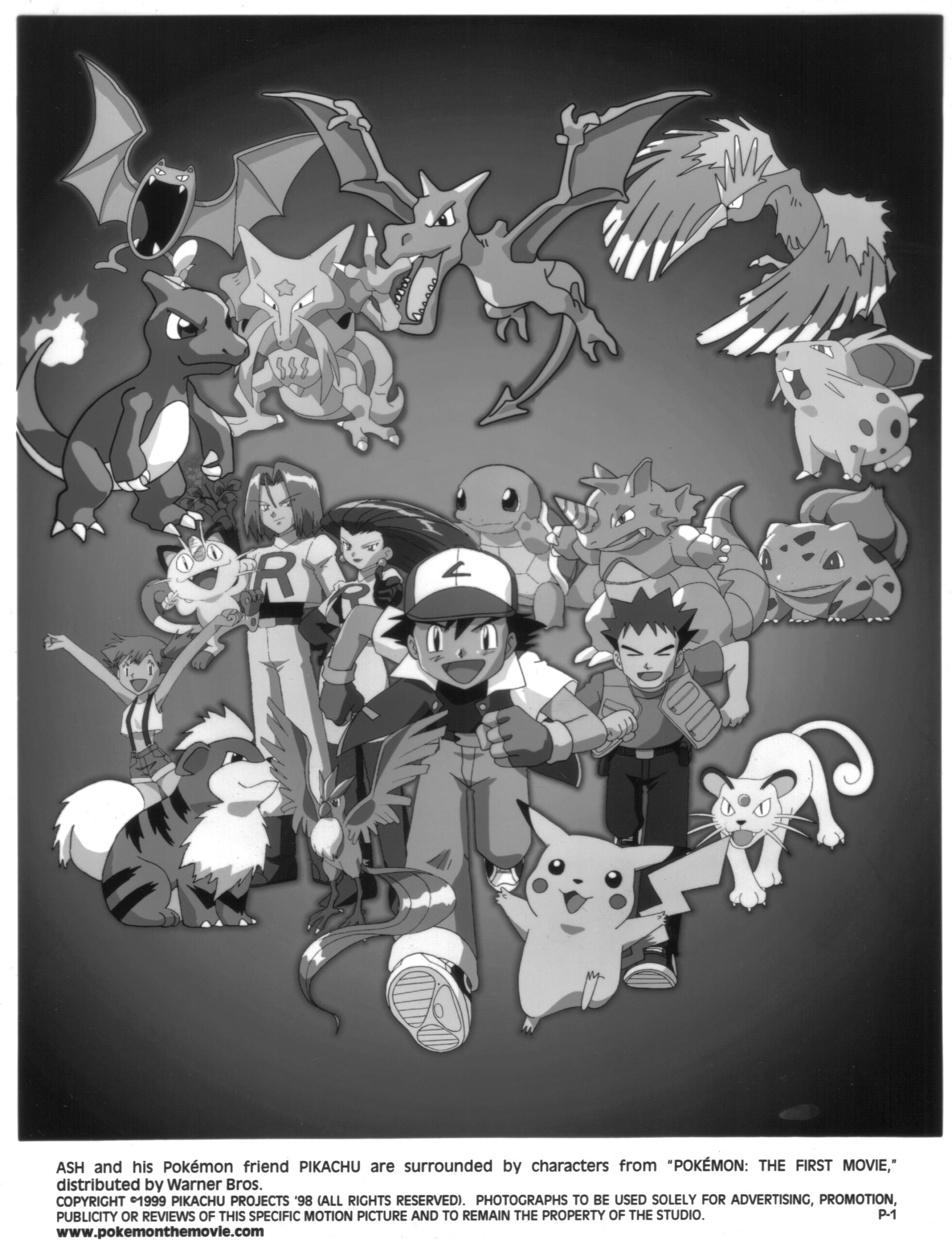
BR: No, I’m not a neurologist. I do get on people’s nerves as you know better than most people, but that’s not my forte. Basically, the Pokémon Panic began on December 16, 1997. It was episode number 38. The title was Computer Warrior Polygon, not whatever that last deuce is very quoted. Not Pokémon Shock, yeah. No, it wasn’t that. It aired in Japan at 6.30 p.m. and it was very, very popular. Of course, again, keep in mind this was the, for those who weren’t old enough to really grasp what Pokemania was, whatever you think the Pokemon history is now, dial it back to 97 and Pokemon was everywhere. TV, movies, hats, t-shirts, tattoos, God, you name it, just anywhere and everywhere. And it was incredibly popular throughout Japan and around the world. So it’s a little difficult at this remove to remember just how popular Pokémon was at the time. And so what happened on this one particular December evening was that one more popular character, the little Pikachu, the little cute little rat like yellow rat like thing with the electric tail.
0:26:02
CW: Ben… we all know what Pikachu looks like.
0:26:04
BR: Some people might not. I’m just trying to be helpful. So in the process of the episode, he uses electricity power to stop what was called a virus bomb, whatever, whatever that is. And it was a technique called Paka Paka. It’s basically an anime technique that’s been used long, long time has been used many times before, including in Sailor Moon and elsewhere. And basically, it’s alternating flashing flashes, sometimes different colors, but this sort of very distinct flashing. And in all, millions of people had seen the episode that night. It’s estimated that in Tokyo alone, 55 percent of schoolchildren watched that episode. So over half of schoolchildren in Tokyo are watching this.
0:26:51
CW: All the cool kids.
0:26:52
BR: All the cool kids. And again, the show began at 6.30 p.m. and at around 6.51, about 21 minutes into it, this is when the flashing filled the screens, and by 7.30, according to the Fire Defense Agency, which is sort of the version of the police there, 618 children had been taken to hospitals complaining of various symptoms.
0:27:15
CW: Oh.
0:27:16
BR: Yeah, so this is this was sort of the initial surge.
0:27:19
CW: And now, did you happen to find out numbers for how many kids would have just ended up in the ER on a typical night?
0:27:26
BR: I mean, no, not really, because I mean, of course, you know, kids can end up in the ER for any number of things, you know, bad ramen or Kuchisaki Onna attacks or whatever else. So, you know, so basically the interesting and relevant issue was how many kids were showing up complaining of symptoms that they claimed were linked in some way to the flashing, the paka paka. And so what happened was that soon, of course, this made the news. I mean, you have one of, if not the most popular shows on television that is apparently making hundreds or in some later news reports Thousands in some cases in some reports tens of thousands or 12,000 children sick this this was making news everywhere and several TV stations then replayed the flashing sequence like so in case you’re wondering which which sequence made people feel ill and go to the hospital. We’re going to show it to you again. There it is. Okay, well, let’s see that again one more time. So this is sort of ill-advised network decisions, but that of course lent a second wave of kids going to the hospital.
0:28:40
CW: That happens at my house whenever the milk goes bad. Oh, this tastes terrible. Here, try this.
0:28:44
BR: Oh, great, we’re all sick.
0:28:46
CW: Yeah.
0:28:47
BR: And so the sorts of symptoms that were being discussed were generally they were shortness of breath, nausea and bad vision. And it was interesting when I was trying to parse this out. Now, keep in mind, I began researching this in 2000. So this had been three, give or take about three years after the initial attacks and the seizure had gone on. So I wasn’t researching this contemporaneously, which is probably just as well because frankly, I needed the sort of time and separation between the initial news reports to sort of parse out what was going on.
0:29:23
CW: Well, that seems like there would be both good and bad things about researching something a little after the fact because it’s not like you’re going to – you wouldn’t have say the opportunity of talking to witnesses and getting memories on exactly what happened to them that night. You’re going to have memories fade. But if you’re just looking to collect data, which I’m guessing you did not fly over to Tokyo and talk to people, you just were looking to gather data from this, right?
0:29:48
BR: Yeah, exactly. And so, one of the first things I looked into was, again, what exactly, and this is the same for any investigation, what exactly are the claims? What’s going on here? Not sort of these general, you know, some people say XYZ, it’s like, no, what? Go to the original accounts. And so, for example, one person, a 10-year-old by the name of Takuya Sato, said, quote, toward the end of the program there was an explosion and I had to close my eyes because of an enormous yellow light like a camera flash. A 15-year-old girl said, as I was watching blue and red lights flashing on the screen, I felt my body become tense. I don’t remember what happened afterwards. So that was one of the curious things was the diversity of symptoms that were being attributed to this one hospital flash. And so again, headache, shortness of breath, nausea, bad vision, loss of memory, things like that. Some people claim that they went into convulsions and vomited. That was sort of the overview. What was one interesting aspect to this was that in the end, according to some news reports, as I mentioned before, around 12,000 children were sickened. And according to the story, 700 had seizures and or were hospitalized.
0:31:06
CW: Whoa. So it went from like 600, like 600 kids, 618 kids on that first showing and then it blew up to 12,000.
0:31:15
BR: Yep, by some newspaper accounts. Yeah. And then, yeah, so the idea is there were 12,000 were sickened and 700 had seizures and or were hospitalized. So it depends on sort of how you break that down. So it was, as you can imagine, this was making the Internet, I mean, I remember hearing about it, you know, over here in the States. I mean, it was like, you know, Pokemon cartoons, sickens thousands in Japan. And I remember sort of just thinking that was a weird story for one thing. I mean, it was a couple weeks before Christmas and, you know, I hadn’t watched Pokémon myself, so it wasn’t like I was concerned that, you know, that was going to happen to me. It was just sort of this weird thing that happened in Tokyo. And then, you know, I pretty much forgot about it. And the reaction in Tokyo and Japan overall was interesting. So TV Tokyo immediately issued an apology and suspended the program and said they would investigate the seizures. Now keep in mind that this is one of their most popular cartoons. It’s sort of like killing friends at its peak. And so TV Tokyo was freaking out. The last thing they want to do is think that their big cash cow is hurting children.
0:32:28
CW: Yeah, you don’t want to have a poisonous cash cow.
0:32:31
BR: That is not what you don’t need the sour milk from that.
0:32:33
CW: Now, did they did TV Tokyo research it like in depth to find out what had happened or did they do a history channel type job and promise transparency but just never bring it up again?
0:32:44
BR: Well, they they sort of split the difference between the two. The first thing they did is what’s called CYA.
CW: Oh, I’ve heard of that.
BR: It’s a it’s sort of like if you’re if you’re a studio that’s issuing the Incredibles and someone warns you that something you do may be bad, you can avoid the lawsuits by issuing a statement, talk about how how concerned you are and we’re going to send labels and you know, blah, blah, blah. And sure enough, that’s exactly what TV Tokyo did.
0:33:13
CW: Count your assets. C-Y-A.
0:33:15
BR: Yes, count your assets. That’s exactly what it is.
0:33:17
CW: Make sure you don’t lose them. Yeah.
0:33:19
BR: And thoughts and prayers. So they put warning labels on all future and past Pokemon episodes, even ones that didn’t contain Paka Paka, although it was and remains a fairly common technique. So you had outraged parents who were talking about, you know, how dare your cartoon, you know, threaten my little Takeshi, you know, just this whole whole outrage. And this is, you know, if this is the era of the outrage, this is the pre-outrage.
CW: Well, you know, Japan always has a way of doing things first.
0:33:50
BR: They’re way ahead of the curve. And so even though, of course, the whole episode freaked people out, people missed Pokemon. They’re like, I don’t care if I have a seizure, give me my Pikachu. So, gotta catch them all, man, but bring this thing back on the air. So, within, I think it was a few weeks, maybe it was a little over a month, but fairly shortly, the demand for Pokemon got too great and they just said, okay, we’ll slap a warning label on it and they’ll keep running the episodes. And it was back on the air by April, along with the new release of Spring Shows, and it retained, as far as I know, about the same status as before. So it didn’t, Pokemon didn’t take a huge ratings hit other than, of course, immediately afterwards.
CW: During that interim period, how many Japanese children were hospitalized with symptoms of Pokemon withdrawal?
0:34:42
BR: Tens of thousands, I’m sure.
0:34:43
CW: I’m sure, yes, okay.
0:34:45
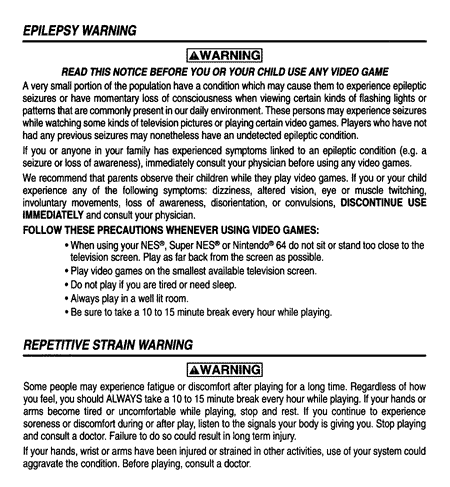
BR: That’s not what you need. So the question is, what were they doing about it? And the answer is, there wasn’t much they could do about it. Keep in mind that again, this Paka Paka technique had been used many times before on other cartoons. So there was nothing particularly unique about this usage. It would just happen to be this one episode of Pokemon. And pretty soon, as I think you mentioned earlier, you would find these seizure warnings on video games, Nintendo, Sony, I mean, even to this day, if you read the instruction booklet, there’s a little boxed warning about PSA or photosensitive epilepsy.
0:35:23
CW: Yeah, and the same with amusement park rides and other experiences, yes.
0:35:28
BR: Yeah, maybe even concerts as well, I’m trying to think of what’s on the back of the tickets. But so this is the problem, was that despite, I mean, I’m not trying to be dramatic, but despite really the best minds trying to figure this out, nobody could figure it out. I mean, it was an international story. They had the world’s top doctors in epilepsy trying to figure out how did this happen and of course how do we keep it from happening again. But Nintendo eventually just said that there was no clear cause of the outbreak. They just said, well, you know, we don’t know why it was this one particular episode. We’re going to keep airing it. Here’s the warnings. If you’re one of the hundreds or thousands, depending on who you talk to, of children who were affected the first time, then, you know, be more careful next time, basically. So at that point, the research sort of just petered out. And that was one thing that that again, sort of three years after the fact, when I was sort of picking up the trail, looking at it, that’s what was interesting was that there was only a handful of of journal articles on this case when I went to research it.
CW: So so it was mainly just covered by the popular media, not so much the academic media.
0:36:44
BR: Right. Yeah. So it was it was a huge pop culture story, of course, and again, reported national news, international news. And keep in mind, again, as I mentioned before, it was Pokémon was, and to some degree still is, but at the time it was a global phenomenon. And so people in Germany and Switzerland and Brazil and the U.K. and elsewhere, there was some latent concern that, well, if this happened in Tokyo, then is this going to happen in our cities and so there was this sort of fear of technology, fear of kids today and all these sorts of things were rolled into one.
0:37:22
CW: That sounds like Pokemon really for the time this was happening, it was like Pokemon was the scary clown of the late 1990s.
0:37:30
BR: Yes, that was basically it. So what happened was that there were basically two explanations, neither one of which really fully fit in terms of what exactly actually happened. The first explanation was that it was photosensitive epilepsy and that was the most obvious explanation because, you know, it’s flashing lights, photosensitive epilepsy is a real thing, it’s known, it’s in the medical medical journals, this is a real thing.
0:38:00
CW: And as I learned going through the incredible snippets, it’s very easy to get a quote from a neurologist about what photosensitive epilepsy is and throw it in your mainstream, you know USA Today article.
0:38:10
BR: Exactly so that that’s that it’s easy enough to pull those things out So here’s the problem with the PSE explanation The problem is that the incidence of photosensitive epilepsy is about one in five thousand So if you extrapolate that to, for example, the population, that’s about 0.02% of the population. So that incidence doesn’t come anywhere near explaining the sheer number of children affected, in some cases nearly 7% of the viewers. So I mean, there’s the thousands that were sick and allegedly had something happen to them. But the problem is that, again, that if it was PSE, then either the Japanese population, for some unknown reason and that has never been discovered before, is especially susceptible to PSE, or there’s something else going on here. So, again, depending on what prefect you’re looking at, in some cases nearly 7% of the viewers in each one. So what was clear was that there almost certainly were some PSE incidences.
0:39:21
CW: So it wasn’t made up out of whole cloth. Just like many panics and hysterias, there is a patient zero or a number of patient zeros that have a real thing happening to them.
0:39:31
BR: Yeah, exactly. And so this was the thing, is that if you look at the statistics for each prefecture, many of the people who had had the seizures had no prior history of epilepsy. You would expect that the bulk of the people who were affected, in this case children, as you mentioned the PSE is over-representing children, the bulk of them would have had a pre-existing, previously diagnosed epilepsy, and that was not the case here. So this is one of the problems, it just didn’t really match up. So the first issue is, is this photosensitive epilepsy? And the answer is that it’s certain that several, many, perhaps dozens, maybe hundreds, certainly not thousands of cases were epilepsy.
0:40:21
CW: So the answer to that question is yes, but not nearly all of them.
0:40:25
BR: Yeah, not nearly all of them, but either Japan has a previously unrecognized, much greater incidence of PSE than the other people in other countries, or there’s something else going on here. That’s where this comes in. The other explanation was mass hysteria. And that was sort of the angle that I took from it, because I’ve researched mass hysteria, sociologist Bob Bartholomew and I, we co-authored a couple books on mass hysteria. We have both done research into mass hysteria throughout the ages. Hoaxes and misdemeanors, why we need critical thinking and the Martians have landed, a history of media driven panics and hoaxes which covers a lot of mass hysteria cases.
0:41:07
CW: So you are not a neurologist but you do know your hysteria.
0:41:11
BR: Yeah, I am not a neurologist but I know more than the average person about mass hysteria. Now, here’s the problem. Even though several facets of the incident suggest mass hysteria, there’s one huge problem with the hypothesis. Now, just for those who don’t know, mass hysteria, and we should do a show on this, there’s all sorts of really fascinating angles into it, but basically, mass hysteria is, it’s not where symptoms are imagined. So a lot of people have this misunderstanding that the people who are suffering from mass hysteria, that’s all in their heads or that they’re they’re faking their symptoms somehow, that they’re they’re malingering or something like that. Mass hysteria occurs typically in closed social units, for example, schools, factories, places like that, where there’s nunneries. There’s lots of cases of there’s a famous case of meowing nuns. I think it was in France.
0:42:03
CW: Meowing nuns?
0:42:04
BR: Yeah, there was a case of, I think Bob and I wrote about it in our Martians of the Landed book. There’s a case in France, I think a couple of years ago, where there was a mother superior that began meowing and pretty soon the entire nunnery was, the women there were all meowing like cats.
0:42:25
CW: What century was this?
0:42:26
BR: I think it was like 17, 1800s.
CW: Oh, man, they needed Pokemon back then or they needed something going on.
0:42:32
BR: Sure. But anyway, so so mass hysteria, it’s also called a social contagion. So basically where somebody will exhibit symptoms, for example, the nausea or fainting or aches or they’ll smell something odd and others will sort of pick up on that and sort of have a form of contagion.
0:42:54
CW: But you’re saying it’s not like they’re trying to fake anybody out with these symptoms? They’re not pretending, they’re not mentally off?
0:43:04
BR: No, no, no, yeah. It happens to, you know, mass hysteria happens to perfectly normal, well-adjusted people. It is not a pathology.
0:43:14
CW: So I could get this.
0:43:15
BR: Oh, yeah. Yeah. And probably you have and probably I have.
0:43:20
CW: I wish you didn’t tell me that, Ben.
0:43:22
BR: Well, it’s mass hysteria. It’s really interesting. There’s a very strong social taboo against acknowledging mass hysteria. And again, we should absolutely do a show on this because there’s lots of fascinating angles to it. But oftentimes, the people that are the victims of mass hysteria and their loved ones, their parents, for example, they will adamantly reject, though this is not mass hysteria, this, you know, the authorities just, you know, they can’t be bothered to figure out what’s really going on here. It’s just this dismissive thing. Because a lot of the public misunderstands the nature of mass hysteria, often it’s sort of seen as this sort of dismissive throwaway, well, they can’t figure else, it must be this. And I’ve written about cases of mass hysteria in schools, in factories, particularly in Southeast Asia and elsewhere. But so this is a common thing here. So again, going back, so one explanation is that it was photosensitive epilepsy, which is almost certainly at least partly true. Another explanation is that it was mass hysteria, but the big problem here is that the children were in their own homes when this happened, right? When the Pokemon program came on, you know, there may have been a family that had two or three kids in the house, but not hundreds and depending on which news report you read, thousands.
CW: So there haven’t been any documented cases of mass hysteria happening because of a shared experience that wasn’t necessarily all in one geographical place.
0:44:50
BR: No, because inherent in mass hysteria is contagion. And contagion primarily through seeing somebody being in proximity to them.
0:45:01
CW: So I can’t like hear about something on Facebook where people are starting to meow randomly and then I’ll start to meow randomly.
0:45:09
BR: Not really.
CW: I have to be around the people meowing.
0:45:12
BR: Yeah, yeah. I mean I don’t want to say, you know, never say never but but typically in most cases you it’s it’s it’s two or more people often dozens or in some cases hundreds of people who are in the same physical space and can see and smell and hear that they can see what the person is experiencing and oftentimes they will they will adopt themselves. One example, and it’s not a perfect example, but it sort of gives you an idea of the parallels, is yawning.
CW: Oh, yeah.
BR: You know, if you’re in a crowd, one person yawns, oftentimes the second person will yawn because yawns are in a way contagious. They’re not physically contagious, there aren’t yawn germs that shoot across the room, but you see someone else yawning, and it’s not just listening to my voice, I mean, I’m sure I put lots of people to sleep, but it’s the same principle. You see someone doing something and there’s this sort of empathy to them. So again, the problem here with the mass hysteria explanation, which many people had sort of raised, but never really solidified, is that it couldn’t be mass hysteria because you’ve got, you don’t have 618 or 2000 or 12,000 kids in one room at one time collectively watching Pokemon at the same time and therefore able to spread the contagion that way.
0:46:40
CW: Well, what if the kids are all psychically linked?
0:46:42
BR: Well, sure. Granted, if they’re psychically linked, then this explanation goes out the window.
0:46:49
CW: I’ve just solved the Pokemon panic everybody.
BR: Thanks Celestia.
0:46:52
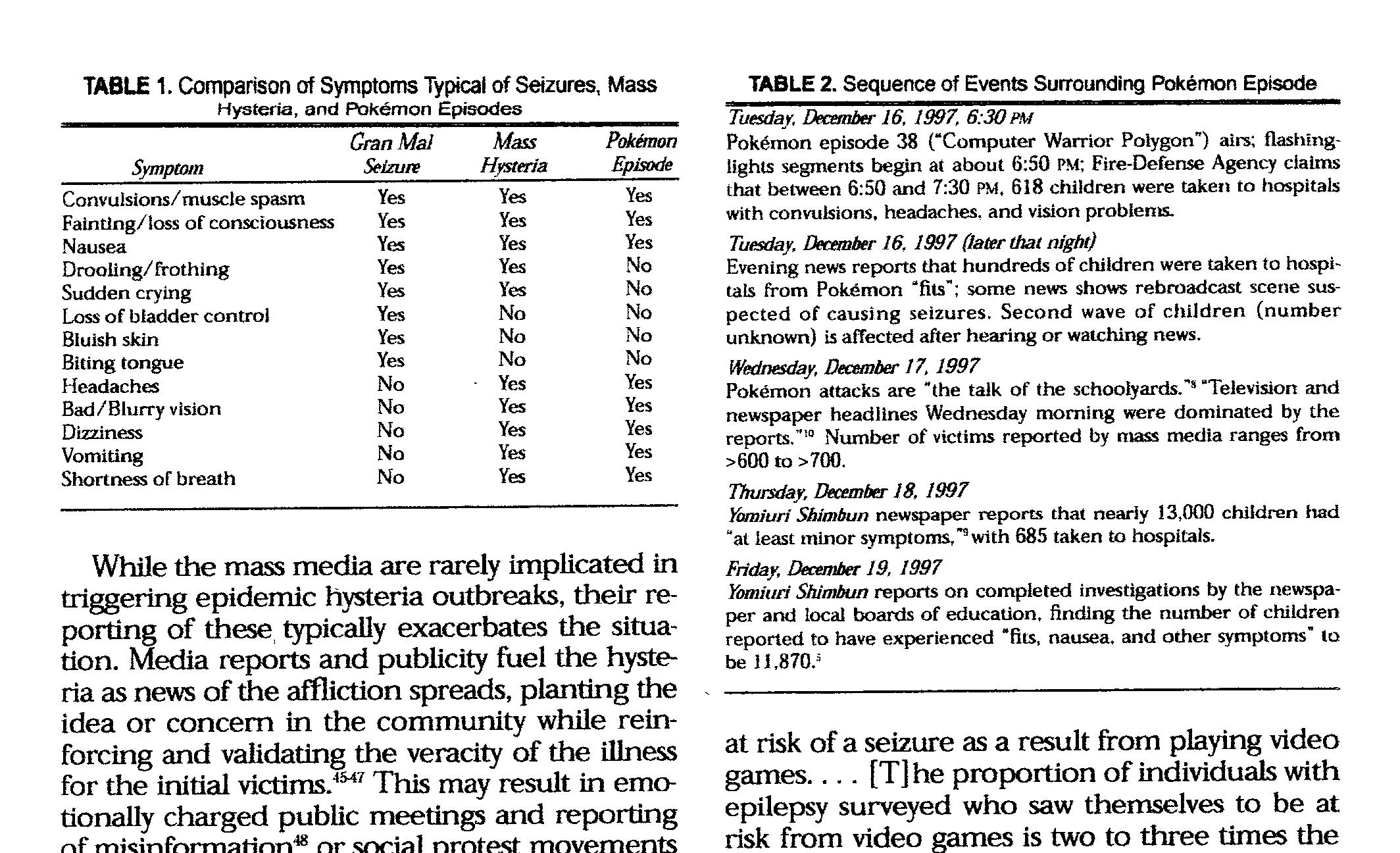
CW: So here’s the thing, so again this was the odd part. When I came to the mystery, there were these two competing explanations, neither of which really fit. It’s not either or. And so the true answer is that the Pokemon seizures didn’t occur all at one time. And this is one thing that often gets lost by just sort of a superficial understanding of what happened in the Pokemon case is people think, oh, well, you know, this all this all happened on December 16th, 1997, you know, at 630 PM, hundreds and thousands of kids went to the hospital. That’s not quite what happened. So the key to understanding how it was in fact certainly largely mass hysteria is to break it down in a timeline. I wrote a chapter on this case in my book, Scientific Paranormal Investigation. I think it is one of the last chapters in there. The first thing I did was go through all the news accounts that I could find and very carefully comb through all of them and build a timeline. So what you find is that initially 618 children were rushed to hospitals with convulsions, headaches, and vision problems. And then later that night on December 16th, again after the news media said, hey, you guys want to see that scary sequence again? Here it is! So after they did that, a second wave of kids had fits because they’re like, hey, everybody, all these Japanese kids are having fits from watching this. Now watch closely. And as one can imagine, this then sent more kids to the hospital. But still not the thousands that would later come to characterize the story. So what you had was on Wednesday, December 17th, one of the clues that I found in the newspaper accounts was that as in sort of in retrospect, this is obvious, but when you’re piecing it together, it wasn’t, that the Pokémon attacks were, of course, quote, the talk of the schoolyards. Of course they were. I imagine, yeah. Yeah, this is Tokyo. This is one of the most popular TV shows in the country at the time. You know, over half of the school kids are watching it. And of course, people are freaking out and talking about, oh my God, did you hear about, you know, somebody else in the school or somebody else in the class, in the hospital.
0:49:19
BR: And so what happened then was that on December 17th, a number of people, primarily kids, a few adults, but mostly kids, reported, still remained about 600 to 700. It’s not until December 18th that suddenly you have reports of nearly 13,000 kids having at least minor symptoms. So the key here is that there wasn’t one Pokemon incident that happened December 16th and went away. There were a series of incidents, most of which happened the following day at schools, when the kids are back together in school and they’re talking about it, and some of the kids were, you know, they’d come home from the hospital, they weren’t so badly hospitalized, they were still in the hospital, they’d gone to the hospital, were checked out, they maybe still had some vision or convulsion problems or whatever else, but they weren’t in any life-threatening danger, so they went to school the next day. And that’s where the contagion happened. That’s where people started to see other people reacting, and that’s when you see this dramatic spike, ranging from, again, 600 to 700 to 12, 13,000 kids.
0:50:27
CW: I’d imagine, yeah, remembering what it was like to be a kid and talking about your favorite show on the playground, I’d imagine that, wow, yeah, that would be very exciting to talk to somebody who had to go to the hospital because of the Pokemon episode the night before.
BR: Oh, yeah. You’re the cool kid, right? I mean, yeah, I almost died. Yeah, yeah. Absolutely.
CW: Pokemon almost killed me.
BR: Pokemon almost killed me. Absolutely. Who’s not going to tell that story to their friends? So really the whole thing occurred over four days, three or four days between December 16th and 19th. In the end, the semi-official total of children who reported to have experienced, quote, fits, nausea, and other symptoms, again, pretty pretty vague, according to Yonru Shunbun newspaper, 11,870. So that was the first part is once I broke it down into the timeline, I realized that opens the door. That’s where that contagion happened. It didn’t happen just on that one night. And then the second part of looking at it was the symptoms, right? You go back to, again, what exactly is being claimed here. This is sort of what really solidified to me that the Pokemon case was almost entirely, certainly largely mass hysteria and not photosensory epilepsy. And that’s when you start comparing the medical symptoms. And as you noted before, I’m not a medical doctor, I’m not a neurologist, I do have background in psychology and so that sort of angles into a little bit but when I was researching this, I was living in Buffalo at the time and I made many, many trips to the UB Medical Library, many, many trips, some of them through the snow.
0:52:16
CW: Now, if you had had Pokemon Go on your phone, you could have been capturing Pokemon the entire time you walked there and back.
0:52:23
BR: I could have. It could have. That would have saved me lots of time.
0:52:27
CW: But no, I would have taken you more time actually.
0:52:30
BR: It’s probably just as well. But so again, I was going through and trying to figure out, okay, well, what’s being claimed here? And so I got all the journal articles that I could find, certain medical journal articles as well as the pop culture ones. And I was researching epilepsy and particularly photosynthesis epilepsy. And what you find when you create a chart and you compare them is that the symptoms that were reported in the Pokemon case much more clearly match those of mass hysteria than a grand mal seizure, which would be the seizure associated with PSE. And so when you go down the list, and there’s about eight or ten criteria, and for example, Fainting, nausea, drooling, urination, headaches, biting tongue, blurry vision, sudden crying, blueish skin, things like that.
0:53:20
CW: I wouldnít want to go to the playground the next day and brag about urinating all over myself.
0:53:26
BR: You can leave that one out. You can just say, I had headaches and I’m still drooling. But again, when you break break it down in terms of what was claimed and does it more clearly match an epileptic seizure or does it more clearly match mass hysteria and the symptoms associated with it, it very clearly is much more clearly matches mass hysteria. So that was another huge red flag for me that the PSE explanation was largely wrong. Again, just to be crystal clear, there almost certainly were some children, maybe a couple dozen, maybe as many as a few hundred, I don’t know, but not hundreds and certainly not thousands who had some actual seizures and some of the symptoms. It was later other kids through mass hysteria and social contagion that sort of picked up on those. You know, their friend is having convulsions and crying and drooling and having headaches and suddenly I’m feeling it myself and I’m part of what’s going on.
CW: Well, thinking about now how the whole Incredibles 2 seizure warnings played out, I’m very glad that that didn’t result in any sort of social contagion over here.
0:54:47
BR: Yeah, well, I mean, you know, keep in mind that with the case of the Incredibles, assuming that somebody I think you mentioned one person’s name, I’ve forgotten his name, but assuming that one or two people had had had some reaction. Keep in mind, this is a dark theater. It is in one place. So, I mean, obviously, if if one person in the front row suddenly was keeling over and having convulsions in front of everybody, then everyone’s going to notice that and there’s much more likely it for social contagion. But if it’s simply somebody who, after the fact, tweets that, oh, well, I saw this and I had a headache or I saw this and whatever else, that’s not going to lend itself to mass hysteria because you’re reading somebody’s presumably legitimate but still sort of, you know, firsthand account of what’s going on. You’re not seeing them, you’re not picking up on their tics and their movement and their heaving and whatever it is they’re doing. You’re just seeing someone telling you, yeah, I saw the movie and I had a headache. Well, okay.
0:55:51
CW: Well, yeah, I’ve never had to yawn from reading somebody’s tweet about yawning.
0:55:56
BR: That’s a good point. One of the reasons that this case is a favorite of mine is that it’s it’s well known. I mean, it’s it’s, you know, again, I mean, international news. It was parodied on The Simpsons.
0:56:09
CW: Oh, yeah, I remember that.
0:56:10
BR: And it was a case where I don’t remember exactly why I looked into it. It was I mean, nobody asked me to look into it. It wasn’t mysterious like Bigfoot or crop circles or whatever else. It was something that, from what I could tell, the medical community hadn’t really explained. I mean, there were a couple of theories. There were actually two different theories and elements of both seemed to match, but there was nothing, there were problems with both those theories. Part of my reluctance to investigate it originally was I’m thinking, well, who the hell am I I don’t have I don’t have medical degree I wasn’t in Japan when this happened. I haven’t personally interviewed any of the people that suffered seizures.
CW: And this is 18. This is 18 years ago. You were a fresh fresh-faced young skeptic you weren’t a seasoned veteran yet.
BR: Right? And so you know so part of me was thinking you know, what makes me think that I’m going to be able to solve this case? I mean, you know, again, I’m not bragging, but I mean, you know, lots of people smarter than me spend a lot of time trying to figure this out. And eventually I just said, well, you know, even if, you know, so I think there’s a natural tendency and I’ve found this personally where I think to myself, well, if it were, if somebody could figure it out, they would have done it by now. And that’s not the case. And I really, I think that’s an important point to make is that, and it was the same case with the Mansi photo, the photo in Lake Champlain that Sandra Mansi took of the Lake Monsters Flash floating log. Part of me is like, well, this was taken in, you know, 77, published in 81. I’m looking into this 20 years later. Surely somebody would have figured this out by now and in fact no nobody had nobody had done it and as I said before it’s not that I’m the smartest guy in the room it’s just that I’m willing to put in the time and the effort to carefully sort through it and sort of bring a different perspective to it so that’s that’s one thing that I would encourage people you know if they see a high-profile mystery or something don’t assume that you can’t make some contribution to it because you may be able to. I should also mention that this case was also the only case so far that was actually written up in a medical journal. Bob Bartholomew and I co-authored a piece in the Southern Medical Journal, which is a respected, at least until he published me, it was a respected medical journal. It’s in the medical literature. I mean, you can look it up and it’s a medical article on our investigation there. So that was kind of cool.
0:58:52
CW: Well that’s pretty, that’s a nice feather in your cap. Well, you’ve certainly driven home the value of sitting down and working out a chart and a graph and a timeline so that you can see all of the data points around you rather than just hearing about the little snippets that the news will show you.
0:59:12
BR: Yeah, as I said, I mean, it is one of those cases of where if you if you don’t ask the right questions, I mean, if you if you just assume that the Pokemon episode happened one night and you don’t look into it and question that assumption, then you’re not going to figure this out. If you assume that the symptoms matched PSE seizures and didn’t match Mass Hysteria, then you’re not going to if you don’t look into it and compare them, then that’s not going to jump out at you. So it is sort of a good example of the importance of sort of parsing things out and making timelines and really sort of comparing and contrasting different explanations.
0:59:52
CW: Well, thanks for doing that.
0:59:54
BR: Well, you’re welcome. It’s a fun little, strange little story. again, it’s one of my better known sort of non-paranormal-esque mysteries. And in fact, there’s even a weird little code to it. I was contacted a few years ago by a guy in Japan by the name of Masaki Miwa. He wrote to me. I didn’t really, to be honest, I didn’t really fully understand what he was writing. I mean, it was in English, but I didn’t really follow it. And he said, hey, Mr. Radford, I read about your Pokemon research. I’d like to do an artistic project. You know, can I have your permission? I was like, Sure. Yeah, knock yourself out. Yes, you have my permission. I didn’t really know what he was doing. I just guys an artists. He wants to use we want to use my research on it. Knock yourself out.
1:00:45
CW: So that could have been all sorts of dangerous. You never know what could happen.
1:00:52
BR: I don’t recommend this.
1:00:54
CW: If a random artist contacts you over the internet, you might want to ask for details.
1:00:58
BR: I’m very gullible. People don’t realize that. So I wrote back. I said, yeah, yeah, sure, knock yourself out. So, to be honest, I pretty much forgot about it. And then about a year and a half later, I get in the mail a book-ish thing that I apparently unknowingly co-wrote.
CW: Unknowingly.
BR: Well, I didn’t I didn’t know he was going to write it. It’s called CSE S1E38. Now you’re wondering what the hell that is.
1:01:27
CW: Well, that sounds like an early George Lucas program.
1:01:31
BR: It does, doesn’t it? It sounds very much like THS 1138.
1:01:36
CW: It’s that that was my joke.
1:01:38
BR: I was explaining for those people who don’t get it. So actually the S1E38, it was the 38th episode. So that is the Pokémon, I think that’s the numerical name for that particular episode. And what he did, and you can find it on Lulu.com, again it’s very short. It says it examines the cultural phenomena that occurred on December 16th, 97 in Japan, where 618 viewers were taken to hospitals. Two people remained hospitalized for more than two weeks. Not actually sure that part’s accurate. But anyway, it says what happens when the source of the phenomena is translated into a flip book, equivalent to a manualized stop motion animation? Do you experience the same phenomena or…? So it’s this really interesting, weird, 232 page artistic book that has my article on the Pokemon case interspersed with like striking visual images.
CW: So it’s like a paper version of Paka Paka?
BR: Sort of like that, yes. Probably so, yes.
1:02:49
CW: Ah, interesting. Okay, well, I’ll have to take a look next time I get a chance. Maybe you can send that to me and I’ll I’ll flip it in front of my eyes and see if it sends me into any sort of mess hysteria. Meow. I do want to look into that nun story. That sounded fun.
(MUSIC)
1:03:08
Pascual Romero: We would like to thank our sponsor-level patrons, Amy Freshour-Kelly and Dr. Angela Mattke. If you’re interested in becoming a sponsor, or just throwing us a buck or two per episode, check out patreon.com forward slash squaringthestrange. Every bit helps us keep the lights on here in Strange Studios, and we could not keep bringing you content without the support of our generous friends. If you’re looking to provide moral support, head on over to iTunes and give us a five-star review. Every positive review helps us move up the podcast charts. Thanks again, strangers.
1:03:44
All right, well thanks for joining us, Squares and strangers out there. We’ll b back in two weeks with another topic or two or three, and in the meantime, take
1:03:55
care. Squaring the Strange is a production of Kronos Creative LLC, copyright 2017. Theme music by Shrik Bak. Additional music by Memory, Guitard and Feathered, and Pascual Romero. Content producer, Celeste Jawara. Audio engineering, producing, and editing provided by Pascual Romero at Kronos Creative Studios.
1:04:20
Additional support provided by Ashley Romero, and of course, our listeners and patrons. The views and opinions expressed in this podcast are those of Squaring The Strange and do not necessarily reflect the views and opinions of Cronus Creative, Center for Inquiry, our necessarily reflect the views and opinions of Cronus Creative, Center for Inquiry, our
1:04:31
advertisers or any affiliated organizations and employers.
Transcribed with Cockatoo
