Episode Summary:
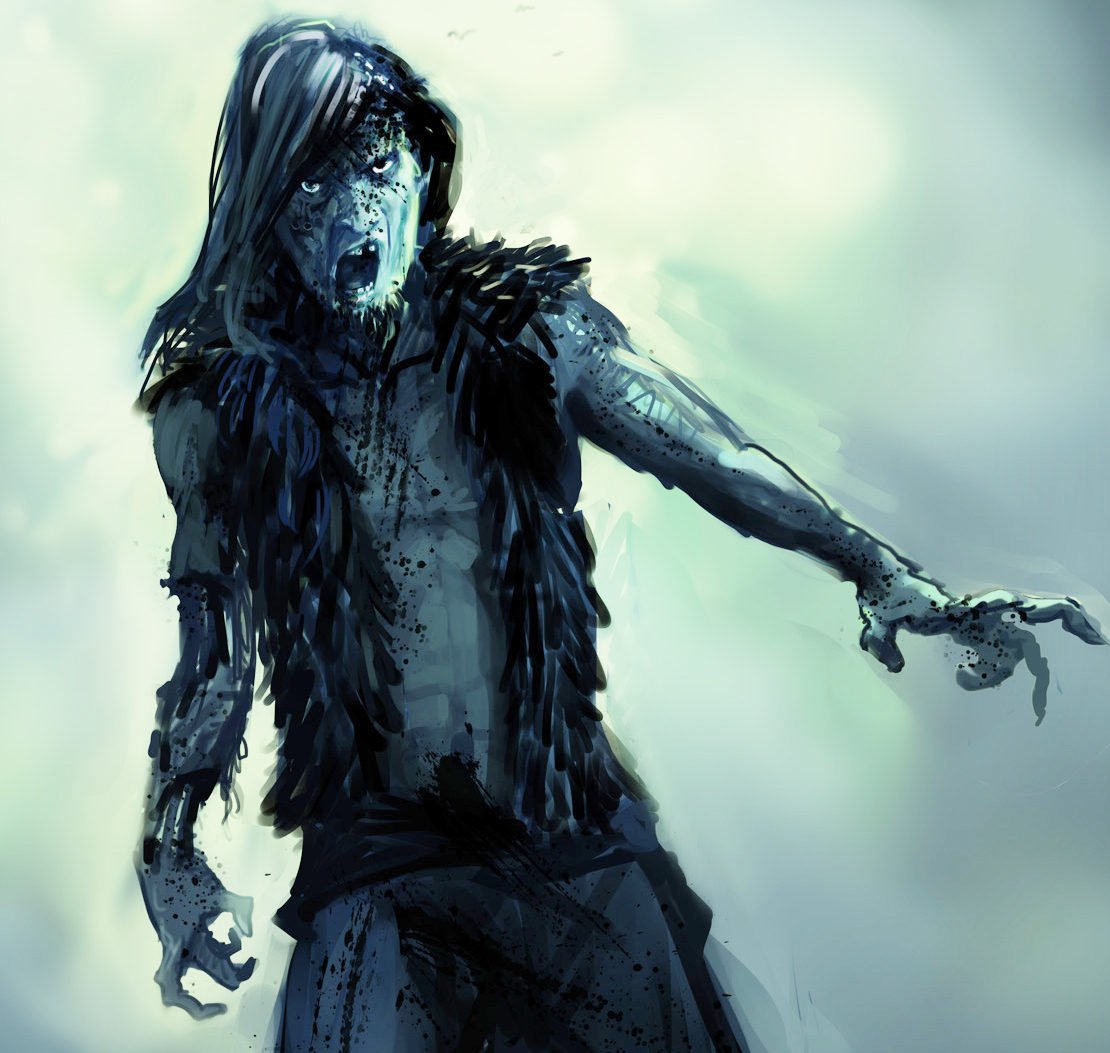
This week, our crew dives into a curious case of a teenager being hypnotized and not remembering the night. Then, we dig up zombies. Not just the Hollywood zombie we’ve grown to love, but the real root of our horror staple, the Hatian zombie. Ben brings folklore and research into real-life details that have helped form our idea of these movie monsters.
0:00:00
Ben Radford: Welcome to Squaring the Strange, the podcast that examines all manner of the mysterious and the mundane through a critical lens. So let’s square the strange.
(MUSIC)
0:00:11
Pascual Romero: Welcome back to Squaring the Strange. This is Pascual. I’m here with Ben and Celestia. How are you guys doing?
BR: Awesome.
Celestia Ward: Pretty good.
PR: Pretty good.
BR: Just okay.
0:00:31
PR: So this week we’re going to be talking about the impending zombie apocalypse, right? I think that’s what it says on the board.
0:00:52
CW: You guys all have your kits, are you prepared?
PR: Oh yeah, I use blades over guns, you know, you gotta know your weapon.
CW: Melee weapon is the way to go.
PR: Yeah, run, walk, ride a bike, don’t use cars. And I got that from Max Brooks, by the way, who we will be kind of talking about briefly during the episode. But no, we’re talking about zombies this week, and we’ll definitely be jumping a little bit into the pop culture zombie but more interestingly we’ll be talking about the history of zombies and the story behind the real zombies which is the Haitian zombie.
0:01:36
BR: Yes that’s that’s really my interest I confessed I think in a teaser on the last episode that I’ve never seen The Walking Dead I know of it I’ve seen scenes from it but I’ve I’m sure it’s wonderful. To be honest, the more modern zombies, frankly, they bore me. And again, maybe, oh, you haven’t watched it, you don’t know. Fine, I get that. But no, I just, I find the early sort of original zombies and the folklore and stories and the ideas behind it much more interesting than just hordes of mindless, like, okay, whatever.
0:02:01
CW: Yeah, we get it Ben you were into zombies before they were cool okay.
0:02:06
PR: I will say that I’m also kind of in that camp I like I like the old-school zombie again not to drop my last name too much but I come from zombie stock so
0:02:20
CW: Is there an actual relation have you traced your lead your genealogy?
PR: I can’t…
BR: How many Romero’s can there be in New Mexico?
PR: Believe it or not, the Romero family is traceable to one single Romero family in Spain. So technically, yes, we’re related. Uncle or anything. No. But anyway, before we get into all that action, let’s see what we’re skeptical about this week.
(MUSIC)
PR: So this week I am skeptical about a little article I came across on the internet.
BR: That’s a good source of skeptical material.
PR: Yeah, where nothing but the truth.
0:03:11
CW: We’re never going to run out of material.
PR: No, no. And it was it was from Cleveland and it was a there’s a couple of news stations covered it. A kid named Jalen Cox was attending his prom and apparently at their prom they had a hypnotist which proms are really different these days. I don’t know what that was all about.
CW: That does not surprise me. I worked a five-year-old’s birthday party recently that had a hypnotist. Not for the five-year-olds, it was for the older kids. But hypnotism is a pop culture entertainment option these days. There’s about a million of them in Vegas.
0:03:53
PR: I’ve always seen them. I mean, it seems like a staple in the skeptic world, let’s just say, of debunking and also a lot of skeptics are hypnotists as a stage act which they use to demonstrate some of the principles of hypnotism. But this story is very curious because so this this kid Jalen he was at his prom with his date and they did a hypnosis act. Look there’s a video for it we’ll link it in the notes. It looks like every other hypnosis video…
BR: Bring them up and then, you know, raise your arms and then, you know, quack like a duck and oh my god, suddenly you’re naked. Oh, how crazy. Oh, wacky wacky.
PR: Yep.
CW: You’re on a roller coaster. You’re really hot. You’re really cold.
PR: Yeah exactly and uh, Jalen is is seen in the video and at one point the hypnotist kind of puts them to sleep which is another thing that happens you know you sleep in air quotes quote and quote and you see him actually collapse to the floor of the stage a couple moments later everyone else does he just seemed to be pretty quick to the punch next thing then this story is very vague so the journalism itself is kind of worthy of skepticism….
BR: Well what was the headline? Why is this newsworthy?
PR: Okay, well, the headline actually jumps to the other side of it, but it says, Parents say teen was hypnotized after prom, can’t remember the night.
0:05:24
CW: Oh, that is totally a good excuse. Kudos to you, Jaylen. No, I wasn’t drinking, man. I got hypnotized. I can’t remember anything.
0:05:30
BR: I don’t know what you’re talking about.
0:05:35
CW: I have not touched a drop of alcohol.
0:05:36
BR: Diet Coke all the way, man.
0:05:39
PR: So the story goes that his date showed up at his parents’ door the next morning with him in tow. It seemed to be implied. They don’t really describe it very well, but he was behaving kind of erratically and he was passing out. This is the next morning and his parents said that they believed it was because of being hypnotized or falling during the being put to sleep part of the hypnosis. They did take him to the hospital. Now, he was checked for a concussion, which they said he didn’t have, so the fall gets ruled out there.
0:06:17
BR: Right.
PR: Also, they did toxicology, and he came back clean.
0:06:21
CW: Now, I read the same article, which is again, super short. This is what, maybe 200 words here.
0:06:29
PR: Yeah, yeah.
0:06:30
CW: It says that, okay, doctors say he didn’t have a concussion and his toxicology report came back clean. Now I don’t know if that means came back clean like there were no illicit substances or, I mean, they must have tested for alcohol too. You think they would mention that if he had alcohol in his system.
0:06:46
PR: I mean, usually, and this is just from personal experience, not first person experience, but I’ve seen when they do toxicology for something like a person showing signs of being on drugs or anything, alcohol is usually one of the first things they test for. It’s also the easiest thing to test for. So I’ll give them the benefit of the doubt. I’m going to presume that they tested for alcohol, which is a pretty common drug on prom night. So that is very curious and his mom said that you know she just she said I don’t know what happened what took place at that event and why they would even allow a kid to participate in something like that without the consent of us. Now that’s that’s an interesting thing because as a parent I kind of feel like on one hand if someone like went to my son’s school I don’t believe that anything negative would happen to him because of it, but on the other hand to me, especially if they’re trying to pass it off as a real thing, they’re subjecting him to some pseudo, maybe borderline religious magical thinking kind of stuff without me allowing it so so I get it like I feel for her on that on that angle. But on the other hand I think she really believes that hypnosis is a powerful tool.
0:08:13
CW: Right well a large number of people do I mean it’s a we should do a show on that yeah You can’t swing a cat on the Las Vegas Strip without hitting and a hypnotist act there’s tons of them right and half the audience really believes it’s a thing. I’ve had a couple of them recommended to me like some friends have gotten free tickets and stuff and one of my friends who’s not very not very woo minded? He said you know it’s a fun show even if you go into it And you totally know these people are just playing along and that’s how it works. It’s still a fun show sure
0:08:48
PR: Sure.
0:08:49
CW: They’re almost given permission to sort of, well, half the audience or sometimes most of the audience thinks I’m in an altered state of consciousness so I can do anything I want. It’s like the guy drinking, it’s like the guy drinking Near Beer at the party. He’s not drunk at all, but he can act like he’s drunk.
0:09:05
PR: Yeah, that’s and there’s just that when you see the group of people up there now, typically the kind of people who volunteer are the kind of people who are wanting to experience it.
BR: A self-selected group.
PR: But even people who might be a little skeptical, there’s that whole thing that’s been demonstrated quite a bit when you put people in a group and everyone does something. Somewhat consciously and somewhat subconsciously want to adhere to what the group is doing. They do these examples when they’ll have people sit in a room and then there will be like 10 actors in one test subject, and they’ll keep like standing up and sitting down, like if a sound goes off.
0:09:44
CW: I saw that, that was weird.
0:09:46
PR: Yeah, and eventually, you know, not everyone, but a lot of people will just start doing it because they think you’re supposed to. And I think hypnotism probably can also bank on that a little bit with people there.
0:09:58
CW: Well, and there’s also the very important, probably the most important part of a hypnotist act. You start with like 15 volunteers and you talk to them for five minutes and you whittle it down to the five best ones.
0:10:11
PR: Totally, totally.
0:10:12
CW: So, so that you spot people who are giggling or snorkeling a little bit like, oh, they’re a little skeptical, they’re just up here and they’re not going to be able to pull it off. And you get you send them back to their seats.
0:10:23
PR: Totally. And it kind of works. It’s like, you know, psychics do the same thing. It’s a very common practice with people who are trying to manipulate others.
BR: And magicians as well, right? Sure, yeah. If you’re a magician, you see somebody who’s obviously sort of snarky and wise-ass and, you know, going to mess up your trick, you don’t pick that person.
0:10:44
PR: Exactly.
0:10:45
CW: Yeah.
0:10:46
PR: And what’s that person doing at a magic show anyway? Come on, man.
0:10:48
BR: Well, but there’s something else we’re going to, so the kid was at this prom at night and the parents didn’t call the police when the kid didn’t show back up at home?
PR: Yeah, that’s…
BR: What’s going on here?
0:11:00
PR: The story, the…
0:11:01
BR: There’s some missing information.
PR: Yeah, I agree. And I, unfortunately, this article is so sparse that it doesn’t, that may have even happened for all I know just because of how vague this article is, but let’s presume it didn’t happen. I mean, you’d think that would be an important detail.
CW: And yeah, it just says there when, you know, their hearts dropped when their son’s prom date banged on their door Sunday morning. Sunday morning could have been like half an hour past midnight.
0:11:31
PR: Sure. Yeah.
0:11:33
CW: It doesn’t say the sun was up.
PR: Yeah. Well, you know, some my parents were were pretty liberal with me and I mean when I was 18 years old if I was out overnight that wasn’t the end of the world.
BR: Well yeah but look at it in terms of what the claim is right I mean if the kid says he has amnesia and he can’t count for 20 minutes that doesn’t mean anything so presumably you see what I’m saying like oh I can’t remember well it’s where were you from you know 11 o’clock until 12:15 I don’t know.
0:12:00
PR: Yeah, so that’s true, that’s true, because we don’t, we don’t know if it really means all night or, you know, like you said, 20 minutes, 15 minutes, I mean it could have been any window of time. It’s very strange and Jalen did, actually I found a quote, he said that, or I’ll quote him directly, only thing I remember was when I woke up in the middle of hypnosis and he put me back to sleep and I fell. That’s all I remember. So we’re presuming everything so that in the video when he falls from then on whatever happened he has no recollection of. Now the fall, if you watch that in the video, Celestia and I kind of pointed this out when we were first talking about this article, it’s a very deliberate fall, it’s good it reads like he did not fall he took a fall yeah he took a fall for sure it was a yeah he decided to slump over to the ground.
CW: yeah yeah his head his head is the last thing to make contact with the stage floor yeah and it does so gently on the side yeah he doesn’t collapse like a sack of marbles, he just, you know, knees and then slumping to the side and then, oh, yeah. Anybody who’s taken a contact sport, you get taught how to fall the right way. And this kid almost does that perfectly in slow motion.
0:13:26
PR: Yeah, he, he almost looks like he should just be, you know, exclaiming, eh, too brutal.
BR: I would, I would like to propose an empirical test. So we saw how he fell. There’s video of how he fell. Yeah, so I would suggest that we put him back up on stage and Someone put him in a chokehold. Maybe maybe Ian Harris, our Comic MMA guy, I believe he knows how to do that and just choke him out and just see what happens See if he falls in the same way or not. I’d be curious
0:13:54
CW: Well, and the doctors at the hospital confirmed that he did not have a concussion. So, by all accounts, he did not suffer amnesia because of a blow to the head.
0:14:08
PR: Yeah, the only thing I’d be worried about at this point is, you know, I’d maybe check – I would recommend his parents keep an eye on the police notes for the next couple weeks because the only convenient reasons for you to make a claim like that might be that you did something you shouldn’t have because I really don’t know you know and I mean there’s so many questions and of course the articles just just don’t give us enough information but what was his date doing she should remember the night. What you know what who why can’t people put the puzzle pieces together how did he even get off stage after he collapsed if he doesn’t remember anything like there was a video cmera filming him being hypnotized. Did they stop rolling and then pretend nothing happened?
0:14:50
BR: If they’d like me to investigate, I will. If you want to pay my expenses, I will go down and sort this out. I’m guessing it would take me less than a day, but I’m happy to do it. I’m pretty sure I could solve this mystery.
0:15:04
CW: Well, I just want to throw out my little hypothesis here, and that’s kind of based on the way the story seems to have unraveled here. And the look on the kid’s face when he’s talking to the news crew when he’s just kind of recounting what happened he’s like not really looking at the camera. He’s kind of looking off to the side seems really kind of quiet and soft-spoken I’m just hypothesizing that he and the date decided it would be a fun gag to tell the parents I don’t remember anything. I was hypnotized and wow And then the parents went bananas and the little prank turns into something that snowballs and pretty soon a Hospital visit is involved and the news is called and he’s interviewed on camera and he’s in a position now where he can’t just say I was just kidding man.
0:15:45
BR: Yeah, I suspect you’re right
0:15:51
CW: How many hoaxes have started because of something like that.
PR: Yeah, I smell a balloon boy coming on.
BR: And another thing to point out is that the public has a distorted view, or I should say that the public is often given a distorted view of what amnesia is like from TV shows and movies. You know, especially for teenagers, right? Oh, someone’s knocked on the head. Oh, they’re unconscious. Yeah, because that happens all the time, right? But it’s just like, so it’s the same thing with when you see people being shot in movies. Oh, they’re shot. They instantly, you know, fall motionless. And it doesn’t mean that you necessarily expect that to happen in real life, but maybe you do. So I’m suspecting that a lot of maybe this kid’s ideas of what amnesia would be like, oh yeah I fell and I forgot things just like in that movie Memento, that’s me.
PR: Yeah I can speak as a person who has had a serious enough concussion to knock a few thoughts out of my head, you have little spots of memory and usually your brain has a way to kind of piece them back together enough to where even if you don’t remember exactly what was going on your brain sort of, you know, your brain’s really good at that. I mean we’ve learned this from people And your brain will do that to you. So in a lot of situations, even if you have a concussion, you won’t even realize you lost memory because your brain’s like, just fill in the blanks. Don’t worry about this. And when it happened to me, it was a workplace injury when I was 18 years old. I had a car rim fall on my head while I was working. And it didn’t knock me out, but it rang my bell. And I don’t remember why I was standing outside of the garage, presumably less than a minute later. But my brain was able to kind of retain the injury and then everything after that. And so when I think about it, it’s not like I have like a blackout moment. I just kind of vaguely am like, maybe I do remember walking out and maybe I don’t. it wasn’t like I was just like, I don’t know my entire, I don’t even know what’s my name.
0:18:09
CW: You didn’t experience lost time like this kid has.
0:18:12
PR: No, no.
0:18:13
CW: The next thing you should look into is possibly aliens, right?
0:18:17
BR: That’s true. There’s that. You know, there’s only been a couple of times when I’ve lost consciousness. One of them was I was getting a colonoscopy. I remember I was waiting in the clinic. I was getting ready to have it done, so the nurse comes over and is talking to me and I’m supposed to count backward from three or four. And the next thing, I’m calling for the nurse, I’m like, are we doing this? I’ve been here a long time, let’s get this done. I mean, come on. I got stuff to do. She’s like, no, we’re done. We finished 20 minutes ago. And it was weird, I don’t remember, it was just like lights out?
CW: Well, the very specific thing that happens to the brain during anesthesia is totally different from other stuff that you experience. I’ve heard some very interesting scientific podcasts on how anesthesia works and how anesthesiologists know you’re really out and the very non-sleep and non-amnesia effects that occur. And it is basically like lost time. Maybe this kid was chloroformed. Who knows?
0:19:21
PR: Yeah, I don’t know how many other members of this podcast have experienced being blackout drunk, but there’s also that. Of course, toxicology came back without that, but at least I know what that feels like. In fact, if anything, that’s the most amnesia-like thing I’ve ever experienced because the couple times and only couple times it’s happened in my life, it was pretty amazing how little you can piece together once the incident begins and when you wake up the next morning.
CW: Who knows?
BR: Well, I will just end with a reminder to employ Hyman’s categorical imperative. Before trying to explain something, make sure there’s something to explain, and I’m not sure that there is an amnesia to explain here.
0:20:04
PR: And a quick note this actually didn’t occur in Cleveland it was in a town called Bellevue Ohio which is in the Sandusky area so it’s a little bit outside of Cleveland but it was reported through the Cleveland news outlets.
(MUSIC)
0:20:19
CW: And we’re back. We’re going to talk about zombies, specifically the Haitian zombie. And let me see here. I’ve looked up what a zombie is, and according to the dictionary, it is a tall mixed drink consisting of several kinds of rum, liqueur, and fruit juice. Oh wait, no, that’s the wrong one. It’s a-
0:20:53
BR: Or is it?
0:20:54
CW: It’s a corpse said to be revived by witchcraft, especially in certain African and Caribbean religions. Now in popular fiction, it is a person or reanimated corpse that has been turned into a creature capable of movement, but not of rational thought, which feeds on human flesh. Now we’re gonna go over both of those, but mainly the Haitian versions. Pascual, do you have a favorite zombie popular culture of reference?
0:21:22
PR: For me, zombies really kind of start and end with the George Romero zombies, which are the ghouls of the original Night of the Living Dead. Mind you, never call them zombies in that era. And the continued kind of saga that he went on with Day of the Dead and Dawn of the Dead, and even some of the more recent ones I did enjoy, but I always think of those zombies when I think of the pop culture zombie. I was into zombies before they were cool, you know, and since then they’ve gotten a little questionable, I guess.
BR: A little sketchy. They’re starting to get a little long in the tooth.
0:21:56
PR: Yeah, yeah. It’s not that they’re doing them wrong these days, it’s just that I feel like maybe they’re a little overdone.
0:22:04
CW: They’ve even got that show, I, Zombie, now, which is kind of a quirky little humorous soap opera about people living with the zombie virus.
0:22:12
PR: Yeah, yeah, and there’s another one on, I think it’s Showtime, or no, Netflix, the Santa Clarita Diet, which is actually a pretty funny show about a woman who suddenly is experiencing being a zombie, except that she’s not really, she’s dead and eats flesh, but she’s also totally herself and trying to live a life with a family which is actually pretty funny.
BR: Have you guys seen Dead Alive?
0:22:37
PR: That’s that one’s great. That’s that’s some apex zombie schlock.
BR: Between that the special effects and they’re just the – for those who only know no Peter Jackson through Lord of the Rings, do yourself a favor and check out Dead Alive.
PR: There’s a lawnmower murder and a weird mutant mother. Do yourself a favor and watch it. Not if you’re squeamish.
0:23:07
CW: Any musical fans, I highly recommend Regarding Your Brains by Jonathan Colton. Have you guys heard that song?
0:23:13
PR: No, I haven’t actually.
0:23:14
CW: It’s like kind of a folksy love ballad sung by a zombie to somebody they’re going to eat.
0:23:20
PR: That sounds awesome.
0:23:22
BR: Oh, tear.
0:23:23
CW: We’re not unreasonable. Nobody’s going to eat your eyes, you know. It’s very cute.
PR: Well, Pascual, you’re a fan of The Walking Dead, or at least the novels
0:23:34
PR: Yeah, I like the books. The show lost me a while ago, but not for any particular reason. I just think that the books are a little more, a little tighter. But yeah, that saga has been, it is pretty in the spirit of the spirit of the quote-unquote traditional zombie, as we know from the Romero zombie, in that zombies just sort of have progressively taken over society and taken over the world and have just become this roaming kind of blight upon the earth. And you know, the real story is the humans surviving within that world. And in reality, most of the conflict is between them and other humans. Night of the Living Dead had a political tone, not to spoil it, I know it hasn’t been out very long, but the ending has a very strong racial tone to it, and in that day and age, 1969, that was a pretty strong statement to make on film. Granted, it was essentially a student film at the time, so it didn’t have the wide popularity that we see nowadays, Definitely, kudos to Romero for being that socially aware to stick that right into a horror story.
0:24:55
CW: Zombies are a brilliant tool, a brilliant dramatic trope to use to expose people’s humanity and sometimes strip it away. Max Brooks, as I mentioned I think last week, that I had seen a talk by him. I’ve actually seen him speak twice about zombies at various cons. And he has loved them since he was a kid. They terrify him. I mean, he loves them, but they terrify him, the whole idea. And he said the crux of what makes a zombie apocalypse terrifying is that it takes away from human beings, the one superpower that we have, which is our civilization, our ability to cooperate and get things done together and specialize. And he even said, he’s like, the one weapon you want to have against zombies is other people. You know, he talks about melee weapons and, and, you know, the usefulness of a car versus a bicycle, etc, etc. But he says the the best tool you can have is you want to assemble a crew of people where you have a doctor, and you know, a person who can hunt game, you know, people who have different skills. And if a zombie apocalypse takes away humans ability to organize and get work done, then that’s, that’s destroying us. That’s what’s really taking away our superpower, our ability to survive. And having also seen Ben talk about the Haitian zombie, I was struck by the fact that it’s the opposite of that. It’s not, it’s not, it’s not a zombie apocalypse thing. It actually, the Haitian zombie zombification actually does not interfere with civilization at all. If anything, it becomes a perfect little human worker. But Ben, why don’t you get into some of that?
0:26:34
BR: Yeah, it’s really interesting in terms of looking at how Night of the Living Dead changed the zombies. As Pascual noted, it’s sort of, you know, the quintesential zombie movie. Romero took the zombie idea, we can go back to, for example, White Zombie in 1932. That was one of the, basically the early zombie film. And, but really Night of the Living Dead really changed, it changed the world! But it certainly changed zombies. And part of it was that the original Haitian zombies, the lore and the films, tend to focus on singular zombies. It was really a, it was a personal tragedy. It was a close-up, terrifying experience of someone losing their identity and their personhood. And that really changed with the later zombies, again beginning with Night of the Living Dead, where you’re focusing on the hordes and the contagion, and the disease, and the relentless moving forward, and that sort of thing. And that’s one of the interesting, there’s lots of dualities about zombies, and that’s one of them is the spinning around. And we’ll get into this a little bit later, but later on when The Serpent and the Rainbow came out, the Wes Craven film in 1988, Craven sort of brought back the original Haitian zombie lore. And so it’s this sort of, you know, this sort of seesawing back and forth, but for most of zombie film history and pop culture history, it was this Romero zombie.
PR: Yeah, I think it’s it’s very curious how it shifted and you look at the the very early pop culture zombies Like white zombie and before that actually a film. That’s one of my favorite films visually the Cabinet of dr Caligari, which is a German film from 1920 that guy was not necessarily definitively a zombie, but they call him the Somnambulist, which is like Sleepwalker. But he’s under the control of Dr. Caligari, and he does things kind of at the command of him. And White Zombie sort of has a thread, has kind of that sort of enslaved, almost hypnotized character, where it’s less about a reanimated ghoul or corpse or monster and more about a being at the that is not in control of itself at all and basically is a Zombie as you would define it in the sense of you know if you woke up in the morning a zombie.
0:29:00
CW: This is harkening back to our sway so and that that poor kid on prom who was under the hip hypnosis power of somebody… possibly.
0:29:07
BR: Or not but no, the context here is important because during this time the 20s and 30s and later you had a lot of moral panic about the white slave trade and This is one reason that white zombie was so scary and so it was so resonant was like and so literal And the same thing, you know with the cabinet dr. Caligari what that wasn’t America that was German, of course. Yeah, sure. But you had this notion of the whites being enslaved in a very real way by other whites.
0:29:43
PR: Right, right.
0:29:44
BR: Of course, there’s a whole tradition of concerns about, well, frankly, racist concerns about white women being taken by the savages. So the early zombie films were really, in many ways, xenophobic and really had this racial undercurrent. And which is why it’s all the more interesting that when Romero comes in 68 to do his, he put the little twist on it.
PR: Yeah, so spoiler alert, the story of Night of the Living Dead essentially just revolves around a group of people that eventually end up cornered in a farm house. And throughout the story, now the protagonist of the film is a black man, and he, and along with the girl, Barbara, who is the first person you see in the film, and she, I’d say maybe it sort of is between this white woman and this black man. They’re sort of the two main characters of the story. And anyway, as the story progresses and as they’re meeting more people, they find the family locked in the basement, and there’s a little bit of a racial tension between him and that family. Well, and throughout the story, you know, this tension between the people really drives the story as they’re trying to cooperate enough to not get attacked by these ghouls. And in the end, the eventual, I guess, kind of sheriff’s posse or kind of militia that’s been sort of drawn up and they’re sort of marching through the countryside trying to eliminate the ghouls, they eventually come upon the farmhouse and when they look up in the window of the farmhouse, there’s a black man standing there and they just shoot him. They don’t check to see if he’s a zombie. They don’t call out to him. They just shoot him. And it’s inferred, obviously, that they didn’t care. And that’s a very progressive view back then. I mean, 1969 was a very important time for civil rights and when we were really trying to like turn the mirror on our racism and and so it was a very socially aware film and that ending it was very powerful I think a lot of people at the time may have almost missed it because people weren’t so aware of their own biases and right were just like wow. Oh, they mistook him for a zombie. You know it’s like well…
BR: There’s more do than that.
0:32:04
CW: Yeah, I think the message there would be a little bit more clearly received nowadays Yeah, a black man being wrongfully shot by police is not exactly something that’s gone away
PR: Yeah, yeah.
0:32:15
BR: Well in one of the themes that we’re seeing here both with white zombie and particularly the early Haitian Inspired zombies is this notion and we touched on earlier of hypnosis and mesmerism. Of course, remember, mesmerism was a big thing 150 years ago. People just believed that you just snap your fingers and there was lots of fear of losing your will and being enslaved in the whole Svengoolie type, you know, Caligari thing. But yeah, I mean, originally the book that really brought the notion of Haitian voodoo and by extension zombies to the public consciousness was a book titled The Magic Island in 1929 by William Seabrook. It was by far the most influential, there were later imitators of course, but this was by far the most influential and it was very sensationalistic, it was again very much a product of its era. So it was filled with lurid stories of black magic and blood sex and orgies and all sorts of stuff. So let me describe for you how Seabrook describes his encounter, or his alleged encounter, with seeing a zombie. He writes, “The eyes were the worst. It was not my imagination. They were in truth like the eyes of a dead man, not blind, but staring, unfocused, unseeing. The whole face, for that matter, was bad enough. It was vacant, as if there was nothing behind it. It seemed not only expressionless, but incapable of expression. Then I suddenly remembered, and my mind seized the memory, as a man sinking in water clutches a solid plank, the face of a dog I had seen in the histological laboratory in Columbia. Its entire front brain had been removed in an experimental operation weeks before. It moved about, it was alive, but its eyes were like the eyes I now saw staring.”
0:34:14
CW: Creepy.
0:34:16
BR: And again, this is all part of a larger context. I mean, we also see this in the case of the White Witch of Rosehall in nearby Jamaica, also in the Caribbean, where there was a woman who came over from, well, depending on which version you consult, she came over from Haiti or Tahiti and there’s this white woman and in a lot of the Jamaican lore, the outsider’s magic is all the more powerful. So the fact that it was a white woman, like, oh, she’s got especially powerful magic. And so again, you see all throughout the Caribbean, you see these notions of enslavement and domination compelling people do things. And of course, when you bring in the presence of the slave trade in Haiti, in Jamaica, and elsewhere in the Caribbean, it all sort of crystallizes in this Haitian zombie.
0:35:05
CW: So was the Haitian zombie and the folklore behind the Haitian zombie idea, was that sort of the patient zero for all the zombie ideas we have today? We wouldn’t have Romero or any of these movies or graphic novels or anything without the idea of the Haitian zombie at the core of it all?
0:35:24
BR: I would say generally yes. Again, it goes back to William Seabrook and a lot of the lurid sensational stories and ideas and, you know, white zombie later on. And it definitely led directly to that, but there’s a broader context here. Because if you go back to the original Haitian zombies, they weren’t villains, they were victims. And so again, you see this sort of duality where the modern zombies are the evil masses sort of coming to eat you or eat your brains or infect, you do something bad to you. But when you’re going back to the original, and let me just begin with a caveat that there’s so much lore in terms of Voodon and zombies and the history of Haiti and the slave trade that there’s, we could do a dozen shows on this. So I’m necessarily sort of narrowing the focus to fit it in today. But what you find is that the zombie lore is closely linked to the Haitian concept of the soul. There’s actually two different types of zombies. The zombies that are bodiless and there are other ones that are soulless. The soulless zombies are the sort of zombies that we’re all familiar with, the idea that the essence and the spirit has been drawn out of them.
0:36:46
CW: Just a husk of a human. Just mindless.
0:36:49
BR: Exactly. But, actually, there’s another type of zombie, which is the bodiless souls.
CW: I’ve never heard of that. Is that like a ghost?
0:36:59
BR: Sort of. It’s actually not really well understood, even in Haiti, among ethnologists. The duality is there, but so much attention has been paid to the, basically, the soulless bodies instead of the bodyless souls. But that’s definitely part of the broader context. And there’s another duality here, which we sort of touched on this earlier, was that one version of the zombies are the sort of docile, controlled zombies. And this is where you get the Svengoolie, the Dr. Caligari, the idea that a former person is being brought into servitude by magic, by someone who’s trying to basically impose their will. And then you have the other type of zombies, which are the hungry, wild, threatening zombies. And those are two different types of zombies.
0:37:53
CW: We have the domesticated zombie and the feral zombie.
0:37:57
BR: But yeah, so what you find is that the term zombie actually stems from West or Central Africa cultures, including Yoruba, the Congo, and the Bonda and others. When people think of zombies, they immediately go to the Haitian zombies, partly because they’re the best known. That’s the one that’s been most often studied. But there are very clear parallels to other stories of zombies and zombie-like figures in other parts of Africa, particularly in West Africa.
0:38:26
CW: Well, Ben, how do you, how and why does a person make a zombie and who has the power to make a zombie?
0:38:33
BR: Well, there’s a couple different ways that one can make a zombie. I’ll sort of go into the two different types. For a long time, certainly outside of Haiti, it was widely believed that zombies were essentially a legend, a scary myth, something to control the masses. And that changed with the research of Ethnobotanist Wade Davis. Everyone in this room has heard of Adam Tully.
PR: Serpent in the Rainbow.
BR: Serpent in the Rainbow, right.
CW: Yeah, yeah.
BR: And that changed in the 1980s and he wrote a couple different books. The first one was The Serpent in the Rainbow, which was later turned into the West Caribbean film we talked about in 1988. And he wrote a follow-up book titled The Ethnobiology of the Haitian Zombie. And I have both books and I’ve read most of both of them. And again, you know, we could do a whole show just on Davis’s claims, but in a nutshell, Davis claimed that he had been able to obtain different samples of a zombie-making powder. And so Davis’s position, let me phrase this carefully, as characterized by the popular media and there’s an important distinction there because he would argue that some of it was twisted around and it may have been to some degree but certainly the the takeaway was that zombies are real or were real and they were created by Bokors or essentially witch doctors who basically used this powder this quasi mythical powder to essentially create zombies. That’s the short answer now
CW: Now, I saw Wade Davis on a recent – to prep for this I sort of poked around a little bit I I didn’t do solid research as one would say, but I did see a documentary which is not research! That way Davis appeared on and it was that it was an episode of something called Hamilton’s pharmacopeia, I don’t know if you guys have heard of that. He’s actually Hamilton Morris, the son of Errol Morris, the famous documentarian. Hamilton, the younger Morris, is kind of like, imagine Shaggy from Scooby-Doo, but like really goth. And he has like this quiet, like sleepy, deep voice, and he’s prone to talking a lot about his dreams and saying dramatic things like, it chilled me to the very thread of my cultural tapestry.
PR: So he’s a hipster.
CW: Very, very hipster, goth, shaggy type. And he went down, he talked to Wade Davis, and Davis explained how he discovered the powder and it has lots of poisonous stuff in it. Some psychoactive plants, the bones of a dead child, the pufferfish toxin, PTX, tetro toxin. What is that called, Ben?
0:41:15
BR: Tetrotoxin.
0:41:16
CW: Yeah, yeah.
0:41:17
PR: Oh yeah, the sushi poison, I like to call it.
0:41:21
CW: But it was a fascinating little romp through Haiti, and the whole time I’m watching this young Morris kid, Hamilton Morris, on the advice of Wade Davis, and you know, gleaning his knowledge, he kind of tried to recreate Wade’s journey through Haiti and it just seemed like a long series of a white guy getting taken for a ride by a bunch of Haitians.
0:41:43
PR: So it sounds exactly like the kind of documentary I would enjoy.
0:41:46
CW: Well, he, to his credit, at the end of this after visiting several Bacors who all kind of seemed similar like, oh yes, I can, I can totally make a zombie and one of them even showed him a zombie. Oh my gosh, it was hilarious. He basically opened up some storage room and there was a guy with a sheet over himself. And he goes, you will throw salt at it. So he threw salt at the zombie and the guy under the sheet goes, oh, the zombies do not like, they don’t like to have their face shown. And then they threw some more salt at him and he goes, oh, go, go, go, go, go, go. And then they leave and you can see the face of the Hamilton Morris’s face is just kind of like, huh, I was terrified, but we needed to find the powder and this guy says he would make the powder for us But he wants $2,000 and no he wanted $8,000 and they talked him down to $2,000 and then as he’s handing the money over the next day because they had to drive out and then back into the village and he’s like and then I noticed the associate who took my money was the same man who was the zombie the day before.
BR: Yeah, that’s…
0:43:12
CW: Really? But anyway, to jump to the end of the documentary, which was amusing, they took the powder that he had procured from a different Bacor for $1,000, they took it into a lab in New York City and analyzed it. So kudos to them for actually bringing some science into it. And it was a bunch of hair and sand and some compounds that you would find in cosmetics. All completely inactive.
0:43:42
BR: Yeah, that doesn’t surprise me Well, is it you one of the things that happens particularly when you’re talking about zombies and voodoo is that the entire subject has become so sensationalized that it’s very very difficult if not impossible for a non-Haitian, because of linguistic barriers, cultural barriers, skin color barriers and many others, whether it’s Mr. Morris or it’s Wade Davis or anyone else to actually get legitimate valid information. That was one of the criticisms of Wade Davis himself, who a Harvard botanist, you know some were thinking that Davis just got taken for a ride as as Tourists do I’ve traveled pretty extensively throughout Latin America and I was briefly in Haiti, and you know that’s that’s what you do to tourists. Especially white tourists are like hey, so I hear you all have zombies? Yeah, sure you cotton man right this way.
PR: We did an entire episode about that, which is that it’s very common for the tourism to just do, once you’ve got your hook, just beat it into the ground and take advantage of anyone who’s willing to give you money to tell them what they want to hear.
BR: Well, the ironic thing here is that it’s entirely possible that there is no there there. In other words, there are no secrets to be found. It’s that, you know, there’s Davis and the American population and the people who love zombie movies, there’s this sort of this, we love this idea that there’s secrets to be discovered and buried treasure out there and if we just ask the right person, if we just bribe the right bacor… but it’s entirely possible that, you know, there’s nothing there. In fact, it reminds me of a line in another George Romero film, my favorite, which is titled Martin. Oh, sure, great vampire movie. 1978, and I won’t spoil it, but it’s, if you haven’t seen Martin, go check it out, but there’s this one line where the title character is explaining, he says, there is no magic. And it’s, if you understand the content, it’s really, it’s really kind of profound when you realize that it’s basically this person who may or may not be a vampire. And part of the premise is, even if he is a vampire, that doesn’t mean he’s necessarily paranormal or magical. And that, I sort of bring that back around with the case of zombies is, it’s entirely possible that Davis and Errol and everyone else is sort of, you’re chasing phantoms.
0:46:29
CW: Well, yeah, my skeptical radar definitely went off as I’m watching this young documentarian get led around by this supposed bacor. And he says, this must be done discreetly. No one must know.
BR: Except the camera crew.
CW: Yeah, and then for the next five minutes, the camera’s on him the whole time as he explains how he’s doing it.
0:46:51
BR: So let’s bring this back to Wade Davis. So after the Serpent and Rainbow came out, and it made a huge splash, and it was a pretty good horror film, but this really, because of the sensationalism and of course the fact it turned into a film, I think Bill Pullman was in that, if I’m not mistaken.
0:47:11
PR: Yes, he was.
0:47:12
BR: And so suddenly Davis’s claims became a little, they had more scrutiny put upon them because he was, this was the basis of quasi based on, I don’t remember whether it actually says based on a true story, but it’s strongly hinting that there’s some truth to it. So people started taking a closer look at Davis’s claims. There are a couple of criticisms, I’ll just read briefly from an article in the Journal of American Folklore, autumn 1991, titled The Ways and Nature of the Zombie. It’s a good little encapsulation of some of the complaints about Davis’ work. It says, “Davis’ thesis is problematic in several ways. Number one, many characteristics of the flesh and blood zombie can be explained by mental disorders, notably amnesia and catatonic schizophrenia. 2. One of his eight zombie powders did not contain any puffer fish. That’s the TTX tetrodotoxin that supposedly is the active ingredient in zombie making powder. 3. Only two zombie powders contain small, apparently innocuous amounts of tetrodotoxin. 4. It’s not clear which samples were studied in which laboratories and exactly what the results were. So I’ll come back to that in a second. Five, most samples contained human remains and a confusing variety of ingredients of weak or uncertain effect. And six, the poison was administered in a seemingly ineffective way. In at least three instances, the powder was said to be strewn on the ground into the path of the intended victim or on the doorstep.” So the claim was not so much that they forced them to inhale it or drink it. It’s like, well, they walked over it. Well, that’s not how that works. So let me briefly talk about some criticisms, and this is from the book Undead Uprising by John Kusenz. This is on page 277. It says, “critical reactions within the scientific community to the publication of Davis’s two books were summarized after the release of Craven’s film in the 1988 article for Science by William Booth called Voodoo Science. You can imagine the tone here. One of the most visciferous critics was C.Y. Cowell of the State University of New York Downstate, who accused Davis’ book of being a fraud.” Now fraud is kind of a harsh word. I’m quoting, to be clear.
PR: This podcast is not making any slanderous claims here.
BR: I’m reading from a book, Dr. Kusanza, don’t sue. Basically, he says, “the three different laboratories that tested the powders, these are the alleged zombie baking powders, found remarkably different levels of tetrodotoxin in the same samples and the conclusions of the doctors assigned to analyzing them varied widely. There were no pharmacologist or toxicologist on Davis’s doctoral dissertation committee, at which he presented the first version of his ethnobiology of the Haitian zombie.” So that was sort of the scientific dismissal of, it wasn’t an outright dismissal, but again, toxicologists once they were made aware of Davis’s claims about the alleged zombie-making powder had some questions.
0:50:24
CW: Well, this stuff is starting to sound like herbal remedies. You know, there might be something in it, there might not. You can have it made on two different days and it has two different varieties of stuff or two different levels of active ingredient or none at all.
0:50:38
BR: This is why the FDA needs to be in charge of the zombie powders. Standardize this stuff. Proof it’s effective.
0:50:46
CW: Well, you mentioned the odd ways that the powder was administered or not administered. And the young Morris on his little jaunt through Haiti, he had some powder applied to him. And the fellow said, this small amount of powder could kill 20 people. He’s like, now, would you like to have some? And Hamilton Morris said, yes. And he was, you know, terrified. And he had the powder put on his arm, and nothing happened. And then he put more on his arm and nothing happened again. And then the Bocor then applied the antidote, which was a lime. He squeezed lime juice and rubbed the lime juice all over the powder on his arm, and that was supposed to be the antidote. And Morris pointed out, well, that doesn’t really make any sense because that would just raise the acidity of the paste on my skin and actually make it more easily absorbed. But, hey, he didn’t die. At least there’s that. But Wade Davis, he did say that the media widely exaggerated what he had claimed in the first place. And he said a lot, he said the conclusion that he came to, and perhaps he came to this conclusion long after he published the books. He said is it all depends on what he called the cultural matrix. He said there’s a strong placebo effect to all these powders and if somebody really believes, he’s like these people have grown up in a world where they fully believe in zombies and if a bokor does certain things with the powder to them, they will believe that they are zombies. So there was a strong emphasis on the placebo effect, at least in the explanation that Davis gave on the documentary. Now granted, this was after about 45 minutes of going through all the ingredients and the toxicity of the puffer fish and the psychedelic qualities of the plants that go into it, supposedly. So it’s kind of hard to figure out where he stands, even from the appearances on this very self-contained little movie.
0:52:51
BR: Yeah, my impression of Davis, I’ve not met him, but I sort of, I get the sense he sort of wants to have it both ways. He wants to be the guy that did all this, and he’s the dashing this and that, and he, you know, he wrote all this. Oh, but I’m not saying let’s just be really clear. So I, you know, I, he’s certainly done far more research than I have, and most other people have on this particular subject, but he seems to sort of be wanting to play both sides of it a little bit. So a few of these zombie-making powders were analyzed, and they typically included frogs and toads, for those who like ground-up frogs and toads.
0:53:30
PR: Classic witchcraft.
BR:There you go. Lizards, millipedes, tarantulas, gunpowder, ground glass, ground glass, wow, and irritants and irritant or harmless plants and various combinations.
0:53:57
CW: I’d rather go with the zombie that involves fruit juices and rum and various liqueurs.
PR: Yeah, it actually is much more effective at turning people into zombies, hence their name.
BR: There you go.
(MUSIC)
Recording: I Can’t let shit lie You know I mean like I can’t walk away from an argument and I don’t that’s because I’m a skeptic or what but it’s like I have this thing where I can’t if you say something factually inaccurate. I me like you just can’t walk away from shit yes yeah cuz you’re probably a skeptic too or maybe an asshole that’s what I think um because that’s what I get called a lot anybody else?
(MUSIC)
0:54:40
CW: Well, now, I was curious, I mean, Davis mentioned the cultural matrix. He mentioned it several times on the little documentary I saw. What can you tell us that you’ve learned about the cultural matrix aspect of zombification and how pervasive is the belief in zombies in Haiti among the locals today or 200, 300 years ago? How far does this go back?
0:55:18
BR: Well, it’s difficult to say because measuring actual belief in zombies is not as easy as it may sound. Depends on who’s asking and why they think you’re asking.
0:55:29
PR: Right.
0:55:30
CW: Yeah.
0:55:30
BR: With that caveat, certainly some people do believe in zombies. You have to go back to the original notion of what the zombie is, and certainly to the Haitians at the time, and we’re talking when Seabrook, for example, was writing his stuff and White Zombie came out and sort of the sensationalist lurid stories like that, you had the fear of zombies was used as a method of political and social control in Haiti. And there’s parallels, for example, we talked about the Popobawa in Zanzibar and how many of the locals would use threats of the Popobawa. We talked about this in the episode on the mother’s helpers, the boogie helpers.
0:56:14
CW: Yeah. And talk about dirty politics. Vote for me or you’ll get attacked by this monster.
0:56:20
BR: Exactly. And so what you find, so there’s, again, it’s a very complex phenomenon. It’s difficult to sort of distill, but basically you had those in political power, in this case, the Duvaliers, the Papadoc and Babydoc Duvaliers, who basically ran Haiti from about 1957 to the mid 80s. And they would use their secret police, the Tontons Macoute, that would threaten people and enforce Duvalier’s orders. And Papadoc himself would often make claims about having supernatural powers. He claimed to be invincible to bullets. Papadoc Duvalier would actually actively cultivate his image as Baron Samadhi. Baron Samadhi is the… do you guys know who that is?
PR: No.
CW: No.
BR: Okay, so he’s a figure… he’s actually probably best known to American audiences. He’s depicted in the James Bond film Live and Let Die in 1973. And so Baron Samedi, he has a top hat, dark glasses, and it’s this sort of evil, scary looking clownish figure. And I-
CW: Yeah, that popped up in one of the recent Disney movies, The Princess and the Frog. There was a character very similar to that.
0:57:37
BR: Yeah. And I’m now regretting not having mentioned in my Bad Clowns book, but if I do an updated edition, I’m going to include Baron Semedi. But it’s a very evocative, creepy figure in Haitian lore, and Papa Doctor Duvalier cultivated his image very much in that. And he tried to reinforce the idea that he had magical powers. And not only did he have magical powers, but he could turn you into a zombie. And again, going back to the original idea of the Haitian zombie, that can be terrifying. I mean, the idea, think of you yourself and your identity and who you are and what you’ve done and your education and all the things you’ve built around you and to have that taken from you and have you turn into a mindless worker is terrifying. And this was especially terrifying to the slaves, because you know the notion of the zombie goes back certainly long pre-days to the Duvaliers, and so to the Haitian slaves, the idea that you could be forced to work even after death was horrifying. It’s bad enough they were brought over from West Africa and forced to work in the sugarcane plantations out in the sun, just a horrible life of work and slavery and toil, but to have the additional threat of, if you disobey me, I’m gonna kill you and dig you back up, and you’re gonna continue working, that was just, that was sort of the ultimate indignity and abuse to the Haitians.
0:59:11
CW: Yeah, death would be the only escape for a lot of these slaves.
0:59:16
BR: Exactly. So again, it goes back to this notion, the original Haitian zombies were victims. They were ordinary people like you or I who would be killed and they would be resurrected and forced to work.
0:59:30
CW: So you’re saying that the idea, while we can’t, as a tourist to Haiti these days, it would be hard to tell who’s messing with us and who honestly believes in zombies. There is there is ample evidence, you’re saying, for a widespread belief. So so pervasive, even in recent history, that it was used by political dictators. And then before that, it was used by slave owners trying to control people in the fields.
0:59:53
BR: Yeah. So what you find is that there’s there’s parallels to the Haitian zombie, as I mentioned, in different parts of Africa, primarily in Cameroon and the Congo and elsewhere. So you have not only words that are similar to zombie in different languages, but again, you get back to the sort of the animism and this notion of separating the human from the soul. So, for example, there are stories in West Africa of surrogate bodies that are intended to deceive relatives and friends of the victims. And of course this evokes the idea of the changelings in the British Islands, this notion that a baby or an infant were swapped out by fairies that would come and take the… and we should do a show on changelings. Fascinating stuff. But as in Haiti, sorcerers are said to have the power of the people who are not buried properly. And so we can sort of expand the scope to looking at the folklore of the zombies in terms of what makes a bad death. And we see this in ghost folklore, for example. Why would a given dead person come back, either as a vampire or a ghost? Everything from maybe they were murdered in some horrible way, or they weren’t baptized.
1:01:14
PR: Ah, oh I’m in trouble.
1:01:16
BR: We’re all screwed, right? But no, it’s interesting that there’s a very strong folkloric aspect of what society deems a bad or problematic death. Revenge killings, babies who aren’t quite right. And it also blurs lines between life and death and what it means to be human. And we see this in course in modern day zombie stories, the World War Z and Walking Dead. But this is sort of why I find the notion of the Haitian zombie particularly interesting. In the case of slaves, you have this blurring of the lines. Are they a property or are they humans?
1:01:54
CW: Oh.
1:01:55
BR: And, well, obviously they’re people, but –
1:01:57
CW: It’s obvious to us today that they’re people, but back in the day, they weren’t really considered people.
1:02:02
BR: Well it was both. And that’s again this is part of the reason that the idea of the zombie was so evocative in Haiti particularly because it was this blurring of the lines right between free will and servitude, between property and humans, between being your own person and being a slave to someone else. So that’s one of the interesting parts about it. In fact there’s a group in the Transvaal believe that people can be killed in such a way that only their shadows go back to the grave. And so you can kill somebody and the real person is enslaved and can be made to work for you.
1:02:33
PR: Wow.
BR: So there’s lots of zombie-like traditions, particularly in Western Central Africa, that were clearly borrowed and taken to the West Indies, and Haiti specifically, by the slaves. It all sort of comes back to the same thing.
1:02:53
CW: That’s fascinating stuff.
1:02:54
BR: I think it is. I dig this stuff. So one question comes up, why make a zombie? This is one of the classic questions. And basically the idea is the victim becomes a slave of the sorcerer who zombified it. You see this notion in genies. There’s the idea that the Ring of Solomon can be used to force a genie to do its bidding. This is the same thing with Aladdin, right? You rub a magic lamp, and the genie is forced to do your bidding, is forced to grant a certain number of wishes.
1:03:25
CW: This long history of zombies and the intertwining of zombification and enslavement is kind of making me root for the modern zombies that have totally turned on their masters and want to eat their brains. Go zombies! Take your freedom back! Be feral!
1:03:43
BR: Go do your thing, right. So we talked about the zombie-making powder that Wade Davis popularized, whether he was taken for a ride or not is debatable. Certainly he popularized it.
1:03:57
CW: The zombie roofie.
1:03:58
BR: The zombie roofie.
1:03:59
PR: There was no duppy repellent.
1:04:01
BR: No, no, no. But so that’s the best known way to make a zombie is to either kill somebody or they die naturally and then you dig them up and you apply the…
1:04:13
PR: Reanimate them.
1:04:14
BR: Reanimate them, right.
1:04:15
PR: Sure, sure.
1:04:16
BR: But there are reports that there is a zombification process that does involve poisoning.
1:04:19
PR: Do tell.
1:04:20
BR: Yes, I was digging this up and there was a report from 1957 where it was saying that the sorcerer steals the soul by aspirating it through a fissure in the victim’s door and transferring it to a bottle. So basically the bokor, the witch doctor, would go to someone’s house as they’re sleeping. You’re vulnerable when you’re sleeping and they would basically suck out your soul and put it in a bottle.
PR: Through like a hole in your door?
BR: Yes, yes. Right. So seal the doors.
1:04:49
PR: Use a bagless vacuum.
BR: And so what would happen is so the victim would then become ill and then die. Okay. So then the person dies and it seems like a normal death. And then they would be buried and then later on the bokor would go to the grave and ask Baron Semedi, the lord of the cemetery, the lord of death, for permission to open the grave. And if permission is granted, they would dig up the grave and then reawaken the corpse by holding the bottle under the nose, sort of like the smelling salts, and feeding a drug that would then bring the person up. So one question that always comes up is, why make a zombie? This is a lot of work, let’s be honest. You’re killing puffer fish, you’re digging people up, you’re doing this, you’re that. For what?
1:05:40
PR: Yeah, I was going to say between a Roomba and a cell phone, there’s enough technology to do your bidding these days that you don’t need a zombie.
1:05:47
BR: You would think, right? But the best known reason for making a zombie, other than just for your own amusement.
PR: For funsies, guys, come on.
BR: Zombies and homunculi, let’s go to town. Typically the main reason given for zombies is to create cheap labor. The idea is that zombies, again, going back to this notion that a warlock or a witch doctor of Bokor can force a figure or an entity to do their bidding. Going back to Svengoolie, the cabinet of Dr. Caligari, imposing one’s will on another one. So the ideas that they’re then used for, usually it’s their claim to work in the sugar cane fields. But they could be day laborers, they could run errands, basically, you know, whatever you need done, if you need to have some money doing your stuff and you don’t want to pay them, then you can create a zombie for that.
1:06:44
CW: Zombie, the original task rabbit.
1:06:46
PR: Yeah.
BR: Now, you may be wondering, well, yeah, but Haiti is one of the poorest countries in the Western Hemisphere. How much do you pay in day labors anyway?
1:06:57
PR: Right, right.
1:06:58
BR: Right? I mean, so the fact is, this logic fails miserably. Because it’s not hard to find day labors or any labors in Haiti. Labor is very, very cheap there. And even if you have a zombie, you still have to feed them, you have to house them, you have to clothe them, you don’t want naked zombies running around.
1:07:22
CW: Well, maybe you don’t.
1:07:25
BR: Well, in your case, yes. But the fact is that in a country where the average income is less than $2,000 a year, there’s plenty of able-bodied people who are more than happy to work in your fields, drive your kids to church, whoever it is, without having to do this. So that’s a lot of commitment. That’s a lot of commitment, a lot of work, and this is one of the big problems for those who actually claim that zombies are real and were being created for a labor force. None of the sugar plantations that are supposedly filled with zombies have ever been found. Haiti is not a big island.
1:08:05
PR: No, no. It’s not.
1:08:06
BR: Half of it’s the Dominican Republic, of course. But Haiti itself is pretty limited. So you can assume that if there were vast numbers of sugar plantations somewhere out there that were being manned by zombies, someone would have noticed that. Like, hey, what’s going on over there? Oh, there’s a bunch of zombies in the fields. Hey, where’s my zombie? So that rationale fails right away. Now, Wade Davis suggested another one, another possible theory for this, sort of recognizing that the economics of zombie making don’t make sense. So Davis claimed, and I think there’s some truth to this, he claimed that zombie making was used as a threat, which in fact it was.
1:08:52
CW: As you’ve said, yeah.
1:08:53
BR: Right, the Duvalier regime. And so there is some truth to this notion that the Bizangos, the witch doctors, the Bacors, and the Duvalier regime specifically, whether they actually turn anyone into a zombie or not is another matter. They threaten to do that, and for those who believe, again going back to sort of the placebo effect, right? If you believe in a curse it may affect you regardless of whether the curse is is real or not. And in the same way if you genuinely believe that someone has the power to kill you and resurrect you and Make you work in their gardens for the next 30 years, that can be terrifying and that that can be used as a very effective method of social control.
1:09:38
PR: Yeah.
1:09:39
CW: So in order to get loyal, dedicated, hardworking workers, they were threatened with becoming supernatural, dedicated, hardworking workers.
1:09:50
BR: Right. Well, and it wasn’t just social control as well. Davis points out that it’s also social misbehavior. So again, it’s not just sort of political, it’s not just doing what you want people to do, it’s also having people not do what you don’t want them to do. Right. And again, this is certainly not restricted to Haiti and Voodoo. You also see this throughout Africa, where there’s a strong belief in black magic, and witchcraft, and curses. Part of the reason that people conform to social norms there is because they’re afraid of being cursed. Particularly in places like, for example, in rural West Africa. If you’re in a village, in a small village, and someone thinks you’re cursed, that’s all it takes. They won’t associate with you. It doesn’t matter whether it’s real or not. It doesn’t even matter whether you believe it’s real or not. If other people believe that it’s real, in some ways it is real.
PR: Yeah, I saw a piece on the belief in witchcraft, and we’ve talked about this before on the show in Africa and how powerful that belief can be to the point that they’re shunning children from villages and even you know sadly killing people. So it’s very real to those people.
1:11:09
BR: Yeah, absolutely. Remember I was saying before about how there’s sort of two different types of zombies. There’s the bodyless soul and the soulless body. And the kind that most people are familiar with and the kind that we’re mostly talking about here are the soulless body. So I can give you a little bit more insight into the bodyless soul. And this is also where you sort of get into this notion of invisible spirits and fairies and genies. And so a spirit zombie can be dispatched to kill or inflict disease on people or livestock. So it’s basically sort of a curse, right? And again, it all sort of folds together, right? For example, with duppies in Jamaica. And now there’s an important distinction between duppies, we talked about in the rolling calf. For those listeners who remember that episode, thanks for listening. Now there’s an important distinction between duppies and zombies. One of them is that duppies are typically malevolent and mischievous. I mean there’s that’s what they do. They’re, they’re, duppies are not nice. Keep in mind that that in the case of zombies particularly in in Haiti they’re not seen as evil. They’re, they’re victims. They didn’t ask for this. They’re, tragic victims.
PR: Yeah.
CW: They’re just, just the messenger.
BR: Exactly. Exactly. So some people believe that the the spirit zombies can be sent, again, sort of as a curse or a genie to go do bad things to people, cause diseases, cancers, stillbirth, things like that. And I was reading in one folklore journal article, it was talking about how spirit zombies can be transformed to cows, pigs, or sheep that are sold in the market for meat. It was saying that these animals may cry out to reveal their human nature, and their meat may foam up in the pot or contain gold teeth or human fingernails or even hands.
1:12:53
CW: Eww.
1:12:54
BR: So again, yes, so if for example you butchered a pig and it bleets as it’s dying or you put its meat on a fire and something weird happens to it, it may have been possessed by a spirit zombie. And this also harkens back to the changelings I was talking about before with this this notion that the human babies were swapped out with very babies and one way that people used to try and determine whether a baby was a changing or not is they would put it in fire. They would apply hot iron to it.
CW: Oh That’s a little extreme, wow.
PR: Yeah, that’s right up the alley of figuring out who’s a witch and things.
BR: Eactly exactly Very extreme and the idea was that if it is indeed a fairy child it will flee with the pain. Or if it’s not, then you just scalded your, maybe killed your own child.
1:13:48
CW: Oh man.
1:13:49
BR: Yeah, the creepy stuff, what made me think about that was, you know, where it talks about the animals may cry out and reveal their nature. It’s this notion that there’s a test. Something seems one way, but if you do a certain thing, it will reveal its true nature.
1:14:03
CW: Well, Ben, you are a font of information, almost too much information for me to process in terms of all the different aspects of zombiehood and how the tendrils really reach all throughout many different aspects of folklore. To bring things back to a grounded instance here, there was one that Wade Davis did mention on the little documentary I saw, and I know I’ve read some stuff about it, an actual medically proven case of zombification, a fellow named Clairvius Narcisse. Now, what can you tell us about him?
1:14:37
BR: So Narcisse is by far the best known found zombie, claimed zombie, let’s put it that way. And Narcisse’s case was, if I’m not mistaken, sort of the impetus for Davis’s research. He’d heard about this case. He was like, wow, this isn’t just a myth. Maybe there’s something to it. So Clairvice Narcisse’s case is in some ways the sort of the patient zero of the second or third generation of zombies, the sort of the more recent Haitian zombie.
1:15:10
CW:About what year was this going on? Was Clairvice Narcisse around?
1:15:13
BR: I won’t go into too many details because it’s kind of a complex story. Basically, this guy Clairvice Narcisse in 1980 claimed that he had died in 1962 and then become a zombie and was forced to work as a slave on one of Haiti’s sugar cane plantations. You can see lots of photos with him. There’s a couple interviews with him you can find. His story is that he had died again in 1962 and he heard his name being called from the grave. He was dug up, then he was transformed into a zombie at that point and for 20 years was forced to work on the sugar cane plantation.
1:15:52
CW: And then he got better?
1:15:53
BR: I got better! Yeah, so here’s the thing. So one of the ways in which zombies can allegedly be removed from their zombification is you give them salt. The idea is that a zombie that tastes salt will come to their senses and oftentimes they’ll seek out their masters in dungeons because they’ll realize, they’ll reclaim their identity. Ah, okay. And salt and also some people say that seeing the ocean, the sugar cane plantations were intentionally set away from the ocean, because if they saw the ocean, then they would all be magically freed.
PR: I was gonna say, there’s probably as many miles of shoreline as there are interior miles in that country, because it is mostly just this zigzag of shoreline.
BR: Exactly, exactly. Now, Narcisse was clearly mentally ill. I mean, no one disputes he’s mentally ill. The people that believe that he was a zombie attribute it to his zombification. Well of course he’s brain damaged, he was a zombie for 20 years.
1:16:59
CW: What came first, the mental illness or the zombification?
1:17:02
PR: Well you got us, I’m turning in my skeptic badge. There is another way to look at this, as you pointed out. The fact is that when Narcisse’s story was investigated, there was no evidence for it. He couldn’t remember exactly what plantation he was on He was never able to lead investigators to where he worked for 20 years Again, these zombie filled sugarcane fields have never been found Yeah, and so there were just there were lots of holes in this story But here so I don’t doubt that he may have believed that it happened and again keep in mind that many people in Haiti Do believe in zombies so it’s entirely possible that a mentally ill person might incorporate zombie belief in their story in the same way that for example a Catholic who believes in exorcism may genuinely believe they’re possessed. Because that’s part of their worldview. It feeds into their story.
CW: He’s not necessarily lying.
BR: Yes, he’s not necessarily lying. That would be a good way to put it. Now, one thing that made Narcisse’s case ostensibly believable was that he claimed to have documentation of his death. And apparently there was like some paperwork filled somewhere that said he may have died or was in a hospital in 1962.
CW: May have died or was in a hospital.
1:18:19
BR: Or may not have. Well, I mean, this is where things get a little sketchy because I don’t want to impugn the record keeping in Haiti. I’m sure it’s all up to date. It’s all the I’s are dotted and the T’s are crossed. The fact is that in many places in the Caribbean and Latin America, records are a little fuzzy.
1:18:44
CW: We were just recently talking about how many people the United States Social Security Administration accidentally marks as dead when they’re not really dead yet.
1:18:53
PR: Sure.
1:18:54
CW: It’s not an isolated thing to a Caribbean island, it can happen anywhere.
1:18:59
BR: Exactly, so the mere fact that they found a piece of paper saying that he had been there or had been gravely injured or something, it doesn’t really mean anything. And I mean, keep in mind, there’s a very long tradition of medical folklore. There are people who were thought to have been dead and didn’t, they weren’t dead. Sure. And it happened, it’s not uncommon. No, it’s a real thing. Particularly in the third world, where again, we talked about this before, where people aren’t necessarily dying in hospitals with EKGs nearby. I wouldn’t doubt that maybe he had been declared dead and you know.
1:19:35
CW: So he had an NZE, a near zombificated experience.
1:19:42
BR: Something like that, yes. That in a nutshell is the story of Clarivirus Narsis. So part of his significance in zombie lore is he is sort of like the guy that’s held up as, well, see, zombies are real. But as is often the case with these stories, when you investigate, when you go beyond the headlines, the devil’s in the details.
PR: Yeah, yeah. Susan, I’m sure you’re listening, our friend Susan Gerbic from Gorilla Skepticism on Wikipedia. I pulled up the Wikipedia page for Clarivus Narcisse and it actually listed him as having died in 1964 on Wikipedia and there are a couple of, it says, needs citations. Contains predictions, speculative material or accounts of events that might not occur. So it’s pretty funny because yeah the Wikipedia account is also perhaps a little vague on details.
BR: Needs a little work on it.
CW: I would still trust Wikipedia over Haiti death records from the 60s.
PR: Yeah, same, same.
BR: And again, keep in mind that bringing some skepticism and critical thinking to this, even if all that were true, even if the zombie powder that Wade Davis claimed to have found, whether it was exaggerated by the media or not, even if all that’s true and people were making zombies, there’s easier ways to give people brain damage. I mean, even if you gave them a bunch of tetrodotoxin, there’s no guarantee they’re going to work on your fields, they’re not going to apply it. It’s just as likely they’d be left in a vegetative state. So superficially, it kind of makes sense, but when you sort of peel it back, it’s like, how does it even work?
1:21:28
CW: What they really need instead is just interns. Have they not heard of interns? Yeah, I don’t know.
1:21:32
PR: Maybe that’s, well, once they get a strong tech industry going, the zombies of Haiti will really rise up I think.
1:21:42
CW: Actually, or perhaps we’re going to be seeing horror movies in the future about interns.
1:21:47
PR: Maybe.
1:21:48
CW: Don’t let him touch you, he’ll make you an intern too.
1:21:55
BR: The zombie really emerged in Haitian folklore after the Haitian Revolution in 1804 and then the French colonialism when it was again this was right around the time that that slavery was was very much in force and so again it was sort of brought from West Africa to the West Indies through the slave trade and the slaves brought their beliefs along with them so it’s not surprising that the idea of the zombie particularly took root in Haiti at the time.
1:22:23
CW: Well thanks Ben that is a tour de force of zombie thought and zombie folklore and zombie fears.
1:22:31
BR: Well there’s a lot to it. Despite what I said earlier, I am a fan of zombies, but from the historical and folkloric point of view, we’re just hitting the surface here. We could do entire shows on any one of these aspects.
PR: We could do a whole podcast on just zombies, which I’m sure there is one.
BR: But to my mind the the original Haitian zombies and the worldview behind it is frankly much more interesting to me than than the latest you know zombie movie on TV.
PR: I agree.
CW: The original zombies the OZs.
PR: If you’re interested in becoming a sponsor or just throwing us a buck or two per episode, check out patreon.com forward slash squaringthestrange. Every bit helps us keep the lights on here in Strange Studios, and we could not keep bringing you content without the support of our generous friends. If you’re looking to provide moral support, head on over to iTunes and give us a five-star review. Every positive review helps us move up the podcast charts. Thanks again, strangers.
1:23:43
PR: So that about does it for this week. Celestia, what do we have on the burner for next week?
1:23:48
CW: I’ve been wanting to look at this for a while. How our senses can fool us. Everything from illusions to sensory problems with feeling and touch and hearing and basically the whole idea of, well, I saw it with my own eyes or trusting your senses. Really can you, should you trust your own senses?
1:24:14
That sounds awesome. I can’t wait to talk about it.
1:24:16
Until then, we’ll see ya.
1:24:18
Bye bye.
1:24:19
Take care.
1:24:20
Watch out for zombies.
1:24:21
Squaring the Strange is a production of Kronos Creative LLC. Copyright 2017. Theme music by Shriek Back. of wearing strange and do not necessarily reflect the views and opinions of Kronos Creative, wearing strange and do not necessarily reflect the views and opinions of Kronos Creative,
1:24:55
Center for Inquiry, our advertisers or any affiliated organizations and employers.
Transcribed with Cockatoo
