
Episode Summary:
This week, the boys explore a topic that Ben literally wrote the book on (and got an award for!): El Chupacabra. From the origins to the events that led to what we now know as the Chupacabra, our fearless fellows leave no stone unturned.
But first, the boys unpack some of the misconceptions of the recent Vegas shooter and try to shed some skeptical light on how these events could be viewed from a rational standpoint.
Also in this episode, Celesta stops in with another tasty morsel of a fortune cookie.


0:00:00
Ben Radford: Welcome to Squaring the Strange, the podcast that examines all manner of the mysterious and the mundane through a critical lens. So let’s square the strange.
0:00:10
Pascual Romero: Welcome back to Squaring the Strange. This is episode 27.
BR: Lucky 27.
PR: But yeah, we’re here. We’ve got a new studio set up. This is actually our second pass at the first part of this episode, because I guess I’m getting used to things. I’m not sure. It was a little weird. But the good news is we have a lot of fancy new stuff, like uh…
0:01:05
BR: Glowing buttons.
0:01:06
PR: Yeah, we have glowing buttons up here.
0:01:07
BR: It almost looked like something that I would see on a ghost hunt brought out by a wannabe weekend ghost hunter who saw this gadget glowing on TV and said, Hey, this must find ghosts. It beeps and it glows.
PR: You know, I should probably just start buying these and reselling them at like double the price as ghost hunting gear.
BR: I’m telling you, man.
PR: But, so this week’s fun. This is the first episode of our month-long Halloween kind of spooky themed episodes run and this week we’re going to open it up with something that you’re quite the expert on. You wrote the book on it, you won an award for the book on it and that is the Chupacabra.
BR: Yes, yes, the Tracking the Chupacabra, the vampire, beast in fact, fiction and folklore. Yeah, it’s a cool monster. It’s a vampire. It’s creepy. It’s weird. It’s only 22. A very young, barely old enough to drink.
PR: I was gonna say that’s one of the more interesting ones for me just because, you know, in my lifetime I have not seen a lot of really huge crypto, you know, characters pop up. Loch Ness predates me, Champy maybe just barely does, Bigfoot’s been around longer than I’ve been alive, and of course the Roswell incident. But Chupacabra, I was a teenager when I first heard about it, and so that was pretty cool. I’m just like, this is a new monster. And it grew legs. I mean, there’s a lot of them that we’ve talked about obscure ones like the lizard man of Scape Orr and things like that. But this one is about the biggest, scariest one in North America as far as recent monsters go. So I’m excited to dig into that one.
BR: Yeah. Part of the reason I wanted to talk about Chupacabra, not just because, again, it’s a fun story, and I, of course, know it intimately, but partly because there’s so many angles to it. There’s so many cool things. There’s the folklore. We could do a whole show on the forensics.
0:03:25
PR: That’s the we could do a whole show on it ding, just for the record.
0:03:29
BR: The official button. Yeah. But I mean, it’s just such an interesting story. It’s got conspiracy theory. It’s got folklore. It’s got eyewitness accounts. It’s got just so many different angles into it, and it’s honestly there’s enough fodder for several shows, but for Halloween I wanted to focus on a part of the chupacabra lore that’s that’s gotten a bit lost actually in the past. I would say decade which is the scary part about it. You know with the hindsight of you know it being around for you know 20 some years and having been I modestly say solved in the past six years or so, it’s become less fearsome than it used to be. We’ll talk about how it was seen and perceived in the late 90s when it was a very real concern. These days, it’s like, oh, mangy dog, this, that, and the other. But at the time, I want to take us back to the original scary chupacabra.
0:04:27
PR: Awesome, awesome. Can’t wait. But before we get into that, Ben, what are you skeptical of this week?
0:04:29
BR: Well, this week I want to touch on, of course, the tragic shooting in Las Vegas that happened just a week or so ago. We can change. And there’s lots of different angles into it, just the evolving timeline, the conspiracy theories, and that’s all ripe stuff. You know, with a lot of these cases where there’s breaking stories and the investigation is still going on, particularly where there’s a complex one like this, my preference is to sort of hang back. You know, I don’t need to be the first to comment on it. I just like, you know what, investigation takes time. I know that better than a lot of people do. And answers, especially to something like this, are not going to be coming out in the first hours and days. Some of these things may take weeks or longer. And so, you know, we can speculate, we can talk about, you know, this and that and the other, but I mean, until there’s more facts established, I wanted to focus on some of the misinformation that circulated in the days afterward. You know, again, we can touch on the conspiracy stuff another time, but it was really some of the misinformation stories that I want to touch on.
0:05:46
PR: Okay.
0:05:47
BR: I have a couple quick examples. I won’t belabor them, but I think it’s worth touching on. The first one is a tweet by Piers Morgan, the British journalist, on October 2nd. And he said, he was promoting a new column he had written. And he says, if Vegas Shooter was Muslim, laws would change in a heartbeat. But an old white guy? Forget it. And I saw this, and it was of course liked and retweeted thousands of times. And I’m like, I don’t think that’s actually true. In fact, I’m pretty sure it’s not true. And so I poked around a little bit, and sure enough, that’s entirely not true. There were several cases, and it’s demonstrably not true. This is a matter of opinion. There have been multiple, not a huge number, but keep in mind that mass shootings by themselves are not that common anyway. So they don’t happen every week. So this is an inherently, statistically rare event. So, so, so even, even a few of them sort of shows that’s not true. So for example, uh, they’re probably the most famous cases. The Omar Mateen, the Pulse nightclub shooter, uh, June 12th, 2016, which was until the Vegas shooting the, the, the worst massacre in modern American history. Uh, how, how appears Morgan missed that is, is beyond me, but I mean he, and I researched that case a bit, and Mateen pledged allegiance to ISIS, he was in fact Muslim, he prayed at a mosque with his father, this is pretty well established, this is not hard to find. There’s the case of Syed Farouk and his wife Malik who killed 14 people in San Bernardino, California in December 2015, by all accounts a devout Sunni Muslim. There’s a Nidal Hassan, the Fort Hood shooter, killed 13 people, wounded 33, November 2009. I mean, there’s other cases as well, but it’s clearly not true that if there was just a mass shooting by a Muslim, gun laws would change. Just flat out not true.
0:07:55
PR: Right. Yeah, absolutely.
BR: You know, there’s all sorts of reasons why gun laws are changing, and I don’t want to get into that. That’s a whole canon where I’m not going to go into. But there are many reasons. There’s the gun lobby, there’s lots of different reasons, but the lack of previous Muslim shooters and mass shootings is not one of them. So there was that. There was another one, I’m looking at a tweet here by someone called Kirsten Schultz, October 3rd, again a couple days afterwards, and the person says, mental health is only brought up when the offender is a white man, otherwise racism and Islam is, Islamisia comes into play. Again, not actually true. There’s actually many cases in which there was a non-Caucasian mass shooter where there were serious questions about their mental competence. There was the case of African American Aaron Alexis who killed 12 people at a Navy shipyard in Washington, D.C. in September 2013. I wrote about that case and he was clearly delusional. He had paranoid schizophrenia. He thought that the government was after him. He had all these weird conspiracy theories. Clearly mentally ill. There’s Tseng-Huang Cho, the Virginia Tech shooter, Asian guy, killed 32 people, wounded 17 in the massacre on April 16, 2007, and so on. So is it often the case that mental health issues are brought up when the shooter is a white male? Yes. Is it always the case? Clearly not. Clearly not. And there were other cases as well. For example, there was the, another one that I saw was that the notion that only white males are called lone wolves. I saw this over and over again in my Facebook feed. And again, I understand the point they’re trying to make and I don’t necessarily disagree with it, but that’s just not true. It’s just, in fact, if you look at it, I mean, all the cases I’ve mentioned so far, these were they were widely called lone wolves yeah that that’s the they didn’t have accomplices uh… in the case of Omar for example uh… by all accounts he was he was alone shooter uh… he he did pledge allegiance to isis uh… and he was doing it on behalf of the islamic state but there’s no evidence that he was included with anybody they didn’t do anything but encourage him, sort of like, hey, low and behold people, go do this. I mean, there was no active collaboration. So again, in all these cases, I understand the political point that they’re trying to make. I get it. I know what you’re trying to say. The problem is that you can’t successfully advocate for a position with misinformation. That doesn’t help things. It really doesn’t. And my larger concern is that all this misinformation and uninformed commentary is being widely shared on social media and it’s distracting from the true facts of the case. We can certainly have a discussion about the categorization of who’s a terrorist, and we’ve talked about that on a previous show. We can certainly talk about whether most lone wolves are white males. Sure, let’s talk about it, but let’s spread accurate information about that in the context of talking about it. At the end of the day, in order for information to be useful, information of any type, to lawmakers, policy makers, the public, in order for the collective us and people who like change laws which is what we want to prevent these sort of things. Right. In order for that information to be useful to those people, it needs to be true or it needs to be recognized as false.
0:11:49
PR: Right.
0:11:50
BR: So either, I mean, information statistics that is true is helpful and information that is known to be false is also helpful because we know that that is not true and that is misinformation. What is unhelpful, what is distinctly unhelpful is misinformation and information that is shared as true but is in fact false or greatly exaggerated wherever else. You know, so that what’s needed is valid information, not agenda-driven misinformation, even if it’s in service of a larger truth. That was sort of the frustration and sadness that I felt was obviously wrapped up in the tragedy that the shooting was and all the victims and just the failures across the board is the sharing and spreading of information without people fact-checking it. It really does do a disservice to people trying to solve the social problems because it’s noise.
0:12:52
PR: Yeah.
0:12:53
BR: And I don’t mean it’s noise in the sort of slang, it’s noise in the information analysis sense, in the statistical sense. Right. In terms of signal to noise ratio, right? You have all these claims, you have all these data points, and in order to make sense of them, in order to act on them, you need more information that’s true and to filter out bad information. That’s exaggerated, that’s wrong, for whatever reason. And any time that you’re sharing information that’s wrong, even if it’s kind of true, that means it’s not true. What’s needed is entirely true information, not greatly exaggerated information, not information that’s kind of true in this weird sense. That’s not helpful. And so to the degree to which people are sharing and spreading this, that’s one thing that I think is not only personally frustrating, but again, it’s counterproductive. It’s not only is it not helping, it’s hindering. And that’s what I find frustrating about it. And again, I get the political points. I know what they’re trying to say. I don’t necessarily disagree with it, but, you know, again, you can’t make good progress on addressing social issues with misinformation.
PR: Now, that is so true, and actually it really lends to what I’m skeptical of this week, which is on the same topic. I think that, I’ll kind of preface this by saying I don’t think that the discussion over over whether or not this recent shooting was terrorism is necessarily appropriate to the conversation anyway. But you know what I’d like to talk about is kind of the number of reactions I’ve seen to the situation in terms of social media and the media at large. The other day Yahoo News I was looking at there sometimes I just end up you know I kind of look at a lot of different news sites. I ended up on Yahoo and they had posted an article. I failed to take down the headline of it and I think they changed it because I couldn’t find it again.
0:15:00
BR: They probably knew that you were on to them. Pascual, on Squaring the Strange, is going to call us on it!
PR: I have a feeling what happened was that someone caught that what they were saying seemed a little sketchy and would probably get some holes poked in it pretty fast. But it was basically saying something like, nobody could have expected this sort of thing to happen with this specific guy because he was such a, you know, it was like an unexpected shooter or something. But anyway, it was that they said that nothing in the shooter’s background suggested why he would have done this. It suggested that it was unexpected, said that he was an affluent real estate investor, professional gambler. They brought up his lack of criminal record, his work history with a company that eventually became Lockheed and described him as leading a privileged life. This was really common. This isn’t just Yahoo. I mean, I saw this happening over and over, there were a lot of articles about you know, what we don’t get it. We don’t understand why…
BR: How could this have happened?!
PR: Yeah, and So it was interesting and I thought you know, well, I don’t I do a little research, you know like it…
BR: So hold it you you Before you before you formed an opinion and shared it with other people you you fact-checked?
PR: I did.
BR: You did actual research?
PR: I did. It was so easy I did it on my phone as a matter of fact.
BR: All right.
PR: So you know but so you know let’s let’s unpack this. I you know I’m not skeptical about his background. It seems so far that everything they’ve been saying is is pretty reliable.
BR: Probably not a Mossad agent, probably not alien, probably yeah no it was what it seems to be just yeah
PR: He’s some well-off guy who’s had a pretty pretty, you know successful life now I’d like to talk a bit about how the media handled it though. It’s it’s what I did though was I thought well Let’s look at mass shooters in general. I looked up the top 10 modern mass shootings. I chose modern specifically because I think that there’s a little bit of a difference in the current phenomenon of the mass shooter, especially when it comes to the fact that media is in play with it and all that. So I looked at the top 10 in modern history and I found that none of them were committed by career criminals. 10 of them, zero career criminals.
BR: That does not entirely surprise me. It apparently surprises everyone else.
0:17:43
PR: It surprises everyone else. It surprises Yahoo. But these were people who would have been considered average, law-abiding citizens by all accounts. Most of them came from middle class or higher backgrounds, and they were mostly white males. Now, I found of these ten incidents, four of them were determined to have come from mental health issues. Two were committed as acts of hatred, not necessarily hate crimes, but as acts of hatred towards a specific group or people in general. One was called a revenge killing, one linked to terrorism, the San Bernardino shooting, as you mentioned. And two, including the most recent one, do not have a known motive as of this recording. And now of these so well let me kind of roll back a little. The one that was was one of the two that was committed as an act of hatred was Omar Mateen. That’s what they that’s kind of the final consensus was that it wasn’t necessarily now again hatred we’re not talking hate crime specifically. I mean, that’s entirely debatable at this point, but we’re talking about there was obviously a motive of hatred. It wasn’t necessarily…
0:18:59
BR: Something going on there.
PR: Yeah. So, but to get back to what I was, my point really is that it stands to reason that mental health issues are kind of the most common thread, not necessarily the majority, but four of 10 and then arguable in all the other ones. Now, so I’m not going to say that mental health is really the primary motivating factor, but it’s definitely something worth considering.
BR: Sure, and if you look, I mean it certainly seems to be the case with the Vegas shooter, you know, and even though it’s widely being talked about how it’s undiagnosed, yeah, there’s lots of undiagnosed mental illness in this country and around the world. That by itself is not unusual.
PR: I would argue that most mental illness is undiagnosed. I mean, sure, your average schizophrenic homeless guy on the corner probably at some point would have gone into the system and come out with a diagnosis, but your average person who can at least function through life well enough to get a successful career. There’s no reason to even suggest that person should seek diagnosis. It’s really tough to say. I think even the Virginia Tech shooter, who was one of the most prime examples of the mental health issue, that was deemed to be the motivating factor and also he didn’t have a clear record on that. He didn’t have clear diagnosis. There were some prior incidents that suggested that he may have had, but he didn’t, he wasn’t medicated.
0:20:39
BR: You saw the same thing with a couple of the other best known shooters Adam Lanza, who shot up the Sandy Hook. I mean, if you saw, I mean, clearly disturbed, I mean just self-evidently disturbed, just weird, I mean, flat out, I mean, all sorts of stuff going on. And also James Holmes, the guy that shot up the Aurora Theater at Batman, which I wrote about in Bad Clowns. I think he actually pleaded not guilty for, by reason of insanity. I mean, clearly mentally ill. And I think in both those cases, I think there was some sort of passing glance with the mental health system, but they were not heavily medicated under… I mean, they were just sort of… They had a couple run-ins and they got their medication, they left, and they moved on.
0:21:34
PR: Right, right. It’s kind of to roll back to the point I’m trying to make is that there isn’t, in most of these cases, in fact in all of the top 10, there isn’t a clear path to what they did. It’s just they seemed, everywhere from just completely normal seeming people to weird people maybe, but nothing suggested, they didn’t have a bunch of they didn’t have a body count leading up to what happened, right? And you know, that’s that’s just kind of the problem is that you know when you’re talking about career criminals, these aren’t they don’t fit the profile. They aren’t the kind of person that does that they’re opportunists there, you know, they’re You know, they’ve got their back against the wall economically or or their drug addicts, you know, but they’re not the kind of people who would create a sophisticated situation where they would go into a hotel with a bunch of weapons and a bunch of different ways to protect themselves.
BR: Especially with like $100,000 worth of weapons or something? Yeah, and I think that you’re exactly right. That’s why there’s this perception of what a criminal is. We think of a criminal, you know, it’s some guy that breaks into your car for meth money. It’s like an armed robber, it’s a whatever. And so we have this notion of what a criminal looks like. And then we see this banker who’s maybe got some mental, whatever else, and like, well, that’s not a criminal. And it also goes to the distinction between blue collar and white collar crime. There’s all sorts of criminals out there. I mean major corporations are criminals! There’s there’s so all sorts of criminals out there! But when we think criminal we think of a specific type of criminal and it’s not these mass shooters. And so it shouldn’t surprise anybody that that it doesn’t fit the the sort of stereotype profile.
PR: Yeah, frankly, I would be pretty surprised to, you know in the wake of a situation like this, hear that the person was a drug-addicted, desperate career criminal. I mean, that’s just not the person that does this. It’s not the person that does mass shootings. It’s not the person that becomes a serial killer. It’s a different kind of person. Again, I just think that it’s kind of irresponsible of the media and people that share this stuff to presume that just because it doesn’t seem to fit some kind of pattern that it’s at all unexpected. I mean it’s unexpected. You don’t expect something like that.
BR: Well it’s very rare. I mean these mass shootings are rare anyway.
PR: They are extremely rare. So unexpected does fit the description in a certain way but not in how they’re using it. Not in that depth. And that, you know, it just, I would love to see a day where we could treat these things with a little more care. And, you know, I mean, again, I know you’re in the news, you’re a reporter, you’re a news site, you’ve got to put that information out there.
BR: You’ve got to fill the time.
PR: Go ahead and do it, but, you know, be careful of how you frame it because this is not something that statistically is out of the realm of what’s expected.
BR: I think that actually folds into what I was saying before in terms of the signal-to-noise ratio. You have all the speculation about his motives and his background, this and that and the other. And again, I get it. It’s a horrible shooting. People are interested in it. But it’s not useful. It’s not helpful. Saying that we didn’t expect the guy to shoot you. Of course you didn’t expect that. If you’d expected it, you would have called the cops. I mean, this is, that’s by definition unexpected. So, so why, why, why raise it? Why bring up the point? Well, of course it wasn’t expected. Yeah. And you know, and unless you’re trying to go to some sort of code word like, well, we don’t expect that kind of person. And, and let’s not go there either. But I mean, it’s just, it’s just, again, it’s not, it’s just noise. And it’s not productive, it’s not useful. It doesn’t help either the public or psychologists or lawmakers to, or mental health professionals to address the problem. It’s not helpful.
PR: You’re right.
BR: And to my mind, I mean, I guess I’m just an idealist, a practical idealist, but I wish that information out there was shared would be helpful and productive and something that can be then used ideally to address the system. Instead of just this wild speculation, oh, we didn’t think that, why would you? And again, I think of the sort of public stereotype of what a sex offender looks like. It’s this 65-year-old pervert in a trench coat lurking around a school yard with Pokemon cards. The fact is that if you look at it statistically, by far the greatest threat to children is a child’s friends and family. By far, more children are harmed, both killed and abused physically and sexually and otherwise, by parents and caregivers. It’s the stepfather, it’s the aunt, it’s the uncle, it’s somebody else, it’s the family friend. It’s not the really sex offender who everyone’s concerned about down the street. And yet, that’s sort of the stereotype that people go to, and it’s misleading. And it also, I think, distracts the public from where the real dangers are. And so, again, it’s just frustrating as a skeptic and someone who’s trying to get people to think critically to see all this noise when, yeah, you have the right to your opinion. Great, that’s fine, you don’t need to share it. If you don’t know what you’re talking about, then it’s okay to say you don’t know. It’s okay to not share on Facebook and social media all these things about which you know little or nothing. It’s okay just to sit back and let other people, hopefully the experts, have their say.
0:27:51
PR: Yeah, definitely.
(MUSIC)
0:27:53
PR: Hey, strangers. We love sharing our podcast with you, but it takes substantial time and money to produce and release each episode. If you think our podcast is worth a buck or two, please head over to patreon.com forward slash squaring the strange and consider becoming a patron. Not only will you be helping us, but you’ll also receive some cool perks. Again, that’s patreon.com forward slash squaring the strange. Enjoy the show.
(MUSIC)
PR: All right, so we are getting into our first episode of the Halloween run that we’re doing.
BR: The scary Halloween run.
PR: I’m excited. I’m a fan of horror movies. I’m a fan of cryptozoology. This stuff is right up my alley, and it’s really exciting to be able to talk about something as fun as the chupacabra. Because I remember when the stories first broke about chupacabra, and I was old enough to not only remember it, but be just at the prime age and interest to just get way into it.
BR: Sucked into it, yeah.
PR: And being in the American Southwest, New Mexico specifically, it really hit home because around here there’s a lot of people who… Well, first off, Chupacabra is a Latin American monster, and this is a very Latin American state. It really hit home, and people here just glommed onto it. It was a lot of fun, because just everyone thought they were seeing chupacabras. Everyone was worried about them. Everyone was, you know, a cow dies out in a field, and the first thing they think is chupacabra. Anyway, I digress. Ben, let’s talk about the chupacabra. Let’s talk about the scary stuff that was happening with the chupacabra back in the 90s when we were kind of at the the fever pitch of chupacabra madness.
BR: Yeah, you know I I want to touch on that for the for the Halloween episodes because you know as I mentioned there’s all sorts of different angles to the story. There’s the folklore the history the the evolution of the story, there’s the there’s the science fiction film that inspired the first Chupacabra, and there’s all sorts of fascinating angles into that, vampirism, social, cultural influences, et cetera. But I think it’s easy 22 years on and after having the mystery more or less solved six, seven years ago, to sort of forget that at one point it was a genuinely unknown, terrifying new creature. It’s easy to sort of take it for granted. Oh, it’s a mangy dog, whatever it is. It’s sort of become defanged, to borrow a vampiric analogy. And so I sort of, I want to take you back to 1995, 1996, 1997, when it was a new and terrifying creature.
(Sound Effect)
BR: So, with that exciting sound effect.
0:31:02
PR: Having fun with the new sound effect boards.
0:31:04
BR: There you go, we’re digging it. And we hope you are too. And those sounds don’t come cheap, folks.
0:31:09
PR: No, no.
BR: No, they’re like $20 a pop? What are they?
0:31:19
PR: I don’t know. This one probably cost us like $50 because I got it from a sound site for film and TV.
BR: And of course, it’s going to cost like another $70 to disinfect your computer from the malware.
0:31:35
PR: The malware. Where I downloaded it.
0:31:38
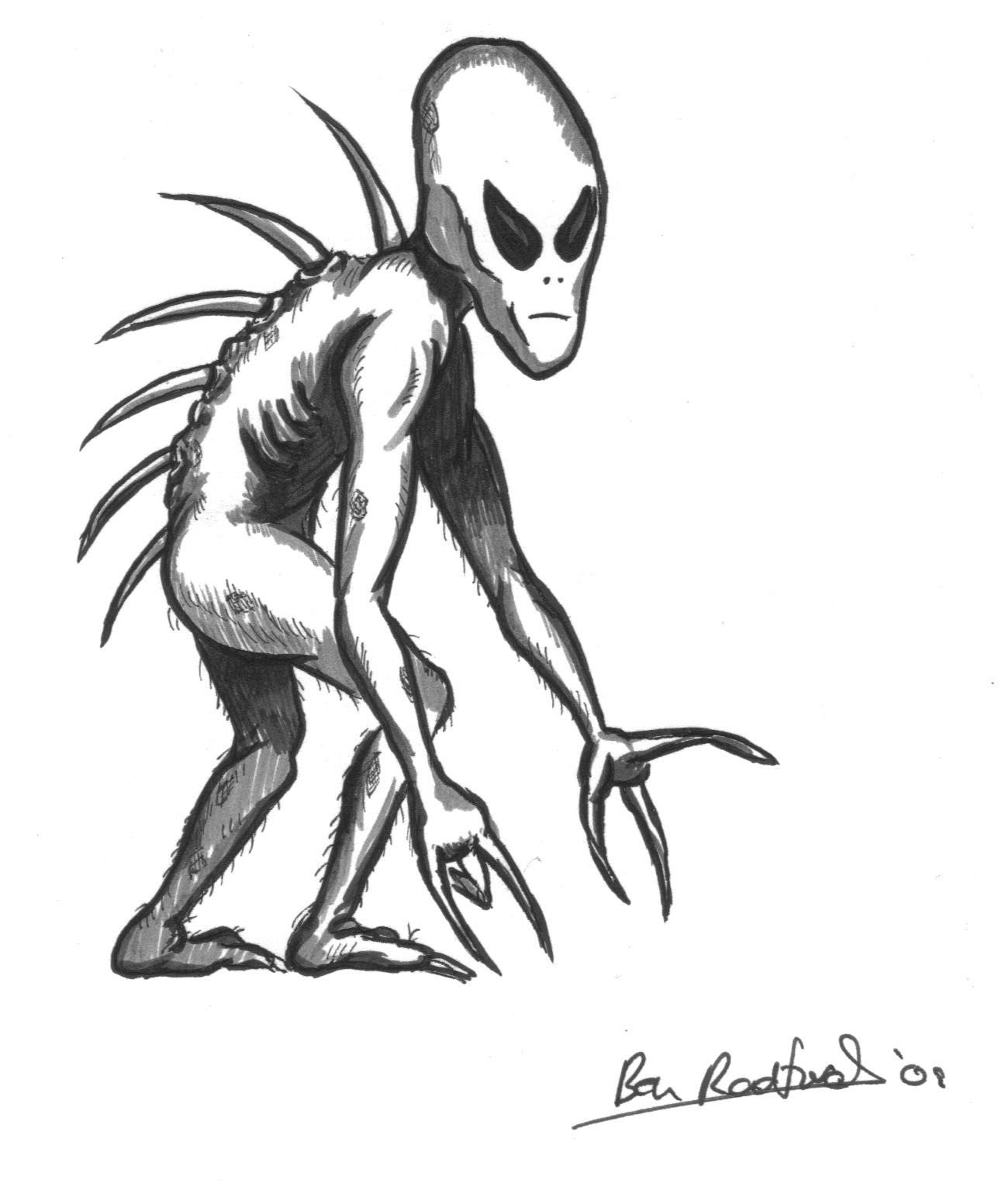
BR: Speaking of scary things, let me get back to the chupacabra. So I’ll just sort of begin with the description of the creature, because I can’t assume that people necessarily are familiar with the chupacabra or the researcher or anything like that. So let me just give you a couple of descriptions from my book. So in his book, Field Guide to North American Monsters, W. Hayden Blackman says that the typical chupacabra is covered in glossy matted hair and has a feral face. Its long limbs, which end in massive claws, can repel the monster across any terrain at amazing speeds. But it’s the creature’s powerful bat-like wings that allow it to migrate huge distances. Goat suckers are deceptively small, standing just three to four feet high. Another description says that it’s four to five feet high, covered in short gray fur, said to have a chameleon-like ability to change color.
0:32:39
PR: Wow.
0:32:40
BR: Yeah, kind of eerie. Large round head, huge lidless fiery red eyes run up to the temples and spread around the sides. The ears are small or absent, two small nostrils, lipless mouth, sharp protruding fangs. Pointy spikes run from the head down the spine. These may double as wings. How exactly they would double as wings, I don’t know. I don’t know, but I’m just passing along the story.
0:33:07
PR: Hey man, it’s a magic monster. What are you going to do?
0:33:10
BR: There you go. muscular but thin hind legs, three clawed toes, no tail. Another one says it is a strange two-legged creature about four to five feet high which looks like a cross between an alien and a fanged kangaroo. Sharp spines down the back, a powerful tail, and staring red eyes and big ears with needle-like teeth for sucking blood. Another says that it’s a strange reptilian beast with a kangaroo-like gait, glowing red eyes and a row of sharp spikes going down the back. So there’s actually quite a variety of original accounts of what the chupacabra looked like. Many of them are contradictory. It’s curious that some say it has wings, some say it doesn’t. Some say it has spikes in the back, some say it doesn’t, but probably the two most common ones are the eyes and the spikes down the back. Other ones sort of come and go. So that’s sort of what we’re talking about here. But even beyond the bizarre descriptions of the creature were the reports of his actions. It’s best known, of course, for sucking the blood out of chickens and goats and other livestock. That’s where chupacabra comes from, the goat sucker. But there’s actually a surprising variety of bizarre claims surrounding its appearances. For example, a farmer named Rafael Morenos says that a chupacabra had taken sexual liberties with his cows.
PR: Oh wow.
BR: Yeah, yeah. I seem to recall the rolling calf and duppies. There was some sort of cow molestation going on as well. Some Puerto Ricans, where the chupacabra originated, borrowing from werewolf mythology, believed that only silver bullets could stop a chupacabra. And several Puerto Rican UFO groups claim that the creature was actually the source of the AIDS epidemic. Wow, okay. Yeah, yeah, it’s just all sort of a panopathogen. You name it, it’s weird, it’s a chupacabra. One person put forth the idea that the chupacabra is one of 20 or more beings that had descended to earth to conduct experiments with human blood in order to produce blood viruses aimed at eliminating humanity. This effort was supposedly designed to depopulate the earth, leaving it open for alien colonization. So a surprisingly large variety of purposes and descriptions and activities. There was one story, just to sort of give some context here. What happened was there were a variety of these stories that were circulating around March of 1995 in Puerto Rico. As I talk about in the book, there’s nothing new about vampire stories. The Chupacabra is a vampire. That’s what’s most sort of terrifying and fascinating about it. Unlike Bigfoot, which you know, it sometimes may or may not be scary, and there’s a couple people who claim to be threatened by a Bigfoot, but for the most part, a Bigfoot is often seen as this sort of wisdom keeper, feral, elusive, untouched group of animals out in the wilderness. Loch Ness Monster is another example. But the chupacabra specifically is a vampire. It sucks blood and that makes it scary. Any vampires are scary. Leeches are scary. Mosquitoes are scary if you get some disease, it spreads. So that was one thing that was intriguing, was the vampire aspect of the chupacabra. A lot of the stories circulated soon after Madeline Tolentino’s first sighting. She was the first person who sighted the chupacabra. I interviewed her and we could talk about that in another episode. Because you’ve got to milk the story, there’s a lot there. But what’s interesting is in the months and years after that, in 1995, 1996, 1997, the The Chupacabra was the subject of lots of rumors and stories circulating around Puerto Rico, particularly as folklore often does, in backyards, in bars, people hanging out. So there was this sort of parallel track with the folklore of Chupacabra because on one hand it was actually being actively promoted, for example, in the tabloids. There are several tabloids. The main one was called El Vocero. When I went to Puerto Rico, I researched old stories from El Vocero. It’s like the National Enquirer Weekly World News, just sensationalized, bloody, murdery, mystery, gory, scary-ass stuff. And so, El Vocero was one of the prime vectors for spreading stories about the chupacabra. And as tabloid stories tend to do, they were, of course, sensational. And scary and alarming, because that’s what they do. And so, here’s one of the chupacabra stories, and it’s pretty short, but it’s one of the stranger ones. It’s not widely known, so I thought I’d share that. This is from El Vocero, and this is quoted in a book by Scott Corrales. In 1997, he says, quote, this is from the story, he says, Although five chickens were found entirely drained of blood in the backyard of the property owned by Julio and Julia Gonzalez, the most spectacular event appears to have been the strange mark placed upon the forearm of the couple’s daughter. Aurelis Gonzales, 5 years old, was marked with a tattoo-like impression that read, Ojo, Diez Ojo, O-J-O, 10, O-J-O, Ojo of course meaning I, after an alleged encounter with non-human entities. While the child is reluctant to discuss exactly what transpired, it is generally acknowledged that this event triggered the child’s IQ, causing her father to describe her as a podigy. Lizard Auralis’ experience came to light when police officer Pablo Robles interviewed Mr. Gonzalez about the dead poultry found in his backyard. So let’s just be crystal clear about what’s being claimed here. According to our witnesses, the chupacabra abducted a five-year-old girl, tattooed some numbers and letters on her forearm, and then escaped. And the experience, or maybe the tattoos, raised her intelligence to genius level. Now, I’m just saying, this is typical of the sort of story that’s circulating about the chupacabra. And, you know, we can laugh about it with the luxury of distancing that evidence. But at the time, again, did people take this seriously? Maybe, maybe not. Surely some did. And again, this is classic urban legend making. You have names, you have specific details, which are very interesting and compelling. So you have all this sort of stuff. But for the most part, most of the stories of Chupacabra were describing this scary entity that would come in the night and attack livestock and chickens.
0:41:19
PR: Right, right.
0:41:20
BR: And I think it’s important to understand the context in which these stories circulated. It’s easy for us, you know, in 2017 New Mexico to sort of say, well, this is at least a chupacabra But keep in mind that for many of the farmers and ranchers, the loss of livestock is very serious. It’s not a joke. Especially if you’re a poor rancher living outside of Canovinas or in rural Puerto Rico. The loss of chickens and goats or cattle, that’s your livestock. I mean the your family might not eat because these things are dead. And so this this notion of some unknown mysterious vampire preying on on on the animals that that that sustain your family that you know provide food and milk and and and money and maybe even, you know your your children, is terrifying.
PR: Yeah, yeah It’s terrifying.
0:42:31
Celestia Ward: Hey squares and hey strangers. Celestia here with a skeptical fortune cookie to chew on. Let’s crack it open. It’s easier to fool someone than to convince them they have been fooled. Ah, I hear you now, smug in your knowledge of skeptical quotations. You know who said this. Samuel Clemens, right? A.K.A. Mark Twain, beloved American humorist and writer who was born on the year of Halley’s Comet 1835 and died, just as he predicted, upon its return in 1910. Well, it might surprise you to know that though this quote has been credited to him countless times, it has never actually been sourced to Mark Twain. There is simply no evidence that Twain ever said it, or certainly ever wrote it. This stands out since Twain’s writing is very well documented. Barbara Schmidt of twainquotes.com does point to a similar thought expressed in volume two of Twain’s autobiography. That passage reads, How easy it is to make people believe a lie, and how hard it is to undo that work again. Certainly the sentiment is very Twain-like, as he grew his reputation by humorously pointing out the foibles and hypocrisies of mankind. A master of colloquial speech, he cast believable characters in narratives that also carried messages of social criticism. He wrote a tremendous number of pieces for many newspapers, under several different pen names, and some of his speeches and lectures are lost. So it’s possible he uttered this exact phrase at some point, or it’s a good statement to remember. It encapsulates a bit of confirmation bias, a bit of magical thinking, and a bit of Dunning-Kruger, though Twain would never resort to such terminology. No, he gets his point across with a more homespun turn of phrase. It’s easier to fool someone than to convince them they have been fooled. No foolin’. Now let’s get you back to Ben and Pascual.
(MUSIC)
0:45:06
BR: So picture the scene. You’re a poor farmer in rural Puerto Rico, you and your neighbors have maybe a handful of livestock, and you come out one day and you find that several of them have been killed, drained of blood apparently. There’s no obvious wounds, they’re not torn apart, except when you approach them and you look more closely you find two puncture marks on the neck. Two small puncture marks other than that they seem to be maybe sleeping, but of course they’re dead. Of course that’s gonna scare people yeah That’s inherently creepy yes, there’s there it’s That’s um. It’s it’s freaky and weird, and it’s not at all surprising that people might freak out over that and wonder what made this, what’s going on here. Part of the reason is that one thing I found over and over again was the assumption that dogs and coyotes and other canids would not just bite an animal and then leave it. Over and over again, I interviewed people and I talked to people who were like, well, a dog wouldn’t do that. They would just rip it to shreds. That’s not actually the case. Spoiler alert. But that was widely believed. So again, the important part here is that they had mentally ruled out dogs. They had ruled out normal animals. So in their minds, whatever was going on was something paranormal or supernatural. And the fact that it was draining blood was of course scary in its own right and taking these things. So again, it’s important to understand the phenomena at the time by the people that were experiencing it, which is very different than we are here in North America a quarter century later.
PR: Sure.
BR: Very different scenario. And so you saw this happening sporadically throughout Puerto Rico. It wouldn’t be every day, it might be a week or two would go by, there would be another attack and it made the news. It was being talked about in bars, behind backyard fences, even on the radio, and as I mentioned, in the tabloids, El Vecero was the prime example.
0:47:43
PR: Yeah.
0:47:44
Stories circulating, often with gory photographs. And these were not presented as, you know, here’s a cute story, these were like, this is a terrifying animal that’s gonna attack you. I mean, these were alarmist, sensational stories, and it’s not surprising that for many people, that they were taken to heart. What you find is that the belief in the Chupacabra is often exaggerated. I’ve come across references, for example, in Scott Corrales’ book on the Chupacabra that suggests that the entire island was gripped in panic. No, it wasn’t. It’s not accurate to suggest that fear gripped the entire island. I mean, it makes for sensational copy, but the fact is that some Puerto Ricans believed it, some didn’t, some people thought it was just a joke. And as often the case, you find that in rural areas it was more widely believed than in urban areas. So, outside the capital of San Juan, you’re more likely to find people who think, no, this is real. Now, part of that is because, of course, there’s sort of an inherent sort of class issue, where you have bankers and lawyers in the capital who think, well, this is just some rural superstition by the crazy farmers who spent too much time alone with their goats. But again, keep in mind who the chupacabra was a threat to. It was not a threat to the bankers and lawyers in San Juan. It was a threat to the rural farmers in Moca, in Islands Interior, who did not have a lot of money, who maybe didn’t have electricity all the time, who lived a lot more closer to the land, and for whose livelihood was much more closely tied to the weather, to things that are outside of their control. And the Chupacabra very much fit right in there. And especially given the fact that again, a vampire. Creepy and weird and something was attacking animals. That was pretty clear. And it wasn’t until the Tolentino sighting, Madeline Tolentino, after she had seen a film, which of course becomes relevant later on, that it really got a name and a form. A name and a form was given, sort of crystallized onto the vampire. And so what happened was that you had these stories circulating and then you had sort of a name attached to it, and there were different theories about where the Chupacabra came from, and I touched on one or two before. Some people, for example, the Pentecostals thought it was satanic. There was a group of people who were sure that it was God’s wrath. We’ve been bad, God’s sending us bad things.
PR: Why not?
BR: Because that’s what it would be, right? And you know, you had the two main theories in terms of the Chupacabra’s origin were that it was either an extraterrestrial, an alien creature that sort of came from beyond the stars and either came in its own spaceship or escaped somehow. There were stories that it may have been like a pet, like a flying saucer opened up and opened the door and the chupacabra ran out and, you bad boy, Rover, come back here!” And instead the chupacabra goes and hides in the Ilunke rainforest that we talked about in a previous episode. The other explanation was that it was either an alien and or it was the result of a top secret genetics experiment gone wrong. A Frankenstein scenario. And it’s interesting, when you look at that belief system, it wasn’t designed this way, but it evolved in a very clever way because if you’re skeptical of aliens, if you don’t believe in extraterrestrials or whatever else, then the other part of the explanation, well, do you believe in conspiracies? A lot of people do, particularly in Puerto Rico, and also anti-government conspiracies. And we’ve especially seen this in recent weeks and months, lots of animosity towards the US, feeling like they’re sort of neglected, right at his stepchild, they don’t have a vote. I mean, there’s lots of anti-US animosity that’s tied in with these beliefs. And so again, the belief system was especially powerful because whether you believe in aliens or not, you have a reason to think that the chupacabra’s here. If you don’t believe in aliens, then it’s a genetics experiment. And there was, as I talked about in a previous episode, there was this belief that there was a top secret laboratory hidden in El Yunki Rainforest, not far from San Juan and near Canovinas where it was later first sighted, that was doing weird genetic experiments. And again, that’s much more plausible to some people. Scientists do weird things. There’s the there’s the famous, you know, photo of a, an ear on a mouse. Right? Creepy thing.
PR: Yeah, sure.
BR: So people look at that. Well, of course, this is real. Yeah. So there’s all these sorts of theories circulating, some grounded in science fiction, some not. And then it sort of spread. So the chupacabra emerged in this rumor, urban legend, story-laden social and cultural context in 1995 in Puerto Rico, and then it spread to other countries. About a dozen countries, including Brazil, Puerto Rico, Mexico, Chile, virtually any Central American country had some Chupacabra reports in it sooner or later.
0:53:44
PR: Yeah, yeah.
0:53:45
BR: And it spread through a couple of ways. One of them was a TV show called Christina, which is sort of the Latin American version of Oprah.
PR: I do, I’m familiar.
0:53:55
BR: You’re familiar, yeah. It’s extremely popular, and she did a show on this, and suddenly people are reporting it elsewhere. Yeah. And so this is sort of what happened. What was interesting was that at the time, a lot of the so-called Chupacabra reports were not Chupacabra reports at all. And this is a mistake that you often see in sort of less skeptical Chupacabra books and blogs and magazine articles. They say, well, you know, the chupacabra was sighted, you know, 30 times in 1996 in Puerto Rico. Well, what they mean, if you look at it a little more closely, is that the chupacabra was thought to have been at a certain place 30 times. So, so it wasn’t so much that, that on 30 different occasions, people reported seeing this weird alien spiky backed with with or without wings, take your pick, creature. There were a few sightings like that, but most of the sightings were… they weren’t sightings at all. They were somebody who had found a dead animal. Somebody had gone out to their barnyard and found a chicken or a goat or something else that had been killed, and of course, they assumed it was a chupacabra, because that’s what everyone was talking about. If you find it, if you’re in rural Puerto Rico and there’s a dead animal that isn’t, this doesn’t have a clear cause of death, it’s probably the chupacabra.
0:55:22
PR: Yeah.
0:55:22
BR: Because why wouldn’t it be? Yeah. So, so it’s important to make that distinction. So, but that just added to the mystery that added to the fear because all that meant was that it was whatever it was, if you, if you assume it’s attacking at night, unseen, killing animals clearly, and escaping. It may or may not change form. It’s a really bizarre, freaky creature, and so you can see why it would have grabbed the public’s attention.
PR: Absolutely.
BR: What happened was that in late 95, there were actually lynch mobs, vigilante mobs that were formed searching for the chupacabra. You had concerned citizens who formed patrols and vigilante mobs hoping to find the chupacabra because they weren’t being protected by the police. Why would they be? Because a chupacabra sighting is not a criminal matter. No, no. So, there was this frustration among many Puerto Ricans, certainly in late 95, 96, they say, hold on here, I’m hearing about these scary stories, I’m hearing about it from the tabloids, I’m hearing about it from my friends, my neighbors, why aren’t the police doing anything? And the police, of course, are like, what do you want me to do? What exactly do you want me to do about this chupacabra? I’m sorry I killed one of your goats. What do you want me to do? You don’t have a description. I mean, there’s stories going around, but there was never any hard evidence. So the police were like, they were trying to be helpful, but what do you want them to do? So many of the public, particularly in rural areas, were understandably frustrated that they weren’t being protected by the police and so they took the law into their own hands. So ranchers brought rifles, farmers bore pitchforks, and ordinary citizens brought baseball bats and tire irons because they’re like, the police aren’t gonna do anything, dammit we’ll go find this thing. There was a case of where there were sheep that were found near the town of Los Mochis that prompted a massive mobilization of searchers outfitted with infrared lights and shotguns and riots and riot gear and helmets. We’re going to go find this thing. There were search parties of 10, 20, dozens of men searching the streets at night expecting to find this evil vampire creature and of course nothing was found. But again it gives you a sense of the fear and how seriously it was taken certainly in some parts. The only real exception to the lack of police and government response was the mayor of San Juan, who was known as Jose Kimo Soto, who was a bit of a cross between Rambo and Indiana Jones. Very camera-friendly, very macho guy, and he basically used the Chupacabra fear as a publicity stunt to get re-elected. He would make a big scene about how he would protect these hard-working, honest Puerto Ricans from the chupacabra. Come hell or high water, you’ll have to get through me! And he would do this, again, any time he was in front of a camera. It got to be a thing where he would just go out of his way to hype it, Chupacabra, because of course, if you don’t think it’s real then I can’t protect you from it.
0:59:21
PR: We laugh, but politics across the globe pretty much operate on the same concept of protecting you from non-things.
0:59:28
BR: Exactly! We talked about that in the Popobawa episode, the skeptic-raping demon of Zanzibar. Or you had another case of where a legendary cryptozoological possibly mythical creature was being used by authorities for political purposes. It’s a fascinating story. Anyway, we should do a show on that. There you go. So anyway, this went on for several years. And meanwhile, of course, there was also a famous X-Files episode. So not only was it publicized by the tabloids and by Christina, this was also the emergence of the internet. So 95, 96, 97, this is when the internet was sort of getting its legs, certainly in Puerto Rico. And so in many ways, the chupacabra is the world’s first internet-created monster, I would argue. It wasn’t entirely created, but it certainly, I’m certainly, if the Chupacabra had emerged ten years earlier, for other reasons, a different film or something, other than the movie that actually inspired it, we wouldn’t have heard about it. It just would not have gained the traction, it wouldn’t have been read about, it wouldn’t be a thing, capital T thing, it wouldn’t have been viral. And part of the reason that you see these days that the Chupacabra has an alien extraterrestrial conspiracy theory aspect to it is that the story was often co-opted by UFO believers in San Juan, and particularly people who read and interviewed Madeline Tolentino and read her story, and they sort of put their own little spin on it, which is one of the reasons why these days there’s a conspiracy angle to it. But anyway, so this is what was going on for the first few years, and again, it got more and more notoriety. And for a while, again, in Puerto Rico, there was a variety of opinions. Some people thought it was a joke. It was like, oh, our cute little chupacabra, it’s our local Bigfoot. They have t-shirts, hats, coffee mugs.
PR: Why not?
BR: I actually have a collection of chupacabra figurines. Awesome. I wrote an article for Skeptic Enquirer Magazine about six or seven years ago, where I photographed, I think I have six or eight different versions of the chupacabra, little plastic figurines and toys. It’s really fascinating to look at how the iconography has changed over time. Anyway, so some people took it as a sort of a joke, it’s cute. Other people were sort of on the fence and again, other people thought it was a very real creature. And then things changed in August 2000. And what changed was the chupacabra was sighted, or maybe not, you’ll see the story, on a farm farm in Nicaragua in the town of I think it was Malparaiso, there was a farmer named Jorge Talavera. On the evening of August 25th, he and a ranch hand had staked out his ranch because he had believed that there was some animal that was coming and attacking his animals at night. He said that there were animal killings, there were animals that had been bled dry, 25 sheep, sheep were being killed mysteriously. And again, this was in the context of Chupacabra. Stories had circulated by that time for nearly five years, primarily in Mexico and Puerto elsewhere, but that was the context in which these were occurring. So late one night, he and a ranch hand staked out, make sure nothing was attacking his animals, and sure enough, he saw one or two, he wasn’t sure, one or two creatures from a distance, he shot at it to scare it away so it would stop attacking his animals. He believed he hit it, he wasn’t sure, but he shot it. Whatever it is, it ran away. A couple days later, a farmhand found what he believed to be the chupacabra. It was, depending on which source you look at, it was either a skeleton or a near skeleton, which is problematic right there because if you only shot it a few days ago, it’s probably not a skeleton so soon. But again, this is…
PR: It fell into a pond filled with piranhas or something.
BR: Because these things happen, right? Anyway, so the belief, rightly or wrongly, was that this skeleton that he found on a different part of the ranch was the same animal that they shot a week or so earlier. And then it was later taken to the local university and analyzed, and there’s a whole story behind that. It was later identified as a dog. But the relevance here is that this was the first time that the chupacabra was thought to be a canid. The first time a canid being the canidae family, dogs, coyotes, foxes, etc. So before that, from basically 95 to 2000, people thought the chupacabra as, again, the spiky-backed weird alien creature, may or may not have wings, just all these sorts of weird amalgam figures. But in 2000, all of a sudden you had a dog-like skeleton that turned out to actually be a dog, but it’s certainly dog-like. And at that point, then the Chupacabra changed. It went from being this creature that was sighted but never found to a creature that was found but rarely sighted. And once you had a figure, once you have a body, that changed things. Once you have a body, then you can do DNA analyses. You can do other things to it. So that’s basically what happened. So that was what sort of shifted, to my mind, that was part of what shifted it from a terrifying creature to a less terrifying creature. Because it went from the imagination, the sort of ephemeral, scary imagination of what could a vampire look like, to, well we know what the chupacabra is, it’s a dog-like creature. Now you could still argue and people disargue that it still drank blood. I mean there were there were different stories that circulated in Texas and elsewhere about the chupacabra still being vampiric. But it’s one of the things where it’s like in a monster movie right with the scariest thing is when you don’t see it. It’s the scary thing behind the wall, it’s the shadow in the background. Once you see the monster it’s less scary because they go, that’s what it looks like. It has this form, this and that. At that point, I would argue that in many ways, the chupacabra lost its terror. It certainly has since that time. Again, that was 2000, so in the last 16, 17 years. The chupacabra has become more of a novelty these days. It’s mangy dogs. That doesn’t mean it’s lost its mystery because to the public, any weird animal is lots of mystery. Because to the public, any weird animal is a chupacabra. A dead dog, a mangy coyote, a raccoon, take your pick. So to my mind, that really covers the sort of golden age of the scary chupacabra. From mid-95 to about 2000. The fond years, he looks back with this.
1:07:17
PR: The best years.
1:07:18
BR: The best years of my life. No, but it’s, I think the chupacabra, it had its heyday for about five, six years. And then it sort of, once it became a dog, once it became a mangy coyote, it sort of lost its fangs. It’s still kind of weird, but it’s a novelty. It’s not something that really strikes terror anymore. Some people are still afraid of chupacabra in South America, Latin America, but for the most part, I think the chupacabra’s scary days are behind it.
PR: We would like to thank our sponsor-level patrons Amy Freshour-Kelly and Dr. Angela Mattke. If you’d like to find out what that is and how to become one, head over to patreon.com forward slash squaring the strange patronage starts at just a buck and there are a lot of perks and bonus content just for our patrons if you’d like to lend your moral support you can head over to iTunes and give us a review every five-star review gets us a little more visibility on the iTunes podcast charts and brings a smile to Pascual’s face.
1:08:59
PR: That was a lot of fun talking about the Chupacabra. And I’m really excited because this is just the first of four episodes leading into our uh, well, completing our entire Halloween run. So it’s going to be a lot of fun. Next week, we’re going to be talking about ghost sex.
BR: Yes, yes.
PR: Ben, I have an idea about what you’re talking about, kind of because of our research into sleep paralysis and things like that, but I am really looking forward to kind of seeing your take on this and really what that is, because I don’t think our audience has any idea what ghost sex is.
1:09:41
BR: Well, I think you’re underestimating our audience, Pascual. We have a bunch of very eclectic folks with a very broad-minded, but who knows? Who knows? Did I tell the Chupacabra furry story?
PR: No.
BR: Okay, well, I’ll save that for another time anyway. Anyway, but yes, next week, Ghost Sex. It’ll be probably PG rated. We’ll do our best, unless we want to do a Patreon version only.
PR: Sure, sure. That’s a possibility.
1:10:12
BR: There you go, but it’ll be fun, so stay tuned for that.
1:10:16
PR: Awesome, we’ll see you guys next week. Bye.
1:10:18
Bye.
1:10:19
Bye. Bye.
1:10:21
Squaring the Strange is a production of Chronos Creative LLC, copyright 2017. Theme music by Shriekback. Additional music by Memory, Guitard and Feathered, and Pascual Romero. Content producer, Celeste Jawara. Audio engineering, producing, and editing provided by Pascual Romero at the Kronos Creative Studios. Additional support provided by Ashley Romero, and of course our listeners and patrons. The views and opinions expressed in this podcast are those of Squaring Strange and do not necessarily reflect the views and opinions of Kronos Creative, Center for Inquiry, our and opinions of Kronos Creative, Center for Inquiry, our advertisers or any affiliated organizations and employers.
Transcribed with Cockatoo