
Episode Summary:
Happy Easter everyone! Rabbits are a fluffy bag of contradictions . . . represented as tricksters but also as victims, lucky or unlucky, clever or depressed, harmless or scary, rabbits and hares have a solid place in the folklore pantheon. We go over tales of hares as witches’ familiars, stories about how the rabbit lost its tail, pareidolia-inspired legends about a rabbit on the moon, how rabbits figured into pregnancy tests and common vernacular, and also give shout-outs to our favorite rabbit appearances in horror films and cartoons. Let’s hop to it!
0:00:00
Ben Radford: Welcome to Squaring the Strange, the podcast that examines all manner of the mysterious and the mundane through a critical lens. So let’s square the strange.
0:00:11
Celestia Ward: Hey, everybody, welcome back to Squaring the Strange. This is episode 198, and I’m one of your hosts, Celestia Ward. With me is…
BR: Ben Radford here.
PR: And Pascual Romero.
0:00:36
CW: Hey, happy episode 198 everybody. We’re almost to 200.
BR: That’s like two shy of 200, right?
CW: Exactly too shy, yes.
PR: I’m just trying to make careful math, yes.
BR: Math has never been my strong point, I will admit that.
CW: Well, we are also, we just passed March and we’re into April
0:01:09
and that kind of means we’re also at our sixth anniversary, right?
BR: That’s right. We, we, and I swear this was, this was not intentional, but yeah, our first episode was April Fool’s Day, which I don’t, I certainly didn’t plan it that way. It just happened that way. But yes, so no, no fooling.
0:01:27
CW: I can’t believe it’s been six years. I mean, what that puts us at, was it 2017 we started this?
PR: Yeah.
CW: Wow.
PR: How much has happened in that time? Yes, I’ve told multiple people multiple times, like the pandemic just obliterated my sense of time and scale and everything. It’s hard to, you know, oh, did I know that person? Did I go to high school with them or did I meet them last week? You know, it’s very hard to sense, to wrap my senses around that these days. Well, what’s going on with you guys, Ben? You just had a fundraiser. How’d that go?
0:02:02
BR: It went very well. And I want to thank everybody who contributed, both artists, such as Coral Pollack, of course, longtime supporter and just a wonderful person up in Winnipeg, and others as well. We had a fundraiser for Leo Igwe, and all his fine work there. And we managed to raise $1,600.
0:02:21
CW: Awesome. Now this is helping critical thinking workshops whereabouts?
0:02:25
BR: Critical thinking workshops, but also, of course, advocating for victims of witchcraft and witchcraft accusations in Nigeria.
0:02:35
CW: Fantastic. And yeah, our past two episodes have really outlined certain angles of the real life present day dangers that witchcraft beliefs and other superstitions have in various parts of Africa today.
BR: Absolutely.
0:02:49
And again, as as longtime listeners know, I’m a huge fan of Leo’s and he does just incredibly important work, but more important work than I do because of his circumstances and everything he does. So shout out to Leo and thanks for all those who contributed. And, you know, just because the fundraisers over doesn’t mean you can’t help out of organizations. So check it out.
0:03:10
CW: Yes. Other than that, do we really have any news stuff like anything weird going on in the news? I kind of think anything strange in the news these days is just getting obliterated by political news with Trump being indicted and arraigned and arrested and all that.
BR: When did that happen?
CW: Oh, for a lot of people it’s happening far later than it should have, I think.
PR: Yeah.
CW: I did see a bizarre little news story about a giant red spoon being stolen in Phoenix. Did you guys hear about that?
0:03:49
PR: No.
0:03:50
CW: Dairy Queen lost its spoon. There was a Dairy Queen that had a gigantic 15-foot spoon. And I am searching for this footage as if it were a Bigfoot reel. But apparently the two people on motorbikes managed to, like, with skilled precision, remove this giant red spoon, 15 foot long spoon, and take off with it on their motorbikes.
PR: That takes, yeah, that takes, I would imagine, I mean, not seeing any footage, I imagine that takes a great deal of skill to make that happen.
CW: I’m assuming these were circus performers, maybe? Have they checked out any of the Ringling Brothers activities?
0:04:32
PR: You sure they weren’t unicycles?
0:04:34
CW: Little teeny tiny pedals!
0:04:37
But yeah, Dairy Queen is actually having a field day with it.
0:04:39
They’re getting a ton of PR. And if the spoon is returned, that particular franchise is saying, no questions will be asked and we will give you a free blizzard item off of our summer menu in every flavor. So if you happen to be in Phoenix and you see a giant red spoon, I think they are offering blizzards in exchange for information as well.
0:05:02
PR: All right, well I may be on the case then.
0:05:06
CW: Yeah, well, let’s see. And other than that, we’ve got weather. We’ve got weird weather happening, tons of tornadoes.
0:05:12
PR: Yeah, there’s been a lot of extreme weather. Unfortunately, the way things are going, we will probably see more and more of it over the coming years. But we did have a freak accident happen in Illinois, Belvedere, Illinois, which is a little ways outside of Chicago. During a metal concert, killing one person and injuring a number of people, I think a couple dozen people. This just happened to be a show that some friends of mine in the band Revocation were on this tour and they had literally just broken down in Albuquerque two days earlier and they weren’t playing a show here but they broke down and I was like, well, let’s help these guys out. And so they came over and hung out and we had a nice time together. And they finally got back on the road the next day and made their way up a couple days later to Illinois. And this event happened and they were touring with the band Morbid Angel, another group that I’ve known for a long time. So none of the band members were injured as far as I know, but a number of people that were on the main floor were. And it was just a freak accident. There really wasn’t much more to it. You know, the theater wasn’t wasn’t in any structural risk before that.
0:06:37
It’s just that 90 mile an hour winds will do that to a building.
CW: And did you talk to them at all after after it happened? Have you checked in with any of the guys?
0:06:45
PR: Yeah, I have. I did text my buddy Brett, who’s the bass player of Revocation, and asked him how they were doing. He was just thankful that everyone in the band was okay, but obviously very shaken that someone had died at the show and that people got injured. But they have been sharing a lot of links to various GoFundMe campaigns for concertgoers who were injured, as well as the family of the man who passed away. And if you just look them up on social media, and you can find those links on their Instagram, the band is Revocation, R-E-V-O-C-A-T-I-O-N. And they are really good guys. You know, again, I’m happy they’re safe, and I’m sorry that happened. It’s tough enough being on the road all the time without these sort of things happening. And again, thankfully, it could have been a lot worse, I guess, not to diminish the fact that someone did pass away, but I’m thankful that it wasn’t worse.
0:07:45
CW: I’m surprised that they were holding the concert. I don’t know who makes that decision or whatnot, but 90 mile an hour winds is pretty intense to be doing anything.
PR: Yeah, my understanding is that it was a freak weather event. So the original reports seemed to think it was a tornado, but I think that has changed in the last few days, at least the wording in the articles just kind of referred to it as a freak windstorm.
0:08:11
CW: Oh, so it’s not like it was sustained like hurricane type situation where it built up to it. It was just like it wasn’t there and then it was.
0:08:21
PR: Yeah, yeah. My mom’s family is from way up there and up in Wisconsin. There are occasionally these kind of freak wind storms. I’m not sure exactly what the meteorological cause is, but they do happen. We had one at my family’s property out there just a couple years ago where just like dozens of trees were just downed in one massive blast of wind out of nowhere. It happens.
0:08:48
CW: Well, you know, that’s one thing we haven’t covered. We all have to put it on the list. Freak weather events, freak storms and beliefs and dangers around those. But for this episode, we’re on a more cheerful note. We’re talking about bunny rabbits.
BR: Rabbits and hares and bunnies and whatnot.
0:09:04
PR: Oh, my.
0:09:05
CW: Happy Easter, everybody. I think if you’re listening to this a couple days late,
0:09:09
you might actually be listening on Easter Sunday. Happy Easter, if anybody celebrates. I mean, I’m a total materialist, not religious at all, don’t celebrate the coming of Jesus, but I do like to hide me some Easter eggs.
0:09:26
BR: And I like to scout up Cadbury’s Cream Eggs.
0:09:28
CW: And we didn’t really mention this in the show, but it’s also the year of the rabbit, isn’t it?
PR: That is true.
CW: Yeah, so it’s, I mean, I don’t think we’ve done an episode on rabbit folklore on previous Easter’s, so I guess it just took the year of the rabbit to finally kind of kick us into doing it.
0:09:43
PR: Yeah, we had rabbits on the mind.
0:09:46
CW: Yes. All right.
0:09:47
Well, without further ado, let’s dig up what we have on little bunny rabbits.
CW: Oh, oh my goodness, this just in. The giant red spoon missing from Dairy Queen has been found. A 52 year old guy walking around playing Pokemon Go at 7 in the morning discovered it at a school yard, a middle school out in Phoenix. So he called police, they took it back, so it’s been reunited with its owners. But whoever took it and how, still, or why, still remains a mystery. So we’ll let you know if that ever comes out.
0:10:29
BR: So for today’s episode, we’ll be talking about rabbits and hare lore, not the follicular kind, but the furry kind.
0:10:45
CW: Hare lore, it sounds like scare lore.
BR: It does. Yes, so I should, just to set the stage and make sure that everybody’s on the same page here,
0:10:55
we should parse out what exactly are hares and rabbits.
0:10:58
Do you guys know the difference?
CW: I think they’re just splitting hairs.
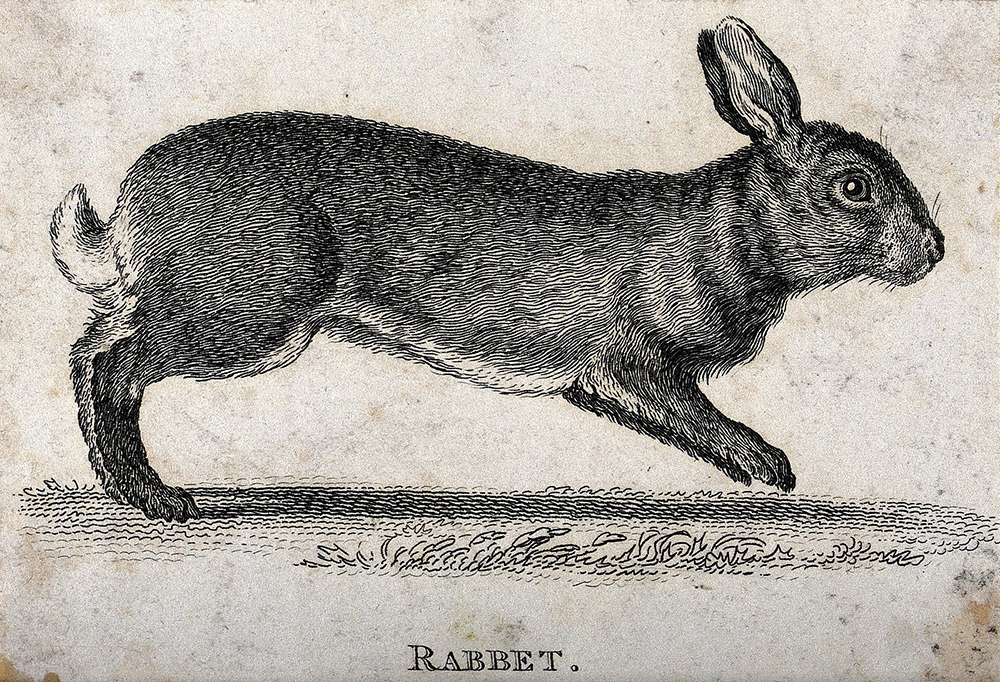
BR: Yeah. Wow. Okay, well, I’m actually not. Thank you very much. Actually. People actually confuse them, and while they’re obviously related, they’re actually different species. So rabbits are smaller, they have shorter ears and legs, and they are more docile and domesticable. Domesticable.
0:11:32
CW: Domesticable.
0:11:33
BR: They also live in burrows and have a reputation for being cute and cuddly.
0:11:39
CW: So they’re the kind of thing you get at a pet store.
0:11:42
BR: Yes, yes.
0:11:43
CW: And I don’t recommend it. There are people I know who love their hairs. They’re rabbits, sorry. But I had a pair of rabbits and they were not friendly and not happy to be pets. So they’re very scared of everything. They’re prey animals.
0:11:59
BR: Yeah, I had a cousin who lived out in Huntington Beach and they had two rabbits. One of them was named Fourdoor because my uncle was a car guy. And I always enjoyed visiting them, visiting the rabbits whenever I went out to visit them. Like, oh, where’s the rabbits? They’re like, we don’t know.
0:12:16
Like, what? You go through all this thing, you set up the cabbage, the carrots, the whole thing and basically they just disappeared and showed up. I mean, I guess you could say same cats, but…
0:12:26
CW: They’re hiding.
0:12:27
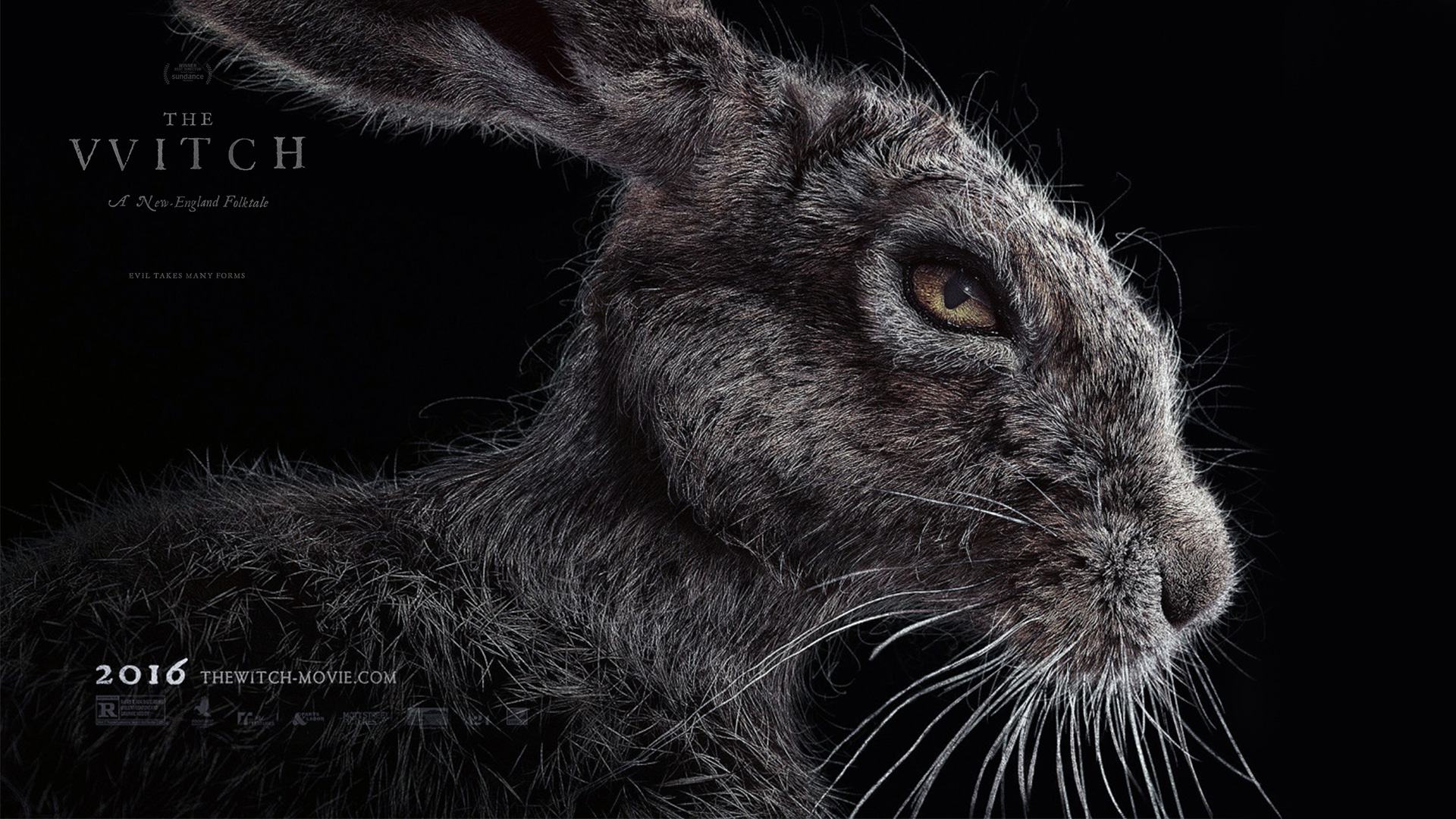
BR: So, those are rabbits. Hares, on the other hand, are a bit different. They’re larger, faster, have longer ears, and unlike the rabbits which live in burrows, the hares live in grasslands. And they also have a bit of a sinister reputation. They were one of the animals believed to be witches familiar, so like the black cat for example and crows, and it was believed that crossing a hare’s path like a black cat was bad luck, in part because it could have been a witch that you were crossing in front of, and that can cause problems. I most recently saw a hare being depicted as evil in the 2015 horror film The Witch, directed by Robert Eggers and starring Anya Taylor-Joy, who was in the Netflix series The Queen’s Gambit.
0:13:19
CW: Oh, yeah, she’s a beautiful person. I’m just perfect face.
0:13:23
BR: Yeah, very distinctive face, eyes wide apart. I imagined that caricatures would have a field day.
0:13:30
CW: Does she turn into a rabbit? Because I could see that working really well.
BR: That is a missed opportunity. She does not.
CW: Oh!
0:13:40
BR: Um, yeah, the witch, it’s actually a really interesting film. It’s historically accurate, which is one of the reasons that I liked it. And it depicts a menacing hare thought to be a witch. So there are a couple scenes. There’s also a goat, which is pretty obvious. But there are several scenes where the camera focuses on this sort of ominous-looking hare. And in the director’s commentary, the director, Robert Eggers, was talking about how he wasn’t sure how that was going to read to American audiences, because even though it’s historically accurate, that is several hundred years ago, the hares were in fact thought to be sinister and evil to modern modern American audiences, certainly, number one they think it’s a bunny. So all that all that really rich historical details lost.
CW: Well, there’s bunnies and then there’s bunnies and we’ll get into that later, but…
BR: Exactly. Exactly. So anyway, I just want to set the stage with that although to be fair Folklore which often of course reflects pop culture often conflates the two. So I will be using the hare and rabbit interchangeably because in many cases they were interchangeable in lore and legends. Although, hares are more closely associated with evil and rabbits with good luck.
0:14:56
CW: Oh, okay. So, fertility would be considered good luck in, you know, back in the day?
0:15:02
BR: Oh yeah, oh yes. Especially back then when you had infant mortality.
0:15:06
CW: Yeah, yeah. And oddly enough, fertility as a bad luck thing is reflected in the phrase, when the rabbit died. We’ll get into that later too, but what else have you got, Ben, in terms of medieval thoughts on rabbits?
0:15:20
BR: Well, in medieval times, it was thought that rabbits and hares, being naturally skittish and nervous creatures, suffered from bouts of depression, just as anyone else would. And it was thought that the way that rabbits alleviated this depression was to eat certain plants and vegetables.
0:15:37
CW: Oh my God, they thought the rabbits were like Gwyneth Paltrow or something?
BR: Yes, exactly. They were trying to… They were feeling kind of down and they were like, well, let me, let me.
0:15:45
CW: They were balancing their humors by eating tons of roughage?
BR: They were the original raw foods.
0:15:56
So, and, and in fact that, that idea and that tradition actually passed along with people who were eating rabbits. And so there were actually taboos against eating rabbits and hares because the idea was that since these animals were subjected to bouts of depression and anxiety or whatever rabbit psychology you want to impose upon them, that you could actually pass that along by eating them. So those who ate rabbit, either out of necessity or because they like the taste were risking themselves falling into a depression.
0:16:32
CW: Well, I would imagine the people eating rabbit most often were among the lower classes, so they had other reasons to be depressed in medieval times.
0:16:41
BR: Yeah, that was, that was… eating rabbits was among the least of their problems. Just put it that way.
0:16:49
CW: Again, one of those, you know, don’t confuse correlation with causation.
0:16:53
BR: Exactly.
PR: So one of my favorite things about rabbits is there’s just so many stories about them.
BR: Yeah, absolutely. And from a folkloric point of view, rabbits are fecund, they are all over the place, they multiply, you know, whatever gags you want to put in there. I think one of the first times I heard about rabbits in stories other than in, I think, Richard’s scary books, which I was very beloved as a kid, was of course Aesop’s Fables.
0:17:21
CW: Oh yeah, yeah.
0:17:23
BR: And if you’ve read through the fables, there’s lots and lots of cocks, lots of lions, mice, foxes, hounds, and things like that, but there’s about a half dozen or so stories of hares. There’s one called the Hound and the Hare, which you shouldn’t confuse with another completely different fable called the Hare and the Hound. Well, I mean, keep in mind there’s, you know, there’s only so many common animals you can use in these just-so stories. I will read you one of Aesop’s fables. It’s about three sentences long, so you don’t need to… don’t get up and get a coke, cuz I’ll be done soon. This is The Hound and the Hare. Again, not to be confused with the Hare and the Hound. A young hound started a hare and when he caught up with her, would at one moment snap at her with his teeth as though he were about to kill her. While another he would let go his hold and frisk about her as if he were playing with another dog. At last the hare said, I wish you would show yourself your true colors. If you’re my friend, why do you bite me? If you’re my enemy, why do you play with me? That’s the entirety of the Aesop’s fable. The moral here, at least according to this version, is he is no friend who plays double.
0:18:38
CW: Two-faced dog.
0:18:39
BR: Exactly. Now, one thing I want to point out about this particular fable is that there’s nothing unique about either one of those animals. I mean, that could have been a mouse and a hound. It could have been, I mean, take your pick. So there’s nothing unique about that particular one, but there are many others. For example, an entirely different fable, The Hare and the Hound. And this one – hey, I’m trying to be helpful here. Here is the Hare and the Hound. A hound started a hare from her form and pursued her from some distance, but as she gradually gained upon him, he gave up the chase. A rustic who had seen the race met the hound as he was returning and taunted him with his defeat. “The little one was too much for you”, said he. “Ah, well”, said the hound. “Don’t forget, it’s one thing to be running for your dinner,
0:19:36
quite another to be running for your life”.
CW: Ah, yeah, okay. Yeah, that’s yeah
0:19:40
So, you know, that’s more that’s more in in character for the hare and hound
0:19:44
as far as that particular fable goes.
0:19:47
CW: A rustic I like that turn of phrase.
0:19:50
It’s better than calling somebody a hillbilly. I will now call them a rustic. It’s funny He say that cuz I
PR: I don’t know maybe I have heard it and that’s why I immediately went there. But my my brain was like, you know, when they call like a rundown shack rustic,
0:20:07
I’m like, oh, it’s like a woods person, isn’t it?
0:20:11
CW: Now, one of my favorite things about rabbits in terms of folklore is there’s a bunch of stories kind of trying to explain how the rabbit came to be because it’s a peculiar looking animal. I mean, they don’t have your standard form. They’ve got these weird little hind legs with the little bushy tail, the long ears, they’re kind of like wall-eyed critters. And the fuzzy bunny rabbit tail has gotten a lot of attention from storytellers over the millennia. So one of the tales, which the internet says is a Brazilian folk tale, but you’ll see it’s kind of repeated elsewhere. It says, how did the rabbit get its tail? In this story, the rabbit is a kind and generous, friendly animal, but it’s a little careless, maybe not that bright. It got tricked by the cat who had no tail. Yes, the cat had no tail at this time. And there are some species of cat that don’t have a tail.
BR: Name one name one.
CW: Bobcat.
0:21:16
And so the cat wanted a tail and she cut off the rabbit’s tail while he was asleep and she sewed it onto herself. The rabbit wakes up and notices this and negotiates with the cat saying, OK, OK, you can keep my tail, but why don’t you give me that knife in exchange? And so she agreed. Now later, as the rabbit is walking through the forest with his new knife, he meets a man who’s making baskets. And he loans the man his knife so that the man can better cut the rushes to make these baskets. But it broke. So the rabbit said, well, oh you broke my my knife. Why don’t you give me one of your baskets in return for the knife that you broke? And the man says, sure, and gives him a basket. So he walks along with the basket and soon sees a woman who’s gathering heads of lettuce and she has no way to hold these that all this lettuce in her skirt and the rabbit says here why don’t you use this basket and what do you think happens? The basket breaks, the bottom falls out and so the woman says oh no what have I done and the rabbit says well why don’t you just give me some lettuce in return for the basket? So the rabbit takes some lettuce and the woman has the broken basket. Now, in the end, the rabbit sits there and he thinks, well, he’s over the course of the day, he’s lost a tail and then a knife and then a basket. But he has a full belly and he’s pretty content about all of it. So the story there is it’s kind of perspective on how you can’t really count on possessions lasting forever. But if you have a full belly at the end of the day, you should be grateful. And it does kind of explain that if you ever see a rabbit and he’s chewing on lettuce, he’s usually pretty chill. He’s a happy guy.
0:23:06
BR: And don’t don’t buy cheap. Pay for quality.
0:23:10
CW: Yes, you could also take it to mean that, yes. Now there’s also a Cherokee tale that, again, it’s listed as a Cherokee tale on a couple of sites and a little YouTube video I found. But it also, it’s been repeated in various other cultures. And in this one, the rabbit is not quite so generous. He’s a bit more despicable. He’s a very proud fellow. He’s got an enormous fluffy tail. It’s bushier and bigger even than the fox’s tail. And he was bragging about it and the fox got a little bit jealous, but the fox is, you know, pretty cunning. He’s a clever fellow. What he does is he cuts a hole in the ice one winter and he gathers up four fish and then he ties the fish to his own tail and when the rabbit walks by he sticks his tail into the water and then he convinces the rabbit that it was an easy way to fish. And then he pulls up his tail and the rabbit sees these four fish attached to the fox’s tail. And the fox says, sure, it’s an easy way to get your supper, just go ahead. So the rabbit goes ahead and sticks his tail into the ice water and waits and waits and he doesn’t catch any fish. But pretty soon his tail is frozen solid in the lake and he’s stuck. And Bear comes along and Bear helps him, pulls him out. I mean, this is starting to sound like a really weird episode of Winnie the Pooh, but the rabbit gets unstuck with a pop and his tail is still frozen in the lake and he’s got this little sad poof ball. So that’s kind of a morality tale on vanity, like be careful what you brag about. Now, although this is called a Cherokee tale, again, it’s all over the place. I know you guys have heard of Br’er Rabbit, you know, anybody who grew up in the 70s remembers the Song of the South, which is now no longer released because it’s got all sorts of problems. But the book that that was taken from, which was Uncle Remus His Songs and Sayings written by a white guy named Joel Chandler Harris. It did contain a bunch of tales, one of them, many of them about Br’er Rabbit. And it was a very similar tale to the one I just mentioned. The fox convinces the rabbit to stick his tail in a hole that freezes up and then he doesn’t have a tail anymore. But of course, it’s told in the heavy slave dialect that Uncle Remus tales were written in. Now, I did a little bit of reading on the whole Uncle Remus thing, and I only had a passing familiarity because I had watched The Song of the South when I was like, I don’t know, five. And this journalist, Joel Chandler Harris, he wrote it. According to him, he collected these stories from various slaves in the American South and the book became a hit and it earned him a bunch of money. But that’s problematic in itself because the stories were co-opted from the oral tradition of an enslaved people working in America. And so now you’ve got these tales are kind of like occupying this dual space where we should appreciate the stories as some sort of record. But at the same time, the fact that Harris was the one profiting off of these stories that weren’t his, it’s like, dang, you know, these people couldn’t even profit, you know, off their own work or their own folklore or anything. And of course, the way that Harris recorded things, and the way it got re-recorded by Disney, elements of exaggeration and caricature in the worst forms in the recounting of the tales. So I will admit that in my little searches of this tale, there is a really charming illustration of the rabbit walking along with his walking stick, sort of dressed like a dandy, and his fluffy tail is like a rooster’s tail behind him. So one way to appreciate these folk tales is to trace them back beyond Uncle Remus and go back to the actual African roots. And I did not realize this, but the story of Brer Rabbit and the Tar Baby actually goes all the way back to Ghana, where it was the story of Anansi the Spider and the Rubber Man. You guys have heard of Anansi the Spider, right?
0:27:22
BR: Yes.
0:27:22
CW: Yeah, very popular. I mean, I’ve read some of the children’s books based on that trickster character like like the rabbit. A spider is a trickster character. And instead of a instead of something made of tar, it’s made of rubber. But it’s the same tale, just kind of reapplied.
0:27:51
BR: Yeah, and of course, I mean, one of the aspects of this and you know, there was a that that story appeared with Disney’s Splash Mountain, as you may know, for for many years. And it was there was recently controversy about whether it should be retained or not. You know, so you have some people who are saying that it’s the sort of painful reminder of racism. Others are noting that Br’er Rabbit is a frankly an African-American heroic figure. I mean, he’s the hero. He’s he’s outsmarting people. He’s it is a hero to the people that were telling stories about it.
0:28:28
CW: Yeah, as a kid I always misunderstood the word Br’er because because he got thrown into a briar patch I thought he was like it was a mispronunciation of briar like briar rabbit and I only only recently learned it was it’s short for brother rabbit and Br’er Fox were brer Fox and brer rabbit and yes, so just little apostrophes in there for brother.
0:28:52
BR: Yeah. So, you know, once again, we’re seeing rabbits as trickster figures, as you mentioned, dating back to Anansi and others. I found some trickster figures in Irish folktales. In one of my books, I was seeing a rabbit, a fairy rabbit. In fact, are you familiar with fairy rabbits?
0:29:09
CW: So this is like a rabbit that is also a fairy or like a witch can become a Rabbit, this fairy turns into a rabbit.
BR: Let me tell you the story.
CW: Okay.
BR: Sit down children
0:29:19
So the tellers in in this story again our story that the tellers grandfather who’s a fisherman is out with a friend of his on a small island and he spies a giant rabbit on the shore. This is sort of surprising because it’s a small island off the coast of Ireland. Why would there be this giant rabbit? He approaches it, trying to scare it off, and it doesn’t move. He gets closer and shouts at it. Once again, it just sits there looking at him. There’s something very odd about it. He’s approaching, and just as that happens, his companion yells out, that is no natural rabbit. And at that very moment, a huge wave crashes over both of them, capsizing their boat and nearly drowning them. They managed to just barely cling to the wreckage and save their lives and get back home. But they noticed that the rabbit had vanished, and it was therefore assumed to be a fairy rabbit. Much in the way that the sirens and mermaids were said to lure sailors to their deaths, this guy’s father or grandfather apparently believed that it was a rabbit that was also a fairy and was trying to lure them to their deaths.
0:30:33
CW: See, in the whole recounting of that tale, I was imagining the rabbit as made of chocolate. Like, what is that giant chocolate rabbit doing over there? Let’s sail towards it.
0:30:45
BR: Well, and there’s a whole history of this antagonism and fear among fishermen and rabbits that hadn’t even occurred to me. Let me read you this other short piece. There’s a story in a book by Edward Lovett and he talks about how there were two fishing families that were quarreling and the members of one of them secretly nailed a rabbit skin to the mast of a boat belonging to the other. Every inch of the skin was tacked down so the victim had to spend a considerable amount of time getting it off. This of course meant that they wasted valuable hours when they ought to have been fishing, but for no consideration whatsoever, they would have to put out to sea and remove the skin before they went out.
0:31:29
CW: And you can’t sail with a rabbit skin tacked to your boat?
BR: No, no, no, no, no.
0:31:35
CW: Because why?
0:31:36
BR: Well, here’s the thing. So rabbits were often considered to be bad omens. In fact, when fishermen were just setting out, setting sail, if they saw a rabbit on the shore, for example, they would often turn around and go back and basically start their day all over again. I don’t know if they would go back to bed, but they would abort their journey and go back. And the same thing with land travelers. There’s a tradition where if you’re starting on a long journey and if soon after you leave you come across a rabbit or a hare, just turn around and go back. Just go back to the house, give it a few minutes, reset, and start out again.
0:32:17
CW: Okay but rabbits are all over the place. I mean, we’ve got a golf course around here. You can’t go two holes without seeing like 12 of them. So I’m imagining that this rumor was started by particularly lazy travelers or fishermen who just wanted a ready excuse to have to go back and like restart your day, have another cup of coffee.
0:32:36
BR: Yeah, but keep in mind that, you know, that being delayed as a fisherman means having other competing fishermen get out to the catch before you do.
0:32:47
CW: Yeah, OK.
0:32:48
BR: So, you know.
0:32:49
CW: I didn’t say greedy travelers and fishermen. I said lazy.
0:32:53
BR: Well, there’s that as well.
0:32:54
CW: Well, now the reason why I’m scratching my chin at rabbits being unlucky is because if you have just one part of the rabbit, it’s lucky. And you know what I’m talking about here? The, uh, the lucky rabbit’s foot that every kid in the seventies and eighties probably had one or two of these and kind of gross having a dismembered limb from a small mammal. Perhaps in fact, in fact some of you out there listening may have a shirt in your closet that I believe is still being sold by the Philadelphia Freethought Society featuring a rabbit with a bandaged stump on crutches and that’s to promote the anti-superstition Friday the 13th parties organized by Margaret Downey, the famous frigatriscodecaphobia nurse. You guys have been to one of those parties, right?
BR: Yes, I was actually a guest speaker at one of them.
CW: Ah, yeah. Well, I drew those little rabbits that you see on the the shirts, and it was a fun project, but yes, that illustration references the fact that people used to like to cut off and carry around rabbit’s feet for good luck. Now, I know for a fact I owned one. Did you guys ever own a rabbit’s foot as a kid?
0:34:07
PR: Yep, sure did.
0:34:08
BR: I did.
0:34:09
CW: Yeah, and then like towards the 80s, they started getting dyed fluorescent colors and things just got weird. Now according to HowStuffWorks.com, this belief that a rabbit’s foot was lucky does go way, way back. It’s sort of an offshoot of totemism, like believing that humans are connected spiritually to other animals and the world. And the hare’s foot represented both good fortune and fertility. So rabbits were these peculiar creatures, like I said, they bred voluminously and also spent a ton of time underground. So Celtics apparently thought, hey, you live underground all the time. That’s almost like godlike because, you know, there’s gods that dwell everywhere, including underground, so you must know them. Maybe you can curry some power with them. So I guess I’ll cut off your foot and put it in my pocket. I’m not looking for any sense to be made out of this, but that’s apparently what gave the rabbit the allure of being lucky, or at foot. The superstition carried over to modern times and rules started forming. By the 20th century, apparently, it was known that the left hind foot was the luckiest, and better still if the rabbit was killed at midnight in a cemetery. Luckily for the rabbits, these days the ones you find available are mostly artificial.
BR: Well now, I’ve read something different.
CW: Your folklore net goes far deeper and farther than mine does.
BR: Well, part of that was right. So you’re right about the important rabbit limb being left hind leg. But according to this story, and I say that advisedly because there’s no one true, it’s like different versions, variants. But the version that I heard and read was that it was not in the cemetery, but well, maybe you can guess when when this should be done.
0:36:04
CW: Sunrise?
0:36:05
BR: Under a full moon.
0:36:06
CW: Under a full moon. Oh, yeah.
BR: But but it gets even even better.
0:36:12
Guess who has to do it? Guess who has to cut off the left hind leg of a rabbit under the full moon?
CW: The rabbit’s wife. No, um, let me check. No, no. Close. I’ll give you a hint.
0:36:30
CW: A virgin?
0:36:31
BR: No, no. You’re getting closer. There is a connection to the evil eye.
0:36:38
CW: A witch?
0:36:39
BR: A cross-eyed person.
0:36:41
CW: A cross-eyed person. Yes. If you get a cross-eyed virgin, then you’re really in luck.
0:36:47
BR: Well, they are rare, um, individually and collectively. So there you go.
0:36:52
CW: All right, well, uh, you should write into, uh, howstuffworks.com and tell them they need to include that tidbit.
BR: I’ll get right on that.
CW: Speaking of under a full moon, I also got some information on pareidolia, one of my favorite, uh, peculiarities of the human brain. And, uh, people have always talked about the man in the moon, but I mean, ever since I was a kid, I always saw a rabbit in the moon. Am I the only one or did you guys grow up looking at the moon thinking, gosh, it looks like a rabbit?
0:37:24
PR: I never thought of it, but I feel there was a band called Rabbit. Was it Rabbit in the moon?
BR: There’s there’s the man in the moon. There’s the moon mate being made of cheese and now there’s a rabbit involved
0:37:45
CW: Well, you of course I’m talking about the dark and light patches on a full moon And we’re talking about pareidolia or in this case heredolia. And apparently my childhood self thinking that way. I was not alone. Whole cultures have felt that way. In East Asia, the rabbit is seen in the moon and they aren’t just imagining a rabbit is there. The rabbit is pounding with a mortar and pestle. And the various things are believed, depending on where you go in Asia, in China and Japan and the Korean and Vietnamese folklore, the rabbit is a companion of the moon goddess Changi. I hope I’m saying that right. And he is constantly pounding out in his mortar and pestle the elixir of life for her. And in some other Korean versions, the rabbit is making the ingridents for mochi or some type of other rice cake. In some other Chinese versions it is making medicine for the mortals who live on Earth, and sometimes they’re making moon cakes. So this has even carried over to modern times. I don’t know if you guys remember the Chinese lunar rover that was launched back in 2013 and is on the moon right now.
BR: Nicknamed Rabbit?
CW: Yeah, well it’s called Yutu, which is Jade Rabbit.
0:39:13
PR: Oh, so that’s where Bono got the name for his band.
0:39:16
CW: But you oh, I didn’t think about it.
0:39:18
CW: Well, here I’m looking at it. It’s spelled Y-U-T-U, but I have never thought about changing that to the letter U and the number two. OK, now, meanwhile, in the Americas, the Aztec peoples were looking up at the same moon and they were imagining the god Quetzalcoatl. Is that how you say that, Pascal? Quetzalcoatl is what my mind wants to say.
0:39:43
PR: Some people say Quetzalcoatl. The official pronunciation is more like Quetzalcoatl.
0:39:50
CW: Quetzalcoatl.
0:39:51
Well, this fellow, he was living on earth as a man for a while. And on a journey, after walking for a long time, he was hungry and he was tired, and he thought he would die. And then a rabbit grazing nearby, offered herself as food to save the God’s life. And he was moved by this offering, and he elevated her to the moon, and then lowered her back to earth and said, you may just be a rabbit, but everyone will remember you. There is your image in light for all people and for all times. So he kind of like, well, he was the first caricature artist. He created her silhouette in the moon there, which is pretty cool. A different legend tells of the brave and noble sacrifice of Nanahuatzin during the creation of the fifth sun. And this is again another god and he sacrificed himself in fire to become the new sun. But a different god known as either metzli, metzli, texactatl, yoha, I just should not be allowed to say any of these words. But there was another God who hesitated. And he hesitated not once, but four times before before he finally flew up to become the moon. And because he was such a coward, and he needed four tries, the other gods made the moon darker, not as bright as the sun. And then one of the gods, as an insult, threw a rabbit on the moon’s face to diminish his light further. So, depending on how you look at it from those ancient American traditions, the moon has an image of a rabbit either as a thank you to a rabbit who did somebody a good turn, or as an insult, somebody got slapped in the face of the rabbit to remind them that they were being such a weenie. Lots of variety there in how things were interpreted by ancient peoples.
0:41:51
PR: So moving on from gods and the moon, I want to get into some scary rabbits.
0:41:58
CW: Scary rabbits.
0:41:59
BR: Ooh, okay.
0:42:00
CW: With great big fangs!
0:42:04
PR: You know what, I’ll start with probably the most feared of all rabbits, the rabbit of Kerbinog from Monty Python and the Holy Grail.
0:42:16
CW: Yes! That’s my favorite! So anyone who’s familiar with the movie or just familiar with the lore around that rabbit, hands down the scariest rabbit to have ever existed.
CW: It flies across the screen, this little white white puff of death.
BR: A terrifying documentary.
PR: Yeah, exactly. Documented twice, too. Once in the Holy Grail, also in the musical Spamalot. And you will notice that the rabbit of Kerbanog, he guards the cave of the Black Beast of Arghh lives.
0:42:53
CW: So he’s like the watchdog of a worse beast.
0:42:58
PR: Yeah, or just, you know, it’s hard to know because maybe it’s like the security guard for the beast that’s probably not as tough. I don’t know.
0:43:07
CW: Like the bodyguard. I love it.
0:43:11
PR: So when they approach the cave and see the rabbit, he’s just a cute little white fluffy thing, and but you will notice that the the area is
0:43:27
absolutely littered with human bones and skulls and as they approach the cave
0:43:38
they do end up in conflict with him.
CW: In conflict. That’s a euphemism Pascual, they get their asses handed to them.
PR: It really, truly the scariest of all rabbits.
0:43:40
CW: And, and, you know, and it’s not like they weren’t warned. The, the sorcerer, Tim, tried to tell them great big, scary thing, but it wouldn’t be a good comedy if they had listened and just walked away.
PR: No, no, no.
0:43:54
But, and it, it really, I mean, they, they react, uh, believably when they see the rabbit at first, because it does seem fairly innocuous. But again, if the rabbit is standing atop a pile of human bones, just leave it be. Just a tip.
0:44:14
BR: Well, keep in mind, you know, historically rabbits were sometimes thought to be witches. So you don’t know. It looks cute and cuddly. It could kill you. That is the nature of fairy rabbits.
CW: Well, see that’s the that’s the whole thing about rabbits that I think really… we’re getting to the crux of why I think rabbits are cool in folklore they have this duality to them where when you’re talking about scary rabbits, they appear one way but they’re actually another way like that. You is it a good rabbit or a bad rabbit? Is it vicious and evil or is it pleasant and and timid?
0:44:51
BR: Right, or of course, I mean, that’s a common trope. But you got the same thing with the evil doll films, right?
0:44:57
CW: Yeah, yeah.
0:44:58
BR: The Omen, right? Is this cute kid or the, I think that was the good son with Macaulay Culkin, is it just a cute, cherubic little eight-year-old? Or is it actually, you know, does he actually have a 666 tattooed to his head. Who knows?
0:45:15
CW: But yeah, there’s a number of rabbits that appear just as frightening and I kind of love that subversion of the image of a rabbit. Pascual, I don’t know if you have this one in your notes, I’m jumping ahead, but again, the movie Pinocchio by Guillermo del Toro.
0:45:31
PR: Oh no, I didn’t get that one.
0:45:33
CW: Yeah, yeah. And again, won the Oscar for best animated feature. Good job, Guillermo del Toro. But in the underworld, where you have that scary sphinx talking to Pinocchio every time he dies, there’s also a pack of rabbits in there playing poker.
0:45:51
BR: I’d forgotten that.
0:45:52
CW: Yeah, they’re playing poker, and they’re clearly like the henchmen. They are clearly in cahoots with the underworld leaders there.
0:46:00
BR: And they’re playing poker.
0:46:03
CW: Yeah, that’s what I said. Yeah, they’re playing poker. Yeah, but that is just one of many. Pascual, what else did you find?
0:46:10
PR: So kind of to flip the image versus actuality on its head a little bit. Have you ever seen the movie Donnie Darko?
0:46:20
CW: I actually have never seen that, but I’m familiar with various bits and pieces and memes.
PR: Okay, so Donnie Darko is a, it’s kind of, it’s a sci-fi slash horror movie, and it involves time travel, so Ben, I’m sure you’d be real excited to see that one. There is a character in the movie known as Frank the Rabbit. He appears as a teenager in a very kind of scary, sort of grotesque rabbit mask and and fur bunny suit. And he kind of appears almost like an omen several times through the film. But he is actually what is known in the story as the manipulated dead, which not to get too far into things and get into spoiler territory too much, it’s about being a teenager that is killed sometime in that timeline that shouldn’t have happened. And so he keeps showing up as like an omen for kind of helping guide Donnie back to where he can re-converge the timelines. The thing is that through most of the movie, it’s kind of unclear what’s happening and what he is. And so you sort of learn this as the movie unfolds. So he is sort of a monster slash antagonist in a sort of vague way and then you discover that he’s actually just a teenage kid in a costume. And yeah and it’s really interesting because he actually looks really scary but ultimately proves to be the kind of character that brings things back to how they’re supposed to be. And so it’s kind of cool to have this sort of like scary rabbit as like an omen and as sort of a guide through trying to repair a divergent timeline in existence.
0:48:18
CW: That’s very, very parallel to the white rabbit in Alice in Wonderland.
0:48:22
PR: It definitely has… I would say without knowing for sure, I would say it definitely seems to draw an influence for sure. And then speaking about just straight scary rabbits, scary rabbits that are also bad rabbits. There was the the the movie Twilight Zone in the early 80s which was a an anthology film. Very famously, there was a really horrific death that happened while that was being filmed.
0:48:51
CW: Yeah, we spoke about that with Eric Christopher Myers when he was on.
0:48:56
PR: Yeah. So there was a segment called It’s a Good Life based on an episode that was called It’s a Good Life. And it is a story about a kid named Anthony who he has the ability to sort of wish things
0:49:10
in and out of existence and sort of wish existence to bend to his will, basically.
CW: I think I remember that one. There were some, there were, I saw that, I saw that movie at a young age and some of them were very nightmare fuel inducing.
PR: Yeah, this one always stuck with me. I saw it when I was pretty young and, and because it just is so strange and, and kind of almost like comically scary. In that segment, little Anthony has sort of tricked a woman into bringing him home to his house where he’s cobbled together this family of people he’s literally holding hostage with his wish powers. And he has this guy, Uncle Walt, who’s played by the character actor Kevin McCarthy, not the politician.
0:50:07
So Uncle Walt they they sit down to dinner and then Little Anthony says hey, Uncle Walt do the hat trick and so Uncle Walt has no idea what the hat trick is but he turns around and a hat has materialized on top of the TV set. So Uncle Walt turns around, he’s like, oh yeah, the hat trick very uncomfortably and with a lot of hesitation. And he stands up and he’s got this, you know, it’s kind of like a magician’s top hat. And he reaches in very reluctantly, expecting to probably get hurt or something, and he pulls a cute little bunny out. You know, everyone because it’s not a trick, you know, and or it’s not a scary trick. But before anyone realizes it, a giant horrific rabbit is just sticking out of the hat now and clawing and biting at Uncle Walt and it jumps out and starts kind of attacking the family and the character Helen Foley. Helen screams out, make it stop, and Anthony makes it stop and disappear. It’s not the happy ending we’d hope for, but he does make things significantly worse for everyone after that. But that particular rabbit, if you get a chance, like even if you just watch that segment of the film, it’s a
0:51:59
great kind of marvel in puppetry and conventional props. It’s a pretty cool looking rabbit.
CW: I swear I’m recalling that in my head. I may have to look it up just to see how accurate my memory is of that character. But I remember it was a it was a frightening character. And in my mind, I’m like, was that it was too early for computer animation. How did they do that?
PR: Yeah. I rewatched the segment in preparation for the show and I was really impressed at how great it looked even now and I think testament to it is just the fact that they meant to make it kind of fantastic and a little cartoony and I just thought that was that was great. It is a very cool segment I think. The original, Anthony’s like wishing everyone out to the field when he doesn’t like them, but in this one, it’s a little little more kind of a black comedy element, which I think is a lot of fun. And last but not least another Scary and comically kind of cartoony rabbit is from Bill and Ted’s Bogus Journey.
CW: The classics.
PR: Yes, I am a big fan of Bill and Ted. I think they really informed my teenage years very well. So in Bill and Ted’s bogus journey, which is the sequel to Excellent Adventure, they end up going to hell at one point. They die and go to hell. And there’s a scene where Bill and Ted revert to childhood because since they’re in hell, it’s making them relive the worst times in their lives. And Ted is suddenly in this house and he sees an Easter basket sitting there and he picks it up and starts eating the chocolate out of it. All of a sudden this kind of cute Easter bunny shows up, but also with just a very menacing look in its eyes, and accuses Ted of stealing his brother Deacon’s Easter basket. What ensues is a pretty scary chase through this sort of labyrinth in hell. The rabbit just, you know, accusing Ted of stealing Deacon’s Easter basket and that he’s going to get him and another great practical effects scene with another kind of frightening but cartoony Easter rabbit.
0:53:53
CW: Yeah, the Easter bunny has… we’re not going itno the origins in this show but I mean, every year on the internet and on social media, since before social media, there would be these collections of horrific photographs of children posing with Easter bunnies from throughout the ages. And as recently as like 1970s and 1980s. They are some scary looking creatures. There are some scary looking costumes which which just there’s this there’s this kind of creepiness with a guy in a bunny suit.
PR: Yeah there was
0:54:49
something about I just something about costumes the further back you go the creepier they get even when they’re not meant to be creepy and I don’t know what the deal is with that I guess we just for people.
CW: They were like, oh, look at that adorable, you know, bunny costume that Uncle Vernon has. And it’s like, whoa, that’s nightmare fuel for today. But back then, the kids were like, yay, let’s hide Easter eggs with that thing. That looks fun.
PR: A bit of an uncanny canyon back then.
CW: Yeah, and any amount of effort, you know, these are people, these are not people who saw, you know, Avatar the Way of Water. These are simple, these are rustics.
0:55:23
BR: These are rustic folks.
0:55:24
CW: Rustic folk.
0:55:27
So any effort at making a head that has two long ears is going to be rewarded with, yay, it’s a rabbit costume. But to our eyes, it’s terrifying.
PR: Yeah, just Google it. Just look up, you know, Easter Bunny
0:55:45
pictures, yeah, I don’t know, say 50s and you will see some bizarre and truly, truly disturbing.
CW: Yeah, you don’t even have to Google it, just wait. We are fast approaching Easter and it will show up in your feed.
PR: Yeah, you’ll see it.
CW: But Ben, do you have any information on folklorically real?
0:56:05
BR: Well, I mean, since Pascal was talking about rabbits in film, there’s of course the famous Wallace and Grommet, the Curse of the Were-rabbit.
0:56:18
Yeah, forgotten about that one, easy to miss. Stop motion, come on man. Yeah. Well, see, this is a perfect transition to were-hares. So, you know, as we’ve talked about in a previous episode, usually werewolves are the most obvious and common shapeshifters, but historically there were many different types. There were were-dogs, were-foxes, were-tigers, were-bears, were-crocodiles, and so on. And of course, were-rabbits or were-hares, take your pick. And so when you sort of go back and you look at the tradition, you find that oftentimes witches were said to steal milk from any source, including cows and lactating mothers, for example, by turning into hares. Does that make sense to you?
CW: The rabbits would steal milk? How?
BR: Yeah, it’s a little weird. But here’s the thing.
0:56:57
So it was a very common belief, particularly in Great Britain and Ireland. Ireland and the idea is that again the were-hairs, were-rabbits, were originally witches and the witches would be seeking nourishment, apparently in the form of milk, because you know milk is yummy, and so they would turn into hares and rabbits and they would suck a lot, they would suck up to sleeping females often at night. I know this sounds weird but but keep in mind the context. So at the time, we’re talking centuries ago, animals including sheep and goats and rabbits and chickens were often kept inside the homes, and by homes, I mean, you know, a thatched hovel for warmth. So it was not uncommon for barn animals, including rabbits and whatnot, to be coming and going. So in that context, that was thought to be one of the things that would happen.
CW: And I suppose you would need some sort of explanation as to why your milk was suddenly dry.
BR: Right.
0:58:07
And so this sort of circles back to the ideas of the trickster figures, the fairies, that you need to be careful not to piss off because they would make your milk run dry, they would cause fires, stillbirths and things like that. So, yeah, in fact, in my research, I came across a story of a hare hunt where people were looking for were-hares. There was a book titled, 40 Years in Moreland Parish, and talks about a farmer whose young saplings were being destroyed by a hare, waited up one night with a gun charged with pieces of old silver buttons. Yes, silver were werewolves, were-hares as well. He saw a great fowl approaching and he fired at it. Had his bullets been ordinary lead ones, he could not have hit it, but as they were silver, he succeeded in wounding the animal, which shrieked and ran away. The next day, a certain old woman, already suspected of witchcraft was found in bed badly cut about in several places. Yeah, you know where this is going. She said her injuries were due to a broken glass bottle upon which she had fallen, but the farmer and all his friends and neighbors knew they were quite sure that they were caused by the silver shot because of course the night before she had been a were-hare.
0:59:33
CW: Well, I mean, what other conclusion could you draw?
BR: Obviously.
CW: Well, moving from suspected were-rabbits stealing milk, let’s talk about rabbits and pregnancy. Some of you out there may have heard of the phrase, the rabbit died. We’re going to talk a little bit about that. The first hormone-based test for pregnancy was developed in the 1920s, and it used mice. The way that this would happen is a doctor would inject urine from a woman suspected of being pregnant directly into the ovaries of the mice, then wait five days and dissect the mice. If the pregnancy hormone HGC, or human chorionic gonadotropin, I hope I said that right, was present in the urine, then it would make the mice’s ovaries enlarge or start to ovulate. So that’s how you would find out if somebody was pregnant. Now, this work was developed by gynecologists in Berlin named Dr. Aschheim and Dr. Zodnack, and it’s called the AZ test for Dr. A and Dr. Z. Their research ended abruptly when when the two of them who were both Jewish had to flee Nazi Germany, unfortunately. And by that time in America, they had replaced this whole idea of using mice with a rabbit. A doctor named Maurice Friedman adapted the test using a rabbit, and he later bragged, the only more reliable test is to wait nine months.
1:01:13
BR: Apparently PETA was fine with this?
1:01:17
CW: I don’t think PETA was around back in those days. But the tests were expensive because it involved quite a bit. It was really only an option for wealthier, well-to-do Americans. But it was also 98% accurate, which is pretty amazing. So all through the 1940s and beyond, the rabbit died became slang or code for announcing a pregnancy, even though the rabbit died, no matter what, you know, they weren’t performing little rabbit hysterectomies to examine the ovaries and then, you know, letting the creature live out their lives. But weirdly, the idea of saying the rabbit was dissected and died was less offensive than using the word pregnant.
1:02:03
That word was just not something said in polite company.
1:02:06
BR: Well, it’s more evocative. I mean, even Steven Tyler. I mean, what’s a sweet emotion?
1:02:11
What song is that?
1:02:12
CW: That’s one of the that’s one of the last references really that popped up in pop
1:02:16
culture was you can’t catch me because the rabbit done died. It was in Sweet Emotion where you may recall Steven Tyler was singing about the benefits of being a deadbeat father. But yes, earlier than that, do you guys remember the I Love Lucy episode where she announced her pregnancy, but CBS would not let them use the word pregnant?
BR: I wasn’t around that time, but I’m sure you remember seeing it.
CW: It’s like in the Hall of Fame for like a sitcom episode.
BR: Oh, I thought you were going to see, you were reminiscing about when you were a teenager.
CW: No, I’m not a vampire, Ben. I’ve not been around for hundreds of years. Don’t don’t believe what you’ve heard. I just have nice skin. OK?
BR: OK, fine. But the episode of I Love Lucy was called Lucy Ensant, which they could use the French word for pregnancy, but they couldn’t use pregnancy. Joan Rivers had her pregnancy announced by saying the rabbit died in a gossip column. And Billy Crystal starred in a movie in 1978 called The Rabbit Test. And that’s about a man getting pregnant, which was hilarious in the 70s. So, meanwhile, the British, ever more civilized than we, began using frogs instead of rabbits. Now, I don’t know why that didn’t catch on here, because the frogs, when you injected them with the urine, if they popped out eggs within 24 hours, that means a positive pregnancy test. So it was faster, and frogs were cheaper and easier to get, and you could reuse them. They didn’t die. So by the 1970s, it was all sort of a moot point anyway, because over-the-counter pregnancy tests that could reliably find the presence of HCG became available, and the rabbits and frogs all breathed a sigh of relief.
1:04:10
BR: That’s kind of a sweet story in the end. So speaking of pregnancy, I think we mentioned it briefly on a previous episode. Do you remember the story of Mary Toft?
1:04:21
CW: I do. You have a particular fondness for this story.
1:04:25
BR: Well, it is a remarkable story. What do you remember about that story?
1:04:30
CW: She had a lot of offspring, a whole brood.
1:04:33
BR: A whole brood, yeah. Well, so for those who don’t recall, so the story, and I will, for our delicate listeners, I will elide some of the details.
1:04:45
CW: Don’t say the word pregnant, Ben.
1:04:47
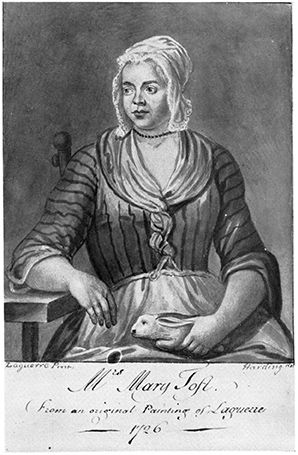
BR: No, I wouldn’t do that. I don’t want to get in trouble with the FCC. No, it was a case in 1726, England, and a young woman named Mary Toft told her neighbor that she had been basically raped by a rabbit. I mean, I’m not being flippant. That’s that’s what she said while she was weeding in a nearby field. So she was out in the field doing fieldwork and a rabbit, you know, which are known to be, you know, what’s the word I’m looking for?
1:05:17
CW: Rapey?
1:05:18
BR: That wasn’t where I was going, but sure, we’ll go with that.
1:05:23
CW: Permiscuous.
1:05:24
BR: There you go. Thank you. Thank you. And, you know, she told people and people were like, okay, Mary, I think you just want to get out of weeding, which is understandable.
1:05:35
CW: What kind of weeds you’ve been weeding over there, Mary.
1:05:37
BR: Right, that’s right, exactly. But, but hold on, well hold on. Again, keep in mind at this time there were no rabbit tests, no frog tests. It was, you know. And sure enough, six months later, a doctor was called to her bedside. And according to a published report, the woman gave birth to five bunnies.
CW: Published meaning what?
1:06:01
BR: Yeah, well, you know, published by the standards of 1726 England.
1:06:05
CW: It was a pamphlet, a woodcut.
1:06:09
BR: Yeah, some super, super doobies. I’m sure Charles Fort had a field day with that one. In any event, and as you might imagine, this was people like, wow, number one, she wasn’t lying. Number two, what the hell? How does this even work?
CW: I want to know how much she sold these rabbits for.
BR: Well, see, then you get into, it gets a sticky situation there. So the news of the birth, as you might imagine, went all throughout England and Europe. And oddly enough, or not, she soon gave birth to even more rabbits. How exactly, what the mechanics are of that are a bit obscure. And learned men of the day, doctors are like, yeah, none of this makes sense, but I mean, you know, she seems to be popping rabbits out.
1:06:59
CW: So people on the whole were believing this, doctors and learned men were taking the story and saying, okay, well now we know this can happen for real.
1:07:08
BR: Yes, yes, we need to rewrite the books because apparently at least one rabbit in this field in England is, you know, watch yourselves ladies. So eventually some skeptics showed up and you can imagine what they thought of this and they exposed her, take that as you will, and she finally confessed to in fact having her husband secretly hide bunnies in her bed sheets.
1:07:33
CW: That’s all it took, they just hid the bunnies in her bedsheets.
1:07:38
PR: Well, doctors back then prescribed almost bleeding to death as therapy, so I imagine.
1:07:46
BR: Well, we need to balance your humors with some leeches, and then after that, we’re going to check your bedsheets for bunnies.
1:07:52
CW: You know, I am just so glad that this hoax did not happen today, because it would have led to a TikTok challenge of some kind.
1:07:59
BR: Yes. That is the last thing we need.
1:08:02
CW: We’d have teenagers trying to make bunny babies all over the place.
1:08:07
BR: But fortunately it has a happy ending, I mean happy insofar as we’re still talking about it centuries later. So just for the record, in case you haven’t listened this far, it was a hoax. She made the whole thing up. That doesn’t actually happen. That doesn’t work with interspecies weirdness there.
1:08:24
CW: I do have one last question about Miss Toft. Did she have children of the human variety? Was she forlorn and wishing that she had kids, but she just hadn’t been able to produce any with her husband? Or did she have a mess of kids and this was just a side project?
1:08:41
BR: I don’t know. That’s a good question. It would be interesting to know more about the dynamics of that. In most of the accounts that I’ve read, I’ve pretty much given you the whole story. I don’t know how much more is it.
1:08:53
CW: So we don’t even know if we will be able to find that out.
1:08:56
BR: Presumably, there, again, it made news to the extent that news was news back in 17.
1:09:04
CW: Yeah, exactly, who knows if they recorded whether or not she had other kids, but I was just curious.
1:09:08
BR: Yeah, no, it’s a fair question. I got was that it wasn’t sort of a false pregnancy in terms of a psychosomatic disorder as sometimes there are with women that believe themselves, basically will themselves into basically stopping their menstrual cycle because they generally believe that they’re pregnant. I got the impression from my readings that it was more of just sort of a publicity stunt hoax. Sooner or later she must have realized that it’s all going to come out in the wash, at least you know half dozen bunnies.
CW: Yeah well good on you for trying, Ms. Toft.
BR: Yeah I would have loved to be a fly on the wall you know when they’re like what are we gonna do about this honey? Okay so I have an idea.
CW: Well it’s not easy to go viral in the like 1400s or whenever that was.
1:10:04
BR: Right. Well, you know, so here’s the bunnies. So hide them, you know, hide them wherever you want to hide them, but just, you know, don’t hurt yourself. And then the doctors will poke around. But of course, you need to be modest about it. So don’t, you know, don’t offer too much. And yeah, I don’t know. Would have been fascinating. But there are other traditions and warnings about pregnant women and hares. For example, it was believed for a long time that pregnant women who saw a hare might have a baby with a hare lip, which is where that comes from, hare lip. And I found a reference from 1507 saying that a pregnant woman who eats a rabbit would very likely have a baby with a hare lip. As I mentioned before, there are several prohibitions against eating rabbits, including in the Bible and Deuteronomy.
CW: You’ll get depressed, you’ll have a baby with a cleft palate, there are all sorts of problems eating rabbits.
BR: Just avoid the whole thing and just skip the rabbits.
1:11:07
CW: And moving on, last of all, I can’t let us end this segment without mentioning, you know, it’s folklore of a sort. I’m talking rabbits in cartoons that I have loved. Everybody’s heard of this rabbit’s much more famous half-brother, but Oswald the Rabbit, precursor to Mickey Mouse, and also Mickey Mouse’s half-brother, interesting. Maybe there’s some Mary Toft stuff going on there, I don’t know. But Oswald the Rabbit came about in 1927. There were a bunch of shorts made and later the character was picked up by Universal and put up and put under the care of Walter Lance of Woody Woodpecker fame, where he churned out a ton of other Oswald the Rabbit productions and the character underwent a bunch of other makeovers but was never as popular as Micky Mouse. Now, Disney abandoned Oswald over some disputes on money and contracts. He designed Mickey Mouse as a replacement for Oswald. And nowadays, Oswald is just a wisp of a shadow compared to the mighty power of the mouse. A much more resilient and famous rabbit is, of course, this is my favorite, Bugs Bunny. He came about in the 1930s, thanks to artists like Chuck Jones and Tex Avery. And he is, I mean, Bugs Bunny, if you were to sort of distill his essence, he is mercurial to such an extreme. He is brilliant, yet he’s also dumb. He’s nice, but he is such an a-hole. And he’s smug, but he’s humble sometimes. And he’s rude, but he’s cultured. He is the every bunny. And it’s hard to explain just how great Bugs Bunny has been over the years. And I do recall Bugs Bunny is responsible for a bit of misinformation. People believe that rabbits love carrots because of Bugs Bunny, but really they prefer lettuce. They’re not that big on carrots. They’ll eat them if they have to. Moving on to the 1980s, we have Roger Rabbit. The Robert Zemeckis movie was based on a book by Gary Wolf that was published in 1981. You guys, you remember seeing that movie? It was something of a wonder.
1:13:28
PR: Oh yeah, I adore that film. Not only am I a huge Christopher Lloyd fan, but I love the fact that A: it is easily the best film that melded hand-drawn animation with live action, but also the way they were able to bring down the walls of copyright pretty well.
1:13:54
CW: Yeah, that’s the thing that just seems like magic to me. They got Mickey Mouse to dance with Bugs Bunny, or I forget exactly who but these clearly competing franchises just frolicking together on the screen like mayhem. It was amazing.
1:14:11
PR: Yeah.
1:14:11
CW: But the thing about Roger Rabbit though is he was not a trickster figure. He was being tricked upon. He was kind of dopey. He was just a clown. That kind of went against a lot of the ways that rabbits are usually portrayed, but other rabbits in the world of cartoon and pop culture, we’ve got Thumper, of course, and Peter Rabbit, and the White Rabbit and the March Hare, both from Alice in Wonderland. We mentioned the White Rabbit earlier, the Velveteen Rabbit, and the Energizer Bunny, which when you think about it, the Energizer Bunny is standing up for rabbits everywhere. He just keeps going and going and going and going and going. And that staying power, you can almost kind of make the euphemism there to like, yeah, rabbits just keep going and going and going. That’s about all the rabbits I kind of decided were important enough to include in my little cartoon roundup of a rabbit tree.
1:15:08
BR: I’m at a loss to think of any rabbits that we miss, although I’m sure our astute listeners will be shocked and dismayed at all the rabbits we’ve missed.
1:15:23
CW: There is a pack of rabbits, or I should say a brood of rabbits that I meant to mention earlier. I’ll mention them now because they are cartoons. My son is really getting into Mario Odyssey, and in the video game there is a pack of evil rabbits called the Brutals. It sounds like brutal, but it’s B-R-O-O-D-A-L-S. And they are really gross looking, angry, mean rabbits that try to kill you.
BR: Do they brutalize?
CW: Yes, they’re very brutal, these Brutals.
BR: But are they brooding?
1:15:56
CW: They don’t seem to be particularly broody.
1:16:00
But yeah, they’re definitely along the lines of Pascual. You were mentioning like the horror, you know, trope of a really scary rabbit. And there’s a bunch of different ones on this video game. Very creepy rabbits in very strange outfits.
1:16:19
Really neat game though.
BR: Wasn’t Watership Down about rabbits?
1:16:23
CW: It was, you know, I didn’t mention that it says I don’t I Guess it was a movie There was a Netflix actually a series a couple years back that I watched most of that did not make my list Maybe I should rethink that Anyway, we should probably have a to be continued one of these days because there’s a lot about rabbits out there But we’ve given you a sample dear listeners, and if we’ve forgotten one of your favorites, do complain to us on our Facebook page. We love that.
1:16:55
BR: Yes, we love that.
PR: And we’ll especially listen to you if you subscribe to our Patreon and complain there.
1:17:02
CW: Yes, yes. We love complaints from Patreon. Just wrap your complaints in like a $20 bill and mail it to…
1:17:09
CW: Okay, that was fun to talk about rabbits. Next week we’re moving from rabbits to Aussies.
BR: Osborn?
CW: No, not Aussie, Osborns. Ozzy Osbourne’s, we are going to be talking to Richard Saunders, longtime friend of the show.
1:17:41
BR: Yes, our favorite Aussie.
1:17:42
CW: Yes, and he is, he’s going to be going over some, some of the details of his great Australian psychic prediction project. And boy, that’s a lot of alliteration. I should have made you say that Ben.
BR: More fun when you do it.
CW: Yes, but he’s he’s bringing some solid science like record keeping, tracking, data crunching for psychics and the predictions that they make. And you may think it would be really challenging and it certainly is. It’s absorbed a lot of his efforts for how many years now? Ten years. Eight, ten, fifteen. It’s been a long time. So we’re going to be having Richard join us and go over that and can’t wait. Until then, take care. Bye-bye. See ya.
We would like to extend heartfelt thanks to our top-tier sponsor level patrons Amy Frusciaro-Kelley, Dr. Angela Matkey, Elizabeth Leggett, and Laura Ellis. Thank you for your continued support of our podcast. If you’re interested in becoming a sponsor or just throwing us a buck or two, please visit squaringthestrange on patreon.com and browse our selection of patron rewards. Every bit helps us keep the lights on here, and we are grateful to our generous friends who help us bring you quality content. If you are short on cash and want to just give us moral support, remember to recommend us to a friend, mention us on social media, or give us a review on your favorite podcast dispenser. If you have comments or topics you’d like to see covered, come join our community on the Squaring the Strange podcast discussion group on Facebook. Squaring the Strange is a production of Two Heads Studio LLC. Copyright 2021. Theme music provided by Shriek Back. Additional music by Memory, Keytard and Feathered, and Pascual Romero. Additional support by Ashley Romero, Robert Sandin, and Alicia Jarvis. The views and opinions expressed on this podcast are those of Squaring the Strange and do not necessarily reflect the views and opinions of Two Heads Studio, Kronos Creative, Center for Inquiry, our advertisers, or any other Studio, Kronos Creative, Center for Inquiry, our advertisers, or any other affiliated organizations and employers.
