
Episode Summary:
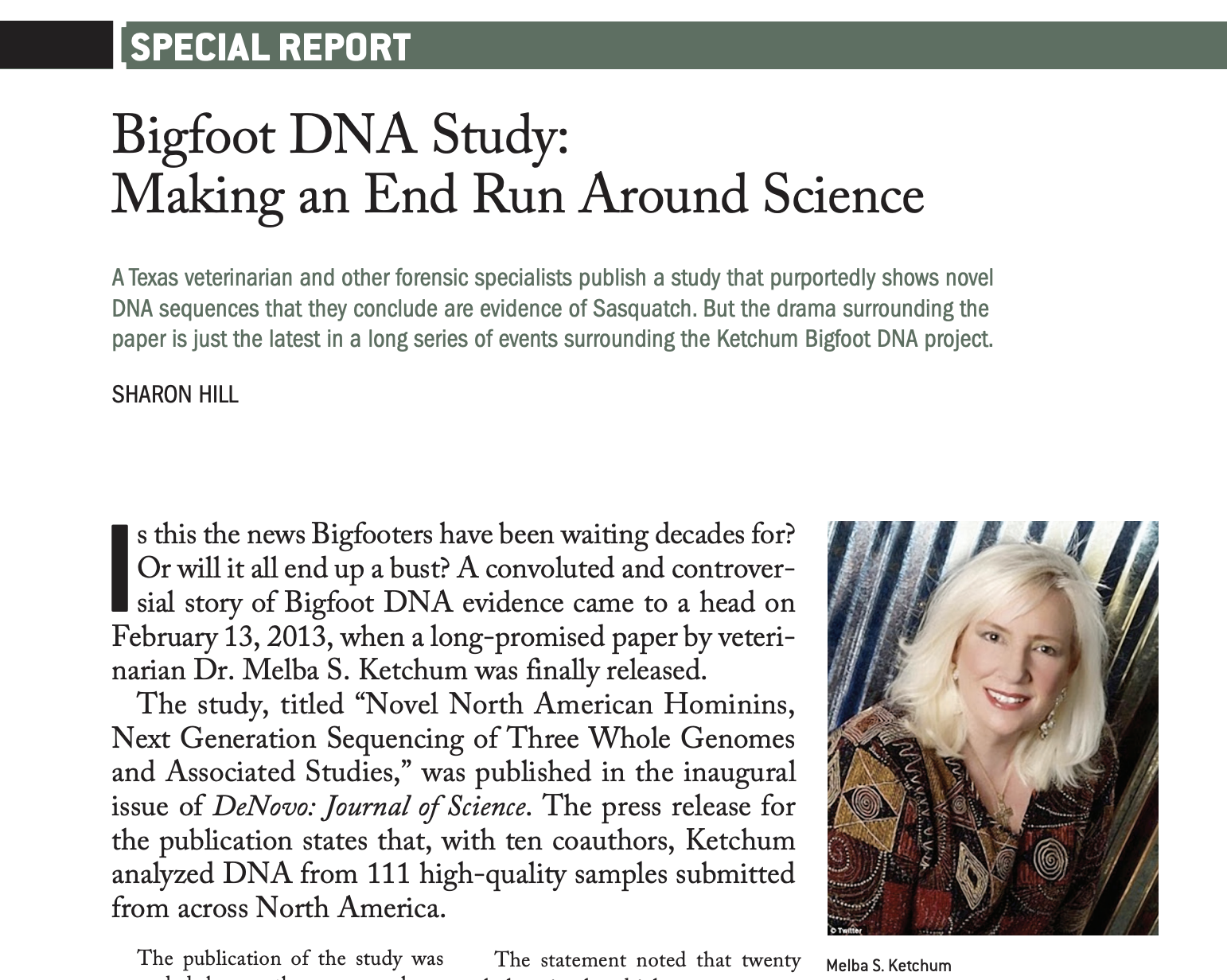
This week, after we take a moment to tally exactly how many kids were killed by rainbow fentanyl passed off as Halloween candy, we bring Sharon Hill on to speak about the excitement around a decade ago when Dr. Melba Ketchum announced she had tested and confirmed Bigfoot DNA. Ben sets the stage in terms of Bigfoot evidence timeline and the rise of genetic technology. Once a vacuum became apparent, it seemed inevitable that someone would eventually become a self-taught geneticist, open an unaccredited lab, and find some genetic evidence for our big hairy friend.
0:00:00
Ben Radford: Welcome to Squaring the Strange, the podcast that examines all manner of the mysterious and the mundane through a critical lens. So let’s square the strange.
0:00:11
Pascual Romero: Welcome back to Squaring the Strange. This is your host, Pascual Romero, with me as always is your other host,
Celestia Ward: Celestia Ward. And where’s our third host? Ben is again missing for the introduction here.
0:00:51
PR: Yeah, I heard he’s he’s off in faraway lands. What is he doing?
0:00:55
CW: I got a missive saying he’s in Malawi somewhere in Africa helping some friends of the podcast deal with witchcraft accusations.
0:01:05
PR: Wow, that is well, that’s good work. Yeah, glad he’s he’s out there representing.
0:01:11
CW: It’s dangerous work. I hope he comes back.
0:01:13
PR: Yeah, seriously.
0:01:15
CW: So, but before he skirted off to parts unknown, Ben did sit down with us and talk to Sharon Hill, a longtime friend of the podcast. She and Ben and I are discussing Melba Ketchum, a peculiar figure in Bigfootery. Have you heard of her, Pascual?
0:01:33
PR: No, I haven’t actually.
0:01:37
CW: Ah, well, there’s some genetic shenanigans, some academic shenanigans, and just all around shenanigans which I’ve come to expect from a lot of the Bigfoot stories that we look into.
0:01:51
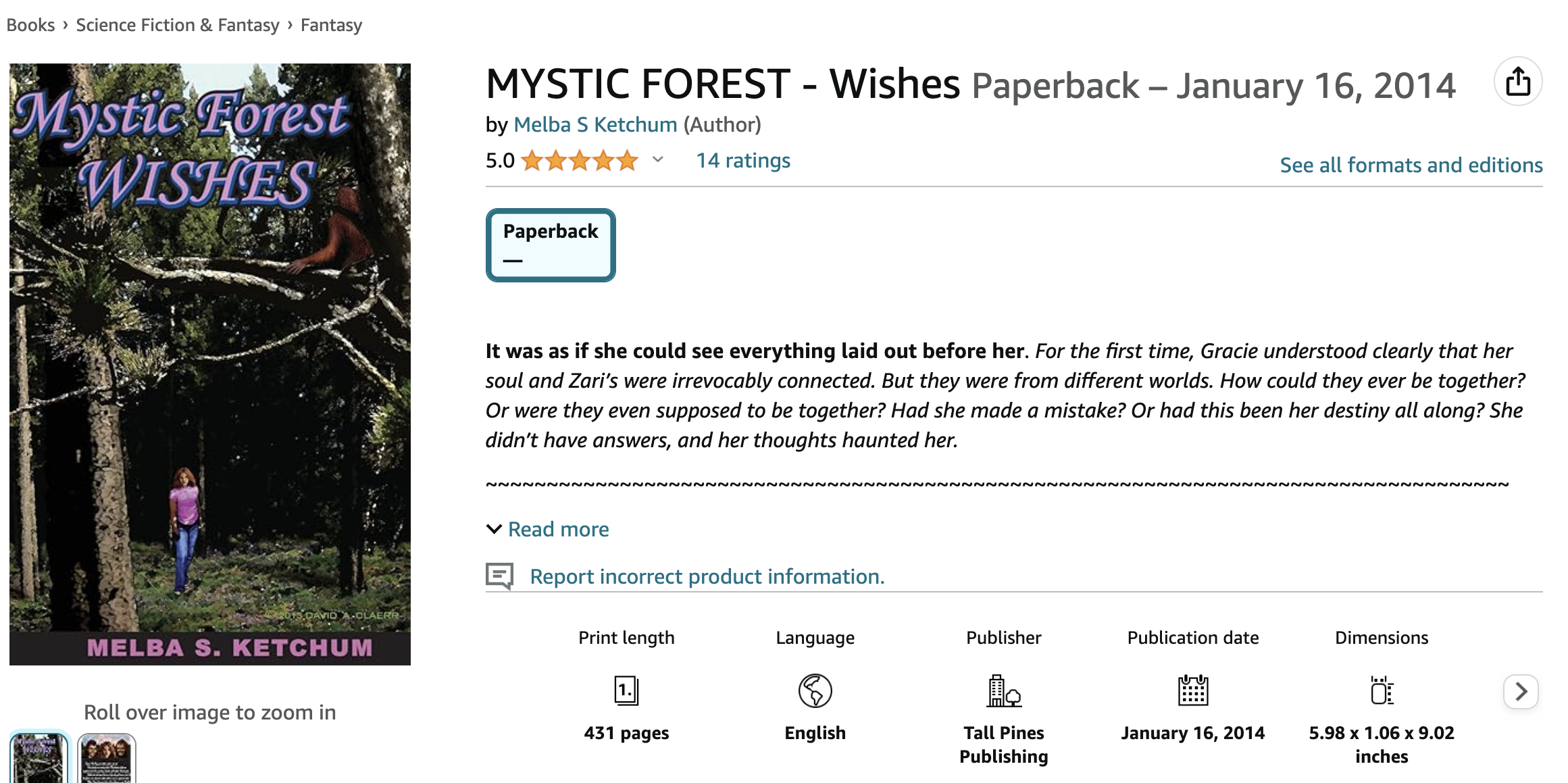
PR: And just looking up a couple of her books, the covers kind of look like weird grocery store romance novels.
0:02:00
CW: Are there any Bigfoot on the front, you know, with the bare chest and flowing golden locks?
0:02:06
PR: I wish. I think Fabio as Bigfoot would be a great cover for a book, but I think she’s going the more mysterious way with just having people standing at the edge of the forest, but it still has big romance novel vibes.
CW: Great. Well, the question on everybody’s mind, I know I was asked this question a couple of times today already, was did I receive any rainbow fentanyl in my child’s Halloween candy bag? Did you? Where did this all go?
0:02:39
PR: No, I looked. I was hoping I’d luck out. I mean, I was looking for a fun weekend, but no. We did not find any fentanyl or razor blades or you know Bigfoot. I don’t know.
0:02:52
CW: So yeah, what is old is new again. I mean there was like a whole bunch of scares years and years. We’ve talked about this on the podcast before, but the latest one, the latest panic, which was pushed pretty hard by the Fox network and a couple of other, you know, conservative outlets, you know, I’m sure there’s some liberal things reporting on this too, but for some reason it seems to be a thing that Fox grabs onto most of all.
PR: Yeah.
0:03:17
CW: Is the rainbow fentanyl. And because it’s rainbow, and it’s not like one pill has got the whole color spectrum in there. It’s not like one pill is the whole rainbow. It’s like there’s pills of different colors. And you know what happens when you take pills of different colors and mix them together?
0:03:33
PR: I don’t know, something out of Alice through the looking glass?
CW: Apparently it looks like a rainbow if you put multiple colors together.
0:03:42
PR: Okay.
0:03:43
CW: Which means I can go into my medicine cabinet right now and take out some of my blue Aleve pain medicine and my orange Advil and various other things. I think I’ve got some Beano or something that’s green and I could make a rainbow.
0:03:59
PR: Yeah, I think I’ve got some red vitamin B and some yellow heartburn medicine so we can have a party.
0:04:06
CW: The Washington Post just over the holiday here came out with a pretty good article written by Paul Fahry. It talked about this whole rainbow fentanyl scare and they did call it a scare. They said experts really kind of say that the rainbow exists, again a rainbow is just multiple colors shuffled together if you’re talking about pills. The pills are different colors because the illegal drug makers want to set off their brand or whatever, they want to show which ones they’re making. They throw some colored dye in it. So I guess if you’re a drug user and you get some really good whatever, you could be like, oh, I really like the purple stuff, so I wanna go find the purple stuff.
0:04:48
PR: Sure, yeah, I mean, don’t ask how I know this, but I know that LSD used to come in a lot of different visually stunning varieties. So it seems it’s a long time practice. Let’s just put it that way.
0:05:02
CW: Yeah. I mean, they even they talked about that on Breaking Bad where, you know, their product was blue. And so people knew that they wanted the blue stuff because it was the best. It was the purest, even though, yeah, that technically wouldn’t result in blue. But who needs to be technically correct for a TV show?
PR: Exactly.
CW: But more dangerous than having certain pills be certain colors is when drug makers, illegal drug makers I’m talking about here, try to make fentanyl and other stuff look like regular prescription or over the counter drugs. Like if they stamp it with certain codes or they put it in a certain shape to make it look like something else, that’s really dangerous. You could have somebody accidentally taking something very bad instead of their heart medication or an aspirin. And yeah, much more dangerous to do that. And as far as the practicalities of drug dealing, if any of you out there intend to be drug dealers? Business tip 101, kids don’t have money for drugs.
0:06:06
PR: Yep, especially not good ones.
0:06:09
CW: If you’re trying to gather your next batch of customers, kids will not be good target audience for that. Yeah, but again, the scare, what’s really behind the scare is not that, oh, these drug dealers want to entice my child into using drugs, although I’m sure many people feel that way, it’s more like, it’s more like this is a boogeyman and they want to kill your kids. They’re gonna put illicit drugs that will murder your children in the Halloween candy, again, which is the same motive behind razor blades and needles and everything else that has been suspected of being in a kid’s Halloween candy over the years. And if Ben were here, he would reiterate the point that it’s never really been found to have happened. There was one kid who did die of poison in a pixie stick. And it turned out that a terrible story. The father actually put it there and the father thought he could get away with it by just saying, oh, he must have gotten tainted Halloween candy like always happens, except it doesn’t always happen. It’s never happened. A child has never been killed with Halloween candy being spiked by some stranger.
0:07:23
PR: Yeah, yeah, that’s, you know, and it’s it comes back every year. I mean, there’s there’s always someone saying something about it.
0:07:32
CW: Yeah.
PR: And it’s a very pervasive rumor, I guess. I mean, it’s understandable. You know, you’re always going to worry about kids. But, you know, so far this has been a rumor my entire life, as far as I can recall. And it, you know, just has never resulted in any actual event, any serious thing happening.
0:07:55
CW: But wait, there was a story out of Winnipeg, Winnipeg, Canada, that is. I don’t know if there’s any other Winnipeg. Apparently some cannabis candies have indeed been found among kids’ Halloween candy.
0:08:09
PR: Wow.
0:08:10
CW: Yeah, Jocelyn Cordiero stated that she found the brightly packaged edibles among her daughter’s candy. Now, she said that she, a couple of red flags popped up initially when I read this story. She said that her nine-year-old read that the candy had a 60 minute activation time and wondered, hey, mom, what does this mean? Oh, the story also was on social media. She went to social media and wanted to warn all the parents in the neighborhood, which, again, you hear of this happening, and sometimes it’s a hoax. A lot of times it’s a hoax. So the story said that police got about half a dozen reports about the candies. And I initially saw some weirdness in the way the article was written. There really was just one source quoted, which would be Mrs. Cordiero. And she, of course, like I said, went to social media to warn others first and think of the children and all that. And we’ve seen this before. So now the article went on to say that police said they received a half a dozen reports of the candies being found. But in the same article, it also said that Cordiero had discussed her little candy surprise with a group of parents that she and her daughter had trick-or-treated with, and they all decided to alert police. So if you put two and two together, I’m like, oh, this could mean that there was really only one piece of candy, And if all the parents decided to call the police separately to kind of boost the signal, you could have had six or seven phone calls from this parent group, even though there’s just one candy. So I was a little confused about that as I read the article and wondering how this would turn out over time. And this did show up on our Facebook discussion group for Squaring the strange. And I of course tagged our favorite Winnipegian, Winnipegian? Winnipegian. I’ve got to find out how you say that. Anyway, Coral, we tagged Coral and she popped back with another story. Suddenly we have got two arrests. So two people have been arrested up in Winnipeg. The number of reports of this candy is now stated at over a dozen, and the kids who received the candies range in ages from 6 to 16. Now, Winnipeg police have arrested a man, 63, and a woman, 53, for the crime or crimes. There’s a bunch of little charges attached to this. First of all, these were pretty strong edibles. The limit in 10 milligrams of THC per package, and these contain 600 milligrams. They were also packaged to look just like Nerd Ropes candy. It looks like it’s like a single serving in one package there. Now, they’re still doing tests on these candies and it’ll take a little while to actually verify how much THC or if there is even THC in it. So right now, all we really have to go on is what it says on the label.
0:11:13
PR: Ah, okay. So, this is a little unclear because down here are our legal edible THC items. It are limited to 10 milligrams max per serving, and then there’s a package limit of 100 milligrams. So, the servings have to be clearly divided up for basically for dosage purposes. So it would be like 10 individual candies at 10 milligrams to equal 100. So I’m a little unclear what they mean by 600. I’m positive there’s not 600 milligrams of THC in a single serving. I mean, at least I would not imagine that.
0:11:56
CW: Well, they have photos of the package and that’s what it said. It said 600 milligrams on the front and it looked like it was a one candy package. I mean, maybe there are 60 tiny little nerds, but I haven’t opened it. I just saw the photo of the outside of the package. And I’m a little bit naive and not really learned on these things. I’ve actually never had cannabis in any form yet. I’m saving it maybe for my 50th birthday. I’ll get really high. I don’t know. But yes, I don’t even know what the limit is here in Nevada.
0:12:28
PR: Okay.
0:12:29
CW: But New Mexico has a max of 100 milligrams per package and 10 milligrams per serving.
0:12:34
PR: I believe that’s what it is. I know that’s what it is in Colorado and I think we’re the same. But yeah, so as far as I know, 600 in a single serving would be basically like…
0:12:50
CW: That might get you stoned enough to give away all the rest of your candy.
0:12:53
PR: You’d get so stoned you’d be on the other side and sober again.
0:13:00
CW: Well again, these were illegal in Canada. They were very illegal at 600 milligrams and again we mentioned this earlier I think where there’s reasons that drug dealers do what they’re doing and if they put something in a package that looks like candy, it’s possibly to make it easier to smuggle across the border or keep out of sight of somebody looking for drugs on your person. But, geez, if you smuggled these in and you paid money for them, be careful with it and don’t accidentally give it out to kids. Geez.
0:13:32
PR: Yeah. I imagine just at that concentration, that would be very expensive edibles.
0:13:38
CW: And again, no child was harmed. There were no reports of any child actually being harmed by this. And as far as I know, no child has ever died of cannabis overdose. I can’t imagine it would be fun, but the police don’t really spend a lot of time worried about this. Apparently, the police were much busier looking for fentanyl. They spent a lot of time with that. So this couple was arrested after their home was searched, and they were charged with 13 counts of distributing cannabis to minors along with, like I said, a few other charges like negligence and intent to endanger life, something, something not noxious substance, blah, blah, blah. So police did say that the motive was unclear and they don’t believe anybody was specifically targeted.
PR: Yeah. It sounds like they were getting into the, uh, into the candy a little ahead of trick-or-treating if you know
0:14:26
CW: I’ll definitely be following this one and seeing how it turns out. It’ll be interesting if there actually Was some nefarious intent behind what this couple did or like you said they just got too much nerds rope themselves sloppy, but the good news the expected news is I’ll read the headline that vice ran on November 2nd. Surprise! Exactly zero kids got rainbow fentanyl in their Halloween candy. So that’s good news. I guess all those police who were worried about it and all those Fox News viewers who were looking out did their job and averted the crisis.
0:15:06
PR:Yep, they prevented the crime of the century. Yeah, I mean really the biggest danger on Halloween is probably a stomachache from eating too much candy. And also, you know, parents, just, you should check your kids’ candy to make sure that they pay the parent tax. So, you know, and be sure to grab yourself a couple good ones, you know, don’t let them try to pawn off their Smarties on you.
0:15:29
CW: So yeah, yeah, I’m a little bitworried about my kids’ common sense when it comes to candy. The first couple houses we went to, he took, he took handfuls out of his bag and tried to put it in their bowl. No, no, you’re being a candy communist. Don’t redistribute the wealth. That all stays in your bag. So, well, let’s get to talking to Sharon Hill, and Ben will join us for this discussion about an interesting scenario that happened in Bigfootery years ago.
(MUSIC)
0:15:59
BR: So today we’re talking about a curious little footnote, bigfoot note if you will, in cryptozoology which is the curious case of Melba Ketchum and her study into Bigfoot DNA. With us we have a special guest and longtime listeners may be able to guess who that is.
0:16:33
Sharon Hill: Hi this is Sharon Hill.
CW: Hi Sharon! Thank you for joining us. It’s been a while since we’ve met.
0:16:38
BR: Last time we had you on we were talking about the bottomless pits and holes like that.
0:16:46
SH: Yes, that was like an endless conversation, right?
CW: We’ve brought you back to discuss a bottomless pit of bull crap?
SH: Right, it is endless that’s for sure no matter what happens people keep believing
0:16:58
BR: art of the reason I wanted to have Sharon on the show was that she and I both played a in my case a small role. I’m not sure what, but in the unveiling and unraveling of this fiasco at the time, and we’ll be getting to what I’m talking about in a second, but at the time I was writing for Discovery News. My editors are like, Ben, you’re the Bigfoot dude, what’s this story? I’m like, ooh, like there’s red flags all over this thing. I was like, how many words do I have? They’re like a thousand like, ahhhhhh…
0:17:38
CW: I can, I can picture you rubbing your hands together in anticipation when they handed you.
0:17:44
BR: Oh, it was just like, yeah, there was just, it was just this, this bottomless pit of every time you, every time you turn something over, they’re just more and more bullshit to uncover. But anyway, let me, let’s, let’s take a step back and set the stage here. So for the context, again, we’re talking about a veterinarian named Melba Ketchum and her role in Bigfoot. Keep in mind here that since the 1950s some of the early sightings of Bigfoot and of course if people want a deeper dive into it they should check out Abominable Science by Dan Loxton, Don Prothero has an excellent piece on that. But initially the initial reports of Bigfoot really, despite the claims that they actually date back to Native American myths and legends which are of course a whole other story. Basically, we’re talking the 1950s. There were sightings and tracks, but no hard evidence. The closest thing to evidence emerged in 1967 with the Patterson-Gimlin film, which we’ve talked about in the show. And this is, to this day, even some 50 years later, this is still held up in many areas of Bigfootery as being the marquee evidence. This is the gold standard, which is inherently problematic of course. And then there were also some not particularly convincing tracks that were allegedly associated with this famous sighting in the just less than one minute film. But really what I want to focus on here is the attempt to bring forensic research to it. So for literally decades there were reports, there were Bigfoot tracks of dubious provenance, but there was really no scientific angles or levers into it. It was just sort of like sightings and blob squashes and things like that. And then we have Grover Krantz. Sharon, have you seen Grover’s, this is a little tangential, have you seen his skeleton?
0:19:34
SH: I have, but unfortunately when I went to the Smithsonian at the time it was not on display. I was unfortunate circumstances, I did not see it in person.
0:19:47
CW: Are we talking about a skeleton Grover Krantz found or the skeleton he used to inhabit?
0:19:55
BR: One he used to inhabit, yes. It would be even, it would be, this would be a very different episode. In the Smithsonian, we found the Bigfoot skeleton that Grover Krantz found. But yeah, so just another Bigfoot footnote. So Grover Krantz, a noted scientist up until recently, sort of the marquee scientist associated with Bigfoot, he actually had his skeleton… I saw it in the Smithsonian. I’m trying to remember if he had a pipe, because it was a human skull, and not the skull, he had the skull skeleton in, and it was with his beloved dog. I’m forgetting the dog’s name.
0:20:34
SH: Right.
0:20:35
BR: And it was kind of, honestly, I mean, there’s lots of human skeletons. I don’t, probably just sort of, they threw him a bone. I mean.
0:20:42
CW: Oh, usually I’m the one with the bad puns here.
0:20:46
BR: I don’t know, I don’t know how Krantz’s skeleton ended up in the Smithsonian, but other than probably, you know, he had…
0:20:52
SH: He donated it. He donated his body, I think.
0:20:55
BR: There you go. There you go.
0:20:56
SH: But it is uncomfortable to see the skeleton of somebody that you recognize in real life.
0:21:03
BR: Yeah.
0:21:04
SH: It’s very weird.
0:21:06
BR: Yeah, it’s not just sort of anonymous, you know.
0:21:09
SH: Right.
0:21:10
CW: Now, did either of you know Grover Krantz? I mean, he was way back, wasn’t he?
SH: Pretty much, yeah. I knew of him. I mean, he was the person that I knew. He was one of the faces of Bigfoot research at the time.
0:21:23
BR: Right, exactly. Yeah, he was a bit before my time, and certainly I think by the time Sharon and I sort of got into cryptozoology and all that, I don’t remember what year Krantz died, but certainly there was, I think there was a bit of overlap. And there were others, you know, Richard Greenwell and others as well. But anyway, so for those who don’t know and again, I keep in mind that not all listeners are as admired in Bigfootery as we are. So Krantz was basically the first, as I mentioned, the first academic scholarly guy who put his reputation on the line and he was the go-to guy, right? So you can, if journalists and others wanted to talk to Bigfoot believers, there are a dime a dozen. If you want to talk to a Bigfoot believer who has some background in science and some credentials, you go to Krantz. And he had an interesting, pretty colorful history. He did end up authenticating some tracks that were later discovered to be hoaxes, including by our mutual friend, Matt Crowley, and by the late Michael Bennett, among others. So this is in sort of classic sort of cranky form. He was very, what’s the word, very sure of himself, very, well, I’m the expert, look at my pipe, look at my credentials, I know what these things are.
0:22:44
SH: And if it’s a hoax, I can spot it. Yes, that was, that’s exactly right. He really believed that if it was a hoax track, he knew the secret and he wouldn’t tell anyone what it was that he could look for in the track to tell if it was legitimate or not. So take that for what it’s worth. Did we ever figure out what it was?
0:23:05
BR: Oh, God, you know, I think Matt might know. I don’t remember. But yeah, there was some, yeah, as Sharon exactly as she said, I mean, there was this notion that he had this personal list because here’s the thing, right? If you publicize, it’s the same thing with, you know, like Indy detectives, right? The FBI. If there’s a homicide, a serial killer, you don’t want to tell everybody in the world everything you know because you want to keep some information back so that, you know, in case there’s copycats and hoaxers. And that was the same with Krantz. And as Sharon mentioned, he had this secret, possibly fictitious, I don’t know, mental list of the things that were a dead sure marker. I suspect it was the dermal ridges.
0:23:48
SH: Me too. That’s what I suspect it was.
0:23:51
BR: Yeah, I think, and again, Matt Crowley’s done lots of stuff on that and he’s ably debunked Jimmy Chilcutt’s. I know we’re getting a little inside baseball here, so I’ll just apologize for that ahead of time. For those listeners who are familiar with Bigfootery, you’ll get something out of it and for the rest of you, just bear with us.
0:24:09
CW: Well, I’ll be sure to jump in and ask questions that a newbie would ask because that would be my role right now.
0:24:16
SH: I think the important point here is that Bigfooters even today say that real scientists aren’t looking at the data or wouldn’t look at the data and that’s patently untrue because throughout the entire history of Bigfoot, there have been people, legitimate scientists who have looked at the data objectively and found it wanting more or less, except for Grover. He was one that didn’t, he was convinced.
CW: So it wasn’t a case of somebody with a little knowledge being dangerous, it was his field. Grover Krantz had a legitimate background and was an academic. He wasn’t some sort of computer engineer who decided this was going to be his side hobby.
0:24:58
BR: Yes, but… right? Look, it’s the same thing with and again, not to go too far afield here, but but basically after Krantz died, the person that that sort of took the mantle from him was Jeff Meldrum, anonymous in Pocatello, Idaho. And once again, I’ve met Jeff. I’ve met him a couple of times and he’s a nice enough guy. And if you listen to the episode that Matt was on, we have some words, we have different opinions about Jeff. But again, certainly he’s knowledgeable in what he does, which is anatomy and things like that, the problem comes in, of course, and this is something that we’ll be talking about throughout this episode, that there are no specimens by which Krantz or Meldrum or anybody else can compare new evidence. So Krantz was a legitimate expert in his field, and Jeff Meldrum is a legitimate expert in his field. The connections between his field and Bigfoot can be debated.
0:26:01
SH: And Krantz, I don’t think we mentioned it, Krantz was an anthropologist. And was Meldrum, Meldrum was an anthropologist, but he specialized in anatomy?
0:26:10
BR: I believe that’s right. I don’t have his bio in front of me, but I think that’s about right. Anyway, so again, so Krantz was the marquee guy for many, many years. He was the go-to guy if journalists and others wanted to get a scientifically credible point of view. And he authenticated, as I mentioned, several tracts that were hoaxed, including by Ivan Marks, the Bosporu-Cripplefoot tracts. So when the Bigfoot field was trying to get beyond just the sightings and the tracts, right, and this is something that Krantz, to his credit, recognized. He wrote a book in 1992 called Bigfoot Prints. And even though much of the evidence for Bigfoot is in the form of sightings, mostly under poor conditions and so on. There’s also the blob squatches. Do I even need to tell you? Celestia, do you know what a blob squatch is just simply by its name?
0:27:02
CW: I do. It’s like, imagine a Rorschach test, but they all look like Bigfoot.
0:27:07
BR: Exactly. So, you know, by the 90s, many Bigfooters, including Krantz and others, recognized that, look, I mean, the Patterson’s film was ’67. You know, it’s been several decades now. Why isn’t the evidence getting any better? By this point, people should be finding hair and feces and, you know, scat and skin and blood and teeth and things like that. And typically, when these things are brought to bear, it’s almost like alien implants in the episode we did on the implants, right? It’s like there’s this sort of touted evidence like, oh, this is going to bust the case open. And then it just sort of fades away. It’s like, oh, yeah, so it gets lost or it’s incon… There’s all these excuses, all these reasons why each of these… Oh, we found Bigfoot hair. Oh, wait, hold on. Oh, hold on. We found Bigfoot teeth. Oh, never mind. Oh, yeah. It’s like, come on, right? So fast forward to the 80s and 90s, right? So this is when people were able to do DNA sequencing. So in 1986, one of the first cases, actually it was the first case when a person was convicted of murder on the basis of DNA evidence, was a guy named Colin Pitchfork, which is a Dickensian name.
0:28:23
CW: All of these names are rather interesting in terms of character. Grover Krantz, you know, is a fun name.
0:28:32
BR: We didn’t even get into Matt Moneymaker. And Cliff Crook, right?
0:28:39
CW: Even Melba Ketchum sounds like an old-timey Depression-era sandwich.
0:28:42
BR: I’ll take that Melba Ketchum over there and put some moxie on it.
0:28:49
CW: Okay. All right.
0:28:51
BR: So – Oh, yes. Back to – sorry. Back to Colin Pitchfork. So here’s the story. Again, I’m going to make it brief because I want to get to Melba, but it’s important to have a little bit of background here. So in 1986, there was a British teenager named Richard Buckland and he admitted that he had raped and killed a 15-year-old, but the police were pretty sure that he actually committed other crimes as well. And he denied it. He said, no, it wasn’t me, it wasn’t me. And right around that time, the technology was sufficient that they could do DNA fingerprinting. So the police, in trying to prove that in fact Buckland did, you know, did these previous crimes, compared his DNA to this victim and no match. So the police then basically conducted a mass DNA screening of all the local men that fit a certain profile, and they still didn’t find anything until somebody overheard someone saying that he had actually submitted his own DNA on behalf of a friend named Colin Pitchfork. After he was identified as being the guy that had asked to have somebody else submit his DNA, he was in fact identified and convicted. So that was the first time that sort of the genetic forensics was applied to criminal investigation. And then the DNA Identification Act of 1994 authorized the FBI to create a national DNA database called CODIS, which is the Combined DNA Index System. Obviously, the technology and the system has evolved since then, but basically, the idea is you have this huge genetic database that law enforcement can then compare to previous DNA left at the scene and future crimes as well. So by the 1990s, there was this sort of glaring hole in Bigfootery, right? Because people were like, hold on here, right? Where you go to a Bigfoot conference, as I did in Pocatello and meeting Jeff Meldrum, and they’re still holding up as the best evidence this Dan Patterson-Gimlin film from 67. And finally, they’re like, hold on, this is, you know, it became too glaring by the 1990s certainly, that the evidence is not getting any better. It’s stuck in the 1960s, even with the development of DNA fingerprinting and CODIS and things like that. So, this is where sort of Melba Ketchum and her lot sort of come into it. They’re like, okay, well, the Bigfoot evidence has been sort of stuck in the mud, is sort of stuck in neutral for decades, right? Again, it’s the same old sightings and reports and dubious witnesses and hoaxes and blob squatches and sketchy tracks. And despite all the better and better photographic techniques and camera phones and all sorts of DNA testing, there’s still nothing. And then finally in 2008 on Destination Truth, which I was on with Josh Gates, there was what was claimed to be the hair of a Yeti. I didn’t actually ask Josh about this. At the time when we were in Puerto Rico looking for the chupacabra, I didn’t want to piss him off because I was his guest on the show, but that turned out to be basically a nothing burger is I think a phrase that I’ve heard Sharon use.
0:32:05
CW: A hairy, hairy nothing burger.
0:32:07
BR: A hairy nothing burger at that.
0:32:08
SH: But who tested the hair?
0:32:10
BR: Tell me it wasn’t Melba.
0:32:12
SH: It was.
0:32:13
BR: I did not know that!
0:32:16
SH: Melba was sent to a DNA diagnostics or forensic analysis in Texas, and that turned out to be Dr. Belva Ketchum. And that was her start into the world of Bigfootery. She was not a believer, that’s what she says, but she tested the hair and it turned out, according to her, and I guess others were working at the lab at the time that she was the CEO of, produced a sample that was unknown, or unknown DNA, or unknown animal DNA. Again, for what it’s worth.
0:32:55
BR: That’s a perfect transition.
0:32:57
CW: I have many questions, but I’ll save it for just one right now.
SH: We have no answers.
0:33:05
BR: Nor does Melba for that matter. Just to set the stage on one final bit, and Sharon will chime in here. So just so everyone is crystal clear what unknown or unidentified means in the context of genetic analysis. Both of you know where we’re going with this. Anybody who’s got an IQ of about 50 as we’re going this, but I’ll say it anyway, right? So just because something is unknown or unidentified does not mean Bigfoot. It doesn’t mean extraterrestrial. It doesn’t mean unusual. It just means unknown or unidentifiable for any number of reasons.
0:33:50
SH: And this will come up repeatedly in Melva’s story. By calling something unknown and then jumping to the conclusion that it’s known based on what they believe, but the reason why it’s unknown is because maybe they didn’t have the actual animal DNA to compare it to, whether that be a black bear, a possum, you know, or a representative statistical sample of the population saying that this part of the DNA could be a number of different things. I mean, DNA sampling does rely a lot on background statistics. And that was really not Melba’s strong point.
0:34:37
CW: But she did… she did run a lab though?
0:34:42
BR: She’s a veterinarian. Now, I don’t mean that in a disparaging way. Vets are great, but she’s a veterinarian with as far as I know no particular academic training in genetics maybe I’m forgetting.
SH: No that is right, she is a self-proclaimed self-taught geneticist.
CW: Okay so she is an example of somebody with a little knowledge being pretty dangerous.
0:35:12
BR: Here’s a hint for all you. If you’re at a party and someone says, you know, I have no training in genetics, but I’m a geneticist… run. Take another drink and walk away because anything else that comes out of their mouth is going to be bullshit or something you’ll…
0:35:31
CW: I have no formal training in ballet, but I own a tutu.
0:35:37
BR: Any questions?
0:35:38
CW: So, that clarifies why she would come up with an absurd answer, rather than knowing what unidentified means in terms of genetic sampling. I was just questioning, okay, how did Destination Unknown get this thing tested by a geneticist and they came up with this conclusion, but you’ve just answered my question. They didn’t go to a geneticist, they went to a veterinarian.
SH: Right, I mean the lab was proposed, it was promoted as being this type of DNA forensics analysis. So she had people who I guess worked at the lab that were legitimate forensic analysts, however that’s different than being an actual geneticist. You can be a forensic analyst and run the samples and come out with conclusions, but you may not be equipped to interpret those conclusions within the context of whatever you’re doing, whether that be a murder investigation, and we’ll touch on that a little bit later too, again, or identifying a particular species or saying it’s an unknown species. So there’s a lot of additional background knowledge that has to play into the interpretation of this data. And I think we see that all the time when it comes to amateurs recording any kind of environmental data or glitches on their technology and then making those interpretations with it because they don’t know how the camera can mess up or how things can be mistakenly identified and things like that.
0:37:13
CW: This is why you don’t have the radiology lab tech read your x-ray for you and give you a diagnosis.
0:37:19
SH: Exactly, yeah.
0:37:20
BR: And it strikes me, I mean, there’s parallels here with the chupacabra in Phillys Canyon. In tracking chupacabra, I talk about, and she was another, again, there’s some parallels here. She was from Texas. She did not claim to be a veterinarian as I recall, but she was a naturopath. So there’s that. And I think she had some veterinary experience. Anyway, so, but she, you know, and again, I won’t go into the whole thing, but we did a show on that one in the Chupacabra story. She found these, actually more than one coyote, and it was submitted to an actual, an actual, a legitimate laboratory, not Melba’s. They came back that it was Coyote, and she said, well, that’s not right. Like, oh, okay. So then she submitted the same thing to a different lab that she paid for, and it came back the same thing. And she says, well, maybe it’s right, but there’s, so she had this sort of elaborate roundabout sort of like, well, yeah, but you need to account for that. Anyway, it was just hearing her talk about genetics was kind of painful to me personally. And I’m not even a geneticist. It was just sort of like, I knew enough about it that she was just grasping at straws, trying to make it fit her hypothesis that she had actually found and, you know, and captured this chupacabra. But anyway, she gets, so Melba Ketchum gets her start in her notoriety analyzing Josh Gates’s bear hair, who knows what the hell it was. And at some point along the way, there was this… Sharon, correct me if I’m not… Now, what year was this? This was like almost like nine years ago? This was a while ago.
0:39:05
SH: This is… As far as I know, she was already done with collecting the samples and doing all the work in 2012.
0:39:12
BR: Okay.
0:39:13
SH: So it must have been before that. It must have been around 2010 or something, and I don’t really know how the collection got started.
0:39:20
BR: Right. Okay. Yeah. So her article in her journal, which we’ll get to in a second, was published in 2013. So yeah, so it was almost a decade ago, and obviously there was a bit of a lead up, because as we’ll touch on, she had some difficulties getting it published. I know this will shock audiences, but there was this whole, so Sharon, help me out here. So there was this sort of a year-long teasing of like, she would go on Facebook and social media and say, I’ve got this breaking evidence and we have hard evidence of Bigfoot and it made national news. And again, I was writing about it for Discovery. But it seemed like it just went on and on. It’s like a trailer for a film that keeps getting delayed.
0:40:08
SH: It was. It was very much like that. And I give her some credit here because everybody does know that it takes a very long time to do a scientific study or what would appear to be a scientific study and then ready it for publication and then run it through the process of getting it accepted and published. So at the time when she was saying it’s in peer review and it’s being shopped around or whatever to different outlets to be published, I knew that that could very well be true. But if we back up a little bit in the time frame, if we’re looking at 2008, which was the Destination Truth stuff, Something, I think, was sparked in her this interest that she saw that something could be here that she could discover. I can’t remember how it got started where she began to collect this amateur collected Bigfoot data. People would send her pieces of Bigfoot, I guess. That’s what they thought it was, right? Hair and feces. I’m not sure if they sent feces, I think so.
0:41:15
BR: Probably, there was a lot of shit involved.
0:41:17
SH: There were toenails, there were pieces of flesh, potential blood, things like that, that she collected from these amateurs that sent it in. And from what I understand, there was no good provenance or careful collection procedures for this evidence. It was just people who had this material stored in their freezer or in their drawers or in I don’t think they could have stored it in alcohol or formaldehyde or anything. It might have ruined the DNA. But wherever they had stored it, who knows that it was any good at that point and had DNA in it. But they sent it all to her. She had I think 111 samples.
0:41:56
BR: Yes, I think that’s right.
0:41:57
CW: So if you have human beings collecting this stuff, putting it in the mail where other humans are helping transport it to wherever Melba is, one of the things I’ve always heard with oh, Bigfoot DNA, this appears to be half human, half animal. Is that where they’re getting some sampling errors?
0:42:19
SH: Could be. Yeah. But I think it’s even more messy than that. What her results, we’ll get to in a little while, her results ended up being, well, this is crystal clear what happened here.
0:42:31
CW: Okay.
0:42:32
SH: So, and that’s, I think, is wrong. And so did everybody else. Everybody else kind of thought it was wrong. But she was able to extract the DNA, and then there was all sorts of problems about how it was extracted, how it was, you know, you replicate it, and you could replicate potential errors in it. You know, if there is contamination in it, you replicate the contamination as well.
0:42:57
BR: I think it was sort of like, pretty much every step of the process, there were problems.
0:43:02
SH: There were problems, exactly.
0:43:03
BR: I mean, look, let’s be clear, no study is perfect. Every study ever conducted, if it’s a scientific study, there is room for error. There is, this is where statistics come in, whether you can pronounce it or not. There are all sorts of potential problems here. This is not the problem. The problem is not that Melba’s study was not perfect. The problem is that there were so many opportunities for contamination all over the place. I actually have a, the part of her statement, so she issued a press release on November 24th from Dr. Melba S. Ketchum. Quote, “a team of scientists can verify their five-year-long DNA study, currently under peer review, confirms the existence of a novel hominin hybrid species commonly called Bigfoot or Sasquatch, living in North America. Researchers’ extensive DNA sequencing suggests that the legendary Sasquatch is a human relative that arose approximately 15,000 years ago as a hybrid cross of modern Homo sapiens with an unknown primate species”. So this is what she was teasing for the better part of a year.
0:44:19
SH: And she was really promoting it. So when she got the sample, when she got the sample results, she was convinced this was a Bigfoot. I’m pretty sure she came into it with a preconceived notion that that’s what she wanted to find, obviously. The problem even occurred at the very, very end where, again, we’re talking about the statistics and she’s comparing it to other wildlife species, but there was even rumors that the black bear species wasn’t included in that comparison.
0:44:49
BR: Yeah, in the sample, right.
0:44:51
SH: Yeah, so there was no way to actually say that this wasn’t, you couldn’t exclude the more obvious issues here, that it was cross-contamination, that it was regular animals. I mean, I think some of them, she did come right out and say weren’t Bigfoot or weren’t anomalous, that they were actual animals, I suppose. But there was this overwhelming push that this was novel, this was a huge earth-shattering find and that she had done it because she was one of those maverick scientists who went out on her own, did her own envelope, back of the envelope calculations for genetics and stuff. That she was the one going to discover this and the rest of science was behind. There was very much that theme. And boy, did she get a lot of people behind her. As this dragged on and on and on, unfortunately, of an audience who didn’t understand how the scientific process works, which means it could take a very long time and you need to be patient to get, you know, if you’re going to do quality, you need to be patient. But if you’re in just general, it’s going to take a long time to get this through peer review and get it published. They just got frustrated with her, her promises. She did a very bad thing in, in promoting herself like crazy. That’s not what you do. That’s not scientific. It’s not professional saying that she has earth shattering evidence that’s going to come out. You should buckle up and it’s going to be, you know, amazing and everything.
0:46:18
BR: Yeah. It was all this sort of Trumpian, you know, this is going to break everything open, it’s going to change the world.
0:46:23
SH: Yeah.
0:46:23
BR: Just wait till you see it. Well, where is it? Well, the tax returns. Oh yeah, they’re, um, you know what, they’re in the mail.
0:46:29
CW: Well, yeah, that’s creating that sense of anticipation is also, I mean, you can be the most unbiased person ever, but you start leaking things like, oh yeah, we’re going to deliver this amazing thing. Then suddenly you are biased towards delivering an amazing thing. You know, you don’t have any objectivity. You are aiming toward a goal ever, ever more greatly with each press release you put out there.
SH: She absolutely fell into that trap. She did exaggerate a number of things an awful lot. She, eventually she came out and said that, um, the, the paper did not pass peer review in at least two journals that it was rejected. So what did she do? She created her own journal website.
CW: You know, I got it handed to her, you know, online, you’re constantly running into people saying, you know, you’ve got to do your own research, and usually what they mean is you’ve got to watch some YouTube videos like I’ve watched. But in her case, she actually did her own research. She got a centrifuge. She launched a so-called peer-reviewed journal. I’m anxious to hear about this.
0:47:46
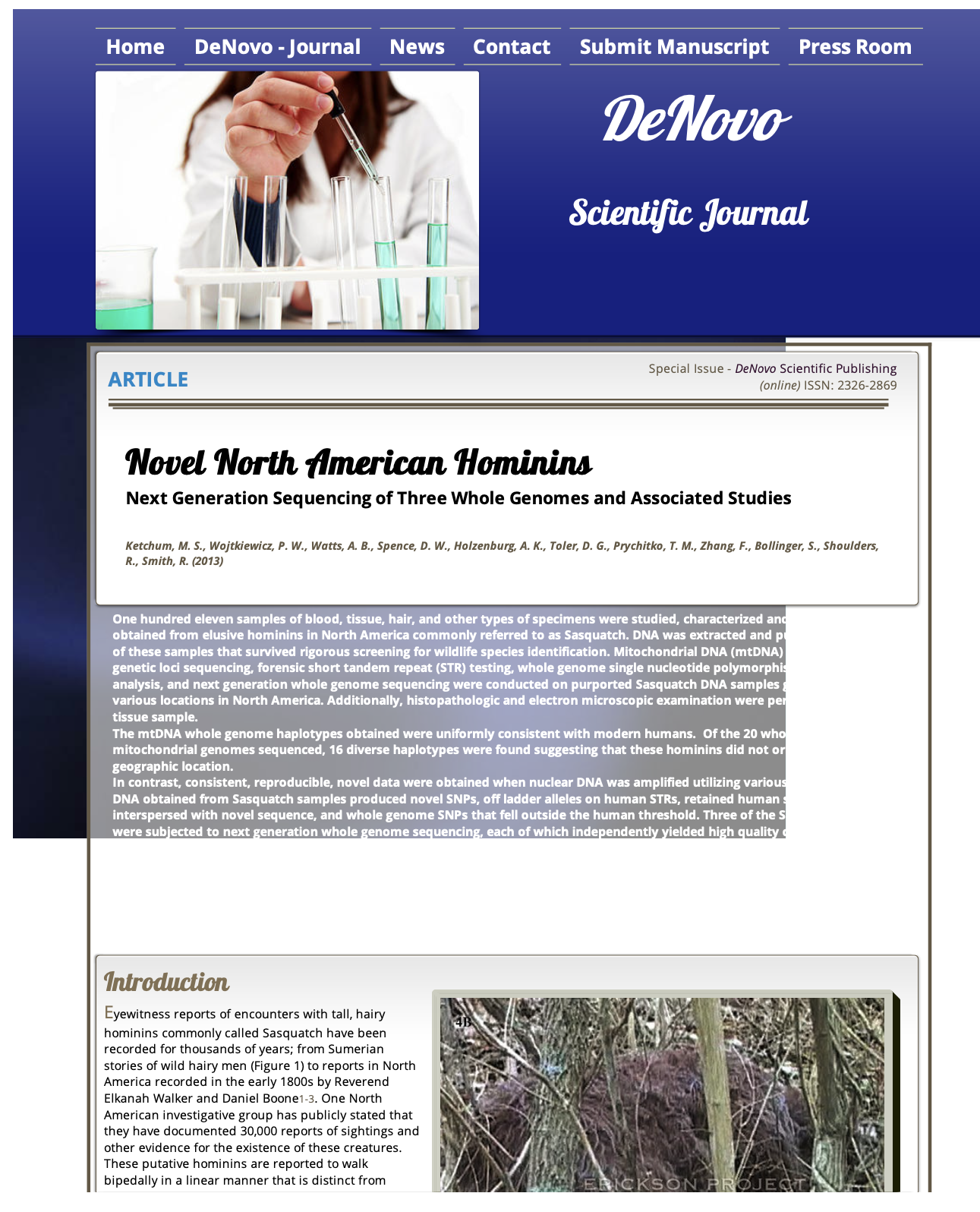
BR: So I have it right in front of me. I’m reading it here. The title is Novel North American Hominins, Next Generation Sequencing of Three Whole Genomes and Associated Studies. And Melba is, of course, the lead author. There’s another one, two, three, four, five, there’s another six or seven people. 2013, as Sharon mentioned, it is in the journal called, it actually says, sorry, it actually says at the top, DeNovo Scientific Journal. I would say a scientifical journal for those who, Sharon, can you give our listeners just a little overview of what scientifical is?
0:48:28
SH: Sure. It’s people who really, really want to sound like they’re talking science, but they’re just sort of making stuff up, and they’re using the jargon, and they’re using the correct words, and they’re appealing to a non-scientific audience. So a layperson’s… They’re appealing to those people who don’t know very much about science, and by putting on those airs of science, by putting on the trappings of science and using those key words and attitudes and behaviors, they come off as pretty credible to non-scientists, unfortunately, because the average person doesn’t know a scientist, they don’t know how science works, and they just assume that if you’re using big words, you must know what you’re talking about.
0:49:08
BR: For those who’d like to know more, check out Sharon’s book, Scientifical Americans.
0:49:12
SH: Yeah, be careful how you spell it. We’ll get to scientific Americans, which is a real thing, but that was obviously the play on words there because it’s just gotten worse and worse with people using that technique to sell whatever snake oil they’re selling. Today, you don’t really even need to talk science because science is a bad guy. But at this time, and it changed relatively rapidly, even in the Bigfoot field, the idea that DNA evidence was gained or could be gained to prove Sasquatch’s existence, people really wanted that to be true. So they wanted to jump on Melva’s bandwagon here.
0:49:54
BR: And keep in mind, again, that the backdrop here is literally decades of nothing but sightings and tracks, which were getting more and more ridiculous, and proven hoaxes and things like that. So, the Bigfoot community at this point was desperate for some hard evidence they could point to. And of course, through TV series like CSI and actual legitimate crimes being solved through DNA fingerprinting genetic analysis, it seemed like, well, that’s right there, right? I mean, it’s, you know, the average person may not understand the intricacies of DNA analysis, but they know that they can identify killers, I mean, even to this day, right? There’s, they’re through genealogy. There are people who are identifying killers who have been long dead, just, you know, from the relative’s DNA.
0:50:42
SH: So it seemed like this would be a plausible thing.
BR: Yeah, absolutely.
SH: If Bigfoot was real, it should be leaving DNA in its environment. People who say that they’ve experienced Bigfoot have this evidence, gave it to what looked like a legitimate DNA lab, and the evidence came out that yes, indeed, it is Bigfoot. And Bigfoot ended up being the mother was human, and the male representative in the genome was an unknown. Now we’re identifying an unknown with another unknown, which was weird. At the time where she let this paper out, interestingly enough, not only did it come out in her own journal, which was just a terrible website, the paper itself had so many problems. It was just very unprofessional. Even though Melba had done, she had been a co-author on other professional journal papers before, at least one I know of. So she should have known how to do this, but instead it was very amateurish. There were spelling errors of all things in it. And of course, some of the references were not legitimate. She had even a hoax paper listed in one of the references.
0:52:00
CW: Oh, wow.
BR: I’d forgotten that.
0:52:03
SH: It was an April Fool’s joke. And she had listed it. And when somebody called her out on it, she’s like, well, the reviewers told us to list all references. I said, what does that mean? All references for Bigfoot studies? Because there’s a heck of a lot more than that. And why would you list something that’s not true? It’s just a joke. It was a really bad excuse.
CW: I’m looking through this de novo paper and I know you mentioned spelling errors, which yes, the legitimate scientists can have a spelling error and it doesn’t invalidate their work. But I’m looking at the design of this and it just does not scream scientific journal.
0:52:41
SH: Not at all.
0:52:42
CW: The font used for these titles, of which there are many, it looks kind of like a a kitschy like roadside diner Font it’s kind of Curly…
SH: Or those things that you see uploaded to research gate by people who have done it themselves
CW: Yes, yeah, and that would be who anybody who was publishing would that that’s a that’s a big red flag right there Just the way it’s designed and a clearly a stock photo of a female hand pipetting a blue liquid into test tubes on the front here.
SH: That was painful, yeah, stock footage for sure. So she said she was going to give away the paper or that it would be open access and it wasn’t. I remember the day that it was released, I went to the DeNova site and I went to get it and I would have been charged 30 bucks for the download.
0:53:37
BR: Yep.
0:53:37
SH: And so I’m like, you know what? Nope, I’m not gonna do it. Even though it was the number one story on Doubtful News, which is what I was running at the time, it was the number one story. Everybody wanted to know about it. And I had been blogging about it so often that I was just, my attitude was just really, really bad at the time for her. And I feel bad about it now, but some people have said, no, I was probably too kind to her because she really did hype this up and then this is what we get? And we have to pay $30 for it? She gave it away for free to Bigfoot bloggers, not academics.
0:54:15
BR: Part of the reason that I wanted to revisit, it’s just such a beautiful type A crystallization of Bigfoot research gone horribly awry and just going sideways in every possible way.
0:54:35
SH: It was a dumpster fire. Yeah, it was literal dumpster fire. Just flaming.
0:54:43
CW: Jumping ahead here because I’m curious, what ramifications did this have for Melba Ketchum? Did she lose her standing in the Bigfoot community or did she get elevated even higher? Did she get called out by any legitimate scientists besides, of course, you two, your esteemed Doubtful News and then Ben’s Discovery News? How was it received?
0:55:07
SH: She did get feedback pretty much right away from legitimate biologists and geneticists who said, this is absolute garbage. Oh, good. They couldn’t understand it. It didn’t make sense to them. It wasn’t in the context of the procedures that they were used to seeing. They saw obvious things that were missing. And there wasn’t a huge amount of attention paid to it. I mean, it did get some press, and a number of legitimate scientists did try. There was a blogger called SciGuy, Eric Berger, who did actually agree with Melba to take some of that information and give it to another geneticist that he knew, and she hyped that up. She’s like, it’s now being reviewed again by a renowned geneticist, until the evidence came back that said, yeah, it’s like an opossum, another species. And then she poo-pooed it, she was all mad.
CW: She didn’t issue a follow-up saying, renowned geneticist calls my work garbage. Yes, she didn’t like that too much.
0:56:11
BR: Or, to be fair, it could have been a three-way between the male Bigfoot, the human female, and the opossum.
0:56:19
SH: I don’t know.
0:56:20
BR: I’m trying to help her out here, I don’t know.
0:56:23
SH: So a couple of other things happened that we… So much happened with this, but let’s just make sure we hit all the high points. She gave it a name. She registered the name with Sue Bank. That doesn’t mean anything, but it is still out there, Homo sapiens cognatus. Not that there aren’t other names for Bigfoot that had been proposed in the past.
BR: Did she name a star after him?
SH: Just to say, if Bigfoot is ever discovered, boy, we are in trouble trying to decide what its official scientific name is going to be because it’s been proposed so many times.
CW: Now, what was the background on the name that she chose in her Latinate version?
SH: Just, you know, thinking, or special thinking man, I don’t know. I forget what, why she named it, but she was very proud of it. When she didn’t get the hero’s welcome, you know, the response that she wanted. She ended up being very anti-science. She was kind of anti-science because she had submitted the paper to Nature. And it was bounced. And then it was submitted to, it was bounced, I think, just very quick. I think it was actually reviewed. Because I remember Dr. Dharani said he was one of the reviewers. And they were just like, nope, nope, nope, nope. When it went to another journal, it was a smaller, more needy, let’s say, journal, very much lower on the index of reputability. They bounced it too. They said, our lawyers said, don’t publish. She got mad. And who did she invoke? Galileo. She invoked the Galileo effect, that she was a scientist, a visionary who was being blocked by the establishment because we didn’t want to accept a new paradigm.
0:58:15
BR: And if you go to her website, which is still active, I’m not going to tell you what it is, but you can find it, there’s a couple of things you’ll find there. Number one is you’ll find a pages and pages long, very defensive, angry, cranky dismissal and rebuttal to everything we’re saying here. Like, well, the contamination was not a problem. The scientists were just jealous. Galileo, Galileo, Galileo. I’m a genius. Why won’t you recognize that? By the way, buy my book. So there’s that. And by the way, if you, she didn’t even renew her De Novo link, so if you go to her website and it says, click on the De Novo Scientific Journal, you get a 404.
0:59:00
CW: I was going to ask, I continued in any way, but that was the one and only issue of De Novo ever printed or not printed.
SH: Yes, yeah, I think so. It was a sole article, but the journal article is available for free on her website now So you can get it now for again for free. We’re not done yet though, do you remember what was released at the same time the paper was released? to support The assertion that Bigfoot was out there and there was substantial evidence.
BR: Was it the Sykes thing?
SH: Well the Sykes thing was happening at the same time, which was curious. We need to touch on that in a minute. But what also was released in conjunction with Melba’s work, because they were sort of in cahoots together, she was in cahoots with a lot of scary people. David Polates, for example, was a big proponent of her. She appeared with him on Coast to Coast AM to promote her stuff, uh, data for the plays of the missing 411 bullshit.
1:00:03
BR: Super. Yeah. Super. We, I’ve been meaning to show on him. He is super sketchy. I all, I’ll just, he’s this, another dumpster fire of big foot read that is toxic, uh, just across the board. So not just that, but also, yeah, Polates also, uh, if, if you go, if you look at her journal article, the first image there is by a guy named Todd Standing. Is this where you’re going with that?
1:00:27
SH: Well, yeah, the Matilda video. Yes. I don’t think that… Is that Todd Standing’s?
1:00:35
BR: Yeah, the Erickson Project.
1:00:37
SH: Yes, the Erickson Project. The Matilda video was taken by somebody else. Doug Fole, I think his name is. Dennis Fole. And it showed… This was released at the same time as Melba’s paper, so it came out with the press release, it showed a very tree-obscured pile of fur on the forest floor breathing. You could see it moving and it was just very deliberately going up and then down. They said, we’ve counted the breaths and we could then judge the animal’s metabolism, the respiration rate, and it seriously looked like a rug under an air bladder that was being moved. That was named Matilda, had the face of Chewbacca, exactly the face of Chewbacca.
1:01:31
BR: Like literally the face of Chewbacca.
1:01:32
CW: It was, it was embarrassingly bad. But that was evidence, and she thought it was great.
1:01:38
BR: Yeah, it was just it’s just so again, just I’m just going through it. It’s just so there’s so many like John Brockman moments like, wow, somebody didn’t didn’t think this through or they did. I don’t even know what the hell was going on.
CW: But just see, the question would arise. You film something like that in the woods. It doesn’t occur to you to back up a little bit to get the whole animal in the frame?
1:01:57
SG: These these were the questions people were asking. Yeah, they were saying, okay Well, if you were able to see this animal and you were able to film it multiple times Where’s the rest of it? Yeah, where’s the clear vision or you know, the clear video of it? Yeah, you know not gonna clear video would be Really anything?
CW: It’s slightly logical to say this is this video is from far away and it’s blurry because this is as far as we were and we couldn’t get closer. But if you’re already like right up on the critter, you’re just filming portions of it breathing, dude, take a couple of steps back. Just back up.
1:02:41
SH: So the majority of people, we were banging our heads going, what the hell?
1:02:45
BR: Yeah, this was just, and it was, I remember, again, this was 10 years ago, but I remember crystal clear. I think I was emailing Sharon and probably Daniel at one point, I’m like, what the hell is this? Seriously? Some people were jumping right on. To be fair, there was some undercurrents of skepticism towards Ketchum. It wasn’t like all the big footers were on her side. Some of them were just like, this is clearly bullshit. I’m not going to waste my time. Other ones are like, well, now hold it now. She does look like Galileo. And I remember, so there’s this one guy named Matthew A. Johnson. He’s a psychologist and he is sort of like a third tier Meldrum. Again, he’s somebody else. He’s a hardcore Bigfoot believer. He doesn’t have the scientific background that Krantz and certainly Meldrum have. But he, again, he does have a doctrine in front of his name, he’s a legitimate doctor in psych, whatever else. But he issued a really rambling, and I use rambling in a very kind way if you actually read it, full of all caps, I’m looking at it now, and so he was one of her supporters, again the sort of rogues gallery, people who do not want supporting you, it’s like, you know what, thanks anyway, I’m good.
1:04:04
SH: Right.
1:04:05
BR: I appreciate it. Send me some money. I don’t need your name on it. But so he wrote this pages long thing, faulty assumptions regarding the peer review process. So he goes, again, I’ll just summarize the whole, it just sort of goes into this whole thing about how well, again, she’s being misunderstood and he’s sort of saying, well, yes, of course, it couldn’t get past peer review, but peer review is overrated.
1:04:31
CW: Okay.
1:04:32
BR: Yeah, it was just this whole bizarre thing and again, just sort of this recurring theme of going beyond the evidence and this is what she does. And like I say, if you go to her website, you will see and I wrote about it elsewhere as well. She will give you in very bold declarative sentences all about Bigfoot. So the end game here is that she wanted to have Bigfoot recognized officially from the government point of view as an unknown, essentially Native American species.
1:05:14
CW: If we’re recognizing unknown species, I mean, why stop at Bigfoot? We could also have unicorns named and flying turnips or-
BR: Flying turnips?
SH: But she actually saw a Bigfoot.
1:05:28
BR: So she, I don’t have all the details of her sighting, but yes.
1:05:33
SH: She- I think it’s in Oklahoma. I believe she said she saw it. So she was going to these places where apparently they were habituated, that they were there all the time and she had this experience and apparently it really affected her.
1:05:45
BR: Yes, she had experience and I happened to notice, again, all this happened years ago, although in preparation for this episode, I sort of dug into more recent stuff on Melba and I found a tweet from her on March 10th, 2020, which is linking to a news story about a body found in a tree in Spokane, Washington. In reference to the story, she says, this is why I tell people, don’t go into the woods alone. There are good Bigfoots, but also dangerous ones. This has happened before. I did see that. Yeah. So still a diehard believer. Yeah. She shows she is crystal. She’s, she’s explicitly saying that she believed that Bigfoot killed this person. Don’t know why. This news article that she links to is pretty pretty sparse anyway. But in addition to that, she also wrote a couple Bigfoot romance books. Young adult novels.
1:06:54
CW: Oh God, Is this like Twilight but with Bigfoot instead of vampires?
SH: Kind of?
CW: Oh boy.
1:07:19
BR: Ready? Gracie McKay is terrified, lost and alone in a desolate, mountainous wilderness. One thing she knows for certain, her demise is imminent. When Gracie, a shy girl of 16, accidentally strays from a group of seasoned hikers, panic overwhelms her. She believes all is lost, that is, until she is rescued by an ancient race of humans. This is Bigfoot. The forest people have remained hidden from civilized society throughout the ages using their mystical powers. Brought into the primitive yet magical world of these antediluvian people, the teen is befriended by Talaki, a forest girl her age. Talaki ushers her into her world, But not all of Talaki’s people welcome Gracie. Some want her dead. You’re welcome.
1:07:45
SH: So here you see, you know, Melba trying to use science to prove a supernatural creature.
CW: Well, see, that was my next question. Throughout this whole scientific endeavor, I haven’t heard the word mysticism or, you know, they have magic that allows them to elude, you know, the eyesight of humans, but the young adult book certainly pushes that narrative.
SH: Yeah, and we can’t really say if that’s what she believes.
CW: Yeah, I’m not sure I mentioned that at all as part of her belief structure.
1:08:15
SH: There were rumors. We’re pretty sure that Melba is a religious person.
BR: Yes, she absolutely is.
SH: And there were rumors at the time when this came out, well, you know, that they’re female humans, male unknown, giants, maybe they were the Nephilim of the Bible.
1:08:41
BR: Yep.
1:08:42
SH: That came down, the giant angels that came down, mated with the women of earth and then became these creatures that we now call Bigfoot.
CW: I did not anticipate a biblical connection when we started this episode.
1:08:55
SH: Well, you know, it goes all sorts of ways. And we’re not even done yet.
1:09:02
CW: Oh, there’s more?
BR: This is a wild story. This is exactly why I wanted to have Sharon on to help us guide through it.
1:09:13
SH: I don’t know if Melba… It said that Melba never did mention the nephilim idea, but like I said, we do know that she was religious. And she ended up talking about Bigfoot as like braiding horses’ manes at night, which is something the fairies did in ancient lore. You know, if you ended up with your horse’s mane braided at night, the fairies came and did it, and you should be glad. You know, their manes and tails would be braided. Well, of course, nobody’s doing it. It’s just happening on its own. But again, she believed these things just without question. She is a very naive person, I would say. And let me tell you another example, and I found this out, of where she is today. So let’s go back to 2010 for a moment. So back in the time where she may have been working on these DNA samples of Bigfoot that people were sending her. She was running DNA diagnostics lab. It was an unaccredited lab. But they were performing human and animal DNA analyses and she was asked by a prosecutor to provide hair testing for a murder trial in 2010. And she did that. So she testified that the hair sample that was found on the defendant’s clothing matched that of the dog fur that belonged to the dog of the victim, who was also on the victim’s clothes. So she’s saying this dog hair was on the victim, was from the dog that was owned by the victim, and then also was the same thing that showed up on the defendant’s clothing. And she testified without necessary statistical significance data that she said that the sample was identical.
CW: This is very, very troubling if she is being asked to testify as an expert in a homicide trial.
SH: Exactly. I don’t know how the homicide trial turned out. was the complaint made against her in 2021 for unethical practice and professional misconduct in relation to this trial. Oh. During the trial, she admitted that she, I’m sorry, during the trial, she admitted that she could not get accredited, that the lab was not accredited and she mostly did the education herself. She was, you know, she had no formal training in genetics. When the complaint came through, they re-interviewed her and she claimed that she couldn’t get accredited. That was wrong. What happened was she didn’t know enough of how to get the accreditation. So when she was asked to do this for a murder trial, I don’t know if it was never asked if the lab was accredited or not. Lab accreditation is a big deal. Your business hinges on how much money you make, hinges on whether you’re accredited or not, and we’re able to bring this type of level of quality to your results.
1:12:14
BR: Especially if you’re gonna be an expert witness.
1:12:16
SH: Exactly.
BR: My God.
SH: So she did this testimony, and I don’t know what happened between 2010 to 2020, when they finally, or 2021, when they actually filed the complaint against her. But in January, the commission ruled that she was found professionally negligent in failing to achieve accreditation for the laboratory before performing the forensic analysis and offering the related testimony for it. She was not found guilty of ethics violations, but she was found professionally negligent because they pretty much said she didn’t really know what she was talking about so she didn’t do it deliberately so it wasn’t an ethical violation but she was just negligent. So what she said was that the sample was identical from one to the other but she had no statistical significance of the local population of dogs. So you couldn’t, it could be identical but so could 50 other samples be identical from the same from different dogs. It would be this it would look the same because it’s just a portion of the genome that you’re looking at. Right. But she didn’t qualify that with saying, well, it could be one in six. You know, there’s the odds.
BR: This could have sent somebody to prison for years.
1:13:29
SH: I’m unclear exactly what happened in the trial. I’m not sure if it could have.
BR: Yeah. But this is this is the sort of thing that could have put someone in jail for a year.
CW: Or likewise, it could have put an innocent person behind bars, or it could have ensured that a guilty party went free because of the incompetence of an expert witness.
SH: And if you look at the end of the commission’s report, I said that, and this is online, Texas Commission, I’m not sure what the title of it is, but January 2022, it mentions some things about her that are consistent throughout her entire career. It said she should have testified in a manner which is clear, straightforward, and objective. She should have avoided phrasing in an ambiguous, biased, or misleading manner. Habit, we’ve seen repeatedly. She didn’t prepare her reports in clear terms. She didn’t distinguish data from interpretation and opinions. And she didn’t disclose relevant limitations.
CW: Did she release a breathless press release about how she was going to have dog hair results for this murder trial?
SH: She ended up retiring after this.
CW: Oh, smart. Okay.
SH: The lab did close and it may have closed somewhere along the lines here, but yeah, she was chastised for her bad presentation of this data and her extended interpretation of it, which was wrong. Like we said, she went beyond the data. And yeah, at this point, she got this charge. Now, Melba was toast. She was no longer credible and she had been, you know, deliberately chastised in the eyes of the law.
CW: I need to point out for the record here. There have been two bad puns and neither one has come from me I’m feeling a little sad about that. But a question in my mind here is the the opposing counsel at this trial where she was an expert witness Never once pointed out your honor. We’d like to mention this woman has found Bigfoot DNA.
1:15:40
SH: You know, it was in 2010. The trial was in 2010, so that it did not come out yet.
1:15:41
CW: OK, that that because, yeah, I was about to say, is this something that only skeptics know about? I mean, why would that be the first thing as an opposing lawyer? I would go to with this. Miss Ketchum, will you please explain this thing you published?
SH: Yeah, it did not come out yet. And it didn’t come out in the complaint either.
CW: Okay.
SH: Which is interesting, yeah, but it didn’t.
1:16:10
BR: Well, kudos to you forbringing it. I didn’t know any of that. I’m not shocked at all and as you said, it fits perfectly. It is aligned perfectly with her history and that’s what she does and that’s what she did.
1:16:22
SH: I mean, everything I know about her suggests that she overrepresented her skills and her knowledge, and she claimed to be an expert in a complex, high-tech subject area that she was totally unqualified to talk about. And she’s repeatedly gotten into trouble for that. So she really has paid for overextending herself. She’s always seemed to bite off more than she could chew. She ended up with other legal troubles regarding taxes and copyrights or something like that. So she was continually in trouble, I think, because she overstepped what she really, she should have stayed within some limits and she couldn’t do that. I think the world, according to Melba, has very different rules than the rest of us.
CW: Now, do you get the sense from having looked at her whole performance throughout this whole, you know, fiasco and beyond, do you get the sense looking through all that that she is maybe a person who is just really optimistic and really believes that Bigfoot are out there and she just wants to try and lend them some scientific credibility, even if it’s a little bit fudged? Or do you think there’s an element of like, yeah, I want to be famous. I don’t care if it’s fraud. I want to be on the talk show circuit and get my name out there.
SH: I don’t get the impression she really wanted to be famous. I think she wanted to feel important. What about you, Ben? What do you think?
1:17:40
BR: No, I think exactly right. I think I think it was the prestige. I mean, you know, she wanted to be known as the person that, you know, had had finally after decades of literally no evidence, no hard evidence coming out. The first person to do this, you want to get her name in the history books.
1:17:56
CW: The fact that she filed a name, she tried to give it an official Latin species name kind of stands out as like, I want to make my mark.
1:18:06
SH: Yeah, that’s the impression I get.
1:18:08
CW: Okay.
1:18:08
BR: Yeah, and again, it’s just what this whole thing, I mean, there’s so many, again, I just love this story. It’s just such a bizarre rabbit hole of Bigfoot fraud and fiasco and just not necessarily fraud, just people not knowing what the hell they’re doing.
1:18:27
SH: Yeah, but being really sure about it.
1:18:30
BR: Oh yeah, being very, very confident about it. And, you know, whatever Melba truly believed, again, she was supported by and surrounding herself with known fraudsters, known con men, have been shown to fake Bigfoot evidence. I mean, this is not even a debate, right?
1:18:55
SH: I just feel she was very naive. She trusted some of the wrong people. Yeah.
1:19:00
CW: Well, certainly as we’ve been learning lately with the political atmosphere, it’s all too easy for somebody with slightly narcissistic tendencies to surround themselves with conmen and fraudsters and just selectively believe what you want whatever it gets you.
SH: Yeah and people still support her today and I think we’re seeing that trend towards conspiratorial beliefs and scientific areas really turning their eyes towards Melba and saying only if she was right mm-hmm and that’s going on it’s absolutely going on today it’s a small small crowd but they she still has her supporters and they buy her books, her novels.
1:19:40
BR: Yeah, and it’s, you know, to me, it just sort of points to the broader problem. And we’ve talked about this on the show, but it’s sort of, you know, the lack of people holding each other accountable, right? It’s, you know, as skeptics, we all are dumped on, criticized, and like, oh, we’re trying to do bad things, we’re trying to be mean or dismiss out of hand, this and that. But the fact is that whether it’s ghost hunting or Bigfoot research, whatever else, is that there has to be some evidential standard. You have to have people who care, who are actually in the field, who are gatekeepers. It shouldn’t always be up to the skeptics to put our time and effort into explaining why this is wrong and bullshit. People who are in the field who have spent literally decades of their lives, and Sharon and I know people just like that, do this. It’s like, come on, man. This is your field that they’re polluting. This is, you claim to care about this, you spend all this time and effort, and yeah, there’s common, there’s that and the other, but there are also people who sincerely and genuinely believe that Bigfoot’s out there, or Loch Ness Monster’s out there, or whoever else, and they’re oftentimes just silent in the face of this self-evident garbage, and it’s just so frustrating. Unfortunately, I don’t hold out much hope. I mean, I know a handful of good, sincere Bigfoot believers who we had Steve Calls on a couple of years back, a couple of episodes back, and he does good work. He is a Bigfoot believer, and that’s fine. We get along fine. And of course, in the context, one of the reasons he was on the show was to help expose his role in not in perpetrating hoax, but in exposing a famous hoax. That’s again, the Melba Ketchum story isn’t about hoaxes, but there are some real parallels between, confirmation bias and selling stuff and trying to get the name out.
1:21:30
SH: She did fail on two of her GoFundMe attempts. So maybe she really didn’t have too many supporters, although somebody did pay for that initial study. She had a financial backer that paid for the DNA tests. But when she tried to raise money for a documentary about her results, she only got $3,000 out of the $95,000 that she needed. And she was also potentially involved in the, I hate to use the word conehead, but the elongated skulls, she called them the conehead skulls that were coming out of Peru.
BR: Oh, I’d forgotten about that.
SH: Manipulated when you’re young and you wrap your skull and it becomes distorted like that as a fashion statement or, you know, a cultural status symbol. Yeah, cultural quality. She wanted to participate in DNA testing because at one time people thought that those skulls were also potentially linked to the idea of a red-haired giant.
CW: Yeah, I remember those when they came out. Interesting, bizarre.
1:22:31
SH: Yeah, so again, yeah, bad association. I think another field full of charlatans and scientifical people.
1:22:41
BR: Well put.
1:22:43
CW: Well, Sharon, thank you so much for coming and discussing this with us. I know I learned some stuff.
SH: You’re very welcome. I enjoyed it. It was a little bit of a trip back memory lane for sure.
1:22:53
BR: Yeah, I’ve loved this conversation. I mean, I love talking about Bigfoot anytime that I can, and it’s fun sort of sharing old, almost war stories.
1:23:02
SH: It felt like it at the time.
1:23:06
CW: It had been a little while. It had been just a hot minute since we talked about our big hairy friend Bigfoot slash Sasquatch slash Yeti slash everything there. Now where can listeners find more of you, Sharon? What are you up to these days?
1:23:20
SH: I’m doing a lot of little things. I’m doing mostly Spooky Geology, which is my main website, although it takes a long time to produce something there because you have to do a lot of research in order to put something good out. So it takes me a while.
BR: What?
SH: Yeah. But I also, because I love cryptids so much, I did sort of do a side thing called Pop Goes the Cryptid and it’s about how science-based coverage of cryptids has now very much moved away from that. And in our era of social media, we’re very much into cryptids as popular icons. And usually they’re supernatural or they’re magical and they have those qualities. And the science doesn’t really matter so much anymore, which is interesting and important. You know, when you’re talking the folklore and you’re talking contemporary legends, that’s pretty fun stuff to talk about. So you can find all those links on SharonAHill.com.
1:24:12
BR: Thanks once again. This has been an absolute pleasure. Always love talking to you and we’ll have you back on again soon.
1:24:19
SH: Thank you very much. Lots of fun.
(MUSIC)
1:24:20
PR: Isn’t it interesting how Ben and I are never in the same place at the same time anymore?
1:24:37
CW: Yeah, he disappeared as soon as you got here for the outro. Amazing how that happens.
PR: Yep.
1:24:45
CW: What are we talking about next time, Pascual?
1:24:52
PR: So next time we’re going to be talking about ley lines.
1:24:56
CW: Ley lines.
1:24:58
PR: They’re straight lines drawn between various landmarks and structures and there’s a lot of rumor and mystery around them and we’re going to break that down.
1:25:10
CW: Spooky energy. Yeah, there’s something quantum, I’m sure. I’m sure there’s something more.
1:25:14
PR: Yeah, I’m sure there’s a quantum thing involved.
1:25:16
CW: Quantum factor with ley lines, but we’ll get into it. Ben’s got some interesting research on ley lines. I think he’s probably visited all of them. We’ll have to ask. Until next time, everybody, I hope your Halloween stomach ache is better now.
1:25:30
Take care.
1:25:31
See ya.
1:25:32
We would like to extend heartfelt thanks to our top-tier sponsor-level patrons. Amy Frusciauer-Kelley, Dr. Angela Matkey, Elizabeth Leggett, and Laura Ellis. Thank you for your continued support of our podcast. If you’re interested in becoming a sponsor, or just throwing us a buck or two, please visit Squaring the Strange on Patreon.com and browse our selection of patron rewards. Every bit helps us keep the lights on here and we are grateful to our generous friends who help us bring you quality content. If you are short on cash and want to just give us moral support, remember to recommend us to a friend, mention us on social media, or give us a review on your favorite podcast dispenser. If you have comments or topics you’d like to see covered, come join our community on the Squaring the Strange podcast discussion group on Facebook. Squaring the Strange is a production of Two Heads Studio, LLC. Copyright 2021. Theme music provided by Shriek Back. Additional music by Memory, Keytard & Feathered, and Pasquale Romero. Additional support by Ashley Romero, Robert Sandin, and Alicia Jarvis. The views and opinions expressed on this podcast are those of Squaring the Strange, and do not necessarily reflect the views and opinions of Two Heads Studio, Kronos Creative, Center not necessarily reflect the views and opinions of Two Heads Studio, Kronos Creative, Center for Inquiry, our advertisers, or any other affiliated organizations and employers.
