
Episode Summary:
First Ben and Celestia look at a couple concoctions that have their skeptical senses buzzing this week. Then we pick three personality assessment tests from psychology’s past and present, doing a deep dive into their origins, what drove their popularity, and consumer’s reluctance to give them up even after serious flaws emerged. Looking at phrenology, the Rorschach test, and the Myers-Briggs Type Indicator is a fascinating tour of how consumerism can leapfrog skepticism when it comes to a topic we all love–ourselves!
0:00:00
Ben Radford: Welcome to Squaring the Strange, the podcast that examines all manner of the mysterious and the mundane through a critical lens. So let’s square the strange.
(MUSIC)
0:00:11
Celestia Ward: All right, welcome back everybody to Squaring the Strange. I’m here, Celestia Ward, and with me is…
BR: Ben Radford.
CW: And we’re on episode 89 already. Wow, that’s a lot of episodes, Ben.
BR: That’s… it’s almost 90.
0:00:38
CW: Yeah, I’m not getting sick of you yet. That’s, it’s almost 90. Yeah, I’m not getting sick of you yet. Are you getting sick of me?
BR: So, um…
CW: Hey!
0:00:48
BR: No, of course not. No, no, no. Your contributions across the board and behind the board are invaluable.
0:00:57
CW: Just to find out whether or not you’re lying, I will apply a psychological test to you.
BR: Oh, all right. Hook me up with one of those sigmoid things.
0:01:04
CW: It will reveal your inner workings and what you’re really composed of in terms of your whole personality, or will it?
0:01:11
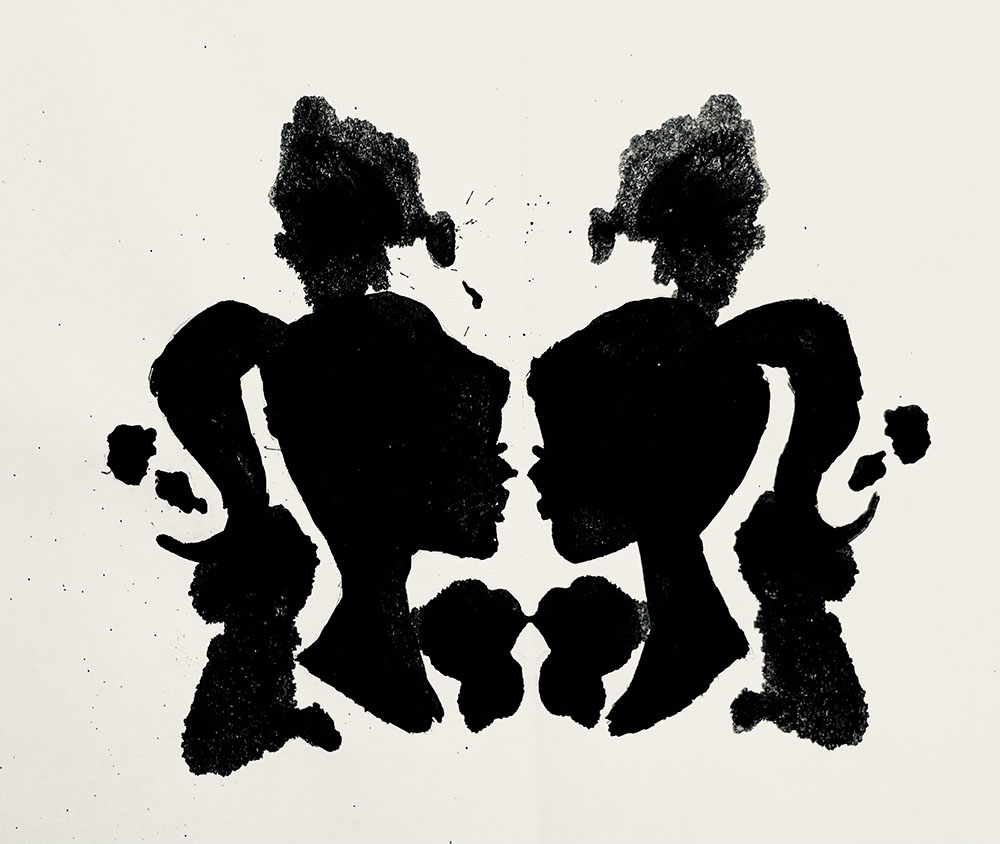
BR: I’m looking at a Rorschach blot right now and let me tell you, those dwarves are pretty impressive.
CW: Well, we’re going to be talking about some sketchy psychological tests this week, but before that, Ben, there’s something I’m feeling a little bit skeptical of this week. Oh, what’s that?
(MUSIC)
0:01:40
CW: Well it occurs to me that there’s a lot of people out there who aren’t really familiar with the whole skeptical movement and homeopathy is one of those things that’s just so well discussed and almost…
BR: So self-evidently bogus.
CW: Yes if I can use a really bad pun here it’s pretty oversaturated with home homeopathy debunks there’s there’s so many things you can read about why homeopathy just doesn’t work from the James Randi’s annual drinking of a ton of homeopathic sleeping remedy to multiple articles on science-based medicine and everything, but there are still so many people out there spending their good hard-earned money on it. I got a message from an old roommate of mine, Cary, who lives out in Michigan now. Hi Cary, if you’re listening, asking me, “Hey, what can you tell me about Ociliococinum?” Am I saying that right, Ben, Ociliococinum?
0:02:46
BR: I think so. If memory recalls, that’s either a, I think it was a Land of the Lost porn parody, but I could be wrong.
0:02:54
CW: Well, I’m not great at pronouncing it because I sure have never gone into a pharmacy and asked for it. But it’s O-C-I-L-L-O-C-C-I-N-U-M. Ociliococcinum. And it’s put out by Boiron, B-O-I-R-O-N, a prominent maker of homeopathic remedies. And my old roommate friend told me that she was going a little bit batty because everybody at her office was taking this stuff. And she approached it from an interesting angle. She’s been to law school. She knows her way around how to research something. And she delved into the legal history of homeopathy and how some of this stuff got subsumed into the Food and Drug Administration type auspices. And that’s a whole nother episode. We could go down that road for like an hour talking about the 1930s and the Senator who was also a homeopath and the various bills that it’s been slid under and the very limited testing it really has to undergo. But I can honestly make a, I can honestly see the logic there because why would you need to test water to make sure it has no drug effect? There’s nothing in it.
0:04:05
BR: Funny how that works.
0:04:06
CW: But I decided to sort of do a little kind of delve into a ciliococcinum and give people a cliff notes version. If you have people in your office who are swearing, oh, well, it worked for me. Let them know exactly what is working for them. So they know.
0:04:23
BR: Now back up, you didn’t say what it’s used for.
0:04:26
CW: It is a flu remedy. It is used for flu and cold.
0:04:30
BR: Okay.
0:04:31
CW: So it’s fine, people are gonna say it works for them, but it might behoove you to let them know what exactly is working or what they think is working. Now from the website, oscilio.com, I love how you can sort of pick out the red flags on the actual marketing copy from the sellers of this. And I quote from the website, unlike other flu medicines, Ociliococcinum is non-drowsy and has no known interactions with other medications or supplements. It won’t mask symptoms that may develop or indicate a more serious condition.
0:05:07
BR: Oh, hold on. It won’t mask the symptoms. So in other words, the symptoms you’re complaining about, such as pain, nausea, sleeplessness, runny nose, congestion, those won’t be masked at all. You won’t get the full force of those.
0:05:26
CW: You would not want a medication to interfere with your full enjoyment of the flu symptoms that accompany the flu. This is what they’re advertising. So that just literally made me laugh out loud. That’s the only reason I buy medicine of any kind, is I want my symptoms to be fully masked. So anyway, there are a lot of really good breakdowns on what Ocilliococcum actually is. I highly recommend one written by Dr. Mark Crislip, C-R-I-S-L-I-P, and that’s on science-based medicine. He titled it, oh so, Psyllium Coccum and other flu bits. And just to go over what it actually is, it gets its name. It’s got a fancy Latin name, so that kind of makes it sound like it’s magic or really scientific. But to break it down, it’s oscillating, a psyllium, and cocci, bubbles. In other words, there was a around the turn of the century there is a doctor who didn’t quite understand Brownian motion or how things worked under a fancy new microscope. So he saw these tiny little bubbles when looking at samples of various flu effluvia. He saw tiny bubbles that were moving around because of Brownian motion, which again he didn’t quite understand Brownian motion. And he decided that those shaky little bubbles, well, that must be the flu. That must be the pathological entity that makes the flu the flu. So he then he was like, oh, I noticed the same sort of shaky bubble thing when I was looking at a duck liver underneath a microscope.
0:07:13
BR: Well, there you go.
0:07:15
CW: Ergo, ducks are made of flu. And I know it sounds like Monty Python. It sounds very Monty Python, but I’m not kidding here.
BR: No, it’s the same. It’s it’s it’s very parallel with it’s identical to the homeopathic notion that the water has memory.
0:07:30
CW: Yes. Well, it says since ducks were obviously made of the same pathological stuff that makes flu bad, like cures like. So you want to take the duck liver and dilute it completely beyond recognition and give it to your patients for the flu. I ate some chicken livers like just the other day and I must have had a good two or three ounces of chicken livers fried up in eggs, so I ought to be cured of flu for my entire life if bird liver is the miracle panacea that it seems to be.
BR: But did you dilute it enough? See, you need to take the livers and then throw them into the swimming pool and then take a sip of the water, and that’s when it really gets potent.
CW: Yes, that’s the other thing. So we’ve got multiple levels of absurdity here. We’ve got the absurdity of I see bubbles in flu and I see bubbles in duck tissue, therefore ducks are made of flu. That’s ridiculous level one. Ridiculous level two, that means since the bubbles are here and the bubbles are there, if I take this, that’ll cure me of that. That’s ridiculous level number two. And ridiculous level three is the fact that they dilute it to the point where there is less than the mass of a proton of the quote-unquote active ingredient left in the nostrum.
BR: And they will admit this, right?
0:09:06
CW: Yes, again, a thing you can do easily at the office if somebody’s taking a ciliococcinum, Google the phrase, what is the active ingredient in Osseococcinum? And I’ll read it right off of Google here. The ingredients of a one gram tube of Osseococcinum are listed as follows. Active ingredient, anis barbarae hepatis et cordis extractum, parentheses, extract of Muscovy duck liver and heart.
0:09:32
BR: Oh, it sounded like something I saw in a Harry Potter film.
CW: Yes, 200 CK HPUS, one times 10 to the negative 400 G, which is much less than the mass of a proton. So yes, if you have somebody who insists, oh, I’m buying this flu remedy because it worked for me, let them know that colds and flu symptoms do resolve on their own. Let them know that, hey, don’t worry, it’s not going to mask any of your flu symptoms according to the manufacturer themselves. And so that you know, one, it’s based on the fact that ducks are made of flu, therefore…
0:10:20
BR: It’s sounding sketchy already here.
0:10:22
CW: Bits of duck will cure your flu and you got to dilute that bit of, you know, duck until it’s less than the size of a proton. And if you could accept absurdity number one, absurdity number two, and absurdity number three, enjoy your homeopathic remedy. Enjoy. So, now that was how my week went. Have you noticed anything that perked up your skeptical radar this week?
0:10:51
BR: Something quite similar in fact. Another bit of sketchy pseudo-scientific nostrum. Something called the catnip cocktail.
CW: Oh, we’re moving from ducks to cats.
0:11:00
BR: Yes, well, kind of. So this is actually sort of the latest drug moral panic of which there are many. One of my favorites is jemken. Are you familiar with jemken?
0:11:16
CW: I can’t say that I am. It sounds like a DJ.
0:11:19
BR: DJ Jemken, very popular in 2007.
0:11:23
CW: I think he’s playing at the MGM later.
0:11:26
BR: Yeah, there you go. No, Jenkem is actually, and sensitive listeners may want to just fast forward to this next part, but Jenkem is allegedly a hallucinogenic inhalant drug made from fermented feces.
0:11:41
CW: Wow.
BR: Yeah, yeah.
0:11:43
CW: That’s some powerful recycling.
BR: That’s some powerful shi – yeah, I mean, kids today, meaning in 2007, there was a huge panic over this thing because the idea was that what are kids doing? Kids are pooping in plastic bags and inhaling it to get high. This is a thing.
CW: I’m glad I missed that whole little panic.
0:12:09
BR: You did. Well, maybe maybe you’re more familiar with the vodka soak tampons.
CW: Wow. OK, I think I vaguely remember something about that in the news.
0:12:19
BR: Yeah. Yeah. Another another drug panic scare. Allegedly college age women were in order to get drunk even faster because apparently drinking just straight from the bottle is not fast enough. They would allegedly soak tampons and vodka and insert them.
CW: Wow.
BR: Yeah, and then of course there’s the the bath salts scare of 2012 When Florida man because…
CW: Yeah, I remember that that one was memorable.
BR: Of course is Florida man, a guy named Rudy Eugene was accused of attacking a homeless guy and biting his face and ripping his flesh off. And this led to rumors that he had been on something called bath salts that made you a cannibal. So for a few months in 2012, this was a, I don’t want to say it was a legitimate news story, but it was a story that circulated widely.
0:13:12
CW: Yes, I saw quite a bit of coverage about face eating.
0:13:16
BR: Yeah, well, the rejoinder to that, which was not really covered, was that he actually was not on bath salts at all. He was on marijuana.
CW: You know how much coverage I heard about that?
0:13:25
BR: Let me guess. Zero.
CW: Yeah. Zero.
0:13:28
BR: Right. So there is a pattern here, right? There’s there’s some new terrifying drug scare that the public needs to be aware of, a hidden danger, and it’s what kids today are doing, and what’s out there, and the latest scary thing, and then as the scare and panic sort of progresses, it sort of fizzles out, and that’s the case with the catnip cocktail. So the catnip cocktail, it actually doesn’t have catnip in it, and it’s actually not for human consumption. It’s for dogs and cats.
0:14:03
CW: So this is like a brand name, it’s like a little jar you can buy that says catnip cocktail?
0:14:07
BR: Exactly.
0:14:08
CW: Oh, okay.
0:14:09
BR: Yeah, so the jars are $22.50 a bottle, plus shipping, of course. They are marketed as, quote, the ultimate mood enhancer for your dogs and cats.
0:14:18
CW: Okay.
0:14:19
BR: Well, whatever.
0:14:21
CW: Is your cat sometimes moody, Ben?
0:14:24
BR: She is, but she’s a cat, so that should be expected.
CW: That’s how you tell they’re working.
0:14:27
BR: Exactly, then you know.
CW: If your cat suddenly is not moody, then you’ve got a broken cat, you need it.
BR: Right, and exactly as the amoxicillin, whatever it was you were talking about earlier, this is marketed as having, quote, helpful pain-relieving properties with non-additive ingredients.
0:14:51
CW: Oh, properties. Oh, okay, that’s a clever one.
0:14:55
BR: Yeah, so helpful pain relieving properties.
0:14:59
CW: This bottle has a pain relieving aura about it. I will sell it to you for $22.
0:15:06
BR: Right, well, and I think by non-additive ingredients, I think they meant to say non-addictive because non-additive doesn’t actually mean anything. Well, that is what’s literally on the website. Anyway, so oddly enough, the website does not contain any testimonials from dogs or cats, which I frankly expected it to. You know, Fluffy says, this is the best thing ever. Or certainly nothing from licensed veterinarians either.
0:15:34
CW: Okay.
0:15:35
BR: But this is not the problem. The problem is not that people are giving this weird, random catnip cocktail, which actually has no catnip in it, to dogs or cats. The problem is, allegedly, that this is a new scary drug that is being misused. It does not have an actual human label usage for it. It’s not even officially for dogs and cats. As you can imagine, the requirements for marketing something to humans is fairly high unless, of course, it’s a supplement, in which case they can dump anything in there. But the bar is even lower for mood enhancing things for dogs and cats, as you can imagine.
0:16:17
CW: Okay. So this is like a thing sold in like head shops for pets.
0:16:21
BR: Yes, something along those lines. And according to the San Jose Mercury News, it has been linked in some way to several incidents where police in a northern New Jersey suburb encountered alarming behavior from people who appeared to be under the influence of this little-known drug.
0:16:36
CW: They appeared to be under the influence of it?
0:16:39
BR: Yes, and let me just give you the context here. So, the Business Insider offered this headline. They warned that it is a dangerous drug called catnip cocktail is on the rise and it’s driving people mad.
0:16:53
CW: Okay.
0:16:54
BR: Literally the headline. I, you know, I punched up a bit, but that is the headline.
0:16:58
CW: Is it even a drug though?
0:17:00
BR: I mean, well, yes and no. So on the website it does list several ingredients. Apparently it is non-FDA approved and it contains caffeine, which is fairly common, and another ingredent which allegedly metabolizes into a sedative akin to RHB, which is the date rape drug.
0:17:20
CW: Oh, OK.
0:17:21
BR: So, again, this is the current panic that’s going on. And but there’s reasons to be skeptical of this. And as I mentioned, it fits very clearly into a long string of similar drug panic moral scares, such as the time that we talked about.
0:17:40
CW: Okay, so just to be clear, there is a substance in there that can metabolize into a drug that is or is similar to a date rape drug.
0:17:51
BR: There is alleged to be, and I’ll get to that.
0:17:54
CW: Okay, all right.
0:17:55
BR: So this is where things get sketchy, is because even though police departments have claimed claimed that this catnip cocktail contains the effects of something similar to GHB, which is a depressant, of course. Its effects include drowsiness, loss of muscle control, slowed heartbeat, memory problems, and so on. The problem is that in the small handful of incidents that are supposedly connected to catnip cocktail, the reported behavior is the opposite. It is not a depressant, it’s a stimulant. People are being arrested allegedly under the influence of this, dancing, yelling, having erratic behavior, euphoria, things like that. Yeah, so there’s a strange disconnect here where part of the fear is that, oh, it’s just like the date rape drug. But what you’re reporting isn’t like the date rape drug, and second of all, allegedly people aren’t using it as a sedative for themselves. I mean, there’s no suggestion that it’s being used to attack anyone else. It’s basically being used as a recreational drug. So there’s lots of sketchy things about it. I was actually interviewed for Rolling Stone recently about that. And I was asked, you know, what’s the truth behind this? And again, I sort of gave the background to it. And it’s important to keep in mind that, you know, a lot of drug users mix different substances, making it difficult or impossible to really pharmacologically determine what’s what, right? I mean, if somebody has taken the catnip cocktail, but they’re also on meth and marijuana and they’re drunk, then there’s no way to tease out, there’s no way to trace out a specific behavior to a specific thing.
0:19:33
CW: Yeah, I mean, it could be a result of the catnip cocktail, it could be a result of the catnip cocktail mixed with other things, or it could be a result of the other things, period.
0:19:42
BR: Yeah, there’s just no way to know. And so is it possible that some people are using the catnip cocktail to get high? Sure, anything is possible. I mean, some people, you know, they sniff aerosol cans to get high. I mean, people who are addicted will, you know, go to any substance. But you know, just because someone was arrested with that in their possession, A, doesn’t mean they’re actually on it, they’ve ingested it, and B, doesn’t mean it actually does anything.
0:20:09
CW: So we don’t have any confirmations that the people have ingested the substance.
0:20:16
BR: That’s correct. What we have are, we have a handful of arrests, I think there’s three or four that I’ve read about, where allegedly somebody who was acting weird was caught with it in their possession, not with five empty bottles and their, you know, swinging from their chandeliers, but just in their possession. And the police and the general public link it all together and say, oh well, this guy’s acting crazy, there’s this new crazy drug, oh my god, except there’s no proven connection between the two.
0:20:45
CW: This seems like a peculiarly preemptive panic.
0:20:50
BR: It is, it is. Keep in mind that it’s also possible that it has no effect at all. Yeah. Again, it is marketed for pets and on the website it actually says, you know, this is not suitable for humans, don’t use it. So the owners of the website are aware of the scare around it and they’re adding all sorts of disclaimers to avoid getting sued. But keep in mind that it’s entirely possible that the catnip cocktail does absolutely nothing and the fact that several people have it in their possession who don’t own pets just means that they think it does something.
0:21:30
CW: Well, I guess the only sensible thing to do is wait and see. I’m sure with the attention given to this concoction, there will be some thorough testing going on, at least.
0:21:59
BR: You would think either that or what may just happen is that it just fades away. As many of these news stories do, look at the case of the bath salts cannibal, right? The initial story that goes around the world is that this crazy guy eats somebody else’s face high on bath salts. Three weeks later, the toxicology comes back and says, well, he actually was high on weed. And of course, no one wants to dig too deeply into that.
0:22:24
CW: Yeah, that’s strange and unusual. I’ve never seen anybody do anything like that on weed and I hope I never do.
0:22:31
BR: I would just say don’t mix weed with catnip cocktail with jenkem. That’s my advice.
0:22:38
CW: Well, with a catnip cocktail, and I predict that this could very likely be the end result of all this, catnip cocktail could just go out of business and not be produced anymore and you can’t find it after six months from now. Unfortunately, that’s not the case with jenkem. There’s no way to stop producing that.
0:22:57
BR: You just make your own.
(MUSIC)
0:23:00
CW: All right, well, let’s get into our main thing here and talk about some psychology tests.
0:23:19
BR: Yes, let’s get ready to test psych, I don’t know.
0:23:26
CW: To test the tests.
0:23:27
BR: To test the tests, yes.
0:23:28
CW: Well, we’re not testing the tests. That would take a lot of time and effort.
0:23:31
BR: Let’s get ready to discuss the tests then.
0:23:33
CW: Yes, we’re going to discuss the testing of the tests.
0:23:35
BR: Yes, very meta.
0:23:37
CW: We’re going to be a pair of testes here and see what we could do. The first one I’m gonna get into is phrenology.
BR: One of my favorite old-time pseudosciences, being a handsome bald man, the bumps in my head are there for all the world to see. It’s kind of hard to to hide my weird little bumps. And so I just have to hope that people will recognize my good nature and my even temperament and my intelligence based upon the smoothness of my noggin.
0:24:08
CW: That’s the first thing I thought when I saw your head. He looks like a nice fellow. Have you actually ever seen one of those phrenology busts?
0:24:17
BR: I have. Joe Nickell, my colleague at Skeptical Inquirer back when I was working at the main center there in Amherst, New York, Joe’s office is this amazingly cool museum slash office slash lab slash God knows what. And on his shelf there, he had one of the, I don’t know if it’s an original, but certainly it was a replica of a phrenology bust and it was pretty cool.
0:24:40
CW: I’d like to get my hands on one. There’s a local guy named Lonnie Hammigren out here and he’s famous for being one of governor’s of Nevada, and also just kind of an eccentric character who is a hoarder of types, and he has a ton of stuff. And every year he opens up his house to let people in and see what he has, and people tour the estate. And he’s got two phrenology busts. And a while back, he had a big estate sale and got rid of a lot of stuff. And I tried to get one of those busts, but I was outbid. Ah, well, anyway, phrenology, let’s talk about it. What is it? It is basically a system of revealing personality traits and cognitive strengths and deficits as supposedly shown in bumps and shapes of the skull now that sounds kooky to us But we got to take ourselves back to like the early 19th century Psychology was not exactly a hard science back then and just even putting together things like, oh, the brain is where the conscious mind is. That was pretty groundbreaking. That’s at least something to be admired there.
0:25:48
BR: It wasn’t it self-evident as it might be today.
0:25:50
CW: Yes, people were still talking about the humors and whether or not the persona resided in the heart or the head or whatnot. But there was a German physician named Franz Joseph Gall and he sort of invented phrenology, although he didn’t call it phrenology back in 1796. He based it on some sort of correct-ish assumptions about the brain.
0:26:15
BR: Some sort of correct-ish? You know, let me just clarify that if I ever have medical professionals working on me, I don’t want them to be working on sort of correct-ish principles. I want them to be grounded in science.
0:26:29
CW: Well, in 1796, correct-ish was about what you could hope for.
0:26:33
BR: When you die from a splinter, right?
0:26:37
CW: Well, yes, you could. Anyway, but phrenologists had some really off-base ideas as well as some correct-ish ideas. They thought that the brain was composed of separate organs that did separate things and that’s kind of true. We do have different areas of the brain that handle different tasks and that’s been demonstrated by a number of experiments and brain damage situations where you have a localized injury or a tumor that affects how the brain functions and you can tell by these injuries that we do have separate things going on in separate parts of our brain.
0:27:14
BR: Yeah, as I recall, the story of Phineas Gage was sort of emerging around this time.
0:27:20
CW: Yes, that was a little later, and I actually am going to get to that too.
0:27:24
BR: I’m jumping ahead.
0:27:26
CW: See how nicely Ben looks at my notes, everybody?
0:27:29
BR: Notes? What? You have notes?
0:27:32
CW: Yes, I make notes.
0:27:34
BR: Where are these notes that I just sent? Did you send them by mail? By carrier pigeon? You know, I live out here in New Mexico and our mail is delivered by burros once a week, so maybe I missed the last one.
0:27:46
CW: Okay, well get back on your burro here and listen up. Anyway, anyway, phrenologists also thought that, now this is the incorrect part, one of the many incorrect parts of their theories here. Phrenologists thought that the brain was like a muscle where if you use certain parts, they would bulk up. And now the brain is kind of elastic, like a muscle, it’ll build up different synapses, depending on what you end up doing a lot of. But they actually thought it would like get bulky, like a muscle, like like a strapping strong man in a carnival. And those those bulges would push out on your skull and the skull would form to those shapes. And, well, that doesn’t happen.
0:28:30
BR: Well, I don’t mean to disagree with you here, but have you heard of the Credible Hulk?
0:28:36
CW: I have.
0:28:37
BR: He’s really, really smart.
0:28:39
CR: Yes.
0:28:40
BR: And he’s also, what’s the word I’m looking for, hulkish.
0:28:44
CW: Really muscular, yes.
0:28:45
BR: Yeah, so you’re telling me that there’s not a correlation there?
0:28:49
CW: Well, he is both smart and hulking with a lot of bumps, but he does not have, unless he’s a freak of science, he does not have bumps on his skull that have resulted from his bulging brain ripping through the skull.
0:29:06
BR: Okay, fair enough. I have not checked. I have once or twice in a moment of enthusiasm, I have tried to climb on top of him. I don’t mean that in a weird way, but I am, you know, six feet tall and over 230 pounds. And even then it was like trying to get on a horse. It was just like, oh, what is this thing on me? He just shrugged and I flew off. It was really embarrassing.
0:29:28
CW: I would pay good money to see that.
0:29:31
BR: Moving on.
0:29:32
CW: Anyway, Dr. Gall had based his initial conclusions on a very limited set of people. He basically rubbed the heads of his friends and his family. And he had taken this interest on pretty early. When he was a schoolboy in the late 1700s, young Franz noticed that classmates who could memorize long passages all seemed to have prominent eyes and large foreheads. And so from this, he kind of inferred that an organ of some kind of verbal memory must be right behind the eyeballs, pushing those eyes out and making the forehead larger, which is not correct, but…
0:30:09
BR: No, it reminds me of a series of photographs, or not photographs, a series of drawings, I think from France or somewhere, Belgium, in the 1700s. And it was this wonderful, bizarre sort of series of eight or ten drawings of different personality types. I’m sure you know the ones I’m talking about.
0:30:29
CW: There’s a bunch of different caricatures that have come out of France, but you might bethinking of the homunculi?
0:30:32
BR: No, it wasn’t the homunculi. It was, it was, they were saying, you know, if a person is greedy, they look like this. If a person is a compulsive masturbator, they look like this. The person is, and it was this whole, you know, lechery, it was this great morality tale version of these things where, watch out kids, you know, look at this vile looking fellow. Well, avoid drink if you want to, don’t look, and of course they just made these people look as horrible as possible.
0:31:01
CW: I’ll have to check that out. I’m not drawing immediately which pieces of art you’re talking about, but certainly sounds like a morality tale writ large in caricature form.
0:31:11
BR: Yes, anyway, sorry to interrupt, go ahead.
0:31:13
CW: Anyway, so he, Franz, that is Franz Gall, he drew some sort of broad judgments based on what he noticed about a limited set of people. And he also based some of his theories on some pretty offensive stereotypes of racial categories. And he ended up coming up with a number of traits like secretiveness, conjugality, combativeness, etc, were all mapped out and labeled on the phrenology head like the ones we were talking about. His method of testing wasn’t really bound by strict protocols. This is kind of before protocols were a big thing. And it was definitely more art than science. He typically just rubbed his fingers over people’s heads looking for what he determined were patterns. he would prognosticate based on that. Certainly, there was a lot of the Barnum effect going on. And as you’re grabbing somebody’s head, you’re also talking to them, asking them questions and everything.
BR: One would hope.
0:32:10
CW: Yes, so.
BR: You can grab strangers’ heads and rub them.
0:32:14
CW: Yeah, it basically sounds like what a good hairdresser could do. You get a feel for people, so to speak, both literally and figuratively. Now, in America, this just happened to hit at just the right time. Phrenology really seemed to take off. Johann Caspar Spurzheim was a student and protégé of Dr. Galls, and he worked as Gall’s anatomist. They did kind of have a falling out and split up in 1813. And Spurzheim was the one who came to America, and he began using the term phrenology. He imported the ideas in 1832 and took what was called a whirlwind lecture tour that ended up killing him, like literally. He died six months into the tour. But by the time he had, by the time he passed away, he had brought the ideas to Harvard and Yale and many other institutions and converted many, many prominent American thinkers, including Ralph Waldo Emerson and John James Audubon to the whole idea that phrenology was a legit thing and could teach us about the human psyche. Now, the national appetite at this time just happened to be really primed for such a thing. People were anxious to know the mysteries of the mind and how to decipher them in some sort of scientifically proven way. And they also wanted to know how to self-improve. This is like fertile ground here for Dr. Oz, but instead of Dr. Oz, it got some phrenologists. Now, phrenology struck a balance between free will and determinism. Everybody had faculties, and those faculties could be improved or changed, or abused and left to rot, depending on what you did with them. Just like that whole analogy of working out your muscles, you know, everybody starts somewhere, and there’s ways you can improve your muscles by working them. Some people mixed it with mesmerism and advocated Phrenomagnetism and Phrenomesmerism and other such offshoots emerged and you had a whole bunch of phrenology going all over the place in the US during the 19th century. And many people who took up the idea of phrenology had some noble aims and they wanted to push for social reform, although some of them kind of wanted to use phrenology to talk about how everybody kind of had this equal footing and had good points about them, just as often it was it was used by people to explain racist ideas like the subjugation of inferior races by other superior groups. This took place in Europe and in America too. Here phrenologists didn’t really band together and demand that the slaves be freed. Rather, they were suggesting that, well, with education in interbreeding, the lesser races might eventually be improved. And we can see this through their, you know, their head shapes and what happens when you interbreed. And yeah, it’s gross. But you see how there’s kind of hints of hints of using phrenology for good and for evil. Enter the brothers Fowler, we have American brothers Orson and Lorenzo Fowler. They caught the bug and they began touring with their newfound knowledge of phrenology. And they had the zeal of preachers because they were in fact ex-evangelists, both of them.
0:35:30
BR: Great.
0:35:31
CW: So they started preaching, quote, the truth of phrenology. They opened a popular New York office called the Phrenology Cabinet, a place that was nicknamed Go Gotha. It housed a huge collection of skulls and was both a research site and a museum open to the public. As phrenology caught on more in the popular mindset, employers started insisting on workers with particular lumps and bumps on their phrenological profile and women styled their hair to show off certain cranial features. Bald men such as yourself started bragging about certain lumps and bumps they had.
BR: Damn right.
0:36:13
CW: And in a particularly morbid and sketchy move, the Fowler brothers ordered a cast of the skull of Aaron Burr after he died in 1836. No surprise there, their post-mortem examination of the skull cast found that his brain organ lumps corresponded to secretiveness and destructiveness far more than the average person. That seems like a really gross thing to do. That kind of offended me.
BR: Definitely sketchy.
CW: Yeah. Now, there also seems to be quite a crossover into transcendentalism, not just Emerson, but also Walt Whitman was a big into phrenology. He quoted his own phrenological reading quite a bit and his book Leaves of Grass Was actually published by the Fowler brothers. They were also dabbling in the publishing business now between rubbing heads and They published a slew of other types of self-help books as well hydrotherapy and other or other forms of quote-unquote therapeutical things available in the 19th century. So they were sort of like dr. Oz times two back in their day. Other writers like Edgar Allen Poe and Herman Melville bring up phrenology in their writing and social reformers latched onto it, like I said, and people just in general thought it was a key into your inner psyche and could give you hints as to how you could improve yourself. There were some skeptics.
BR: Yay. Do tell. This is, this is where it’s getting better.
0:37:37
CW: John Quincy Adams disparaged phrenology quite a bit. And Mark Twain, Twain has an interesting story. I think you’ve probably heard about this because one of the sources I dug up was actually from the Skeptical Inquirer about Mark Twain debunking phrenology.
0:37:51
BR: I remember that reading that and it was, it was a great story.
0:37:54
CW: From the January, February, 2002 issue of Skeptical Inquirer, it was an article titled, Snaring the Fowler, Mark Twain Debunks Phrenology by Delano Jose Lopez. Twain was familiar with the technique of cold reading, and he was well aware that the readings that phrenologists offered people seemed pretty similar to cold reading in how they were kind of vague and flattering. There was never a really terrible phrenology reading. All of the different aspects of your head could be cast as, you know, good attributes, just depending on how you use them. Twain visited Fowler, Lorenzo Fowler, I believe, using a pseudonym, and he might have disguised himself too, but he doesn’t mention it if it did. “I came out safe and sound in the end, which lost their value and amounted to nothing because each of the hundred was coupled up with an opposing defect which took the effectiveness all out of it.” So Twain then reports that there was one stunning cavity and that represented a total lack of a sense of humor, which in Mark Twain is hard to believe. He was the most world-renowned satirist and humorist, has a dent indicating that the guy’s just got no sense of humor whatsoever.
BR: I’m skeptical.
CW: Yes, so Twain then returned three months later, and this time, rather than going incognito, he identified himself and sat for another reading. Fowler, for the second reading, I’ll quote Mark Twain again here, once more he made a striking discovery. The cavity was gone and in its place was a Mount Everest figuratively speaking, 31,000 feet high, the loftiest bump of humor he had ever encountered in his lifelong experience.
0:39:57
BR: Wow, that’s a turnaround.
0:39:59
CW: He must have been working out that humor muscle like really hard over three months. Anyway, Lopez points out that this was, it was still just a single blind test, as Twain obviously knew what was that what was going on. And it’s always possible that Twain didn’t recall the situation quite accurately. Or he may have even colored it a bit as as humorists are known to do. Twain claims that he kept the charts of both readings, but they do appear to not have survived. Now, Twain also had a third reading some 30 years later by another phrenologist in 1901, not either of the Fowler brothers, but one of their students, I believe, and that reportedly relegated his humor to merely a habit and said that his overriding features were now seriousness and a concern for humanity. And indeed, Twain’s work had kind of gone off in that direction. He was being a little bit less jokey and funny and much more of a serious author about many things involving the human condition.
0:41:00
BR: This would probably be common knowledge, too, because by that time he was a pretty well-known author and so.
0:41:06
CW: Oh, yes.
0:41:07
BR: Presumably, it wouldn’t. There are other ways to determine whether or not Twain’s contenthas changed or not.
0:41:13
CW: Yes, in fact, Lopez points out that the person who gave Twain the third phrenology reading was obviously a much better literary critic than Fowler had been. And Twain didn’t really talk about that third one. Some historians have suggested that that might be because it kind of struck a nerve with him. Maybe he did feel it was accurate. I doubt that. Other biographers say that Twain simply was too much of a gentleman. He was too benevolent to keep kicking phrenology while it was down because by this time by the turn of the century Uh phrenology had fallen far from the favor it once enjoyed and it didn’t really need a solid debunking. It was already on its way out.
0:41:54
BR: Well as uh as we’ve discussed on the show before, uh, there’s the rubber duck syndrome. So just when you think that you’re not going to hear any more about X, take your pick, whether it’s the rear triangle or Bigfoot or astrology or what have you, it’s their old wine and new bottles.
0:42:14
CW: Yep, yep, yep. Well, a dozen years before that third reading that Mark Twain had, the publishers of Encyclopedia Britannica had actually done a pretty good job of kind of putting the first set of nails in the coffin. In 1888, they published a seven-page debunk of phrenology, pointing out that the so-called organs were theorized on very slim data, and just like fortune-telling, phrenologists relied on a few surprising coincidences. But when these did not occur, as they often did not, the practitioners simply rationalized away any discrepancies. In other words, they were remembering the hits and forgetting the misses. I’ll quote the Britannica here, based like many other artificial philosophies on an admixture of assumption and truth, certain parts will survive and become incorporated into scientific psychology, while the rest will do will in due course come to be relegated to the limbo of effect heresies.
0:43:12
BR: The limbo effect heresies. I love it.
0:43:17
CW: And to sort of give phrenology a little bit of its due here, it was extremely loosely applied by a lot of these practitioners and traveling head readers. And it was not on the right track, but it was a precursor to a lot of the science of neurology in that it just it tried to map out brain regions with their functions or traits. And it did recognize that the brain was the seat of the mind, and that the mind was not some united single force, but composed of independent pieces that sometimes didn’t agree with each other. During the heyday of phrenology, there were real anatomical things going on and being discovered. As you mentioned, Phineas Gage, who was a rail worker involved in an explosion that shot a railroad spike right into his skull. He survived and he could talk and walk and function, but his temperament completely changed. And he went from being a nice, affable fellow to kind of an argumentative dick. Nelson Sizer visited Phineas Gage to look at his injury and give his own prognosis of it. And he said he determined that the changes in Gage’s personality were because the spike had damaged regions of his brain that corresponded to the phrenological regions of benevolence and veneration. So that just kind of proves you can be right for all the wrong reasons.
0:44:37
BR: Hmm. All right.
0:44:39
CW: Yeah. Now, phrenology does make an interesting appearance in the year 2018. Did you know that?
0:44:45
BR: I did not know that.
0:44:46
CW: Well, there was an article that came out by Harriet Dempsey Jones, who is a postdoc in cognitive neurosciences.
0:44:54
BR: Shout out to HDJ.
0:44:56
CW: Yes, she was writing for the conversation in an article titled, Neuroscientists Put the Dubious Theory of Phrenology Through Rigorous Testing for the First Time, showing it’s never too late, I guess, to debunk something. These researchers at the University of Oxford have access to a gigantic data collection of 6,000 MRIs of people’s brains mapped out along with their corresponding data on their lifestyles, cognitive tests and demographics. And they just kind of, they instead looked at the shape of the skull in the MRIs that they had available.
0:45:33
BR: I could see where they were going with that.
CW: Yeah, so rather than shielding the image of the skull, they took a distinct look at the skull shape and the lumps and bumps that a phrenology supposedly measures, and they were able to pull 23 items that they could roughly correspond to provide some sort of metric that they could glean from the demographic information. For instance, phrenology might call a particular region a tune, and you could measure it in today’s demographics by, okay, how many people are actually musically inclined or have a career in music, just like a phrenological term like eventuality, which meant how receptive a person would be to education, could be measured today in terms of how much schooling somebody has completed. So no big surprise, they did not find any meaningful statistic correspondence with the phrenological bumps of people’s skulls and the so-called traits that phrenology was meant to measure 200 years ago. But as if to put an extra set of nails on that coffin, they kind of double disproved it. Not only was there no correlation between the predicted traits based on skull formations, there was no correlation between the skull formation and the brain shape. So the brain is obviously the brain is not causing bumps on the skull, but also conversely, the skull is not dictating the shape of the brain. You have thickness and thinnesses and so people’s brains are not going to fit their skull shape as much as a phrenologist might think it does. Dr. Dempsey-Jones adds with my favorite type of thing, a pun. She said, all in all, it appears as the researchers themselves state that the quote digital technology of their time, feeling the scalp with the digits, aka fingers, was no match for the digital MRI technology of the current day. Ba-dum-bum.
0:47:52
BR: Okay.
0:47:53
CW: That was all. I read that whole thing just to get to the pun.
0:47:58
BR: Long walk.
0:47:59
CW: Yeah. Okay.
BR: What’s the status of phrenology today? Is it entirely dead or are there any practitioners in the alt-med industry that actually take it seriously? What’s the current status? Do you know?
0:48:11
CW: There are all sorts of ologies. If you go online, you can find people who still adhere to iridology where they think you can diagnose all sorts of health problems by looking at the iris of somebody’s eye.
BR: Not the ears? Iridology, come on.
0:48:28
CW: And I think there’s one where you can look at the ear, too, and do a little acupuncture on just the ear, and it’ll cause all sorts of things. But I was not able to find anything about people practicing phrenology today. It seems to have died a thorough death, and it is relegated to antique busts of people’s heads with regions mapped out in black.
0:48:50
BR: For now.
(MUSIC)
BR: Well, let’s go on to another sketchy pseudoscience, at least one that for modern ears is probably a little bit more more highly regarded certainly in some fields and that is the the Rorschach test.
CW: That’s one of my favorite characters in the Watchmen.
BR: Yes. Yes. He’s got the the blot on his face.
CW: Yes many blots
0:49:27
BR: Well, the original Rorschach – most people know sort of the outlines of it It’s a it’s a series of ten ink blots. Some are colored some are black and white. They were created about a century ago by a Swiss psychiatrist, Hermann Rorschach, and they are what psychologists call a projective test. So you’re basically looking for subjective responses, so there’s no right or wrong answer because you’re just supposed to give, you know, what are your thoughts on this blot? What do you make of this?
0:50:03
CW: How does this make you feel?
0:50:05
BR: Exactly. Let’s discuss your childhood as you look at this inkblot and tell me how this relates to your love of animals. The premise behind the test is that the answers that are provided by people who suffer from a variety of mental illnesses such as schizophrenia will be significantly different than those provided by people who aren’t afflicted by that. And there’s a couple of interesting angles to the Rorschach. One of them is that the inkblots are actually, they’re actually supposed to be a secret.
0:50:39
CW: Secret, how so?
0:50:41
BR: Well, I don’t know if they’re copyrighted. They might be, I don’t know. But certainly the book in which they originally appeared is copyrighted. And so the practitioners of the Rorschach and certainly its adherents have made a concerted effort to keep the Rorschach blots out of public view. And the reason for that, I first saw Rorschach in a book called Big Secrets by William Poundstone, which came out in the mid-80s. And it was sort of, you know, secrets of X revealed, blah, blah, blah. And it was, I think Poundstone did a couple of really good books. He did one on paradoxes, if I’m not mistaken. I have three or four of William Poundstone’s books on my shelf. But anyway, this one particular one, Big Secrets, it shows the Rorschach plots and sort of discusses what they’re supposed to reveal and basically how to beat the test. And so that’s why there is some secrecy regarding the Rorschach blots.
0:51:38
CW: Now, I just did a Google search for Rorschach test and I’ve come up with like several thousand images of all the Rorschach blots.
0:51:45
BR: No.
0:51:45
CW: No?
BR: No, you haven’t.
0:51:46
CW: I haven’t. Okay.
0:51:47
BR: No. What you have found, I mean, I’m sure some of them are the actual Rorschach blots, because the Rorschach is a projective test. There are many, many, many pseudo-Rorschach blots.
0:51:59
CW: Well, there’s one here that looks like a stormtrooper and another one that looks like Donald Trump. So I’m pretty sure all of them are.
0:52:08
BR: Yeah, my point is that if you do a Google search, many of them, I’m sure a few of them are actual, you know, actual official Rorschach plots. Many of them are just basically ink plots. That’s, you know, so there’s it’s very, very easy to create a fake Rorschach plot. And it’s frankly, just as just as valid as the non-ones, as the official ones. So anyway, there was some concern about the publication of the Rorschach blots and some guidelines in terms of what they would suggest, precisely because the concern was that if people learned what some sort of so-called normal responses were, that they could beat the test. And so if you were concerned about passing a Rorschach test and you did a little bit of searching and then you say, oh, well, you know, if I just say that this looks like a bird, then, you know, instead of, well, this looks like, you know, a bloody dinosaur smeared in feces on top of Donald Trump, you know, obviously the more gruesome and gory and frankly the more interesting they get, the more likely you are to be marked as deviant.
0:53:21
CW: Well, that seems like, okay, it seems like if you have the presence of mind to go online or get some sort of book published in 1983 and learn your way around the secret Rorschach blot so that you know what to say, it seems you also would have the presence of mind to just sort of self-censor yourself and say, oh, that looks like a butterfly that looks like a kitty, you know, rather than that looks like, you know, you know, like my mother with a knife through her eye or something.
0:53:50
BR: Right. Well, you know, as as it turns out, and this is not going to be a big surprise to you, our listeners, the biggest problem with the Rorschach is not the revealing of the blots. That is that is by far the least of the problems. The real problem is that there are very serious problems with its validity, its reliability, its validity, the norms that are associated with it. Again, the whole premise is that a mentally disturbed person will respond in one way to a given ambiguous stimuli, in this case a Rorschach, whereas somebody who doesn’t have that affliction would respond differently. And there’s no good evidence that the Rorf-Rot can in fact differentiate between the two.
0:54:32
CW: Okay. So it’s essentially a worthless test.
0:54:36
BR: Well, I wouldn’t say it’s entirely worthless. I mean, it’s possible. I mean, look, like any projective test, it can tell you something. In theory, it can tell you something, right? if you show somebody a dozen blots and if their answers are indicative of disturbed perceptions, it’s a battleship feeling out blood and bile or whatever, or if it’s, you know, if it’s a mountain. So it’s not entirely worthless if you understand its limitations, which are unfortunately pretty broad.
0:55:10
CW: So hand in hand, like as a conversation starter, it can help a clinician gauge somebody’s mental state like the same way that you could say, I want you to look at the ficus plant in my office here and tell me what you think of ficus plants.
0:55:27
BR: Sure, or again, there’s nothing unique to the Rorschach. You can do the same thing with photos of clouds or just sort of free association. So it is true that in some very disturbed individuals, you will get a pattern of aberrant responses that are that by itself don’t diagnose a given mental illness, but might you know be an indicator for that and Scott Lilienfeld, who’s a professor of psychology at Emory University, he co-authored a book titled What’s Wrong with the Rorschach? He’s done great work on it. And if anyone was interested in the scientific problems with the Rorschach. It’s a great title, it’s very self-evident. He surveyed more than 50 years of research and studies on the scientific evidence and he included that it is, quote, weak at best and non-existent at worst. So keep in mind, again, the Rorschach basically emerged about a century ago, and it’s already been subjected to what in theory are valid research methodologies trying to establish this validity, but much in the same way that Freudian theory, much of that is largely fell out of favor and in many ways, of course, is considered unfalsifiable and just basically BS. But overall, the problem is that studies show that about half the normal Rorschach test takers will be labeled as having distorted thinking regardless of whether they actually exhibited any pathologies.
0:56:51
CW: Well, that’s unfortunate.
0:56:53
One question that comes up is, of course, well, why is it still used today? And it is still used today in some places. I think part of the answer is the same reason that phrenology lasted so long, or bloodletting, you know, the fear of the humors. It’s tradition. You know, clinicians are trained to believe that certain methods are working, and they don’t necessarily challenge them. They say, well, I read about this, this is a projective test, maybe they’re Jungian or Freudian, what have you. It takes time for new clinicians to basically be subjected to science-based, evidence-based criticism such as by Lilienfeld and others, to finally weed out the people who are finally using the Roarshak. There’s a lot of inherited wisdom, both good and bad in psychology and psychiatry.
0:57:40
CW: Well, yeah, I imagine people get invested too. You buy yourself a set of the Rorschach cards, you learn how to use them, it becomes part of your repertoire and I’m seeing that in a lot of the psychological tests that we were looking at.
BR: Absolutely.
(MUSIC)
0:57:54
CW: Well, much like you mentioned with the Rorschach test being pretty ingrained in practitioners who are using it and phrenology for that matter being ingrained in people who had invested all the time to learn the different procedures, there is a test that is out there right now that is pretty ingrained, that is getting some pushback from the academic fields, but is pretty entrenched in the commercial world, and I’m talking about the Myers-Briggs type indicator.
0:58:36
BR: Yes, I remember that from my university work. That’s the INTJ, EMT, different axes, right?
0:58:45
CW: Yeah. Have you ever taken it?
0:58:48
BR: I have. My personality type was INTJ. I think it’s introverted thinking, feeling, judging or something or other. I have taken it and I remember getting the results back and thinking, oh yeah, that’s me. Then later saying, hold on, hold on, hold on. Lt me look at the other ones… You know, that could be me too.
0:59:10
CW: Yeah, there’s definitely some Barnum going on here. I took the Myers-Briggs type indicator test back in college, I think. I think I may have taken it in high school and in college, and I can’t for the life of me remember what I was, and I probably came out as two different things. Now it actually has kind of an interesting origin story. It’s based on the work of Carl Jung, and Jung, as you know, had been working with Freud in the new field of psychoanalysis. But by 1920, he had split with Freud and in 1921, he published psychology type in which I’m not going to be able to say in Swiss like he would, which explored the concepts of introversion and extraversion. And that’s extraversion like not not like extra virgin olive oil, but just you know how extroverted a person is, versus how introverted. Now, introducing to the mix a mother-daughter team, Katherine Cook Briggs and her grown adult daughter, Isabel Myers. This was during World War Two, and both of them were avid readers of psychological books and Jung’s theory of different types of personalities really kind of caught their imagination. Since it was during World War II, a lot of women were being called to the workforce to replace the men who had gone to the front lines. Catherine Cook Briggs was motivated to create some sort of psychological test or some sort of personality test based on the work of Carl Jung that might help place women in jobs that would be well suited to them. The way that people usually got placed into jobs was based on their job experience, but you had this vast group of female workers who really didn’t have any experience until all the men left for war. So at least it was something. They figured that with a test to determine a personality type, it could at least help in some way get people placed into jobs that would work out for them during the wartime effort. So, based on Jung’s work, Briggs and Myers worked together to formulate their own framework, and they based it on four different axes. Introversion versus extroversion, sensing versus intuition, thinking versus feeling, and judging versus perceiving. So, according to Myers and Briggs, everybody fit somewhere in the 16 different possibilities that resulted from picking one or the other among these four dichotomies. Now this is what they were coming up with in, you know, the 1940s. Does it still kind of ring familiar to you as somebody who took the test in recent years?
1:01:51
BR: Yeah, it sounds like it hasn’t changed very much at all in the in the in the decade since it was first introduced. I, as I recall, you know, a lot of times with these tests, you will see an R at the end or like a two or three indicating that the, you know, the test has been sort of updated, hopefully with additional validation, but not necessarily. So it could be that I took the Myers-Briggs, you know, two or three or R or whatever it was. It’s been a long time, but it sounds about right.
1:02:24
CW: Well, interestingly enough, there’s a couple of forces at work that have kept this test from evolving the way that standard scientific work tends to evolve. It’s essentially pretty much the same as it was when they first developed it. And they were finding that they did take about two decades to refine their test. And with the help of Catherine’s husband, Isabel’s father, who was the director of the U.S. Bureau of Standards, they were able to recruit about 5,000 George Washington University medical students and have them serve as early test subjects. So after doing some work with the students, by 1975, the test was on the market under a distribution deal with a company called CPP. More than 2.5 million people a year these days take the test. It’s used by more than 10,000 companies, 2,500 colleges and universities use it, and 200 government agencies. The military, the CIA, and the State Department have used it for decades, and it rakes in about $200 million a year in revenue. And the grandson of Katherine Cook Briggs and his wife are the copyright holders right now, at least they were. I believe the grandson has passed away fairly recently and his ex-wife is in her 90s. So when they pass away, the copyright will pass along to a foundation. But it’s a very valuable test.
1:03:49
BR: Valuable financially.
1:03:52
CW: Valuable finacially.
BR: But is it also valuable for use in psychology testing?
CW: Well, there’s the rub and we’re going to be getting to that. Yes, the test is pretty unchanged, but there have been hundreds of other products developed to go along with it. So you can get the Myers-Briggs coaching guide, the Myers-Briggs extra little quiz, and there’s all sorts of little corporate tools you can buy to go along with your Myers-Briggs test. But the test itself is pretty unchanged. It’s very marketable, Just like phrenology and your average horoscope, it is kind of a judgment-free assessment. None of the personality types are really inherently better or worse than the others. They all have strengths and indicate a human being who can contribute in different ways to a corporate structure or a friendship or a marriage. You’re not going to have anyone who takes Myers-Briggs and gets as a result, hey, you’re a loser and you’re unemployable and you have no redeeming qualities. So…
BR: Right. No, your friends and parents will tell you that.
CW: Yeah, you got other people to tell you that, but the Myers-Briggs test is really safe. You can give it to all your employees and you’re not going to crush any of their egos. It fits in with the corporate development trends of the recent past, you know, yay, synergy and team building and, you know, let’s all take this test and find out what our inner makeup is so that we can better use it to contribute to the workplace synergy.
1:05:21
BR: To go along with the motivational poster.
1:05:24
CW: Yes, yeah. And it’s not really regarded as academically sound. Part of the reason has to do with its commercial success. Specifically, it’s a copyrighted test. And the fact that it’s copyrighted makes it difficult to adapt and streamline as new things are learned about psychology. Science has to be malleable. That’s how it works. That’s like a defining feature of science. It changes. It takes on new iterations when we learn new things. And with businesses and copyrighted material, that’s not so much possible. So now let’s get into the doubts that have been raised, especially recently about Myers-Briggs. Some psychologists have described it as almost a cult. And the way that the business of Myers-Briggs is run, it does almost kind of smack of a multi-level marketing scheme. People pay money to take the test, and other people pay money to become certified administrators of the test. As a Washington Post article from 2012 states, no major journal had published any research on the Myers-Briggs, which is a red flag for academics. There seems to be kind of a divide, like the corporate world uses it, but respected psychologists, even the ones that are serving on the board of CPP, won’t do research on it or back it up. That sounds a little sketchy to me. Yeah, it does. And Lillian Cunningham, who wrote the Washington Post article from 2012, that I looked at, she sums it up pretty well by saying, it’s a classic chicken and egg problem. No major journal has published on it. Therefore, no elite academic will support it. Therefore, no major journal will publish on it. So it’s kind of a kind of a cyclical problem there. The fact that it was based around Jung’s work is one of the things holding it back from getting academic credentials. While Jung was creative and he came up with some really interesting theories, he was kind of, you know, a product of a time where psychology wasn’t really an empirical science. It was a bunch of guys talking about weird stuff that they kind of intuited was correct about the human psyche. And the way that Myers and Briggs approached the development of the test was backwards. They came up with the framework and then they did the research, not the other way around.
1:07:44
BR: That’s no no, that’s that’s not how you do that.
1:07:48
CW: Yeah, well, they made all their index cards for their personality types first. And then when they talked to those 5000 students, they just kind of pigeonhole everybody according to the index cards. So that is putting the cart before the horse. Another issue is the tests reliance on all or nothing binary choices. You are either an introvert or an extrovert, one or the other. It’s black and white. And as you well know, life and people simply aren’t like that. Everybody has nuance. The nature of the binary choices are a problem. In MBTI speak, you are either thinking or you are feeling. You know, they’re set up as opposite sides. Yet people can be both thinking and feeling, and they often are. People with higher rational thought skills are usually found to also be good at managing emotions, and they feel things deeply. It’s not an either or thing. And even the proponents, even the people who fully believe in the merit of the Myers-Briggs test, describe it in really kind of fuzzy terms, like it’s a religion or a horoscope. Brian Dunning of Skeptoid Fame did a segment years ago comparing the Myers-Briggs to Zodiac signs. And they’re always sort of positive descriptions, which again, show the Barnum effect or the Forer effect, whichever you want to to call it. Barnum, it’s the Barnum effect if you like the showman and it’s the Forer effect if you want to credit the psychologist. But they’re basically the same thing, where people are capable of seeing descriptions of themselves in any sort of vague enough, pleasant enough personality assessment.
1:09:23
BR: Yeah, I mean, it’s, you know, I could I could really fit any of these if you catch me on the right day.
1:09:46
CW: Exactly. And and once companies once, for instance, companies find out what a certain person is in terms of the Myers-Briggs categorization there, what do you do with that?
1:09:58
BR: Yeah, I mean, that’s that’s a good question. In some ways, it has some of the same problems as the Rorschach. Okay, so you’ve done a Rorschach test and you’ve scaled normal on three of the measures and aberrant on seven of the other ones. What does that mean? Well, it doesn’t really mean anything. It just means that there’s – it’s a reason to keep going. It’s not a diagnosis of any sort. It’s not a useful be-all end-all. It’s sort of like, hey, you could take this. Yeah, I guess I could. And what’s that going to tell us? Okay, well, then why are we doing it?
CW: Yeah, an X-ray will show you if you have a broken leg, and then you put a cast on it. Whereas a personality assessment, companies that do the Myers-Briggs, although they spend tons of money on it, and they have HR people that are specially trained to deliver the test. Once they get the results, they don’t have any particular way that they make use of the results. For some companies, it’s just part of a team building exercise. Others use it as part of a job interview and some people just add it to the employee’s official profile.
1:11:07
BR: And what possibly is, I mean, the problem that I could see is that that could be easily misused. Let’s say that you have an employee who at some point is thought to be embezzling or something and they look in his file and it says, you can sometimes be secretive. Well, there you go, right? I mean, who knows how that’s going to be interpreted. I mean, the so-called experts have a hard enough time determining what that means, much less any random employer.
1:11:35
CW: Yes, and it does remind me of what I read about with the phrenology readings. You had employers back in the 19th century who were looking specifically for employees that had certain lumps and bumps on their head that indicated, you know, perhaps a non-secretive nature, good and affable, you know, good with numbers and whatnot. And when that starts entering into your employment prospects, there’s something really wrong about that.
1:12:01
BR: Yeah, and the analogy to astrology is interesting. As you noted, they’re all more or less pleasant. I mean, none of the astrological sun signs are, you’re a horrible person. So they’re all balanced in sometimes you can be X, you’re generally Y, whatever else, but it goes back to one of the questions about skepticism is what’s the harm? And I’ve personally seen cases where there will be a person who, for example, has asked me or I’ve overheard someone else saying, you know, should I date this person or should I take this job based upon their sun signs, right? I’m an Aquarius, he’s a Taurus, we’re never going to get along. Well, that’s a horrible, I mean, you could be missing out on a wonderful fulfilling relationship just because of some sun sign that you think is going to be indicative of what the future holds. And it can be dangerous.
1:12:59
CW: Yeah, unnecessarily limiting. Now looking at some academics who have poked around with the validity of the test, David Pittenger, who’s the chair and assistant professor in the Department of Psychology at Marietta College attempted to measure the Myers-Briggs in comparison with other psychological assessment methods. And looking at the MBTI’s statistical structure, reliability, and validity, his work was published in 1993 in the Review of Educational Research, and he found some problems, to say the least. Statistically, the bell curve one would expect is replaced with two lumps, again, that binary problem. To quote his conclusions, although the MBTI appears to measure something, many psychologists are not convinced that any significant conclusions can be based on the test. And Adam Grant, who’s a PhD that was writing for Psychology Today, he had a 2013 article titled, “‘Goodbye to MBTI, the fad that won’t die, a little rhyming structure there. He says the Myers-Briggs is about as useful as a polygraph for detecting lies, which I found kind of a double burn.
BR: We could do a whole show on the polygraphs usefulness as a test.
CW: Yes, indeed. Anyway, he goes on and says, it’s hard to argue with the idea that if we’re going to divide people into categories, those categories ought to be meaningful. In social science, we use four standards. Are the categories reliable, valid, independent, and comprehensive? For the MBTI, the evidence says not very, no, no, and not really. Talking about the absence of those bell curves and pigeonholing people again into one of the two binaries, Grant says, quote, it turns out that like all personality traits, introversion slash extroversion is shaped like a bell curve. Itís most common to be in the middle. The vast majority of us are ambiverts.î So thatís good to know because sometimes you feel like an extrovert, sometimes you feel like an introvert.
1:15:06
BR: Right. Yeah, I mean it reminds me of and Iíll do a shorter segment on this. We don’t have time for this episode but in the future I’ll talk about my investigation into eHarmony and their validity or lack thereof. Hint, hint.
1:15:22
CW: Yes, that’s another way to limit people’s potential choices by means of a personality test. Yeah, that’s a good example. And an article by Roman Kizarnik points out that if you retake the test after only a five-week gap, there’s around a 50% chance that you will fall into a different personality category. Anyway, I’ll end here with a quote from a Smithsonian.com article from 2013, quotes an unnamed University of Indiana researcher who assessed the Myers-Briggs. In summary, it appears that the MBTI does not conform to many of the basic standards expected of psychological tests. Many very specific predictions about the MBTI have not been confirmed or have been proved wrong. There is no obvious evidence that there are 16 unique categories in which all people can be placed. There is no evidence that scores generated by the MBTI reflect the stable and unchanging personality traits that are claimed to be measured. Finally, there is no evidence that the MBTI measures anything of value.
1:16:29
BR: That’s a running theme. As you point out, if people are going to take these things seriously, then they should measure something of value. And if your results are going to vary over the course of weeks or months, then what’s the point? I remember I was talking to somebody who was selling aura photographs. I always like to talk to people and just sort of, I play a little bit dumb. And I said, well, how does this work? Blah, blah, blah. And then, oh yeah, it, it, it, it measures, you know, your aura and this and that. And I said, okay, so if I, if I get your photo, Oh, it’ll show you this and different colors mean different things. I said, okay, so if I, if I took a photo and then if we took a photo, like a minute later, it should be exactly the same, right? Oh no, no, no. It’s, it’s totally different. You’re going to get, you’re going to say, well, hold on here. Why would it be different? Well, it changes from moment to moment and you might be excited or think about something else. I’m like, first of all, if the aura photograph actually measures what you’re claiming it measures, and it actually depicts what you’re claiming it depicts, then you should be able to take two photographs within seconds of each other that will be identical. I mean, if it really is showing a red thing here and a blue thing there and an orange thing there that’s all by your aura, then that should be the case. But they always have some, oh, well, no, it’s not quite that way. And then so at one point I said, well, what use is it? If whatever photograph of my aura you’re going to show me is going to change seconds later, then why bother to have a photograph of it? If it’s so malleable and so changeable from minute to minute, an hour to hour, what possible use is it? And they’re like, it’s five bucks, sir.
1:18:21
CW: Yeah, I don’t even like buying bread that’s going to expire within the week. I don’t want an aura photograph that’s going to be not even a good representation one minute to the next.
1:18:33
BR: Exactly.
1:18:34
CW: Well, the good news, if there is any good news about market trends and commercial success playing in so directly with the success of Myers-Briggs is that it might be the commercial, well it’s going to have to be the commercial realm that eventually takes it down from being so popular. The market is getting more and more crowded these days. And if academics aren’t going to actually topple the Myers-Briggs Goliath, then an up and coming test just might. There are a few competitors that are on the rise. And a lot of those are based on more academically trusted theories of personality, but Adam Grant that psychology today writer would Does back this five-factor framework to quote him again across many of the world’s cultures five personality traits? consistently emerged extraversion emotional stability agreeableness conscientiousness, and openness. The Big Five traits have high reliability and considerable power in predicting job performance and team effectiveness. They even have genetic and biological bases, and researchers in the emerging field of personality neuroscience have begun mapping the Big Five to relevant brain regions. So that’s kind of exciting if they’re getting a handle on some actual testable things that are showing reproducibility and validity there. And interestingly enough, only one of those big five even corresponds in any way to the Myers-Briggs axis. Well we’ll see what happens.
(MUSIC)
1:20:16
BR: All right, well that’s our look at sketchy psychological tests including the Rorschach, the Myers-Briggs, and phrenology.
1:20:37
CW: Yeah, that was a fun romp back through history.
BR: Yes, indeed. And recent history, too. Yeah, and unfortunately, probably the future as well. The old wine and new bottles story.
1:20:58
CW: Yes.
1:20:59
BR: Well, on a personal note, I just wanted to say that the show takes a lot of time away from our friends and our family. And you know, it’s very much a labor of love. We’ve been doing it two years now. This is actually sort of our two-year anniversary.
1:21:15
CW: Yeah, it’s April. Wow.
1:21:17
BR: April already. That’s right. We started April Fool’s Day two years ago, which is kind of cool. I’m glad to say we’re still going, thanks to the support of all our listeners and patrons. And also just wanted to sort of send a thank-out to my friends, Chris Ailes and Sean and Pedran Shelley friends who don’t see as much of me anyway, because I’m taking time for the podcast. I love doing it and I’d like to keep doing it. But it does take time and effort to pull together.
1:21:46
CW: Well, yeah, I should I should send out a thank you to Rob, my ever patient husband. He does become a podcasting widower during various times during the week when I’m editing or recording and he does go solo with a little Bambino while I do all that. So thank you, Rob.
1:22:04
BR: Thanks, Rob.
1:22:06
CW: And we should also mention all of our patrons. Thank you for signing up on Patreon. Every little bit helps you dollar patrons. We appreciate you dollar patrons, you two dollar patrons. We appreciate you twice as much and you five dollar and up patrons. We’ve been sending out skeptic crates on the regular.
1:22:22
BR: So Celestia, we may have new listeners who have not heard about or experienced the glory that is a skeptic rate. So for those, can you can you give them just a little teaser, a little sample of what they would get?
1:22:36
CW: Well, I feel kind of bad calling them a crate because, you know, we do have to do things within the realm of fiscal feasibility. So it’s an envelope. You get a greeting once a month. If you support us at the $5 and up level per episode, you do get an envelope with at least three cool little things in it. We’re talking stickers, postcards, anything relating to some of the cryptids or fun stuff we’ve discussed on the show, sometimes artwork. Just recently, I sent out some hand-drawn jackalope illustrations that people seemed to enjoy.
BR: That was really cool.
1:23:13
CW: So, yeah, stuff like that, you will get once a month a little greeting from Squaring the Strange. And there are also one-time bonuses for anybody who signs up at a lower level. You know, we send out creature cards and, you know, stickers and pins and all sorts of things. Take a look. We appreciate your support and we appreciate people sticking with their support because we’ve been very lucky. People who have signed up with us, we have a very high retention rate. People who have signed up as patrons are sticking around. So yay, thank you. We love you all.
BR: We have the best retentives. Yes.
CW: Once you go strange, you never go back. Well, now what are we going to be talking about in two weeks, Ben?
BR: We’ll be back in two weeks looking at doppelgangers.
CW: Doppelgangers?
BR: Yes, doppelgangers.
CW: You can say that again.
1:24:02
BR: Doppelgangers.
1:24:03
CW: Well, there’s there’s there’s a whole lot of cool angles with doppelgangers, and I look forward to discussing them with you. Yes, it’ll be fun. All right. Take care. Bye bye. We would like to thank our sponsor level patrons, Amy
1:24:14
Freshour-Kelley and Dr. Angela Mattke. If you’re interested in becoming a sponsor or just throwing us a
1:24:19
for watching. charts. Thanks again, strangers.
1:24:49
Squaring the Strange is a production of Two Heads Studio, LLC. Copyright 2018.
1:24:55
Theme music by Shriekback. Additional music by Memory, Guitard and Feathered, and Pascual Romero. Additional support provided by Ashley Romero, Robert Sundin, and of course our listeners and patrons. The views and opinions expressed in this podcast are those of Squaring the Strange and do not necessarily reflect the views and opinions of Two Head Studio, Kronos Creative, Center for Inquiry, our advertisers, or any affiliated organizations and employers. for Inquiry, our advertisers, or any affiliated organizations and employers.
1:25:38
the
Transcribed with Cockatoo
