
Episode Summary:
Award-winning filmmaker Erik Kristopher Myers joins Ben and Celestia to discuss Bigfoot on film. Starting with a quick analysis of the famous and most influential Bigfoot film, the Patterson-Gimlin footage, we tour the offerings since then, looking both at pop culture and the more serious efforts of a particularly litigious present-day Canadian Squatcher. Various Bigfoot and Yeti have flourished in all genres, popping up in horror films as well as children’s entertainment. From the pendulous, hairy Bigfoot breasts seen in the grainy 1967 footage to the pendulous, hairy Bigfoot breasts drawn by R. Crumb a decade later, the creature has captured imaginations and resulted in some twisted depictions over the years.
0:00:00
Ben Radford: Welcome to Squaring the Strange, the podcast that examines all manner of the mysterious and the mundane through a critical lens. So let’s square the strange.
(MUSIC)
BR: Welcome back to Squaring the Strange. I’m here of course with Celestia.
Celestia Ward: Howdy.
BR: And once again we have a special guest who is…
Erik Kristopher Myers: Erik Khristopher Myers. There you go. I said it with a question mark. I wasn’t sure but yes.
CW: Well we’re talking about some cool stuff that you’re going to have a lot of interesting perspective on as a filmmaker.
EM: Absolutely. I’m excited.
BR: As you may recall from the first time we talked with Eric, that’s one of our shared passions. Of course, there are many, but we both we both grew up being fascinated by cryptozoology and Bigfoot and stuff.
0:01:09
EM: Lots, lots to talk about, too much to talk about. But I think we can go in some fun directions here.
0:01:14
BR: So today we’ll talk about Bigfoot in films and TV. So just just to be clear about the scope, we’re not going to talk about every aspect of Bigfoot. We’re not going to talk about, you know, in-depth analyses of every alleged Bigfoot film, not necessarily Bigfoot in pop culture. I mean, any of those we could do multiple episodes on. So we’re not going to do too deep a dive. It’ll just be sort of touching on a few fun examples related to the Bigfoot.
0:01:38
CW: So this will be sort of like a a blurry quick view of Bigfoot in film.
EM: Kind of a Bigfoot primer.
BR: Hopefully it’ll be a bit a bit clearer than most photos, though.
0:01:47
CW: What are we starting with, Ben? Where do we begin?
0:01:49
BR: Well, let’s start with the granddaddy of films or the grandmommy, depending on how you look at it. The 500 pound gorilla in the room, the man in the hearsuit suit, Patty.
EM: The Grand Patty.
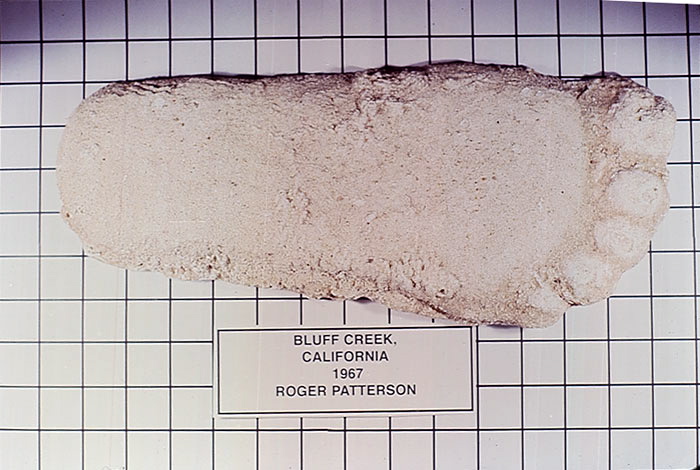
BR: Of course, I’m referring to the Patterson-Gimlin film shot in Bluff Creek, California in 1967, probably. Not everybody knows that that’s allegedly a female Bigfoot. It’s interesting because usually people use male pronouns for Bigfoot, but in the best known case of an alleged photograph or video, it’s actually allegedly a female with pendulous breasts.
0:02:27
EM: Pendulous breasts. That’s the who came up with that term originally because it’s stock. It’s always used in the description. I don’t know whoever he is. I want to buy him a beer.
0:02:35
CW: I once had an old work colleague of mine talk to me at length about the pendulous breasts in the Patterson Gimlin film and he was convinced he’s like, you’ve got to see this. I’m like, I’ve seen the movie. He’s like, I mean, there’s no way the way that those breasts move. That is absolutely a real Bigfoot. And it’s a female. And I pointed out to him because I knew of his belief system. And he was a creationist. He did not believe in evolution. And I said, so let me get this straight. You don’t believe in evolution, but you believe in the missing evolutionary link between man and ape Bigfoot. And he had to think about that for a while. But the breasts did really have him convinced.
0:03:18
BR: So let me zoom out of the hairy pendulous breasts, although I know that we want to, who doesn’t want to focus on that? But so the footage, as I mentioned, was shot in Northern California on a tributary of the Klamath River, allegedly October 20th, 1967. There are some, as with many aspects of the film, it is disputed. Again, it’s the best known footage. It runs about a minute or so, and there’s, of course, lots of different edits and changes. And so, for example, you know, if you watch one TV special, it’ll be maybe enhanced or something else, and then there’s other versions as well. But it’s essentially that. And so you have this large, what frankly looks like a Bigfoot. I mean, if you’re going to claim that Bigfoot are real and they are large human-like hominids covered with fur, then this is it. I mean, that’s one of the things that makes the Patterson-Gimlin film interesting is that there’s no ambiguity here. Either it’s a hoax or it’s a Bigfoot. I mean, it’s not a moose, it’s not an optical illusion, it’s one of the two.
0:04:26
CW: It’s also that lumbering silhouette is really the image that launched a thousand logos listeners, if you are not really sure if you’ve ever seen the Patterson-Gimlin film, if you’ve seen a logo with Bigfoot kind of walking sideways. That’s from that movie. That’s from that clip.
0:04:41
EM: Yeah. And I think there are two elements that really give it, you know, a sort of grainy authenticity. And the first would be just to bring it back around to the pendulous breasts again I mean, that’s one of those details that you know Just kind of come so far out of left field that it adds, you know a certain level of believability to it and also the fact that Roger Patterson was allegedly on horseback when they stumbled upon this animal and he had you know his horse reared and he had to get off the horse and then he ran toward it. And so the shaky cam manages to obscure the image somewhat and again gives it that sort of immediacy and realism. Now there’s M.K. Davis who anybody that knows anything about Bigfoot knows him as somebody who’s been studying that film exhaustively and he has done all sorts of high resolution scans and used image stabilization to focus in on the Bigfoot herself, and to remove all of that shakiness. And for my money, that strips away about 99% of the believability. To me, it looks like a person in a suit.
0:05:49
CW: Oh.
0:05:50
BR: But hopefully, our listeners will remember that you are, you know something about films, don’t you?
0:05:56
EM: I pretend to.
0:05:57
BR: You are a filmmaker, you’re an auteur, sir. If any of us are qualified to discuss the makings of a film such as this, it would be you.
0:06:05
CW: Now, where can people see this reverse engineered stable cam version of the Patterson-Gimlin film?
0:06:11
EM: YouTube. I mean, if you type in MK Davis, Marlon Davis, he’s been doing tons and tons of different versions that have zeroed in on different aspects, different details that he’s trying to underline, but the image stabilization is all over the place. You can find it anywhere online.
0:06:29
CW: Fantastic.
0:06:30
BR: We did neglect to mention the Gimlin side of this. We mentioned it’s a Patterson-Gimlin film. Roger Patterson, he’s the main guy that did it, and he has a, what’s the word I’m looking for? A colorful history.
0:06:42
EM: A shadowy accomplice.
0:06:43
BR: He has a colorful history. He died in 1972 of, I think, lung cancer, if I’m not mistaken. Bob Gimlin, his friend, is still alive as of this recording. And he maintains, last I heard, that it’s a real film. And there’s a really interesting dynamic there, because it’s possible that it is a hoax and Gimlin doesn’t know about it. It’s possible that it was set up by Roger Patterson and Gimlin is just sort of the the fall guy stooge who’s there to swear up and down that the whole thing was real. Now there was a mistaken there was a gun present and the immediate attempt was to to film it of course not not to shoot the creature and it’s important to keep in mind that that they were out there in bluff Creek Specifically for the reason the purpose of shooting Bigfoot and so it’s it’s it’s a rather remarkable coincidence given given how many people have gone into the woods with with cameras hoping to record Bigfoot they just happen to you know hit the jackpot on this on this occasion.
0:07:49
EM: Well it actually goes one step further than that they weren’t just there to try to film a Bigfoot they were there filming a docudrama about looking for Bigfoot such that Bob Gimlin was playing a Native American guide who was leading Roger Patterson through the woods to find a Bigfoot campsite. And, you know, lo and behold, they just, as you said, just so happened to be making a film about this. They had other costumes, other props, you know, it’s not too far of a leap.
0:08:19
CW: So they were filmmakers?
0:08:22
EM: Amateur at best.
0:08:26
BR: It reminds me of, I once investigated a haunted house in Clovis, California. It was called Wolf Manor actually. It was part of a TV show. I think it was a Mystery Quest. And it has a fascinating story. I won’t go too far off on the tangent, but it began as a fake haunted house. That is, you know, with the fake blood and fake cobwebs and all this. And the owner of the place, after making money on it being a fake haunted house after a while decided that oh no it’s a real haunted house no I missed I got that wrong no the ghosts are actually real it’s just it’s very fortunate how these things work out.
CW: I think you can charge more for the real ghosts yeah.
EM: Well you know it there’s a lot to be said for the fact that a lot of a lot of believers in various cryptids want to take the specific evidence for what it is and they want to analyze it and they want to study it and they want to draw their conclusions. There is a tendency to overlook the character sometimes of the photographer or the eyewitness. In the case of Patterson, I believe you called him colorful. Others would have called him a con man. He was somebody who always had some entrepreneurial scheme up his sleeve and always owed somebody money. I mean, there was actually a warrant out for his arrest while he was filming this because he had not returned the camera that he had rented.
CW: Wow.
BR: Yeah, no, no, Eric’s exactly right. If anyone’s interested in more of the details of this, there’s a good overview in Greg Long’s book, The Making of Bigfoot, The Inside Story. I don’t endorse everything Long says, but he’s done a meticulous job in tracking down people who knew Roger Patterson and the reviews are almost universally come in shady.
0:10:05
EM: Yeah and I mean it’s it’s not helped by the fact that the thing that first inspired Patterson to become a Bigfoot believer and then Hunter was an article that he read by Ivan T. Sanderson in True Magazine 1959 and this article had a double page headline image that was an artist’s recreation of this sighting. And it was literally the Patterson-Gimlin film right down to pendulous breasts and a hunter who is crouched behind an overturned tree, except he has a gun, whereas Patterson had a camera, obviously. So it feels very staged once you start digging into the details.
0:10:48
CW: I’m going to have to check that out. That’s yeah, I had not I had not heard that the Patterson-Gimlin film closely mirrored an earlier piece of art. That’s fascinating.
0:10:57
EM: Yeah. The only difference is the direction the Bigfoot is walking.
0:11:00
BR: Yeah. Down to the exact. I mean, down to the I mean, it’s all there. And so once you once you sort of take it apart and say, where did this come from? Where are the sources? Well, you’re just recreating this this image. And does this prove that the film is a hoax? No. But are all the red lights flashing, pointing to hoax? And absolutely yes.
0:11:20
EM: And of course, people are going to look at the image and it being a grainy piece of 16 millimeter film, you know, there’s only so much magnification that can be done. And so people are seeing all sorts of things in it. And there are so many arguments used to verify its authenticity. Look, you can see these muscles moving. And, you know, there’s a lot to be said for artifacts that are introduced in the film, especially when you do extreme magnification. There have been arguments that, you know, it was actually a massacre and that Patterson and Gimlin shot a Bigfoot and the one we are watching is retreating from the scene. You can deep dive and you go pretty crazy. And I suggest an entire episode on this subject.
0:12:05
BR: Maybe one day. Eric, let’s just briefly go over some of the unknowns. For example, we don’t know what the film speed was. It was either I think 16 or 18 frames per second, which is important in determining several things, including how fast the creature is going.
EM: Correct.
0:12:22
BR: What else?
EM: Well, the frame rate I think is the big one and for people who are not film people without getting too super technical Every time you shoot one second of film you are taking 24 photographs and when it plays back you are seeing 24 frames per second If you shoot over 24 frames per second So you shoot 32 or if you shoot under 24 seconds It completely changes the playback speed and so there have been all sorts of arguments made for the speed and the gait of the alleged animal. If the camera was set at this particular speed, then it’s a guy in a suit. And if it was set at that speed, then it is some animal unknown to science. But Patterson could not remember what setting he had on the camera. That’s the big one.
0:13:08
BR: That’s unfortunate. So of course, the film’s been around since 1967. And as Erik’s mentioned, it is the gold standard make of that what you will for Bigfoot evidence and as you know, it’s been subjected to endless endless examinations and analyses and iterations One of the early people who analyzed this was Grover Krantz who’s now deceased and I think I saw his skeleton at the Smithsonian If I’m not mistaken. Yeah. Yeah, I think he and his dogs, he was a sort of a, I don’t say cranky old man, but certainly had that air about him. And as I recall, I was in DC and I think his skeleton, along with those of his dogs are mounted. I could be wrong, but I think that’s right. Anyway, Krantz was sort of one of the original science-based Bigfoot experts. Other people have since taken on the mantle, including Jeffrey Meldrum from Idaho. But, but Krantz was sort of one of the big main people that was sort of had some actual academic credentials and training and was willing to put his name and reputation on the line. Not always to his benefit, I should add, but he had a couple analyses and one of them, he claimed He claimed that the proportions were inhuman. He claimed that there was no way that a human could be built that broadly. They were actually looking at the chest width. Because if you look at it, certainly the height is not inhuman. I mean, for example, the size, just looking at it, is well within human range. It’s not 12 feet tall. It’s not 15 feet tall. So whatever it is, whether it’s a big foot or someone in a costume, it is roughly human size. But Krantz was saying, well, okay, maybe it’s roughly human height, but the chest is far too broad. And that sort of was the sort of default belief for a while until a friend of mine, Dave Daigling, who’s the author of a book titled Bigfoot Exposed. He’s from Florida, and he spent a in the Yale University Science Library. And he found a book called Anthropometry Sourcebook, which has cross-cultural analyses and measurements of different people from all over the world. And he found that, in fact, the impossibly inhumanly large chests that Krantz said couldn’t be human is actually represented in about 5% of the German Air Force. So, if that by itself means that it can’t be human, then there’s some weird stuff going on in the German Air Force. So it was clearly within human range. So Degling in his book, he sort of recounts being shocked that Grover Krantz who meticulously built up his reputation for being so careful and scholarly, he just was talking out of his ass. He was just wrong. And then the second, there’s lots of analyses. I’m only gonna touch on a couple of them. The second one was the Krantz claimed that the gate, the stride that we see in the Patterson film was unnatural. It wasn’t human. And that was one of the arguments, as Derek mentioned, that, well, people don’t walk that way. And once again, Dave Daigling looked into it, he researched what’s called the compliant gait. He discovered that in fact, it’s true that if you look at the way the Patterson-Ginland creature person walks, that’s not typically how a person walks. That doesn’t mean that a person can’t walk that way. In fact, Daigling basically recreated it. There’s lots of factors in here. How does a person walk when they’re in a costume? They walk differently than when they’re not in a costume. How does a person walk when they’re trying to hide a human walk, et cetera? And so the point is that on at least two key issues, Grover Krantz was flat out wrong. He was just saying, well, the chest is far too large to be human. Not true. Well, you know, people can’t walk that way. People can walk that way and so on.
0:17:16
CW: A question that immediately pops up in my mind is if you’re talking about a costume, I mean for crying out loud. I learned how to pad a bra when I was, you know, in middle school. You can do lots of things to make a chest look broader. And if you’re wearing a costume, I mean, it’s going to look broader. Anyway, all you need is padding in the costume or you know, yak hair or something. And that just seems an odd thing to zero in on saying that the chest is broader than a human’s would be, because, I mean, if you’re designing an alien costume to look very extraterrestrially skinny, that’s difficult. Then you need an actor like Doug Jones, who has very unusual body proportions. But if you just want a broad chest, you just get a costume with a broad chest.
EM: You’re absolutely right. You know, trying to reduce size, as you said, is the trick. You get a gorilla suit or some sort of a monster suit, and you have the actor or the model where football padding, shoulder pads and take some steel rods or something like that and hold those inside the arms. That automatically is going to change the gait. Put on clown shoes underneath the outfit and suddenly the way that the feet fall and rise, everything changes.
0:18:34
BR: That’s exactly right. And well, that’s only true, Eric, if you believe that shoulder pads existed in 1967.
EM: They did not.
0:18:43
BR: Let’s just talk briefly about the suit because that is sort of, that’s one of the Bigfoot film believers’ favorite go-to’s. Like, okay, where’s the suit Mr. Skeptic? Where’s the suit? In Greg Long’s book, Making of Bigfoot, he interviews a guy named Bob Hieronymus. And to be clear, there isn’t just one person that has been claimed to be in the suit. There’s actually several, which of course poses a problem because only one person can fit in that suit at one time. So at least one or more of the people who have either claimed to have been in the suit or others have claimed to have been in the suit, almost certainly weren’t. That doesn’t mean that maybe one of them wasn’t and Bob Hroninus was one of them. And as I recall the story, it’s been a while since I’ve gone into the deep details on it but as I recall the story, it was said that Patterson had sort of cobbled the suit together out of fur and that was what he was wearing. And but, you know, so one of the questions is, well, where’s the suit? And to my mind, it would be nice if somebody found a suit, you know, in some trunk in Roger Patterson’s house somewhere. But the fact that that particular suit hasn’t surfaced is not a smoking gun. It doesn’t mean anything. It just means that it got thrown away or got tossed or maybe they burned it. Maybe they didn’t want to have the evidence of it around. Who knows?
0:20:13
EM: Yeah, numerous people have come forward and claimed, as you said, to have been in the suit. Numerous people have come forward to claim that they made the suit. It’s, you know, apparently this, you know, poorly kept secret that, you know, various people worked on it or constructed it. John Chambers, who was a famous suit designer, was claimed by John Landis to have done it. John Chambers said that he didn’t. So, again, lots of people have tried to go after, you know, the credit, and some people shied away from it But you know it’s it’s one of those things that because we don’t know and because Bob Gimlin Isn’t talking or had not spoken actually since 67 until the early 90s. He was very tight-lipped about it and even now is sort of like well I don’t know what’s possible that Roger was pulling a scam on me, but he won’t commit to that either so it’s going to be one of those great unknowns.
0:21:13
BR: Well, speaking of the suit, I want to touch briefly on another aspect, which is another one of the so-called bits of ammunition against the skeptics they like to pull out, is this notion that, and I actually saw this recently on a Bigfoot forums piece, said they can’t replicate Patty. On the left-hand side it says frame 352 from the Patterson-Gimlin film. On the right-hand side is captioned, the best attempt so far to recreate the footage using 1967 costume technology. It’s this really weird, cheesy, unconvincing, reddish thing, I don’t know what the hell that was. I’ve gotten this over the years from several Bigfoot believers. They say, well, how come they can’t replicate it? And it’s sort of a weird question. Like, well, who’s they and who tried? And like, well, you know, they. And it certainly is true that there have been a handful of people that have, with varying degrees of competence and goals, made recreations of the suit, or made recreations of the film. And it’s also true that none of them, none of the ones I’ve seen are particularly convincing. But that doesn’t mean it can’t be done. It just means that the TV producers and the people that were involved in the previous recreations, they didn’t do it. There are any number of reasons why it would be very difficult to replicate a given photograph or given footage from 1967. Things change. There’s a lot of unknowns.
0:22:51
EM: Well you know first of all what I was saying before about shoulder pads and steel rods and clown’s feet I mean that’s the best explanation that I have heard for the locomotion and the build and all of that and that was by a gentleman named Philip Morris. He was the owner of Morris costumes. He claimed to have built the suit. Now whether he did or he didn’t his argument is 100% convincing and I feel that all the recreations in particular the one that you’re mentioning which I think was done by the BBC if I’m correct it’s just a guy in a suit and so it doesn’t have the correct build and therefore it’s going to automatically have a very very different gate unless there is something that is offsetting the typical movement of a human being. It’s just going to look like a human being. Now I said before that I thought that the stabilizations that MK Davis have done, removing all that shake, it just looks like a guy walking past. I think it’s still a very, very clever hoax if it is indeed a hoax, because it’s definitely not simply looking like a guy in a gorilla suit. However, the people who are saying they have not been able to recreate it as Ben was saying before, you know, they’re meeting the skeptics. They’re meeting debunkers or whatever you want to call people who are applying skeptical theory to these things. But at the same time, the real red flag is that we have never had another piece of video or film footage that looks anything like the Patterson Giblin film, which to me points to it being simply a very, very clever gag.
CW: It sounds like lightning in a bottle where you just had the right combination of factors like the shaky camera, a pretty good suit, a guy who knew how to walk pretty well in a suit, just the right weather conditions and sunlight. And it just it just kind of all worked.
0:24:45
BR: It all worked partly because we’re all so familiar with the end result. That film could have been shot in other ways that would have influenced our sort of, I mean keep in mind that the Patterson-Gimlin film is sort of, it is the template. It is, to most people, that’s what Bigfoot looks like. Had they changed the costume a bit or had they done something else, that would be what we’re comparing it against. And so, it’s like I mentioned earlier, it looks exactly like a Bigfoot because that’s what we’ve all sort of learned a Bigfoot looks like. And so it’s sort of hard to escape that sort of circular logic. But yeah, I mean, that’s the biggest question to my mind is how exactly is it that the best evidence for Bigfoot remains something that was filmed during the Johnson administration. These days almost everybody has a, you know, five megapixel HD camera in their pockets. You know, we have drones, we have people that more and more people are out there in the woods with cameras and video phones, and in photographs of everything else have gotten better since 1967. Photographs of trees, photographs of people, photographs of mountains, photographs of flowers, deer, sunsets. There is no material object for which there are, uh, there’s not the better photographs today than there were, you know, 50 years ago, except Bigfoot. For some reason, Bigfoot and maybe, you know, Loch Ness Monster, take your pick. But for some reason, these cryptological curiosities are in their own little category that somehow they’re in this time warp where photographs of them, they just seem stuck in this sort of zone of ambiguity. And when you ask Bigfoot believers about this, they just dance around like, well, you know, you’ll see, or blah, blah, blah. They never, I have yet to get a full, sincere, straight answer as to why the best video of this dates back to 67.
0:26:44
EM: I have this argument in the Lake Monster community all the time when I’m saying it’s a, you know, a specific landlocked body of water and we are in an age where, as you said, everyone is carrying a high definition camera in their pocket all the time. How is it that I’m able to, you know, capture my son taking his first steps, which I did not expect and just happened, and someone cannot take high definition video of any of these sorts of occurrences. At best, we tend to get photographs. But therein is sort of the weird, ironic twist to it in that the better the image or the video we get, the more we are automatically ready to sort of dismiss it from our minds as being a hoax. So that’s why blurry photographs are the best ones.
0:27:37
Pascual Romero: We would like to thank our sponsor level patrons Amy Freshour-Kelly and Dr. Angela Mattke. If you’re interested in becoming a sponsor or just throwing us a buck or two per episode, check out patreon.com forward slash squaring the strange. Every bit helps us keep the lights on here in Strange Studios, and we could not keep bringing you content without the support of our generous friends. If you’re looking to provide moral support, head on over to iTunes and give us a five-star review. Every positive review helps us move up the podcast charts. Thanks again, strangers.
0:28:12
BR: So, as we mentioned, there’s lots and lots more we could talk about the Patterson-Gimlin film. There’s all sorts of sketchy aspects to it, including the fact that it’s not clear when the film was developed or by who. A little bit weird, but whatever. Let’s leave that aside for the moment and move on to another, some would say equally sketchy but more recent video footage. You looked into this a bit, Erik. What do you make of the video by Todd Standing?
0:28:50
EM: That would depend on which video we’re talking about because Todd Standing has this amazing talent of being able to be in regular proximity to Sasquatch and to take numerous videos. He’s a lumber mill worker. He’s a self-described Sasquatch tracker from British Columbia, and he is the director of a documentary that came out last year in 2017 called Discovering Bigfoot it is available for streaming on Netflix so Todd if you are listening there is your plug Discovering Bigfoot is Amazing in every sense of the word it…
BR: Would you would you go far as to say it’s incredible.
EM: I would say that it is amazingly incredible or incredibly amazing.
0:29:45
CW: Unbelievable.
0:29:46
EM: Absolutely. I think that’s the best description. That’s what needs to go on the DVD. Unbelievable. Yeah, Todd standing did this documentary all about his Bigfoot investigations and he also talks all about the video footage that he has captured. It’s so fantastic. It starts off with standing, calling himself in the opening scene a skeptic, but in the same breath he goes on to claim that Bigfoot is a quote, miracle of nature, the same way that bats and beavers are miracles, because bats are blind and beavers build intricate structures and survive on wood.
BR: Wow, okay, so he really has a good grasp of zoology, okay.
EM: Yes, he takes it to the next level as he goes on to say that he’s trained in every form of tracking and survival known to man and as he’s narrating this breathlessly, you know, we’re seeing B-roll of him running and jumping…
BR: Some parkour through Kmart and doing gymnastics and all right, some kung fu stuff.
0:30:57
CW: Does he ever drink his own pee? That’s what I’d like to know.
0:31:00
EM: You know, he doesn’t get into it, but I’m hoping in the sequel we talk about it.
0:31:04
CW: Okay.
0:31:05
BR: In the DVD extras.
0:31:06
EM: You know something? Like I said, I streamed it, so hopefully that’s on the bonus feature somewhere. If not it should be. So standing is this guy who has accumulated multiple videos of Bigfoot and they fall into sort of two categories. There’s either stuff that is shot with night vision and it’s just sort of, you know, a shape in the middle distance. It could be anybody or anything and super ambiguous. And that’s when Bigfoot tends to interact and throw logs at him and stuff like that. And then there is the rest, which is crystal clear, high definition footage that has been filmed through tree branches or whatever, at a short distance on maximum zoom, showing Bigfoot in full glory standing still and hiding behind a tree. It’s, it’s so clear, in fact, that it’s, in my opinion, unmistakably fake. The Bigfoot doesn’t move. If it moves, it moves only slightly. The big selling point is, look, it blinks. Which, you know, it’s like, okay, well, that’s the only animation.
0:32:17
BR: Did you see that?
0:32:18
EM: It still looks like a Chewbacca mask. But, you know, you don’t need a special effects expert to tell you that. But if you did, you would talk to Daniel Falconer, who wrote an essay. Daniel Falconer is known to movie geeks as being one of the special effects artists who worked on The Lord of the Rings and King Kong and Avatar. And along with his partner or his partner on this project, Phil Poling, who is a vlogger and skeptic for para breakdown. They did this abstract where they took stills from the video and they pointed out all sorts of things. They’re saying, look, yeah, it’s crystal clear, it’s high definition, and that’s why we can see that the blinking eyes, there’s no change in the facial muscles, which looks very much like foam latex. When it moves very slightly, the eyes don’t move, and that’s not the way eyes move or eyes work, you can see the glue on the fur. The fur, you know has very distinct areas where it’s very short and then suddenly it becomes very long That’s not the way it works.
0:33:24
BR: There’s a price tag from Party City for Christ’s sakes. Come on!
0:33:28
EM: Yes, exactly. But yeah all sorts of stuff like you know, this was supposedly a video that was shot You know all within a span of a couple of minutes and he stopped and started it a couple of times, but the light changes dramatically or there’s snow on the branches in this shot and there’s no snow in the next shot. Lots of stuff like that. But again, as great as that is to read and to see the arguments put to paper, all you have to do is look at this footage and it’s very clear, too clear that it’s a guy in a mask or could even be Todd Standing himself as Falconer did some frame grabs and said hey look they’ve got the same mouth so it couldbe even crazier.
0:34:13
CW: Yeah you you showed me you emailed me the photo of like four images in succession kind of showing the the Bigfoot face, and then showing Todd Standing’s face. And that to me, that really seemed like a smoking gun. The thing that makes human faces very individual and stand out as a unique person is, you know, the measurements of how far apart the eyes are, how long the distances between the nose and the mouth and and distances between features, you can run into somebody that has like, oh, wow, that person’s eyes are really similar to mine, or that person has the same shape nose. But the distances involved, that’s where the real algorithm of likeness comes in. And there’s, you know, caricature theory is based on this. They teach you the T-shape theory when you’re first learning how to make a drawing look like somebody. And seeing how perfectly the math of the distances of features lined up with Todd Standing’s face versus the Bigfoot face. To anybody who draws portraits or caricatures or anybody who works on facial recognition software that kind of stands out as a smoking gun.
0:35:31
EM: And that’s why it was really surprising when Jeffrey Meldrum, who Ben was talking about before the professor of anatomy and anthropology, who’s constantly sort of being carted out for these sorts of documentaries because he is a Bigfoot advocate. He is shown looking at Todd Standing’s footage and he seems, I don’t know if euphoric is quite the right word, but he seems very, very impressed and just saying, you know, I always imagined what it would look like to look into the face of a Bigfoot and you know here it is between these tree branches you know I can see its eyes I can see it’s blah blah blah and it was it was very surprising to hear him so sort of smitten by that.
0:36:11
BR: Well from what I understand Meldrum has has carefully avoided explicitly endorsing it. He is featured in the piece but I did a little bit of research and poking around I couldn’t find any quotes from him saying, yes, I enthusiastically endorse Standing’s stuff, which is probably to his credit. Matt Moneymaker, on the other hand, of the Bigfoot, the BFRO, the Bigfoot Field Research Organization, has no such compunctions and has enthusiastically embraced Todd Standing’s footage. And it’s just, it’s one of those cases where you see these things and to a skeptic or really anybody with any sense, it’s so self-evidently a hoax that you just wonder why aren’t people just running. You would think that people with any sort of shred of credibility to their name would distance themselves, and especially for as often as they’ve gotten burned. We should do a whole show on Bigfoot hoaxes. I mean that lasts a couple episodes. We’ve got bad data. We’ve got Melba Ketchum. We’ve got just up and down the line, and you have – that’s one thing that always surprises me about the Bigfoot, whether it’s Standing or somebody else, they don’t seem to get it. They just wait until the next one comes around, like, oh, wow, look at that. And the guy that was touring with his Bigfoot body for a couple of months, I’m just perpetually astonished that people do that much.
0:38:02
EM: The Minnesota Iceman, yeah. And Ivan Sanderson was taken in by that. He completely went for it. And you’d think that just the sheer number of encounters, close encounters, that Standing has claimed to have had, and the sheer number that are shown in this documentary, and again, like I said, there’s the really ambiguous night vision at which point Bigfoot is very, very active and interactive. And then there’s the, you know, daytime full closeup color footage where it’s just standing there and not moving at all. I mean, it just red flags are all over the place, but I will say that this documentary is worth watching if for no other reason than an absolutely fantastic segment in which standing who spends the entire documentary laying out apples as bait for Bigfoot so that he can try to encounter the Bigfoot or that he can follow its tracks or what have you. There’s this wonderful scene that takes place at night and he set out three red apples. And so he’s kind of at a vantage point and he is claiming to see as he’s narrating into the camera. He’s like, you know, there it is. Look, there’s Bigfoot. Hey, here he comes. He’s, he’s, hey, hey, hey, hey, it’s Todd. Hey, want an apple, big fella? Hey, hey, big fella, come on, have a, have a red delicious apple. And then, oh, look, look, he took the apple. He took the apple. And then freeze frame and this very dramatic music and the voiceover, and he says, before there were three apples, but if you look closely, red arrow, ding, one of the apples is now missing my red delicious apple was taken by a Bigfoot. It’s it’s crazy! It’s fantastic. It’s wonderful. I encourage everybody to watch it.
0:39:43
CW: Yeah, well Todd standing you’re mentioning that There’s very little credibility to what he’s produced and the people backing him up But Todd standing in an perhaps an effort to gain some credibility filed a real actual legal complaint in October 2017 around the time his documentary was being released.
EM: Funny that. CW: Against the province of British Columbia, alleging that it had, quote, breached its stewardship by failing to recognize the existence of Bigfoot. He claimed that he had seen Bigfoot over 50 times and he had a bunch of footage and he was demanding that the court provide government biologists to accompany him on a Sasquatch expedition for no less than three months to help prove the existence of the creature. His lawyer also said that in addition to the matter of protecting indigenous wildlife to Canada, there was also a constitutional matter because Todd Standing was being discriminated against on the basis of his beliefs. So yeah So I apparently, you know in Canada You’re not supposed to discriminate on somebody based on their religion or their political views And so he’s kind of shoehorning his belief in Bigfoot into that whole Category now…
BR: The the plight of the the poor poor oppressed white man with the Bigfoot beliefs. Whatever shall we do? Let’s sort of go fund me.
0:41:19
CW: The Ministry of Forests, Lands, Natural Resources, Operations, and Rural Development filed their response in January and they denied Standing’s version of the facts and they also denied that the plaintiff, quote, suffered or continues to suffer any loss, damage or expense as alleged in the notice of civil claim.
0:41:40
BR: Except to his reputation.
0:41:42
CW: Yes, and he’s very offended at suggestions that this was all a publicity stunt to hawk the new documentary.
0:41:48
EM: And yet, at the same time, he said in numerous press interviews that his documentary had been a flop financially, that the sales were, in his word, dismal. So I mean, the timing, as you said is is very very suspect It’s kind of like back in 2005 when the the Loch Ness tooth was found on the shore And it was all over the news for about five minutes until it was realized Oh, yeah and Steve Alton the author is about to release his book the lock and it was just a you know it was a it was A it was a promo it was a tie-in And so it sounds like if he makes a bunch of noise, it gets people saying his name and has people like us talking about him.
0:42:30
CW: It certainly resulted in a bunch of news clips and a bunch of news articles, one of which you’re quoted in Ben. I read about you in a Vancouver newspaper and Todd standing himself. He does admit that he has a lot of critics, including in the Bigfoot and Sasquatch community. But he brushes all the criticism off saying that, well, Gandhi and Einstein had haters, too. That’s like an actual quote. He said they had haters. So he kind of goes right to that old canard of saying that, well, geniuses were laughed at and I’m being laughed at. Ergo, I’m a genius. Now, you know, in August, just just a little while ago, in August 2018, the judge assigned to the case, Justice Kenneth Ball, reserved his right to toss out the case as frivolous. Now, he said it really lacked an air of reality to it. Now, reserving the right to dismiss essentially means that he will follow up in writing at a later date. After going over some more of the paperwork, the judge also suggested that it wasn’t really up to the courts to decide whether or not an animal existed. And there’s like no precedent for the courts ever deciding whether or not a biological creature is mythological or real.
0:43:43
BR: So they basically said that he had no standing.
0:43:46
CW: Oh, yes. Oh, I’ve converted you. He’s making puns now, Erik. Oh, I’m so proud.
0:43:51
BR: Let’s move on.
0:43:52
EM: I’m sitting here very slowly shaking my head right now.
BR: I know. I dealt with that enough. So let’s move on to a few other fictional less based on a true story Bigfoot he exploits.
0:44:06
CW: Well I started being a fan of cartoons I started looking at the cartoons and I found an interesting little trend here the the cartoon Yeti designed by Chuck Jones for Looney Tunes in the Abominable Snow Rabbit. You guys remember him? I’m going to hug him and squeeze him and call him George. Yes that was definitely a snow Bigfoot, a Yeti, directed. It was in that short directed by Chuck Jones in 1961, and it was inspired by the 1957 British horror film The Abominable Snowman. And shortly after that, we have Bumble the Yeti. You remember him?
0:44:44
BR: Oh, the stop-motion monster, yeah.
0:44:47
CW: Yeah, in the Bass Rankin stop motion feature of Rudolph, and he also appeared in the one they did in the 2000s. But the original one came out in 1964, and Bumble the Yeti spends most of it kind of growling as a villain, chasing around Hermie and Rudolph. Then we find out later that he really just had a toothache, he was a nice guy. That also really quite seemed inspired by the whole Abominable Snowman movie, the lesson seemed to be that if the British make a horror film, well, just wait a few years, and we Americans are going to have that monster in all of our kid shows. We also have a giant white Yeti that appears in Scooby-Doo. That’s kind of a special Yeti in that it’s in an episode called That’s Snow Ghost. Ha, ha, ha. Episode 17, it’s the final episode of season one. So that came out in back in 1970.
EM: And do you guys remember Viewmaster?
0:45:46
CW: Yes.
0:45:47
EM: I used to have an entire set of that episode. It was like six different slides that you stuck into the Viewmaster and rotated. I had the storyboards for that entire episode. I love it.
0:45:58
CW: Oh, it’s probably worth something if you can find it now, but there’s a special bit of trivia to that appearance of the giant white yeti in Scooby Doo in that it’s the first actual real monster that shows up in the cartoon. There’s no ripping off the mask or anything. It’s intended to be a real yeti. Now, it’s only in a flashback. There’s an old eccentric character named Fu Lan Chi he lives in a cave and talks about encountering a yeti in Asia and how the yeti fell to its death while it was chasing him or something. And now this poor guy, Fu Lan Chi, is kind of haunted or he thinks he’s haunted by the yeti’s ghost. There is, of course, a side plot involving a fake ghost, somebody dressing up like the Yeti. And Velma spots a clue and then she gets captured and almost done in by a circular saw. And oh, poor Ben, you must have been biting your nails during that episode. But she makes it out alive.
0:47:00
EM: That was the 1970s when we had the big speculation explosion and, you know, suddenly monsters were on mainstream TV and in cartoons.
CW: Yes, yes, they there was definitely a big for a bigfoot mania going on around the late 60s early 70s in pop culture.
0:47:19
BR: So the one that I jumped to in terms of cartoons is it’s not it’s it’s not in film But just just briefly is if I’m not mistaken Tintin there was a tintin in Nepal I think or tintin Tibet, which would be which would be the alliterative one. I think there’s a there’s abomabdible snowman Was there one in do you guys remember if there was one in Johnny Quest?
0:47:40
EM: I don’t know. I’m pretty sure you’re right about Tin Tin, but I’m not sure about Johnny Quest.
0:47:45
CW: That is a good question. Actually, give me 30 seconds here. I’m curious.
0:47:48
BR: Didn’t mean to derail, but I was a big Tin Tin fan, so.
EM: Did you like the Tin Tin movie?
BR: It was okay. It was better than I expected it was going to be. Yes, I would agree.
0:47:58
CW: There was a Yeti in Johnny Quest. Cool. There we go.
EM: And to bring it back around to Roger Patterson for a second, he spent his remaining days before he died of cancer trying to mount an organization because apparently there was a Yeti that was locked up in a monastery just like that. Turns out it was a hoax. Somebody was pranking him, but that was sort of going to be his last expedition.
0:48:23
BR: I did not know that. Interesting. Interesting. Well, I, I, you know, I think back to, you know, the six million dollar man and the abominable, well, I guess it wasn’t, it was the abominable snowman. I think back to the six million dollar man and Bigfoot in there. And there’s a, there’s another film. I can’t really recommend it, but it’s titled Treak of the Mutilated. If for no other reason, I love the title. It’s just a bad, bad film, I think it’s 74. I can’t really describe it. I’ve seen it, but I’m just having a hard time sort of making a coherent plot out of it. It involves a Yeti, but it’s actually sort of like a Scooby-Doo moment where it turns out it’s not actually a Yeti that’s attacking people. It’s a band of crazed killers. It’s sort of like elements of like the hills have eyes. I can’t even describe it, but anyway.
(CLIP PLAYS)
0:49:45
The sight of it will live with you or die with you, but you will never forget the shriek of the mutilated. The Abominable Snowman, the Yeti, or is it? A scientific expedition that turns into a nightmare for all but a few with the surprise ending of the year. Sometimes it almost sounds like something human. It’s the damnedest thing, Ernst. If it isn’t a yeti, I can’t imagine what it could be.
0:50:11
I could see it as it was chewing the flesh of Tom’s leg.
0:50:27
Stop treating me like a child!
0:50:28
Why don’t you stop acting like one?
0:50:29
Dr. Proud brought you on this mission for a reason!
0:50:30
This is not for the weak. This is truly the shriek of the mutilated. Rated R.
(CLIP ENDS)
0:50:34
BR: Now, Eric, another one that I’ve seen, but it’s been forever, and it’s probably one of the best known fictional versions is The Legend of Boggy Creek.
0:50:55
EM: Yes, Legend of Boggy Creek terrified me and many other children back when it would be rerun on TV all the time in the 1980s. Legend of Boggy Creek was actually shot in 72 and there was another film from that same era called Sasquatch, The Legend of Bigfoot, which was in 1975 and they were both kind of docudramas. I guess you could sort of call them mockumentary style. Very, very, very low budget. And they were this weird sort of fusion of horror and nature films like you would watch, you know, in elementary school on reel to reel projectors. For those of us who are old enough to remember reel to reel projectors in elementary schools.
0:51:39
CW: I can see that being really creepy as a school-aged child.
0:51:41
EM: Yeah, I mean, they sort of, it was like, you know, one minute, you’d have the explorers who were going out to find Bigfoot as they’re on a mountain trek, and they’re like, you know, the narrator is saying, and as we entered into the valley, we saw a cougar, and then you see a cougar, and there’s bluegrass music playing on the soundtrack, and, you know, it’s this educational sort of instructional video and then the next thing you know They’re boulders falling down off a cliff and the men are all running for safety and what could have possibly thrown boulders at us? And you know, there’s the silhouette of Bigfoot on the ridge and it’s watching them enter into its hallowed terrain I mean they were they were really really creepy films that were shot like they were documentaries and and you know they did big money for no budget in the 70s and then they started showing up on TV all the time in the 1980s and scared kids to death.
0:52:34
CW: Well as you do. Now Ben you had just mentioned a second ago the six million dollar man and I did a little bit of a dive into that because hey it’s 1970s TV why not. Much like the Shriek of the Mutilated where you have Bigfoot being used not as a real creature, but as a device, like, you know, these, not to give away the ending, but they end up being some sort of satanic cult of cannibal killers who dress up as abominable snowmen to put people off the scent so that, oh, there’s no actual cannibals in the woods killing and eating people. It’s just an abominable snowman. So let’s not look into that, you know. Yeah, so much the way that in that movie, there’s no actual Bigfoot or Yeti, but it’s being used as a cover. In the $6 million man, there was a whole story arc, where in the first appearance of a Bigfoot is in an episode, a pair of episodes titled The Secret of Bigfoot Parts 1 and 2. And in it, Bigfoot is played by Andre the Giant. Oh my God.
0:53:44
BR: Cool.
0:53:45
CW: And if you look on YouTube for the footage, it’s great because he’s in fantastic shape. This is back in season three. So it’s 1976. He’s not Andre the Giant from The Princess Bride where his back is, you know, really bad by then. He’s doing all these wrestling moves. He’s in a giant Bigfoot suit. He and Lee Majors are like slow motion wrestling. They’re grabbing trees and hitting each other with it. It’s great. And we find out by the end of the episode that this Bigfoot is actually a robot. And he’s protecting a group of aliens who are holed up in a mountain complex nearby. And then that leads to a subplot with an underground volcano and a predicted earthquake that’s going to completely wipe out California. And I tell you, the writers back then, they didn’t really pull their punches. There’s nothing half-assed.
0:54:31
BR: That sounds like the coolest thing I’ve ever heard.
0:54:34
CW: They crammed everything in they could and made, like, Sharknado look lazy. Now, that Bigfoot episode was really popular. I should just say that Bigfoot part one and two episodes were really popular, and capitalizing on that, the first episode in season 4 brings Bigfoot back Unfortunately Andre the giant was not back for it. So We have a new more kind of slender Bigfoot played by Ted Cassidy and you guys remember him as lurch from the Addams Family
0:55:02
EM: Correct. Yes
0:55:04
BR: Wasn’t he the guitarist in the Partridge family or is that? No, you’re thinking of a dreamy Shawn Cassidy. Okay, my bad. All right. I wasn’t a teenage girl in the 70s and 80s.
0:55:16
EM: I think you’re actually both right. I think, or both wrong. That was David Cassidy.
0:55:20
CW: Oh, you’re right. I was thinking too much of Ted Cassidy and it threw me all off. Ted Cassidy, incidentally, also narrated The Incredible Hulk, one of my favorite movies, or rather one of my favorite TV shows as a kid. But anyway, so Ted Cassidy is now back as the same Bigfoot cyborg. And in this two-parter creatively titled The Return of Bigfoot, we find a splinter rebel group of the same aliens have holed up in a different mountain in Mexico. And they’re having their robot Bigfoot steal jewels and metals that they need to construct some machinery. And again, there’s a volcano. And this time, Steve Austin also gets hit with radiation and he needs the aliens help to survive. And again, the writers just go whole hog.
0:56:17
EM: It had to be a volcano.
0:56:19
CW: And here’s the resolution, because there’s a complete story arc here. In all in these four episodes, there’s no actual Bigfoot. Bigfoot is just a ruse. He is a robot created to look like Bigfoot, again, to throw off the scent, you know, because they don’t want anybody to know that there’s aliens with a robot hiding in the mountains.
0:56:39
BR: Right, no, that’s crazy.
0:56:41
CW: So yeah, just make him look like Bigfoot, and Americans will be like, oh, it’s just Bigfoot. Well, yeah, hi, Bigfoot. You know, we just won’t pay any attention to that.
0:56:49
BR: That is a really interesting thread. I hadn’t thought about that.
0:56:53
EM: And interestingly enough, there was a movie that was shot out here in Baltimore called Blackwater Creek by a filmmaker named Mark Schell that had a similar premise where people were seeing Bigfoot and it turns out that the whole Bigfoot thing was just a cover for other nefarious deeds.
0:57:07
CW: Oh, see, you’re covering one thing with another here. But the $6 million man, again, because the writers are freaking brilliant. They completely went meta with it and they twisted it around in the fifth episode about Bigfoot. Again, creatively titled Bigfoot 5. It shows up again season five, episode five, titled as I said Bigfoot 5, where we have the robot kind of turning into the real thing. We discover that the aliens have now left Earth, and they’ve abandoned their poor cyborg robot Bigfoot there. And again, it’s Ted Cassidy playing the role again. And Steve Austin is confused because he runs into him and they end up fighting and he’s not the same Bigfoot robot that he befriended like in the previous season. And an anthropologist has spotted him and is on the hunt for the for the Bigfoot and her associates are nefarious and they want to make plans to capture it and exploit it and make money off of it and it turns out that the Sketch the the Bigfoot robot has decided to be left behind He likes earth and he was in the process through alien technology of being transformed into a real earth creature When the process was interrupted, so he was left in this unstable mental state. And that’s why he turned violent. And so his friend, Steve Austin helps get him back to the cave where he can complete the transition. So it’s like Bigfoot Pinocchio. Isn’t that beautiful? I have a tear in my eye.
BR: I’m just picturing the piles of drugs floating around Hollywood in the 70s.
CW: So we have Bigfoot that’s not really Bigfoot, he’s just a cover and then by the end of five hours of really good 70s TV, we have a real Bigfoot.
EM: This sounds like a marathon needing to happen.
0:58:59
BR: I was thinking exactly the same thing.
0:59:02
CW: I’ll make the popcorn.
0:59:03
EM: You need cocaine with it, you know, you can sprinkle the cocaine on your popcorn.
CW: Cocaine and popcorn and Bigfoot, this is, yeah, that’s a weekend.
0:59:09
BR: Now listeners, we’re not encouraging this, this is not an endorsement, we’re just talking, we’re just talking, right, we’re just talking.
0:59:16
CW: These are not the views of our employer or spouses or anything.
BR: Not necessarily the views.
0:59:21
CW: Well, I would be remiss if I didn’t go right from cocaine and popcorn to talking a little bit about some underground cartoons about.
0:59:28
EM: Yes. Yes.
BR: Are we going to go in a circle back to to hairy pendulous breats again?
CW: Oh, yes. Yes, actually we are. Absolutely we are. Yes, we are indeed. Now, we kind of, in the planning of this show, we kind of wondered whether or not we should touch with a 10-foot pole any of the Bigfoot porn out there. And oh my god, is it out there. In fact, doing a little web search looking for, uh, Yeti tracks, which was the book that Smallfoot, the most recent family film about Bigfoot that’s been out recently. I was looking for the book that that was based on and I accidentally went down a rabbit hole of all this erotica called, you know, there’s various Yeti erotica out there, which, which showed up before Yeti tracks did. So just be alert, be alert to that possibility. If you ever search for Yeti titles or Bigfoot titles on the Internet. You’re going to run into porn. There’s a lot out there. But you guys are familiar with underground cartoonist R. Crumb. Yes?
BR: Yes.
1:00:37
CW: Well, he wrote back in 1971 for Homegrown Funnies. He did an excellent piece called White Man Meets Bigfoot. And yeah, and I think you mentioned, Erik, you had to come across this when you were a young man?
1:00:55
EM? Rephrase that.
EM: Rephrase it.
CW: You encountered this?
1:00:59
EM: That’s better than what I was actually just going to say to rephrase it. But yes, I read a number of Zap comics and homegrown funnies and all that our crumb stuff when I was about 14 because I was really really into comic books and found these alternative underground 60s books and Yes, I remember the exact story you’re talking about
1:01:24
CW: Yeah, R Crumb he’ll open the eyes of a 14 year old boy Oh if you find his work R Crumb has got for anybody who’s not familiar our crumb is kind of this You know little nebbish looking guy and he has a very well documented fetish for large women, large hairy women. And so he was the perfect one to write this, well that certainly inspired this story where a small nerdy suburban dad gets kidnapped by a Bigfoot in the woods and ends up being kind of given as a gift to the Bigfoot chieftain’s daughter and they end up Bigfoot married and well a lot of really ruggedly illustrated Bigfoot sex later they live happily ever after. I’ll put it that way.
1:02:13
BR: I’m glad you lighted through that, yes.
1:02:15
CW: Yes, yada yada yada.
1:02:17
EM: It’s pretty graphic. Some of those images are burnt into my brain.
1:02:22
CW: I imagine they would be, yes.
1:02:23
BR: I have not, I’ve not seen that particular comic. I am, I am familiar with Crumb. I read a lot of Fabulous Furry Freak Brothers as well, and other Zap stuff. This one particular episode did not, did not twist my early mind.
1:02:40
CW: Well he also illustrated for Fate: Strange and unknown. The November 2000 issue, which actually became the most popular cover of Fate ever, has the title Bigfoot is Everywhere, and on it you’ll see a really nice archrom illustration of a bigfoot lady wearing high heels and a fashionable mini dress that like barely contains her bigfoot nipples and a little pink bow on her styled hair. And then a couple years later, the January 2003 issue of Fate is titled Bigfoot in Russia and Arkrum drew a much less kooky version showing two nude bigfoot, a male and a female kind of retreating into a snowy forest. So he’s kind of been known in cartoon circles as being a little bit of a Bigfoot aficionado and also into all sorts of cryptid stuff and aliens and everything.
1:03:40
BR: I would be remiss if I didn’t mention that there actually is an eyewitness account of a man, a Canadian logger, who claimed that he was abducted by a family of Bigfoot and held captive for about a week in 1924. He claimed that there were some sexual tensions going on with one of the Bigfoot. I’ll just leave that there.
1:04:03
CW: But is I seem to remember you mentioned that in a previous episode where we were… We mentioned the whole Bigfoot porn thing coming up in a local, a local race for some local Senate somewhere.
BR: Yes.
EM: I always took the lumberjack in question. His name was Albert Ostman or I think he was a prospector. But regardless, I always took his story as being the influence or instigation for our Crumbs comic, because it was basically the exact same scenario. You know, whether you believe him or not, you know, he did not copulate with the Bigfoot daughter. He actually fed them chewing tobacco and the whole family got sick and he ran away and was able to escape that way.
BR: Very clever.
EM: Yeah. And and less less. There were fewer positions
1:04:50
CW: Well, yeah, it’s definitely a man freed by wilderness story because in our crumbs version He kind of he goes he goes back to society And then he realizes how much he hates it and then then just turns tail and goes back to the hills with the Bigfoot So happy ending in so many ways. Disney movie waiting to happen. And I suppose last and not least, because it certainly was the Bigfoot representation of the 1980s, was we have Harry and the Hendersons. And it’s the live action one we all remember, 1987, John Lithgow plays the dad of a typical suburban family who hits a lovable Sasquatch with their car and ties it to the roof and brings it home thinking it’s dead, only to discover it’s still alive. And then they have wacky hijinks as they try to keep up with it and find out where it’s gone off to and get it back to the woods eventually. And the nemesis is a Bigfoot hunter who’s obsessed with it and is tired of the world laughing at him. He chases them all down and then everybody finally gets along at the end. And now the actor who played Bigfoot, or the actor who played Harry was the six foot nine tall Kevin Peter Hall. And, you know, like many actors of super tall stature, he has a background or he had a background in the horror movie genre. And he’d been in Prophecy and Mazes and Monsters. Do you remember Mazes and Monsters?
1:06:20
EM: Oh, yes. Oh, yes. I actually own that on VHS.
1:06:23
CW: Oh, my mother did not want us to watch that because it was about Dungeons and Dragons and she I from what I recall There was there was quite a bit of a worry in the parental community of how? Role-playing games could lead to real like mental problems and kids. Do you remember that’s a mania? Yeah, I haven’t heard you talk about Ben. We should think about that for a future show.
1:06:42
EM: Absolutely. Absolutely
1:06:44
BR: The big D&D scare. I mean, the Satanism, you get in the Judas Priest trial. And we’ll we’ll touch on that in the future.
1:06:55
EM: The whole the whole satanic panic and the McMartin stuff.
1:06:58
BR: We we touched on that a little bit, not in America, but in the previous episode, we talked about the satanic panic in Scandinavia, primarily through the music scene. But we’ll as long as listeners keep supporting us. We appreciate it. We will. We’ll do a show on that sometime.
1:07:14
CW: Yeah, well the mazes and monsters thing hit closer to home for me because I knew a bunch of people who were into D&D. I didn’t really know any Scandinavian rock stars, but back to Kevin Peter Hall, the fellow who played the lovable Harry the Sasquatch. He was actually almost cast as Geordi La Forge in Star Trek The Next Generation, which I was impressed to discover. That would have been cool. He was in the process of reprising his role of Harry for the TV show. And back in 1991, unfortunately, as they were filming the first season of Harry and the Hendersons, he announced that he had contracted AIDS from a blood transfusion. And he passed away right before his 36th birthday, which is a sad ending to that whole Harry and the Henderson story. But yeah, we’ve still got stuff happening today with family TV and family movies and Bigfoot. As I mentioned, the movie is just recently out, Small Feet, where it kind of flips the whole script and we see the story from the point of view of the Yeti. It focuses on some Yeti who are trying to prove that humans are real. They think of us as the myth.
1:08:25
BR: Nice twist, nice twist. This has been a fun conversation. I enjoyed talking with you guys and it’s fun to sort of revisit a couple of the highlights of Bigfoot in film and TV and elsewhere. So again, this is a huge topic to Bigfoot. There’s a lot more we can cover and we’ll do so at some point.
1:08:43
CW: Yeah, I’d like to personally thank Patterson and Gimlin. Regardless of whether or not they hoaxed that video, they launched a ship that has just been sailing through pop culture for the past 50 years. And we’ve gotten a lot of interesting cartoons out of it. Cartoons, family entertainment, movies, horror films. And it’s given us a lot to speculate and talk about.
1:09:00
EM: And that’s the most important thing, that these ambiguous mysteries that cannot be solved will never go away.
1:09:07
BR: I suspect that 50 years from now, the Patterson-Gimlin film will remain the best video evidence.
EM: I think you’re right. I’ll take you up on that.
CW: Meantime, I’m going to go pop some popcorn and get some cocaine.
(MUSIC)
CW: Hey, listeners, we’re popping back in real quick just to add a quick little PS. Whoa, we recorded this a little while ago and since then a bunch of Bigfoot stuff has happened that we had to let you guys know about. First and foremost, we talked about this back in July, but the fellow who was running for office in Virginia’s 5th Congressional District. Oh, I think I know where you’re going with this. Republican guy named Denver Riggleman, which sounds like a porno name anyway, Denver Riggleman, but he was accused by his opponent Leslie Cockburn of…
1:10:00
BR: Seriously?
1:10:02
CW: Okay, that’s another name that sounds a little askew. Wow, okay, all right. Sorry, go ahead. She publicized the fact that he was an avid writer of Bigfoot erotica. He wrote this jokey book called The Mating Habits of Bigfoot and Why Women Want Him. And he just won office. I hope everybody got out there and voted. We just did have the midterm elections. So Ben, you remember talking about this fellow in his alleged erotica.
1:10:41
BR: I do, you know, and I have to say that I think that’s a bit of a cheap shot. I mean, so the guy did a jokey Bigfoot erotica thing. I mean, I don’t know what his other qualifications are or aren’t, but to my mind, bringing that up just seemed like a sort of a cheap shot. You know, if I applied for a job at somewhere, like, oh, well, he wrote about lake monsters. He’s silly. He wrote about Bigfoot and ghosts. He’s clearly a wacko. It’s like, well, hold on.
1:11:13
CW: Who among us hasn’t dabbled in a little bit of Bigfoot erotica? I can’t say that I’m completely innocent of that myself. But in other news, I really failed to mention the appearance of Sasquatch in one of my favorite cartoons, The Venture Brothers. Anybody who’s seen it out there on Adult Swim, it’s sort of a parody of Johnny Quest. And as we were talking about, Johnny Quest had appearances by Sasquatch. Venture Brothers also does and they do a callback to the Steve Austin six million dollar man Bigfoot appearance. So you get to see the six million dollar man and Bigfoot are like hiding out in the woods and of course because it’s Venture Brothers there’s a twist on it. They’re now lovers and Steve Austin has run away from the government because he doesn’t want to have to pay for all of his bionic implants because they’re charging him to use them.
1:12:04
That reminds me of another one. One of my favorite, favorite cartoons from the nineties, Animaniacs had a, had an episode I think it was called Space Probed or something. And I think the three, Wacko, Yakko and Dot were taken up to an alien spaceship and among their wacky adventures, they go into a room on the spaceship and there’s Elvis and Bigfoot and I think Amelia Earhart playing poker.
1:12:30
CW: I loved Animaniacs and if you’re a teacher, there’s a lot of snippets you can pull from Animaniacs to use. Years ago, I was roommates with a geography teacher and she used to use their country’s song a lot that just named all the countries of the world in a quick like three or five minute song. It was really cute.
1:12:50
BR: Rob Paulson. Awesome. I met Rob Paulson at DragonCon a couple years back. He and Mo Lamarche, who did the voice for Pinky and the Brain, they were just the coolest guys. It was just so fun.
1:13:04
CW: Oh, neat. It’s always nice to meet people at cons. In terms of movies that are out right now, we touched on Smallfoot for just a hot minute during our talk with Erik, but since then I’ve been hearing all sorts of phenomenal things about Smallfoot. Now, I have not gotten out of the house to see a movie because I have a small baby, but I sought out what I could online and saw some snippets and I read what I could and I heard from friends and apparently Smallfoot is a super atheist skeptic film. Can you believe it?
1:13:31
BR: I’m slightly surprised by that and I’m pleased that it’s those sort of messages in an accessible, fun film, apparently. I haven’t seen it, but it’s on my list.
1:13:43
CW: Well, yeah, Channing Tatum plays the lead’s Bigfoot, Yeti, you know, monster character. And I prefer to see Channing Tatum in animation because I can’t get over the fact that his face looks like a potato. But the bits that I was able to pull off online and take a look at in terms of clips, looked really kind of adorable. They’ve got some cute music. And from what I’ve been hearing, the whole premise is that the Yeti who live on this high mountaintop in the Himalayas or something are being misled by essentially a priest and a bunch of old stories carved on stones, you know, kind of like a Yeti Bible that was written, you know, ages ago by the Yeti to keep the people in line and to keep them safe. You have these Yetis questioning things and there’s even like a song telling the Yeti to, you know, if you have curiosity, push it down until it goes away. And they make reference even to the turtles all the way down theory, except of course because it’s in the Himalayas, it’s yaks all the way down as they’re explaining the nature of the universe, but I think adults will pick up on a ton of stuff, but children will just, they might just kind of pick up on the fact that, oh, the movie says it’s good to investigate things and look at nature. Oh, cool.
1:15:03
BR: Awesome. You got me excited about the project. I’m looking forward to it.
1:15:07
CW: Yeah, you should check it out when it’s out on Netflix or something, which will probably be soon. It’s been out for a while and and stuff that hasn’t come out yet. You just sent me a very compelling little snippet Why don’t you tell us what you saw about Mr. Link?
1:15:18
BR: Mr. Link. I just Literally just crossed my desk Earlier today. I don’t know much about other than it looked kind of interesting It looks sort of like it’s not Wallace and grommet style animation sort of claymation But it has sort of that look about it. Again, it hasn’t come out yet. I just saw a preview for it, but apparently someone writes a letter and a esteemed dashing cryptozoologist, perhaps like myself, goes, investigates, and the two meet up and out in the woods, and he’s surprised to meet Sasquatch, this missing link that turns out to be, you know, friendly, erudite person. His penmanship is a bit off. But other than that, they go on a quest together and it looks like there’s cameos by the Loch Ness Monster. I’m hoping there’s one by the Chupacabra. That would please me to no end. But it looks like a fun one with, of course, references to Darwin and the Theory of Evolution by Natural Selection. the theory of evolution by natural selection. So it could be an interesting, you know, sort of cousin to the other one.
1:16:31
CW: Distant evolutionary relative. Yes, I, too, thought that the animation style was very reminiscent of Nick Park, who did Wallace and Gromit. He was in our Ardman animation, which is still putting out stuff. But it’s actually Mr. Link was done by Laker animation that they’re the ones that did Coraline and Two Strings. But I think they were definitely influenced by by Aardman when they did this. The soundtrack and the pacing of the trailer really reminded me of a Wes Anderson film. So it might be cute and of course the lead, the lead, the Sasquatch is played by Zach Galifianakis. So it’s going to be it’s going to be a sort of hapless character. Kind of hapless. If Zach Galifianakis is playing anything, they’re not going to be a super competent hero.
1:17:22
BR: You’re suggesting there’s some typecasting going on.
1:17:24
CW: Oh, perhaps, yes. Anyway. And lastly, guess what I’m going to be doing next week, Ben?
1:17:30
BR: Something cool?
1:17:31
CW: Yes! I got invited to go out to an escape room, and this was even decided without me. I didn’t put in a vote for this. It came to me as an invitation phrase this way. Hey, do you want to go to the Bigfoot Sighting escape room later next week?
1:17:46
BR: Yes.
1:17:46
CW: There’s an escape place here called Escape Reality, you know, where you do a bunch of puzzles and try and break out of a room in an hour. And they’ve got one that’s themed as, quote, Bigfoot Sighting in Vegas.
BR: That sounds awesome. I wish I could be there.
CW: Well, get your butt down here like next week and we’ll go. But I can’t report on it yet because I haven’t gone. I haven’t escaped from it. But I’m very curious to see what they incorporate. But all of this goes to show you just how permeated Bigfoot is into pop culture. I mean, in the space of like a week or so, like all these things cross my desk or and I got an invitation to a Bigfoot escape room for crying out loud.
1:18:27
BR: Very cool.
CW: Yeah. So I there’s a lot of yeah. Thank you again Patterson and Gimlin for starting this avalanche of Bigfoot stuff. It’s a lot of fun. I wouldn’t take it seriously enough to go arm myself and camp out in the woods looking for Bigfoot, but I’m having fun with it.
1:18:41
BR: That’s all you can ask for.
1:18:42
CW: Okay. Well, next week, what have we got coming up?
1:18:46
BR: I believe we’ll be talking to our old friend Richard Saunders, as we discussed earlier, a pen name for Benjamin Franklin, who I think is not actually Franklin. I think this is the original Richard Saunders, if you will.
1:19:00
CW: Oh, that would be cool if we could talk to Richard Saunders, the reanimated spirit of Ben Franklin. But we’ll have to settle for Richard Saunders, the learned and charming host of the Skeptic Zone podcast, one of the, if not the, I think they’re close, they’re neck and neck, which one is the longest-running Skeptic podcast, the Skeptic Zone or SGU? I think Richard might be the longest-running one, we’ll have to check with him.
1:19:27
BR: Yeah, yeah, I always love chatting with him and he’s just always so witty and fun and warm and generous with his time and knowledge and stuff. Richard’s one of my favorite people.
1:19:39
CW: And he is going to be talking to us about designing and participating in the Million Dollar Challenge put out by JRef, the James Randi Educational Foundation, and other challenges like it that are out there that have been available for decades now, offering vast riches and rewards if you can do some provable supernatural thing under scientific testing circumstances.
1:20:06
BR: Still unclaimed, last I checked.
1:20:08
CW: Yeah, if that changes by next week or by two weeks from now, we’ll have a very exciting show, but probably not.
1:20:15
BR: Good enough.
1:20:16
CW: Okay, well take care everybody.
1:20:18
BR: Bye-bye.
1:20:19
Squaring the Strange is a production of Two Heads Studio, LLC. Copyright 2018. Theme music by Shriekback. Additional music by Memory, Keytard and Feathered, and Pastel Romero. Additional support provided by Ashley Romero, Robert Sundin, and of course our listeners and patrons. The views and opinions expressed in this podcast are those of Squaring the Strange and do not necessarily reflect the views and opinions of Two Head Studio, Kronos Creative, Center for Inquiry, our advertisers, or any affiliated of Two Head Studio, Kronos Creative, Center for Inquiry, our advertisers, or any affiliated organizations and employers.
Transcribed with Cockatoo
